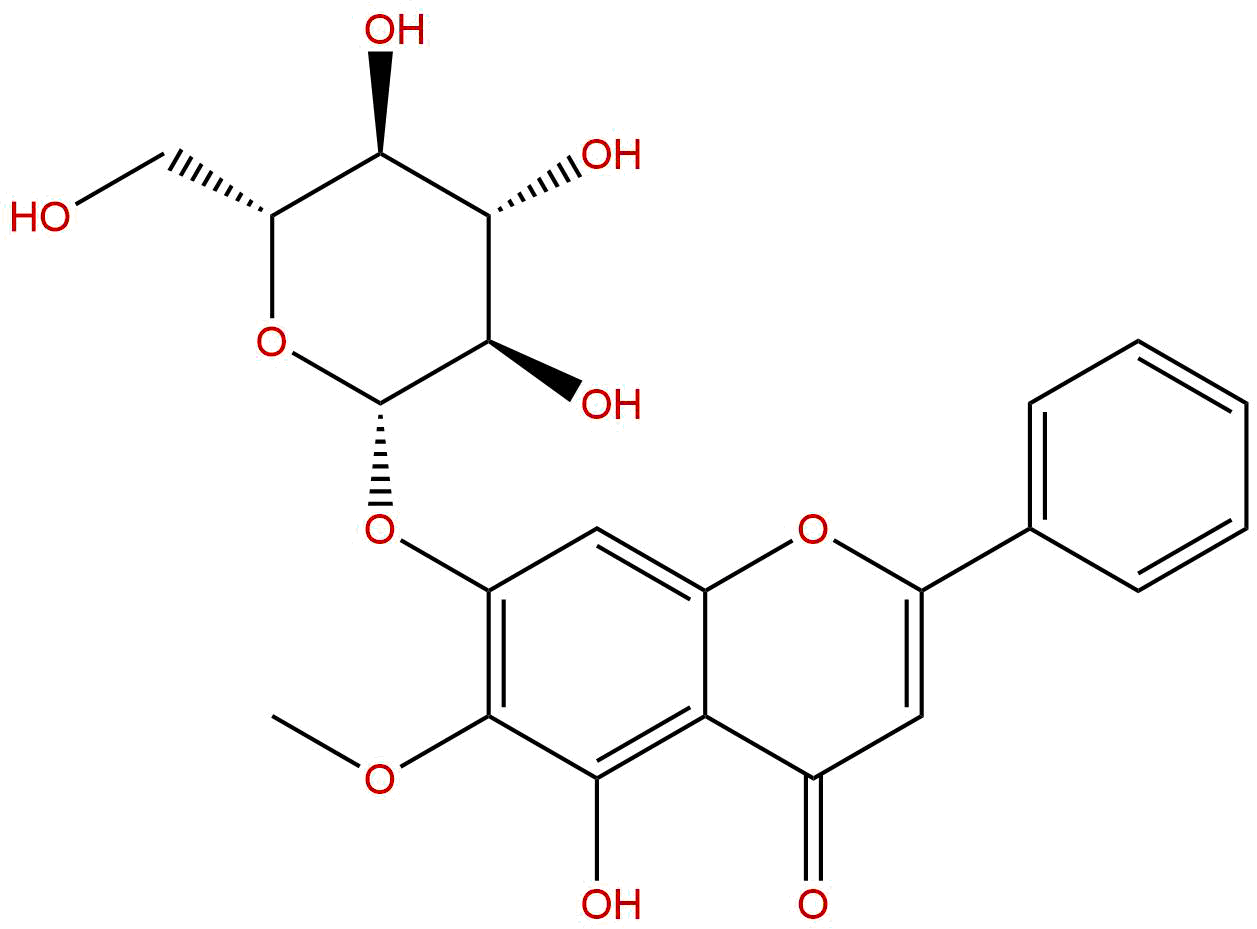


Product name: Oroxylin A-7-O-glucoside
Synonym name: 6-Methoxybaicalein 7-glucoside
Catalogue No.: BP4662
Cas No.: 36948-77-3
Formula: C22H22O10
Mol Weight: 446.408
Botanical Source:
Type of Compound: Flavonoids
Purity: 95%~99%
Analysis Method: HPLC-DAD or/and HPLC-ELSD
Identification Method: Mass, NMR
Packing: Brown vial or HDPE plastic bottle
Storage: Store in a well closed container, protected from air and light. Put into refrigerate or freeze for long term storage.
Whenever possible, you should prepare and use solutions on the same day. However, if you need to make up stock solutions in advance, we recommend that you store the solution as aliquots in tightly sealed vials at -20℃. Generally, these will be useable for up to two weeks.
The product could be supplied from milligrams to grams
Inquire for bulk scale.
For Reference Standard and R&D, Not for Human Use Directly.
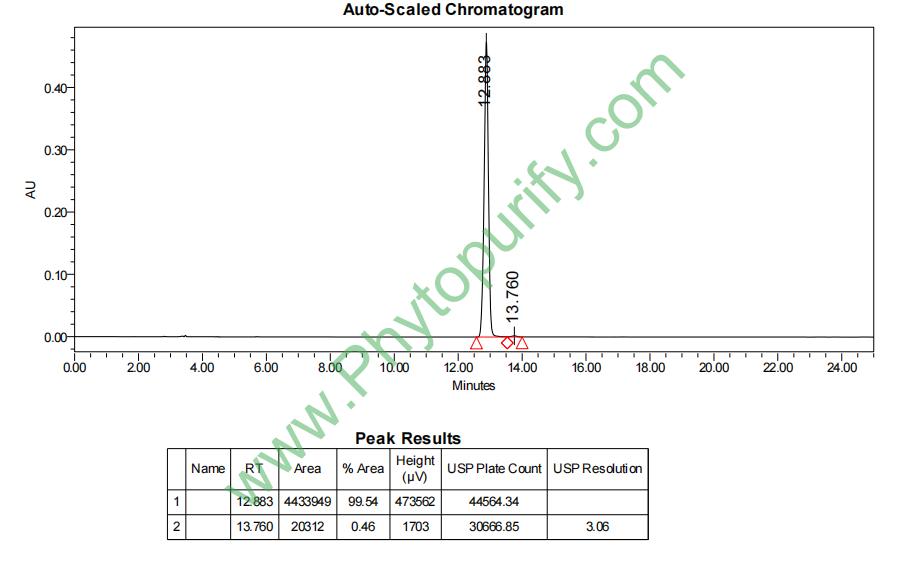
HPLC of Oroxylin A-7-O-glucoside
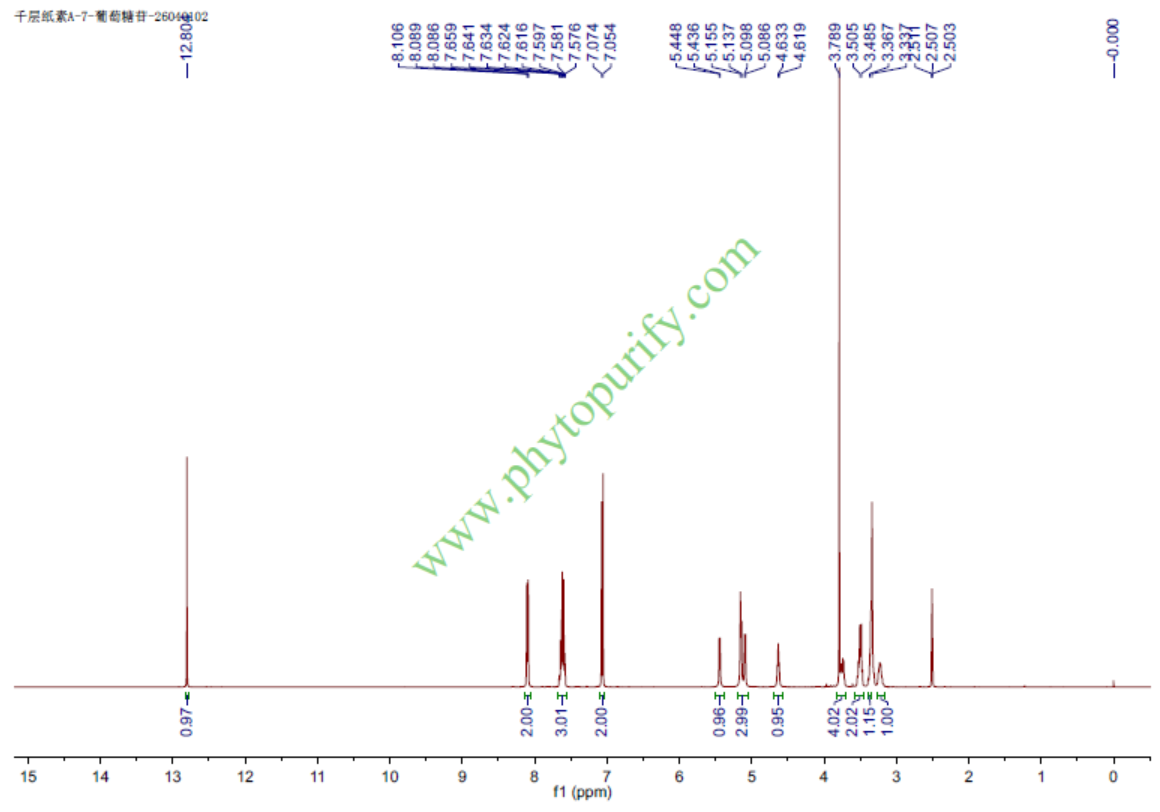
HNMR of Oroxylin A-7-O-glucoside
Storage conditions:Short-term storage at 2~8℃, long-term storage at -20 ~ -80℃
159.0500
.5446
.5341
.3763
.5591
.1550
Low
83.6536
3.8063
Yes
No
No
No
Yes
No
0.6
Yes
No
Yes
Yes
Natural products, as an important source of drug discovery, have always played a crucial role in the long history of human fight against diseases. Flavonoids have become one of the hotspots in natural product pharmacology research due to their extensive biological activity and low toxicity. Oroxylin A-7-O-glucoside, as a typical representative of flavonoid glycosides, has attracted much attention in recent years due to its significant antiviral activity. This compound is a 7-hydroxy-glucoside product of the flavonoid glycoside Oroxylin A. This glycosylation modification not only changes its physicochemical properties, but also profoundly affects its biological activity and metabolic characteristics. With the increasingly severe threat of new and recurrent viral infectious diseases worldwide, such as herpes simplex virus, cytomegalovirus, and human immunodeficiency virus, developing new, efficient, and low toxicity antiviral drugs has become a top priority. The purpose of this article is to systematically review the chemical properties, plant sources, pharmacological activities, and multi-target antiviral mechanisms of Qiancen Paper A-7-glucoside, and to deeply explore its pharmacological properties and clinical application prospects, in order to provide comprehensive scientific references for further research and development of this compound.
The chemical name of cellulose A-7-glucoside is 5,7-dihydroxy-6-methoxy-2-phenyl-4H-1-benzopyran-4-one-7-O - β - D-glucoside, and its CAS number is 36948-77-3. Its molecular formula is C22H22O11 and its molecular weight is 446.4080. Structurally, its parent nucleus is cellulose A, a typical 6-methoxyflavonoid structure characterized by methoxy substitution at position 6 of the flavonoid skeleton, and a hydroxyl group at position 7 connected to a molecule of β - D-glucose through a glycosidic bond. This glycosidic structure significantly enhances the polarity of the molecule.
The key physicochemical property parameters are as follows: the calculated lipid water partition coefficient (LogP) is 0.5446, indicating that the compound has moderate lipophilicity but overall leans towards hydrophilicity. The topologically polar surface area (TPSA) is as high as 159.0500 Å ², which is mainly attributed to the numerous hydrogen bond acceptors (oxygen atoms) in the molecule, further confirming its strong polarity characteristics. The theoretically calculated water solubility is 0.3763 mg/mL, belonging to the category of slight solubility, which is consistent with the hydrophilicity brought by its glycoside structure. However, the hydrophobicity of the flavonoid core limits its high solubility in water. These properties directly affect their absorption, distribution, and metabolism in the body. Preliminary drug risk assessment shows that its ability to cross the blood-brain barrier is low, suggesting that its direct effect on central nervous system related viruses may be limited; Negative in hERG potassium channel inhibition test indicates a low potential risk of arrhythmia; The Ames test result is 0.6 (usually considered to have mutagenic risk if>1.0), indicating a low genetic toxicity risk, but further experimental confirmation is needed.
The main source of A-7-glucoside in thousand layered paper is the traditional medicinal plant, wood butterfly(Oroxylum indicum The seeds, bark, and leaves of (L.) Kurz, also known as "thousand sheets of paper" or "torn cloth" in traditional Chinese medicine, are cold in nature and bitter in taste. They are traditionally used to treat cough, sore throat, hepatitis, and other conditions. In addition, in Scutellaria baicalensis(Scutellaria baicalensis Georgi and other plants in the family Lamiaceae have also been found in small quantities, often coexisting with its aglycone, quercetin A, and other flavonoid components such as baicalin and baicalin.
The compound is often extracted from plant materials using solvent extraction method. Due to its high polarity as a flavonoid glycoside, methanol, ethanol, or their aqueous solutions (such as 70% ethanol) are commonly used for heating reflux or ultrasound assisted extraction. After vacuum concentration, the crude extract was separated and purified by utilizing the differences in polarity and solubility between the compound and other coexisting components. The conventional separation strategy includes: first, enrichment is carried out using macroporous adsorption resins (such as D101, AB-8), followed by gradient elution with water and different concentrations of ethanol. The target component is usually eluted at the site of low to medium concentration ethanol; Further purification depends on column chromatography technology, such as silica gel column chromatography (chloroform methanol water system as eluent), polyamide column chromatography or Sephadex gel (LH-20) column chromatography. High performance liquid chromatography (HPLC), especially preparative HPLC, is the final key step in obtaining high-purity cellulose A-7-glucoside. It is commonly separated using a C18 reverse phase chromatography column with methanol water or acetonitrile water (pH adjusted with a small amount of formic acid or acetic acid) as the mobile phase. Modern extraction techniques such as supercritical fluid extraction and microwave-assisted extraction have also been applied in research aimed at improving extraction efficiency and protecting thermally unstable components.
The pharmacological activity research of cellulose A-7-glucoside is currently mainly focused on its antiviral field, demonstrating broad-spectrum and multi-target inhibitory potential.
1. Antiherpesvirus activity Research has shown that this compound has significant inhibitory effects on herpes simplex virus types 1 (HSV-1) and 2 (HSV-2). Its function is not only reflected in inhibiting the virus replication cycle, but also interfering with the early adsorption and invasion process of the virus to host cells. Regarding cytomegalovirus (CMV), research has also shown that it can inhibit the virus's proliferation within cells.
2. Anti human immunodeficiency virus (HIV) activity As a key focus of antiviral research, quercetin A-7-glucoside exhibits inhibitory activity against HIV-1. Its function involves multiple stages of the virus life cycle, including potentially interfering with the binding of the virus to host cell receptors, inhibiting the activity of viral enzymes, and interfering with the integration of viral genes.
3. Other antiviral potentials In addition to the above-mentioned viruses, preliminary studies suggest that they may also have a certain inhibitory effect on hepatitis B virus (HBV), influenza virus, etc., but further research is needed.
In addition to its core antiviral activity, some exploratory studies also suggest that the compound may have auxiliary activities such as anti-inflammatory, antioxidant, and neuroprotective effects. For example, its aglycone Qianceng Paper Protein A has been proven to have strong anti-inflammatory effects and can inhibit inflammatory signaling pathways such as NF - κ B. Although there is limited direct research on glycoside forms, considering their potential metabolism as aglycones in vivo, these related activities provide potential value for alleviating excessive inflammatory responses (such as cytokine storms) in viral diseases. Its antioxidant properties help alleviate oxidative stress damage caused by viral infections.
The antiviral effect of cellulose A-7-glucoside is not achieved through a single pathway, but exhibits the characteristics of multi-target and multi link intervention, which provides an advantage for overcoming viral resistance. According to existing research, its mechanism of action mainly involves the following targets and pathways:
1. Targeting the herpes virus family:
* Virus DNA polymerase helper proteins (UL42, UL54)In HSV and CMV, UL42 and UL54 are respectively the process factor and catalytic subunit of viral DNA polymerase. This compound may affect the function of these proteins through direct binding or indirect interference, thereby inhibiting the synthesis and replication of viral DNA.
* Virus immediate early protein (ICP27)The ICP27 protein of HSV is an important posttranscriptional regulator. Interfering with the function of ICP27 can disrupt the temporal expression of viral genes and effectively inhibit viral replication.
* Viral thymidine kinase (TK)Although many anti HSV drugs, such as acyclovir, rely on viral TK activation, Qiancenzi A-7-glucoside may affect the TK pathway in a way different from classical nucleoside analogs or act as a non substrate inhibitor.
* Virus envelope glycoprotein D (gD)GD is a key protein for HSV adsorption and invasion into cells. This compound may interfere with the interaction between gD and host cell receptors, preventing the virus from entering the cell.
2. Targeting HIV:
* Host cell co receptors (CCR5, CXCR4)HIV invasion into macrophages/lymphocytes requires binding to CD4 and CCR5 or CXCR4 co receptors. This compound may act as a co receptor antagonist or allosteric modulator, blocking the binding of virus envelope protein gp120 to co receptors and thus preventing virus invasion.
* Virus protease (HIV1-PR)HIV protease is a key enzyme necessary for cleaving viral precursor proteins and producing mature viral particles. Molecular docking simulation studies have shown that this compound may be able to enter the active pocket of HIV-PR and competitively inhibit its enzyme activity.
* Virus integrase (INT)HIV integrase is responsible for integrating viral cDNA into the host genome. Interfering with INT function can prevent viruses from establishing permanent infections. This compound may inhibit its function by chelating the metal ions (Mg ² ⁺/Mn ² ⁺) required for the active site of the integrase or directly binding to the enzyme.
3. Targeting host immunity and inflammation:
* Myeloperoxidase (MPO)MPO is a key enzyme involved in the production of strong oxidants such as hypochlorous acid by neutrophils during inflammatory reactions. Overactivation can lead to tissue damage. Inhibiting MPO activity helps to control the pathological inflammation and oxidative damage associated with viral infection. Qiancen Paper Protein A-7-Glucoside may exert anti-inflammatory and cell protective effects by regulating MPO activity.
In summary, Qiancen Paper A-7-Glucoside forms a multi-layered, synergistic antiviral network by directly targeting key viral replication proteins such as polymerase components, proteases, and integrases, interfering with viral invasion processes such as acting on viral envelope proteins or host co receptors, and assisting in regulating host immune responses such as inhibiting MPO.
Based on its physical and chemical parameters and preliminary biological data, a preliminary evaluation was conducted on the pharmacological properties of cellulose A-7-glucoside. Its molecular weight is moderate, and the LogP value shows that it has good balance. However, its high TPSA and slight solubility may limit its passive transmembrane diffusion, leading to challenges in oral bioavailability. The glycosidic structure makes it easy to serve as a substrate for β - glucosidase in the gut microbiota and intestinal epithelial cells. It may undergo hydrolysis in the gastrointestinal tract or be absorbed through the intestinal wall, releasing the aglycone quercetin A, which has higher lipid solubility and is more easily absorbed. Therefore, its pharmacokinetic behavior after oral administration may be a mixed effect of glycosides and aglycones.
At present, there are few reports on the pharmacokinetic studies of this compound system, but the general rules of flavonoid glycosides can be referred to. It is speculated that its oral absorption may mainly occur in the small intestine, and the absorption rate and degree are affected by the form of the preparation and the condition of the intestinal microbiota. After absorption, it may exist in the blood in the form of prototype glycosides, aglycones, and their II phase metabolites (such as glucuronic acid conjugates, sulfate conjugates). Its lower BBB permeability limits its application in treating central nervous system viral infections, but it may also reduce the risk of central nervous system side effects. The distribution volume may be moderate and tends to be distributed in tissues and organs with abundant blood flow. The metabolic pathways mainly involve hydrolysis, hydroxylation, demethylation, and a wide range of binding reactions (glucuronidation and sulfation). The prototype drug and its metabolites are mainly excreted through the kidneys and bile.
To enhance its drug efficacy, it may be necessary to optimize the molecular structure or adopt advanced drug delivery strategies in the future. For example, by preparing prodrugs (such as esterification prodrugs to improve lipid solubility and absorption), or using delivery systems such as phospholipid complexes, cyclodextrin inclusion complexes, nanoliposomes, polymer micelles, etc., their solubility and stability can be improved, oral bioavailability can be enhanced, and targeted delivery may be achieved.
The Thousand Layered Paper Protein A-7-Glucoside exhibits great potential as a novel multi-target antiviral lead compound. Its clinical application prospects may be reflected in the following aspects:
However, pushing it from a lead compound to clinical applications still faces a series of challenges: it requires completing systematic preclinical pharmacological, pharmacokinetic, and toxicological evaluations; Clarify its main active form in vivo (whether it is a prototype glycoside or a aglycone); Optimize synthesis or extraction processes to meet the needs of large-scale production; Conduct rigorous clinical trials to validate its safety and efficacy. Future research should focus on utilizing structural biology and computer-aided drug design methods to clarify their precise binding patterns with key targets and guide the rational design of better derivatives.
As a natural flavonoid glycoside derived from traditional medicinal plants, Qiancen Paper A-7-glucoside has shown unique value in the field of antiviral drug development due to its multi-target and multi link antiviral mechanism. It not only directly targets key viral replication proteins and invasion processes, but may also play an adjuvant therapeutic role by regulating host immune inflammatory responses. Although there may be challenges in drug formulation, such as oral absorption and metabolic stability, this is precisely the direction that modern pharmacy and medicinal chemistry can focus on optimizing. Thoroughly revealing its metabolic fate, active substance basis, and interactions with other drugs will lay a solid scientific foundation for its subsequent development. With the continuous deepening of research and the development of technology, cellulose A-7-glucoside is expected to provide a new therapeutic option with synergistic advantages and multiple effects in response to the severe threat of viral infectious diseases in the future, continuing the immortal contribution of natural products in human health.
