Introduction/Overview
As an important treasure trove for drug discovery, natural products continue to provide modern medicine with lead compounds with novel structures and diverse activities. Curcumin, as turmeric(Curcuma longa L. The main active ingredients of () have attracted much attention due to their extensive anti-inflammatory, antioxidant, and anticancer activities. However, its poor bioavailability and instability limit its clinical application. In recent years, the research focus has gradually shifted towards its in vivo metabolites, which may be the key entities for its pharmacological effects. Hexahydroxycurcumin (HHC), CAS number 36062-05-2, is one of the main metabolites produced by the microbial reduction of curcumin in the intestine. Compared with the parent compound, HHC exhibits better stability and oral bioavailability, and demonstrates unique and significant pharmacological properties. Research has shown that HHC is a selective oral active cyclooxygenase-2 (COX-2) inhibitor with no significant effect on COX-1, providing the possibility of precise targeting for its application in inflammation related diseases. In addition, HHC has shown strong potential in antioxidant, anticancer, and anti-inflammatory aspects, especially in the treatment of complex inflammatory diseases such as pancreatitis, where its multi-target mechanism of action is noteworthy. This article aims to systematically review the chemical properties, pharmacological activities, mechanisms of action, and pharmacological properties of hexahydrocurcumin, and to explore its clinical application prospects.
Chemical structure and physicochemical properties
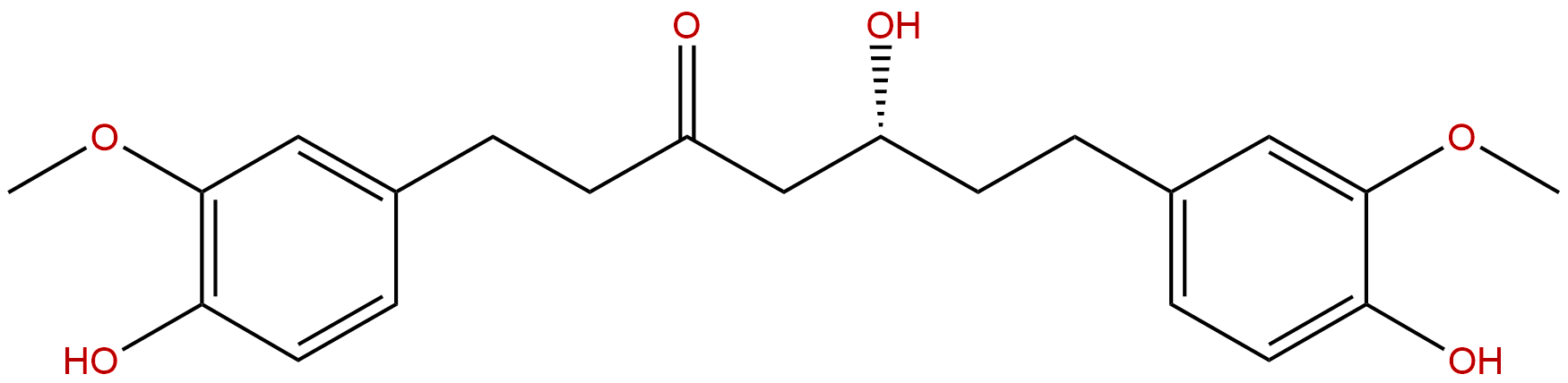
The chemical name of hexahydrocurcumin (HHC) is 1,7-bis (4-hydroxy-3-methoxyphenyl) -4-heptone, with a molecular formula of C21H26O6 and a molecular weight of 374.4330. Structurally, HHC is the product of complete hydrogenation reduction of three double bonds on the seven carbon chain skeleton connecting two aromatic rings in curcumin molecules. This structural transformation transforms it from the linear conjugated diketone structure of curcumin to a saturated β - diketone structure (specifically 1,4-heptanedione derivatives). The two aromatic rings still retain the substitution mode of para hydroxyl and meta methoxy groups.
This structural change profoundly affects its physical and chemical properties. Firstly, the saturated fatty chain enhances its hydrophobicity, and the calculated lipid water partition coefficient (LogP) is 2.4572, indicating its moderate lipophilicity. The topological polar surface area (TPSA) is 96.2200 Å ², reflecting the total exposed area of polar groups (mainly hydroxyl and carbonyl oxygen) in its molecule. The predicted value of its water solubility is 0.1221 mg/mL, which belongs to the category of slight solubility, which is consistent with its LogP value. These properties collectively determine its distribution characteristics within the organism: the ability of HHC to cross the blood-brain barrier is predicted to be "low", indicating that it mainly acts on the peripheral system and may reduce the risk of central nervous system side effects. In the early screening of drug properties, HHC showed good safety potential, and its hERG inhibition prediction was "no", indicating a low risk of cardiac toxicity; The Ames test predicted a value of 0.0, indicating no mutagenicity and low risk of genetic toxicity.
Plant sources and extraction methods
Hexahydrocurcumin is not a native compound that directly and abundantly exists in plants. Its main source is the metabolic transformation of curcumin in organisms. After oral administration of curcumin, under the action of the gut microbiota, the double bonds of the curcumin side chain are gradually hydrogenated through reductase, first producing dihydrocurcumin and finally producing hexahydrocurcumin. Therefore, the turmeric rhizome rich in curcumin is its most fundamental natural precursor source.
There are two main ways to obtain HHC in laboratory preparation and research:
1. Chemical Synthesis This is currently the main method for obtaining high-purity HHC. Usually starting from vanillin and other raw materials, a framework is constructed through reactions such as Claisen Schmidt condensation, and then the olefin bonds of the intermediate are catalytically hydrogenated (such as using palladium carbon catalysts) to ultimately obtain HHC. The yield of chemical synthesis method is controllable, and pure products of gram level or even larger scale can be obtained, meeting the needs of pharmacological research.
2. Biotransformation method Simulating in vivo processes, using specific microorganisms (such as certain bacteria or fungi) or reductases extracted from microorganisms to perform biocatalytic reduction of curcumin in vitro, selectively generating HHC. This method has mild conditions and more green chemical characteristics, but usually has lower yield and efficiency than chemical synthesis, and is mostly used for mechanism exploration and specific preparation.
3. Extraction and Separation Method In theory, turmeric can be extracted from the blood, feces, or urine of people or animals who consume turmeric for a long time or in large quantities. However, this method is expensive and yields very low, making it impractical.
At present, HHC standards used for research are mainly obtained through chemical synthesis and structurally confirmed through techniques such as nuclear magnetic resonance and mass spectrometry.
Pharmacological activity research
Hexahydrocurcumin exhibits extensive and significant pharmacological activity, which not only inherits some of the advantages of curcumin, but also has new characteristics due to structural changes.
-
anti-inflammatory activity This is one of the core activities of HHC. HHC has shown dose-dependent anti-inflammatory effects in various animal models of acute and chronic inflammation, such as carrageenan induced paw edema in rats, increased intra-abdominal capillary permeability in mice induced by acetic acid, and cotton ball induced granulomas. Its characteristic is that it is a Selective COX-2 inhibitors COX-2 is an inducible enzyme that is highly expressed at the site of inflammation and is responsible for synthesizing pro-inflammatory mediators such as prostaglandins; COX-1 is a structural enzyme that plays an important role in maintaining the integrity of gastrointestinal mucosa and platelet function. HHC selectively inhibits COX-2 without affecting COX-1, which means that while exerting anti-inflammatory effects, it may avoid the gastrointestinal damage and bleeding risks caused by traditional nonsteroidal anti-inflammatory drugs (NSAIDs) that inhibit COX-1, and has better safety.
-
antioxidant activity The phenolic hydroxyl group in HHC molecules is the structural basis for its antioxidant capacity. Research has shown that HHC can effectively scavenge DPPH free radicals, ABTS free radical cations, and superoxide anions, and its iron ion reduction ability is also strong. Compared with curcumin, due to its saturated structure and higher chemical stability, it may maintain a longer antioxidant state in vivo. It can alleviate oxidative stress-induced cell damage and protect biomolecules such as DNA, lipids, and proteins from oxidative damage.
-
anticancer activity HHC can inhibit proliferation and induce apoptosis in many cancer cell lines, including colon cancer, breast cancer, liver cancer and pancreatic cancer. Its mechanism involves cell cycle arrest (such as G1/S phase arrest), upregulation of pro apoptotic proteins (such as Bax), downregulation of anti apoptotic proteins (such as Bcl-2), activation of Caspase cascade reaction, etc. In addition, HHC can also inhibit the migration and invasion of cancer cells, demonstrating the potential for anti metastasis.
-
Protective effect on pancreatitis This is a highly promising research direction for HHC. In animal models of experimental acute pancreatitis induced by rain frog hormone or L-arginine, HHC pretreatment significantly reduced pancreatic tissue edema, inflammatory cell infiltration, and acinar cell necrosis. It can effectively reduce the levels of amylase and lipase in serum, and inhibit the overexpression of various pro-inflammatory factors (such as TNF - α, IL-1 β, IL-6) in pancreatic tissue. In addition to its direct anti-inflammatory effect, HHC has also been reported to inhibit the activity of pancreatic lipase (PNLIP). Pancreatic lipase is a key enzyme in dietary fat digestion, which is abnormally activated in the early stages of acute pancreatitis. Its breakdown products can exacerbate pancreatic self digestion and inflammatory reactions. The inhibition of this enzyme by HHC provides another unique protective pathway for its treatment of pancreatitis.
Mechanism of action and molecular targets
The pharmacological effects of hexahydrocurcumin are not achieved through a single target, but through the synergistic action of multiple targets and pathways, forming a networked regulatory system, especially in complex inflammatory diseases such as pancreatitis.
-
Regulation of core anti-inflammatory pathway:
- Selective inhibition of COX-2/PTGS2 HHC directly acts on inducible cyclooxygenase-2 (encoded by the PTGS2 gene), inhibiting its catalytic activity and reducing the production of potent inflammatory mediators such as prostaglandin E2, which is a key direct target for its rapid anti-inflammatory effect.
- Inhibition of NF - κ B signaling pathway Nuclear factor kappa B (NF - κ B, composed of subunits such as NFKB1) is a core transcription factor that regulates inflammatory responses. HHC can inhibit the degradation of I κ B α, prevent the transfer of NF - κ B p65 subunit into the nucleus, and thereby downregulate the expression of a series of pro-inflammatory genes downstream, including TNF - α (TNF), IL-1 β (IL1B), IL-6 (IL6), and COX-2 itself. This is the central mechanism by which it exerts a wide and long-lasting anti-inflammatory effect.
- Inhibition of JAK/STAT3 signaling pathway In inflammation and cancer, interleukin-6 (IL-6) binds to its receptor, activating JAK kinase and subsequently phosphorylating and activating signal transducer and activator of transcription factor 3 (STAT3). Activated STAT3 promotes the expression of more pro-inflammatory and pro survival genes in the nucleus. HHC can block this pathway, inhibit STAT3 phosphorylation and nuclear translocation, thereby breaking the positive feedback loop of inflammation.
-
Immune regulation and Th17 cell differentiation In chronic inflammation and autoimmune diseases, helper T cell 17 (Th17) and its characteristic cytokines IL-17A and IL-23 play important roles. The differentiation of Th17 cells is regulated by the key transcription factor ROR γ t. Research has shown that HHC can inhibit the activity or expression of ROR γ t, thereby reducing the production of IL-17A and IL-23, and regulating the immune balance towards anti-inflammatory direction. This mechanism is of great significance for the treatment of refractory inflammation associated with Th17 cells, such as certain types of pancreatitis, inflammatory bowel disease, psoriasis, etc.
-
Specific targets for pancreatitis:
- Direct inhibition of pancreatic lipase (PNLIP)HHC can act as an inhibitor of pancreatic lipase, reducing its abnormal activation in pancreatic acinar cells, thereby reducing the cytotoxicity and inflammatory cascade caused by fat breakdown products (such as free fatty acids), and alleviating the "self digestion" of the pancreas from the source.
- Inhibition of multiple cytokine networks In the pancreatitis model, HHC has a strong inhibitory effect on the expression of key pro-inflammatory factors such as TNF - α, IL-1 β, IL-6, which together form an amplifying network of pathological damage in pancreatitis.
In summary, HHC has constructed a three-dimensional and multi-level anti-inflammatory and organ protection network by directly inhibiting COX-2 and PNLIP, and simultaneously intervening in key signaling nodes such as NF - κ B, JAK/STAT3, and ROR γ t.
Evaluation of drug properties and pharmacokinetics
Based on its physicochemical properties and preliminary biological data, hexahydrocurcumin exhibits superior pharmacological potential compared to its parent curcumin.
-
Pharmacokinetic characteristics Although research on the pharmacokinetics of HHC system is not as comprehensive as curcumin, existing evidence suggests that it has good oral absorption. As a reducing metabolite of curcumin, its saturated structure significantly enhances its stability to light, heat, and alkaline environments compared to curcumin. In the body, HHC can further undergo glucuronidation and sulfation binding reactions, forming corresponding phase II metabolites, which are excreted through urine and bile. Its low blood-brain barrier permeability makes it possible to focus on the treatment of peripheral diseases.
-
ADMET property analysis:
- Absorption The moderate LogP value (2.46) and TPSA value (96) conform to the common range of the "five rules of class drugs" for oral medication, indicating its good intestinal permeability and oral absorption potential.
- Distribution Low blood-brain barrier permeability limits its entry into the central nervous system, which may be an advantage rather than a disadvantage for anti-inflammatory drugs that require peripheral action, reducing central side effects.
- Metabolism Mainly undergoing phase II combined metabolism, rather than extensive phase I metabolism of cytochrome P450 enzyme system, which reduces the risk of serious drug drug interactions.
- Excretion Expected to be mainly excreted through the kidneys and bile.
- Toxicity Predicting the absence of hERG inhibition and Ames mutagenicity is a positive signal of its early safety. In reported animal experiments, no significant toxicity was observed with HHC at effective doses.
-
Formulation Challenges and Strategies Although the water solubility is generally low (0.122 mg/mL), it can be overcome through modern formulation techniques, such as preparing nanocrystals, liposomes, cyclodextrin inclusion complexes, or solid dispersions to increase their solubility and dissolution rate, thereby enhancing their bioavailability.
Clinical application prospects and prospects
The multi-target, high selectivity, and good safety characteristics of hexahydrocurcumin depict broad prospects for its application in various disease fields.
-
Inflammatory diseases:
- Acute and chronic pancreatitis As the most distinctive indication, HHC can intervene in the pathological process of pancreatitis from the two core links of "self digestion" and "inflammatory storm" by inhibiting PNLIP, COX-2, and multiple inflammatory pathways. It is expected to be developed as a new type of pancreatitis treatment or adjuvant therapy drug.
- arthritis Its selective COX-2 inhibitory properties make it a potential candidate drug for the treatment of rheumatoid arthritis and osteoarthritis, with both anti-inflammatory and analgesic effects, and lower gastrointestinal risk.
- Inflammatory bowel disease By regulating the NF - κ B, STAT3, and Th17 pathways, HHC may have therapeutic value for ulcerative colitis and Crohn's disease.
- Skin inflammatory diseases The mechanism of inhibiting Th17 differentiation in diseases such as psoriasis and atopic dermatitis is targeted.
-
Chemotherapy prevention and adjuvant therapy for cancer The anti proliferative, pro apoptotic, and anti metastatic activities of HHC make it potential for cancer chemoprevention (especially for colorectal cancer) and as a sensitizer or adjuvant drug to reduce the side effects of radiotherapy and chemotherapy.
-
Metabolic diseases Chronic low-grade inflammation is an important pathological basis of metabolic diseases such as obesity and type 2 diabetes. The anti-inflammatory and antioxidant effects of HHC may help improve insulin resistance and metabolic disorders.
-
Future research directions and challenges:
- In depth mechanism research Further use of techniques such as gene knockout and proteomics is needed to accurately elucidate its direct interaction mode with key targets such as ROR γ t.
- System preclinical development Complete standardized preclinical pharmacological, pharmacokinetic, and toxicological evaluations to determine the therapeutic window and safe dose.
- Formulation optimization Develop stable and efficient formulations suitable for clinical administration.
- clinical translation Ultimately, its effectiveness, safety, and pharmacokinetic characteristics in the human body need to be validated through rigorous clinical trials.
Conclusion
As a key bioactive metabolite of curcumin, hexahydrocurcumin successfully overcomes the shortcomings of poor stability and low bioavailability of the parent compound, and exhibits unique selective COX-2 inhibitory activity and multi-target mechanism of action. Its outstanding potential in anti-inflammatory, antioxidant, anticancer, and especially in the treatment of pancreatitis has transformed it from a simple metabolite into a highly valuable lead compound for development. From inhibiting pancreatic lipase to regulating NF - κ B, STAT3, and even ROR γ t transcription factors, the network of action of HHC covers multiple levels from enzyme activity to gene expression. Although its clinical application still requires systematic and rigorous preclinical and clinical research, existing scientific evidence fully demonstrates that hexahydrocurcumin has the potential to become a new candidate drug for the treatment of inflammation related diseases, especially pancreatitis, providing a classic example for the modern research and transformation of natural products. In the future, with the deep exploration of its mechanism of action and continuous progress in formulation technology, hexahydrocurcumin is expected to shine in the field of innovative drug development.