Introduction/Overview
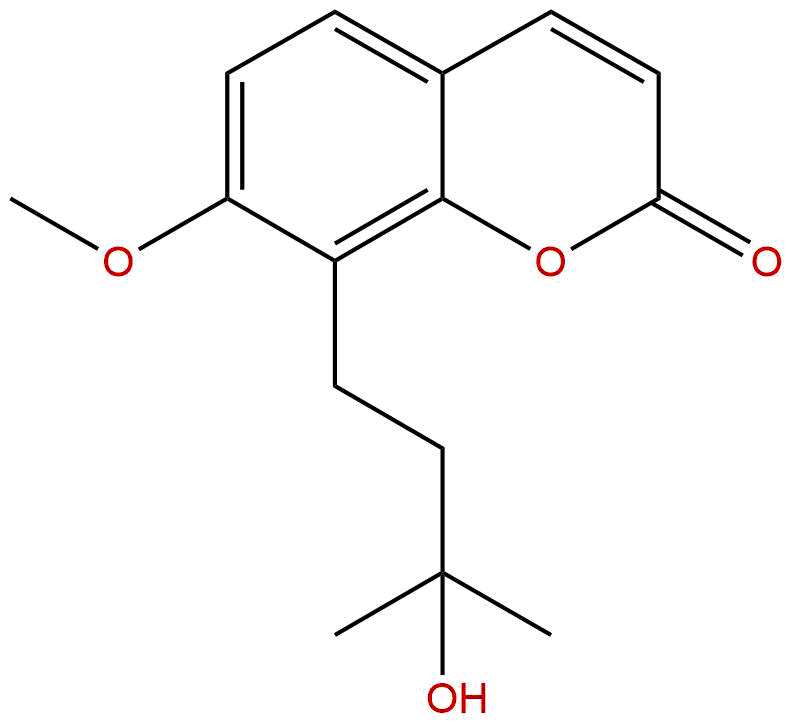
Coumarin compounds are a class of benzo [a] - pyranone derivatives widely found in nature, which have attracted much attention due to their structural diversity and wide range of biological activities. Among numerous coumarin derivatives, Osthol hydrate (CAS number: 69219-24-5), as a structurally unique natural product, has gradually demonstrated its significant potential in the field of pharmacology. This compound is a coumarin metabolite isolated from the Rutaceae plant F. schottiana. Its structural feature is that the 7th and 8th positions are respectively replaced by methoxy and 3-hydroxy-3-methylbutyl groups, forming a hydrated structure. In recent years, with a deeper understanding of the pathogenesis of inflammation related diseases, the search for highly effective and low toxicity anti-inflammatory drugs has become a research hotspot. Preliminary studies have shown that hydrated snake bed extract exhibits significant anti-inflammatory activity in various inflammatory models, involving the regulation of key inflammatory targets such as interleukin-6 (IL-6), signal transduction and transcription activator 3 (STAT3), and tumor necrosis factor (TNF). This article aims to provide a systematic review of the chemical structure, plant sources, pharmacological activities, mechanisms of action, and medicinal properties of hydrated snake seed extract, in order to provide comprehensive scientific references for the in-depth research and potential drug development of this natural product.
Chemical structure and physicochemical properties
Hydrated osthol, also known as 2 '- deoxymeranzin hydrate, has a molecular formula of C15H18O4 and a molecular weight of 262.3050. Structurally, it belongs to the derivatives of coumarin (benzo [a] - pyranone), with its core skeleton being a fused structure of a benzene ring and an alpha pyranone ring. Its structural modification is mainly reflected in two key sites: a methoxy group (- OCH3) is connected at position 7, and a 3-hydroxy-3-methylbutyl side chain (- CH2CH2C (OH) (CH3) 2) is connected at position 8. The tertiary alcohol structure (- C (OH) (CH3) 2) in this side chain is a manifestation of its "hydration" characteristic and also has an important impact on its physicochemical properties and biological activity.
In terms of physical and chemical properties, the lipid water partition coefficient (LogP) of hydrated osthole is 2.6133, indicating that it has a certain lipophilicity, but not highly hydrophobic, which is conducive to its penetration of cell membranes. Its topological polar surface area (TPSA) is 59.6700 Å ², reflecting the contribution of polar atoms (especially hydroxyl and carbonyl oxygen) in the molecule. The water solubility value is 0.0563 mg/mL, which belongs to the category of slightly soluble to poorly soluble. This is a common feature of many coumarin compounds and a problem that needs to be considered in their formulation development. It is worth noting that its drug prediction shows that it has a high blood-brain barrier permeability, which provides a structural basis for its application in central nervous system related inflammatory diseases such as neuropathic pain and neurodegenerative diseases. In addition, its hERG inhibition risk is negative, and the preliminary Ames test result is 0.6 (a value close to 1 is generally considered to indicate a low risk of mutagenicity), providing early clues for its relatively good safety.
Plant sources and extraction methods
Hydrated osthitin is mainly isolated from the Rutaceae plant F. schottiana. This genus of plants is distributed in tropical and subtropical regions around the world, and is often used in traditional medicine to treat fever, pain, and inflammatory diseases, which is closely related to its high content of coumarin compounds.
Its extraction and separation usually follow the conventional process of natural product chemistry. Firstly, crush the dried parts of the plant (such as roots, stems, and leaves) and extract them using appropriate solvents. Common extraction solvents include methanol, ethanol, or ethanol water mixed solvents, which can effectively extract polar and moderately polar coumarin components. After vacuum concentration, the crude extract is preliminarily enriched using liquid-liquid extraction method (such as ethyl acetate or chloroform extraction). Subsequently, separation and purification are carried out through a series of chromatographic techniques, such as silica gel column chromatography, gel column chromatography (such as Sephadex LH-20) and high performance liquid chromatography (HPLC). During the separation process, thin-layer chromatography (TLC) or high-performance liquid chromatography-mass spectrometry (HPLC-MS) is often combined for online or offline monitoring to track the target compound. Due to its specific UV absorption (characteristic absorption of coumarin skeleton) and mass spectrometry characteristic ion peaks, these analytical techniques can effectively guide its separation and identification. At present, there are relatively few research reports on its large-scale preparation or total synthesis, which may be a direction for future research to meet the needs of in-depth pharmacological research and development.
Pharmacological activity research
A large number of pharmacological studies in vitro and in vivo have confirmed that the core biological activity of hydrated snake bed extract is concentrated in anti-inflammatory Domain and demonstrate multiple effects in related models.
In cellular level studies, hydrating osthol can significantly inhibit the inflammatory response of macrophages (such as RAW264.7 cells) induced by inflammatory stimuli such as lipopolysaccharides (LPS). Specifically, it manifests as a dose-dependent reduction in the excessive production of nitric oxide (NO) and prostaglandin E2 (PGE2), which are key effector molecules in the inflammatory process. Meanwhile, it can effectively inhibit the gene expression and protein secretion of various pro-inflammatory cytokines (such as TNF - α, IL-6, IL-1 β).
In animal model experiments, the anti-inflammatory activity of hydrated osthol was further validated. For example, in mouse ear xylene or TPA induced acute inflammation models, local or systemic administration can significantly reduce ear swelling. In the rat paw swelling model induced by carrageenan or formalin, it can effectively inhibit the formation and development of edema and alleviate painful behavior. More importantly, in chronic autoimmune inflammation models such as collagen induced arthritis (CIA), treatment with hydrating osthol can improve joint pathological damage, reduce synovitis and cartilage destruction, indicating its therapeutic potential for chronic inflammatory diseases.
In addition to its classic anti-inflammatory effects, its anti-inflammatory activity also extends to related pathological processes. For example, by inhibiting the inflammatory pathway, it may have a protective effect against oxidative stress damage. In addition, given its excellent blood-brain barrier permeability, it also shows promising applications in neuroinflammatory models such as LPS induced brain inflammation and neuropathic pain models.
Mechanism of action and molecular targets
The anti-inflammatory effect of hydrated snake bed extract is not achieved through a single target, but acts on multiple key nodes of the inflammatory signaling network, forming a multi-target regulatory characteristic. Existing research suggests that it is closely related to the following targets and pathways:
-
Inhibition of NF - κ B signaling pathway Nuclear factor kappa B (NF - κ B) is a core transcription factor that regulates the expression of inflammatory genes. Hydrated snake bed extract can inhibit the activation of I κ B kinase (IKK, especially IKBKB) under inflammatory stimulation, prevent the degradation of I κ B protein, and thus reduce the translocation of NF - κ B p65 subunit (RELA) to the nucleus. This directly leads to a decrease in the expression of downstream genes such as TNF - α, IL-6, IL-1 β, inducible nitric oxide synthase (NOS2), and cyclooxygenase-2 (COX-2, encoded by PTGS2). Among them, the inhibition of NOS2 and PTGS1/2 (COX-1/COX-2) respectively explains the phenomenon of reducing NO and PGE2 production.
-
Regulating the JAK-STAT signaling pathway After binding to its receptor, interleukin-6 (IL-6) activates JAK kinase, which in turn phosphorylates and activates signal transducer and activator of transcription factor 3 (STAT3). Activated STAT3 drives the expression of a series of pro-inflammatory and pro survival genes in the nucleus. Research has shown that hydrating osthol can downregulate the production of IL-6 and may directly or indirectly interfere with the phosphorylation or dimerization of STAT3, thereby blocking this crucial pathway in chronic inflammation and autoimmune diseases.
-
Affects inflammasome activity The assembly and activation of inflammasomes (such as NLRP3 inflammasome) are key steps in the mature release of IL-1 β and IL-18, and caspase-1 (CASP1) is the core executor of this process. There is evidence to suggest that hydrating osthol may reduce the release of mature IL-1 β by inhibiting the assembly of NLRP3 inflammasomes or the activity of caspase-1, thereby suppressing pyroptosis (cellular inflammatory necrosis) and strong inflammatory responses.
-
Regulating ion channels and pain perception Transient receptor potential vanillic acid subtype 1 (TRPV1) and transient receptor potential anchor protein subtype 1 (TRPA1) are important ion channels for sensing nociceptive stimuli (such as heat and chemicals) and mediating inflammatory pain. Hydrated osthol may act as a regulator to affect the activity of these channels, which is consistent with its analgesic effect in inflammatory pain models, providing a molecular explanation for its dual anti-inflammatory and analgesic effects.
In summary, the hydrating snake bed extract forms a multidimensional and multi-level anti-inflammatory network by synergistically acting on multiple targets and pathways such as NF - κ B, JAK-STAT, inflammasomes, and pain sensing channels, which may be the mechanism basis for its highly effective anti-inflammatory effects.
Evaluation of drug properties and pharmacokinetics
Based on its physical and chemical parameters and preliminary biological data, a preliminary evaluation of the pharmacological properties of hydrated osthole extract is conducted
Advantage aspects:
1. Moderate molecular weight(262.3), meets the basic requirements of the Rule of Five and has the molecular basis to become an oral medication.
2. Suitable lipid solubility(LogP ~2.6), It is beneficial for it to cross the biofilm through passive diffusion and be absorbed by cells.
3. High blood-brain barrier permeability This is a significant advantage that makes it promising for treating inflammatory diseases of the central nervous system.
4. Preliminary safety indicators are good There is no significant risk of hERG channel inhibition (indicating a low risk of cardiac toxicity), and preliminary Ames test results suggest a low risk of mutagenicity.
Challenge aspect:
1. Poor water solubility This is the main obstacle to its development into formulations, especially injections. It may be necessary to improve its solubility and bioavailability through strategies such as salt formation, formation of inclusion complexes, nanocrystals, liposomes, or prodrug modification.
2. Metabolic stability unknown Coumarin compounds are easily metabolized by cytochrome P450 enzymes in vivo, and their specific metabolic sites (such as pyranone ring, methoxy group, side chain hydroxyl group), major metabolites, and whether they have hepatic enzyme induction or inhibition effects still need further research.
3. Lack of systematic pharmacokinetic data At present, there are few complete research reports on the absorption, distribution, metabolism, and excretion (ADME) of hydrating osthol. The key pharmacokinetic parameters such as oral bioavailability, plasma protein binding rate, tissue distribution characteristics, half-life, and main excretion pathways urgently need to be elucidated through standardized animal experiments.
4. Potential toxicity Although the initial genetic toxicity risk is low, more comprehensive preclinical toxicology studies are needed, including subacute/chronic toxicity, reproductive toxicity, etc., to evaluate their safety window.
Clinical application prospects and prospects
Hydrated snake bed extract, as a multi-target anti-inflammatory natural product, has broad clinical application development prospects:
-
Disease treatment direction:
- Rheumatoid immune diseases The inhibition of IL-6/STAT3 pathway and NF - κ B pathway in diseases such as rheumatoid arthritis and ankylosing spondylitis is highly correlated with their pathological mechanisms.
- Inflammatory pain and neuropathic pain Combining its anti-inflammatory effects and potential regulatory effects on TRPV1/TRPA1 channels, it can be used to develop novel analgesic drugs.
- Inflammatory diseases of the nervous system Thanks to its high blood-brain barrier permeability, it has unique potential in the treatment of Alzheimer's disease, Parkinson's disease, multiple sclerosis, and neuroinflammation after stroke.
- Other chronic inflammations Such as inflammatory bowel disease, chronic dermatitis, asthma, etc.
-
Drug development strategy:
- lead optimization To address its shortcomings of poor water solubility and metabolic instability, structural modifications are carried out. For example, esterification or etherification of its side chain hydroxyl groups to prepare prodrugs; Alternatively, appropriate modifications can be made to the coumarin core to improve its pharmacokinetic properties while maintaining its activity.
- New delivery system Develop delivery systems based on nanotechnology (such as polymer nanoparticles, solid lipid nanoparticles) or liposome technology to improve their solubility, targeting, and stability.
- combination therapy Consider using it in combination with existing anti-inflammatory drugs (such as nonsteroidal anti-inflammatory drugs, biologics), which may produce synergistic effects, reduce their respective dosages and side effects.
-
Future research focus:
- In depth mechanism research Using techniques such as gene knockout, RNA interference, molecular docking, and surface plasmon resonance, accurately verify the direct interaction sites and patterns with targets such as STAT3, IKBKB, and CASP1.
- Systematic pharmacodynamic evaluation Validate its efficacy in more complex animal models that are closer to human diseases, such as humanized mouse models and spontaneous disease models.
- Complete preclinical ADME/Tox study This is the necessary path to advance it towards clinical trials.
- Explore its other activities In addition to anti-inflammatory effects, it is also worth exploring whether it has anti-tumor, anti fibrotic, antibacterial and other activities.
Conclusion
Hydrated osthol is a structurally unique coumarin compound isolated from traditional medicinal plants. Pharmacological studies have confirmed its significant anti-inflammatory activity, and its mechanism of action involves multidimensional regulation of multiple key inflammatory targets such as NF - κ B, JAK-STAT, inflammasomes, and pain sensing channels, demonstrating the advantage of multi-target action. Despite facing challenges such as poor water solubility and incomplete pharmacokinetic information in drug development, its excellent blood-brain barrier permeability and preliminary safety data have laid a positive foundation for its drug development. Future research needs to focus on in-depth analysis of its mechanism of action, systematic evaluation of its pharmacokinetic properties, and drug efficacy enhancement based on dosage form improvement or structural optimization. With the advancement of these studies, hydrating osthol is expected to develop from a promising natural lead compound into a novel candidate drug for treating inflammation and related diseases, providing new options to meet the unmet clinical medical needs.