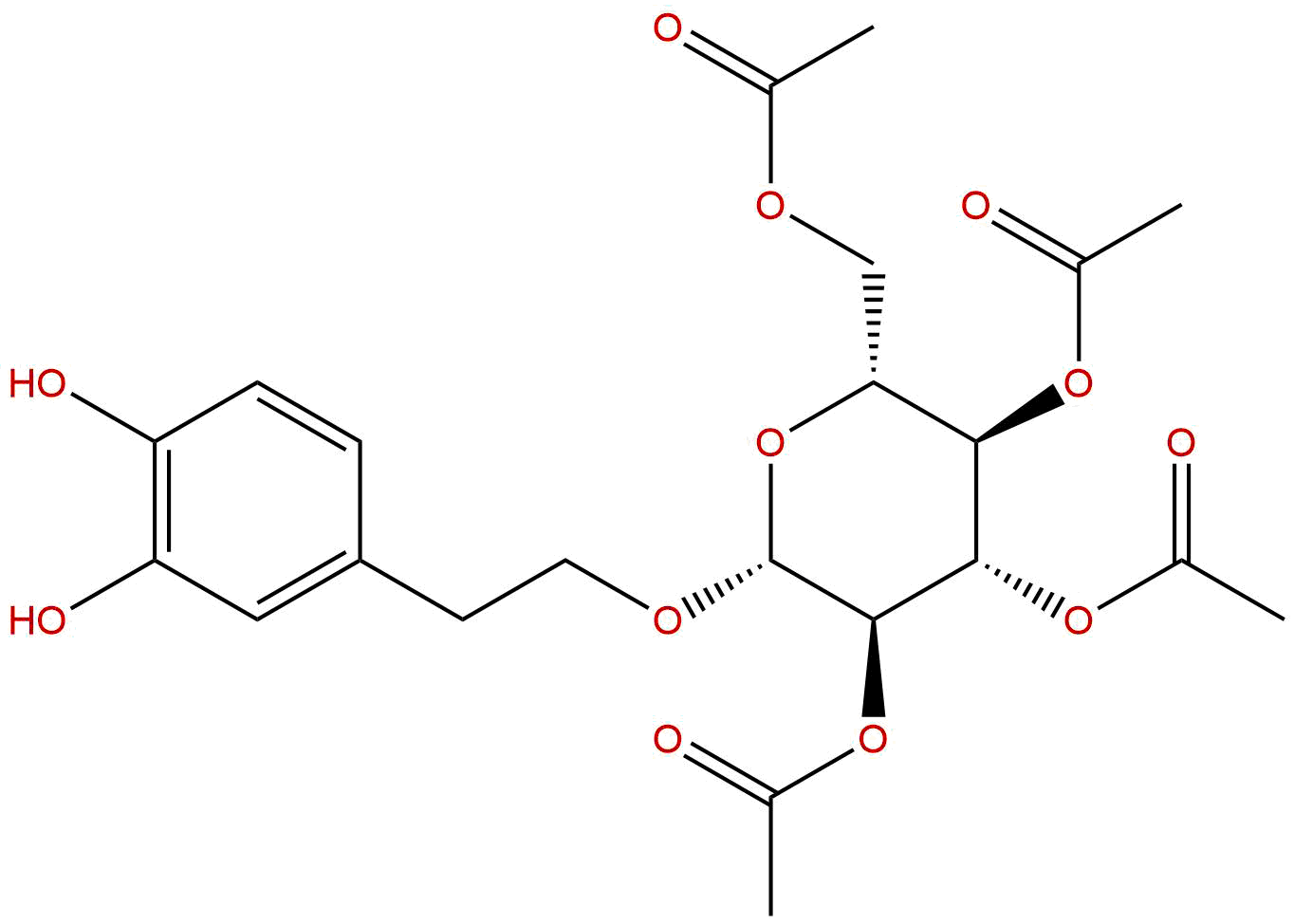


Product name: Hydroxytyrosol-1-all-acetylglucoside
Synonym name: 3,4-Dihydroxyphenethyl acetylglucoside
Catalogue No.: BP2368
Cas No.: 1815608-82-2
Formula: C22H28O12
Mol Weight: 484.454
Botanical Source:
Type of Compound: Phenols
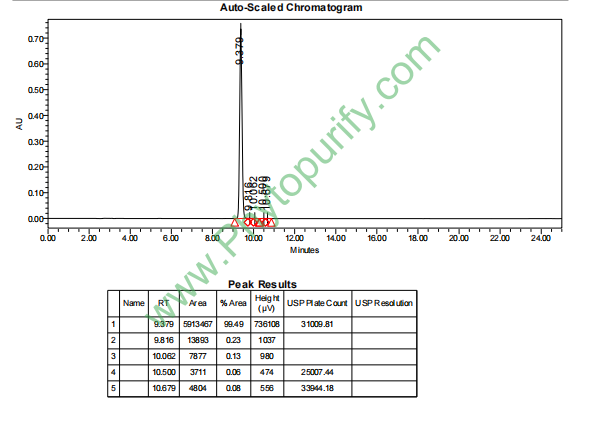
Purity: 95%~99%
Analysis Method: HPLC-DAD or/and HPLC-ELSD
Identification Method: Mass, NMR
Packing: Brown vial or HDPE plastic bottle
Storage: Store in a well closed container, protected from air and light. Put into refrigerate or freeze for long term storage.
Whenever possible, you should prepare and use solutions on the same day. However, if you need to make up stock solutions in advance, we recommend that you store the solution as aliquots in tightly sealed vials at -20℃. Generally, these will be useable for up to two weeks.
The product could be supplied from milligrams to grams
Inquire for bulk scale.
For Reference Standard and R&D, Not for Human Use Directly.
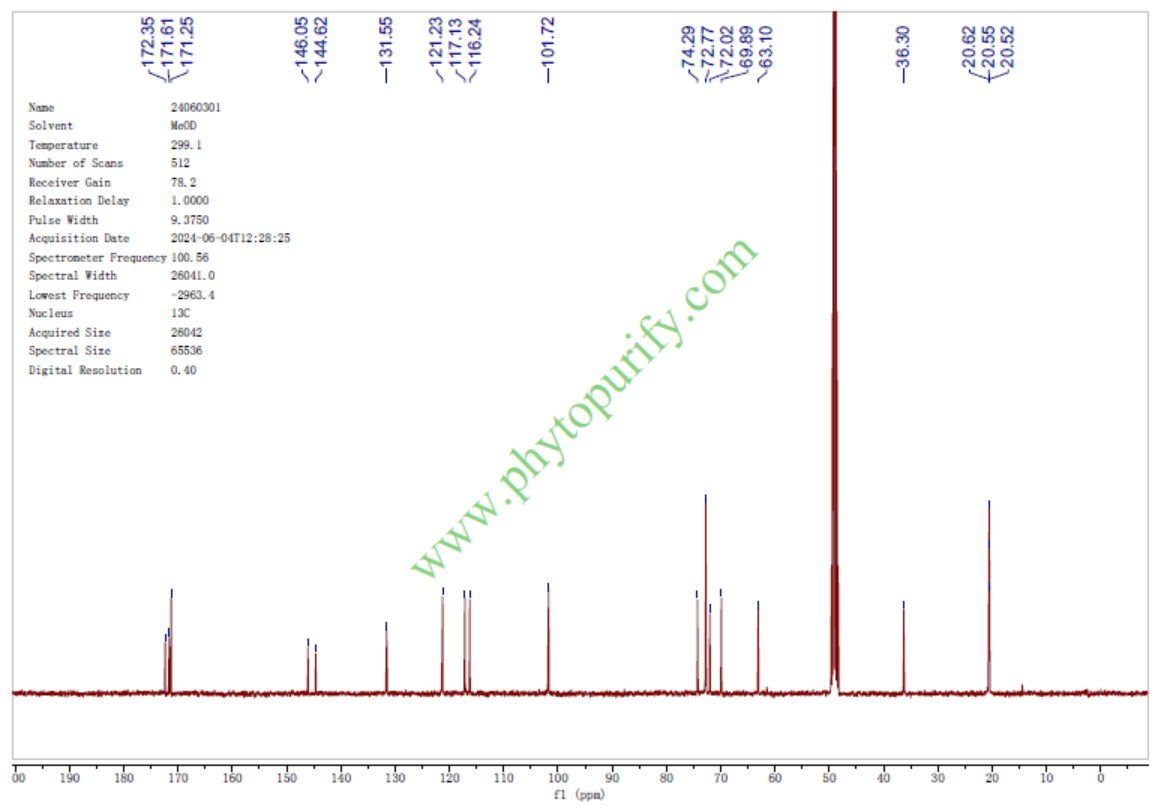
NMR of Hydroxytyrosol-1-all-acetylglucoside
HPLC of Hydroxytyrosol-1-all-acetylglucoside
Storage conditions:Short-term storage at 2~8℃, long-term storage at -20 ~ -80℃
164.1200
.7253
.7208
2.5009
1.6987
.1358
Low
56.8892
3.8809
Yes
Yes
No
No
No
No
0.0
Yes
No
Yes
Yes
Natural products, as an important source of drug discovery, play an irreplaceable role in the long history of human struggle against diseases. In recent years, with the deepening exploration of the health benefits of the Mediterranean diet, phenolic compounds in olive oil and its derivatives have received widespread attention. Among them, hydroxytyrosol (HT), as one of the polyphenols with the richest content and strongest antioxidant activity in olive oil, has been proved to have anti-inflammatory, antioxidant, anti atherosclerosis, neuroprotective and other pharmacological activities. However, hydroxytyrosol is easily metabolized and cleared in the body, with low bioavailability, which to some extent limits its clinical translational potential. To address this bottleneck, researchers are committed to developing derivatives or prodrugs of hydroxytyrosol in order to improve its pharmacokinetic properties and enhance its biological activity.
Hydroxytyrosol-1-acetylglucoside (HT-1-AAG) is a representative compound synthesized and studied in this context. This molecule aims to enhance the lipid solubility, stability, and targeted delivery ability of the molecule by glycosidizing the phenolic hydroxyl group of hydroxytyrosol with a fully acetylated glucose group using a "prodrug" strategy. The fully acetylated glucose moiety not only protects glycosidic bonds, making them more stable in the gastrointestinal tract, but may also be hydrolyzed by esterases in the body, releasing the active parent hydroxytyrosol, thereby achieving sustained or targeted release. In addition, glycosylation itself may also endow the molecule with unique biological activity, such as enhancing interactions with specific receptors or altering its cellular uptake pathways.
Structurally, HT-1-AAG ingeniously combines the potent antioxidant core of hydroxytyrosol with the biocompatibility and targeting potential of glucose groups. Its molecular weight is 484.4540 and the lipid water partition coefficient (LogP) is 0.7253, indicating moderate lipophilicity, which facilitates its transmembrane transport. It is worth noting that its topological polar surface area (TPSA) is as high as 164.12 Å ², which usually indicates poor passive diffusion ability, especially through the blood-brain barrier (BBB). The pharmacological parameters also clearly indicate that its BBB permeability is "low", which seems to contradict the need for treating central nervous system diseases. However, this precisely reveals the potential for the molecule to enter brain tissue through non passive diffusion mechanisms, such as active transport mediated by glucose transporter GLUT1, as GLUT1 has an affinity for glycosylated molecules. This characteristic makes HT-1-AAG demonstrate unique research value in the field of neurodegenerative disease treatment.
This review aims to systematically review the chemical properties, plant sources, pharmacological activities, mechanisms of action, and medicinal properties of hydroxytyrosol-1-pentaacetyl glucoside, with a focus on exploring its application prospects in the field of neurodegenerative diseases, in order to provide comprehensive scientific basis for the in-depth research and development of this natural product derivative.
The chemical structure of hydroxytyrosol-1-pentacetyl glucoside consists of two parts: the glycoside part is 3,4-dihydroxyphenylethanol (i.e. hydroxytyrosol), and the sugar part is β - D-glucopyranose connected at the 1-position, with all four hydroxyl groups (2,3,4,6 positions) on the glucose being replaced by acetyl groups (- COOH ∝). This fully acetylated modification is the core structural feature of the compound. Its IUPAC name can be described as 2- (3,4-dihydroxyphenyl) ethyl-2,3,4,6-tetra-O-acetyl - β - D-glucopyranoside. The molecular formula is C ₂₂ H ₂₈₁₂, and the precise molecular weight is 484.1581 Da, which is consistent with the given 484.4540 Da (possibly the average molecular weight).
In terms of physical and chemical properties, HT-1-AAG exhibits a "balanced" characteristic. Its LogP value is 0.7253, which is between hydrophilic and lipophilic. Compared to hydroxytyrosol (LogP of approximately 0.5-1.0), fully acetylated modification significantly increases the lipophilicity of the molecule, which facilitates its passive diffusion across the cell membrane and may enhance its distribution in lipid environments such as cell membranes and lipoproteins. However, its extremely high TPSA (164.12 Å ²) is mainly derived from 12 oxygen atoms and multiple hydroxyl/ester groups, which are typically associated with low oral absorption and extremely low passive brain permeability. The water solubility parameter is 2.5009, indicating that it has a certain degree of water solubility, but is not very soluble in water. This moderate water solubility is relatively advantageous for the development of oral formulations.
The key pharmacological evaluation results show that the compound has no hERG inhibitory activity (no), and the Ames test result is 0.0, indicating that it has no significant mutagenicity or cardiotoxicity risk, which is an important safety advantage as a candidate drug. However, the blood-brain barrier (BBB) permeability has been determined to be "low", which poses a major challenge in its application in central nervous system (CNS) diseases. However, it must be pointed out that the prediction model of BBB permeability is mainly based on passive diffusion. For glycosylation molecules like HT-1-AAG, they may be actively transported through glucose transporter 1 (GLUT1), which is highly expressed on brain capillary endothelial cells. GLUT1 has a high affinity for glucose and its derivatives, and fully acetylated glucosides may be recognized as substrates, thereby bypassing the limitations of passive diffusion. Therefore, although the predictive model shows' low ', actual brain uptake may be much higher than expected, which needs to be validated through in vivo pharmacokinetic experiments.
Hydroxytyrosol-1-phenylacetyl glucoside is not a major secondary metabolite widely found in plants in nature. Currently, it is considered a semi synthetic or fully synthetic compound aimed at simulating or improving the properties of natural hydroxytyrosol glycosides (such as metabolites of oleuropein). Naturally occurring hydroxytyrosol glycosides, such as hydroxytyrosol-4- β - D-glucoside, are abundant in the fruits, leaves, and olive oil of Olea europaea. However, fully acetylated glucosides are extremely rare in nature, as plants typically do not undergo such complete acetylation modifications of sugar groups.
Therefore, the "source" of HT-1-AAG mainly depends on chemical synthesis. The synthesis strategy usually starts from hydroxytyrosol and undergoes Koenigs Knorr glycosylation reaction with acetobromo - α - D-glucose catalyzed by Lewis acid (such as boron trifluoride ether). The reaction requires strict control of anhydrous conditions and low temperature to promote the stereoselective formation of β - glycosidic bonds. After the reaction is complete, the target product is separated and purified by column chromatography (such as silica gel column). Another possible synthetic route is to first synthesize the glucoside of hydroxytyrosol (such as enzymatic synthesis using UDP glucosyltransferase), and then chemically acetylate the hydroxyl group on the sugar group. The chemical synthesis method has the advantages of high yield, scalability, and controllable structure, and is the main way to obtain this compound.
From the perspective of natural product chemistry, although HT-1-AAG itself is not a natural product, it is a structurally optimized product based on the natural product hydroxytyrosol. Researchers have created a "natural like" molecule with improved properties by mimicking the structure of natural glycosides and introducing a "fully acetyl" protective group. This strategy is referred to as "prodrug design" or "natural product based drug discovery" in medicinal chemistry. Therefore, although its plant sources are limited, its design inspiration is deeply rooted in natural product chemistry, especially olive polyphenol chemistry. The extraction method is not applicable here, instead a standardized process for synthesis, purification, and structural identification (NMR, mass spectrometry) is used.
Given the widely proven antioxidant, anti-inflammatory, and neuroprotective effects of hydroxytyrosol, HT-1-AAG, as its prodrug or derivative, has been extensively studied for its pharmacological activity, with particular attention paid to its efficacy in central nervous system disease models.
Antioxidant activity: This is the core pharmacological activity of HT-1-AAG. Its glycoside hydroxytyrosol is a known potent free radical scavenger, and its catechol structure can effectively chelate transition metal ions (such as Fe ² ⁺, Cu ² ⁺) and directly scavenge reactive oxygen species (ROS) and reactive nitrogen species (RNS). HT-1-AAG itself may have reduced antioxidant activity directly due to glycosylation of phenolic hydroxyl groups. However, in vivo or within cells, esterases can hydrolyze acetyl groups, followed by glycosidases that may hydrolyze glycosidic bonds, releasing free hydroxytyrosol and exerting strong antioxidant effects. More importantly, fully acetylated glycosides may act as a "prodrug" to enter cells more effectively and be hydrolyzed within cells, achieving intracellular antioxidant effects. Research has shown that in oxidative stress-induced cell models, HT-1-AAG pretreatment can significantly reduce intracellular ROS levels and protect mitochondrial membrane potential. Its effect is even better than equimolar concentrations of hydroxytyrosol, attributed to its better cellular uptake and intracellular accumulation ability.
Neuroprotective activity: This is the most promising research direction for HT-1-AAG. In various neurodegenerative disease cell models, such as A β - induced Alzheimer's disease (AD) model, MPP ⁺ - induced Parkinson's disease (PD) model, and glutamate induced excitotoxicity model, HT-1-AAG has shown significant neuroprotective effects. It can effectively reduce neuronal apoptosis, decrease lactate dehydrogenase (LDH) release, and improve the expression of synaptic plasticity markers. Specifically, in animal models, oral or intraperitoneal injection of HT-1-AAG can alleviate cerebral ischemia-reperfusion injury, reduce infarct volume, and improve cognitive function. These protective effects are closely related to their strong antioxidant and anti-inflammatory activities.
Anti inflammatory activity: Chronic neuroinflammation is a common pathological feature of neurodegenerative diseases. HT-1-AAG can inhibit the excessive activation of microglia and astrocytes. In the BV-2 microglial cell model stimulated by lipopolysaccharide (LPS), HT-1-AAG treatment significantly reduced the release of pro-inflammatory factors such as tumor necrosis factor - α (TNF - α), interleukin-1 β (IL-1 β), and interleukin-6 (IL-6), while increasing the expression of anti-inflammatory factors such as IL-10. This anti-inflammatory effect is partially achieved by inhibiting the nuclear factor kappa B (NF - κ B) signaling pathway.
Other activities: Preliminary studies also suggest that HT-1-AAG may have anti-aging and anti-tumor activities. In the aging cell model, it can delay the aging phenotype of cells; In some cancer cell lines, it has shown the potential to inhibit proliferation and induce apoptosis, but its selectivity needs further validation.
The pharmacological mechanism of HT-1-AAG is multi-layered, mainly involving its regulation of redox balance and key signaling pathways. Its core molecular target network is highly consistent with given neurodegenerative disease-related targets, including NFE2L2 (NRF2), SOD1, CAT, GPX1, and HMOX1.
1. Activate the NRF2-ARE antioxidant pathway: This is the core mechanism by which HT-1-AAG exerts neuroprotective effects. NRF2 (encoded by NFE2L2 gene) is the main transcription factor for cells to cope with oxidative stress. Under normal conditions, NRF2 binds to Keap1 and is degraded by ubiquitination. When cells are exposed to oxidative stress or electrophilic agents, NRF2 dissociates from Keap1, translocates into the nucleus, binds to antioxidant response elements (ARE), and initiates transcription of a series of antioxidant and detoxifying enzyme genes. HT-1-AAG and its metabolites (such as hydroxytyrosol) are considered moderate strength electrophilic reagents that can modify cysteine residues on Keap1, thereby activating NRF2. Activated NRF2 further upregulates the expression of downstream target genes, including:
- SOD1 (Copper Zinc Superoxide Dismutase)Catalytic dismutation of superoxide anion (O ₂⁻) into hydrogen peroxide (H ₂ O ₂) and oxygen.
- CAT (catalase)Decompose H ₂ O ₂ into water and oxygen.
- GPX1 (Glutathione Peroxidase 1)Reduce H ₂ O ₂ and organic peroxides to water or alcohol using glutathione (GSH).
- HMOX1 (Heme Oxygenase 1)Catalytic degradation of heme into biliverdin, carbon monoxide (CO), and free iron. biliverdin and its metabolite bilirubin are potent antioxidants, while CO has anti-inflammatory and anti apoptotic effects.
By upregulating this entire antioxidant enzyme system, HT-1-AAG can significantly enhance the overall antioxidant defense ability of cells, effectively resisting oxidative damage in neurodegenerative diseases.
2. Inhibit NF - κ B-mediated inflammatory response: Neuroinflammation is another key driving factor for neurodegenerative diseases. HT-1-AAG can inhibit the nuclear translocation of NF - κ B by suppressing the activity of I κ B kinase (IKK), preventing the phosphorylation and degradation of I κ B α. The inactivation of NF - κ B leads to the inhibition of transcription of downstream pro-inflammatory genes such as TNF - α, IL-1 β, COX-2, iNOS. This anti-inflammatory effect has a cross dialogue with the activation of the NRF2 pathway, as the product CO of HMOX1 has been shown to have the ability to inhibit NF - κ B activity.
3. Regulating mitochondrial function and autophagy: Mitochondrial dysfunction is an early event in neurodegenerative diseases. HT-1-AAG can protect mitochondria from oxidative damage, maintain mitochondrial membrane potential, and promote the clearance of damaged mitochondria through autophagy (mitochondrial autophagy) pathway. This may be related to the upregulation of antioxidant enzymes after NRF2 activation and the direct clearance of ROS. In addition, studies have shown that hydroxytyrosol and its derivatives can activate the SIRT1/PGC-1 α pathway, which is a key regulatory factor in mitochondrial biosynthesis and energy metabolism.
4. Potential interactions with glucose transporters: As mentioned earlier, the fully acetylated glucoside structure of HT-1-AAG makes it a potential substrate for GLUT1. GLUT1 is highly expressed on the endothelial cells of cerebral capillaries and is responsible for transporting glucose into the brain. If HT-1-AAG can be recognized and transported by GLUT1, this will explain why it can still play a central neuroprotective role even in the case of low BBB permeability prediction. This mechanism still requires direct evidence, but it provides important ideas for designing brain targeted prodrugs.
In summary, HT-1-AAG forms a synergistic network of multiple targets and pathways by activating the NRF2-ARE pathway, inhibiting the NF - κ B pathway, protecting mitochondrial function, and potentially GLUT1 mediated brain targeted delivery, thereby exerting a comprehensive protective effect in neurodegenerative diseases.
Based on the provided pharmacological parameters, HT-1-AAG exhibits a good "drug like" basis, but also faces specific challenges.
Pharmaceutical advantages:
1. Good safety: The absence of hERG inhibitory activity and negative Ames test indicate a low risk of cardiac and genetic toxicity, which is an important prerequisite for preclinical development.
2. Balance of physical and chemical properties: LogP is 0.7, which is within the ideal range of lipid water partition coefficient for oral medication (usually 0-3), which is beneficial for oral absorption and in vivo distribution. Moderate water solubility avoids bioavailability issues caused by low solubility.
3. Advantages of prodrug design: The design of fully acetylated glycosides is itself a strategy to enhance drug efficacy. It protects unstable glycosidic bonds and improves chemical stability; Increased lipid solubility and improved membrane permeability; And it may achieve targeted or sustained release.
Challenges and opportunities in pharmacokinetics:
1. Absorption and metabolism: After oral administration, HT-1-AAG is expected to be hydrolyzed by esterases in the intestine, deacetylated, and generate hydroxytyrosol-1-glucoside, which may then be further hydrolyzed by glycosidases in gut microbiota or intestinal wall cells to hydroxytyrosol. Therefore, its oral bioavailability may mainly depend on the stability of its prodrug form in the gastrointestinal tract and the absorption efficiency of the released hydroxytyrosol. Full acetylation may protect it from first pass metabolism, thereby improving overall bioavailability.
2. Distribution and Brain Targeting: This is the biggest challenge. The prediction of extremely high TPSA (164 Å ²) and "low" BBB permeability suggests poor ability to enter brain tissue through passive diffusion. However, its potential as a substrate for GLUT1 provides the possibility of 'active transport'. If this mechanism is confirmed, HT-1-AAG will have a natural brain targeting advantage. This requires validation of its transport mechanism through in vivo brain microdialysis or PET imaging experiments, combined with GLUT1 inhibitors such as cell relaxin B. In addition, its distribution volume may be relatively large, as increased lipid solubility facilitates its accumulation in tissues.
3. eliminate: The released hydroxytyrosol is mainly metabolized in the body through methylation (COMT), sulfation (SULT), and glucuronidation (UGT) pathways, and quickly excreted from urine. The metabolism of HT-1-AAG may follow a similar pathway, but its fully acetylated form may prolong its circulation time in vivo.
Comprehensive evaluation: The pharmacological potential of HT-1-AAG is high, especially in terms of safety. The core of its pharmacokinetic properties lies in whether the "prodrug" design can be successfully transformed into actual pharmacological advantages. The key is to verify whether it can effectively cross the BBB through active transport (such as GLUT1), and whether its metabolic release kinetics in vivo can maintain effective therapeutic concentrations. If these questions are answered positively, HT-1-AAG will be a highly promising neuroprotective candidate compound.
The clinical application prospects of hydroxytyrosol-1-phenylacetyl glucoside mainly focus on the field of neurodegenerative diseases, especially Alzheimer's disease, Parkinson's disease, amyotrophic lateral sclerosis (ALS), and stroke.
1. Alzheimer's disease (AD): The core pathological features of AD include A β deposition, excessive phosphorylation of Tau protein, oxidative stress, and neuroinflammation. HT-1-AAG can simultaneously counteract oxidative stress and neuroinflammation by activating the NRF2 pathway, and may promote the clearance of A β and Tau aggregates by regulating autophagy. Its potential GLUT1 mediated brain targeting enables it to reach the lesion area more effectively. In the future, the combination therapy strategy with acetylcholinesterase inhibitors (such as donepezil) or NMDA receptor antagonists (such as memantine) can be explored.
2. Parkinson's disease (PD): The characteristic of PD is the progressive loss of dopaminergic neurons, with oxidative stress and mitochondrial dysfunction being the main pathogenic factors. HT-1-AAG has been shown to protect dopaminergic neurons in MPP ⁺ and 6-OHDA induced PD models. It can directly counteract oxidative damage that leads to neuronal death by enhancing the activity of antioxidant enzymes such as SOD, CAT, and GPX1. In addition, its anti-inflammatory effect can inhibit the excessive activation of microglia and alleviate the "secondary attack" of neuroinflammation on dopaminergic neurons.
3. Stroke (ischemic stroke): Oxidative stress is a key factor leading to neuronal death in cerebral ischemia-reperfusion injury. The potent antioxidant and anti-inflammatory activities of HT-1-AAG make it an ideal neuroprotective agent. Animal experiments have confirmed that it can reduce the infarct volume. Its prodrug properties may enable it to remain effective even after short-term administration after ischemia, which is crucial for the treatment window of acute stroke.
4. Other diseases: In view of its anti-inflammatory and antioxidant effects, HT-1-AAG may also play a role in the adjuvant treatment of atherosclerosis, non-alcoholic fatty liver disease (NAFLD) and some cancers. But its potential is most prominent in the CNS field.
Future research directions:
- Confirming the mechanism of brain targeting: It is necessary to demonstrate through rigorous experiments whether HT-1-AAG is truly a substrate for GLUT1 and quantitatively evaluate its uptake efficiency in the brain. This will determine whether it has unique advantages that distinguish it from other hydroxytyrosol derivatives.
- Optimize the drug delivery system: Given that its BBB permeability may still be unsatisfactory, consideration may be given to developing nano formulations (such as liposomes, PLGA nanoparticles) or intranasal administration routes to further improve its brain delivery efficiency.
- In depth mechanism research: Use gene knockout animal models (such as NRF2 knockout mice) to verify whether their effects are completely dependent on the NRF2 pathway and explore whether they involve other novel targets (such as epigenetic modifications, microRNA regulation).
- Conduct preclinical toxicology research: Conduct systematic acute and chronic toxicity tests in various animal models to evaluate their safety window and lay the foundation for clinical trials.
- Synthesis and structural optimization: Explore different glycosylation modes (such as mannose, galactose) or different degrees of acetylation to optimize their targeting and pharmacokinetic properties.
Hydroxytyrosol-1-phenylacetyl glucoside is a clever prodrug design based on the natural product hydroxytyrosol. It successfully improved the physicochemical properties and potential pharmacokinetic properties of the parent compound by introducing fully acetylated glucose groups, while retaining its strong antioxidant and anti-inflammatory activities. This molecule exhibits significant neuroprotective effects in various neurodegenerative disease models by activating the NRF2-ARE antioxidant pathway, inhibiting the NF - κ B inflammatory pathway, and protecting mitochondrial function. Although its blood-brain barrier permeability is predicted to be low at the passive diffusion level, its potential as a substrate for glucose transporters provides exciting possibilities for its brain targeted applications.
At present, research on HT-1-AAG is still in its early stages, and there is still a long way to go from laboratory discovery to clinical application. The key scientific issues, such as the precise brain transport mechanism, metabolic fate in the body, and long-term safety, urgently need to be addressed. However, its clear chemical structure, good safety profile, and multi-target pharmacological mechanism make it a highly promising candidate molecule. In the future, with a deeper understanding of its mechanism of action and optimization of its delivery system, hydroxytyrosol-1-phenylacetyl glucoside is expected to provide a new and effective chemical entity for the treatment of neurodegenerative diseases, bringing new hope to patients suffering from these diseases. It represents the classic transformation research pathway from natural products to lead compounds, and then to candidate drugs, reflecting the deep integration of modern pharmaceutical chemistry and natural product chemistry.
