| Catalog No | Package | Original Price | Price | Inventory | Quantity | Operating |
|---|---|---|---|---|---|---|
| SBP00238-5mg | 5mg | $260.00 | Sign in |
|


Storage conditions:Short-term storage at 2~8℃, long-term storage at -20 ~ -80℃
29.4600
3.7562
3.7546
.0508
6.8488
29.8193
High
94.1301
1.8434
Yes
Yes
Yes
No
Yes
No
0.6
No
Yes
Yes
Yes
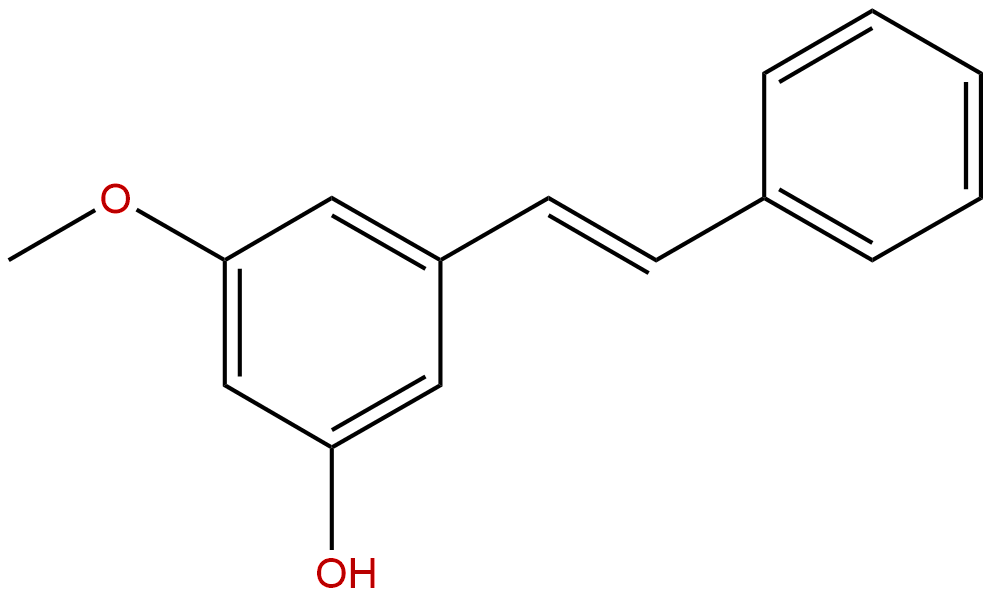
Natural products, as an important source of drug discovery, play an irreplaceable role in human health maintenance and disease treatment. Among numerous natural compounds with biological activity, stilbene compounds have attracted much attention due to their structural diversity and extensive pharmacological activities. Pinosylvin monomethyl ether (PME), also known as 3-methoxy-5-hydroxystilbene, is a naturally occurring stilbene compound and an important member of the stilbene family. This compound was initially isolated and identified from the heartwood of pine plants, and its name is derived from the Latin name of the pine tree (Pinus), reflecting its close association with the pine family.
The discovery of silver pine monomethyl ether can be traced back to the mid-20th century, when researchers first isolated this compound while systematically studying the chemical composition of pine wood. With the advancement of separation technology and structural identification methods, the chemical structure of PME has been clarified, and its unique styrene skeleton and monomethoxy substitution mode have aroused strong interest among chemists and pharmacologists. In recent years, with the deepening of research on the biological activity of natural products, PME has demonstrated various pharmacological activities including antibacterial, antifungal, antioxidant, anti-inflammatory, and anti-tumor effects, among which the study of its antioxidant mechanism is the most systematic and in-depth.
It is worth noting that the antioxidant activity of PME is not the result of a single target action, but a networked effect achieved by regulating multiple key molecular targets. Research has shown that PME can affect multiple proteins and enzymes closely related to oxidative stress, including tyrosinase (TYR), matrix metalloproteinases 1 and 3 (MMP3), nuclear factor E2 related factor 2 (NFE2L2/NRF2), superoxide dismutase 1 and 2 (SOD2), catalase (CAT), glutathione peroxidase 1 (GPX1), and heme oxygenase 1 (HMOX1). The multi-target regulatory properties of PME demonstrate unique application potential in the prevention and treatment of oxidative stress-related diseases.
This article will systematically review the research progress of silver pine monomethyl ether from the aspects of chemical structure and physicochemical properties, plant sources and extraction methods, pharmacological activity research, mechanism of action and molecular targets, drug evaluation and pharmacokinetics, clinical application prospects and prospects, in order to provide reference for the in-depth research and development of this natural product.
The chemical structure of silver pine monomethyl ether belongs to typical stilbene compounds, and its basic skeleton is composed of two benzene rings connected by an vinyl bridge. Specifically, the chemical name of PME is 3-methoxy-5-hydroxystilbene, with a molecular formula of C15H14O2 and a molecular weight of 226.2750 g/mol. In terms of structural features, the 3rd position of one benzene ring of PME is replaced by methoxy (- OCH3), and the 5th position is replaced by hydroxyl (- OH), while the other benzene ring remains unsubstituted. This asymmetric substitution pattern endows PME with unique chemical properties and biological activity.
From the perspective of stereochemistry, PME exists in two geometric isomers: cis - and trans -. Naturally occurring PMEs mainly exist in the trans configuration, as the trans configuration is thermodynamically more stable. In the trans configuration, two benzene rings are located on either side of the vinyl double bond, and the molecule is in a linearly extended state, which facilitates interaction with biological targets. Research has shown that differences in configuration significantly affect the biological activity of PME, with trans isomers typically exhibiting stronger pharmacological effects.
In terms of physicochemical properties, the lipid water partition coefficient (LogP) of PME is 3.7562, indicating that the compound has strong lipophilicity and is easily able to penetrate biofilm structures. This characteristic is closely related to its excellent blood-brain barrier permeability (blood-brain barrier: high), suggesting that PME may play a role in the prevention and treatment of central nervous system diseases. The topological polar surface area (TPSA) of PME is 29.4600 Å ², which is much lower than the upper limit of 140 Å ² typically required for oral drugs, further supporting its good membrane permeability. However, PME has poor water solubility (water solubility: 0.0508 mg/mL), which may limit its oral bioavailability and needs to be considered in drug formulation design.
In terms of spectroscopic characteristics, PME exhibits characteristic absorption peaks in the UV visible region, mainly attributed to the π→π * transition of the conjugated styrene system. In its infrared spectrum, the stretching vibration peak of the hydroxyl group appears in the 3200-3600 cm ⁻¹ region, and the C-O stretching vibration peak of the methoxy group appears in the 1250-1050 cm ⁻¹ region. In the nuclear magnetic resonance hydrogen spectrum, the proton signal of the methoxy group appears at δ 3.8-3.9 ppm, and the ethylene matrix exhibits a typical AB coupling system with a coupling constant (J) of about 16 Hz, confirming the existence of the trans configuration. These spectral features provide important basis for the structural identification and content determination of PME.
Silver pine monomethyl ether is mainly present in the heartwood of Pinaceae plants and is an important component of the defense system in the pine genus. Research has shown that PME is distributed in various pine species, including European red pine (Pinus sylvestris), coastal pine (Pinus pinaster), and North American short leaf pine (Pinus banksiana). In addition, PME has also been detected in coniferous trees such as Picea and Larix. It is worth noting that PME is not unique to pine plants and has also been found in some angiosperms such as Eucalyptus and Morus, but its content is usually low.
The distribution within the plant body exhibits significant tissue specificity. Heartwood is the main site of PME accumulation, with a content ranging from 0.1% to 1.0% of dry weight, while the content in sapwood and bark is relatively low. This distribution pattern is closely related to the defense mechanism of pine trees - when trees are infected or mechanically damaged by fungi, the PME content in the heartwood will significantly increase, exerting antibacterial and antifungal defense functions. In addition, the content of PME in plants is also influenced by factors such as tree age, growth environment, and seasonal changes, and is usually higher in the heartwood of older trees.
The traditional organic solvent extraction method is still the most commonly used method for extracting PME. Common extraction solvents include organic solvents with moderate polarity such as methanol, ethanol, and ethyl acetate. Research has shown that using an 80% ethanol aqueous solution as the extraction solvent and refluxing 2-3 times at 60 ℃ can achieve high extraction efficiency. In recent years, various auxiliary extraction techniques have been developed to improve extraction efficiency and selectivity. The ultrasonic assisted extraction method utilizes cavitation effect to destroy plant cell walls, which can significantly shorten the extraction time and improve the yield of PME. The microwave-assisted extraction method generates heat through the rapid vibration of polar molecules in a microwave field, accelerating the dissolution of the target compound. Supercritical fluid extraction technology, especially supercritical CO ₂ extraction, has shown good application prospects in the extraction of PME due to its advantages of green environmental protection and good selectivity.
The crude extract after extraction needs to undergo purification steps to obtain high-purity PME. Common purification methods include silica gel column chromatography, preparative high-performance liquid chromatography (pre HPLC), etc. Silica gel column chromatography typically uses a n-hexane ethyl acetate or chloroform methanol gradient elution system, with PME enriched in medium polarity fractions. For large-scale preparation, high-speed countercurrent chromatography (HSCCC) technology is favored due to its high separation efficiency and large sample loading capacity. In recent years, molecular imprinting technology has also been attempted for the selective separation and purification of PME, demonstrating excellent specific recognition ability.
The antibacterial activity of silver pine monomethyl ether is one of its earliest discovered pharmacological effects. Research has shown that PME has significant inhibitory effects on various Gram positive bacteria, including Staphylococcus aureus, Staphylococcus epidermidis, Bacillus subtilis, and others. Its minimum inhibitory concentration (MIC) is usually in the range of 10-100 μ g/mL, exhibiting moderate antibacterial activity. It is worth noting that PME also shows a certain inhibitory effect on methicillin-resistant Staphylococcus aureus (MRSA), indicating its potential value in combating drug-resistant bacteria.
In terms of antifungal activity, PME exhibits inhibitory effects on various plant pathogenic fungi and human pathogenic fungi. Research has found that PME can effectively inhibit the growth of wood decay fungi such as Sphaeropsis sapinea and Lecanosticta acicola, which are consistent with its natural defense function in pine heartwood. For human pathogenic fungi, PME also exhibits inhibitory activity against Candida albicans, Cryptococcus neoformans, and other pathogens, with MIC values ranging from 50-200 μ g/mL. Mechanism studies have shown that PME may exert antifungal effects by disrupting the integrity of fungal cell membranes, inhibiting ergosterol synthesis, and interfering with mitochondrial function.
Antioxidant activity is one of the most prominent pharmacological properties of PME. Multiple in vitro studies have confirmed that PME has significant free radical scavenging ability. In DPPH radical scavenging experiments, the IC50 value of PME is about 20-40 μ M, and its activity is stronger than common antioxidants vitamin C and vitamin E. ABTS cation radical scavenging experiments and iron ion reducing ability (FRAP) experiments also confirm the antioxidant potential of PME. In addition, PME can effectively inhibit lipid peroxidation reactions and protect biological membranes from oxidative damage.
At the cellular level, PME can protect multiple cell types from oxidative stress-induced damage. Research has shown that PME pretreatment can significantly reduce the levels of reactive oxygen species (ROS) induced by hydrogen peroxide (H ₂ O ₂) and improve cell survival rate. In SH-SY5Y neuroblastoma cells, PME can alleviate oxidative damage induced by β - amyloid protein, indicating its potential application in the prevention and treatment of neurodegenerative diseases. PME also exhibits protective effects in liver cells and myocardial cells, reducing oxidative stress-induced cell apoptosis and mitochondrial dysfunction.
In addition to antibacterial and antioxidant activities, PME also exhibits various other pharmacological effects. In terms of anti-inflammatory activity, PME can inhibit lipopolysaccharide (LPS) - induced macrophage inflammatory response and reduce the expression of pro-inflammatory factors such as tumor necrosis factor - α (TNF - α) and interleukin-6 (IL-6). In terms of anti-tumor activity, PME showed inhibitory effect on proliferation of many cancer cell lines, such as breast cancer MCF-7 cells, lung cancer A549 cells, colon cancer HT-29 cells, and its IC50 value was generally within the range of 10-50 μ M. In addition, PME also has neuroprotective, cardioprotective, and hepatoprotective effects, which are closely related to its antioxidant and anti-inflammatory properties.
The pharmacological activity of silver pine monomethyl ether, especially its antioxidant effect, is achieved through the network effect of regulating multiple molecular targets. A deep understanding of these molecular mechanisms is of great significance for elucidating the mode of action of PME and developing its clinical applications.
Nuclear factor E2 related factor 2 (NRF2, also known as NFE2L2) is a key transcription factor in the cellular antioxidant defense system. Under normal physiological conditions, NRF2 binds to Kelch like ECH related protein 1 (KEAP1) and is in an inhibited state. When cells are stimulated by oxidative stress or electrophilic compounds, NRF2 dissociates from KEAP1, translocates into the nucleus, binds to antioxidant response elements (ARE), and initiates transcription of downstream antioxidant enzyme genes.
Research has shown that PME can effectively activate the NRF2 signaling pathway. Specifically, PME modifies cysteine residues on the KEAP1 protein, disrupting the stability of the KEAP1-NRF2 complex and promoting nuclear translocation of NRF2. This process leads to upregulation of a series of NRF2 target genes, including genes encoding antioxidant and detoxifying enzymes. It is worth noting that PME has moderate activation of NRF2 and does not cause excessive activation, which is beneficial for maintaining the balance of intracellular redox homeostasis.
PME regulates the expression and activity of various antioxidant enzymes through the NRF2 signaling pathway, forming a synergistic antioxidant network.
Superoxide dismutase (SOD1 and SOD2)SOD is a key enzyme in the body that clears superoxide anion radicals. SOD1 (copper zinc superoxide dismutase) mainly exists in the cytoplasm, while SOD2 (manganese superoxide dismutase) is mainly localized in mitochondria. PME treatment can significantly upregulate the mRNA and protein expression levels of SOD1 and SOD2, enhancing the ability of cells to clear superoxide anions. This upregulation depends on the activation of NRF2, as the induction effect of PME on SOD is significantly weakened after NRF2 gene knockout.
Catalase (CAT)CAT is responsible for decomposing hydrogen peroxide into water and oxygen, and is an important hydrogen peroxide scavenging enzyme in cells. PME can increase the enzymatic activity of CAT, accelerate the decomposition of hydrogen peroxide, and thereby alleviate the damage of hydrogen peroxide to cells. Research has shown that PME regulation of CAT also involves NRF2 dependent transcriptional activation mechanisms.
Glutathione peroxidase 1 (GPX1)GPX1 utilizes reduced glutathione (GSH) as a substrate to reduce hydrogen peroxide and organic peroxides to water or corresponding alcohols. PME treatment can increase the expression level and enzyme activity of GPX1, and enhance the cell's ability to clear peroxides. In addition, PME can promote the synthesis of GSH and provide sufficient substrate for GPX1 by upregulating the expression of glutamate cysteine ligase (GCL).
Heme oxygenase 1 (HMOX1)HMOX1 is the rate limiting enzyme in heme catabolism, catalyzing the degradation of heme into biliverdin, carbon monoxide, and free iron. Bilibilin and its reduced product bilirubin are potent endogenous antioxidants, while carbon monoxide has anti-inflammatory and cell protective effects. PME is a potent inducer of HMOX1 and can significantly upregulate the expression of HMOX1. Research has shown that PME induces HMOX1 mainly through the NRF2-ARE pathway, which also involves the involvement of protein kinase C (PKC) and mitogen activated protein kinase (MAPK) signaling pathways.
Matrix metalloproteinases (MMPs) are a class of zinc dependent endopeptidases that participate in the degradation and remodeling of the extracellular matrix. MMP1 (collagenase-1) and MMP3 (matrix metalloproteinase-1) play important roles in pathological processes such as skin aging, arthritis, and tumor invasion. Oxidative stress can activate the expression and activity of MMPs, accelerating tissue damage.
PME can inhibit the expression and activity of MMP1 and MMP3. In skin fibroblasts, PME can alleviate UV induced upregulation of MMP1 and protect collagen fibers from degradation. In chondrocytes, PME inhibits the expression of MMP3 induced by interleukin-1 β (IL-1 β), slowing down the degradation of cartilage matrix. Mechanism studies have shown that the inhibitory effect of PME on MMPs is partially achieved by suppressing the activity of transcription factors such as nuclear factor kappa B (NF - κ B) and activator protein-1 (AP-1), which are key regulatory factors of MMPs gene expression.
Tyrosinase (TYR) is a key rate limiting enzyme in melanin synthesis, and abnormally elevated activity can lead to pigmentation disorders. Research has shown that PME can inhibit the activity of TYR and reduce the production of melanin. In B16 melanoma cells, PME treatment can reduce TYR enzyme activity and decrease melanin content. This inhibitory effect may be achieved through two mechanisms: direct chelation of copper ions with TYR active centers and downregulation of TYR protein expression levels. The TYR inhibitory activity of PME makes it potentially valuable for the treatment of skin whitening and pigmentation disorders.
The successful conversion of natural products into clinical drugs depends on their pharmacological characteristics, including physicochemical properties, pharmacokinetic properties, safety, etc. The pharmacological evaluation of silver pine monomethyl ether shows that the compound has some favorable characteristics, but there are also aspects that need to be optimized.
The molecular weight of PME is 226.2750 g/mol, which meets the requirement of Lipinski's five rules for molecular weight less than 500. Its LogP value is 3.7562, which is within the ideal lipophilic range (LogP 2-5), which is beneficial for membrane permeability and oral absorption. The TPSA is 29.4600 Å ², far below the upper limit of 140 Å ² typically required for oral medications, indicating that the compound has good intestinal absorption potential. However, PME has poor water solubility (0.0508 mg/mL), which may limit its oral bioavailability. According to the Biopharmaceutical Classification System (BCS), PME may belong to Class II drugs (low solubility, high permeability), and its solubility and dissolution rate need to be improved through formulation techniques.
PME has been assessed as having high blood-brain barrier permeability. This characteristic is closely related to its high lipophilicity and small molecular weight. The blood-brain barrier permeability makes PME potentially useful for the treatment of central nervous system diseases such as Alzheimer's disease, Parkinson's disease, and other neurodegenerative disorders. However, this also means that PME may cause central nervous system related side effects that require attention in drug development.
The hERG inhibition experiment results showed that PME does not have hERG potassium channel inhibitory activity (hERG inhibition: No), indicating a low risk of causing QT interval prolongation in the heart. The Ames test result was 0.6, indicating that PME did not exhibit significant mutagenicity at the tested concentration. These security data provide favorable support for the further development of PME. However, a complete toxicological evaluation still needs to include systematic studies on acute toxicity, chronic toxicity, reproductive toxicity, carcinogenicity, and other factors.
At present, there is insufficient systematic research on the pharmacokinetics of PME, but based on its physicochemical properties and existing research data, some characteristics can be inferred. The oral absorption of PME may be limited by its poor water solubility, and its bioavailability may be low. In terms of internal distribution, PME may be widely distributed in various tissues and organs, especially in brain tissue. In terms of metabolism, PME may mainly undergo phase II metabolic reactions, including glucuronidation and sulfation, forming water-soluble metabolites that are excreted through urine and bile. The half-life may be short and requires frequent administration or development of sustained-release formulations.
Based on the multi-target pharmacological activity of silver pine monomethyl ether, especially its antioxidant and anti-inflammatory effects, the application prospects of this compound in multiple disease fields are worth looking forward to.
Oxidative stress and neuroinflammation are the core pathological mechanisms of neurodegenerative diseases such as Alzheimer's disease and Parkinson's disease. The potent antioxidant activity, NRF2 activation ability, and good blood-brain barrier permeability of PME make it a candidate compound for treating neurodegenerative diseases. Research has shown that PME can alleviate beta amyloid induced neurotoxicity and protect dopaminergic neurons from oxidative damage. Future research should further evaluate the neuroprotective effects of PME in animal models and explore its synergistic effects with existing therapeutic drugs.
The inhibitory effect of PME on MMP1 and the regulatory activity of TYR make it potentially applicable in the fields of skin anti-aging and whitening. PME can inhibit UV induced collagen degradation and reduce wrinkle formation; Simultaneously inhibiting melanin synthesis and reducing pigmentation. Developing PME as a cosmetic ingredient or dermatological drug requires evaluating its skin permeability, stability, and safety.
Oxidative stress and inflammatory reaction play a key role in cardiovascular diseases such as atherosclerosis, myocardial ischemia-reperfusion injury. The antioxidant and anti-inflammatory activities of PME, as well as its regulation of antioxidant enzymes such as SOD, CAT, and GPX1, suggest that it may have a protective effect on the cardiovascular system. Preliminary studies have shown that PME can alleviate oxidative damage to myocardial cells and inhibit the inflammatory response of vascular endothelial cells. In the future, in vivo research is needed to verify the therapeutic effect of PME in animal models of cardiovascular disease.
Oxidative stress and chronic low-grade inflammation are important features of metabolic diseases such as insulin resistance and non-alcoholic fatty liver disease. PME enhances the body's antioxidant defense ability by activating the NRF2 signaling pathway, which may improve insulin sensitivity and alleviate liver steatosis. In addition, the induction of HMOX1 by PME is also related to metabolic protective effects. Exploring the application of PME in metabolic diseases requires a systematic evaluation of its impact on glucose and lipid metabolism.
Although PME exhibits various pharmacological activities and potential applications, its clinical translation still faces many challenges. Firstly, the poor water solubility and potential low bioavailability of PME are key issues that need to be addressed. New delivery systems such as nanomaterials, liposomes, and cyclodextrin inclusion complexes may enhance the oral bioavailability of PME. Secondly, although the multi-target nature of PME is beneficial for achieving comprehensive therapeutic effects, it may also increase the risk of off target effects, requiring systematic pharmacological and toxicological research. In addition, further research is needed to determine the biological activity and safety of the metabolites produced by PME in vivo.
Future research directions should include: using medicinal chemical methods to modify the structure of PME, improving its water solubility and metabolic stability; Develop efficient and controllable synthetic or semi synthetic methods to solve the problem of limited natural sources; Conduct systematic pharmacokinetic and toxicological studies to lay the foundation for clinical trials; Explore the combined application of PME and other drugs to achieve synergistic therapeutic effects.
Silver pine monomethyl ether, as a natural stilbene compound, has attracted widespread attention for its unique chemical structure and multi-target pharmacological activity. From its initial discovery as an antibacterial component in pine heartwood to its current recognition as a bioactive molecule that functions through multiple mechanisms such as regulating the NRF2 signaling pathway, activating the antioxidant enzyme system, and inhibiting MMPs and TYR, the research history of PME reflects the depth and breadth of natural product pharmacology research.
The antioxidant effect of PME is not a single target effect, but rather a synergistic antioxidant network formed by regulating multiple molecular targets including NRF2, SOD1, SOD2, CAT, GPX1, HMOX1, MMP1, MMP3, TYR. This multi-target regulatory characteristic gives PME unique advantages in the prevention and treatment of oxidative stress-related diseases. The evaluation of drug properties shows that PME has good drug like and safety characteristics, but poor water solubility and possible low bioavailability are obstacles that need to be overcome.
Looking ahead to the future, with the continuous deepening of understanding of the pharmacological mechanism of PME, as well as advances in medicinal chemistry and formulation technology, silver pine monomethyl ether is expected to move from the forefront of natural product research to clinical applications. This natural compound discovered from pine heartwood is providing new possibilities for human health maintenance, and its research process once again confirms the eternal value of natural products as a source of drug discovery.
Batch can search by a CAS number,one per line
