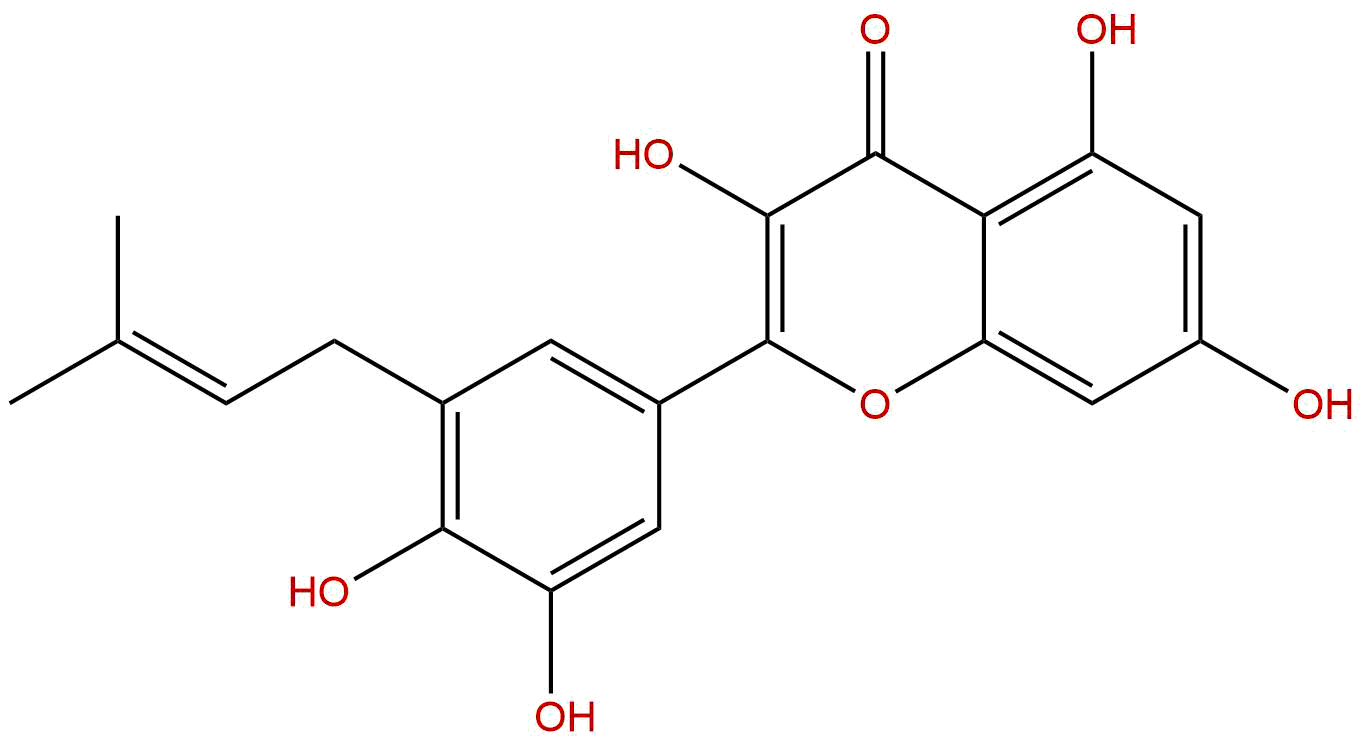
Introduction/Overview
In recent years, natural products have received high attention from the pharmacology community as important resources for new drug discovery due to their structural diversity and biological activity. Uralenol (CAS number: 139163-15-8) is a natural compound isolated from the mulberry plant Broussonetia papillifera (paper mulberry) and has been identified as an effective inhibitor of protein tyrosine phosphatase 1B (PTP1B) (IC50=21.5 μ M). PTP1B is a key negative regulator in insulin signaling pathway, and its inhibitor has potential application value in the treatment of diabetes and metabolic syndrome. In addition, Ural alcohol has shown significant pharmacological activity in the field of osteoporosis, involving multiple bone metabolism related targets such as estrogen receptor 1 (ESR1), matrix metalloproteinase 9 (MMP9), vitamin D receptor (VDR), nuclear transcription factor RUNX2, osteopontin (BGLAP), etc. This article aims to systematically review the chemical structure and physicochemical properties, plant sources and extraction methods, pharmacological activity and mechanism of action, pharmacological evaluation, and clinical application prospects of Uralic alcohol, providing theoretical basis and research direction for its further drug development.
Chemical structure and physicochemical properties
The molecular formula of Uralic alcohol is C21H2O6, with a molecular weight of 370.3570. Its structural feature is a multi hydroxy substituted phenylpropanoid derivative, containing multiple phenolic hydroxyl and methoxy groups, which endow it with strong biological activity and a certain polarity. Its topological polar surface area (TPSA) is 131.36 Å ², indicating that the molecule has high polarity, which is conducive to forming hydrogen bonds and polar interactions with protein targets. The LogP value is 3.2423, indicating that it has moderate lipid solubility, which is conducive to cell membrane penetration but not too hydrophobic, which is in line with the ideal range for oral small molecule drugs. Low water solubility (0.0528 mg/mL) suggests limited solubility in aqueous phase, which may affect bioavailability. The low permeability of the blood-brain barrier reduces the risk of central nervous system side effects. The hERG channel inhibition test was negative, indicating a low risk of cardiac toxicity. The Ames mutagenicity test score is 0.6, indicating a low risk of genetic toxicity and a good safety foundation.
Plant sources and extraction methods
Uralool is mainly isolated from the root bark or leaves of the mulberry plant Broussonetia papillifera. B. Papyrifera is widely distributed in East Asia and traditionally used for papermaking, fiber production, and traditional Chinese medicine. Its root bark is rich in various phenylpropanoids and flavonoids, and is the main source of Uralic alcohol.
The extraction process usually uses organic solvent extraction method. The specific steps include:
- Ingredient Preparation Collect fresh or dry B. papillifera root bark and grind it into fine powder.
- Solvent extraction Using ethanol or methanol as extraction solvents, repeatedly extract several times at room temperature or heating conditions.
- Crude extract concentration Concentrate the extract under reduced pressure to obtain a concentrated extract.
- Separation and purification Through techniques such as silica gel column chromatography and reverse phase high performance liquid chromatography (RP-HPLC), combined with solvent gradient elution, Ural alcohol with high purity was separated.
- Structural Identification Confirm the structure of the compound using modern analytical methods such as nuclear magnetic resonance (NMR), mass spectrometry (MS), and infrared spectroscopy (IR).
In recent years, ultrasound assisted extraction and microwave-assisted extraction technologies have been introduced to improve extraction efficiency and yield, while reducing solvent usage and extraction time, in line with the principles of green chemistry.
Pharmacological activity research
PTP1B inhibitory activity
Uralic alcohol, as a natural inhibitor of PTP1B, has an IC50 value of 21.5 μ M, indicating moderate enzyme inhibitory activity. PTP1B is a negative regulator of insulin receptors, which inhibits insulin signaling by dephosphorylating insulin receptors and their substrates. Inhibition of PTP1B can enhance insulin sensitivity, improve abnormal glucose metabolism, and has the potential to treat type 2 diabetes and obesity. In vitro enzyme activity assays and cell experiments have confirmed that Ural alcohol can effectively inhibit PTP1B activity and promote the activation of the insulin signaling pathway.
Anti osteoporosis activity
Osteoporosis is a metabolic bone disease characterized by reduced bone mass and microstructural damage to bone tissue, which can easily lead to fractures and disabilities. Uralic alcohol exhibits multi-target effects in bone metabolism regulation, mainly targeting:
- ESR1 (estrogen receptor 1)Uralic alcohol may promote bone formation by activating ESR1, regulating the balance between bone formation and resorption.
- MMP9 (Matrix Metalloproteinase 9)Ural alcohol participates in the degradation of bone matrix and inhibits MMP9 activity, which helps to slow down bone resorption.
- VDR (Vitamin D Receptor)Uralic alcohol may enhance VDR signaling and promote bone formation by regulating calcium and phosphorus metabolism and bone mineralization.
- RUNX2 and SP7 (bone formation transcription factors)Uralool, a key bone formation regulatory factor, can upregulate its expression and promote osteoblast differentiation.
- CTSK (Cat Hepsin K)Bone resorption enzyme, Ural alcohol inhibits CTSK activity and slows down bone resorption.
- TNFRSF11B (osteoprotegerin)Ural alcohol may inhibit bone resorption by regulating the expression of osteoprotegerin, which inhibits osteoclast formation.
- SOST (Bone Hard Protein)Negative regulation of bone formation, Ural alcohol may inhibit its expression and promote bone formation.
- COL1A1 and BGLAP (Bone Matrix Proteins)Uralic alcohol promotes the expression of bone formation markers and enhances bone matrix synthesis.
Multiple in vitro cell experiments and animal model studies have shown that Ural alcohol exhibits significant anti osteoporosis activity by regulating the aforementioned targets, promoting bone formation, and inhibiting bone resorption.
Other potential pharmacological activities
In addition to the main functions mentioned above, Uralic alcohol, as a polyphenolic compound, has certain antioxidant and anti-inflammatory activities, and may participate in the prevention and treatment of various diseases by regulating oxidative stress and inflammatory responses. In addition, its low blood-brain barrier permeability reduces the risk of central nervous system side effects, making it suitable for long-term treatment of chronic metabolic diseases.
Mechanism of action and molecular targets
The pharmacological effects of Uralic alcohol are mainly based on its regulation of PTP1B and bone metabolism related targets. PTP1B, as a member of the protein tyrosine phosphatase family, catalyzes the dephosphorylation of insulin receptors and their substrates, and negatively regulates the insulin signaling pathway. Uralic alcohol binds to the active site of PTP1B, blocking its enzymatic activity, maintaining the phosphorylation state of insulin receptors, enhancing insulin signaling, and improving insulin resistance.
In terms of bone metabolism, Uralic acid regulates the balance between bone formation and bone resorption through multi-target synergistic effects. Its activation of ESR1 promotes osteoblast proliferation and differentiation, enhances bone matrix synthesis; Inhibit MMP9 and CTSK activity, slow down bone matrix degradation and bone resorption; Regulating VDR signals to promote calcium and phosphorus metabolism and bone mineralization; Upregulation of RUNX2 and SP7 activates the osteogenic transcription program; Increase TNFRSF11B expression and inhibit osteoclastogenesis; Inhibit SOST expression and relieve inhibition of bone formation. Through the comprehensive regulation of these molecular targets, Ural alcohol effectively improves the pathological state of osteoporosis.
Molecular docking and dynamic simulation studies further revealed that the phenolic hydroxyl and methoxy groups of Uralic alcohol stably bind to the catalytic pocket of PTP1B and the active site of bone metabolism related proteins through hydrogen bonding and hydrophobic interactions, providing a molecular basis for its biological activity.
Evaluation of drug properties and pharmacokinetics
The pharmacological parameters of Uralic alcohol indicate that it has good potential for drug development. The moderate molecular weight (370.3570) and moderate LogP value (3.2423) comply with Lipinski's rule and are beneficial for oral absorption. A higher TPSA (131.36 Å ²) suggests stronger polarity, which may affect membrane permeability but is beneficial for target binding. Low water solubility (0.0528 mg/mL) may limit its bioavailability and needs to be improved through pharmaceutical methods such as nanocarriers, solid dispersions, etc.
The low permeability of the blood-brain barrier reduces the risk of adverse reactions in the central nervous system and is suitable for treating metabolic diseases. The negative inhibition of hERG channel indicates a low risk of cardiac toxicity, while the Ames test results show a low risk of genetic toxicity and good safety.
In terms of pharmacokinetics, existing research is relatively limited. It is speculated that Uralic alcohol is well absorbed after oral administration, but there may be a first pass effect. Metabolism in the body is mainly carried out through the liver enzyme system, and the metabolites and excretion pathways still need to be systematically studied. In the future, in vivo pharmacokinetic and toxicological studies need to be conducted to clarify their absorption, distribution, metabolism, and excretion (ADME) characteristics, providing data support for clinical development.
Clinical application prospects and prospects
Ural alcohol, as a natural inhibitor of PTP1B, has the potential to regulate insulin signaling pathway and is suitable for adjuvant treatment of type 2 diabetes and metabolic syndrome. Its multi-target anti osteoporosis activity provides a new therapeutic approach for bone metabolism diseases, especially in the context of an aging society where the demand for osteoporosis prevention and treatment is increasing. Uralool alcohol is expected to become a safe and effective bone protectant.
Future research should focus on the following aspects:
- Structural optimization and derivative design By chemical modification, its enzyme inhibitory activity and pharmacokinetic properties are improved, enhancing bioavailability and targeting.
- In depth analysis of pharmacological mechanisms Combining multiple omics technologies such as genomics and proteomics, elucidate its mechanism of action in cellular signaling networks.
- In vivo pharmacokinetics and safety evaluation Conduct animal experiments on the system to clarify its ADME characteristics and long-term toxicological safety.
- Preclinical and clinical research Conduct effectiveness and safety evaluations to promote clinical translation.
- Formulation development Develop a new drug delivery system to address its poor water solubility and improve drug stability and bioavailability.
In addition, the antioxidant and anti-inflammatory potential of Uralic alcohol is also worth exploring in depth, which may expand its application scope in other chronic diseases.
Conclusion
Uralic alcohol, as an important natural active ingredient in Broussonetia papillifera, has demonstrated excellent pharmacological activity and potential as a drug due to its PTP1B inhibitory activity and multi-target regulation of bone metabolism. Its unique chemical structure endows it with various biological functions, combined with good safety indicators, which lays the foundation for its use as a candidate drug for anti diabetes and anti osteoporosis. In the future, through structural optimization, mechanism research, and preclinical evaluation, Uralool alcohol is expected to become an important breakthrough in the field of natural product drug development, providing new strategies and choices for the treatment of metabolic and bone metabolism diseases.