| Catalog No | Package | Original Price | Price | Inventory | Quantity | Operating |
|---|---|---|---|---|---|---|
| BP3179-5mg | 5mg | $330.00 | Sign in |
|


Product name: Helichrysetin
Synonym name:
Catalogue No.: BP3179
Cas No.: 62014-87-3
Formula: C16H14O5
Mol Weight: 286.283
Botanical Source:
Physical Description: Yellow powder
Type of Compound: Chalcones
Purity: 95%~99%
Analysis Method: HPLC-DAD or/and HPLC-ELSD
Identification Method: Mass, NMR
Packing: Brown vial or HDPE plastic bottle
The product could be supplied from milligrams to grams. Inquire for bulk scale.
We provide solution to improve the water-solubility of compounds, thereby facilitating the variety of activity tests and clinic uses.
For Reference Standard and R&D, Not for Human Use Directly.
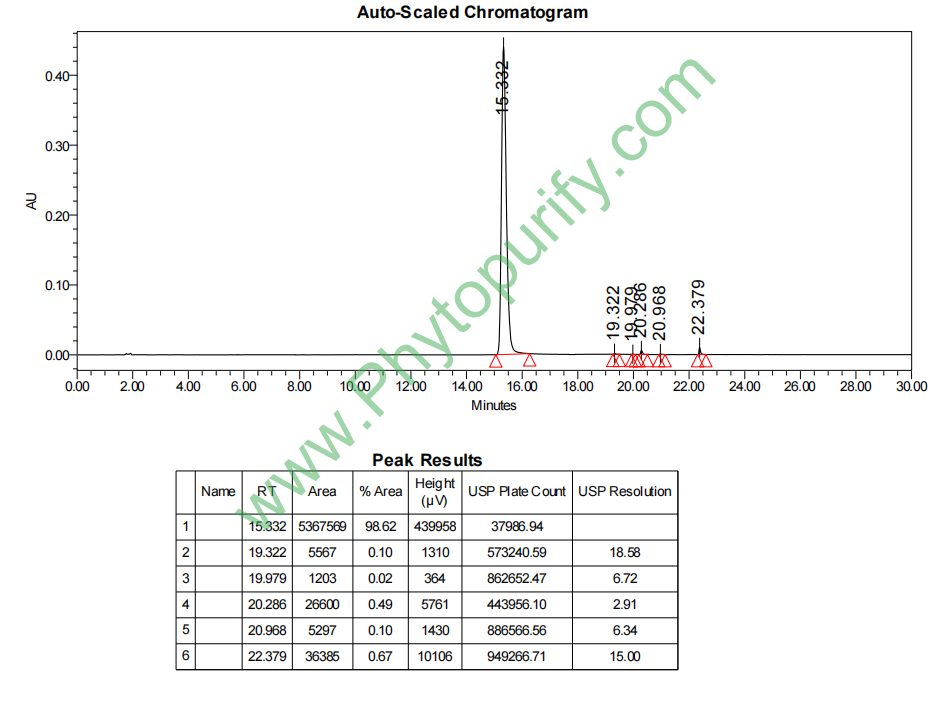
HPLC of Helichrysetin
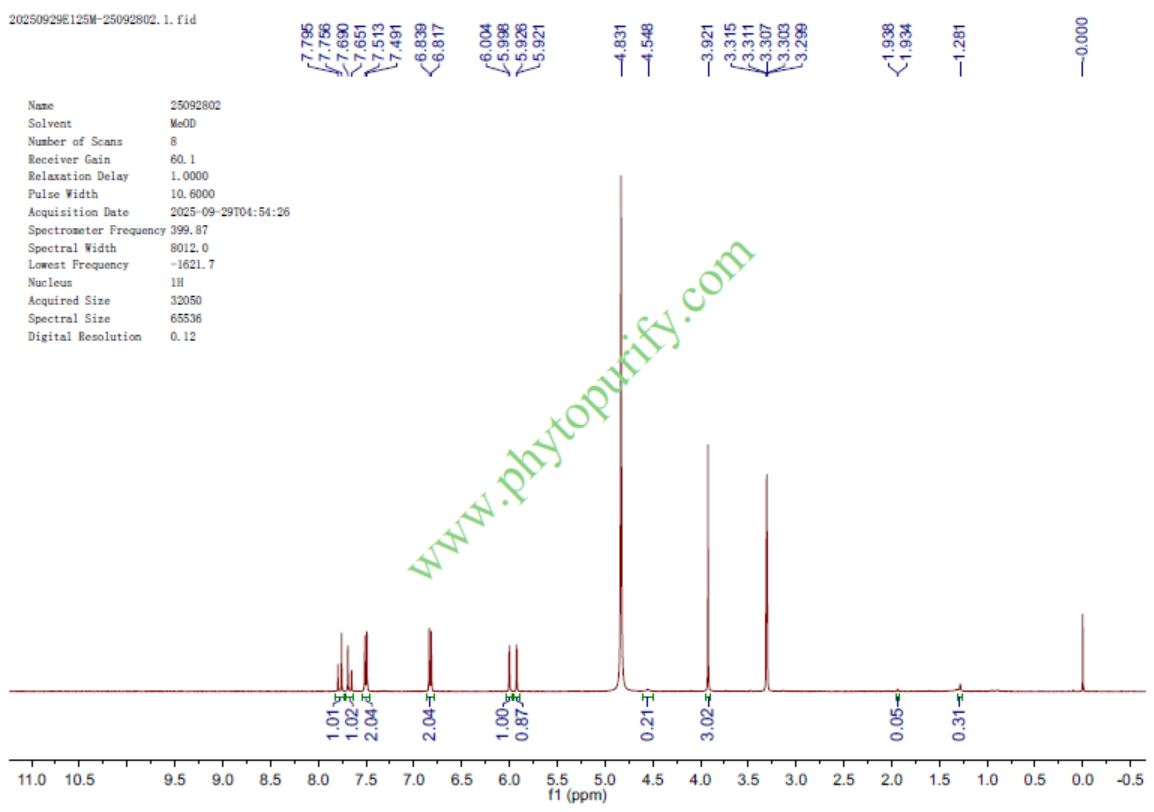
HNMR of Helichrysetin
Storage conditions:Short-term storage at 2~8℃, long-term storage at -20 ~ -80℃
86.9900
2.7635
2.6213
.1233
3.8212
17.5971
Low
91.2511
2.2397
Yes
No
Yes
No
Yes
Yes
0.6
Yes
Yes
Yes
Yes
Natural products have long been an important source of innovative drug discovery, with their structural diversity and wide range of biological activities providing unique molecular frameworks and lead compounds for addressing complex diseases, especially malignant tumors. Helichrysetin, a chalcone compound isolated from the genus Helichrysetin in the Asteraceae family, has attracted the attention of pharmacological researchers in recent years due to its significant anti-tumor activity. Its CAS number is 62014-87-3, originally derived from the rich aroma of wax chrysanthemum(Helichrysum odoratissimum)Obtained through identification in flowers. Early studies revealed its antioxidant properties, but deeper research has found that the core value of wax chrysanthemum pavilion lies in its ability as an inhibitor of DNA binding inhibitor 2 (ID2), which can effectively induce apoptosis in various tumor cells and demonstrate great potential as a candidate anti-tumor drug. Especially in the research model of malignant melanoma, wax chrysanthemum pavilion has shown regulatory ability on multiple key signaling pathways and targets, including AMPK, BCL2, STAT3, MMP2, NFE2L2, HIF1A, etc. This suggests that it may exert therapeutic effects through multi-target and multi pathway synergistic effects, thereby overcoming the limitations of single target drugs. This article aims to systematically review the chemical properties, plant sources, pharmacological activities, molecular mechanisms of action, pharmacological parameters, and clinical application prospects of wax chrysanthemum pavilion, in order to provide comprehensive academic references for the in-depth development and transformation research of this natural product.
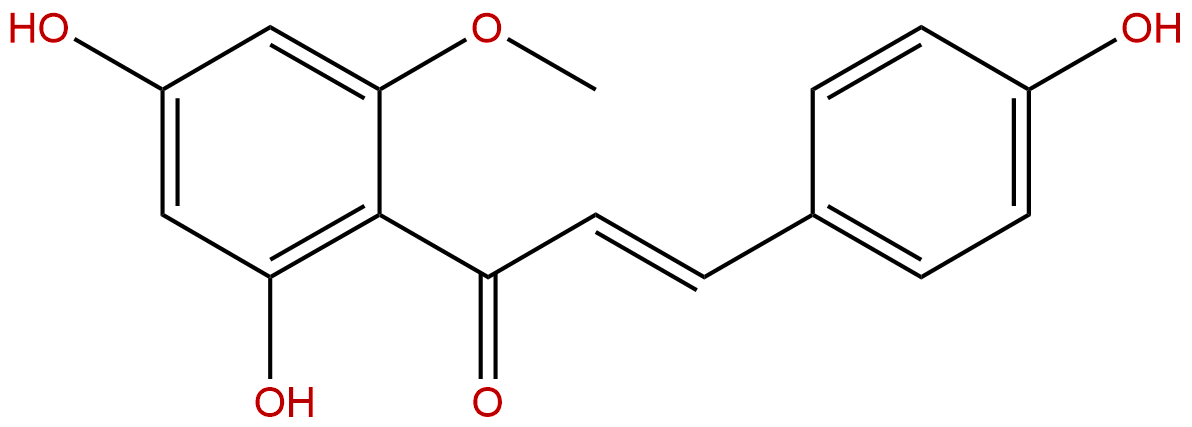
The chemical name of wax chrysanthemum pavilion is (E) -1- (2,6-dihydroxy-4-methoxyphenyl) -3- (4-hydroxyphenyl) -2-propen-1-one, which belongs to chalcone compounds. Chalcone is a precursor of flavonoids, and its basic skeleton is composed of two aromatic rings (A ring and B ring) connected by a three carbon α, β - unsaturated carbonyl system. This unique structure endows chalcone compounds with excellent electron delocalization and reactivity, making them easy to undergo Michael addition reactions with nucleophilic groups in biomolecules such as thiol and amino groups in proteins. This is an important chemical basis for their various biological activities.
The molecular formula of wax chrysanthemum pavilion is C17H16O5, with a molecular weight of 286.2830. The A ring is a benzene ring substituted with 2,6-dihydroxy-4-methoxy, and the B ring is a para hydroxy benzene ring. This substitution pattern of multiple hydroxyl and methoxy groups not only affects its physicochemical properties, but also directly relates to its biological activity and target selectivity. For example, the presence of hydroxyl groups provides the ability to donate hydrogen bonds, enhances interactions with the active sites of target proteins, and also contributes to their antioxidant activity.
From the perspective of physicochemical parameters related to medicinal properties, the calculated lipid water partition coefficient (LogP) of Huaju Pavilion is 2.7635, indicating its moderate lipophilicity, which is beneficial for its penetration of cell membranes but may also affect its water solubility. Its topological polar surface area (TPSA) is 86.99 Å ², which is relatively moderate. The predicted water solubility value is 0.1233 mg/mL, which belongs to the category of slight solubility, indicating that solubilization strategies may need to be considered in formulation development. The prediction of blood-brain barrier permeability as "low" means that it may not easily enter the central nervous system, which may reduce the risk of central neurotoxicity for the treatment of peripheral tumors, but is a challenge for the treatment of brain tumors. Importantly, preliminary computer predictions and/or in vitro experiments have shown that wax chrysanthemum pavilion has no significant inhibitory effect on hERG potassium channels (predicted as' no '), which reduces its potential risk of inducing QT interval prolongation and apical torsion type ventricular tachycardia, making it a favorable feature as a candidate drug. In addition, its Ames test value is 0.6, indicating a low risk of mutagenicity in this testing system, but further in vitro and in vivo genetic toxicity evaluation is still needed to fully confirm its safety.
The wax chrysanthemum pavilion is mainly derived from the Asteraceae genus of wax chrysanthemums(Helichrysum)Plants. This genus of plants is widely distributed in the Mediterranean region, South Africa, and Eurasia, with many species used in traditional medicine to treat inflammation, infections, and skin diseases. The wax chrysanthemum pavilion was originally created from Helichrysum odoratissimum(Now commonly regarded as Helichrysum italicum Separated from flowers of subspecies or varieties. This plant is known for its strong, curry like aroma and is commonly used in folk medicine for anti infection and wound healing.
Except for H. odoratissimum Subsequent research has also been conducted on other plants belonging to the same genus, such as Helichrysum arenarium The detection or isolation of wax chrysanthemum pavilion indicates that it may be one of the characteristic secondary metabolites of this genus of plants. Chalcone compounds are commonly used as phytohormones in plants, produced in response to biotic or abiotic stress, which may explain their diverse biological activities.
The extraction of wax chrysanthemum from plant materials usually follows the conventional process of natural product chemistry. Firstly, crush the dried wax chrysanthemum stems and extract them using organic solvents. Common solvents include methanol, ethanol, acetone, or their mixed solvents with water. These polar solvents can effectively extract phenolic components such as chalcones and flavonoids. After filtration and concentration, the crude extract can be separated and purified using various chromatographic techniques. Initial separation is often carried out using normal or reverse phase silica gel column chromatography, combined with thin layer chromatography (TLC) monitoring, followed by fine purification using preparative high-performance liquid chromatography (HPLC) or medium pressure liquid chromatography (MPLC) to obtain high-purity wax chrysanthemum monomer. Structural identification is accomplished through spectroscopic techniques such as nuclear magnetic resonance (NMR, including 1H-NMR and 13C-NMR), mass spectrometry (MS), infrared spectroscopy (IR), and ultraviolet spectroscopy (UV). With the development of synthetic biology and metabolic engineering, it is also possible to explore sustainable production of wax chrysanthemum through microbial heterologous synthesis or plant cell culture techniques in the future to meet the needs of large-scale pharmacological research and drug development.
The pharmacological activity research of wax chrysanthemum pavilion mainly focuses on anti-tumor and antioxidant aspects, among which anti-tumor activity is currently the focus of research.
1. Antitumor activity:
A large number of in vitro studies have shown that wax chrysanthemum pavilion has broad-spectrum growth inhibition and cytotoxicity effects on various human tumor cell lines, and can effectively induce cell apoptosis. One of the most extensively researched areas is malignant melanoma. Melanoma is a highly invasive and easily metastatic skin malignancy that is prone to develop resistance to traditional chemotherapy. Experiments have found that wax chrysanthemum pavilion can significantly inhibit the proliferation of melanoma cells (such as A375, SK-MEL-28, etc.) in a dose-dependent and time-dependent manner, and induce typical morphological changes of apoptosis, such as cell shrinkage, chromatin condensation, and nuclear fragmentation. In addition, the study also indicated that Helichrysotin has anti proliferative effect on breast cancer, colon cancer, liver cancer, lung cancer and other cancer cells, indicating that its anti-tumor activity has certain universality.
In addition to directly inducing cancer cell death, wax chrysanthemum pavilion has also been found to inhibit the migration and invasion ability of tumor cells, which is a key link in anti-tumor metastasis. For example, in melanoma cells, wax chrysanthemum extract can downregulate the expression and activity of matrix metalloproteinase-2 (MMP-2), which is a key enzyme that degrades extracellular matrix, promotes tumor invasion and metastasis. Meanwhile, it can also affect the expression of epithelial mesenchymal transition (EMT) related markers, further inhibiting the metastatic potential of cells.
2. Antioxidant activity:
As a polyphenolic chalcone, the antioxidant activity of wax chrysanthemum pavilion is its fundamental chemical property. The phenolic hydroxyl group in its molecule can effectively scavenge free radicals (such as DPPH free radicals, ABTS free radical cations) and has the ability to chelate metal ions. This antioxidant effect not only helps protect normal cells from oxidative stress damage, but may also indirectly participate in its anti-tumor mechanism. Because sustained oxidative stress in the tumor microenvironment is an important factor driving tumor progression, and wax chrysanthemum extract may inhibit adaptive survival of tumor cells by regulating intracellular redox balance and affecting antioxidant signaling pathways such as nuclear factor E2 related factor 2 (NFE2L2/Nrf2).
3. Other potential activities:
Based on the commonality of chalcone compounds, wax chrysanthemum pavilion may also have anti-inflammatory, antibacterial and other activities, but there is relatively little specialized research in these areas, which needs further exploration.
The anti-tumor effect of wax chrysanthemum pavilion, especially in melanoma, involves a complex multi-target and multi-path network. Its characteristic as an ID2 inhibitor is the starting point of its core mechanism of action, which triggers a series of downstream signaling events.
1. Core target: ID2 protein
DNA binding inhibitor 2 (ID2) is a member of the helix loop helix (HLH) transcription factor family. It lacks a DNA binding domain and can form heterodimers with alkaline HLH (bHLH) transcription factors to inhibit their binding to DNA, thereby regulating cell differentiation, proliferation, and apoptosis. In various cancers, overexpression of ID2 promotes tumor cell proliferation and inhibits differentiation. Wax Chrysanthemum Pavilion has been identified as an ID2 inhibitor, which may interfere with the function of ID2 through direct binding or indirect regulation, release its inhibition of bHLH factors that promote differentiation or apoptosis, and thus initiate the apoptosis program.
2. Melanoma related signaling pathways and target networks:
In melanoma models, the mechanism of action of wax chrysanthemum pavilion revealed its regulation of the following key targets and pathways:
* AMPK (PRKAA1) pathway activation: AMP activated protein kinase (AMPK) is a core regulatory factor in cellular energy metabolism and an important tumor suppressor. Wax chrysanthemum pavilion can activate AMPK, which may lead to the inhibition of its downstream targets (such as mTOR), thereby inhibiting protein synthesis and cell growth, and promoting autophagy and apoptosis.
* Regulation of apoptosis pathway: Wax Chrysanthemum Pavilion can downregulate the expression of anti apoptotic protein BCL-2, and may also affect pro apoptotic proteins such as BAX, leading to a decrease in mitochondrial membrane potential, release of cytochrome C, and ultimately activating the caspase cascade reaction to perform cell apoptosis.
* STAT3 signal suppression: Signal transducer and activator of transcription factor 3 (STAT3) is continuously activated in melanoma, promoting cell proliferation, survival, and immune escape. Wax chrysanthemum pavilion can inhibit the phosphorylation (activation) of STAT3 and the expression of downstream target genes (such as Cyclin D1, Survivor).
* HIF-1 α signal inhibition: Hypoxia inducible factor-1 alpha (HIF1A) plays a central role in tumor adaptation to hypoxic microenvironment, angiogenesis, and metastasis. Wax chrysanthemum pavilion can reduce the protein stability or expression of HIF-1 α, thereby inhibiting its mediated pro tumor effect.
* Regulation of Nrf2 (NFE2L2) pathway: Nrf2 is the main regulator of antioxidant reactions. Wax chrysanthemum pavilion may affect the activity of Nrf2 and regulate the oxidative stress tolerance of tumor cells through its antioxidant properties or direct effects.
* Transfer related target inhibition: As mentioned earlier, wax chrysanthemum pavilion can inhibit the expression and activity of MMP-2. Meanwhile, studies suggest that it may affect protein kinase C (PKC) subtypes (such as PRKCA, PRKCE) and microtubule associated protein tau (MAPT), which are closely related to cytoskeleton rearrangement, migration, and signal transduction.
* Targets related to melanin production: The potential impact on tyrosinase (TYR) may be related to its structural similarity to certain tyrosinase inhibitors, but its significance in anti melanoma treatment lies more in inhibiting melanin synthesis itself rather than directly killing tumor cells.
In summary, wax chrysanthemum pavilion may form a networked mechanism of inhibiting tumor cell proliferation, inducing apoptosis, and blocking invasion and metastasis by inhibiting ID2 and synergistically regulating multiple key targets such as AMPK, STAT3, BCL-2, HIF-1 α, MMP-2, etc. This multi-target characteristic makes it promising to combat tumor heterogeneity and drug resistance.
Based on the physical and chemical parameters mentioned earlier, the wax chrysanthemum pavilion has a certain pharmacological basis, but there are also obvious challenges.
Pharmaceutical advantages:
1. Moderate molecular weight (286 Da)It falls within the common range of small molecule drugs.
2. LogP value is approximately 2.76 Within the ideal range recommended by Lipinski's "Five Rules" (<5), it is beneficial for oral absorption and cell penetration.
3. No significant risk of hERG inhibition The warning signal for cardiac toxicity is low.
4. Preliminary Ames test did not show strong mutagenicity This provides a preliminary foundation for subsequent security assessments.
Challenges and unknowns faced:
1. Poor water solubility: The predicted water solubility is only 0.123 mg/mL, which may result in low oral bioavailability and irregular absorption in vivo. In the development of formulations, it is necessary to consider the use of solubilization technologies such as nanocrystals, solid dispersions, liposomes, and cyclodextrin inclusion complexes.
2. Low blood-brain barrier permeability: This limits its therapeutic potential for primary or metastatic brain tumors, but may also reduce central nervous system side effects.
3. Lack of pharmacokinetic data: At present, there are very limited public reports on the in vivo pharmacokinetic studies (such as absorption, distribution, metabolism, and excretion, i.e. ADME) of wax chrysanthemum pavilion. Chalcone compounds are often prone to glucuronidation and sulfation in vivo, leading to significant first pass effects and possibly shorter half lives. The specific metabolic enzyme profiles (such as CYP450 isoenzymes), major metabolites and their activities, and in vivo distribution characteristics (excluding brain tissue) urgently need to be elucidated through systematic preclinical pharmacokinetic studies.
4. Lack of comprehensive toxicological evaluation: In addition to genetic toxicity, its acute toxicity, subchronic toxicity, reproductive toxicity, and long-term carcinogenicity have not been systematically evaluated, which is a necessary step for its transformation into a drug.
Therefore, wax chrysanthemum pavilion is currently in the early stages of research on lead compounds or drug candidates. Future work needs to focus on addressing its solubility and metabolic stability issues, and conducting systematic preclinical ADME and toxicology studies to comprehensively evaluate its potential as a drug.
As a natural chalcone with multi-target anti-tumor activity, the clinical application prospects of wax chrysanthemum pavilion mainly revolve around the development of anti-tumor drugs, especially in the treatment of malignant melanoma and other solid tumors.
Potential application directions:
1. Single drug therapy: If subsequent preclinical and clinical studies can confirm its good safety and efficacy, wax chrysanthemum pavilion or its optimized derivatives are expected to be developed into a new type of single drug for anti melanoma or other cancers. Its multi-target properties may be effective for tumors with heterogeneity or those that have developed drug resistance.
2. Combination therapy strategy: The combination application of wax chrysanthemum pavilion with existing standard therapies (such as chemotherapy drug dacarbazine, targeted drug BRAF/MEK inhibitors, immune checkpoint inhibitors, etc.) is a highly attractive direction. For example, its STAT3 inhibitory activity may help reverse the immunosuppressive microenvironment of tumors and enhance the efficacy of PD-1/PD-L1 inhibitors; Its ability to induce apoptosis and inhibit survival signals may have a synergistic effect with chemotherapy.
3. Precision therapy based on ID2 target: For specific tumor subtypes with high expression of ID2, wax chrysanthemum pavilion can serve as a potential targeted therapy option. Developing companion diagnostic methods to screen ID2 dependent patients can help achieve precision medicine.
4. Development of topical preparations: Since its source plant is traditionally used for skin problems, and Chrysanthemum pavilion has anti-inflammatory, antioxidant and anti melanoma activities, developing it into an external gel or cream for skin precancerous lesions (such as actinic keratosis) or early non melanoma skin cancer may be a short path of research and development.
Future research prospects and challenges:
1. Structural optimization and modification: Addressing the drawbacks of poor water solubility and fast metabolism of wax chrysanthemum pavilion, structural modification through medicinal chemical methods (such as introducing polar groups, preparing prodrugs, and synthesizing analogues) is the key to enhancing its medicinal properties. The study of structure-activity relationships aimed at improving activity, selectivity, and pharmacokinetic properties is crucial.
2. In depth mechanism research: It is necessary to more accurately elucidate its direct interaction mode with key targets such as ID2 (such as eutectic structure analysis), and use systems biology methods (such as proteomics and transcriptomics) to comprehensively map its action network and discover new biomarkers.
3. Strengthen preclinical research: It is urgent to validate its in vivo anti-tumor efficacy and safety in animal models that are closer to human diseases, such as human tumor xenograft models and genetically engineered mouse models, and to complete standardized preclinical pharmacokinetic and toxicological studies.
4. Exploring new indications: In addition to tumors, based on their antioxidant and potential anti-inflammatory properties, their potential applications in neurodegenerative diseases, metabolic diseases, and other fields can be explored.
Wax Chrysanthemum Pavilion, a natural chalcone derived from the genus Chrysanthemum, has become a promising star molecule in the research of natural anti-tumor drugs due to its core properties as an ID2 inhibitor and its extensive regulatory ability on multiple tumor related pathways such as AMPK, STAT3, BCL-2, HIF-1 α, MMP-2, etc. The multiple effects of inducing apoptosis, inhibiting proliferation and metastasis demonstrated in tumor models such as melanoma highlight the unique advantages of multi-target natural products in dealing with complex diseases. Although it currently faces challenges in drug development such as water solubility and metabolic stability, and the systematic pharmacokinetic and toxicological data are not yet complete, these are precisely the links that can be overcome through chemical modification, formulation technology, and in-depth preclinical research in modern drug development. In the future, through interdisciplinary cooperation, we will deeply analyze its molecular mechanism of action, optimize its physicochemical and pharmacokinetic properties, and actively explore its combination therapy strategies and new indications. Wax Chrysanthemum Pavilion is expected to successfully transform from a plant component with a long history of folk application into a modern drug for combating malignant tumors, bringing new hope to cancer patients. The research process once again confirms that discovering and optimizing lead compounds from traditional medicinal plants remains a vibrant and important pathway for innovative drug discovery.
