| Catalog No | Package | Original Price | Price | Inventory | Quantity | Operating |
|---|---|---|---|---|---|---|
| SBP00303-5mg | 5mg | $350.00 | Sign in |
|


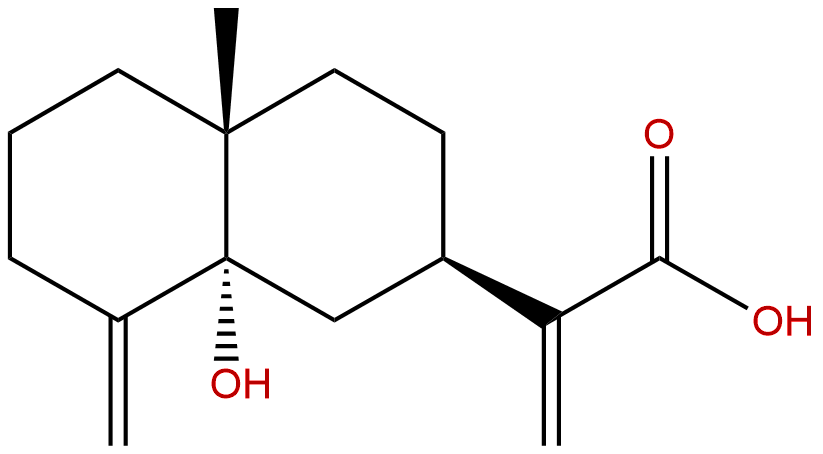
Product name: 5α-Hydroxycostic acid
Synonym name:
Catalogue No.: SBP00303
Cas No.: 132185-83-2
Formula: C15H22O3
Mol Weight: 250.338
Botanical Source:
Type of Compound:
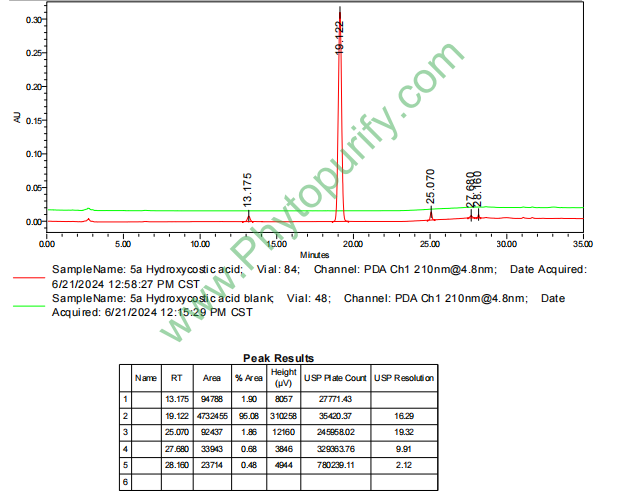
Purity: 95%~99%
Analysis Method: HPLC-DAD or/and HPLC-ELSD
Identification Method: Mass, NMR
Packing: Brown vial or HDPE plastic bottle
Storage: Store in a well closed container, protected from air and light. Put into refrigerate or freeze for long term storage.
Whenever possible, you should prepare and use solutions on the same day. However, if you need to make up stock solutions in advance, we recommend that you store the solution as aliquots in tightly sealed vials at -20℃. Generally, these will be useable for up to two weeks.
The product could be supplied from milligrams to grams
Inquire for bulk scale.
For Reference Standard and R&D, Not for Human Use Directly.
HPLC of 5α-Hydroxycostic acid
Storage conditions:Short-term storage at 2~8℃, long-term storage at -20 ~ -80℃
57.5300
2.2357
-.2926
.5648
3.8761
8.0424
High
86.9458
4.3864
No
No
No
No
No
No
0.0
Yes
No
Yes
No
Natural products, as an important source of drug discovery, play an irreplaceable role in the long history of human fight against diseases. From classic aspirin to complex paclitaxel, the chemical diversity inherent in nature provides endless inspiration for modern pharmacology. Among the numerous biologically active natural product families, Eudesmane type sesquiterpenes derived from Asteraceae plants have attracted much attention due to their structural diversity and significant pharmacological activity. Costic acid and its derivatives are important members of this group, mainly derived from traditional medicinal plants such as agarwood(Saussurea costus, also known as Saussurea lappa)Obtained through separation, it exhibits a wide range of biological activities such as anti-inflammatory, anti-tumor, and antibacterial.
5 α - Hydroxycarboxylic acid (CAS number: 132185-83-2) is a specific member of the cinnamic acid family, characterized by the introduction of a hydroxyl functional group at the C-5 position. This seemingly minor structural modification may have a profound impact on its biological activity, target selectivity, and physicochemical properties. In recent years, with the deepening understanding of the pathogenesis of inflammation related diseases such as autoimmune diseases, neuroinflammation, and cancer-related inflammation, as well as the advancement of research on the relationship between structural modification and activity (SAR) of natural products, 5 α - hydroxycinnamic acid, as a natural anti-inflammatory molecule with a unique mechanism of action, has gradually emerged from numerous sesquiterpenes. Preliminary studies have shown that it can regulate inflammatory responses through multiple targets and pathways, particularly in key signaling axes such as IL-6/STAT3, NF - κ B (RELA/IKBKB), and NLRP3 inflammasome (CASP1), demonstrating its enormous potential as a lead compound or candidate drug.
However, similar to many natural products, research on 5 α - hydroxycinnamic acid is still in its early stages, and its in-depth pharmacological mechanisms, in vivo pharmacokinetic behavior, and systematic pharmacological evaluation are not yet complete. This article aims to systematically review the research progress of 5 α - hydroxycinnamic acid in terms of chemical structure, plant origin, pharmacological activity, mechanism of action, and medicinal properties, and explore its future clinical application prospects and challenges, in order to provide comprehensive scientific references for the in-depth development of this natural product.
5 α - Hydroxycinnamic acid belongs to the eucalyptol type sesquiterpenes, and its core skeleton consists of 15 carbon atoms, including a decalin ring system. The key characteristic of its chemical structure is that the hydrogen atom at the C-5 position is replaced by a hydroxyl group (- OH), forming a 5 α - hydroxyl configuration; Connect an isopropyl side chain at position C-7; The C-12 position is a carboxyl group (- COOH), which is the origin of its "acid" name. The molecular structure also contains a conjugated double bond system (usually located at C-3 and C-4 positions, or C-11 and C-13 positions), and the specific double bond position may vary depending on different plant sources or extraction conditions, but the core eucalyptol skeleton and 5 α - hydroxyl and 12 carboxyl groups are key markers for its structural identification.
From the perspective of physical and chemical properties, the molecular weight of 5 α - hydroxycinnamic acid is 250.3380 g/mol, belonging to the category of small molecule compounds. Its lipid water partition coefficient LogP is 2.2357, indicating that the molecule has moderate lipophilicity, neither highly hydrophilic nor extremely lipophilic. This balanced characteristic is beneficial for its permeability on biological membranes. The topological polar surface area (TPSA) is 57.53 Å ², which is lower than the commonly recognized threshold for good oral absorption (approximately 140 Å ²), indicating its potential for good oral absorption. The water solubility (0.5648 mg/mL) is relatively low, which is consistent with the hydrophobic properties of its sesquiterpene skeleton. However, the presence of carboxyl and hydroxyl groups gives it a certain degree of water solubility, making it possible to partially ionize under physiological pH conditions.
Of particular note is its blood-brain barrier (BBB) penetration ability assessed as' high '. This characteristic is relatively rare for natural products, indicating that 5 α - hydroxycinnamic acid may have the ability to enter the central nervous system (CNS), thus having potential application value in the treatment of neuroinflammation, neurodegenerative diseases (such as Alzheimer's disease, Parkinson's disease), or brain tumors. In addition, hERG inhibition was predicted as' no ', and the Ames test result was 0.0, preliminarily ruling out its significant risk of cardiac toxicity and genetic toxicity, providing favorable early evidence for its safety as a candidate drug. Overall, 5 α - hydroxycinnamic acid has excellent "drug like" characteristics and is a natural lead compound worthy of further research.
The main plant source of 5 α - hydroxycinnamic acid is plants in the Asteraceae family, including the most famous one, Yunmuxiang(Saussurea costus (Falc.) Lipschitz, Different names Saussurea lappa C.B.Clarke)。 Originated in the the Himalayas, including India, Pakistan, China's Xizang and Yunnan Province, it is a traditional medicinal plant with a long history. It is widely used in Ayurveda, Tibetan medicine and traditional Chinese medicine systems, and is often used to treat indigestion, asthma, cough, inflammation and skin diseases. In addition, other plants of the genus Chrysanthemum, such as Saussurea involucrata(Tianshan Snow Lotus)Saussurea obvallata Wait, it may also contain the compound or its structural analogues, but the content is usually low.
The extraction of 5 α - hydroxycinnamic acid usually follows the standard process of natural product chemistry. Firstly, collect the dried roots and rhizomes of plants (the main medicinal parts of Yunmuxiang), crush them, and extract them using organic solvents. Given the moderate polarity of the compound, commonly used extraction solvents include methanol, ethanol, or their aqueous solutions. In order to improve extraction efficiency and selectivity, modern technologies such as ultrasound assisted extraction (UAE) or microwave-assisted extraction (MAE) can be used. After filtration and vacuum concentration of the extract, crude extract is obtained.
Due to the high content of other sesquiterpenes, triterpenes, sterols, and volatile oils in the crude extract, systematic separation and purification are required. Classic separation strategies include:
1. Liquid-liquid extraction Suspend the crude extract in water and extract it sequentially with solvents of different polarities such as petroleum ether, ethyl acetate, and n-butanol. Enrich 5 α - hydroxycinnamic acid in the ethyl acetate or n-butanol extraction layer.
2. Column chromatography separation This is the most crucial purification step. Usually, silica gel column chromatography is used, with gradient elution using different ratios of petroleum ether ethyl acetate or chloroform methanol mixed solvents. Due to the presence of carboxyl groups in 5 α - hydroxycinnamic acid, tailing may occur on silica gel. Sometimes, a small amount of formic acid or acetic acid needs to be added to the mobile phase to improve the peak shape.
3. High performance liquid chromatography (HPLC)For the final high-purity separation, especially for the separation of isomers with extremely similar structures, preparative HPLC is an essential tool. Usually, a reverse phase C18 chromatographic column is used, with acetonitrile water (containing 0.1% formic acid) as the mobile phase for isocratic or gradient elution.
4. Structural Identification The purified compound was structurally confirmed by techniques such as nuclear magnetic resonance spectroscopy (¹ H-NMR, ¹ ³ C-NMR, 2D-NMR), high-resolution mass spectrometry (HR-MS), and infrared spectroscopy (IR). The characteristic NMR signal, such as the chemical shift change and coupling constant caused by 5 α - hydroxyl group, is the key basis for distinguishing it from cinnamic acid (5-H).
The pharmacological activity research of 5 α - hydroxycinnamic acid is currently mainly focused on the anti-inflammatory field, while also involving preliminary exploration of its anti-tumor and neuroprotective effects.
Inflammation is the body's defense response to harmful stimuli, but uncontrolled chronic inflammation is the pathological basis of many diseases (such as rheumatoid arthritis, inflammatory bowel disease, atherosclerosis). Existing studies have shown that 5 α - hydroxycinnamic acid exhibits significant anti-inflammatory effects in various in vitro and in vivo inflammatory models.
In cell models, 5 α - hydroxycinnamic acid can significantly inhibit the production of nitric oxide (NO) and prostaglandin E2 (PGE2) by macrophages (such as RAW264.7 cells) stimulated by lipopolysaccharide (LPS), which is direct evidence of its anti-inflammatory activity. NO and PGE2 are respectively catalyzed by inducible nitric oxide synthase (iNOS, encoded by the NOS2 gene) and cyclooxygenase-2 (COX-2), and are key mediators in the inflammatory response. In addition, it can effectively reduce the mRNA and protein expression levels of pro-inflammatory cytokines such as tumor necrosis factor - α (TNF - α), interleukin-6 (IL-6), and interleukin-1 β (IL-1 β). These cytokines are the core molecules that drive and amplify the inflammatory cascade reaction.
In animal models, preliminary studies (mostly intraperitoneal injection or oral administration) have shown that 5 α - hydroxycinnamic acid can alleviate the swelling of rat toes induced by carrageenan or Freund's complete adjuvant, reduce the activity of myeloperoxidase (MPO) in inflammatory tissues, and decrease the infiltration of inflammatory cells. These results collectively indicate that 5 α - hydroxycinnamic acid has the potential to be developed as a novel anti-inflammatory drug.
In addition to anti-inflammatory effects, limited literature suggests that 5 α - hydroxycinnamic acid may have other biological activities. For example, based on the known anti-tumor activity of its structural analogue, cinnamic acid, some studies speculate that 5 α - hydroxycinnamic acid may inhibit the proliferation of certain cancer cells (such as liver cancer and lung cancer cells) by inducing cell apoptosis and cycle arrest. In addition, given its excellent blood-brain barrier penetration, its inhibitory effect on neuroinflammation mediated by microglia is also worth noting, which may be related to the treatment of neurodegenerative diseases such as Alzheimer's disease. However, the reports in these fields are still insufficient and require more systematic research to confirm.
The anti-inflammatory effect of 5 α - hydroxycinnamic acid is not achieved through a single target, but exhibits the characteristics of multi-target and multi pathway synergistic regulation. Based on existing research, its core mechanism of action mainly involves the following aspects:
Nuclear factor kappa B (NF - κ B) is the core transcription factor in inflammatory response, and its family member RELA (p65) is the main transcriptional activation subunit. In the resting state, NF - κ B binds to the inhibitory protein I κ B and exists in an inactive form in the cytoplasm. When cells are stimulated by LPS, TNF - α, etc., I κ B kinase (IKK, encoded by IKBKB) is activated, phosphorylates and degrades I κ B, releasing NF - κ B. Free NF - κ B immediately translocates into the nucleus, initiating the transcription of a series of pro-inflammatory genes including TNF - α, IL-6, iNOS, and COX-2.
Research has shown that 5 α - hydroxycinnamic acid can effectively inhibit the activity of IKK β (IKBKB), thereby blocking the phosphorylation and degradation of I κ B, ultimately preventing the nuclear translocation and transcriptional activity of NF - κ B (RELA). This is one of the core mechanisms by which it exerts anti-inflammatory effects. By inhibiting the NF - κ B pathway, this compound upstream inhibits the production of various pro-inflammatory mediators.
IL-6 is a multifunctional pro-inflammatory cytokine that plays a key role in chronic inflammation and autoimmune diseases. After binding to the receptor, IL-6 activates JAK kinase, which in turn phosphorylates signal transducer and activator of transcription factor 3 (STAT3). Phosphorylated STAT3 forms dimers and merges into the nucleus, regulating gene expression related to cell proliferation, survival, and inflammation.
5 α - hydroxycinnamic acid can directly or indirectly inhibit the production of IL-6 and also interfere with the phosphorylation process of STAT3. This dual inhibitory effect reduces the production of upstream ligand IL-6 and blocks the activation of downstream signaling molecule STAT3, enabling it to effectively cut off the positive feedback inflammatory loop of IL-6/STAT3, thus demonstrating therapeutic potential in disease models such as rheumatoid arthritis and inflammatory bowel disease.
NLRP3 inflammasome is a multi protein complex, and its assembly and activation are key steps in the maturation and secretion of IL-1 β and IL-18. The abnormal activation of NLRP3 inflammasome is closely related to various inflammatory diseases. CASP1 (Caspase-1) is the core effector protein of inflammasomes, responsible for cleaving inactive pro-IL-1 β and pro-IL-18 into mature active forms.
Preliminary evidence suggests that 5 α - hydroxycinnamic acid may reduce the activation of CASP1 and the release of IL-1 β by inhibiting the assembly or activity of NLRP3 inflammasomes. This mechanism complements its role in inhibiting IL-1 β gene transcription through the NF - κ B pathway, comprehensively suppressing IL-1 β production from both transcriptional and post-translational levels.
TRPV1 and TRPA1 are non selective cation channels expressed on sensory neurons and are key molecules for sensing pain, heat, cold, and chemical stimuli. They also participate in neurogenic inflammation, which is a local inflammatory response triggered by the release of neuropeptides (such as substance P and CGRP) from sensory nerve endings.
5 α - hydroxycinnamic acid is predicted to be a potential regulator of TRPV1 and TRPA1. Although the specific role of these channels as agonists or antagonists still requires experimental verification, regulating their activity may explain their potential role in relieving pain and neuroinflammation. For example, antagonizing TRPV1 or TRPA1 can alleviate pain and neurogenic inflammation.
In summary, 5 α - hydroxycinnamic acid forms a complex and networked anti-inflammatory regulatory mechanism by simultaneously acting on multiple key targets such as IKBKB/NF - κ B (RELA), IL-6/STAT3, CASP1/NLRP3, and TRPV1/TRPA1. This multi-target characteristic is the advantage that distinguishes it from many single target synthetic drugs, which may bring higher efficacy and lower risk of drug resistance.
The conversion of natural products into clinical drugs must undergo strict pharmacological evaluation. 5 α - hydroxycinnamic acid exhibits some encouraging features in early pharmacological evaluation, but also faces common challenges as a natural product.
As mentioned earlier, the molecular weight (250.34 Da), LogP (2.24), and TPSA (57.53 Å ²) of 5 α - hydroxycinnamic acid all meet most of the criteria in the Lipinski Five Rules (molecular weight<500, LogP<5, hydrogen bond donor<5, hydrogen bond acceptor<10, TPSA<140 Å ²), indicating its good oral bioavailability potential. Although its water solubility (0.56 mg/mL) is not high, it is still within an acceptable range. More importantly, its high blood-brain barrier penetration opens the door for its application in the field of central nervous system diseases. The negative results of hERG inhibition and Ames test have preliminarily ruled out the two major risks of cardiac toxicity and genetic toxicity.
Although the physicochemical properties are good, the pharmacokinetic behavior of 5 α - hydroxycinnamic acid as a sesquiterpene compound in vivo is still unknown and challenging
1. Metabolic stability The sesquiterpene skeleton is easily oxidized and metabolized by cytochrome P450 enzymes (CYPs) in the liver, which may result in a shorter half-life. The hydroxyl group at position C-5 and carboxyl group at position C-12 are potential metabolic sites that may undergo II phase metabolic reactions such as glucuronic acid binding or sulfation. At present, there is a lack of detailed in vivo metabolic profiles.
2. Oral bioavailability Although the theoretical predictions are good, the actual oral bioavailability is influenced by multiple factors, including solubility in the gastrointestinal tract, permeability, and first pass effects. The presence of carboxyl groups may keep them in a non ionized state in acidic gastric environments, which is beneficial for absorption, but in alkaline intestinal environments, they may ionize and reduce absorption. Animal experiments are needed to accurately determine its oral bioavailability.
3. Plasma protein binding rate High plasma protein binding rate can limit the concentration of free drugs and affect their efficacy. The protein binding rate of this compound is still unknown.
Given the above challenges, structural modification of 5 α - hydroxycinnamic acid is a key pathway to enhance its pharmacological properties. Possible strategies include:
- Prodrug design Esterifying the carboxyl group of C-12 can improve its lipophilicity and membrane permeability, and it can be hydrolyzed by esterases into active active active ingredients in vivo.
- Metabolic site blockade Introducing fluorine atoms or methyl groups at easily metabolized sites (such as the allyl position) can block the oxidative metabolism of CYP enzymes and prolong their half-life.
- salt formation Salting carboxyl groups with suitable bases (such as sodium, potassium, lysine) can significantly improve their water solubility and facilitate formulation development.
Based on its unique pharmacological effects and good early drug formation, 5 α - hydroxycinnamic acid has shown promising clinical application prospects in multiple disease fields.
This is its most direct application area. By inhibiting the NF - κ B and IL-6/STAT3 pathways, 5 α - hydroxycinnamic acid is expected to be used for the treatment of autoimmune inflammatory diseases such as rheumatoid arthritis, inflammatory bowel disease (such as Crohn's disease, ulcerative colitis), psoriasis, etc. Its multi-target characteristics may make it more effective than certain single target biologics, and as a small molecule drug, it has potential advantages in oral administration and lower cost.
Its greatest differentiation advantage is its high blood-brain barrier penetration. In the pathological processes of diseases such as Alzheimer's disease, Parkinson's disease, and multiple sclerosis, microglia mediated chronic neuropathy plays a key role. 5 α - hydroxycinnamic acid can enter the central nervous system, inhibit excessive activation of microglia, reduce the release of neurotoxic inflammatory factors, and thus may delay disease progression. In addition, its regulatory effect on TRPV1 and TRPA1 also provides the possibility for its treatment of neuropathic pain.
Chronic inflammation in the tumor microenvironment is an important factor in promoting tumor occurrence, development, and metastasis. 5 α - hydroxycinnamic acid can not only inhibit inflammation but also directly suppress tumor cell proliferation and induce apoptosis by inhibiting STAT3 and NF - κ B. Therefore, it may serve as an adjuvant drug for cancer treatment, used to alleviate cancer-related inflammation and enhance the efficacy of chemotherapy or immunotherapy.
Despite the promising future, 5 α - hydroxycinnamic acid still faces many challenges in transitioning from laboratory to clinical use
1. Source issue At present, it mainly relies on plant extraction, with low yield, high cost, and limited resources. In the future, it is necessary to develop efficient chemical synthesis or semi synthesis routes, as well as utilize biosynthetic technologies (such as yeast cell factories) to achieve large-scale production.
2. Unclear pharmacokinetics Lack of systematic in vivo ADME (absorption, distribution, metabolism, excretion) research. Animal experiments must be conducted to comprehensively evaluate its oral bioavailability, half-life, tissue distribution, and metabolic pathways.
3. Insufficient depth of mechanism of action Although multiple targets have been identified, the synergistic relationship between each target and evidence of direct binding to target proteins (such as through surface plasmon resonance, drug affinity reaction, target stability, and other techniques) still need further confirmation.
4. In vivo efficacy verification Currently, most pharmacological studies are limited to cellular and acute inflammation animal models. Long term and systematic pharmacological evaluation is needed in animal models of chronic diseases that are more closely related to clinical practice, such as collagen induced arthritis models and APP/PS1 transgenic Alzheimer's disease models.
5. Toxicity Studies Although the Ames test is negative, more comprehensive acute and chronic toxicity studies are needed, including potential toxicity assessments of major organs such as the liver and kidneys.
5 α - Hydroxycinnamic acid, as a natural sesquiterpene derived from the traditional medicinal plant Eucommia ulmoides, has shown great potential as a novel anti-inflammatory lead compound due to its unique chemical structure and multi-target anti-inflammatory mechanism, especially by regulating key signaling nodes such as NF - κ B, IL-6/STAT3, NLRP3 inflammasome, and TRP channel. Its excellent physicochemical properties, preliminary safety assessment, and remarkable blood-brain barrier penetration ability make it have broad application prospects in the treatment of chronic inflammation, neurodegenerative diseases, and cancer-related inflammation.
However, we must be aware that research on 5 α - hydroxycinnamic acid is still in its very early stages. From discovery to drug discovery, it is a long and challenging road. Future research should focus on establishing an efficient and sustainable compound supply system; Systematically elucidate its pharmacokinetic characteristics and metabolic fate in vivo; Using modern chemical biology methods to deeply reveal its molecular mechanism of action; And verify its efficacy and safety in more complex animal models of diseases. Only in this way can the potential of this natural product be truly transformed into clinical drugs that benefit patients. The study of 5 α - hydroxycinnamic acid is not only an exploration of a specific molecule, but also a practice of the paradigm of natural product drug discovery. It reminds us that there are still countless treasures waiting to be discovered in the vast treasure trove of natural products, which may be the key to conquering complex diseases in the future.
