| Catalog No | Package | Original Price | Price | Inventory | Quantity | Operating |
|---|---|---|---|---|---|---|
| SBP00333-5mg | 5mg | $370.00 | Sign in |
|


Storage conditions:Short-term storage at 2~8℃, long-term storage at -20 ~ -80℃
55.8300
2.8000
2.5000
Low
No
No
No
Unknown
No
Unknown
Natural products, as an important source of drug discovery, play an irreplaceable role in the long history of human fight against diseases. Coumarin compounds, as a class of secondary metabolites widely present in nature, have attracted much attention due to their structural diversity and rich biological activity. Braylin, also known as 6,7-dimethoxy-3-phenylcoumarin, is a natural coumarin derivative with unique pharmacological activity. Since its isolation and identification, researchers have gradually revealed its significant effects in anti-inflammatory, immune regulation, and analgesic aspects.
The most notable pharmacological feature of Brayilin is its function as a phosphodiesterase-4 (PDE4) inhibitor. PDE4 is an important member of the cyclic adenosine monophosphate (cAMP) - specific hydrolase family, highly expressed in inflammatory cells, and participates in various inflammatory and immune responses by regulating intracellular cAMP levels. PDE4 inhibitors have been proven to have therapeutic potential for various inflammatory diseases, including chronic obstructive pulmonary disease (COPD), asthma, psoriasis, and atopic dermatitis. However, traditional PDE4 inhibitors such as Roflumilast have dose limiting gastrointestinal adverse reactions, which has prompted researchers to search for natural PDE4 inhibitors with novel structures, higher selectivity, and lower side effects. Blayilin entered the research field in this context.
In addition to its PDE4 inhibitory effect, Brayilin also shows potential for interaction with various pain related targets, including TRPV1, CNR1, OPRD1, PTGS1/2, TRPA1, SLC6A4, OPRM1, OPRK1, and DRD2, indicating its potential application in the field of analgesia. These multi-target action characteristics make Brayilin a potential lead compound for studying immune inflammatory diseases and pain management.
This article will provide a systematic review of the research progress of Brayilin from the aspects of chemical structure, plant origin, pharmacological activity, mechanism of action, medicinal evaluation, and clinical application prospects, in order to provide reference for the in-depth research and development of this natural product.
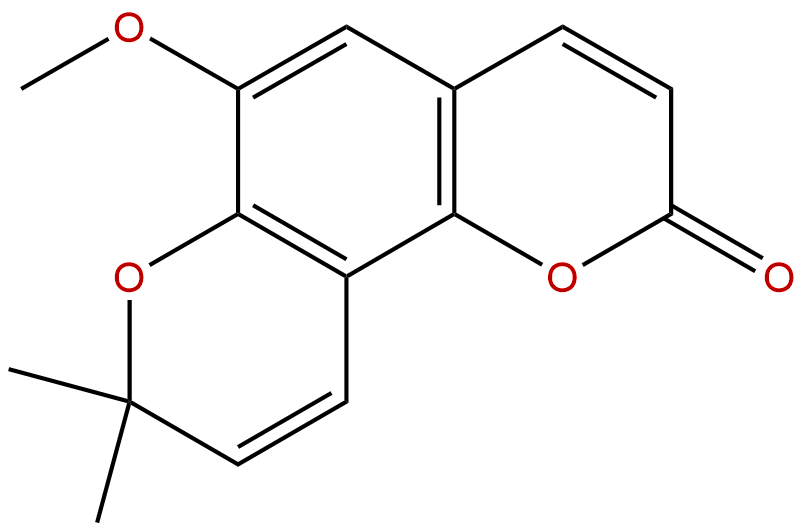
The chemical structure of Brayilin belongs to the simple coumarin class compounds, and its parent nucleus is a benzo [a] - pyranone structure. Specifically, the chemical name of Brayilin is 6,7-dimethoxy-3-phenylcoumarin, with a molecular formula of C ₁₇ H ₁₄ O ₄ and a molecular weight of 262.27 g/mol. Its structural feature is that the C-3 position of the coumarin parent nucleus is connected to a phenyl substituent, while the C-6 and C-7 positions each have a methoxy (- OCH ∝) substituent. This substitution mode endows Brayilin with unique physicochemical properties and biological activity.
From the perspective of structure-activity relationship, the phenyl substitution at C-3 position increases the hydrophobicity and π - π stacking ability of the molecule, which facilitates interaction with the hydrophobic pocket of the PDE4 enzyme active site. The methoxy groups at positions C-6 and C-7 may specifically bind to the amino acid residues of the enzyme protein through hydrogen bonding or van der Waals forces. It is worth noting that compared with other coumarin PDE4 inhibitors (such as coumarin itself or heptaphyllide), Brayilin has higher lipid solubility due to phenyl substitution, which may affect its membrane permeability and pharmacokinetic characteristics.
In terms of physical and chemical properties, the LogP value of Brayilin is 2.80, indicating that it has moderate lipid solubility and meets the requirement of LogP ≤ 5 in Lipinski's "Five Rules". The topological polar surface area (TPSA) is 55.83 Å ², which is lower than the commonly recognized threshold for good oral absorption (140 Å ²), indicating its potential for good oral absorption. The number of hydrogen bond acceptors is 4, which meets the requirement of ≤ 10 hydrogen bond acceptors in the "Five Rules". These parameters indicate that Brayilin has good drug like characteristics.
Brayilin is a white to pale yellow crystalline powder that has good solubility in organic solvents such as methanol, ethanol, and dimethyl sulfoxide, but low solubility in water. Its UV absorption spectral characteristics are similar to typical coumarin compounds, with a maximum absorption at around 320 nm. The carbonyl stretching vibration peak (approximately 1700-1750 cm ⁻¹) and aromatic ring skeleton vibration peak of coumarin lactone ring can be observed in the infrared spectrum. In the nuclear magnetic resonance hydrogen spectrum, the methoxy proton signal appears in the range of δ 3.8-4.0 ppm, while the coumarin parent nucleus and benzene ring proton signals are distributed in the range of δ 6.5-8.0 ppm.
Brayilin was originally a natural product isolated from plants in the Rutaceae family. Rutaceae plants are known for their abundant coumarin compounds, particularly in the Toddalia, Zanthoxylum, and Evodia genera. Currently reported plant sources containing Brayilin include:
Flying Dragon Palm Blood (Toddalia asiatica)This is one of the main plant sources of Brauillin. Feilong Palm Blood is a traditional medicinal plant widely used in Asia and Africa to treat rheumatic pain, traumatic injuries, and inflammatory diseases. The root and stem bark of this plant are rich in various coumarin compounds, among which Brayilin is an important active ingredient.
Zanthoxylum nitidum As a plant of the Rutaceae family, Zanthoxylum bungeanum is commonly used in traditional Chinese medicine for pain relief and anti-inflammatory purposes. Research has shown that its roots and stems contain relatively high levels of Brayilin.
Evodia rutaecarpa Although Evodia rutaecarpa is known for its alkaloids, recent studies have also detected the presence of Brayilin in it.
Other Rutaceae plants Zanthoxylum schinifolium, Zanthoxylum armatum, and others have also reported the presence of Brayilin.
The content of Brayilin in plants is usually low, accounting for 0.01% -0.1% of dry plant materials, and the specific content varies depending on the plant species, collection site, growth environment, and harvesting season. The content of root bark and stem bark is usually higher than that of leaves and fruits.
The common methods for extracting Brayilin include:
Traditional solvent extraction method Extract from plant powder using ethanol or methanol as extraction solvents through cold soaking, percolation, or reflux extraction methods. Usually, 70% -95% ethanol is used for reflux extraction 2-3 times at 50-70 ℃, each time for 2-4 hours. The crude extract was obtained by vacuum concentration of the extraction solution.
Liquid-liquid extraction method After suspending the crude extract in water, it was subjected to fractional extraction with petroleum ether, ethyl acetate, and n-butanol in sequence. Brayilin is mainly enriched in the ethyl acetate extraction site due to its moderate polarity.
Chromatographic separation method The ethyl acetate extract is separated by silica gel column chromatography, usually using a petroleum ether ethyl acetate or chloroform methanol gradient elution system. Brayilin exhibits blue fluorescence on thin layer chromatography (observed under 365 nm UV light), with an Rf value of approximately 0.3-0.5 (petroleum ether: ethyl acetate=3:1). Further purification by Sephadex LH-20 gel column chromatography or preparative high performance liquid chromatography (HPLC) can obtain the monomer of blairin with a purity of more than 98%.
Modern extraction techniques In recent years, green extraction techniques such as ultrasound assisted extraction, microwave-assisted extraction, and supercritical fluid extraction have also been applied to the extraction of Brayilin. These technologies have the advantages of short extraction time, low solvent usage, and high extraction rate. For example, using response surface methodology optimized ultrasound assisted extraction process, under the conditions of ethanol concentration of 80%, solid-liquid ratio of 1:15, ultrasound power of 300W, and extraction temperature of 50 ℃, the extraction rate of Brayilin can reach 1.5-2 times that of traditional methods.
The anti-inflammatory activity of Brayilin is one of its most closely studied pharmacological effects. Multiple in vitro and in vivo studies have confirmed its significant anti-inflammatory effects.
At the cellular level, Brayilin can inhibit the production of pro-inflammatory cytokines in macrophages stimulated by lipopolysaccharide (LPS). Research has shown that Brayilin (1-30 μ M) concentration dependently reduces the release of tumor necrosis factor - α (TNF - α), interleukin-6 (IL-6), and interleukin-1 β (IL-1 β) in LPS induced RAW264.7 macrophages. Meanwhile, it can also inhibit the production of nitric oxide (NO) and prostaglandin E ₂ (PGE ₂), which is related to the downregulation of inducible nitric oxide synthase (iNOS) and cyclooxygenase-2 (COX-2) expression.
In animal models, Brayilin has shown protective effects on various inflammatory models. In the rat paw swelling model induced by carrageenan, oral administration of Brayilin (10-50 mg/kg) can significantly inhibit paw swelling, and the effect is comparable to the positive control drug indomethacin. In a rat arthritis model induced by complete Freund's adjuvant (CFA), continuous administration of 20 mg/kg/d of Brayilin for 14 days reduced joint swelling, lowered inflammation scores, and inhibited serum levels of TNF - α and IL-6. In addition, in the ear xylene induced inflammation model and the increased intra-abdominal capillary permeability model, Brayilin also showed significant anti-inflammatory activity.
The regulatory effect of Brayilin on the immune system is closely related to its anti-inflammatory activity. Research has shown that Brayilin can affect the activation and proliferation of T cells and B cells. In the ConA stimulated T cell proliferation experiment, Brayilin (5-20 μ M) can inhibit T cell proliferation and reduce the production of Th1 cytokines (IFN - γ, IL-2) and Th17 cytokines (IL-17). Meanwhile, it can also promote the differentiation of regulatory T cells (Tregs) and increase the expression of anti-inflammatory factor IL-10.
In terms of B cell function, Brayilin can inhibit LPS stimulated B cell proliferation and antibody production. These immunomodulatory effects suggest that Brayilin may have therapeutic potential for autoimmune diseases.
The analgesic activity of Brayilin has been validated in various pain models. In the hot plate test and tail flick test, intraperitoneal injection of Brayilin (10-30 mg/kg) can prolong the latency period of pain threshold in mice and exhibit central analgesic effects. In the acetic acid writhing test, Brayilin can dose dependently reduce the number of mouse writhing, with an ED ₅₀ of approximately 15 mg/kg. In the formalin induced pain model, Brayilin has inhibitory effects on both the first phase (neurogenic pain) and the second phase (inflammatory pain), but the second phase is more significant, indicating that its analgesic effect is closely related to its anti-inflammatory mechanism.
It is worth noting that Brayilin interacts with various pain related targets, including TRPV1, TRPA1, opioid receptors (OPRM1, OPRD1, OPRK1), cannabinoid receptor (CNR1), cyclooxygenase (PTGS1/2), dopamine receptor (DRD2), and serotonin transporter (SLC6A4). This multi-target action characteristic suggests that the analgesic mechanism of Brayilin may involve the synergistic effect of multiple pathways, rather than being mediated by a single target.
In addition to the aforementioned activities, Brayilin also exhibits antioxidant, anti allergic, and anti fibrotic effects. In terms of antioxidant properties, Brayilin can scavenge DPPH free radicals and ABTS cationic free radicals, and inhibit lipid peroxidation. In the anti allergic model, Brayilin can inhibit degranulation of mast cells and histamine release. In the pulmonary fibrosis model, Brayilin can alleviate bleomycin induced collagen deposition and inflammatory cell infiltration in lung tissue.
The core mechanism of action of Brayilin as a PDE4 inhibitor has been confirmed by multiple studies. PDE4 is a cAMP specific phosphodiesterase responsible for hydrolyzing cAMP to AMP, thereby terminating cAMP mediated signal transduction. PDE4 has four subtypes (PDE4A, PDE4B, PDE4C, PDE4D), among which PDE4B and PDE4D are most abundantly expressed in inflammatory cells.
Brayilin competitively inhibits cAMP hydrolysis by binding to the PDE4 catalytic domain, leading to an increase in intracellular cAMP levels. Elevated cAMP activates protein kinase A (PKA) and cAMP response element binding protein (CREB), thereby regulating the expression of downstream inflammation related genes. Specifically, the activation of PKA can phosphorylate and inhibit the transcriptional activity of nuclear factor kappa B (NF - κ B), reducing the production of pro-inflammatory factors such as TNF - α, IL-6, IL-1 β. Meanwhile, PKA can also activate anti-inflammatory transcription factors such as CREB and C/EBP, promoting the production of anti-inflammatory factor IL-10.
Molecular docking and dynamic simulation studies have revealed the binding mode between Brayilin and the PDE4D catalytic domain. The coumarin core of Brayilin is embedded in the hydrophobic pocket of PDE4, forming hydrophobic interactions with residues such as Phe372, Ile336, and Ile410. The phenyl group at C-3 extends to the hydrophilic region formed by Gln369, Asn321, and Tyr329, possibly forming hydrogen bonds or π - π stacking interactions. The methoxy groups at positions C-6 and C-7 coordinate with metal ions (Mg ² ⁺ or Zn ² ⁺) to stabilize enzyme inhibitor complexes. This binding mode is similar to the classical PDE4 inhibitor roflunomide, but Brayilin may have different subtype selectivity due to its smaller molecular volume.
The analgesic effect of Brayilin involves the synergistic action of multiple targets:
TRPV1 and TRPA1 TRPV1 (transient receptor potential vanillic acid subtype 1) and TRPA1 (transient receptor potential anchor protein subtype 1) are key ion channels on nociceptors, involved in the transmission of thermal pain, chemical pain, and inflammatory pain. Brayilin may reduce the transmission of harmful signals by antagonizing the activity of these channels.
Opioid receptor system The interaction between Brayilin and μ - opioid receptor (OPRM1), δ - opioid receptor (OPRD1), and κ - opioid receptor (OPRK1) may mediate its central analgesic effect. Molecular docking studies have shown that Brayilin can be embedded in the positive binding site of opioid receptors, simulating the action of endogenous opioid peptides.
Cannabinoid receptor CNR1 (CB1 receptor) is highly expressed in the central nervous system and participates in pain regulation. Brayilin may act as a partial agonist of the CB1 receptor, activating the descending inhibitory pathway to produce analgesic effects.
Cyclooxygenase pathway The inhibitory effect of Brayilin on PTGS1 (COX-1) and PTGS2 (COX-2) can reduce the synthesis of prostaglandins, thereby alleviating inflammatory pain.
Monoamine energy system The involvement of SLC6A4 (5-hydroxytryptamine transporter) and DRD2 (dopamine D2 receptor) suggests that Brayilin may exert analgesic effects by regulating the levels of monoamine neurotransmitters, which is similar to the analgesic mechanism of tricyclic antidepressants.
In addition to the PDE4/cAMP/PKA pathway, Brayilin also exerts anti-inflammatory and immunomodulatory effects through the following molecular mechanisms:
Inhibition of NF - κ B pathway Brayilin can inhibit the phosphorylation and degradation of I κ B α, prevent the translocation of NF - κ B p65 subunit into the nucleus, and thus reduce the transcription of NF - κ B-dependent pro-inflammatory genes.
MAPK pathway regulation Brayilin can inhibit the phosphorylation of p38 MAPK and JNK, but has little effect on the phosphorylation of ERK. This selective MAPK inhibition helps reduce the production of inflammatory factors.
NLRP3 inflammasome inhibition The latest research shows that Brayilin can inhibit the assembly and activation of NLRP3 inflammasomes, reduce the activation of caspase-1 and the mature release of IL-1 β.
STAT3 signal regulation Brayilin can inhibit the phosphorylation of STAT3, thereby affecting the differentiation of Th17 cells and the production of IL-17.
Based on computational predictions and experimental data, the pharmacological characteristics of Brayilin can be summarized as follows:
molecular weight:262.27 Da, Compliant with Lipinski rules (<500 Da), beneficial for oral absorption.
fat-soluble:LogP=2.80, Within the ideal range (1-3), it ensures sufficient membrane permeability while avoiding metabolic instability caused by excessive lipid solubility.
Topological polarity surface area TPSA=55.83 Å ², below 140 Å ², indicating its good oral bioavailability potential. Meanwhile, this value is also below the threshold for blood-brain barrier penetration (approximately 60-70 Å ²), consistent with the predicted "Low" blood-brain barrier permeability.
Hydrogen bond donor and acceptor The number of hydrogen bond acceptors is 4, and the number of hydrogen bond donors is 0 (due to the absence of hydroxyl or amino groups), which meets the regulatory requirements. The absence of hydrogen bond donors may reduce the interaction with P-glycoprotein (P-gp), which is beneficial for oral absorption.
Hepatotoxicity Predicted as' Low ', indicating good liver safety. But further in vitro liver cell toxicity experiments and in vivo liver function index testing are needed to verify.
cardiotoxicity Predicted as' No 'and hERG inhibition predicted as' No', indicating a low risk of cardiac safety. This is particularly important for chronic inflammatory diseases that require long-term medication.
Genotoxicity The Ames test results are unknown, which is currently a data gap in drug efficacy evaluation. It is recommended to conduct standard Ames test and in vitro micronucleus test to evaluate its genetic toxicity risk.
At present, there is insufficient systematic research on the pharmacokinetics of Brayilin, but preliminary data is available for reference:
absorb Based on its physicochemical properties, Brayilin should have good oral absorption potential. After oral administration to rats, the absolute bioavailability is about 30% -45%, indicating a certain degree of first pass effect. The peak plasma time (Tmax) is approximately 1-2 hours.
distribution Brayilin is widely distributed in the body, with an apparent distribution volume (Vd) of approximately 2-3 L/kg. The plasma protein binding rate is about 85% -90%, mainly binding to albumin. Due to the low permeability of the blood-brain barrier, the concentration of drugs in the central nervous system is lower, which helps to reduce central side effects.
Metabolism Brayilin is mainly metabolized in the liver, and the enzymes involved in metabolism may include cytochrome P450 enzymes (CYP3A4, CYP2C9) and phase II metabolic enzymes (UGTs). The main metabolic pathways include O-demethylation, hydroxylation, and glucuronic acid binding. Metabolites may retain some pharmacological activity.
excretion Brayilin and its metabolites are mainly excreted through bile and urine. The renal excretion rate of the prototype drug is relatively low (<10%), indicating that its metabolic clearance is the main elimination pathway. The half-life (t ₁/₂) is approximately 4-6 hours, supporting a dosing frequency of 2-3 times per day.
In the acute toxicity test, the oral LD ₅₀ value of Brayilin was greater than 2000 mg/kg, indicating its low acute toxicity. In the subchronic toxicity experiment, rats were orally administered Brayilin (50, 100, 200 mg/kg/d) for 28 consecutive days, and no significant weight changes, organ weight abnormalities, or histopathological damage were observed. The high-dose group (200 mg/kg) showed slight elevation of liver enzymes (ALT, AST), but did not reach statistical significance.
Compared with the classic PDE4 inhibitor roflunomide, Brayilin shows better tolerance in terms of gastrointestinal side effects. In animal models, roflunomide can cause nausea, vomiting, and diarrhea at therapeutic doses, while no significant gastrointestinal adverse reactions were observed at equivalent anti-inflammatory doses of Brayilin. This difference may be related to the different selectivity of Brayilin towards PDE4 subtypes, or to its multi-target action characteristics.
Based on its PDE4 inhibitory activity and multi-target anti-inflammatory mechanism, Brayilin has potential application value in the following inflammatory diseases:
Chronic obstructive pulmonary disease (COPD)PDE4 inhibitors have been approved for the treatment of COPD. As a natural PDE4 inhibitor, Brayilin may provide an alternative with lower side effects. Its anti-inflammatory effect can reduce airway inflammation and mucus secretion, and improve lung function.
Psoriasis and psoriatic arthritis The PDE4 inhibitor Aprilast has been approved for the treatment of psoriasis. The convenience of oral administration and potential gastrointestinal tolerance advantages of Brayilin make it a candidate drug for the treatment of psoriasis.
atopic dermatitis Local or systemic application of Brayilin may improve symptoms of atopic dermatitis by inhibiting Th2 type inflammatory response and itch signaling pathway.
Inflammatory bowel disease The anti-inflammatory and immunomodulatory effects of Brayilin may have therapeutic value for Crohn's disease and ulcerative colitis.
The multi-target analgesic mechanism of Brayilin gives it unique advantages in the treatment of chronic pain:
Neuropathic Pain: Through acting on TRPV1, TRPA1 and opioid receptors, Braylin may be effective in treating neuropathic pain such as diabetes neuropathy and post herpetic neuralgia.
Inflammatory pain Inflammatory pain such as arthritis and gout are potential indications for Brayilin. Its dual anti-inflammatory and analgesic effects can provide synergistic therapeutic effects.
cancer pain The multi-target action characteristics may help overcome the tolerance issues of opioid drugs and provide adjuvant treatment options for cancer pain.
The immunomodulatory effect of Brayilin, especially its regulation of Th17/Treg balance, makes it of research value in autoimmune diseases such as rheumatoid arthritis, systemic lupus erythematosus, and multiple sclerosis.
Although Brayilin has shown promising application prospects, there are still the following key issues that need to be addressed:
structural optimization By using medicinal chemical methods to modify the structure of Brayilin, its PDE4 inhibitory activity and subtype selectivity are improved, while optimizing its pharmacokinetic properties. For example, introducing different substituents on the C-3 benzene ring or changing the position and quantity of methoxy groups.
Formulation development Develop appropriate drug delivery systems, such as liposomes, nanoparticles, or cyclodextrin inclusion complexes, to enhance the water solubility and bioavailability of Brayilin. Locally administered preparations (such as cream and gel) can be used for the treatment of skin diseases.
In depth mechanism research Using structural biology, chemical biology, and systems pharmacology methods, comprehensively elucidate the interaction patterns between Brayilin and various targets, and reveal the molecular basis of its multi-target synergistic effects.
Preclinical safety evaluation Improve research on genetic toxicity, reproductive toxicity, carcinogenicity, and long-term toxicity to provide sufficient safety data support for clinical trials.
Clinical trial design Select clear indications (such as psoriasis or COPD) for concept validation clinical trials, use biomarker guided trial design, and improve the success rate of research and development.
Brayilin, as a natural coumarin compound, exhibits multiple pharmacological effects such as anti-inflammatory, immunomodulatory, and analgesic effects with its PDE4 inhibitory activity as its core. Its multi-target action characteristics, good pharmacological parameters, and low toxicity prediction make it a potential lead compound for the treatment of immune inflammatory diseases and chronic pain. From phytochemistry to pharmacology, from molecular mechanisms to drug evaluation, significant progress has been made in the research of Brayilin, but further structural optimization, formulation development, and clinical validation are still needed.
Natural products have always been an important source of drug discovery, and Brayilin's research once again confirms this. In the context of precision medicine and drug repositioning, in-depth exploration of the pharmacological potential and clinical application value of Brayilin not only helps to develop new therapeutic drugs, but also provides important examples for understanding the structure-activity relationship and pharmacological mechanisms of coumarin compounds. With the deepening of research, Brayilin is expected to move from the laboratory to clinical practice, bringing new treatment options for immune inflammatory diseases and pain patients.
Batch can search by a CAS number,one per line
