Trans methyl isoeugenol: research progress and prospects from natural insecticides to multi-target anti-inflammatory drugs
Introduction/Overview
Natural products, as an important source of drug discovery, play an irreplaceable role in the long history of human fight against diseases. According to statistics, over 60% of clinical drugs worldwide are directly or indirectly derived from natural products and their derivatives. Among numerous natural active molecules, phenylpropanoid compounds have attracted much attention due to their structural diversity and wide range of biological activities. Trans Methylisoeugenol (t-MIE), as a typical phenylpropanoid compound, was initially isolated and identified from the traditional medicinal plant Acorus calamus L. and was recognized for its significant insecticidal activity. However, in recent years, with the deepening of research, the pharmacological activities of t-MIE in anti-inflammatory, analgesic, neuroprotective and other aspects have gradually been revealed, especially its unique mechanism of regulating multiple inflammatory signaling pathways and acting on multiple key targets, making it a research hotspot in the field of natural product pharmacology.
Acorus calamus, as a commonly used herb in traditional Chinese medicine, is rich in various phenylpropanoid compounds in its volatile oil, among which methyl isoeugenol is one of the main active ingredients. It is worth noting that methyl isoeugenol exists in two geometric isomers, cis and trans, while in natural sources, it mainly exists in the trans configuration. The chemical structure of t-MIE determines its unique physicochemical properties and biological activity. The methoxy and allyl side chains in its molecule, as well as the substitution mode on the benzene ring, provide a structural basis for its interaction with biomolecules.
The cognitive shift from insect chemical insecticides to potential therapeutic drugs reflects the paradigm evolution of natural product research. The research process of t-MIE indicates that the biological activity of natural products often has multiple facets, and their initially discovered functions may only be the tip of the iceberg. This article aims to systematically review the chemical properties, plant sources, pharmacological activities, mechanisms of action, and medicinal characteristics of t-MIE, providing comprehensive academic references for the in-depth research and development of this natural product.
Chemical structure and physicochemical properties
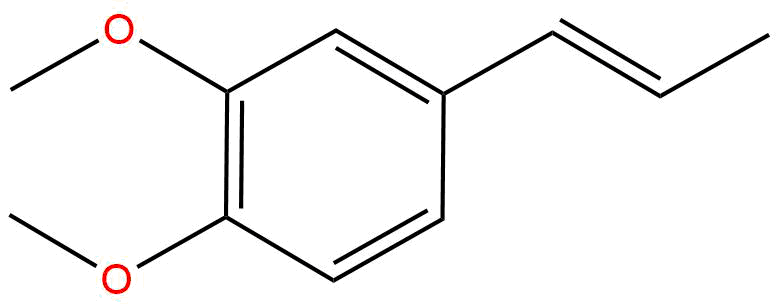
The chemical name of trans Methylisoeugenol is 1,2-dimethoxy-4- [(1E) -1-propenyl] benzene, with a molecular formula of C ₁₁ H ₁₄ O ₂ and a molecular weight of 178.2310 g/mol. From a structural classification perspective, t-MIE belongs to the phenylpropanoid class of compounds, with its core skeleton consisting of a benzene ring and C3 side chains. Specifically, there are two methoxy groups (- OCH ∝) attached to the benzene ring, located at positions C1 and C2, respectively, while a trans configured acrylic side chain (- CH=CH-CH ∝) is connected at position C4. This structural feature gives it the properties of both aromatic and olefin compounds.
The cis trans isomers of t-MIE exist in nature, but the trans configuration is more stable and abundant. The difference between cis Methylisoeugenol and its trans isomer lies in the geometric configuration of the double bond on the propylene side chain, which leads to significant differences in their physicochemical properties, biological activity, and metabolic pathways. Generally speaking, the trans configuration has better thermodynamic stability and higher bioavailability.
In terms of physicochemical properties, t-MIE exhibits typical lipophilic small molecule characteristics. Its lipid water partition coefficient (LogP) is 3.1298, indicating that the compound has strong lipid solubility and is easy to penetrate biofilms. The topologically polar surface area (TPSA) is only 18.4600 Å ², far below the upper limit of 140 Å ² typically required for oral medications, consistent with its good membrane permeability. In terms of water solubility, the water solubility of t-MIE is only 0.0556 mg/mL, which is a poorly soluble compound. This characteristic needs special attention in formulation development.
It is worth noting that the blood-brain barrier (BBB) penetration ability of t-MIE is evaluated as "high", which is closely related to its small molecular weight, high lipid solubility, and low polarity surface area. This feature not only provides the possibility for its application in the treatment of central nervous system diseases, but also suggests the need to pay attention to potential central nervous system side effects. In terms of safety evaluation, the predicted result of hERG inhibition is "no", indicating a low risk of cardiac toxicity; The Ames test result was 0.6, indicating a possible genetic toxicity risk, but further experimental verification is needed.
Plant sources and extraction methods
Trans methyl isoeugenol was initially isolated from Acorus calamus L., but subsequent studies have found that this compound is widely present in various medicinal and spice plants. In addition to Acorus tatarinowii, t-MIE has also been detected in Asarum sieboldii, Acorus tatarinowii, Zingiber officinale, Myristica fragrans, and certain camphor plants. The content of t-MIE varies significantly among different plant sources, with the highest content in the volatile oil of Acorus calamus rhizome, reaching 10% -30% of the total volatile oil.
As the main source of t-MIE, Acorus calamus has a medicinal history dating back thousands of years. There are over 200 species of Acorus plants worldwide, mainly distributed in the northern temperate and subtropical regions. In China, Acorus calamus and Acorus tatarinowii are two main medicinal varieties. Research has shown that there are significant differences in t-MIE content in Acorus calamus from different regions, harvest seasons, and varieties, which are closely related to their growth environment and genetic factors.
The extraction of t-MIE is usually carried out by steam distillation or organic solvent extraction. The steam distillation method is a traditional method for extracting t-MIE from volatile oil. Its principle is to utilize the insolubility and volatility of t-MIE with water. By heating, the compound is evaporated together with water vapor, and after condensation, the volatile oil containing t-MIE is separated. This method is easy to operate and cost-effective, but the extraction efficiency is relatively low, and high temperatures may lead to the degradation of some active ingredients.
The organic solvent extraction method usually uses solvents such as ethanol, methanol, or n-hexane for leaching or reflux extraction. Among them, ethanol, as a solvent with moderate polarity, can effectively extract t-MIE while preserving its structural integrity. Supercritical CO ₂ extraction technology has also been applied to the extraction of t-MIE in recent years. This technology has the advantages of low extraction temperature, no solvent residue, and high extraction efficiency, and is particularly suitable for the extraction of thermosensitive components. Research has shown that using supercritical CO ₂ extraction technology, the extraction rate of t-MIE can be increased by 30% -50% compared to traditional methods under pressure of 25-30 MPa and temperature of 40-50 ℃.
The crude extract after extraction usually needs further purification to obtain high-purity t-MIE. Common purification methods include silica gel column chromatography, preparative high-performance liquid chromatography (HPLC), and high-speed countercurrent chromatography (HSCCC). Among them, silica gel column chromatography is the most commonly used due to its simple operation and low cost, usually using n-hexane ethyl acetate or petroleum ether ethyl acetate as elution systems. For studies that require high-purity t-MIE, preparative HPLC can provide products with a purity of over 98%.
Pharmacological activity research
anti-inflammatory activity
The anti-inflammatory activity of t-MIE is one of its most concerned pharmacological effects. Multiple in vitro and in vivo studies have confirmed that t-MIE can significantly inhibit key components of inflammatory response. In cell models, t-MIE can effectively reduce the production of pro-inflammatory cytokines in macrophages stimulated by lipopolysaccharide (LPS), including tumor necrosis factor - α (TNF - α), interleukin-6 (IL-6), and interleukin-1 β (IL-1 β). Research has shown that t-MIE treatment can dose dependently inhibit the mRNA expression and protein secretion of TNF - α and IL-6 in LPS induced RAW264.7 macrophages, with a half maximal inhibitory concentration (IC ₅₀) of approximately 10-50 μ M.
In animal models, the anti-inflammatory effect of t-MIE has also been validated. In the carrageenan induced rat paw swelling model, oral or local administration of t-MIE can significantly reduce inflammatory response, and its effect is comparable to the positive control drug indomethacin. In the fully Freund's adjuvant (CFA) induced arthritis model, the t-MIE treatment group showed significant improvements in joint swelling, histopathological scores, and inflammatory cell infiltration in rats. In addition, t-MIE has shown protective effects in various inflammatory animal models such as colitis and dermatitis.
Analgesic activity
The analgesic activity of t-MIE is closely related to its anti-inflammatory effect. In the hot plate test and acetic acid writhing test, t-MIE showed significant central and peripheral analgesic effects. Research has shown that the analgesic mechanism of t-MIE partially involves the activation of transient receptor potential vanillic acid subtype 1 (TRPV1) channels, which is an interesting finding as TRPV1 is often considered a key molecule for pain signaling. As an agonist of TRPV1, t-MIE may exert analgesic effects through desensitization mechanism, similar to the analgesic principle of capsaicin.
Neuroprotective activity
Given the excellent blood-brain barrier penetration ability of t-MIE, its neuroprotective activity has become a research hotspot. In the Alzheimer's disease (AD) model, t-MIE can inhibit β - amyloid (A β) - induced neuronal apoptosis, alleviate oxidative stress damage, and improve cognitive function. In the Parkinson's disease (PD) model, t-MIE activates the nuclear factor E2 related factor 2 (Nrf2) signaling pathway, enhances antioxidant enzyme activity, and protects dopaminergic neurons from toxic damage caused by 6-hydroxydopamine (6-OHDA).
Antibacterial and antiparasitic activity
T-MIE was initially recognized as a chemical insecticide and its broad-spectrum antibacterial activity was also confirmed. Research has shown that t-MIE has inhibitory effects on various pathogenic microorganisms such as Staphylococcus aureus, Escherichia coli, and Candida albicans, with a minimum inhibitory concentration (MIC) range of 50-200 μ g/mL. In terms of antiparasitic activity, t-MIE exhibits bactericidal activity against malaria parasites, Leishmania parasites, and various agricultural pests, which is related to its interference with insect nervous system function.
Mechanism of action and molecular targets
The pharmacological activity of t-MIE involves the regulation of multiple molecular targets and signaling pathways, exhibiting typical multi-target action characteristics. A deep understanding of its mechanism of action is of great significance for elucidating the pharmacological basis of the compound, guiding structural optimization, and predicting potential therapeutic applications.
Regulation of inflammatory signaling pathways
The anti-inflammatory effect of t-MIE is mainly achieved by regulating the nuclear factor kappa B (NF - κ B) signaling pathway. NF - κ B is a core transcription factor in inflammatory response, regulating the expression of various pro-inflammatory genes including TNF - α, IL-6, IL-1 β, inducible nitric oxide synthase (NOS2), and cyclooxygenase-2 (PTGS2). Research has shown that t-MIE can inhibit the activity of I κ B kinase β (IKBKB), prevent the phosphorylation and degradation of I κ B α, and thus suppress the nuclear translocation and transcriptional activity of NF - κ B. Specifically, t-MIE treatment can significantly reduce the nuclear accumulation of p65 (RELA) subunit in LPS stimulated macrophages and decrease the binding ability of NF - κ B to DNA.
In addition to the NF - κ B pathway, t-MIE also regulates the signal transduction and transcription activator 3 (STAT3) signaling pathway. STAT3 plays a crucial role in inflammation and immune response, and its abnormal activation is associated with various inflammatory diseases. Research has shown that t-MIE can inhibit IL-6-induced STAT3 phosphorylation, block STAT3 dimerization and nuclear translocation, thereby downregulating the expression of its target genes. This inhibitory effect on the STAT3 pathway may explain the potential therapeutic value of t-MIE in chronic inflammation and certain cancers.
Inflammatory bodies and cell pyroptosis
The regulation of cysteine containing aspartic acid protease 1 (CASP1) by t-MIE is another important aspect of its anti-inflammatory mechanism. CASP1 is a key effector molecule for inflammasome activation, responsible for processing pro-IL-1 β and pro-IL-18 into mature forms and mediating pyroptosis. Research has shown that t-MIE can inhibit the assembly and activation of NLRP3 inflammasomes, reduce the activation of CASP1, and thus decrease the secretion of IL-1 β and IL-18. This mechanism has potential therapeutic significance in inflammatory body related diseases such as gout and diabetes nephropathy.
Adjustment of TRP channel
The regulatory effect of t-MIE on transient receptor potential (TRP) channels is its unique feature that distinguishes it from traditional anti-inflammatory drugs. TRPV1 and TRPA1 are two important nociceptors involved in physiological and pathological processes such as pain, inflammation, and itching. Research has found that t-MIE is an agonist of TRPV1, which can activate TRPV1 channels and cause calcium influx. However, sustained activation can lead to TRPV1 desensitization, resulting in analgesic effects. Meanwhile, t-MIE also has a regulatory effect on TRPA1, and this dual regulation may be related to its synergistic effect on anti-inflammatory and analgesic activities.
Oxidative stress and nitric oxide pathway
T-MIE reduces the production of nitric oxide (NO) by inhibiting the expression of NOS2, which is an important component of its anti-inflammatory activity. In an inflammatory state, NOS2 is induced to express and produce a large amount of NO, leading to tissue damage and exacerbation of inflammation. T-MIE can inhibit NF - κ B-mediated transcriptional activation of NOS2, reduce NO levels, and alleviate oxidative stress damage. In addition, t-MIE also exerts indirect antioxidant effects by activating the Nrf2 antioxidant response element (ARE) pathway, enhancing the expression of antioxidant enzymes such as superoxide dismutase (SOD) and glutathione peroxidase (GPx).
Metabolic pathway of arachidonic acid
The inhibitory effect of t-MIE on prostaglandin endoperoxide synthase 1 (PTGS1, COX-1) is also one of its anti-inflammatory mechanisms. PTGS1 is a key enzyme involved in the metabolism of arachidonic acid into prostaglandins, and is involved in the production of inflammation and pain signals. Although the inhibitory effect of t-MIE on PTGS1 is weaker than traditional nonsteroidal anti-inflammatory drugs (NSAIDs), its selective inhibition mode on COX-1/COX-2 may pose a lower risk of gastrointestinal side effects.
Evaluation of drug properties and pharmacokinetics
Analysis of drug properties parameters
Based on Lipinski's' Rule of Five ', t-MIE exhibits good drug like characteristics. Its molecular weight (178.23 Da) is less than 500 Da, LogP (3.13) is less than 5, and the number of hydrogen bond donors (0) and hydrogen bond acceptors (2) meet the requirements. Only TPSA (18.46 Å ²) is slightly lower than the recommended range of 60-140 Å ², but this is actually beneficial for membrane permeability. Overall, t-MIE meets the basic pharmacological requirements for oral medications.
However, the water solubility of t-MIE is poor (0.0556 mg/mL), which may lead to limited oral bioavailability. In the development of formulations, solubilization techniques such as cyclodextrin inclusion, solid dispersion, lipid nanoparticles, etc. need to be used to improve their solubility and dissolution rate. In addition, the chemical structure of t-MIE contains allyl side chains, which may make it prone to oxidation and isomerization reactions, and appropriate stabilization measures need to be taken during formulation and storage.
Pharmacokinetic characteristics
The pharmacokinetic studies on t-MIE are relatively limited, but existing research has provided some key information. In terms of absorption, t-MIE can be absorbed by the gastrointestinal tract after oral administration, but the degree of absorption may be limited by its low water solubility. Due to its high lipid solubility and small molecular weight, t-MIE may rapidly penetrate intestinal epithelial cells through passive diffusion. In terms of distribution, t-MIE has a high apparent distribution volume (Vd), indicating its widespread distribution in tissues and organs. Of particular note is that t-MIE can penetrate the blood-brain barrier and enter the central nervous system, consistent with its high LogP and low TPSA.
In terms of metabolism, t-MIE mainly undergoes phase I and phase II metabolic reactions. Phase I metabolism includes epoxidation, hydroxylation, and O-demethylation reactions of allyl side chains, mainly catalyzed by cytochrome P450 enzyme systems (especially CYP1A2, CYP2C9, and CYP3A4). Phase II metabolism involves a combination reaction of glucuronidation and sulfation, generating water-soluble metabolites for easy excretion. The metabolites of t-MIE may retain some biological activity and even produce new pharmacological effects, which deserves further research in this field.
In terms of excretion, t-MIE and its metabolites are mainly excreted through urine and bile. Due to the high lipid solubility of t-MIE, some prototype drugs may undergo enterohepatic circulation, prolonging their retention time in the body. The half-life (t ₁/₂) of t-MIE varies among different species, with a half-life of approximately 1-2 hours after intravenous injection in rats and possibly longer after oral administration.
safety evaluation
The safety evaluation of t-MIE is an important component of its pharmacological assessment. HERG inhibition prediction is' no ', indicating a low risk of cardiac toxicity. However, the Ames test result was 0.6, indicating a possible genetic toxicity risk, and further in vivo micronucleus and chromosomal aberration tests are needed to confirm. In terms of acute toxicity, the median lethal dose (LD ₅₀) of t-MIE is approximately 1-2 g/kg in oral administration to mice, making it a low toxicity compound. Long term toxicity studies have shown that high-dose (>100 mg/kg/day) long-term administration may cause liver and kidney damage, but the safety window at therapeutic doses is wider.
It is worth noting that t-MIE, as a food flavoring ingredient, has been recognized by the US Food and Drug Administration (FDA) as a Generally Recognized as Safe (GRAS) substance and has a long history of use in food. However, as a drug development, systematic preclinical safety evaluations are still needed, including studies on reproductive toxicity, developmental toxicity, and carcinogenicity.
Clinical application prospects and prospects
Application of anti-inflammatory therapy
Based on the multi-target anti-inflammatory mechanism of t-MIE, it has potential application value in the treatment of various inflammatory diseases. In the treatment of rheumatoid arthritis (RA), t-MIE may alleviate joint inflammation and bone destruction by inhibiting the NF - κ B and STAT3 signaling pathways, reducing the production of TNF - α and IL-6. In inflammatory bowel disease (IBD), the inhibitory effect of t-MIE on inflammasomes may alleviate the inflammatory response of intestinal mucosa. In addition, the protective effect of t-MIE in neuroinflammatory related diseases such as Alzheimer's disease and Parkinson's disease provides the possibility for its application in central nervous system diseases.
Application of Analgesic Treatment
T-MIE exerts analgesic effects through the TRPV1 desensitization mechanism, which gives it an advantage in the treatment of chronic pain. Compared with opioid drugs, t-MIE does not have addictive and respiratory inhibitory side effects; Compared with nonsteroidal anti-inflammatory drugs, their risk of gastrointestinal and cardiovascular side effects is lower. T-MIE may be particularly suitable for the treatment of neuropathic pain and inflammatory pain, but further clinical research is needed to validate it.
Anti infection application
The broad-spectrum antibacterial activity of t-MIE and its characteristics as a chemical insecticide make it have potential applications in the field of anti infection. In local infections such as skin infections and oral infections, t-MIE can be used as a natural antibacterial agent. In the field of agriculture, t-MIE, as a plant-based insecticide, has the advantages of environmental friendliness and resistance, which is in line with the development trend of green agriculture.
Challenges and Opportunities
Although t-MIE has various pharmacological activities and good pharmacological characteristics, its clinical translation still faces several challenges. Firstly, the issue of oral bioavailability caused by poor water solubility needs to be addressed through formulation technology. Secondly, the genetic toxicity risk indicated by the positive results of Ames test needs to be further evaluated and structurally optimized. In addition, the potential impact of t-MIE on the CYP450 enzyme system needs to be systematically studied to avoid drug drug interactions.
Future research should focus on the following aspects: firstly, improving the water solubility and metabolic stability of t-MIE through structural modification, and reducing potential toxicity; The second is to develop new drug delivery systems, such as nanoliposomes, polymer micelles, etc., to improve their pharmacokinetic characteristics; Thirdly, conduct systematic preclinical pharmacological and toxicological studies to lay the foundation for clinical trials; The fourth is to explore the synergistic effects of t-MIE with other drugs and develop compound formulations.
Conclusion
Trans methyl isoeugenol, as a natural phenylpropanoid compound isolated from medicinal plants such as Acorus calamus, vividly illustrates the transformation path of natural products from traditional uses to modern drug development. Initially recognized as a chemical insecticide, t-MIE has gradually revealed its pharmacological activities in anti-inflammatory, analgesic, neuroprotective, and other aspects as research deepens. In particular, its unique mechanism of action through regulating multiple signaling pathways and molecular targets such as NF - κ B, STAT3, inflammasome, TRP channel, etc. makes it a promising natural lead compound for development.
The chemical structure of t-MIE determines its excellent drug like properties and blood-brain barrier penetration ability, providing the possibility for its application in the treatment of central nervous system diseases. However, further research and solutions are needed to address issues such as poor water solubility, potential genetic toxicity, and metabolic stability. In the future, t-MIE is expected to develop into a novel drug for treating inflammatory diseases, chronic pain, and neurodegenerative diseases through structural optimization, formulation innovation, and systematic preclinical evaluation.
Natural products are an inexhaustible source of drug discovery, and the study of t-MIE not only provides candidate molecules for the development of new therapeutic drugs, but also provides an example for understanding the multi-target mechanism of action of natural products. With the advancement of modern medicinal chemistry, pharmacology, and pharmaceutical technology, it is believed that t-MIE and its derivatives will play an important role in future clinical applications.