


Product name: Galanthamine hydrobromide
Synonym name:
Catalogue No.: BP0607
Cas No.: 1953-04-4
Formula: C17H22BrNO3
Mol Weight: 368.271
Botanical Source: Lycoris radiata (L’Her.) Herb.
Physical Description:
Type of Compound: Alkaloids
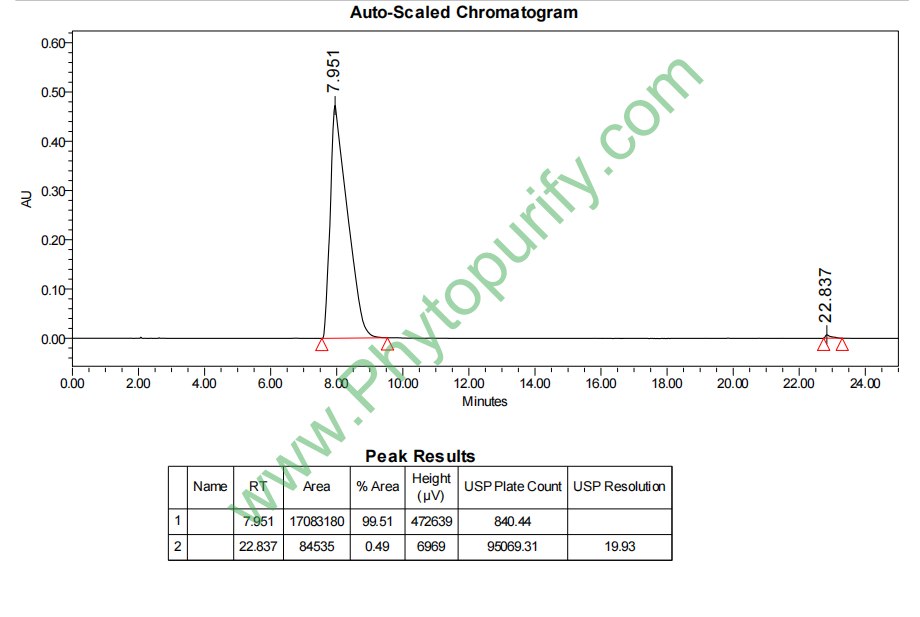
Purity: 95%~99%
Analysis Method: HPLC-DAD or/and HPLC-ELSD
Identification Method: Mass, NMR
Packing: Brown vial or HDPE plastic bottle
Storage: Store in a well closed container, protected from air and light. Put into refrigerate or freeze for long term storage.
Whenever possible, you should prepare and use solutions on the same day. However, if you need to make up stock solutions in advance, we recommend that you store the solution as aliquots in tightly sealed vials at -20℃. Generally, these will be useable for up to two weeks.
The product could be supplied from milligrams to grams
Inquire for bulk scale.
Chengdu Biopurify Phytochemicals Ltd. is a leading company in the research, development, manufacture and marketing of High Quality Phytochemicals and Extracts(especially Active Ingredients from Traditional Chinese Medicine,TCM), Natural Active Pharmaceutical Ingredients worldwide.
The main services:
A. Supply active ingredients and reference standards of TCM, from mgs to kgs scale
B. Custom extraction and purification, target Herb Active Ingredients
C. Custom synthesis and semi-synthesis for Natural Active Ingredients
D. CR(contract research), CM(contract manufacture) and PD(process development) services from lab scale, pilot scale to commercial scale(GMP is also available)
E. TCM compounds library for drug screen,more than 3000 compounds available, many of them are rare and unique.
HPLC of Galanthamine hydrobromide
Storage conditions:Short-term storage at 2~8℃, long-term storage at -20 ~ -80℃
41.9300
1.9393
1.4399
3.0311
2.6472
38.8784
High
40.2015
4.3280
No
Yes
No
No
No
No
0.0
Yes
Yes
Yes
Yes
Alzheimer's Disease (AD), as a progressive neurodegenerative disease, has become a major challenge in the global public health field. Its main pathological features include senile plaques formed by the deposition of β - amyloid protein, neurofibrillary tangles caused by excessive phosphorylation of tau protein, and accompanying functional defects of cholinergic neurons. Among numerous treatment strategies, interventions targeting the cholinergic system are one of the clinically validated effective approaches. Acetylcholinesterase inhibitors partially improve cognitive function in AD patients by inhibiting the degradation of acetylcholine and increasing the concentration of acetylcholine in the synaptic cleft. Galanthamine hydrobromide (CAS: 1953-04-4) is a second-generation acetylcholinesterase inhibitor derived from natural products. Its uniqueness lies in its selective and reversible acetylcholinesterase inhibitory activity, as well as its potential as a conformational modulator of nicotinic acetylcholine receptors, demonstrating multi-target synergistic effects. Since its isolation from plants in the Amaryllidaceae family in the mid-20th century, galantamine has undergone a transformation from a folk herb to a modern synthetic drug, ultimately becoming a widely used first-line treatment for mild to moderate Alzheimer's disease worldwide. This article aims to systematically review the chemical properties, plant sources, pharmacological activities, mechanisms of action, pharmacological properties, and clinical applications of galantamine hydrobromide, in order to provide reference for further research in this field.
Galantamine hydrobromide is the hydrobromide form of galantamine, and its parent compound galantamine is an isoquinoline alkaloid. The chemical name is (4aS, 6R, 8aS) -3-methoxy-11-methyl-4a, 5,9,10,11,12-hexahydro-6H-benzofuran [3a, 3,2-ef] [2] benzodiazepine-6-ol hydrobromide. The molecular formula is C17H21NO3 · HBr, with a molecular weight of 287.36 (free base) and 368.27 (hydrobromide). Its structural core is composed of a four ring skeleton, including a benzene ring, a furan ring, and a nitrogen heterocyclic heptane ring, and is connected to important functional groups such as methoxy and hydroxyl groups. The stereochemical structure, especially the chiral hydroxyl group at the C-6 position, is crucial for its biological activity.
In terms of physical and chemical properties, galantamine hydrobromide is a white or off white crystalline powder, odorless, and bitter in taste. Its LogP value is about 1.94, indicating that it has moderate lipophilicity, which is beneficial for its penetration of the blood-brain barrier. The topologically polar surface area (TPSA) is 41.93 Å ², which is relatively small and further supports its good membrane permeability. The water solubility data shows 3.03 mg/mL (approximately 8.2 mM), indicating moderate solubility in water, which provides a basis for the development of its oral formulation. Its pharmacological parameters show that the compound has high blood-brain barrier permeability, no significant risk of hERG channel inhibition (indicating low risk of cardiac toxicity), and a negative Ames test result (indicating no mutagenicity), which together constitute its excellent pharmacological basis.
Galantamine was originally isolated as an alkaloid from plants in the Amaryllidaceae family. Its main natural sources include:
1. Caucasian Snow Lotus It was the main plant source for early commercial extraction.
2. Allium plants Like safflower and garlic, it has a medicinal history in Chinese folk culture.
3. Narcissus plants Like various ornamental daffodils.
4. Snowflake lotus plants。
Due to the extremely low content of galantamine in plants (usually less than 0.1% dry weight) and its significant influence by season, origin, and variety, direct extraction from plants is difficult to meet the huge clinical demand. Therefore, its production method has undergone significant evolution:
1. Traditional extraction and separation In the early stages, plant materials were extracted by organic solvents such as ethanol and methanol, and then separated and purified by acid alkali treatment, column chromatography, and other techniques. The steps were cumbersome and the yield was low.
2. Chemical Total Synthesis To meet the requirements of large-scale production, multiple chemical synthesis routes have been developed. These routes typically use inexpensive and readily available chemicals as starting materials, construct their complex four ring skeleton through dozens of reaction steps, and achieve stereoselective control of key chiral centers. Total synthesis has become the main method for industrial production of galantamine, ensuring a stable supply of the drug.
3. Biotechnology methods In recent years, research on the production of galantamine through biosynthetic pathways such as plant cell culture and microbial fermentation (such as engineered yeast) has made progress. These methods aim to regulate key enzymes in the biosynthetic pathway through metabolic engineering, achieving green and sustainable production, which is a promising direction for future development.
The pharmacological activity research of galantamine hydrobromide mainly focuses on its multiple effects on the central nervous system, especially the cholinergic system.
1. Acetylcholinesterase inhibitory activity Galantamine is a selective, reversible, and competitive acetylcholinesterase inhibitor. Its IC50 value is about 0.35 µ M, indicating strong inhibitory efficacy. Compared with the first generation AChEi (such as tacrine), it has lower selectivity for butyrylcholinesterase and relatively fewer side effects. By reversibly occupying the active sites of AChE, the hydrolysis of acetylcholine is slowed down, thereby increasing the levels of acetylcholine in cognitive key brain areas such as the cerebral cortex and hippocampus, directly improving cholinergic neurotransmission defects caused by AD.
2. Nicotine acetylcholine receptor allosteric regulation This is the unique advantage that sets Galantamine apart from other AChEi. It can act as a conformational enhancer ligand on various neuronal nicotinic acetylcholine receptor subtypes, including α 3 β 4, α 4 β 2, α 6 β 4, etc. This effect does not directly excite the receptor, but enhances the binding effect between endogenous acetylcholine and the receptor, increasing the sensitivity of the receptor to acetylcholine. This mechanism not only synergistically enhances cholinergic transmission, but may also bring benefits beyond simply improving symptoms by activating nAChRs mediated neuroprotective signaling pathways.
3. Potential for neuroprotection and disease modification Preclinical studies have shown that galantamine exhibits multiple neuroprotective effects. It can alleviate neuronal toxicity induced by β - amyloid protein, inhibit abnormal phosphorylation of tau protein, and reduce neuronal apoptosis. These effects are partially attributed to the upregulation of downstream signaling pathways such as PI3K/Akt, ERK, and other survival promoting pathways triggered by the activation of nAChRs. In addition, research suggests that galantamine may exert anti neuroinflammatory effects by regulating the function of microglia.
4. Improvement effect on cognitive behavior Long term administration of galantamine can significantly improve learning and memory abilities in various AD animal models, such as APP/PS1 transgenic mice and cognitive impairment models induced by scopolamine or quinoline acid, showing excellent performance in behavioral tests such as Morris water maze and new object recognition.
The mechanism of action of galantamine hydrobromide in treating AD is a multi-target, multi pathway synergistic process, and its core targets and related networks are as follows:
Core direct targets:
* acetylcholinesterase Direct competitive inhibition and rapid increase in synaptic acetylcholine levels are the immediate basis for improving cognitive symptoms.
* Nicotinic acetylcholine receptor As a conformational enhancer, it effectively and physiologically enhances cholinergic signaling and initiates neuroprotective signals.
Indirect signaling pathways and related molecular targets involved:
The pathological process of AD involves complex network dysregulation. Galantamine indirectly affects multiple key molecules and pathways associated with AD pathology through its core cholinergic activity
* APP/A β pathway Studies have shown that galantamine may promote non amyloid APP processing by activating α 7 nAChR, thereby reducing the production of A β. Meanwhile, it may promote the clearance of A β by enhancing the phagocytic function of microglia. This is related to the target APP and BACE1 Related to the pathological process.
* Cell apoptosis and survival pathway The nAChR-PI3K/Akt pathway activated by galantamine can phosphorylate and inhibit pro apoptotic proteins such as BAD Simultaneously upregulating anti apoptotic proteins such as Bcl-2 and Mcl-1 Inhibiting mitochondrial apoptosis pathway and protecting neurons through its expression.
* Energy metabolism and autophagy Evidence suggests that galantamine may activate AMPK(PRKAA1)Regulating cellular energy homeostasis and potentially inducing protective autophagy, clearing abnormal protein aggregates.
* Neuroinflammation and Immune Regulation Inhibiting excessive activation of microglia and reducing the release of pro-inflammatory cytokines through the nAChR (especially α 7 subtype) mediated cholinergic anti-inflammatory pathway. This process may be related to IDO1 Related to changes in the expression of immune regulatory molecules.
* Lipid metabolism and membrane transport AD is associated with dysregulation of cholesterol metabolism in the brain. The therapeutic effect of galantamine may be indirectly related to its impact on cholesterol reverse transporters ABCA1 The latter plays a role in the production and clearance of A β, which is related to its function.
* Neurogenesis and differentiation:Notch1(NOTCH1)The signaling pathway is crucial in neural development and stem cell maintenance, and may be dysregulated in AD. The neuroprotective effect of galantamine may involve subtle regulation of these developmental pathways.
* Neuronutritional support Retinoic acid receptor alpha(RARA)Galantamine, which is involved in neural differentiation and plasticity, may indirectly affect related signals and provide neurotrophic support.
In summary, the mechanism of action of galantamine is not simply a "single target inhibition", but rather a core driving force of "cholinergic enhancement". Through direct and indirect means, it extensively regulates the signal network closely related to AD pathophysiology, thereby exerting a dual effect of symptom improvement and potential disease modification.
Galantamine hydrobromide has excellent pharmacological properties, which lays the foundation for its successful development as an oral medication.
Pharmacokinetic characteristics:
* absorb After oral administration, the absorption is rapid and complete, with an absolute bioavailability of nearly 90%. Food can slow down the absorption rate, but it does not affect the total absorption amount.
* distribution Manifested as a large cloth volume (approximately 175 L), indicating its widespread distribution in tissues. Its moderate lipophilicity and small TPSA enable it to efficiently penetrate the blood-brain barrier, with brain concentrations reaching several times higher than plasma concentrations, which is the key to its central role.
* Metabolism Mainly metabolized by the cytochrome P450 enzyme system in the liver, CYP2D6 and CYP3A4 are key isoenzymes involved in its main metabolic pathways, such as N-demethylation, O-demethylation, and isomerization. Therefore, its metabolic rate is affected by CYP2D6 gene polymorphism, and its exposure is increased in individuals with weak metabolism.
* excretion Metabolites and some prototype drugs (about 20-25%) are mainly excreted through the kidneys and urine. The elimination half-life is about 7 hours and supports a twice daily dosing regimen.
Drug interactions Due to CYP450 enzyme metabolism, co administration with potent CYP2D6 or CYP3A4 inhibitors (such as paroxetine and ketoconazole) may increase the blood concentration of galantamine and increase the risk of adverse reactions. Co administration with cholinergic agonists or anticholinergic drugs may result in pharmacological antagonism or synergy, and caution should be exercised.
safety evaluation Overall, the tolerance is good. The most common adverse reactions are related to cholinergic enhancement, mostly mild to moderate, transient, including nausea, vomiting, diarrhea, loss of appetite, dizziness, etc. Its lack of hERG inhibitory properties reduces the potential risk of cardiac toxicity, and negative Ames test results also support its low genetic toxicity risk. However, patients with bradycardia and atrioventricular block should use with caution.
At present, galantamine hydrobromide has been approved by multiple countries and regions worldwide for the treatment of mild to moderate Alzheimer's disease, which can effectively improve patients' cognitive function, daily living ability, and overall clinical impression. Its dual mechanism of action (AChEi+nAChR allosteric regulation) is considered the theoretical basis for its clinical benefits.
Current challenges and limitations:
1. Symptom improvement is the main focus Like all AChEi, galantamine mainly provides symptomatic improvement and cannot completely prevent or reverse disease progression.
2. individual differences The polymorphism of CYP2D6 gene in metabolism leads to individual differences in efficacy and adverse reactions.
3. adverse reaction Cholinergic side effects still affect the tolerance and compliance of some patients.
Future research directions and prospects:
1. Exploration of Disease Modification Therapy Further investigate the specific molecular mechanisms of its neuroprotective, anti A β, anti tau pathological, and anti-inflammatory effects, clarify whether it has true disease modifying potential, and search for corresponding biomarkers.
2. Combination therapy strategy Exploring the combined use of galantamine with other mechanism of action drugs such as NMDA receptor antagonist memantine, anti-A β antibody, anti tau therapy, anti-inflammatory drugs, etc., in order to generate synergistic effects and achieve multi-target intervention.
3. Formulation optimization and new delivery system Develop sustained-release formulations to improve pharmacokinetic characteristics, reduce blood drug concentration fluctuations and side effects; Research new approaches such as transdermal and intranasal administration to improve patient compliance.
4. Expand indications Based on its neuroprotective mechanism, its research in other neurodegenerative diseases such as Parkinson's disease dementia and vascular dementia, as well as cognitive impairment after traumatic brain injury, deserves attention.
5. Precision Medical Applications Combining pharmacogenomics (CYP2D6 typing) to achieve personalized optimization of dosing regimens, improving efficacy and safety.
Galantamine hydrobromide is a modern successful drug model that has emerged from traditional medicinal plants. It is not just a simple acetylcholinesterase inhibitor, its unique nicotinic receptor allosteric regulation endows it with multi-target and multi effect pharmacological characteristics. The development process of galantamine reflects the complete path of modern research on natural products, from precise analysis of chemical structures to breakthroughs in large-scale synthesis processes, from in-depth elucidation of basic pharmacological effects to verification in large-scale clinical trials. Although there are still challenges on the road to completely conquering Alzheimer's disease, the value of galantamine as one of the current core therapeutic drugs is beyond doubt. In the future, by delving deeper into its disease modification potential, exploring optimized treatment strategies, and combining emerging biotechnology and precision medicine concepts, this classic drug is expected to continue to play an important role in the treatment of neurodegenerative diseases and provide continuous inspiration for innovative drug development derived from nature.
