


Product name: Arachidonic acid
Synonym name: (5Z,8Z,11Z,14Z)-Icosa-5,8,11,14-tetraenoic acid
Catalogue No.: BP4150
Cas No.: 506-32-1
Formula: C20H32O2
Mol Weight: 304.474
Botanical Source:
Physical Description:
Type of Compound: Aliphatics
Purity: 95%~99%
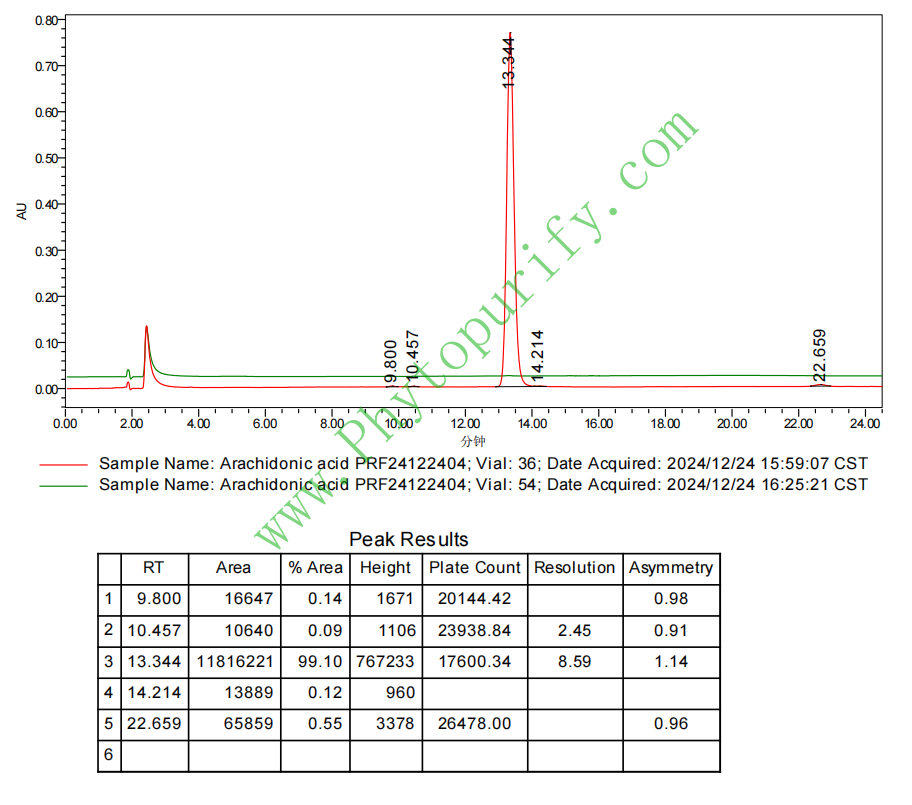
Analysis Method: HPLC-DAD or/and HPLC-ELSD
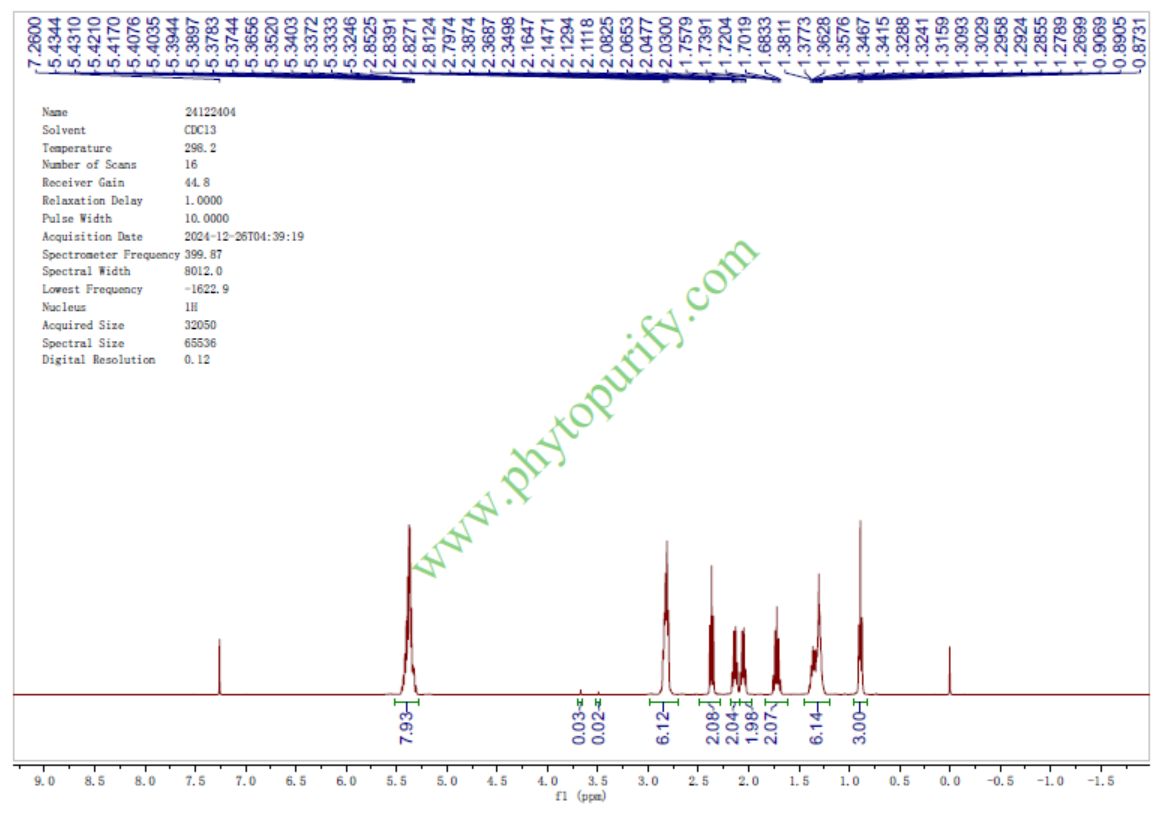
Identification Method: Mass, NMR
Packing: Brown vial or HDPE plastic bottle
Storage: Store in a well closed container, protected from air and light. Put into refrigerate or freeze for long term storage.
Whenever possible, you should prepare and use solutions on the same day. However, if you need to make up stock solutions in advance, we recommend that you store the solution as aliquots in tightly sealed vials at -20℃. Generally, these will be useable for up to two weeks.
The product could be supplied from milligrams to grams
Inquire for bulk scale.
For Reference Standard and R&D, Not for Human Use Directly.
HPLC of Arachidonic acid
HNMR of Arachidonic acid
Storage conditions:Short-term storage at 2~8℃, long-term storage at -20 ~ -80℃
37.3000
6.6187
4.2247
.0048
4.4855
2.4535
High
96.5293
2.7686
Yes
Yes
No
No
No
No
0.0
No
Yes
Yes
Yes
Arachidonic acid (ARA, CAS number: 506-32-1) is an important polyunsaturated omega-6 fatty acid widely present in mammalian cell membrane phospholipids. As an important component of the cell membrane, it plays a crucial role in maintaining the fluidity and functional integrity of the cell membrane. ARA is not only the foundation of biofilm structure, but also a precursor substance for various bioactive lipid mediators, such as prostaglandins (PGs), leukotrienes (LTs), and thromboxanes (TXs). These metabolites play important roles in inflammatory response, immune regulation, vascular function, and nervous system function.
In recent years, with in-depth research on the physiological functions and metabolic pathways of ARA, the potential pharmacological value of ARA in improving cognitive function, cardiovascular protection, and inflammation regulation has gradually been revealed. Especially in the fields of chronic inflammation, neurodegenerative diseases, and cardiovascular diseases, ARA and its metabolites have become important targets for research and development of novel therapeutic strategies. This article will provide a systematic review of the chemical structure and physicochemical properties, plant sources and extraction methods, pharmacological activity and mechanism of action, pharmacological evaluation and pharmacokinetic characteristics of ARA, and explore its clinical application prospects and development trends. The aim is to provide comprehensive and in-depth reference materials for researchers in the field of natural product pharmacology.
The chemical name of arachidonic acid (ARA) is 5,8,11,14-eicosatetraenoic acid, with a molecular formula of C20H32O2 and a molecular weight of 304.4740. ARA belongs to the omega-6 series of polyunsaturated fatty acids (PUFAs), containing 20 carbon atoms and 4 cis double bonds located at positions 5, 8, 11, and 14 of the carbon chain, all in cis configuration. Its structural features endow ARA with high molecular flexibility and biological activity.
The physicochemical properties of ARA are characterized by high lipophilicity, with a LogP value of approximately 6.6187, indicating its strong lipophilicity and poor solubility in water (with a water solubility of approximately 0.0048 mg/mL). However, its polar surface area (TPSA) is relatively low, only 37.3 Å ², which is conducive to penetrating cell membranes and the blood-brain barrier. The high blood-brain barrier permeability of ARA enables it to play important physiological functions in the nervous system. In addition, ARA does not exhibit hERG channel inhibition in vivo, and the Ames mutagenicity test result is 0, indicating its high safety and low risk of genetic toxicity.
In terms of chemical stability, the polyunsaturated structure of ARA makes it susceptible to oxidation, especially under exposure to light, heat, and oxygen conditions, which can lead to peroxidation reactions and the formation of lipid peroxides. Therefore, antioxidant measures need to be taken during the preservation and application of ARA to maintain its activity.
Although ARA mainly exists in animal tissues, especially in mammalian brain tissue, liver, and muscle, some plant oils and algae also contain small amounts of ARA, becoming one of their natural sources. Common plant resources containing ARA include certain algae (such as red algae and brown algae) and microalgae (such as Mortierella alpina), which become important raw materials for industrial production of ARA through fermentation technology.
Traditional extraction methods mainly rely on solvent extraction and fatty acid esterification techniques. Common extraction solvents include hexane, ethanol, and chloroform methanol mixed solvents. Lipid mixtures are obtained by ultrasound assisted extraction, Soxhlet extraction, or cold pressing, followed by saponification and fatty acid methylation treatment. Gas chromatography-mass spectrometry (GC-MS) technology is used for separation and quantitative analysis.
In recent years, with the promotion of green chemistry concepts, supercritical CO2 extraction technology has gradually become the mainstream method for extracting ARA due to its high efficiency, environmental friendliness, and strong selectivity. This technology can maintain the structural integrity of ARA at lower temperatures, reduce oxidation losses, and improve purity and yield. In addition, the engineering modification of biosynthetic pathways also provides new ideas for the industrial production of ARA, by genetically engineering microalgae or yeast to achieve efficient biosynthesis.
Arachidonic acid, as an important component of cell membrane lipids and a precursor of various lipid mediators, exhibits diverse pharmacological activities, covering areas such as inflammation regulation, neuroprotection, and cardiovascular function improvement.
ARA metabolites such as prostaglandin E2 (PGE2) and leukotriene B4 (LTB4) have bidirectional regulatory effects in inflammatory responses. ARA is released through phospholipase A2 (PLA2) and enters the cyclooxygenase (COX/PTGS2) and lipoxygenase (LOX) pathways, generating various inflammatory mediators. Prostaglandins catalyzed by PTGS2 (COX-2) promote vascular dilation and immune cell recruitment in the early stages of inflammation, while lipoxygenases such as ALOX5, ALOX12, and ALOX15 participate in the production of leukotrienes and lipoxygenins, regulating the chemotaxis and activation of inflammatory cells.
Research has shown that ARA and its metabolites play a crucial role in regulating the temporal and spatial dynamics of inflammatory responses. They can promote acute inflammatory responses to resist pathogens, as well as promote inflammation resolution and tissue repair by generating anti-inflammatory lipid mediators such as lipoxygenin A4. Therefore, the role of ARA in chronic inflammatory diseases is complex, with both the risk of promoting inflammation and the potential to regulate and alleviate inflammation.
ARA is abundant in the central nervous system and participates in the construction of neuronal membranes and signal transduction. ARA metabolites affect neuroinflammation, synaptic plasticity, and neurotransmitter release, thereby regulating cognitive function and neuroprotection. Clinical and animal experimental data show that ARA supplementation can improve cognitive response, promote nerve repair, and slow down the progression of neurodegenerative diseases.
In addition, the high blood-brain barrier permeability of ARA enables it to directly act on brain tissue, regulate neuronal membrane fluidity and signal transmission, enhance neuronal adaptability and survival ability.
ARA and its metabolites play important roles in vasodilation, platelet function, and blood pressure regulation. Prostaglandin I2 (PGI2) and thromboxane A2 (TXA2) respectively regulate vasodilation and platelet aggregation, maintaining the balance of hemorheology. The metabolic pathway of ARA improves the overall health status of the cardiovascular system by regulating endothelial function and anti-inflammatory response.
Research has shown that moderate intake of ARA can help reduce the risk of cardiovascular disease, improve blood lipid profile and vascular elasticity, but excessive intake may promote inflammation and thrombosis, and a balanced intake is needed to achieve optimal protective effects.
The biological function of ARA is mainly mediated by its metabolites, involving multiple enzymatic metabolic pathways and signal transduction pathways. Its key molecular targets include:
ARA generates various bioactive lipid mediators through the catalysis of the aforementioned enzyme system, regulating intracellular signaling pathways such as NF - κ B, MAPK, and PPAR, affecting gene expression, cell proliferation, apoptosis, and immune response. In addition, ARA and its metabolites can act as ligands to activate specific lipid receptors, such as G protein coupled receptors (GPCRs) and nuclear receptors, mediating multiple physiological effects in cells.
The molecular weight of ARA is 304.4740, and its high LogP (6.6187) indicates strong hydrophobicity and low water solubility (0.0048 mg/mL), which poses challenges to its oral bioavailability and formulation design. Low polarity and smaller polar surface area (TPSA 37.3 Å ²) are beneficial for penetrating cell membranes and blood-brain barriers, supporting their pharmacological effects on the nervous system.
In terms of safety, ARA did not exhibit hERG channel inhibitory activity, reducing the risk of arrhythmia. A negative Ames test indicates a low risk of genetic toxicity and has a good safety foundation.
ARA, as an endogenous fatty acid, is mainly obtained in the body through dietary intake and fat tissue release. It is mainly absorbed in the small intestine and enters the bloodstream through passive diffusion and lipase assisted absorption. Due to its high lipophilicity, ARA mainly binds to lipoproteins in plasma and is widely distributed, especially enriched in organs such as the brain, liver, and heart.
ARA is rapidly metabolized in the body, mainly through the cyclooxygenase and lipoxygenase pathways to convert into various bioactive metabolites. The half-life of metabolites is short and requires continuous supply to maintain physiological functions. The excretion pathway of ARA is mainly through the metabolism of metabolites in the liver, which are then excreted with bile and urine.
Due to the physiological function of ARA relying on its metabolites, pharmacokinetic studies need to combine the generation and clearance dynamics of metabolites to comprehensively evaluate its in vivo activity and duration of drug efficacy.
With a deeper understanding of the physiological functions and metabolic networks of ARA, ARA and its related metabolites have shown broad application prospects in the prevention and treatment of various diseases.
The bidirectional regulatory effect of ARA metabolites in inflammatory response makes it a potential therapeutic target for chronic inflammatory diseases such as rheumatoid arthritis, inflammatory bowel disease, asthma, etc. By regulating the activity of key enzymes such as ALOX and PTGS2, the development of specific inhibitors or modulators targeting the ARA metabolic pathway is expected to achieve precise control of inflammation.
The role of ARA in cognitive function and neuroprotection makes it a candidate molecule for adjuvant therapy of neurodegenerative diseases such as Alzheimer's disease and Parkinson's disease. In the future, by improving the brain supply of ARA or regulating its metabolism, it is expected to promote neural repair and functional recovery.
ARA metabolites regulate vascular function and platelet activity, providing new ideas for the prevention and treatment of cardiovascular diseases. Rational regulation of ARA and its metabolic pathway can help reduce the risk of atherosclerosis, thrombosis and hypertension.
ARA, as an essential fatty acid, has been widely used in infant formula and nutritional supplements to support brain development and immune function. In the future, with the advancement of biosynthetic technology, the high purity and efficient production of ARA will promote its widespread application in clinical nutrition and health management.
Although ARA has significant biological activity, its high lipid solubility and susceptibility to oxidation limit the development and clinical application of formulations. In the future, advanced drug delivery systems such as nanocarriers and liposomes will be needed to improve their stability and bioavailability. Meanwhile, in-depth analysis of the ARA metabolic network and target interactions can help discover new therapeutic targets and develop multi-target synergistic drugs.
Arachidonic acid, as a key polyunsaturated omega-6 fatty acid, has become an important object of natural product pharmacology research due to its central position in cell membrane structure and lipid mediator generation. ARA exhibits multidimensional pharmacological potential by regulating inflammatory response, neurological function, and cardiovascular health through complex metabolic pathways. Although there are certain challenges in its pharmacological development, with the continuous progress of extraction technology, drug delivery systems, and molecular targeting research, ARA and its metabolites have broad prospects for application in disease treatment and health promotion. Future research should focus on in-depth analysis of ARA metabolic regulation mechanisms, formulation optimization, and clinical translation, providing a solid foundation for the development of innovative drugs based on natural fatty acids.
