Research progress on systematic pharmacology and pharmacological properties of 3-O-ferulic acid: a natural polyphenolic acid
Introduction/Overview
Natural products, as an important source of drug discovery, play an irreplaceable role in the long history of human fight against diseases. Phenolic acid compounds, as important components of plant secondary metabolites, have attracted much attention due to their wide range of biological activities. Quinic acid and its derivatives, especially esters formed with hydroxycinnamic acid (such as ferulic acid and caffeic acid), constitute a diverse and functionally rich family of compounds in nature. 3-O-Feruloylquinic acid (3-FQA), as a derivative formed by the ester bond between the 3-hydroxy group of quinic acid and trans ferulic acid, is one of the representative members of this family.
3-O-feruloylquinic acid is widely present in various medicinal plants and daily diets, such as coffee, honeysuckle, echinacea, and certain Asteraceae plants. Its chemical structure endows it with unique physicochemical properties and biological activity. In recent years, with the deepening of research on natural antioxidants and anti-inflammatory active substances, 3-FQA has gradually become a research hotspot in the field of natural product pharmacology due to its significant antioxidant capacity, potential anti-inflammatory, anti fibrotic, and neuroprotective effects. Especially in intervention strategies for oxidative stress-related diseases such as skin aging, cardiovascular disease, and neurodegenerative diseases, 3-FQA has shown remarkable potential.
This article aims to systematically review the chemical structure and physicochemical properties, plant sources and extraction methods, pharmacological activity, mechanism of action, pharmacological evaluation, and clinical application prospects of 3-O-feruloylquinic acid, in order to provide comprehensive scientific basis for further research and development of this natural product.
Chemical structure and physicochemical properties
Chemical structure analysis
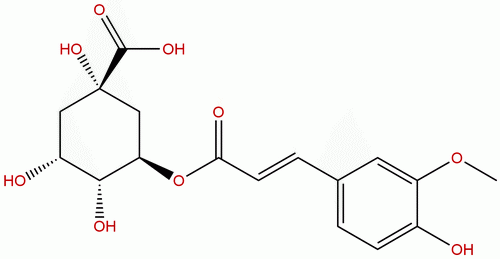
The chemical name of 3-O-feruloylquinic acid is 3-O - [(2E) -3- (4-hydroxy-3-methoxyphenyl) prop-2-enoyl] - D-quinic acid, and its core skeleton consists of two parts: the parent nucleus D-quinic acid (-) - quinic acid) and the side chain trans ferulic acid. Quinic acid is a cyclohexane polyacid with six carbon atoms, with a carboxyl group at position 1 and hydroxyl groups at positions 2, 3, 4, and 5. In 3-FQA, ferulic acid is linked to the hydroxyl group at the 3-position of quinic acid through ester bonds. The ferulic acid moiety contains a phenolic hydroxyl group, a methoxy group, and an alpha, beta unsaturated carboxylic acid structure. This conjugated system is the key structural basis that endows it with antioxidant activity.
From a stereochemical perspective, naturally occurring 3-O-feruloylquinic acid is typically in the D-configuration. Its molecular formula is C ₁₇ H ₂₀ O ₉, and its molecular weight is 368.3380 g/mol. This compound belongs to the phenolic acid family, specifically classified as hydroxycinnamoylquinic acids. Compared with the more well-known chlorogenic acid (5-O-caffeoylquinic acid), the difference between 3-FQA lies in the different acylation positions and phenolic acid types (ferulic acid vs caffeic acid), which leads to differences in polarity, antioxidant capacity, and bioavailability.
Physical and chemical property parameters
Based on computational chemistry and experimental data, 3-O-feruloylquinic acid exhibits typical polar molecular characteristics:
- Lipid water partition coefficient (LogP): 0.1088. This value is extremely low, indicating that the compound has high hydrophilicity and is not easily able to penetrate the lipid bilayer. This is related to the presence of multiple hydroxyl and carboxyl groups in the molecule.
- Topological Polarity Surface Area (TPSA): 153.7500 Å ². TPSA is an important parameter for predicting oral absorption and blood-brain barrier penetration ability. It is generally believed that molecules with TPSA greater than 140 Å ² have poor oral absorption and are difficult to penetrate the blood-brain barrier. The high TPSA value of 3-FQA suggests that its oral bioavailability may be limited and the central nervous system exposure may be low.
- Water solubility 5.4184 (LogS). This value indicates that 3-FQA has good solubility in water, which is beneficial for its dissolution in the gastrointestinal tract and formulation development.
- Blood-brain barrier (BBB) penetration ability: Low. Combining high TPSA and low LogP values, 3-FQA has almost no ability to penetrate the blood-brain barrier, and its pharmacological effects are mainly limited to peripheral tissues and organs.
- HERG inhibition: No. Inhibition of hERG potassium channels is the main cause of cardiac toxicity (QT interval prolongation). 3-FQA has no hERG inhibitory activity, indicating a low risk of cardiac safety.
- Ames test: 0.0. The result is negative, indicating that 3-FQA has no mutagenicity in the standard bacterial response mutation test and has a low risk of genetic toxicity.
These physical and chemical parameters collectively outline 3-FQA as a highly polar, water-soluble, and safe natural product that may have limited oral absorption, providing direction for its subsequent pharmacokinetic studies and formulation design.
Plant sources and extraction methods
Main plant sources
3-O-feruloylquinic acid is not a rare compound and is widely distributed in the plant kingdom, especially in the following families and genera where its content is relatively high:
- Caprifoliaceae family Honeysuckle flower(Lonicera japonica)Plants belonging to the same genus are important sources of 3-FQA. Honeysuckle, as a traditional Chinese medicine for clearing heat and detoxifying, is based on various phenolic acid components, including 3-FQA, chlorogenic acid, isochlorogenic acid, etc.
- Rubiaceae family: Coffee(Coffea Both raw and baked beans contain 3-FQA. In coffee, it is one of the isomers of chlorogenic acid (CGA), and although its content is usually lower than that of 5-caffeoylquinic acid, it still makes an important contribution.
- Asteraceae (Asteraceae): Purple cone chrysanthemum(Echinacea purpurea), Thistle(Cynara scolymus)And the presence of 3-FQA has also been detected in some Artemisia plants (such as Artemisia annua).
- Other sources It has also been reported in Solanaceae plants (such as goji berries), Umbelliferae plants (such as Angelica sinensis), and certain fruits (such as blueberries and apples).
It is worth noting that the content of 3-FQA varies significantly among different plants, different parts (flowers, leaves, roots, fruits), and different growth stages. For example, honeysuckle has a higher content during the bud stage, while the roasting process of coffee beans can lead to partial degradation or isomerization.
Extraction and purification methods
Given the polarity characteristics of 3-FQA, its extraction is usually carried out using a polar solvent system:
- Solvent extraction method The most commonly used method. Using water, methanol, ethanol or their mixed solvents (such as 50% -80% ethanol aqueous solution) as extraction agents, heating reflux, ultrasound assisted or microwave-assisted extraction is used. Ultrasound and microwave technology can effectively destroy cell walls and improve extraction efficiency. The extraction temperature needs to be controlled (usually 40-70 ℃) to avoid hydrolysis of ester bonds.
- Solid phase extraction (SPE)Commonly used for preliminary purification of crude extracts. The C18 reverse phase SPE column can effectively enrich phenolic acid components and remove impurities such as sugars and proteins.
- Chromatographic separation technology:
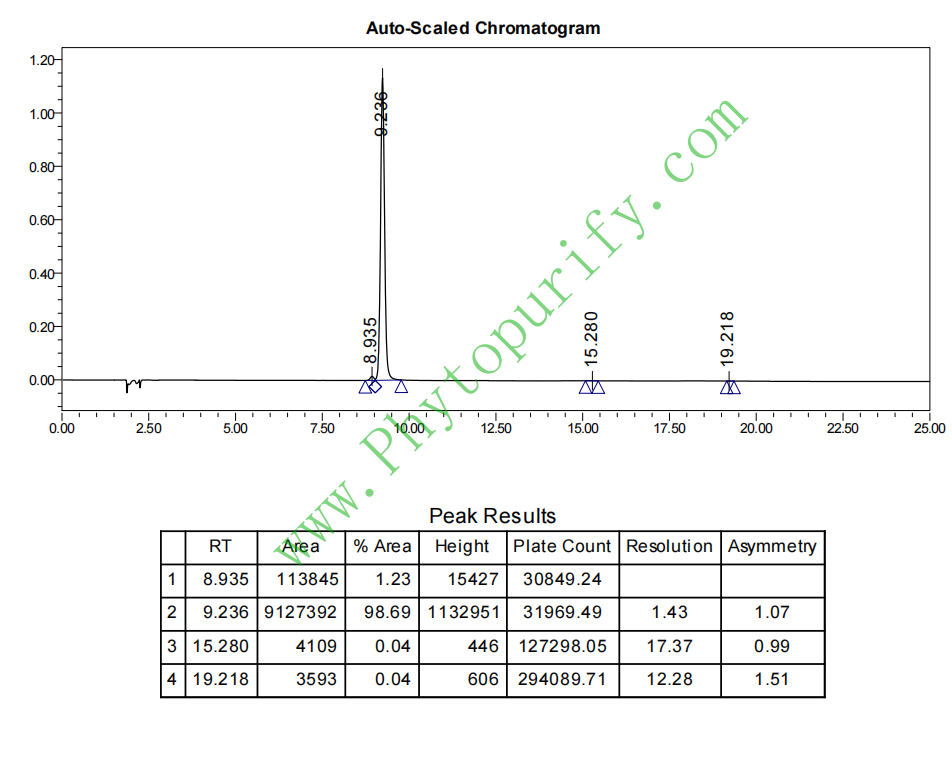
- Preparation type high performance liquid chromatography (Prep HPLC)Currently, obtaining high-purity 3-FQA (>98%) is the most effective method. Usually, a C18 reverse phase column is used, with acetonitrile water or methanol water (containing a small amount of formic acid or acetic acid) as the mobile phase for gradient elution.
- High Speed Counter Current Chromatography (HSCCC)A liquid-liquid distribution chromatography technique suitable for large-scale preparation, with advantages such as high sample recovery and irreversible adsorption.
- Macroporous adsorption resin For example, HPD-100, D101, etc. can be used for preliminary separation, and the target phenolic acid components can be enriched by gradient elution with different concentrations of ethanol.
During the extraction and purification process, special attention should be paid to avoiding high temperatures, strong acids, strong bases, and prolonged light exposure to prevent oxidation or hydrolysis degradation of 3-FQA.
Pharmacological activity research
antioxidant activity
Antioxidant activity is the most core and extensively studied pharmacological activity of 3-O-feruloylquinic acid. The phenolic hydroxyl group (ferulic acid moiety) and α, β - unsaturated double bonds in its molecular structure endow it with strong free radical scavenging ability.
- In vitro chemical model In classic antioxidant evaluation systems such as DPPH, ABTS, FRAP, and ORAC, 3-FQA exhibits significant clearance ability. Its activity is usually stronger than that of single quinic acid or ferulic acid, which is attributed to the stabilization of intramolecular hydrogen bonds after esterification and the synergistic antioxidant effect. Research has shown that 3-FQA has good scavenging effects on hydroxyl radicals (· OH), superoxide anions (O ₂⁻·), and peroxynitrite (ONOO ⁻).
- Cell Model In H ₂ O ₂ - or UVB induced oxidative stress cell models (such as human keratinocyte HaCaT, human fibroblast HFF-1, and liver cell L02), 3-FQA pretreatment can significantly reduce intracellular reactive oxygen species (ROS) levels, inhibit the production of lipid peroxidation product malondialdehyde (MDA), and enhance the activity of endogenous antioxidant enzymes such as superoxide dismutase (SOD), catalase (CAT), and glutathione peroxidase (GPX) in cells. This effect is closely related to its activation of the nuclear factor E2 related factor 2 (NRF2/NFE2L2) signaling pathway.
anti-inflammatory activity
Chronic inflammation is the common pathological basis of many diseases (such as cardiovascular disease, diabetes, neurodegenerative disease). 3-FQA exhibits anti-inflammatory potential in multiple inflammatory models.
- Macrophage model In RAW264.7 macrophages stimulated by lipopolysaccharide (LPS), 3-FQA can dose dependently inhibit the production of pro-inflammatory mediators such as nitric oxide (NO), prostaglandin E ₂ (PGE ₂), and pro-inflammatory cytokines (TNF - α, IL-6, IL-1 β). The mechanism involves inhibiting the activation of nuclear factor kappa B (NF - κ B) and phosphorylation of the mitogen activated protein kinase (MAPK) signaling pathway.
- Skin inflammation model In the UVB induced skin photodamage model, local application of 3-FQA can alleviate skin erythema and edema, inhibit inflammatory cell infiltration, and downregulate the expression of cyclooxygenase-2 (COX-2) and inducible nitric oxide synthase (iNOS).
Anti fibrotic and skin protective effects
Given its dual regulatory effects on oxidative stress and inflammation, 3-FQA exhibits unique value in skin anti-aging and anti fibrosis.
- Inhibition of matrix metalloproteinases (MMPs)The main characteristic of skin photoaging is the degradation of extracellular matrix (ECM), in which MMP-1 (collagenase) and MMP-3 (matrix metalloproteinase) play a key role. 3-FQA can effectively inhibit the expression and activity of MMP-1 and MMP-3 induced by UVB, thereby protecting skin collagen and elastin from degradation. This effect is partially achieved by inhibiting the MAPK/AP-1 pathway.
- Inhibition of Tyrosinase (TYR)Tyrosinase is a key rate limiting enzyme in melanin synthesis. 3-FQA has an inhibitory effect on TYR activity, suggesting that it may have whitening effects. Although its inhibitory activity may be weaker than traditional whitening agents such as arbutin, it has both antioxidant and anti-inflammatory properties, making it more advantageous in comprehensive skincare.
Other pharmacological activities
- Liver protection In animal models of liver injury induced by carbon tetrachloride (CCl ₄) or alcohol, 3-FQA can reduce serum transaminase (ALT, AST) levels, alleviate liver cell necrosis and steatosis, and its mechanism is related to activating the NRF2/HO-1 pathway and inhibiting oxidative stress.
- neuroprotection Although BBB penetration is low, 3-FQA may indirectly exert neuroprotective effects by regulating peripheral inflammation and oxidative stress in pathological states of peripheral neuropathy or damage to the blood-brain barrier. In the A β - induced neurotoxic model, it exhibits certain anti apoptotic activity.
- metabolic regulation Preliminary studies suggest that 3-FQA may improve insulin resistance and lipid metabolism disorders by activating the AMPK signaling pathway.
Mechanism of action and molecular targets
The pleiotropic pharmacological effects of 3-O-feruloylquinic acid stem from its regulation of multiple molecular targets and signaling pathways. Based on existing research, its core mechanism of action can be summarized as follows:
Core signaling pathway: NRF2/ARE pathway
NRF2 (composed of genes)NFE2L2 Coding is the main transcription factor for cells to cope with oxidative stress and electrophilic substances. In the basic state, NRF2 binds to Keap1 and is degraded by ubiquitination. When cells are subjected to oxidative stimulation, NRF2 dissociates from Keap1, translocates into the nucleus, binds to antioxidant response elements (ARE), and initiates the transcription of a series of downstream protective genes.
3-FQA and its metabolites (such as ferulic acid) have been proven to be effective activators of NRF2. The activation mechanism may include:
1. Directly modify Keap1 The α, β - unsaturated carbonyl structures in 3-FQA molecules can act as Michael addition receptors, covalently binding to cysteine residues (such as Cys151) on Keap1 protein, causing a conformational change in Keap1 and releasing NRF2.
2. Inducing ROS production Low concentrations of 3-FQA can slightly induce ROS production as a signal to trigger NRF2 activation.
After NRF2 activation, upregulated downstream target genes include:
- antioxidant enzyme:SOD1(Cu/Zn-SOD)、SOD2(Mn-SOD)、CAT(Catalase)GPX1(Glutathione peroxidase 1).
- Phase II detoxifying enzyme:HMOX1(Heme oxygenase-1, HO-1), NQO1 (Quinone oxidoreductase 1).
- Glutathione synthesis related enzymes:GCLM、GCLC。
Through this core pathway, 3-FQA enhances the overall antioxidant defense ability of cells, thereby combating oxidative stress damage.
Anti inflammatory and anti-aging related targets
- Inhibition of NF - κ B pathway NF - κ B is the core transcription factor of inflammatory response. 3-FQA can inhibit the phosphorylation and degradation of I κ B α, prevent the nuclear translocation of NF - κ B p65 subunit, and downregulate the expression of pro-inflammatory factors such as COX-2, iNOS, TNF - α, IL-6, etc. There is a cross-talk between the activation of NRF2 and the inhibition of NF - κ B. The products of HO-1, carbon monoxide (CO) and biliverdin, have anti-inflammatory activity and can further inhibit NF - κ B.
- Inhibition of MAPK/AP-1 pathway UVB and other stimuli can activate MAPKs such as JNK, p38, and ERK, which in turn phosphorylate and activate transcription factor AP-1 (c-Jun/c-Fos). AP-1 is MMP1 and MMP3 The main transcriptional activators of genes. 3-FQA inhibits MAPK phosphorylation and blocks AP-1 activation, thereby reducing the synthesis of MMP-1 and MMP-3 and protecting the skin ECM.
- Inhibition of Tyrosinase (TYR)3-FQA can chelate copper ions from the active center of tyrosinase or competitively inhibit its activity as a substrate analog, reducing melanin production.
Multi-target network effect
3-FQA does not act on a single target, but exerts its comprehensive pharmacological effects through a network regulation mode of "multi-target, multi pathway". Its target network involves:
- Redox balance regulation:NRF2、SOD1/2、CAT、GPX1、HMOX1。
- Inflammation and immune regulation:NF-κB、COX-2、iNOS、TNF-α、IL-6。
- ECM reshaping:MMP1、MMP3。
- Pigment metabolism:TYR。
This multi-target mode of action gives it unique advantages in dealing with complex diseases such as skin aging and metabolic syndrome, but it also increases the difficulty of analyzing its precise mechanism of action.
Evaluation of drug properties and pharmacokinetics
Drugability assessment
Based on Lipinski's Five Rules (Ro5) and Veber's Rules, a preliminary evaluation of the pharmacological properties of 3-FQA was conducted
- molecular weight 368.34 Da (<500 Da, compliant with Ro5).
- LogP 0.11 (<5, compliant with Ro5).
- Hydrogen bond donor (HBD)5 (phenolic hydroxyl, carboxyl, alcohol hydroxyl), slightly higher than the upper limit of 5 for Ro5.
- Hydrogen bond acceptor (HBA)9 (>10, compliant with Ro5).
- Number of rotatable keys: 5 (<10, compliant with Veber rules).
- TPSA 153.75 Å ² (>140 Å ², not meeting the prediction of good oral absorption in Veber's rules).
Conclusion 3-FQA meets the requirements for synthetic drug properties in terms of molecular weight and lipophilicity, but its high number of hydrogen bond donors and extremely low LogP value, especially its extremely high TPSA, strongly suggest its Oral bioavailability may be poor This is mainly due to the high polarity of the molecules, making it difficult to passively diffuse through the intestinal epithelial cell membrane. Therefore, 3-FQA is more likely to be classified as a "beyond Rule of Five" (bRo5) molecule, requiring special formulation techniques or routes of administration (such as topical application or injection) to exert its pharmacological effects.
Pharmacokinetic characteristics
At present, there is insufficient research on the in vivo pharmacokinetics of 3-FQA, but based on the study of its structural analogues (such as chlorogenic acid and ferulic acid), its general characteristics can be inferred:
- absorb After oral administration, the absorption rate of 3-FQA in the stomach and small intestine is relatively low. Most of them may enter the colon in their original form and be metabolized by the gut microbiota. Its ester bond can be hydrolyzed by intestinal microbiota esterase, releasing quinic acid and ferulic acid. Ferulic acid itself has good absorption and may be an important active metabolite for 3-FQA to exert systemic pharmacological effects.
- distribution Due to its high polarity and low fat solubility, 3-FQA and its metabolites are mainly distributed in plasma and extracellular fluid, with limited tissue distribution, especially difficult to penetrate the blood-brain barrier (BBB low).
- Metabolism Metabolism mainly occurs in the liver and intestines. The main metabolic pathways include:
- hydrolysis Hydrolysis of ester bonds produces ferulic acid and quinic acid.
- Combination reaction Phenolic hydroxyl and carboxyl groups combine with glucuronic acid, sulfuric acid, or methyl to form phase II metabolites.
- Methylation/demethylation The methoxy group on ferulic acid can undergo demethylation to produce caffeic acid.
- excretion Mainly excreted in the form of metabolites through urine and bile.
safety evaluation
As mentioned earlier, the Ames test was negative and hERG inhibition was negative, indicating that 3-FQA has a lower risk of genetic toxicity and cardiac toxicity. In animal acute toxicity experiments, no significant adverse reactions were observed at high doses of 3-FQA. However, research on long-term toxicity and reproductive toxicity is still a gap that needs to be addressed in future studies.
Clinical application prospects and prospects
Potential application areas
Based on its pharmacological activity and safety characteristics, 3-O-feruloylquinic acid has broad development prospects in the following fields:
- Skin care and anti-aging cosmetics This is the most direct and feasible application direction for 3-FQA. Its powerful antioxidant, anti-inflammatory, MMPs inhibiting, and tyrosinase inhibiting activities make it an ideal anti-aging, whitening, and photoprotective active ingredient. Due to its large molecular weight and high polarity, it is not easy to penetrate the skin, but its skin retention and transdermal absorption can be improved through carrier technologies such as nanoliposomes and microemulsions. It is the most realistic way to develop topical preparations (such as essence, face cream and facial mask).
- Functional foods and dietary supplements As a natural ingredient in daily foods such as coffee and honeysuckle, 3-FQA has guaranteed safety. Can be developed as a dietary supplement with antioxidant, hepatoprotective, and hypoglycemic functions. Although oral bioavailability is low, its intestinal metabolite (ferulic acid) has biological activity, and 3-FQA itself may exert antioxidant and anti-inflammatory effects locally in the intestine (such as regulating gut microbiota and protecting the intestinal mucosal barrier).
- Adjuvant therapy in the field of medicine:
- Liver disease adjuvant therapy Used as an adjuvant intervention for alcoholic liver disease and non-alcoholic fatty liver disease (NAFLD).
- Cardiovascular protection: Alleviate the progression of atherosclerosis through antioxidant and anti-inflammatory effects.
- Complications of diabetes Inhibit oxidative stress and the formation of advanced glycation end products (AGEs).
Challenges and Solutions Faced
Despite the bright future, the development of 3-FQA still faces severe challenges:
- Low oral bioavailability This is the biggest bottleneck. The solution strategy includes:
- Prodrug design Esterification or etherification modification of carboxyl or phenolic hydroxyl groups to improve lipid solubility.
- nano-formulation Liposomes, solid lipid nanoparticles, polymer micelles, etc. can enhance their oral absorption.
- Absorption enhancer Used in combination with P-glycoprotein inhibitors or intestinal permeability enhancers.
- Insufficient depth of mechanism of action Currently, research is mostly focused on the cellular and animal levels, lacking direct evidence of binding to specific protein targets (such as surface plasmon resonance, molecular docking validation). In the future, it is necessary to combine chemical biology methods to clarify its direct target proteins.
- Lack of systematic pharmacokinetic and toxicological data in vivo Standardized preclinical studies are required, including pharmacokinetics, tissue distribution, long-term toxicity, reproductive toxicity, etc. in rats/dogs.
- Quality Control Standards As a natural product, standardization of its source and extraction process is crucial. It is necessary to establish fingerprint spectra and content determination methods based on HPLC or LC-MS to ensure the quality consistency of different batches of products.
Conclusion
3-O-feruloylquinic acid, as a natural phenolic acid widely present in the plant kingdom, exhibits a multidimensional pharmacological activity spectrum with antioxidant as the core and covering anti-inflammatory, anti fibrotic, and skin protection, thanks to its unique chemical structure. Its mechanism of action mainly revolves around activating the NRF2/ARE antioxidant defense system and inhibiting the NF - κ B/MAPK inflammatory signaling pathway, reflecting the characteristics of multi-target and multi pathway synergistic regulation of natural products.
The evaluation of drug properties reveals its typical characteristics of "high activity, high polarity, and low oral bioavailability". This is both a challenge and an opportunity. Through the empowerment of modern pharmaceutical formulation technologies such as nanocarriers and prodrug design, as well as the in-depth exploration of its intestinal microbiota metabolism and local application potential, 3-FQA is expected to achieve its clinical value in the fields of skin health care, functional foods, and adjuvant therapy for chronic diseases.
Future research should focus on: 1) identifying its direct molecular targets through chemical biology methods; 2) Develop efficient and safe delivery systems to overcome oral absorption barriers; 3) Conduct systematic preclinical pharmacokinetic and toxicological evaluations. Only in this way can this ancient plant metabolite be revitalized in the modern drug development system and contribute to human health.