| Catalog No | Package | Original Price | Price | Inventory | Quantity | Operating |
|---|---|---|---|---|---|---|
| BP2310-5mg | 5mg | $250.00 | Sign in |
|


Storage conditions:Short-term storage at 2~8℃, long-term storage at -20 ~ -80℃
124.2900
.6006
-1.6243
3.3369
.7151
.3367
Low
79.0485
3.5987
Yes
No
No
No
Yes
No
0.0
Yes
Yes
Yes
Yes
Natural products, as an important source of drug discovery, play an irreplaceable role in the long history of human fight against diseases. In recent years, with the rapid development of modern separation technology and pharmacological screening methods, more and more plant secondary metabolites have been identified and demonstrated significant biological activity. Among them, phenolic acid compounds have attracted much attention due to their extensive pharmacological activities such as anti-inflammatory, antioxidant, and anti-tumor effects. 5-O-Coumaroylshikimic acid (5-OCSA), as a unique phenolic acid shikimic acid ester natural product, has shown remarkable potential in anti-inflammatory and anti arthritis research in recent years.
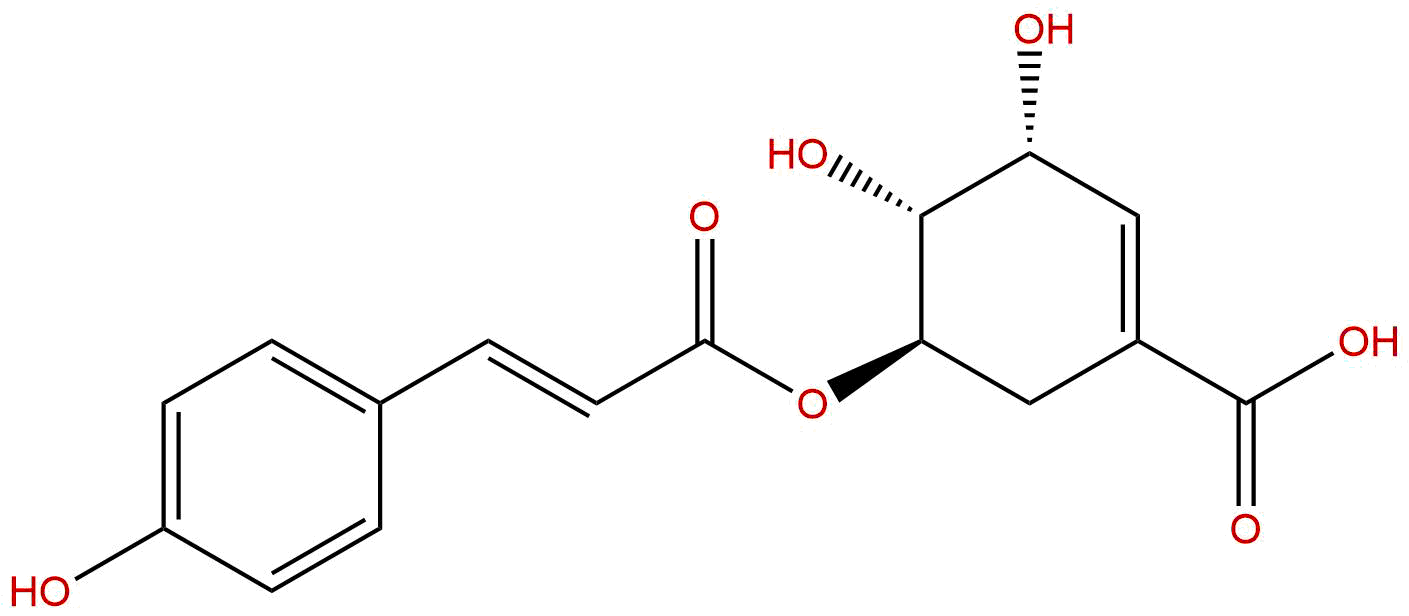
5-O-p-hydroxycinnamoyl-shikimic acid is a natural compound formed by ester bonding between p-coumaric acid and shikimic acid. Its CAS registration number is 111614-47-2, and its molecular formula is C16H16O7. This compound was first isolated from various medicinal plants, including plant families such as Umbelliferae and Asteraceae. From a chemical structure perspective, 5-OCSA possesses the dual structural characteristics of phenolic acid and shikimic acid, and this unique molecular skeleton endows it with diverse biological activities.
Arthritis is a chronic disease characterized by joint inflammation, pain, and functional impairment, affecting hundreds of millions of people worldwide. Among them, rheumatoid arthritis (RA) and osteoarthritis (OA) are the two most common types. Although existing therapeutic drugs such as nonsteroidal anti-inflammatory drugs (NSAIDs), disease modifying antirheumatic drugs (DMARDs), and biologics have achieved certain therapeutic effects in clinical practice, the long-term use brings side effects such as gastrointestinal injury, cardiovascular risk, immune suppression, and high treatment costs, making the search for safe and effective natural alternative therapies a research hotspot. 5-OCSA, as a natural phenolic acid compound, has attracted widespread attention in the academic community for its regulatory effects on arthritis related targets.
This review aims to systematically review the research progress of 5-O-hydroxycinnamoyl shikimic acid, covering its chemical structure and physicochemical properties, plant sources and extraction methods, pharmacological activity, mechanism of action, pharmacological evaluation, and clinical application prospects, in order to provide reference for the in-depth research and development of this natural product.
The chemical structure of 5-O-hydroxycinnamoyl-shikimic acid consists of two parts: p-coumaroyl moify and shikimic acid moify. Hydroxycinnamic acid is linked to the 5-hydroxy group of shikimic acid through ester bonds, forming 5-O-hydroxycinnamoyl shikimic acid. Its IUPAC name is (3R, 4S, 5R) -3,4-dihydroxy-5- [(E) -3- (4-hydroxyphenyl) prop-2-enoxy] cyclohex-1-en-1-carboxylic acid.
From a stereochemical perspective, shikimic acid contains three chiral centers (3R, 4S, 5R) that give the molecule a specific spatial configuration. The hydroxycinnamic acid moiety has a trans double bond (E configuration), which is most common in natural products. The phenolic hydroxyl and carboxyl groups in the molecule endow the compound with excellent hydrogen bond donor and acceptor abilities, which facilitate the formation of interactions with biological targets.
According to computational chemistry and experimental data, the main physicochemical properties of 5-O-hydroxycinnamoyl shikimic acid are as follows:
Based on the above physicochemical properties, 5-O-hydroxycinnamoyl shikimic acid exhibits good drug like and safety characteristics, laying the foundation for its further drug development.
5-O-hydroxycinnamoyl shikimic acid is widely distributed in nature and mainly exists in the secondary metabolites of higher plants. The currently reported plant sources containing this compound include:
It is worth noting that the content of 5-OCSA varies greatly among different plants and is influenced by factors such as growth environment, harvest season, and processing methods. For example, the content of 5-OCSA in Angelica root is usually between 0.01% and 0.1%, while in some varieties of Echinochloa purpurea, it can reach over 0.5% in the aboveground part.
The traditional solvent extraction method is the most commonly used approach. Due to the moderate polarity of 5-OCSA, methanol, ethanol, acetone, or their aqueous solutions are usually chosen as extraction solvents. Research has shown that a 50% -70% ethanol aqueous solution has the highest extraction efficiency for 5-OCSA. The extraction conditions are generally as follows: material to liquid ratio of 1:10-1:20 (w/v), temperature of 40-60 ℃, extraction time of 1-3 hours, and repeated extraction 2-3 times.
In recent years, various modern extraction techniques have been developed to improve extraction efficiency and selectivity
The 5-OCSA in the extraction solution usually needs to be purified by chromatographic techniques:
Inflammation is the core pathological process of arthritis. Multiple studies have confirmed that 5-O-hydroxycinnamoyl shikimic acid has significant anti-inflammatory activity. In the RAW264.7 macrophage model stimulated by lipopolysaccharide (LPS), 5-OCSA (10-100 μ M) can concentration dependently inhibit the production of nitric oxide (NO) and prostaglandin E ₂ (PGE ₂), while reducing the secretion levels of pro-inflammatory cytokines such as tumor necrosis factor - α (TNF - α), interleukin-1 β (IL-1 β), and interleukin-6 (IL-6).
In vivo experiments, 5-OCSA (20-80 mg/kg, intraperitoneal injection) significantly reduced carrageenan induced paw swelling in rats, and its anti-inflammatory effect was comparable to the positive control drug indomethacin. In addition, in the fully Freund's adjuvant (CFA) induced arthritis rat model, after continuous administration for 14 days, the joint swelling, arthritis index, and pathological score of the 5-OCSA treatment group were significantly lower than those of the model group.
Oxidative stress plays an important role in the pathogenesis of arthritis. The phenolic hydroxyl group in 5-OCSA molecules has good free radical scavenging ability. The DPPH radical scavenging experiment showed that the IC50 value of 5-OCSA was 25.6 μ M, slightly lower than that of vitamin C (IC50=18.3 μ M). The ABTS ⁺ free radical scavenging experiment also confirmed its antioxidant activity. At the cellular level, 5-OCSA can reduce the level of reactive oxygen species (ROS) induced by H ₂ O ₂ in chondrocytes, protect mitochondrial membrane potential, and reduce cell apoptosis.
The characteristic pathological change of osteoarthritis is the progressive degeneration of articular cartilage. 5-OCSA has a direct protective effect on chondrocytes. In IL-1 β - stimulated human chondrocytes, 5-OCSA (1-50 μ M) significantly inhibits the expression of matrix metalloproteinase-3 (MMP) and MMP-13, while upregulating the synthesis of type II collagen and aggrecan. These effects help maintain the metabolic balance of cartilage matrix and delay cartilage degeneration.
Patients with arthritis often experience severe joint pain. 5-OCSA showed certain analgesic activity in both acetic acid writhing test and hot plate test. In the acetic acid writhing test, 5-OCSA (40 mg/kg, intraperitoneal injection) reduced the number of writhing movements in mice by about 50%, and its mechanism may be related to the inhibition of prostaglandin synthesis and activation of opioid receptors.
Nuclear factor kappa B (NF - κ B) is a core transcription factor in the inflammatory response and plays a crucial role in the pathogenesis of arthritis. Research has shown that 5-OCSA can inhibit the NF - κ B signaling pathway through multiple mechanisms:
The mitogen activated protein kinase (MAPK) family includes three main pathways, ERK, JNK, and p38, which play important roles in inflammatory signal transduction. 5-OCSA can inhibit LPS or IL-1 β - induced phosphorylation of p38 and JNK, but has little effect on ERK phosphorylation. This selective inhibition may be closely related to its anti-inflammatory activity.
Cyclooxygenase-2 (COX-2, encoded by the PTGS2 gene) is a key enzyme in prostaglandin synthesis, and its upregulation is closely related to inflammation and pain in arthritis. 5-OCSA can inhibit the expression of COX-2 at the transcriptional level and directly suppress the activity of COX-2 enzyme (IC ₅₀ is about 15 μ M). This dual inhibitory mechanism enables it to effectively reduce the production of PGE ₂, exerting anti-inflammatory and analgesic effects.
5-OCSA can significantly reduce the expression levels of various pro-inflammatory cytokines:
Matrix metalloproteinases (MMPs) are key enzymes that degrade the extracellular matrix and play a central role in cartilage destruction in arthritis. 5-OCSA can inhibit the expression of MMP-3 (matrix metalloproteinase-1) and MMP-13 (collagenase-3), which are responsible for degrading proteoglycans and type II collagen, respectively. The mechanism involves inhibiting the activity of AP-1 transcription factor and blocking the MAPK signaling pathway.
Computer aided drug design studies have revealed the interaction patterns between 5-OCSA and key target proteins. The molecular docking results showed that 5-OCSA can form hydrogen bonds and hydrophobic interactions with the active sites of COX-2 (Arg120, Tyr355, Ser530, etc.), and its binding energy (-8.5 kcal/mol) is similar to that of the selective COX-2 inhibitor celecoxib (-9.2 kcal/mol). In addition, 5-OCSA can interact with the DNA binding domain of NF - κ B p65 subunit, interfering with its binding to DNA.
According to Lipinski's Five Rules, the molecular weight (320.3 Da) of 5-O-hydroxycinnamoyl shikimic acid is less than 500, the number of hydrogen bond donors (5 phenolic hydroxyl and carboxyl groups) is less than 5, the number of hydrogen bond acceptors (7 oxygen atoms) is less than 10, and the LogP (0.60) is less than 5. Although its TPSA (124.3 Å ²) is slightly higher than the ideal range for oral drugs (<140 Å ²), it overall meets the requirements for drug likeness. In addition, the compound contains fewer rotatable bonds (4), which is beneficial for maintaining the stability of the molecular conformation.
Pharmacokinetic prediction based on computer simulation (such as ADMET Predictor, SwissADME, etc.) provides the following information:
Preliminary toxicological studies indicate that 5-OCSA has good safety:
Based on the multi-target anti-inflammatory, antioxidant, and cartilage protective effects of 5-O-hydroxycinnamoyl shikimic acid, this compound has broad application prospects in the field of arthritis treatment. Compared with existing anti arthritis drugs, 5-OCSA has the following advantages:
To further promote the clinical translation of 5-OCSA, it is recommended to adopt the following development strategies:
Despite the promising development prospects of 5-OCSA, it still faces the following challenges:
5-O-hydroxycinnamoyl shikimic acid, as a natural phenolic shikimic acid ester compound, has shown significant development value in the field of anti arthritis research due to its unique chemical structure and multi-target pharmacological activity. This compound exerts anti-inflammatory, antioxidant, and cartilage protective effects by regulating key signaling pathways such as NF - κ B and MAPK, inhibiting inflammation related enzymes such as COX-2 and MMPs, and reducing the expression of pro-inflammatory cytokines such as TNF - α, IL-1 β, and IL-6. Its excellent safety features and drug like parameters further enhance its potential as a lead compound.
However, there are still many challenges from laboratory discoveries to clinical drug applications. Future research should focus on: further elucidating its molecular mechanism of action, optimizing pharmacokinetic properties, developing efficient and green preparation processes, and conducting systematic preclinical and clinical studies. With the continuous deepening of natural medicine chemistry and pharmacology research, 5-O-hydroxycinnamoyl shikimic acid is expected to become a new candidate drug for the treatment of arthritis, bringing new treatment options to billions of arthritis patients worldwide.
Natural products are the treasure trove of drug discovery, and the research history of 5-O-hydroxycinnamoyl shikimic acid once again confirms this viewpoint. In the contemporary context of precision medicine and the return of natural medicines, in-depth exploration of the medicinal value of these natural small molecules not only helps to develop safer and more effective therapeutic drugs, but also provides important clues for understanding the scientific connotation of traditional herbal medicine. We look forward to the near future when 5-O-hydroxycinnamoyl shikimic acid can move from the laboratory to clinical practice, truly benefiting human health.
Batch can search by a CAS number,one per line
