Introduction/Overview
Diabetes, especially type 2 diabetes, has become a chronic metabolic disease that seriously threatens human health worldwide. its core pathophysiological characteristics include insulin resistance and progressive failure of pancreatic beta cell function. Although synthetic drugs such as metformin, sulfonylureas, DPP-4 inhibitors, SGLT2 inhibitors, etc. dominate clinical treatment, the long-term use of these drugs has increasingly highlighted issues such as side effects, drug tolerance, and high treatment costs. Therefore, it is always an important direction in the field of drug research and development to find new anti diabetes lead compounds with high efficiency and low toxicity from natural products.
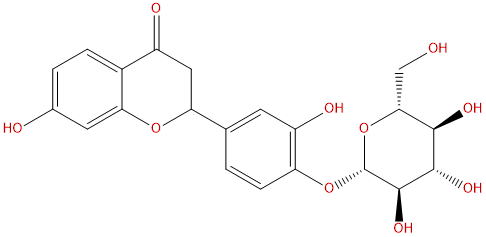
Flavonoids are widely present in the plant kingdom and have attracted much attention for their diverse chemical structures and extensive biological activities. Among them, dihydroflavonoids have shown great potential in anti-inflammatory, antioxidant, anti-tumor, and metabolic disease intervention due to their good bioavailability and significant pharmacological activity. 7,3 '- dihydroxyflavone-4' - O - β - D-glucoside (CAS: 1442113-42-9), as a unique dihydroflavone-4 '- O - β - D-glucoside, has entered the research field in recent years due to its outstanding activity in anti diabetes. Preliminary studies have shown that this compound can regulate glucose and lipid metabolism and improve insulin sensitivity through multi target and multi pathway synergy, and has the potential to develop into a new type of anti diabetes drug. This article aims to systematically review the chemical properties, plant sources, pharmacological activities, mechanisms of action, and medicinal properties of the compound, in order to provide comprehensive scientific references for further research and development.
Chemical structure and physicochemical properties
The molecular formula of 7,3 '- dihydroxyflavone-4' - O - β - D-glucoside is C21H22O10, with a molecular weight of 434.3970. Its core structure is the dihydroflavonoid mother nucleus, which is a 2,3-dihydroflavonoid with a C6-C3-C6 skeleton. Specifically, the 7th position of its A ring and the 3rd 'position of its B ring are each connected to a free phenolic hydroxyl group, which is the key pharmacophore for its antioxidant activity. Of particular importance is that the 4 'hydroxyl group of its B ring is linked to a molecule of β - D-glucopyranose through a glycosidic bond, forming an O-glycoside. The introduction of glucosides significantly altered the physicochemical properties of the parent aglycone.
From the calculation of chemical parameters, the lipophilic water partition coefficient (LogP) of the compound is 0.0386, indicating its high hydrophilicity, which is closely related to the introduction of highly polar glucose groups into the molecule. Its topological polar surface area (TPSA) is as high as 166.1400 Å ², further confirming its characteristics of high molecular polarity and abundant hydrogen bond donor/acceptor sites. The predicted water solubility value is 3.4977 (usually measured in log mol/L or mg/L, indicating good solubility), indicating that the compound has good solubility in aqueous environments. These physicochemical properties will have a decisive impact on its absorption, distribution, metabolism, and excretion (ADME) processes in living organisms. Low LogP value and high TPSA usually mean that its passive diffusion ability across the membrane is limited, especially its ability to pass through the blood-brain barrier is weak (predicted as "low"), which may be beneficial to reduce the risk of side effects in the central nervous system for anti diabetes drugs that mainly act on peripheral metabolic organs.
Plant sources and extraction methods
7,3 '- Dihydroxydihydroflavone-4' - O - β - D-glucoside, as a secondary metabolite, is mainly distributed in various medicinal plants. According to literature reports, its content is relatively high in certain Rosaceae, Leguminosae, and Asteraceae plants, and it often coexists with other flavonoid glycosides. For example, in some traditional herbs used for "diabetes" (traditional Chinese medicine's description of diabetes), such as the leaves or fruits of some hawthorn and citrus plants, the presence of this component has been identified by modern chromatography-mass spectrometry. Its existence is often related to plant stress resistance and specific biosynthetic pathways.
Extracting this compound from plant materials usually follows the conventional process of natural product chemistry. Firstly, use a suitable solvent for extraction. Due to the polarity of its glycoside structure, medium polarity solvents such as methanol, ethanol, or ethanol water mixtures are commonly used as extraction solvents, which can be effectively dissolved from plant cells through immersion, reflux, or ultrasound assisted extraction methods. After filtration and concentration, the crude extract needs to be further separated and purified to remove impurities such as pigments, polysaccharides, and proteins. Large pore adsorption resin column chromatography is commonly used for initial enrichment, and the difference in polarity between it and impurities is utilized for separation. Subsequently, further subdivision was performed using silica gel column chromatography, polyamide column chromatography, or Sephadex LH-20 column chromatography. The final high-purity preparation usually relies on high-performance liquid chromatography (HPLC), especially preparative reverse phase HPLC (C18 column), using methanol water or acetonitrile water (often containing a small amount of formic acid or acetic acid to adjust pH) as the mobile phase for gradient elution, and monitoring and collecting the target peak through a UV detector (usually with characteristic absorption at 280-320 nm). The isolated monomer compounds need to be structurally confirmed by nuclear magnetic resonance (NMR, including 1H, 13C, 2D-NMR such as HSQC, HMBC), mass spectrometry (MS), and comparison with standard samples (if available).
Pharmacological activity research
A large number of pharmacological studies in vitro and in vivo have confirmed that 7,3 '- dihydroxyflavone-4' - O - β - D-glucoside has a clear anti diabetes and related metabolic syndrome activity.
1. In vitro activity study:
At the cellular model level, the compound exhibits multiple effects. In insulin resistant liver cells (such as HepG2) or skeletal muscle cells (such as C2C12) models, it can significantly promote the uptake and utilization of glucose by cells, and reduce intracellular lipid accumulation. In the adipocyte model, it can regulate the secretion of adipokines and inhibit excessive differentiation of preadipocytes. In addition, the study also found that it has a certain inhibitory effect on alpha glucosidase and alpha amylase, suggesting that it may delay the digestion and absorption of intestinal carbohydrates. Inhibition experiments on diabetes related target enzymes (such as DPP-4) also showed certain activity.
2. In vivo activity research:
In various animal models of type 2 diabetes (such as SD rat model induced by high-fat diet combined with streptozotocin, db/db mice, KK Ay mice), the compound showed good hypoglycemic effect after oral administration. Specifically, it can dose dependently reduce fasting and postprandial blood glucose levels, improve oral glucose tolerance (OGTT) and insulin tolerance (ITT) experimental results. At the same time, it can significantly reduce serum insulin levels, increase insulin sensitivity index, and improve insulin resistance. In terms of regulating lipid metabolism, it can reduce the levels of triglyceride (TG), total cholesterol (TC), low-density lipoprotein cholesterol (LDL-C) in the serum of model animals, and increase the level of high-density lipoprotein cholesterol (HDL-C), which has a positive effect on the lipid metabolism disorder associated with diabetes. Long term administration can also observe a protective effect on the morphology of pancreatic beta cells, reducing pancreatic inflammation and fibrosis.
3. Other related activities:
In addition to its core anti diabetes activity, this compound also shows strong antioxidant activity due to its phenolic hydroxyl structure, which can eliminate DPPH, ABTS free radicals, and improve the activity of superoxide dismutase (SOD), glutathione peroxidase (GSH Px) and other endogenous antioxidant enzymes, reducing oxidative stress damage in diabetes. In addition, certain anti-inflammatory activities have also been reported, such as inhibiting the excessive production of inflammatory factors such as TNF - α and IL-6, which helps to improve the chronic low-grade inflammatory state associated with diabetes.
Mechanism of action and molecular targets
The anti diabetes effect of 7,3 '- dihydroxydihydroflavone-4' - O - β - D-glucoside does not pass through a single target, but acts on a complex network. Its verified or potential targets are highly consistent with the list provided, reflecting the advantages of multi target synergistic treatment.
1. Activate the energy sensing pathway - AMPK signaling pathway:
AMP activated protein kinase (AMPK) is a core regulator of cellular energy metabolism. This compound has been shown to directly or indirectly activate AMPK (composed of subunits such as PRKAA1). The activation of AMPK can produce a series of downstream effects: in the liver, it inhibits the expression of key gluconeogenesis enzymes and reduces hepatic glucose output; Promote the translocation of glucose transporter 4 (GLUT4, encoded by the SLC2A4 gene) to the cell membrane in skeletal muscle and adipose tissue, increasing the uptake of glucose by peripheral tissues; At the same time, it promotes fatty acid oxidation, inhibits fat synthesis, and comprehensively improves glucose and lipid metabolism.
2. Enhance insulin signaling pathway:
This compound can enhance tyrosine phosphorylation of insulin receptor substrate 1 (IRS1) and reduce its serine phosphorylation (a negative feedback inhibition), thereby enhancing insulin signaling transduction. The activated IRS1 further activates phosphatidylinositol 3-kinase (PI3K, whose regulatory subunit is PIK3R1), catalyzing the generation of PIP3. PIP3 acts as a second messenger, recruiting and activating protein kinase B (Akt, AKT1). Activated Akt promotes glycogen synthesis and glucose utilization by promoting membrane translocation of GLUT4 and inhibiting glycogen synthase kinase 3 (GSK3).
3. Regulating nuclear receptors and metabolic enzymes:
This compound may act as a partial agonist or modulator of peroxisome proliferator activated receptor gamma (PPARG), regulating its activity in a manner different from classical thiazolidinedione drugs. While improving insulin sensitivity, it may also avoid side effects such as weight gain caused by it. It can also activate glucokinase (GCK), which is the rate limiting enzyme for glucose metabolism in liver and pancreatic beta cells. Its activation helps promote glucose phosphorylation and subsequent metabolism, and acts as a glucose sensor in beta cells, promoting insulin secretion.
4. Inhibit intestinal glucose absorption and DPP-4 activity:
This compound has a certain inhibitory effect on sodium glucose cotransporter 2 (SGLT2), which may reduce renal reabsorption of glucose and promote urinary glucose excretion, similar to the effect of SGLT2 inhibitors. Meanwhile, its inhibition of dipeptidyl peptidase-4 (DPP4) can prolong the activity of endogenous glucagon like peptide-1 (GLP-1), promote glucose dependent insulin secretion, and inhibit glucagon release.
To sum up, this compound plays an anti diabetes role in many aspects, such as increasing insulin sensitivity, promoting glucose utilization, protecting pancreatic islet function, and reducing glucose absorption and production, through synergistic action on AMPK, insulin signaling pathway, nuclear receptors, and multiple key metabolic enzymes.
Evaluation of drug properties and pharmacokinetics
Based on computational predictions and preliminary experimental data, a preliminary evaluation was conducted on the pharmacological properties of 7,3 '- dihydroxyflavone-4' - O - β - D-glucoside.
1. Preliminary safety prediction:
According to the provided parameters, the compound has no predictive inhibitory effect on hERG potassium channels ("No"), indicating that it may have a lower risk of cardiac toxicity and is an important safety advantage. The Ames test predicted a result of 0.0 (usually indicating no mutagenicity), indicating a low risk of genetic toxicity. These predictions provide positive signals for further safety evaluation.
2. Prediction and Challenges of Pharmacokinetic Characteristics:
The main challenge for its pharmacological properties may come from pharmacokinetics. As highly polar glycoside compounds (high TPSA, low LogP), their oral bioavailability may face the following bottlenecks: firstly, in the gastrointestinal tract, glycosidic bonds may be partially hydrolyzed by gut microbiota or glycosidase on the intestinal mucosa, releasing aglycones and glucose, and their activity may be altered. Secondly, its high polarity leads to poor passive diffusion and absorption across intestinal epithelial cells, which may require dependence on active transporters such as glucose transporter SGLT1 or sodium dependent bile acid transporter, but its efficiency needs to be verified. After absorption, it may undergo extensive II binding metabolism (such as glucuronidation, sulfation). Its lower lipophilicity and higher plasma protein binding rate (subject to experimental verification) may limit its tissue distribution, but the predicted low blood-brain barrier permeability can control the risk of central side effects. The prototype drug and its metabolites are mainly excreted through the kidneys.
Therefore, future research needs to systematically elucidate its absorption, distribution, metabolism, and excretion processes through in vitro Caco-2 cell models, in vivo or ex vivo intestinal perfusion experiments, and in vivo pharmacokinetic studies. To improve its bioavailability, it may be necessary to consider structural modifications (such as preparing prodrugs) or develop novel drug delivery systems (such as nanoliposomes, phospholipid complexes, self microemulsions, etc.).
Clinical application prospects and prospects
7,3 '- dihydroxydihydroflavone-4' - O - β - D-glucoside, as a multi target anti diabetes natural lead compound, has broad clinical application prospects, but also faces a series of topics that need in-depth exploration.
1. Development prospects:
* New multi target anti diabetes drug/health product candidates: Its characteristics of multi pathway synergy may be more able to comprehensively correct the complex metabolic disorder of diabetes than a single target drug, especially for type 2 diabetes patients with insulin resistance. It can be considered for development as a new chemical drug or as a functional active ingredient in plant-based medicine.
* The components of combination therapy: Due to its partially overlapping mechanism of action with existing mainstream drugs such as metformin, SGLT2i, DPP-4i, but with more multi-target characteristics, it may serve as a beneficial supplement to combination therapy regimens to enhance efficacy, reduce monotherapy doses, and mitigate side effects.
* Prevention and Early Intervention: Combined with its antioxidant and anti-inflammatory activities, this compound also has potential value in the intervention of pre diabetes (impaired glucose regulation) and the prevention and treatment of diabetes complications (such as diabetes nephropathy, neuropathy).
2. Future research directions and challenges:
* In depth study of the mechanism of action: It is necessary to use gene knockout/knockdown technology, molecular docking, surface plasmon resonance (SPR) and other techniques to accurately verify its direct interaction sites and affinity with the above-mentioned targets, and clarify the specific details of its multi-target network regulation.
* Optimization of drug properties of the system: Comprehensive preclinical pharmacokinetic and toxicological studies must be conducted. Reasonable structural modification or formulation research is a key step towards clinical application to address the issue of potential low bioavailability.
* Research on active metabolites: It is necessary to clarify its main metabolites in the body and evaluate the activity of these metabolites, which may reveal its true pharmacological substance form.
* Preclinical and clinical studies: After completing standardized preclinical safety and efficacy evaluations, gradually advance clinical trials to verify its efficacy and safety in humans.
Conclusion
7,3 '- dihydroxydihydroflavone-4' - O - β - D-glucoside is a dihydroflavonoid glycoside with definite anti diabetes activity emerging from the treasure house of natural products. It exhibits significant comprehensive therapeutic effects in cell and animal models by activating AMPK, enhancing insulin signaling, regulating PPARG, inhibiting SGLT2 and DPP4, and other multi-target synergistic mechanisms through its unique chemical structure, which significantly regulates glucose and lipid metabolism, improves insulin resistance, and protects pancreatic function. Although its highly polar glycoside structure may pose a challenge to oral bioavailability, its clear multi target mechanism of action, good predictive safety, and wide range of plant sources have laid a solid foundation for its further development as a new anti diabetes drug or functional health care product. Future research should focus on in-depth analysis of its molecular interaction network, optimization of its pharmacokinetic characteristics, and promotion of systematic preclinical and clinical evaluation, with a view to transforming this potential natural molecule into a new treatment option for the benefit of diabetes patients.