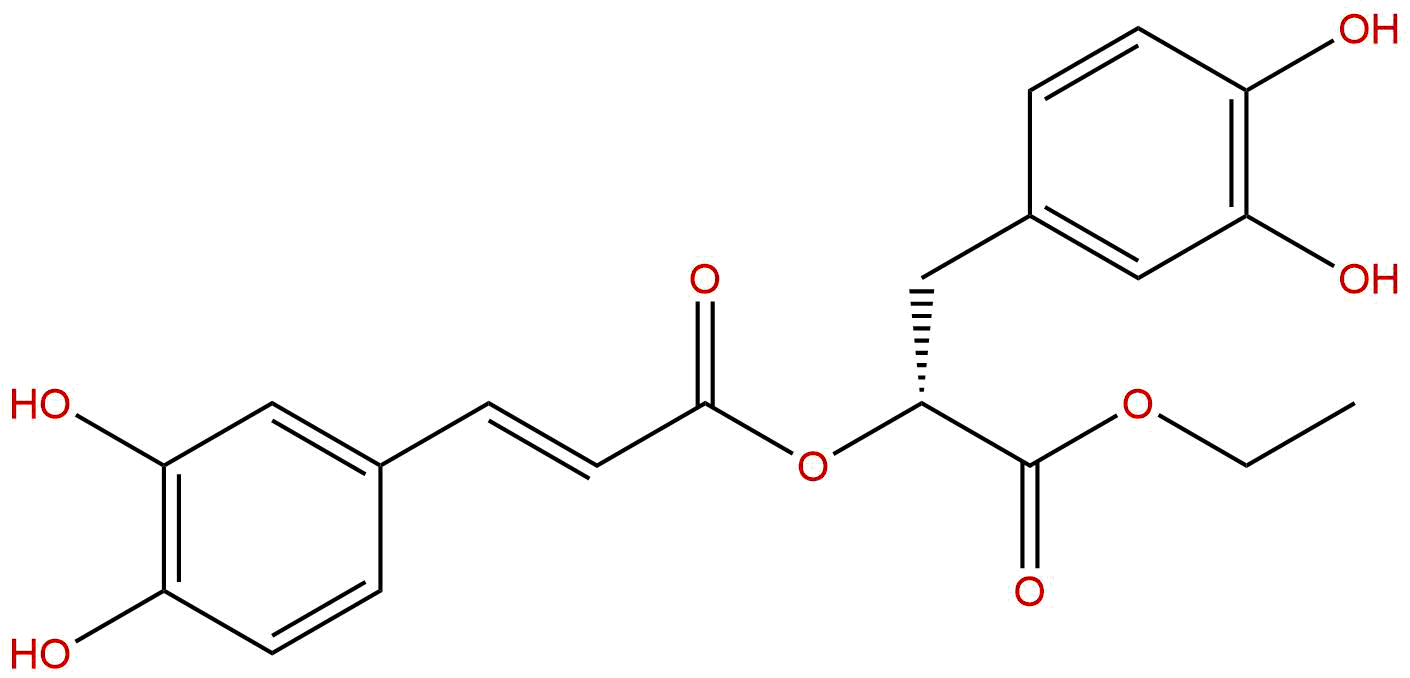


Product name: Ethyl rosmarinate
Synonym name: Rosmarinic acid ethyl ester
Catalogue No.: BP5006
Cas No.: 174591-47-0
Formula: C20H20O8
Mol Weight: 388.372
Botanical Source:
Type of Compound: Phenylpropanoids
Purity: 95%~99%
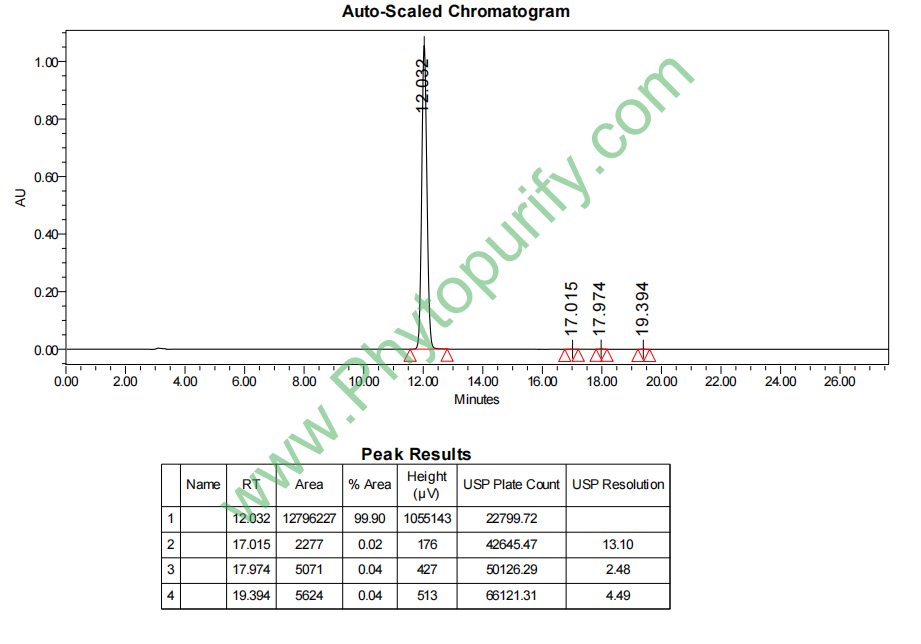
Analysis Method: HPLC-DAD or/and HPLC-ELSD
Identification Method: Mass, NMR
Packing: Brown vial or HDPE plastic bottle
Storage: Store in a well closed container, protected from air and light. Put into refrigerate or freeze for long term storage.
Whenever possible, you should prepare and use solutions on the same day. However, if you need to make up stock solutions in advance, we recommend that you store the solution as aliquots in tightly sealed vials at -20℃. Generally, these will be useable for up to two weeks.
The product could be supplied from milligrams to grams
Inquire for bulk scale.
For Reference Standard and R&D, Not for Human Use Directly.
HPLC of Ethyl rosmarinate
Storage conditions:Short-term storage at 2~8℃, long-term storage at -20 ~ -80℃
133.5200
2.6183
2.5917
.1892
2.7773
.4901
Low
89.0385
2.9452
Yes
Yes
No
No
Yes
No
0.0
Yes
Yes
Yes
Yes
Natural products, as an important source of drug discovery, have long played an indispensable role in the human fight against diseases. Among numerous natural phenolic acid compounds with biological activity, Rosmarinic acid (RA) and its derivatives have attracted much attention due to their extensive pharmacological activities. Rosmarinic acid is a naturally occurring ester of caffeic acid and 3,4-dihydroxyphenyllactic acid, widely distributed in various plants such as the Lamiaceae and Verbenaceae families. However, the limited bioavailability and rapid metabolism of natural rosmarinic acid in the body to some extent limit its clinical application. Structural modification of rosmarinic acid has become a research hotspot to improve its pharmacokinetic properties and enhance specific pharmacological activities. Among them, ethyl rosmarinate (ER), as an important derivative, exhibits unique biological characteristics.
Rosmarinic acid ethyl ester, CAS number 174591-47-0, is a phenolic compound obtained by esterifying the carboxyl group in rosmarinic acid molecules. This simple structural modification not only changes the lipid solubility of the molecule, but may also affect its interaction mode with biological targets. Research has shown that ethyl rosmarinate can be extracted from bamboo shoots(Lycopus lucidus)It was isolated from various plants and exhibited significant antioxidant activity. Of particular note is the excellent performance of rosmarinic acid ethyl ester in inhibiting lung inflammation, indicating its potential value in the treatment of respiratory diseases. In addition, in recent years, research has continuously expanded its pharmacological spectrum, especially in the field of neuroprotection. Rosmarinic acid ethyl ester has shown potential in combating neurodegenerative diseases by regulating multiple key targets such as BCL2, APP, BACE1, MAPT, NFE2L2, SIRT1, MAPK1, CASP9, and GSK3B.
This review aims to systematically review the research status of ethyl rosmarinate, exploring its chemical structure and physicochemical properties, plant sources and extraction methods, pharmacological activity, mechanism of action and molecular targets, pharmacological evaluation and pharmacokinetics, and evaluating its clinical application prospects and challenges, in order to provide comprehensive scientific basis for the further development and utilization of this natural product.
The chemical structure of rosmarinic acid ethyl ester is based on the rosmarinic acid skeleton, and its core feature is that the carboxyl group in the molecule is esterified. Specifically, rosmarinic acid molecules are composed of a caffeic acid unit and a 3,4-dihydroxyphenyllactic acid unit connected by ester bonds. In ethyl rosmarinate, the carboxyl group (- COOH) of 3,4-dihydroxyphenyllactic acid undergoes esterification reaction with ethanol to form the ethyl ester group (- COOCH ₂ CH3). This structural modification has had a profound impact on the overall properties of the molecule.
From the perspective of physicochemical properties, the molecular weight of ethyl rosmarinate is 388.3720 Da, which is within the ideal range for small molecule drugs. The coefficient of lipid water partition (LogP) is 2.6183, indicating that the compound has moderate lipophilicity. Compared to the parent compound rosmarinic acid (LogP of approximately 1.0-1.5), ethylation significantly improved the lipid solubility of the molecule. This characteristic is beneficial for its penetration through biological membranes, which may improve cellular uptake and transmembrane transport capabilities. The polar surface area (TPSA) is 133.5200 Å ², which is relatively high and mainly contributed by multiple phenolic hydroxyl and ester groups in the molecule. High TPSA is often associated with poor intestinal absorption and blood-brain barrier penetration, but may also reduce non-specific binding and toxicity. The water solubility parameter is 0.1892 mg/mL, which is a low water solubility compound, consistent with a higher LogP value. It is worth noting that the blood-brain barrier (BBB) penetration was evaluated as "low", which is consistent with its higher TPSA and molecular weight, suggesting that rosmarinic acid ethyl ester may require special delivery strategies or depend on the pathological state of BBB destruction in the treatment of central nervous system diseases. In addition, hERG inhibition was predicted as' no ', and the Ames test result was 0.0, indicating a low risk of cardiac and genetic toxicity, which provides preliminary positive signals for its safety evaluation.
In summary, rosmarinic acid ethyl ester successfully adjusted the physicochemical properties of the parent compound through simple ethylation modification. While maintaining the antioxidant activity of the phenolic hydroxyl core, it enhanced lipid solubility and exhibited good preliminary safety characteristics. However, its low water solubility and low BBB penetration are also challenges that need to be focused on and overcome in subsequent drug development.
Rosmarinic acid ethyl ester, as a naturally occurring compound, is mainly isolated from plants. Although rosmarinic acid is widely present in various plants, the natural content of rosmarinic acid ethyl ester is usually low, and its distribution is species-specific. The currently known plant sources rich in ethyl rosmarinate include plants in the Lamiaceae family of the Asparagus genus, such as Asparagus(Lycopus lucidus). In addition, in perilla(Perilla frutescens)Rosemary(Rosmarinus officinalis)Trace amounts may also exist in plants, but bamboo shoots are considered one of their main sources. As a traditional medicinal plant, ground bamboo shoots are used in China, Japan, and South Korea to treat inflammatory diseases and bleeding. The study of their active ingredients laid the foundation for the discovery of ethyl rosmarinate.
The extraction of rosmarinic acid ethyl ester from plants usually follows the classic process of natural product chemistry. Firstly, the dried plant material (such as the aboveground part of bamboo shoots) is crushed, and then solvent extraction is used. Given the moderate lipophilicity of ethyl rosmarinate, commonly used extraction solvents include methanol, ethanol, or their aqueous mixtures. For example, a 70% -80% methanol or ethanol aqueous solution is often used as an extraction solvent, and multiple extractions are carried out at room temperature or heating conditions through methods such as cold soaking, percolation, or reflux extraction to obtain crude extracts rich in phenolic compounds.
After obtaining the crude extract, a systematic separation and purification step is required. Liquid liquid extraction is a commonly used method for preliminary separation, usually suspending the crude extract in water and then sequentially extracting it with solvents of different polarities such as petroleum ether, ethyl acetate, n-butanol, etc. Rosmarinic acid ethyl ester tends to be distributed in the moderately polar ethyl acetate layer due to its LogP value. Subsequently, the ethyl acetate extract needs to be finely separated using various chromatographic techniques. Column chromatography, such as silica gel column chromatography and ODS (octadecylsilane) reverse phase column chromatography, is the core separation method. By gradient elution, such as using different ratios of methanol water or acetonitrile water systems, rosmarinic acid ethyl ester can be separated from other phenolic acid components (such as rosmarinic acid, caffeic acid, salvianolic acid, etc.). High performance liquid chromatography (HPLC) technology, especially preparative HPLC, is often used for final purification to obtain high-purity rosmarinic acid ethyl ester monomer. The structural identification of compounds relies on spectroscopic techniques, including nuclear magnetic resonance spectroscopy (NMR, especially ¹ H-NMR and ¹ ³ C-NMR), mass spectrometry (MS), and ultraviolet visible spectroscopy (UV Vis), to confirm their structure by comparing with known literature data or standard samples.
It is worth noting that due to the limited content of rosmarinic acid ethyl ester in natural plants, chemical synthesis or semi synthesis methods have also become important ways to obtain this compound. Usually, rosmarinic acid is used as the raw material to efficiently prepare rosmarinic acid ethyl ester by esterification reaction with anhydrous ethanol in the presence of acidic catalysts such as concentrated sulfuric acid and p-toluenesulfonic acid. The synthesis method not only has high yield and controllable cost, but also facilitates structural modification and large-scale production, providing a stable material basis for subsequent pharmacological research and drug development.
The pharmacological activity research of ethyl rosmarinate mainly focuses on its antioxidant, anti-inflammatory, and neuroprotective effects, which are closely related to its phenolic structure.
1. Antioxidant activity
As a derivative of rosmarinic acid, rosmarinic acid ethyl ester inherits its strong antioxidant capacity. The catechol hydroxyl group (catechol structure) in the molecule is a key functional group that exerts antioxidant effects. This structure can effectively eliminate various free radicals, including hydroxyl radicals (· OH), superoxide anion radicals (O ₂⁻·), and peroxynitrite (ONOO ⁻). Research has shown that the antioxidant activity of rosmarinic acid ethyl ester is even better than that of the parent compound rosmarinic acid in some systems, which may be attributed to its increased lipophilicity through esterification, making it easier to enter cell membranes and lipid environments, thereby more effectively protecting biological membranes from oxidative damage. In addition, it can chelate transition metal ions (such as Fe ² ⁺, Cu ² ⁺), inhibit the Fenton reaction, and thus block the generation of free radicals. In cell models, rosmarinic acid ethyl ester can upregulate the activity of endogenous antioxidant enzymes such as superoxide dismutase (SOD), glutathione peroxidase (GPx), and catalase (CAT), and increase the level of reduced glutathione (GSH), thereby enhancing the overall antioxidant defense ability of cells.
2. Anti inflammatory activity
Rosmarinic acid ethyl ester has shown significant effects in inhibiting inflammation, especially in lung inflammation models. Research has confirmed that ethyl rosmarinate can effectively inhibit acute lung injury (ALI) induced by lipopolysaccharide (LPS). Its mechanism of action involves multiple levels: firstly, it can inhibit the phosphorylation of key molecules in the inflammatory signaling pathway, such as nuclear factor kappa B (NF - κ B) and mitogen activated protein kinase (MAPK, including p38, JNK, and ERK). By blocking the activation of these pathways, rosmarinic acid ethyl ester significantly reduced the production of pro-inflammatory cytokines such as tumor necrosis factor - α (TNF - α), interleukin-1 β (IL-1 β), and interleukin-6 (IL-6). Secondly, it can also inhibit the expression of cyclooxygenase-2 (COX-2) and inducible nitric oxide synthase (iNOS), thereby reducing the production of inflammatory mediators such as prostaglandin E ₂ (PGE ₂) and nitric oxide (NO). In addition, rosmarinic acid ethyl ester can inhibit the infiltration of neutrophils into inflammatory sites and alleviate pathological damage to lung tissue. These findings suggest that rosmarinic acid ethyl ester has the potential to become a candidate compound for the treatment of acute or chronic pulmonary inflammatory diseases, such as asthma and chronic obstructive pulmonary disease.
3. Neuroprotective activity
In recent years, the neuroprotective effects of ethyl rosmarinate have received increasing attention, with research mainly focusing on neurodegenerative diseases such as Alzheimer's disease (AD). The pathological features of AD include deposition of β - amyloid protein (A β), neurofibrillary tangles formed by excessive phosphorylation of tau protein, oxidative stress, and neuroinflammation. Rosmarinic acid ethyl ester has shown potential in combating these pathological processes through multi-target action. Research has shown that ethyl rosmarinate can inhibit the activity of BACE1 (β - secretase 1), thereby reducing the production of A β. Meanwhile, it can also regulate the processing of APP (amyloid precursor protein) to tilt towards non amyloid pathways. Regarding tau protein, rosmarinic acid ethyl ester can inhibit the activity of GSK3 β (glycogen synthase kinase 3 β), which is a key kinase for tau protein phosphorylation. Therefore, rosmarinic acid ethyl ester helps reduce excessive phosphorylation of tau protein and maintain microtubule stability. In addition, it can also activate the NFE2L2 (nuclear factor E2 related factor 2)/ARE (antioxidant response element) pathway, induce the expression of a series of antioxidant enzymes, and counteract A β - induced oxidative stress. Rosmarinic acid ethyl ester can also upregulate the expression of anti apoptotic protein BCL2 and inhibit the activation of CASP9 (cysteine aspartate protease 9), thereby protecting neurons from A β - induced apoptosis. Meanwhile, it can activate SIRT1 (deacetylase 1), which is closely related to prolonging lifespan and neuroprotective effects. Finally, by inhibiting MAPK1 (ERK2) and other MAPK pathway members, rosmarinic acid ethyl ester can also alleviate neuroinflammatory responses. The synergistic effect of these multiple targets makes rosmarinic acid ethyl ester exhibit unique advantages in the field of neuroprotection.
The pharmacological activity of ethyl rosmarinate originates from its interactions with multiple molecular targets, which mainly involve key pathological pathways such as oxidative stress, inflammation, and neurodegeneration. Its mechanism of action exhibits the characteristics of multi-target and multi pathway.
1. Regulation of antioxidant and anti-inflammatory pathways
The antioxidant effect of ethyl rosmarinate is mainly achieved through direct clearance of free radicals and indirect activation of endogenous defense systems. The direct effect depends on the hydrogen supply ability of its phenolic hydroxyl group. The indirect effect is mainly achieved by activating the NFE2L2 (NRF2) transcription factor. Under normal physiological conditions, NFE2L2 binds to Keap1 protein and is anchored in the cytoplasm. When cells are subjected to oxidative stress stimulation, rosmarinic acid ethyl ester or its metabolites may promote the dissociation and translocation of NFE2L2 into the nucleus by modifying key cysteine residues on Keap1. In the nucleus, NFE2L2 binds to antioxidant response elements (ARE) and initiates transcription of a series of downstream protective genes, including genes encoding SOD, CAT, GPx, glutathione S-transferase (GST), and heme oxygenase-1 (HO-1). The activation of this pathway is the core mechanism by which rosmarinic acid ethyl ester exerts long-lasting antioxidant and cell protective effects.
In terms of anti-inflammatory effects, rosmarinic acid ethyl ester mainly inhibits two key signaling pathways, NF - κ B and MAPK. NF - κ B is a central regulatory factor in inflammatory response. In the resting state, NF - κ B binds to I κ B protein and remains inactive. Rosmarinic acid ethyl ester can inhibit the activity of I κ B kinase (IKK), prevent the phosphorylation and degradation of I κ B, thereby preventing NF - κ B from being released and entering the nucleus to initiate the transcription of pro-inflammatory genes (such as TNF - α, IL-1 β, IL-6, COX-2, iNOS). Meanwhile, rosmarinic acid ethyl ester can also inhibit the phosphorylation of p38, JNK, and ERK1/2 in the MAPK pathway, and the activation of these kinases is also involved in the synthesis and release of pro-inflammatory cytokines. By double inhibiting the NF - κ B and MAPK pathways, rosmarinic acid ethyl ester can effectively suppress the inflammatory cascade reaction.
2. Regulation of targets related to neurodegenerative diseases
For Alzheimer's disease, the mechanism of action of rosmarinic acid ethyl ester is more complex, involving multiple key targets:
- BACE1 and APP Rosmarinic acid ethyl ester can directly inhibit the enzymatic activity of BACE1 and reduce the production of A β. At the same time, it may promote the non amyloid processing pathway of APP by regulating the activity of alpha secretases such as ADAM10, thereby producing sAPP alpha fragments with neurotrophic effects.
- GSK3 β and MAPT GSK3 β is one of the main kinases involved in tau protein phosphorylation. Rosmarinic acid ethyl ester inhibits the activity of GSK3 β, reduces the excessive phosphorylation of tau protein at Ser396, Ser404 and other sites, thereby inhibiting the formation of neurofibrillary tangles, protecting microtubule structure and axonal transport function.
- SIRT1 SIRT1 is an NAD ⁺ - dependent deacetylase involved in regulating cellular stress response, metabolism, and aging. Rosmarinic acid ethyl ester can activate SIRT1, which can deacetylate and inhibit pro apoptotic and pro-inflammatory proteins such as p53 and NF - κ B, while activating factors related to mitochondrial biosynthesis such as PGC-1 α, thereby exerting neuroprotective effects.
- BCL2 and CASP9 Rosmarinic acid ethyl ester can upregulate the expression of anti apoptotic protein BCL2 and inhibit the activation of key promoter CASP9 in mitochondrial pathway apoptosis. This helps maintain mitochondrial membrane potential, prevent the release of cytochrome c, thereby blocking the apoptotic cascade and protecting neurons from A β toxicity or oxidative stress-induced cell death.
- MAPK1 As a member of the MAPK pathway, excessive activation of MAPK1 (ERK2) is associated with neuroinflammation and cell damage. The inhibitory effect of ethyl rosmarinate on MAPK1 is part of its overall anti-inflammatory and neuroprotective properties.
In summary, rosmarinic acid ethyl ester forms a synergistic network regulatory mechanism by directly clearing free radicals, activating the NFE2L2 antioxidant pathway, inhibiting the NF - κ B and MAPK inflammatory pathways, and specifically regulating AD related targets (BACE1, GSK3 β, SIRT1, BCL2, CASP9, etc.), thereby exerting its pharmacological activity at multiple levels.
To advance the selection of rosmarinic acid ethyl ester from natural products to clinical drugs, a systematic evaluation of its pharmacological properties is required, with pharmacokinetic characteristics being a key consideration factor.
1. Analysis of pharmacological parameters
According to the provided pharmacological parameters, rosmarinic acid ethyl ester exhibits some favorable characteristics, but there are also potential challenges. Its molecular weight (388.37 Da) meets the requirement of Lipinski's Rule of Five for molecular weight less than 500. The LogP value is 2.6183, which is within the ideal range (1-3), indicating that it has good lipid solubility and is conducive to membrane permeation. However, the TPSA is 133.52 Å ², exceeding the threshold of 140 Å ², which typically indicates poor oral absorption and low BBB penetration. The water solubility (0.1892 mg/mL) is low and belongs to low solubility compounds, which may limit its oral bioavailability. On the positive side, hERG inhibition is predicted as' no ', indicating a low risk of cardiac toxicity; The Ames test result is 0.0, indicating no genetic toxicity. These preliminary security data provide a good starting point for subsequent development.
2. Pharmacokinetic characteristics
There are relatively limited reports on the specific pharmacokinetic studies of ethyl rosmarinate, but reasonable inferences can be made based on its physicochemical properties and data on the parent compound rosmarinic acid. After oral administration, the main challenges faced by rosmarinic acid ethyl ester are absorption and metabolism. Its low water solubility may lead to slow dissolution rate in the gastrointestinal tract, thereby limiting absorption. In addition, as an ester compound, rosmarinic acid ethyl ester is easily hydrolyzed by esterases in the intestine and liver, rapidly converting into the parent compound rosmarinic acid. Therefore, the main substance detected in the blood after oral administration may be rosmarinic acid, rather than the prototype drug. This "prodrug" characteristic has both advantages and disadvantages: on the one hand, rosmarinic acid itself also has biological activity; On the other hand, if the specific activity of rosmarinic acid ethyl ester depends on its complete structure, rapid hydrolysis will weaken its advantage.
Once absorbed, rosmarinic acid ethyl ester (or hydrolyzed rosmarinic acid) undergoes extensive phase II metabolism, mainly through glucuronidation and sulfation binding reactions in the liver and intestines, generating more polar metabolites that are easily excreted through urine and bile. This results in a typically short half-life and limited systemic exposure. Its distribution volume may be moderate, but due to high TPSA and protein binding, its tissue distribution, especially its ability to enter the central nervous system, is limited. Low BBB penetration is a major obstacle in its neuroprotective application. However, under conditions of brain inflammation or injury, the permeability of the BBB increases, which may provide an opportunity for rosmarinic acid ethyl ester to enter the brain parenchyma.
3. Strategies for improving drug properties
Given the above challenges, strategies to enhance the pharmacological properties of rosmarinic acid ethyl ester mainly focus on the following aspects:
- Improve water solubility By preparing its salts (such as sodium and potassium salts), forming inclusion complexes with cyclodextrin, or developing new formulation technologies such as solid dispersions and lipid nanoparticles, its solubility and dissolution rate can be significantly improved.
- Improve metabolic stability Structural modification of ester bonds, such as introducing steric hindrance groups or using bioelectronic substitutes, can reduce the hydrolysis rate of esterases and prolong their half-life in vivo. Alternatively, it can be designed as a non ester prodrug.
- Targeted delivery For pulmonary inflammation, inhalation administration can be used to directly deliver the drug to the site of action, avoiding first pass effects, increasing local drug concentration, and reducing systemic side effects. For neuroprotection, developing nano delivery systems that can cross the BBB, such as targeted modified liposomes and polymer nanoparticles, is a key direction.
- Prodrug design Regard ethyl rosmarinate itself as a prodrug of rosmarinic acid, utilize its better lipid solubility to promote absorption, and then convert it into its active form in the body. Alternatively, design better rosmarinic acid prodrugs to balance absorption and metabolism.
Overall, rosmarinic acid ethyl ester has good preliminary safety, but its pharmacokinetic properties, especially low water solubility and rapid metabolism, are the main bottlenecks in its drug development. Through rational formulation techniques and drug chemical modifications, it is expected to overcome these obstacles and unleash its potential as a therapeutic drug.
Rosmarinic acid ethyl ester has shown broad clinical application prospects in multiple disease fields due to its multiple pharmacological activities such as antioxidant, anti-inflammatory, and neuroprotective effects.
1. Respiratory system diseases
Given its significant inhibitory effect on lung inflammation, rosmarinic acid ethyl ester has great potential in the treatment of respiratory diseases such as acute lung injury, asthma, and chronic obstructive pulmonary disease (COPD). Through inhalation administration, drugs can directly act on the airways and alveoli, achieving local high concentrations while reducing the side effects caused by systemic exposure. Future research should focus on developing formulations suitable for inhalation, such as dry powder inhalers or nebulized solutions, and validate their efficacy and safety in animal models, laying the foundation for clinical trials.
2. Neurodegenerative diseases
Rosmarinic acid ethyl ester regulates AD related pathological processes through multiple targets, making it a potential candidate drug for the treatment of Alzheimer's disease and other neurodegenerative diseases. However, its low BBB penetration is the main obstacle. Future research directions include: developing nano drug delivery systems that can cross the BBB (such as PLGA nanoparticles or liposomes loaded with ethyl rosmarinate, and surface modified with targeted molecules such as transferrin receptor antibodies); Explore the therapeutic effects of BBB damage in pathological conditions such as cerebral ischemia and traumatic brain injury; Alternatively, search for active metabolites that can enter the central nervous system. In addition, combining modern biotechnology, such as using neural models derived from induced pluripotent stem cells (iPSCs), can further investigate their neuroprotective mechanisms.
3. Metabolic diseases and cardiovascular protection
Oxidative stress and chronic inflammation are the core pathological links of cardiovascular diseases such as metabolic syndrome and atherosclerosis. The antioxidant and anti-inflammatory properties of ethyl rosmarinate suggest that it may play a protective role in these diseases. Preliminary studies have shown that it may improve insulin resistance, lower blood lipids, and inhibit endothelial inflammation. More in vivo studies are needed in the future to validate these potential benefits and explore whether they can be used as dietary supplements or adjunctive treatments.
4. Future research directions
Rosmarinic acid ethyl ester, as a structural modification product derived from natural rosmarinic acid, has occupied a place in the field of natural product drug research due to its unique chemical structure and multi effect pharmacological activity. It cleverly balances the hydrophilicity and lipophilicity of the parent compound through ethylation modification, demonstrating significant intervention effects on lung inflammation and neurodegenerative diseases while retaining strong antioxidant and anti-inflammatory activities. Its mechanism of action involves the regulation of multiple key signaling molecules and targets such as NFE2L2, NF - κ B, MAPK, BACE1, GSK3 β, SIRT1, reflecting the characteristics of multi-target and multi pathway synergistic effects.
However, the path to commercialization of ethyl rosmarinate is not smooth. Its low water solubility and easy hydrolysis by esterases result in poor oral bioavailability; And the high polarity surface area limits its ability to cross the blood-brain barrier. These pharmacokinetic shortcomings are the main bottleneck for its transition from laboratory to clinical application. In the future, through innovative formulation technologies such as nano delivery systems and rational drug chemical modifications such as prodrug design, it is expected to overcome these challenges and fully unleash its therapeutic potential.
In summary, ethyl rosmarinate is a highly promising natural product lead compound. In depth research on it not only helps to reveal the material basis of traditional medicinal plants, but also provides valuable molecular templates and ideas for developing new therapeutic drugs for oxidative stress and inflammation related diseases, especially respiratory and neurodegenerative diseases. With the continuous deepening of research and technological progress, rosmarinic acid ethyl ester and its derivatives are expected to contribute to human health in the future.
