Introduction/Overview
Natural products, as an important source of drug discovery, play an indispensable role in the long struggle between humans and diseases. From the classic analgesic morphine to the anti malaria miracle drug artemisinin, countless structurally diverse natural small molecules provide valuable lead compounds and molecular probes for modern pharmacology. Among numerous phenolic compounds with relatively simple structures but diverse functions, Orcinol (chemical name: 3,5-dihydroxytoluene) has attracted continuous attention from researchers due to its unique biological activity and wide application in biochemical research.
Moss black phenol is a naturally occurring phenolic secondary metabolite widely distributed in lichens, mosses, and certain higher plants. Its name comes from its original origin from lichens (such as the dye coat genus) Roccella The history of species separation. In the 19th century, moss black phenol was mainly known as a precursor substance for the synthesis of orcein, an important biological dye. However, with the advancement of modern separation and analysis techniques and pharmacological screening methods, the biological connotation of moss black phenol is constantly being explored. In recent years, studies have shown that moss black phenol exhibits various pharmacological activities, including inhibition of melanin production, antioxidant, antibacterial, and regulation of body metabolism. Especially its significant effects in inhibiting tyrosinase activity and melanin synthesis pathway make it potentially valuable in the fields of skin whitening and pigmentation disease treatment. Meanwhile, its antibacterial activity and regulatory effect on nitrogen balance also suggest its potential in anti infection and metabolic disease research. This article aims to comprehensively review the chemical characteristics, sources, pharmacological activities, mechanisms of action, and potential medicinal properties of moss black phenol, in order to provide a systematic scientific basis for the modern development and application of this ancient natural product.
Chemical structure and physicochemical properties
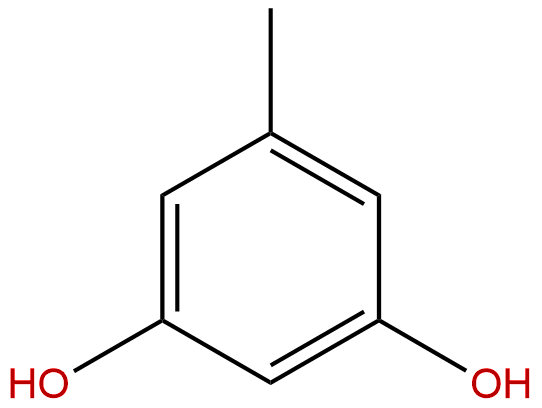
The chemical name of moss black phenol is 3,5-dihydroxytoluene, and its chemical structure belongs to a simple monocyclic phenolic compound. Its molecule is composed of a benzene ring core, with a methyl group (- CH3) attached to the 1st position of the benzene ring and a hydroxyl group (- OH) attached to the 3rd and 5th positions respectively. The structural characteristics of this type of resorcinol are the basis of its chemical properties and biological activity. Its molecular formula is C ₇ H ₈ O ₂, and its relative molecular mass is 124.14 g/mol. The CAS registration number is 504-15-4.
From the perspective of physical and chemical properties, moss black phenol usually appears as colorless or white needle shaped crystals with a certain degree of sublimation. Its melting point is about 107-109 ° C and boiling point is about 290 ° C. Due to the presence of two phenolic hydroxyl groups in the molecule, mossy black phenol exhibits weak acidity and can react with bases to form phenolic salts. Its solubility in water is moderate, with a calculated water solubility (LogS) of approximately 15.95 mg/mL, indicating that it has a certain degree of hydrophilicity. Meanwhile, its oil-water partition coefficient (LogP) is about 1.69, indicating moderate lipophilicity, which enables it to penetrate biofilms well. The topological polar surface area (TPSA) is 40.46 Å ², which is much lower than the upper limit of 140 Å ² typically required for oral drugs, indicating its good oral absorption potential. In terms of spectroscopic characteristics, phenol has characteristic absorption in the ultraviolet region, with its maximum absorption wavelength (λ max) usually around 270-280 nm, which is related to the π→π * transition of the benzene ring. In infrared spectroscopy, broad and strong stretching vibration peaks of phenolic hydroxyl (- OH) groups (approximately 3200-3500 cm ⁻¹) and benzene ring skeleton vibration peaks (approximately 1600 cm ⁻¹ and 1500 cm ⁻¹) can be observed. In the nuclear magnetic resonance hydrogen spectrum (¹ H NMR), the methyl proton signal appears in the high field (approximately δ 2.2 ppm), while the two aromatic protons on the benzene ring (located at positions 2 and 6) typically exhibit a single or double peak with a chemical shift between δ 6.0-6.2 ppm due to their proximity to two hydroxyl groups. These structural features and physicochemical parameters collectively determine the absorption, distribution, metabolism, and excretion behavior of moss black phenol in organisms, as well as its interaction with biological targets.
Plant sources and extraction methods
Moss black phenol is widely distributed in nature, but mainly enriched in lichens, mosses, and certain higher plants. Its classic source is the dye clothing genus(Roccella)Tea stained clothing belongs to(Lecanora)Waiting for lichens, these lichens are traditionally used to extract lichen red dye, and moss black phenol is a key precursor for synthesizing this dye. In addition, in the genus Malus(Usnea), Litmus genus(Cladonia)The presence of moss black phenol was also detected in lichens. In higher plants, naringenin or its derivatives (such as naringenin) are present in Primulaceae, Rubiaceae, and certain Orchidaceae plants. For example, in the traditional Chinese medicine Danshen(Salvia miltiorrhiza)In the roots and stems, as well as in vanilla(Vanilla planifolia)There have been reports of moss black phenol or its glycoside form in the pods. In recent years, studies have also isolated moss black phenol from certain fungi and algae derived from the ocean.
The traditional method for extracting moss black phenol mainly relies on organic solvent extraction. Due to its moderate polarity, commonly used extraction solvents include methanol, ethanol, acetone, or their mixed solvents with water. For dry plant materials, methods such as cold soaking, reflux, or Soxhlet extraction are usually used. For example, dry and crushed lichen or plant samples can be soaked in 80% methanol or ethanol at room temperature for 24-48 hours, filtered, and concentrated under reduced pressure to obtain crude extracts. In order to obtain high-purity moss black phenol monomers, modern chromatographic separation techniques need to be combined. Common separation and purification methods include silica gel column chromatography, Sephadex LH-20 gel column chromatography and high performance liquid chromatography (HPLC). In silica gel column chromatography, gradient elution systems such as chloroform methanol or petroleum ether ethyl acetate are commonly used. Due to the presence of phenolic hydroxyl groups in moss black phenol, a small amount of acid (such as formic acid) is sometimes added during the separation process to prevent tailing. In addition, high-speed countercurrent chromatography (HSCCC), as a liquid-liquid distribution chromatography technique, has been successfully applied to the separation and preparation of phenol due to its high sample recovery rate and irreversible adsorption advantages. With the promotion of green chemistry concepts, some new extraction techniques such as ultrasound assisted extraction, microwave-assisted extraction, and supercritical fluid extraction have also been attempted for the extraction of moss black phenol. These methods usually have the advantages of high extraction efficiency, short time, and low solvent consumption. For example, using ultrasound assisted method with ethanol water as solvent can significantly improve the extraction rate of moss black phenol under optimized conditions. The qualitative and quantitative analysis of extracts mainly relies on thin-layer chromatography (TLC) and HPLC, often using C18 reverse phase chromatography columns with methanol water or acetonitrile water systems as mobile phases, monitored at a UV detection wavelength of 280 nm.
Pharmacological activity research
In recent years, significant progress has been made in the pharmacological activity research of moss black phenol, revealing its potential therapeutic value in multiple disease models.
1. Inhibit melanin production activity
This is currently one of the most extensively studied and promising activities of moss black phenol. Melanin is the main pigment that determines skin color, and its excessive synthesis and abnormal deposition can lead to pigmentation diseases such as freckles and melasma. Tyrosinase (TYR) is a key rate limiting enzyme in melanin synthesis, while microphthalmia associated transcription factor (MITF) is the core transcription factor regulating the expression of TYR and its related enzymes (such as TRP1, DCT). Research has shown that tocopherol can significantly inhibit melanin production in mouse melanoma cell line B16F10. Its mechanism of action is not to directly inhibit the enzymatic activity of tyrosinase, but to achieve it by regulating upstream signaling pathways. Specifically, moss black phenol can activate the mitogen activated protein kinase/extracellular signal regulated kinase (MAPK/ERK) signaling pathway. Activated ERK can phosphorylate MITF, promote its ubiquitination degradation, and thereby downregulate the protein level of MITF. The decrease in MITF levels leads to a significant reduction in the transcriptional expression of its downstream target genes, tyrosinase (TYR), tyrosinase related protein 1 (TRP1), and dopa pigment isomerase (DCT), ultimately inhibiting melanin synthesis. This discovery indicates that moss black phenol is a melanin production inhibitor regulated through signaling pathways rather than direct enzyme inhibition, providing new ideas for the development of novel whitening active ingredients.
2. Antioxidant activity
Phenolic compounds usually have good antioxidant capacity, and mossy black phenol is no exception. The two phenolic hydroxyl groups in its molecule can serve as hydrogen atom donors, effectively scavenging free radicals. In vitro chemical experiments, mossy black phenol exhibited certain DPPH (1,1-diphenyl-2-trinitrophenylhydrazine) radical scavenging activity. Although its DPPH scavenging ability may be weaker than some classic strong antioxidants such as vitamin C or gallic acid, its activity cannot be ignored. In addition, moss black phenol may also inhibit the Fenton reaction by chelating transition metal ions (such as Fe ² ⁺, Cu ² ⁺), thereby reducing the production of hydroxyl radicals. This antioxidant activity may be related to its potential roles in anti-aging, anti-inflammatory, and protecting cells from oxidative stress damage.
3. Antibacterial activity
Natural phenolic compounds typically exhibit broad-spectrum antibacterial activity. Research has confirmed that moss black phenol has inhibitory effects on various bacteria and fungi. Its antibacterial spectrum includes Gram positive bacteria such as Staphylococcus aureus Staphylococcus aureus Including methicillin-resistant MRSA strains and Gram negative bacteria such as Escherichia coli Escherichia coli Pseudomonas aeruginosa Pseudomonas aeruginosa). For fungi such as Candida albicans(Candida albicans)It also shows a certain inhibitory effect. Its antibacterial mechanism may involve multiple aspects: firstly, as a hydrophobic phenolic compound, moss black phenol can insert and destroy the phospholipid bilayer of bacterial cell membranes, increase membrane permeability, and lead to leakage of cell contents; Secondly, it may exert its effect by inhibiting the activity of key bacterial enzymes, such as DNA gyrase (GyrA/GyrB), dihydrofolate reductase (DHFR), fatty acid synthase (FabI), and cell division protein FtsZ. These targets are crucial for bacterial DNA replication, folate metabolism, cell wall synthesis, and cell division. For fungi, moss black phenol may exert antifungal effects by inhibiting key enzymes in the ergosterol synthesis pathway (such as CYP51A1/RG11) or interfering with the function of multidrug resistance proteins (such as CDR1).
4. Metabolic regulatory activity
Early studies have reported that tocopherol can alter the nitrogen balance in animals, suggesting its potential involvement in regulating protein and amino acid metabolism. Although there is relatively little modern pharmacological research in this area, this discovery suggests that naringenin may have a broader metabolic regulatory role. Given its potential applications in cancer and metabolic disease research, it is necessary to further investigate its effects on glucose and lipid metabolism, energy metabolism, and mitochondrial function in the future.
Mechanism of action and molecular targets
The pharmacological activity of Taiheiphenol is the result of its interaction with multiple biomolecules, and its mechanism of action exhibits multi-target and multi pathway characteristics.
1. Regulation of melanin synthesis pathway
As mentioned earlier, the core mechanism by which moss black phenol inhibits melanin production is the activation of the MAPK/ERK signaling pathway. The specific molecular events are as follows: Ternophenol first interacts with a certain receptor on the cell membrane or directly acts on intracellular kinases, leading to phosphorylation and activation of MEK (MAPK/ERK kinase), which in turn phosphorylates and activates ERK1/2. Activated ERK1/2 translocates into the nucleus and directly phosphorylates multiple sites of MITF protein, such as Ser73. Phosphorylated MITF is recognized by ubiquitin ligase and rapidly degraded through the ubiquitin proteasome pathway. The decrease in MITF protein levels directly leads to the loss of its transcriptional activity, which cannot initiate the expression of downstream melanin synthase genes such as TYR, TRP1, DCT, thereby blocking the biosynthesis of melanin. This mechanism indicates that tyrosinase inhibitors are not directly acting as inhibitors of tyrosinase, but rather as regulators of upstream signaling pathways, providing a new strategy for its application in the field of whitening that is different from traditional tyrosinase inhibitors such as arbutin and quercetin.
2. Molecular targets for antibacterial activity
The antibacterial activity of moss black phenol involves multiple potential targets. Based on computational chemistry and molecular docking studies, moss black phenol may bind to various essential proteins of bacteria:
- DNA gyrase (GyrA/GyrB)By embedding DNA enzyme complexes, the formation of DNA supercoils is inhibited, hindering DNA replication.
- Dihydrofolate reductase (DHFR)Competitive binding to the active site of the enzyme blocks the conversion of dihydrofolate to tetrahydrofolate, interfering with the synthesis of nucleic acids and amino acids.
- Fatty acid synthase (FabI)Inhibit the activity of acyl ACP reductase, block bacterial fatty acid synthesis, and disrupt cell membrane integrity.
- Cell division protein FtsZ Interfering with the aggregation of FtsZ and the formation of Z-rings, inhibiting bacterial cell division.
- Penicillin binding protein (PBP/PENA)May interfere with the cross-linking of peptidoglycans and affect cell wall synthesis by binding to PBP.
- Drug resistance related proteins For MRSA, tyrosol may directly act on MecA protein or PBP2a, restoring sensitivity to beta lactam antibiotics; For fungi, it may inhibit the efflux pump protein CDR1 and reverse resistance to azole drugs.
3. Antioxidant mechanism
The antioxidant effect of moss black phenol is mainly based on its hydroxyl group's hydrogen donating ability. It can directly neutralize free radicals such as DPPH, ABTS ⁺, etc., forming a stable intermediate of phenoxide free radicals, thereby terminating the chain reaction of free radicals. In addition, it may also inhibit the Fenton reaction and reduce the generation of highly active hydroxyl radicals (· OH) by chelating transition metal ions such as Fe ² ⁺ and Cu ² ⁺. This direct free radical scavenging and metal chelation ability is the basis for its cell protective effect.
Evaluation of drug properties and pharmacokinetics
To evaluate whether a natural product can become a drug, it is necessary to comprehensively consider its physicochemical properties, pharmacokinetic characteristics, and safety. Moss black phenol exhibits certain advantages and challenges in these aspects.
1. Analysis of pharmacological parameters
According to Lipinski's "Rule of Five", the molecular weight of mossy black phenol (124.14 Da) is much smaller than 500 Da, the LogP (1.69) is less than 5, and the number of hydrogen bond donors (2 phenolic hydroxyl groups) and hydrogen bond acceptors (2 oxygen atoms) meets the requirements. Its TPSA (40.46 Å ²) is also much lower than 140 Å ². These parameters indicate that naringenin has excellent oral bioavailability potential and can theoretically be absorbed smoothly through the gastrointestinal tract. Its water solubility (LogS about 15.95 mg/mL) is also good, which is beneficial for the development of the formulation. In addition, the predicted results show that tocopherol can efficiently penetrate the blood-brain barrier (BBB), which provides a possibility for its application in central nervous system diseases such as neurodegenerative diseases, but potential central neurotoxicity should also be noted.
2. Security assessment
The Ames test is a classic method for evaluating the mutagenicity of compounds. The Ames test result of moss black phenol is negative (0.0), indicating that it does not exhibit mutagenicity in bacterial reverse mutation assay, which is a positive signal. In addition, the predicted results showed that it does not have hERG (human ether - à - go related gene) potassium channel inhibitory activity, which means that its risk of causing QT interval prolongation and arrhythmia in the heart is low. However, as a phenolic compound, high concentrations of moss black phenol may cause certain toxicity to cells, such as by generating oxidative stress or interfering with mitochondrial function. Therefore, in in vivo applications, it is necessary to determine the safe and effective dosage range. At present, there is still insufficient research on the systemic toxicity of mossy black phenol, such as acute toxicity, chronic toxicity, and reproductive toxicity, which is a gap that must be filled before its clinical translation.
3. Pharmacokinetic characteristics (predicted and known)
At present, there is relatively limited data on the pharmacokinetics (ADME) of phenol in vivo, but reasonable predictions can be made based on its physicochemical properties.
- Absorption Due to its small molecular weight and moderate lipid solubility, mossy black phenol is expected to be well absorbed in the gastrointestinal tract. It may be absorbed through passive diffusion or carrier mediated transport.
- Distribution Due to its high blood-brain barrier penetration, tyrosol is widely distributed in the body and may accumulate in organs such as the liver, kidneys, and brain.
- Metabolism Phenolic compounds mainly undergo phase II metabolic reactions in the body, such as glucuronidation, sulfation, and methylation. The two hydroxyl groups of moss black phenol are the main metabolic sites. In the liver, it may be catalyzed by UDP glucuronosyltransferases (UGTs) and sulfotransferases (SULTs) to generate corresponding glucuronides and sulfate ester complexes, thereby increasing water solubility and promoting excretion. In addition, catechol-O-methyltransferase (COMT) may also catalyze its methylation.
- Excretion Metabolized water-soluble complexes are mainly excreted in urine through the kidneys, and some may also enter the intestine through bile and be excreted in feces.
Clinical application prospects and prospects
Based on its unique pharmacological activity spectrum and good pharmacological basis, naringenin has shown promising application prospects in multiple therapeutic fields.
1. Skin whitening and treatment of pigmentary diseases
This is the most direct application direction of moss black phenol. Unlike traditional tyrosinase inhibitors, tocopherol inhibits melanin synthesis by promoting MITF degradation, providing a novel mode of action. This mechanism may have the following advantages: firstly, it comprehensively inhibits the melanin synthase system at the transcriptional level, and the effect may be more thorough; Secondly, it may avoid compensatory upregulation caused by direct inhibition of tyrosinase activity. Therefore, tyrosol or its structural derivatives have the potential to be developed as a new generation of skin whitening agents for the treatment of diseases such as melasma, freckles, and post inflammatory pigmentation. Its safety (Ames negative, no hERG inhibition) also lays the foundation for its application in cosmetics and dermatological drugs.
2. Development of anti infective drugs
Faced with the increasingly severe problem of bacterial resistance, especially the threat of methicillin-resistant Staphylococcus aureus (MRSA) and multidrug-resistant Gram negative bacteria, it is urgent to develop anti infective drugs with new mechanisms. The multi-target antibacterial mechanism of moss black phenol (acting on DNA gyrase, DHFR, FtsZ, etc.) makes it less prone to drug resistance. Especially its activity against MRSA, as well as its potential to reverse drug resistance (such as inhibiting MecA or efflux pumps), make it an ideal starting point for developing lead compounds against drug-resistant bacterial infections. Through structural modification, it is expected to improve its antibacterial potency and selectivity, and reduce potential toxicity.
3. Metabolic diseases and cancer research
Early reports on the regulation of nitrogen balance by tequilol, as well as its antioxidant and anti-inflammatory potential, suggest that it may play a role in metabolic syndrome, diabetes and its complications. In addition, the MAPK/ERK signaling pathway is abnormally activated in various cancers, and as a regulator of this pathway, the effects of mossy black phenol on tumor cell proliferation, differentiation, and apoptosis deserve further investigation. Although direct evidence is currently limited, its potential application in central nervous system tumors such as gliomas is also worth paying attention to, given its ability to penetrate the blood-brain barrier.
Outlook:
Future research on moss black phenol should focus on the following aspects: firstly,In depth in vivo pharmacological and pharmacokinetic studies The system elucidates its absorption, distribution, metabolism, excretion, and toxicity characteristics (ADMET) in animal models, clarifying its effective dose and toxic dose. Second,Structure based drug design Using phenol as the lead compound, a series of analogues are synthesized through reasonable chemical modifications (such as introducing halogens, alkyl chains, heterocycles, etc.) in order to obtain candidate drugs with stronger activity, higher selectivity, and lower toxicity. Third,Deepening mechanism research By utilizing modern omics techniques such as proteomics and metabolomics, as well as chemical biology methods, we aim to comprehensively reveal the network of action and direct protein targets of naringenin within cells. Fourth,Formulation development To develop appropriate dosage forms (such as liposomes, nanoemulsions, gel, etc.) for their specific application scenarios (such as skin topical, oral or injection), so as to improve their stability and targeted delivery efficiency.
Conclusion
Moss black phenol, an ancient natural product that emerged from lichens, is undergoing a magnificent transformation from a dye precursor to a modern drug precursor. Although its structure is simple, its function is extraordinary. By regulating the MAPK/ERK-MITF signaling axis to inhibit melanin production, and exerting antibacterial activity through a multi-target mechanism, as well as potential antioxidant and metabolic regulatory effects, its unique pharmacological activity spectrum is formed. Its excellent pharmacological parameters, such as small molecular weight, moderate lipid water partition coefficient, no mutagenicity or cardiac toxicity risk, provide favorable conditions for its further development. Although there is still a need for further systematic pharmacological and toxicological research on moss black phenol, its enormous potential in skin whitening, anti infection, and metabolic disease treatment undoubtedly makes it a natural product treasure trove worth exploring in depth. In the future, through interdisciplinary integration, especially the collaborative efforts of medicinal chemistry, pharmacology, and pharmacy, naringenin and its derivatives are expected to move from the laboratory to clinical applications, making new contributions to human health.