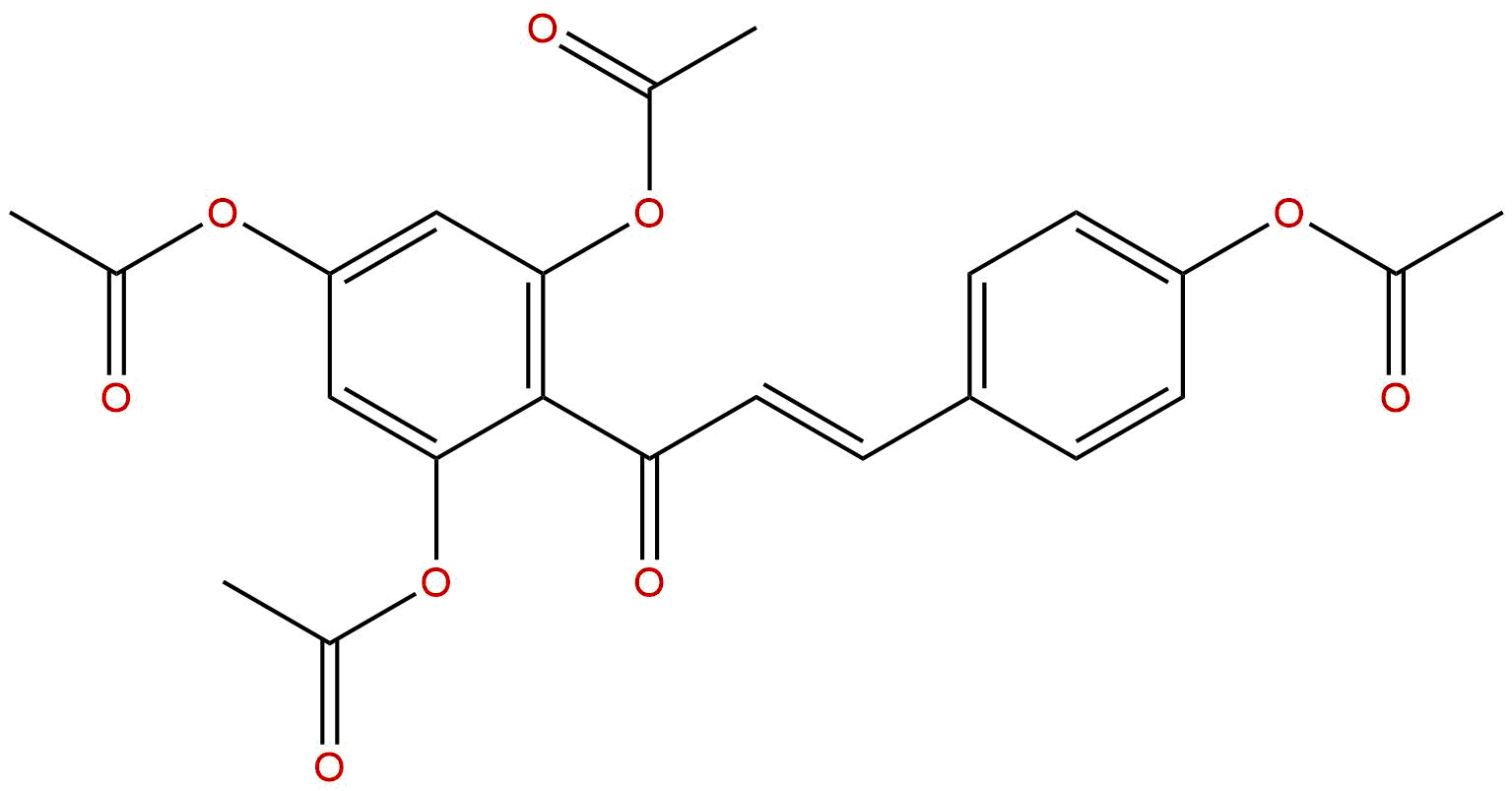


Product name: Tetraacetylnaringenin chalcone
Synonym name: Tetraacetate Naringenin chalcone;3-[4-(Acetyloxy)phenyl]-1-[2,4,6-tris(acetyloxy)phenyl]-2-propen-1-one
Catalogue No.: BP2386
Cas No.: 42385-90-0
Formula: C23H20O9
Mol Weight: 440.404
Botanical Source:
Type of Compound: Chalcones
Purity: 95%~99%
Analysis Method: HPLC-DAD or/and HPLC-ELSD
Identification Method: Mass, NMR
Packing: Brown vial or HDPE plastic bottle
Storage: Store in a well closed container, protected from air and light. Put into refrigerate or freeze for long term storage.
Whenever possible, you should prepare and use solutions on the same day. However, if you need to make up stock solutions in advance, we recommend that you store the solution as aliquots in tightly sealed vials at -20℃. Generally, these will be useable for up to two weeks.
The product could be supplied from milligrams to grams
Inquire for bulk scale.
For Reference Standard and R&D, Not for Human Use Directly.
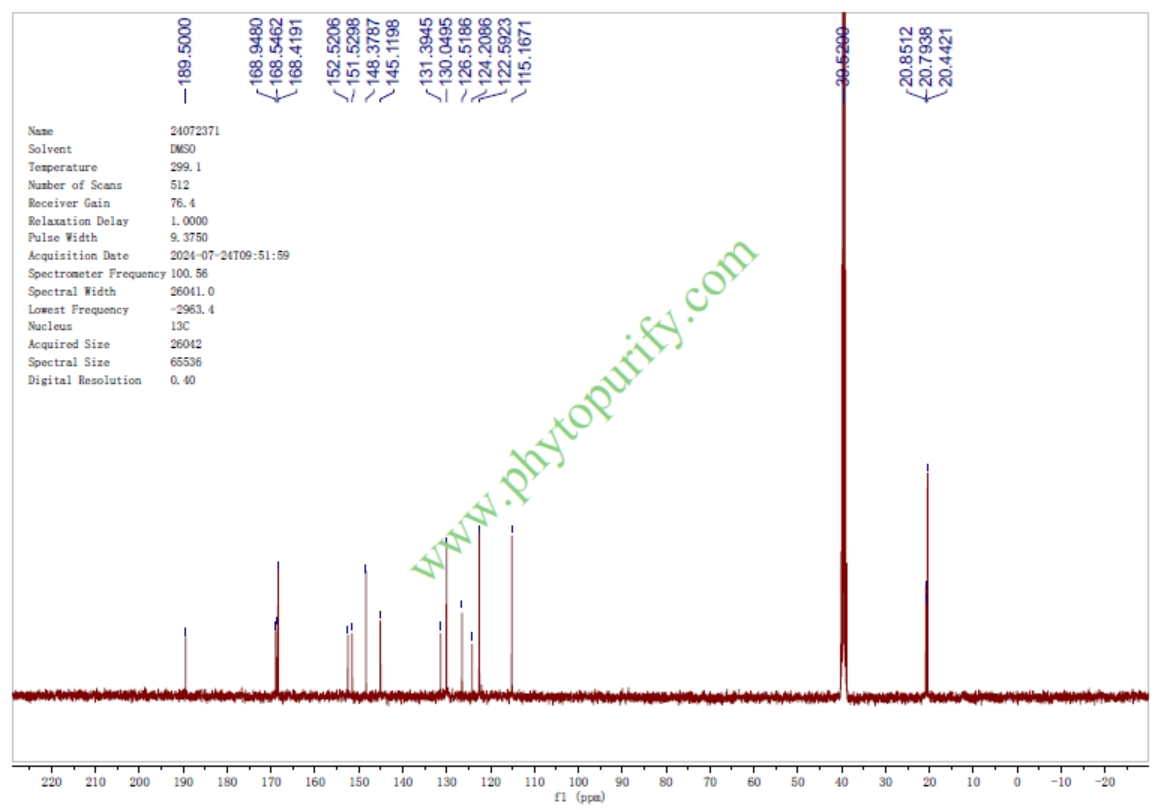
NMR of Tetraacetylnaringenin chalcone
Storage conditions:Short-term storage at 2~8℃, long-term storage at -20 ~ -80℃
122.2700
3.0147
3.0145
.0046
3.6959
11.2932
High
89.8382
2.5628
Yes
Yes
No
No
Yes
No
0.3
No
Yes
Yes
Yes
Natural products, as an important source of drug discovery, play an irreplaceable role in the long history of human fight against diseases. Flavonoids and their derivatives have attracted much attention due to their extensive biological activities, among which naringenin chalcone, as a type of flavonoid precursor with a unique α, β - unsaturated ketone structure, exhibits significant anti-inflammatory, antioxidant, and anti-tumor activities. However, natural chalcone compounds commonly suffer from defects such as poor water solubility and metabolic instability, which severely limit their clinical translational potential. To overcome these limitations, structural modification has become a key strategy for optimizing its pharmacological properties.
Tetraacetylnaringenin chalcone (CAS number: 42385-90-0) is a derivative of naringenin chalcone designed and synthesized based on this idea. By introducing acetyl protecting groups at multiple hydroxyl sites of the parent molecule, this compound not only improves lipid solubility, but may also achieve in vivo sustained release through prodrug mechanisms, thereby enhancing bioavailability. In recent years, studies have revealed that tetraacetyl naringenin chalcone has shown remarkable potential in the treatment of colorectal cancer (CRC), involving multiple key signaling pathways such as AMPK, STAT3, BCL2 family, and regulating tumor multidrug resistance associated transporters ABCB1 and ABCG2. This article will provide a systematic review of the research progress of tetraacetyl naringenin chalcone from the aspects of chemical structure, plant origin, pharmacological activity, molecular mechanism, pharmacological evaluation, and clinical application prospects, aiming to provide theoretical basis for the in-depth development of this natural product derivative.
The molecular formula of tetraacetyl naringenin chalcone is C ₂ ∝ H ₂₀ O ₁₀, with a molecular weight of 440.4040 g/mol. Its core skeleton is a chalcone structure, in which two aromatic rings are connected by an α, β - unsaturated ketone bridge (1,3-diphenyl-2-propen-1-one). Compared with the parent compound naringenin chalcone, this compound introduces acetyl groups (- COOCH3) at the four phenolic hydroxyl positions of the A and B rings, forming a tetraacetylated derivative. This structural modification significantly changes the physicochemical properties of the molecule, manifested as:
Enhanced lipid solubility The calculated LogP value is 3.0147, which is much higher than the parent naringenin chalcone (LogP of about 2.0-2.5), indicating that the introduction of acetyl groups increases the overall hydrophobicity of the molecule. This characteristic is beneficial for compounds to penetrate the lipid bilayer of the cell membrane, which may improve cellular uptake efficiency.
Topological Polarity Surface Area (TPSA)122.27 Å ², in the moderate polarity range. TPSA is an important parameter for predicting oral absorption and blood-brain barrier penetration ability, and molecules with TPSA<140 Å ² are generally considered to have good oral bioavailability potential. The TPSA value of tetraacetylnaringenin chalcone suggests that it may have some oral absorption disorders, but through prodrug design strategies, the acetyl group is released as an active precursor after enzymatic hydrolysis in vivo, which may improve this situation.
Water solubility The predicted water solubility is only 0.0046 mg/mL, which belongs to extremely low water solubility compounds. This is a common defect of chalcone compounds and one of the main bottlenecks limiting their clinical application. Acetylation modification may not fundamentally solve the problem of water solubility, but it may improve its dispersibility in organic solvents by reducing intermolecular hydrogen bonding, providing convenience for formulation development.
Blood-brain barrier penetrability Predicted as high penetration. This characteristic is not necessary in the treatment of colorectal cancer, but it is of great significance for evaluating possible brain metastases or central nervous system side effects. It is worth noting that high blood-brain barrier penetration also suggests that the compound may have potential effects on the central nervous system, which should be given special attention in subsequent safety evaluations.
HERG inhibition risk The prediction result is negative, indicating that the compound has a low risk of inhibiting the cardiac potassium channel hERG, reducing the potential risk of inducing QT interval prolongation and arrhythmia, which is an important safety advantage of its candidate drug.
Genotoxicity The Ames test predicted a value of 0.3, indicating a low risk of mutagenicity. This data provides a positive signal for subsequent toxicology research, but it still needs to be validated through standardized genotoxicity tests.
Tetraacetyl naringin chalcone is not a naturally occurring plant secondary metabolite, but a derivative obtained through chemical synthesis based on natural naringin chalcone. Therefore, its "plant origin" essentially refers to the natural source of the parent compound naringenin chalcone, as well as the subsequent chemical synthesis pathway.
Naringin chalcone is widely present in Rutaceae plants, especially in the peel and flesh of citrus fruits. Grapefruit (Citrus paradisi), lime (Citrus aurantium), and sweet orange (Citrus sinensis) are the main natural sources of naringenin chalcone. In addition, it has also been found in Asteraceae plants such as Artemisia annua and Fabaceae plants. Naringin chalcone, as an intermediate in the flavonoid biosynthesis pathway in plants, is catalyzed by chalcone synthase (CHS) to condense coumaroyl CoA and malonyl CoA, and can then be further isomerized into naringenin.
The extraction of naringin chalcone from plant materials is usually carried out using the following methods:
Solvent extraction method Using organic solvents such as methanol, ethanol, or acetone for cold soaking or hot reflux extraction of dried plant powder. Due to the good solubility of chalcone compounds in polar solvents, ethanol water mixed systems (such as 70% ethanol) are often used as extraction solvents. After vacuum concentration, the extract is preliminarily purified by liquid-liquid extraction (such as ethyl acetate water system).
Chromatographic separation technology: The crude extract was separated and purified by silica gel column chromatography, polyamide column chromatography or Sephadex LH-20 gel column chromatography. Naringin chalcone has characteristic absorption under ultraviolet light (approximately 365 nm) and can be monitored by thin layer chromatography (TLC) or high performance liquid chromatography (HPLC). Preparation HPLC can further obtain high-purity monomers.
chemical synthesis The synthesis of tetraacetyl naringenin chalcone is usually based on naringenin chalcone as the raw material. In the presence of alkaline catalysts such as pyridine or triethylamine, it reacts with excess acetic anhydride to completely acetylate the four phenolic hydroxyl groups. The reaction conditions are mild (from room temperature to 50 ° C) and the yield is high. The product can be purified by recrystallization or column chromatography, and its structure is confirmed by nuclear magnetic resonance (¹ H-NMR, ¹ ³ C-NMR) and mass spectrometry (MS).
Colorectal cancer is the third most common malignant tumor in the world, and its incidence rate and mortality are increasing year by year. The existing treatment methods include surgical resection, chemotherapy, radiotherapy, and targeted therapy, but drug resistance and toxic side effects remain major challenges in clinical practice. Tetraacetyl naringenin chalcone has demonstrated multiple pharmacological activities in the treatment of colorectal cancer.
Inhibit tumor cell proliferation In vitro experiments have shown that tetraacetyl naringenin chalcone has significant inhibitory effects on the proliferation of various colorectal cancer cell lines (such as HCT116, HT-29, SW480), with a half maximal inhibitory concentration (IC ₅₀) at the micromolar level. Compared with the parent naringin chalcone, the activity of the tetraacetylated derivative is several times higher, which may be attributed to its enhanced lipophilicity promoting cellular uptake. The time effect curve shows that the compound inhibits cell growth in a time-dependent manner, and long-term exposure (48-72 hours) can induce cell cycle arrest in the G ₂/M phase.
Inducing cell apoptosis Through Annexin V-FITC/PI dual staining flow cytometry detection, colorectal cancer cells treated with tetraacetyl naringenin chalcone showed significant early and late apoptosis characteristics. Hoechst 33342 staining observed typical apoptotic morphological changes such as nuclear condensation and fragmentation. Further research has found that this compound can upregulate the expression of pro apoptotic protein BAX, while downregulating the levels of anti apoptotic proteins BCL2 and MCL1, leading to loss of mitochondrial membrane potential, release of cytochrome c into the cytoplasm, and activation of caspase-9 and caspase-3 cascade reactions, ultimately executing the apoptotic program.
Inhibit cell migration and invasion The results of scratch healing experiments and Transwell invasion experiments showed that tetraacetyl naringenin chalcone can significantly inhibit the migration and invasion ability of colorectal cancer cells at non-toxic concentrations. This effect may be related to the downregulation of matrix metalloproteinases (MMPs) activity and the regulation of epithelial mesenchymal transition (EMT) related markers such as upregulation of E-cadherin, downregulation of N-cadherin, and vimentin.
In addition to its anti colorectal cancer activity, tetraacetyl naringenin chalcone also exhibits other potential pharmacological effects:
anti-inflammatory activity In a macrophage model stimulated by lipopolysaccharide (LPS), this compound can inhibit the release of pro-inflammatory cytokines TNF - α, IL-6, and IL-1 β, while downregulating the expression of inducible nitric oxide synthase (iNOS) and cyclooxygenase-2 (COX-2). Its anti-inflammatory mechanism may be related to the inhibition of the TLR4 signaling pathway.
antioxidant activity The DPPH radical scavenging experiment and ABTS cation radical scavenging experiment showed that tetraacetyl naringin chalcone has a certain antioxidant capacity, but weaker than the parent naringin chalcone. This may be due to the acetyl group protecting the phenolic hydroxyl group, reducing its ability to directly scavenge free radicals. However, in the intracellular environment, the free phenolic hydroxyl groups released after acetyl hydrolysis by esterases can still exert antioxidant effects.
Reverse multidrug resistance In drug-resistant colorectal cancer cells overexpressing ABCB1 (P-glycoprotein) or ABCG2 (BCRP), tetraacetyl naringenin chalcone can partially reverse resistance to chemotherapy drugs such as doxorubicin and paclitaxel. The mechanism may involve inhibiting transporter activity or downregulating its expression level, thereby increasing the accumulation of chemotherapy drugs in cells.
The anti colorectal cancer effect of tetraacetyl naringenin chalcone involves the synergistic regulation of multiple signaling pathways and molecular targets, exhibiting a multi-target and multi pathway characteristic of action.
AMP activated protein kinase (AMPK) is a key sensor for cellular energy metabolism and is often downregulated in colorectal cancer. Tetraacetyl naringenin chalcone can significantly activate the phosphorylation level of AMPK (PRKAA1 subunit), thereby inhibiting the downstream mTOR signaling pathway, leading to reduced protein synthesis and cell growth arrest. The activation of AMPK can also regulate fatty acid oxidation and alter the metabolic reprogramming of tumor cells by phosphorylating acetyl CoA carboxylase (ACC). It is worth noting that the activation of AMPK is functionally associated with the downregulation of MCL1. AMPK can reduce the translation of MCL1 by inhibiting mTORC1 activity, thereby promoting cell apoptosis.
BCL2 family proteins play a central role in regulating the mitochondrial apoptosis pathway. Tetraacetyl naringenin chalcone treatment can simultaneously downregulate the expression of anti apoptotic proteins BCL2 and MCL1, and upregulate the levels of pro apoptotic proteins BAX and BAK. This change in expression profile leads to the formation of oligomeric pores on the outer membrane of mitochondria by BAX/BAK, releasing apoptotic factors such as cytochrome c and Smac/DIABLO. Cytochrome c binds to Apaf-1 to form apoptotic bodies, activating caspase-9 and subsequently activating downstream effector caspase-3/7, ultimately leading to DNA fragmentation and cell disintegration.
Signal transducer and activator of transcription factor 3 (STAT3) is often continuously activated in colorectal cancer, promoting cell proliferation, angiogenesis, and immune escape. Tetraacetyl naringenin chalcone can inhibit the phosphorylation of the Tyr705 site of STAT3, blocking its nuclear translocation and transcriptional activity. The inhibition of STAT3 activity leads to downregulation of its target genes such as Cyclin D1, Survivor, and VEGF, thereby inhibiting cell cycle progression and angiogenesis. In addition, there is cross regulation between STAT3 and the BCL2 family, and STAT3 can directly transcribe and activate the expression of MCL1 and BCL2. Therefore, the inhibition of STAT3 may be one of the important upstream mechanisms by which this compound downregulates anti apoptotic proteins.
Toll like receptor 4 (TLR4) is an important pattern recognition receptor of the innate immune system, which can be activated by endogenous ligands such as HMGB1 and S100 proteins in the colorectal cancer microenvironment, promoting inflammation related tumor progression. Tetraacetylnaringenin chalcone can inhibit the binding of TLR4 to its adapter protein MyD88, blocking the activation of downstream NF - κ B and MAPK signaling pathways. This effect not only reduces the production of pro-inflammatory cytokines, but may also promote apoptosis by inhibiting NF - κ B-mediated upregulation of BCL2 transcription.
Carboxyesterase CES1 and CES2 are key enzymes involved in drug metabolism and endogenous ester hydrolysis. Tetraacetyl naringin chalcone, as an acetylated prodrug, can theoretically be hydrolyzed by CES1/CES2 to release the active parent naringin chalcone. Interestingly, the compound itself may also regulate the expression or activity of CES1/CES2. In colorectal cancer cells, the expression level of CES2 is closely related to the activation efficiency of irinotecan (CPT-11), and the regulation of CES2 by tetraacetylnaringenin chalcone may affect the metabolism and efficacy of chemotherapy drugs.
ABCB1 (P-gp) and ABCG2 (BCRP) are important members of the ATP binding cassette (ABC) transporter family, and their overexpression is one of the main mechanisms of multidrug resistance in colorectal cancer. Tetraacetylnaringenin chalcone can inhibit the transport function of ABCB1 and ABCG2, and increase the accumulation of chemotherapy drugs in cells. Mechanism studies have shown that this compound may affect the phosphorylation status and membrane localization of transporters by directly binding to the drug binding site of the transporter or by regulating the PKC (such as PRKCA) signaling pathway.
PRKCA, a member of the protein kinase C (PKC) family, is involved in regulating cell proliferation, differentiation, and apoptosis in colorectal cancer. Tetraacetyl naringenin chalcone can regulate the activity of PRKCA, thereby affecting downstream signaling networks. The activation of PRKCA can phosphorylate and regulate the transport activity of ABCB1, so the regulation of PRKCA by this compound may be related to its ability to reverse multidrug resistance.
Based on computational predictions and preliminary experimental data, the pharmacological characteristics of tetraacetyl naringenin chalcone can be summarized as follows:
Drug Evaluation According to Lipinski's five rules, the molecular weight of the compound (440.4 Da) is slightly higher than the threshold of 500 Da, and LogP (3.01) meets the requirement of ≤ 5. The number of hydrogen bond donors (0 free hydroxyl groups, but 4 hydroxyl groups are produced after acetyl hydrolysis) and hydrogen bond acceptors (10) are both within an acceptable range. Overall, the compound meets the requirements for drug like properties, but its high molecular weight may affect oral absorption.
Metabolic stability Acetyl, as a protective group, can be hydrolyzed by widely distributed esterases (such as CES1 and CES2) in the body, releasing the active parent compound naringenin chalcone. This prodrug design strategy can prolong the drug's duration of action and avoid first pass metabolism of the parent compound in the gastrointestinal tract or liver. However, the hydrolysis rate of acetyl groups is influenced by esterase expression levels and individual differences, which may lead to pharmacokinetic variability.
Security prediction The low risk of hERG inhibition and negative Ames test provide preliminary guarantees for the safety of this compound. However, it should be noted that high blood-brain barrier penetration may cause central nervous system side effects such as dizziness and drowsiness, which need to be closely observed in animal experiments. In addition, the long-term toxicity, immunotoxicity, and reproductive toxicity of acetylated derivatives still need to be systematically evaluated.
At present, there is limited pharmacokinetic data on tetraacetylnaringenin chalcone, but reasonable speculation can be made based on its physicochemical properties and structural characteristics:
absorb Low water solubility (0.0046 mg/mL) is the main obstacle to oral absorption. This compound may belong to BCS class II (low solubility, high permeability) drugs, and its oral bioavailability may be limited by dissolution rate. Improving dissolution through formulation techniques such as solid dispersions, lipid nanoparticles, and cyclodextrin inclusion complexes is a key strategy for improving oral absorption.
distribution High lipid solubility is beneficial for drugs to penetrate cell membranes, and the distribution volume may be larger. High blood-brain barrier penetration suggests that drugs can enter the central nervous system, and attention should be paid to the relationship between drug concentration in the brain and potential neurotoxicity. The plasma protein binding rate has not been reported yet, but based on LogP values, it is speculated to be relatively high (>90%).
Metabolism The main metabolic pathway includes esterase catalyzed acetyl hydrolysis to produce naringin chalcone. The latter can further undergo phase II metabolism (glucuronidation and sulfation), and may also be oxidized by cytochrome P450 enzymes (such as CYP3A4). The rate of acetyl hydrolysis is a key factor determining the duration of drug action.
excretion Metabolites are mainly excreted through bile and urine. Due to its large molecular weight and multiple polar groups (after hydrolysis), bile excretion may be the main pathway, with the possibility of enterohepatic circulation.
Tetraacetylnaringenin chalcone regulates signaling pathways such as AMPK, STAT3, BCL2 family, and TLR4 through multiple targets, and has the ability to reverse multidrug resistance, making it a promising candidate molecule for the treatment of colorectal cancer. Its advantages lie in:
Based on its mechanism of action, the combined application of tetraacetyl naringenin chalcone and the following drugs is worth exploring:
Despite its promising prospects, the clinical translation of tetraacetyl naringenin chalcone still faces the following challenges:
In addition to colorectal cancer, the anti-inflammatory and antioxidant activities of tetraacetyl naringenin chalcone suggest that it may have therapeutic potential in inflammatory bowel diseases such as ulcerative colitis and Crohn's disease. In addition, its inhibition of TLR4 signaling may be applied in the treatment of sepsis and autoimmune diseases. Future research can explore its activity in other solid tumors (such as breast cancer and lung cancer), and the possibility of using it as a radiosensitizer or immunomodulator.
Tetraacetyl naringin chalcone, as an acetylated derivative of natural naringin chalcone, has successfully improved the lipid solubility and metabolic stability of the parent compound through structural modification, while retaining its multi-target pharmacological activity. In the field of colorectal cancer treatment, this compound exerts a comprehensive effect of inhibiting proliferation, inducing apoptosis, resisting migration and invasion, and reversing multidrug resistance by regulating multiple signaling pathways such as AMPK, STAT3, BCL2 family, TLR4, etc. Its pharmacological evaluation shows low hERG inhibition risk and low genetic toxicity, but poor water solubility and pharmacokinetic uncertainty remain the main obstacles to clinical translation.
Future research should focus on: (1) developing efficient formulation technologies to improve bioavailability; (2) Conduct systematic preclinical pharmacokinetic and toxicological studies; (3) Verify the synergistic effect of combination therapy strategy through in vitro and in vivo models; (4) Using omics techniques to deeply analyze its multi-target action network. With the deepening of research, tetraacetyl naringenin chalcone is expected to become a new candidate drug for the treatment of colorectal cancer, providing a successful example for the development of drugs derived from natural products. The transformation process from natural products to lead compounds, and then to candidate drugs, embodies the wisdom of multiple disciplines such as medicinal chemistry, pharmacology, and pharmacy, and also demonstrates the irreplaceable value of natural products in modern drug discovery.
