


Synonym name:
Catalogue No.: BP0700
Cas No.: 343-27-1
Formula: C13H13ClN2O
Mol Weight: 248.71
Botanical Source:
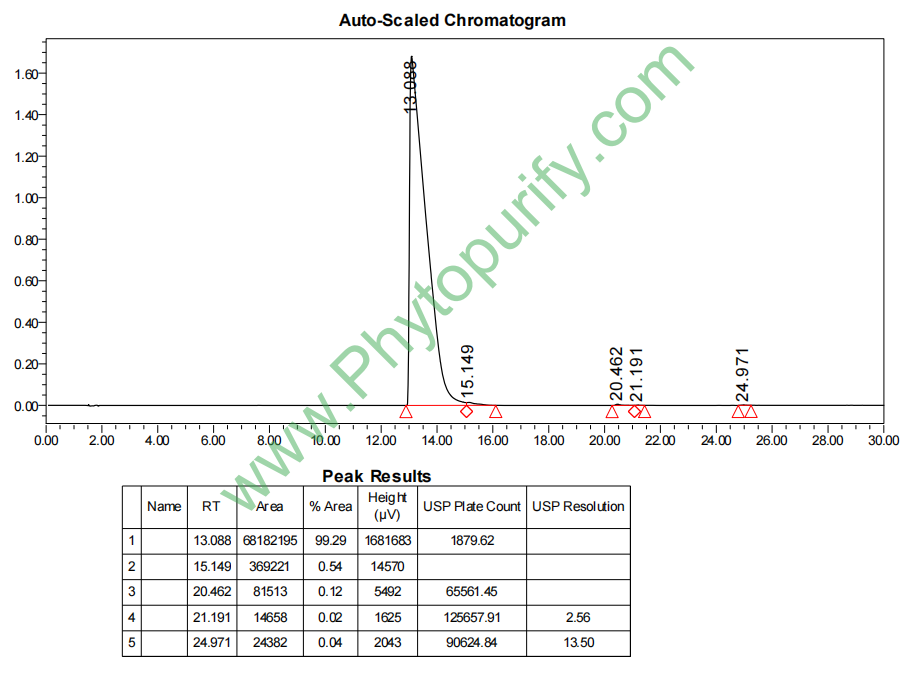
Purity: 95%~99%
Analysis Method: HPLC-DAD or/and HPLC-ELSD
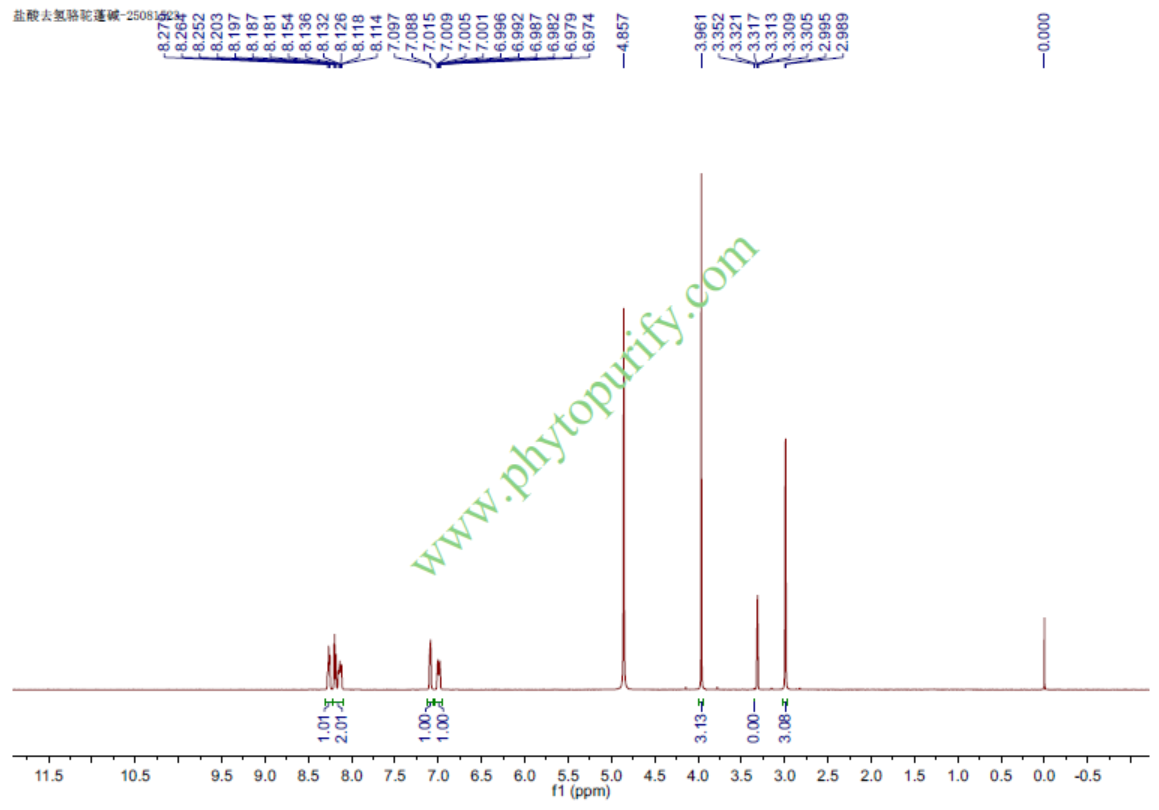
Identification Method: Mass, NMR
Packing: Brown vial or HDPE plastic bottle
Can be supplied from milligrams to grams.
For Reference Standard and R&D, Not for Human Use Directly.
Inquire for bulk scale.
HPLC of Harmine hydrochloride
HNMR of Harmine hydrochloride
Storage conditions:Short-term storage at 2~8℃, long-term storage at -20 ~ -80℃
Harmine hydrochloride (CAS number 343-27-1) is a naturally occurring β - carbene alkaloid widely found in various plants, particularly in the genus Peganum harmala. As a natural product with multiple targets, dehydrocamelbine hydrochloride has received high attention from the pharmacological community due to its significant anti-cancer, anti-inflammatory, and neuromodulatory activities. In recent years, with the in-depth study of its molecular mechanism, dehydrocamelbine hydrochloride has been found to be an effective dual specificity tyrosine phosphatase regulated kinase (DYRK) inhibitor, while exhibiting high affinity for 5-hydroxytryptamine 2A receptor (5-HT2A) with a Ki value of about 397 nM. Its potential therapeutic value in various diseases such as lung cancer, especially by regulating key molecular targets such as BCL2, STAT3, TLR4, has shown broad application prospects.
This article will provide a systematic review of the chemical structure and physicochemical properties, plant sources and extraction methods, pharmacological activity and mechanism of action, pharmacological evaluation and pharmacokinetic characteristics of dihydrocamel base hydrochloride. Combined with its target effects in diseases such as lung cancer, it will explore its clinical application prospects and future development directions, aiming to provide comprehensive theoretical basis and practical guidance for related research.
The chemical name of hydrochloric acid dehydroberberine is 7-methoxy-1-methyl-9Hindole [2,3-b] quinoline hydrochloride, with the molecular formula C13H12N2O · HCl and a molecular weight of 212.2520. Its core structure is a β - carbene skeleton, consisting of two fused ring systems of indole and quinoline, and the 7-methoxy substituent endows it with unique electronic properties. The hydrochloride form increases its water solubility and stability, making it easier for biological utilization.
In terms of physical and chemical properties, the LogP value of hydrochloric acid dehydrocamelbine is 2.7861, indicating its moderate lipid solubility, which is beneficial for cell membrane penetration and blood-brain barrier passage. The polar surface area (TPSA) is 37.9100 Å ², indicating moderate molecular polarity and good lipophilic and hydrophilic properties. The water solubility is low (0.0202 mg/mL), but the hydrochloride form improves its solubility. Its molecular structure is stable and has no significant hERG channel inhibitory effect. The Ames test result is 1.5, indicating a low risk of genotoxicity and good safety.
Hydrochloric acid dehydrocamelbine mainly comes from the seeds and rhizomes of Peganum harmala L. plants. Camel bark is widely distributed in arid regions of Central Asia, West Asia, and North Africa, and is an important source of alkaloids in traditional herbs. In addition to Peganum harmala, some Aristolochiaceae plants also contain dehydrocoumarin.
The extraction method usually involves organic solvent extraction combined with acid-base stepwise purification. The specific steps include:
1. Dry plant powder is subjected to reflux extraction with methanol or ethanol to extract a total alkaloid mixture.
2. After concentration of the extract, dilute hydrochloric acid solution is added to convert the alkaloids into their hydrochloride form, which is dissolved in the aqueous phase.
3. Adjust the pH through alkalization to precipitate the dehydrogenated camel's foot alkaloid as a free base, and separate it using solvent extraction (such as chloroform or ethyl acetate).
4. Repeatedly recrystallize and purify by column chromatography to obtain high-purity hydrochloric acid dehydrocamelbine.
The application of modern extraction techniques such as ultrasound assisted extraction, microwave-assisted extraction, and high-performance liquid chromatography (HPLC) separation technology has significantly improved extraction efficiency and purity, providing technical support for industrial production.
The pharmacological activities of dehydrocamelbine hydrochloride include multiple aspects such as anti-cancer, anti-inflammatory, neuroprotective, and mental regulation.
A large number of in vitro and in vivo studies have shown that dihydrocamel camel tail alkaloid hydrochloride exhibits significant inhibitory effects on various tumor cells, especially in lung cancer models. Its anti-cancer mechanism involves inducing tumor cell apoptosis, inhibiting proliferation, and suppressing tumor related signaling pathways. By regulating BCL2 family proteins, promote mitochondrial mediated cell apoptosis; Inhibiting the STAT3 signaling pathway, blocking immune escape and proliferation signals of tumor cells; Regulate TLR4 mediated inflammatory response and alleviate the pro-inflammatory state of the tumor microenvironment. In addition, dehydrocamelbine hydrochloride can inhibit tumor cell migration and invasion, reduce MMP2 activity, and decrease matrix degradation.
Hydrochloric acid dehydroberberine significantly reduces the release of inflammatory factors such as TNF - α and IL-6 by inhibiting the NF - κ B (RELA) and MAPK signaling pathways, exerting anti-inflammatory effects. Its regulatory effect on TLR4 further inhibits the cascade reaction of inflammatory signals, reduces tissue damage, and has potential therapeutic value for inflammatory diseases.
Hydrochloric acid dehydrocamelbine has high affinity for 5-HT2A receptors and participates in regulating neurotransmitter balance in the central nervous system, demonstrating potential for antidepressant, anti anxiety, and cognitive function improvement. Its high blood-brain barrier permeability supports the exploration of its application in neurological diseases. In addition, as a DYRK inhibitor, dehydrocamelbine hydrochloride can regulate neuronal development and survival, promoting neuroprotection.
The multi-target mechanism of action of dehydrocamelbine hydrochloride is the basis of its pharmacological activity, especially in the treatment of lung cancer. Its main molecular targets include:
In addition, dehydrocamelbine hydrochloride, as an inhibitor of DYRK family kinases, affects cell cycle regulation, transcription factor activity, and neuronal function, further enriching its pharmacological action network.
The pharmacological parameters of hydrochloric acid dehydrocamelbine show that it has good potential for drug development. Its molecular weight is moderate (212.2520), in accordance with Lipinski's rule, and a LogP value of 2.7861 indicates suitability for oral absorption. The TPSA is 37.91 Å ², which supports its good cell membrane permeability and blood-brain barrier permeability, making it suitable for the treatment of central nervous system diseases.
Low water solubility (0.0202 mg/mL) may limit its oral bioavailability, but formulation design in hydrochloride form and nanocarrier technology can effectively improve solubility and stability. The hERG channel inhibition experiment was negative, indicating a low risk of cardiac toxicity. The Ames test result is 1.5, indicating a low risk of genotoxicity and good safety.
Pharmacokinetic studies have shown that after oral administration, dehydrocamel alkaloids hydrochloride are rapidly absorbed and widely distributed, especially at high concentrations in brain tissue, which is consistent with their high blood-brain barrier permeability. Its metabolism is mainly carried out through the liver enzyme system, and the metabolites are relatively stable, with excretion mainly completed through the kidneys. Moderate half-life, suitable for daily administration.
Hydrochloric acid dehydrocamelbine, as a multi-target natural product, has increasingly demonstrated potential in the treatment of lung cancer. It exhibits synergistic anti-cancer advantages by regulating tumor cell apoptosis, inhibiting inflammation and tumor microenvironment. In the future, the combination strategy of targeted drugs and immunotherapy is expected to enhance its clinical efficacy.
In addition, the application prospects of dehydrocamel camel base hydrochloride in neurological diseases are broad. Its high affinity for 5-HT2A receptors and DYRK inhibition provide new ideas for the treatment of neurodegenerative diseases such as depression and Alzheimer's disease. With the advancement of drug delivery technology, the bioavailability and targeting of dehydrocamelbine hydrochloride will be further improved.
Future research should focus on in vivo pharmacokinetic optimization, toxicological safety assessment, and preclinical model validation. At the same time, in-depth analysis of its multi-target mechanism of action, development of structurally modified derivatives, and improvement of selectivity and efficacy will promote the clinical translation of dihydrocamel base hydrochloride.
Hydrochloric acid dehydrocamelbine, as a natural product with multiple biological activities, has shown broad application potential in the fields of anti-cancer, anti-inflammatory, and neuroprotection due to its unique chemical structure and multi-target mechanism of action. Its good pharmacological parameters and safety evaluation provide a solid foundation for drug development. In the future, through technological innovation and in-depth research on mechanisms, dehydrocamelbine hydrochloride is expected to become an important candidate drug for the treatment of lung cancer and neurological diseases, promoting the development and clinical translation of natural product pharmacology.
