Introduction/Overview
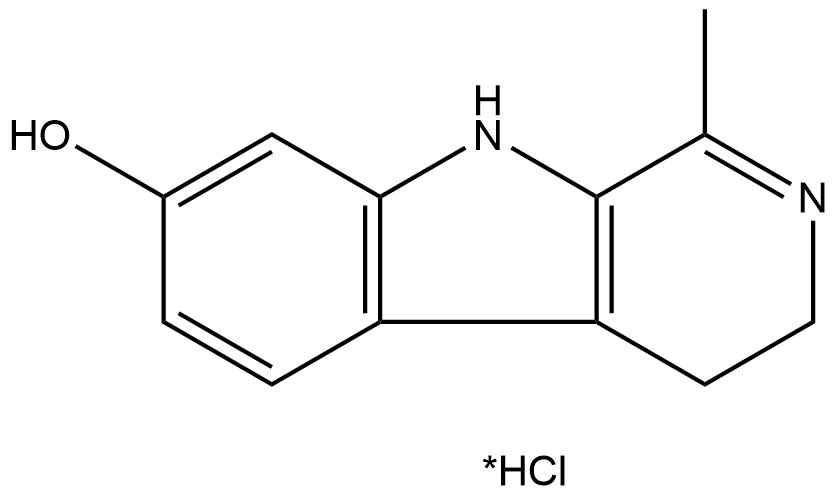
Harmalol hydrochloride (CAS number: 6028-07-5) is a typical β - carboline alkaloid, mainly found in traditional medicinal plants such as Peganum harmala. As the main metabolic product of Harmaline in the body, camel antler hydrochloride has attracted widespread attention in the field of natural product pharmacology in recent years due to its unique chemical structure and diverse biological activities. It has shown significant pharmacological potential in antioxidant, anti-tumor, neuroprotective and other aspects, especially in regulating cell apoptosis and inhibiting tumor related signaling pathways.
This review aims to systematically summarize the chemical structure and physicochemical properties, plant sources and extraction methods, pharmacological activity and mechanism of action, pharmacological evaluation and pharmacokinetic characteristics of camel seed phenol hydrochloride. Combined with its molecular targets in anti-tumor and other related diseases, it explores its clinical application prospects and future research directions, providing theoretical basis and practical guidance for the drug development of this natural product.
Chemical structure and physicochemical properties
Camelol hydrochloride belongs to the β - carboline alkaloid class, with a molecular formula of C12H12N2O and a molecular weight of 200.2410. Its core structure is a β - carboline skeleton, consisting of a tricyclic system formed by the fusion of an indole ring and a pyrrole ring. The structure contains a hydroxyl group, which endows it with certain polarity and reactivity. The LogP of Camel Pongol Hydrochloride is 2.2414, indicating that it has moderate lipid solubility and is beneficial for cell membrane penetration. The topological polar surface area (TPSA) is 48.38 Å ², indicating that its molecular polarity is moderate and may affect its bioavailability and blood-brain barrier permeability.
The low water solubility (0.0692 mg/mL) to some extent limits its solubility and absorption efficiency for oral administration. The assessment of blood-brain barrier permeability shows that its penetration ability is low, suggesting that its role in the central nervous system may be limited. The hERG channel inhibition experiment showed a negative result, indicating a low risk of cardiac toxicity from camel seed phenol hydrochloride. The Ames test result is 0.3, indicating a low risk of genotoxicity and a good safety foundation.
Plant sources and extraction methods
Hydrochloric acid camelid phenol mainly exists in plants such as Peganum harmala (commonly known as camelid or hamar grass). Peganum harmala is widely distributed in Central Asia, West Asia, and North Africa, and is an important source of alkaloids in traditional herbs. The seeds of this plant contain abundant β - carboline alkaloids, including hamalin, hamalol (camelid hydrochloride), and hamalin.
The commonly used methods for extracting camelid hydrochloride include:
-
Solvent extraction method Using organic solvents such as methanol, ethanol, or ethyl acetate to extract dried plant powder, followed by concentration and liquid-liquid distribution to enrich alkaloid components.
-
Acid-base extraction method Using hydrochloric acid or sulfuric acid to acidify plant powder, extract water-soluble alkaloids in the form of hydrochloride salts, and then free the alkaloids through alkalization. Purification is achieved through organic solvent extraction.
-
Chromatographic separation technology Including column chromatography, high performance liquid chromatography (HPLC), etc., used for further purification and separation of camelid hydrochloride to improve its purity and yield.
In recent years, modern technologies such as ultrasound assisted extraction and microwave-assisted extraction have also been applied to improve extraction efficiency and reduce solvent usage, promoting the industrial production process of camelid hydrochloride.
Pharmacological activity research
Camel oil hydrochloride has various significant pharmacological activities, covering antioxidant, anti-tumor, anti-inflammatory, and neuroprotective fields.
antioxidant activity
Camelol hydrochloride exhibits excellent ability to scavenge hydroxyl radicals and effectively inhibits oxidative stress-related cell damage. In vitro experiments have shown that it reduces intracellular reactive oxygen species (ROS) levels and slows down oxidative damage processes by capturing free radicals and regulating antioxidant enzyme activities such as superoxide dismutase and glutathione peroxidase. This characteristic lays the foundation for its potential applications in neurodegenerative and inflammatory diseases.
Antitumor activity
Peganol hydrochloride has inhibitory effect on many tumor cell lines, including lung cancer, breast cancer, liver cancer and colorectal cancer. Its anti-tumor mechanisms are diverse, mainly including:
- Inducing tumor cell apoptosis, regulating BCL2 family protein expression, and promoting programmed cell death.
- Inhibit tumor cell proliferation and migration, reduce matrix metalloproteinase (MMP2) activity, and block tumor metastasis.
- Intervene in tumor related signaling pathways such as STAT3, MAPK1, and HIF1A to inhibit angiogenesis and cellular metabolic reprogramming in the tumor microenvironment.
- Interfering with the function of DNA topoisomerases (TOP1, TOP2A) and hindering DNA replication and repair in tumor cells.
Other pharmacological effects
Camel oil hydrochloride also has certain anti-inflammatory effects, which can inhibit the release of inflammatory mediators and alleviate tissue inflammatory reactions. In addition, it has a protective effect on the nervous system and may improve cognitive function by regulating neurotransmitter metabolism and antioxidant mechanisms.
Mechanism of action and molecular targets
The pharmacological effects of camel seed phenol hydrochloride are closely related to its multi-target effects, with the main targets including:
- MCL1 and BCL2 As an anti apoptotic protein, Camel Pongol Hydrochloride promotes tumor cell apoptosis by downregulating the expression of MCL1 and BCL2.
- STAT3 Camelthorn hydrochloride inhibits the STAT3 signaling pathway, blocks its transcriptional activity, reduces tumor cell proliferation and immune escape.
- MMP2 By inhibiting the activity of MMP2, Camel Pegasus Hydrochloride reduces the invasion and migration ability of tumor cells.
- TOP1 and TOP2A Hydrochloric acid camel seed phenol interferes with the function of DNA topoisomerase, hinders DNA unwinding and replication, and leads to inhibition of tumor cell proliferation.
- HIF1A By inhibiting the hypoxia inducible factor HIF1A, camel camel seed phenol hydrochloride reduces the adaptive metabolism and angiogenesis of tumor cells.
- MAPK1 Regulating the MAPK signaling pathway, affecting cell proliferation and stress response.
- ESR1 and CYP19A1 In hormone dependent tumors, coumarin hydrochloride may affect hormone levels and tumor growth by regulating estrogen receptor (ESR1) and aromatase (CYP19A1) activity.
In addition, camel seed phenol hydrochloride significantly inhibits dioxin mediated CYP1A1 induction at transcriptional and translational levels, demonstrating its potential value in environmental toxicology and detoxification mechanisms.
Evaluation of drug properties and pharmacokinetics
The pharmacological parameters of camel seed phenol hydrochloride show that it has certain potential for drug development:
- Molecular weight (200.24)Moderate, in line with Lipinski's rules, beneficial for drug design.
- LogP(2.24)Indicating that its lipid solubility is moderate and conducive to cell membrane permeation.
- TPSA(48.38 Ų)Moderate, indicating good oral absorption potential.
- Low water solubility (0.0692 mg/mL)It may limit the oral bioavailability and needs to be improved through pharmaceutical methods.
- Low blood-brain barrier permeability Limit the function of the central nervous system, but reduce the risk of central toxicity.
- HERG channel inhibition negative The risk of cardiac toxicity is low.
- Ames test result (0.3)Indicating low risk of genotoxicity and good safety.
In terms of pharmacokinetics, as the main metabolic product of Hamarin, camel seed phenol hydrochloride has stable metabolism in vivo and is mainly converted by the liver metabolic enzyme system. Its low blood-brain barrier penetration and moderate lipid solubility suggest that its distribution in the body is relatively limited, with a moderate half-life, which is beneficial for maintaining effective blood drug concentrations.
However, currently there is limited systematic pharmacokinetic data on camel seed phenol hydrochloride, and more in vivo kinetic, metabolic pathway, and toxicological studies are needed in the future to improve its drug development foundation.
Clinical application prospects and prospects
Camelol hydrochloride has shown broad clinical application prospects due to its multi-target and multi mechanism anti-tumor activity. Its potential in regulating tumor cell apoptosis, inhibiting tumor metastasis, and angiogenesis is particularly suitable for development as adjuvant chemotherapy drugs or targeted therapy drugs. In addition, its antioxidant and anti-inflammatory effects provide new ideas for the treatment of neurodegenerative and chronic inflammatory diseases.
Future research should focus on the following directions:
-
Optimization of drug formulation To address the issue of poor water solubility, new dosage forms such as nano formulations, liposomes, or solid dispersions have been developed to improve their bioavailability and in vivo stability.
-
Systematic pharmacokinetics and toxicology research Improve the in vivo metabolic pathway, distribution characteristics, and long-term safety evaluation of camelid hydrochloride to provide a basis for clinical trials.
-
Combination therapy strategy Explore the synergistic effect of camel seed phenol hydrochloride with existing anti-tumor drugs, reduce drug resistance, and improve treatment efficacy.
-
Preclinical and clinical trials Conduct systematic animal model research and early clinical trials to verify its safety and effectiveness, and promote its clinical translation.
-
In depth analysis of molecular mechanisms Using multi omics techniques to further elucidate its targets and signaling pathways, guiding precise drug design.
Conclusion
Camelol hydrochloride, as a β - carboline alkaloid with rich pharmacological activity, has important research value in the field of natural product pharmacology due to its antioxidant, anti-tumor, and multi-target regulatory abilities. Although its clinical application is still in its early stages, with the deepening of extraction and purification technology, drug formulation improvement, and molecular mechanism research, camel seed phenol hydrochloride is expected to become an important candidate for new anti-tumor and antioxidant drugs. Future systematic research and clinical validation will be key to driving its drug development and application, and we look forward to its greater role in modern medicine.