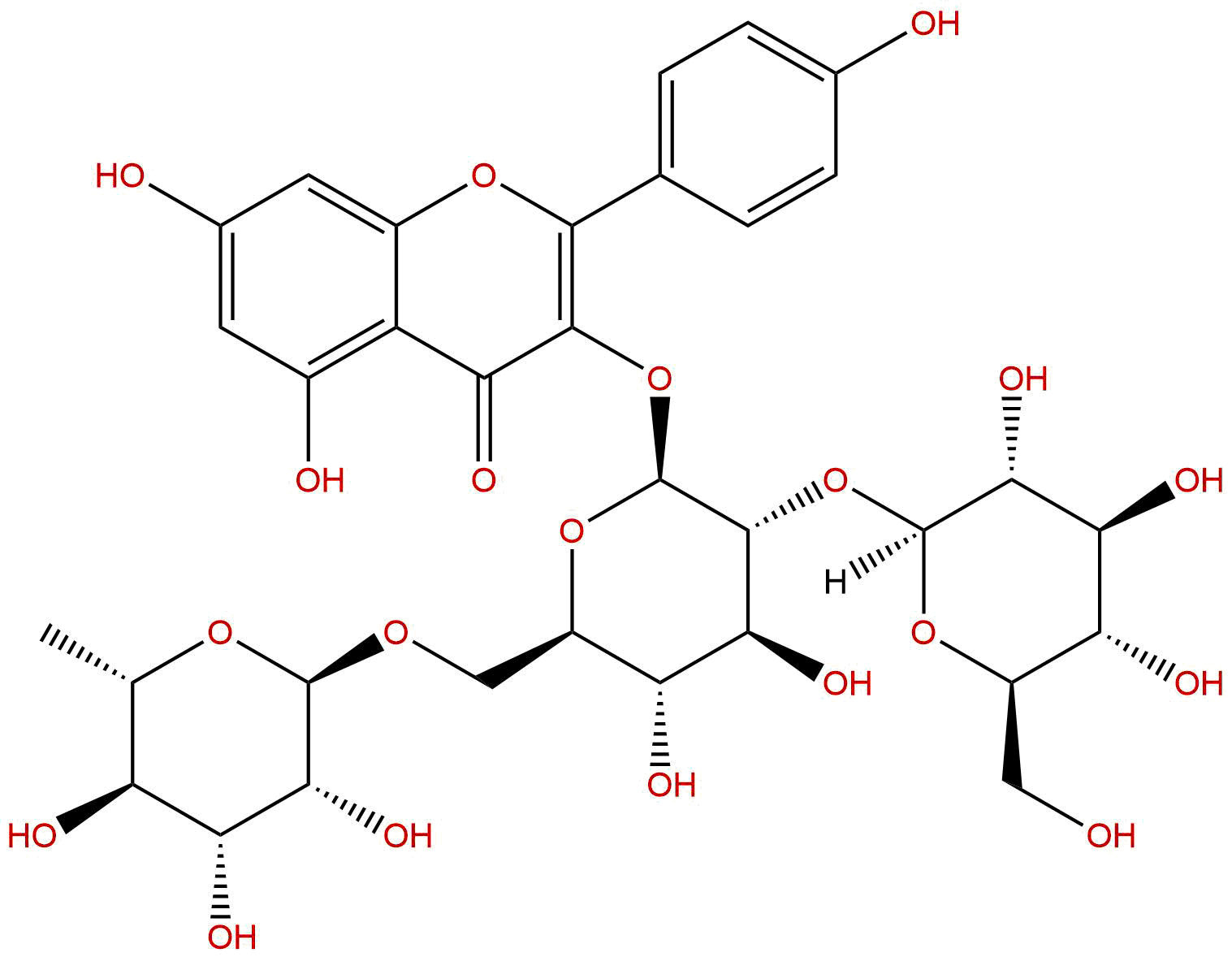


Product name: Kaempferol-3-O-(2''-O-β-D-glucopyl)-β-D-rutinoside
Synonym name: Kaempferol-3-O-glucosyl (1→2) rutinoside
Catalogue No.: BP4842
Cas No.: 55696-58-7
Formula: C33H40O20
Mol Weight: 756.663
Botanical Source:
Type of Compound: Flavonoids
Purity: 95%~99%
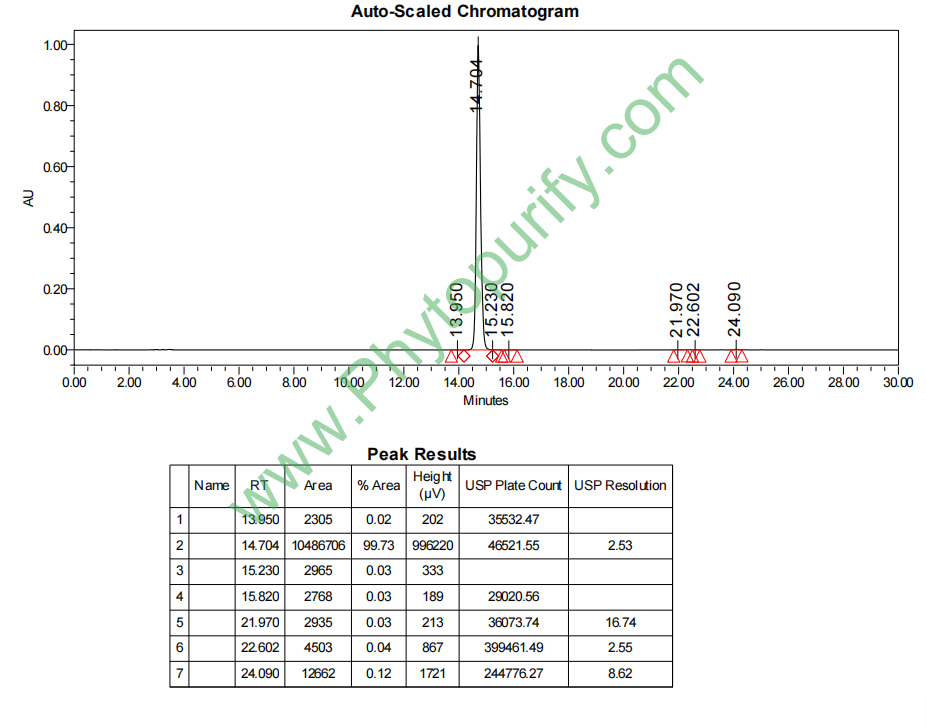
Analysis Method: HPLC-DAD or/and HPLC-ELSD
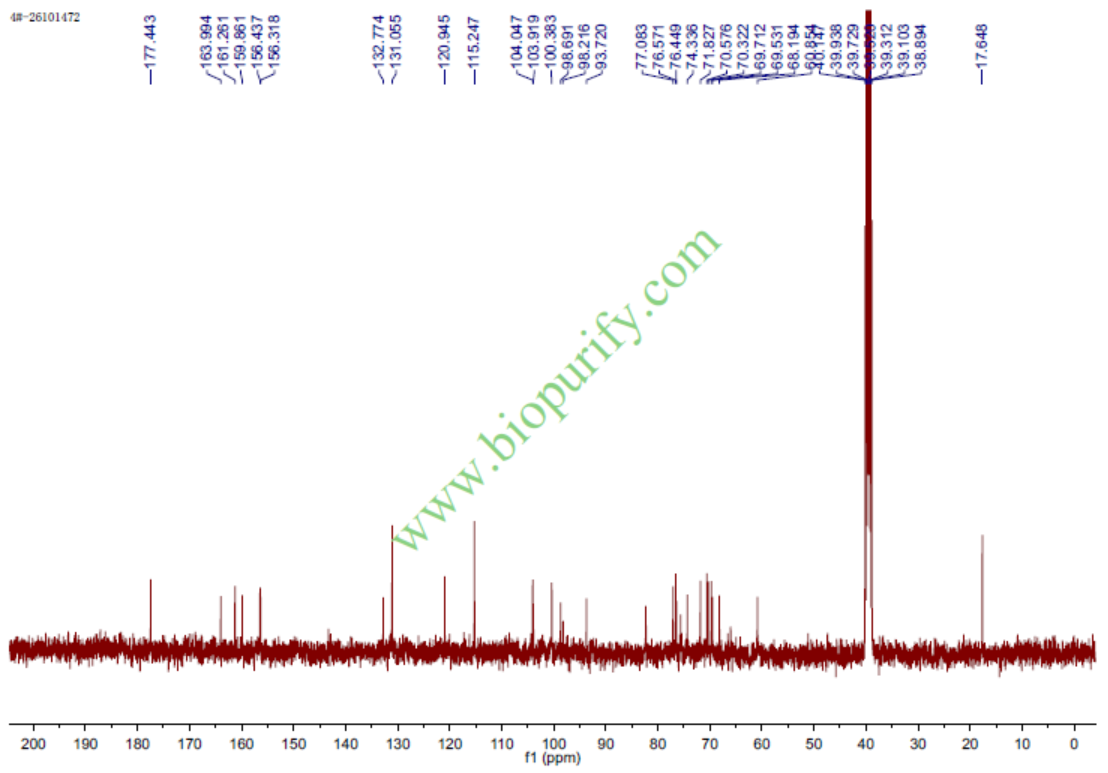
Identification Method: Mass, NMR
Packing: Brown vial or HDPE plastic bottle
Storage: Store in a well closed container, protected from air and light. Put into refrigerate or freeze for long term storage.
Whenever possible, you should prepare and use solutions on the same day. However, if you need to make up stock solutions in advance, we recommend that you store the solution as aliquots in tightly sealed vials at -20℃. Generally, these will be useable for up to two weeks.
The product could be supplied from milligrams to grams
Inquire for bulk scale.
For Reference Standard and R&D, Not for Human Use Directly.
HPLC of Kaempferol-3-O-(2''-O-β-D-glucopyl)-β-D-rutinoside
NMR of Kaempferol-3-O-(2''-O-β-D-glucopyl)-β-D-rutinoside
Storage conditions:Short-term storage at 2~8℃, long-term storage at -20 ~ -80℃
328.3500
-1.0251
-1.0953
5.2333
.3457
.1110
Low
74.0002
5.3222
Yes
No
Yes
No
Yes
No
0.0
Yes
Yes
Yes
Yes
Natural products, as an important source of drug discovery, play an irreplaceable role in the history of human health maintenance and disease treatment. Flavonoids, as the largest class of polyphenolic compounds in plant secondary metabolites, have always been a hot topic in pharmaceutical research due to their extensive and significant biological activities. Kaempferol and its glycoside derivatives are important members of flavonoids, widely present in various edible and medicinal plants. Among them, Kaempferol-3-O - (2 "- O - β - D-glucosyl) - β - D-rutinoside, as a structurally complex flavonol glycoside, has attracted widespread attention from researchers in recent years due to its potential pharmacological activity, especially in the field of cardiovascular disease.
Atherosclerosis (AS) is the main pathological basis of cardiovascular and cerebrovascular diseases (such as coronary heart disease, stroke). Its pathogenesis is complex, involving lipid metabolism disorder, endothelial dysfunction, chronic inflammatory reaction, oxidative stress, proliferation and migration of vascular smooth muscle cells and other links. Although lipid-lowering therapies such as statins have achieved great success in the prevention and treatment of AS, residual cardiovascular risks still exist, and drug tolerance and side effects cannot be ignored. Therefore, the search for novel natural compounds with multi-target and low toxicity to intervene in the occurrence and development of AS has important scientific significance and clinical value. Kaempferol-3-O - (2 "" - O - β - D-glucopyranosyl) - β - D-rutin, with its unique chemical structure and preliminarily revealed regulatory effect on LOX-1, AMPK, BCL2 and other key targets, shows great potential as an anti atherosclerosis candidate molecule. This article aims to provide a systematic review of the chemical structure, plant origin, pharmacological activity, mechanism of action, medicinal properties, and clinical application prospects of the compound, in order to provide reference for further in-depth research and development.
Kaempferol-3-O - (2 "- O - β - D-glucosyl) - β - D-rutinoside, whose chemical structure belongs to flavonol glycosides. Its glycoside is Kaempferol, which is 3,5,7,4 '- tetrahydroxyflavone. A trisaccharide chain is connected to the C-3 hydroxyl group of the aglycone. The composition and connection mode of this sugar chain are highly specific: the inner side is β - D-rutinoside, which is a disaccharide composed of α - L-rhamnose (1 → 6) connected to β - D-glucose; And on the C-2 "" hydroxyl group of the glucose unit in the rutin sugar group, a further β - D-glucose group is connected. Therefore, its complete sugar chain structure can be described as: β - D-glucosyl - (1 → 2) - [α - L-rhamnosyl - (1 → 6)] - β - D-glucosyl, connected to kaempferol through a C-3 oxygen glycosidic bond. This complex multi branched sugar chain structure is a key feature that distinguishes this compound from other common kaempferol glycosides, such as amygdalin and kaempferol-3-O-rutinoside.
From the perspective of physical and chemical properties, the molecular formula of this compound is C ③③ H ₄₀ O ₂₀, with a molecular weight of 756.6630 Da. The calculated lipid water partition coefficient LogP is -1.0251, indicating its strong hydrophilicity, which is consistent with the structural characteristics of the molecule containing multiple hydroxyl and sugar units. The extremely high polarity is also reflected in its topologically polar surface area (TPSA) of up to 328.3500 Å ². The predicted value of water solubility is 5.2333 mg/mL, indicating good water solubility, which provides favorable conditions for its absorption and distribution in organisms, but may also limit its transmembrane transport capacity. The predicted results indicate that the compound has a low ability to penetrate the blood-brain barrier (BBB), suggesting that its pharmacological activity related to the central nervous system may be weaker. However, this also means that the risk of central side effects during peripheral medication is lower. In addition, the predicted hERG inhibition risk by the computer is "no", and the Ames test result is 0.0, indicating that its cardiac toxicity and mutagenicity risk are relatively low, and it has a good safety basis. These physicochemical properties parameters, especially high polarity and high water solubility, determine that the pharmacokinetic behavior of the compound in vivo may be mainly characterized by passive diffusion limitation and dependence on transporter mediated absorption.
Kaempferol-3-O - (2 "- O - β - D-glucosyl) - β - D-rutinoside is not a rare compound, it has been identified and found in various plants, especially enriched in some traditional medicinal plants and daily edible plants. The main sources of plants include leguminous plants such as Sophora japonica(Sophora japonica L. The flower buds and fruits of Astragalus membranaceus(Astragalus membranaceus)The root; Rosaceae plants such as licorice(Glycyrrhiza glabra)Roots and rhizomes; And some vegetables and fruits, such as onions(Allium cepa)The bulbs and spinach(Spinacia oleracea)The leaves, etc. In addition, in plants of the family Lamiaceae such as Perilla frutescens(Perilla frutescens)And plants in the Asteraceae family such as safflower(Carthamus tinctorius)The presence of this ingredient has also been reported in China. The content of this compound in plants is influenced by various factors such as variety, origin, harvest season, and growth environment, and is usually higher in organs with vigorous photosynthesis or metabolism such as flowers, leaves, and fruits.
For the extraction of this compound, solvent extraction method is commonly used due to its high polarity. The commonly used extraction solvents are methanol, ethanol, or water alcohol mixed systems of different concentrations. To improve extraction efficiency and selectivity, techniques such as ultrasound extraction, microwave extraction, or enzymatic assisted extraction can be used. For example, using 70% ethanol ultrasonic extraction to extract locust horn powder can effectively dissolve the compound. After filtration and vacuum concentration of the extract, crude extract is obtained. Due to the complex composition of plant extracts, the separation and purification of target compounds often require the use of multiple chromatographic techniques. The classic separation process includes: first, preliminary enrichment is carried out through macroporous adsorption resin column chromatography (such as D101, AB-8 type), followed by gradient elution with water and different concentrations of ethanol. The target compound is usually enriched in the 30% -50% ethanol elution site. Subsequently, silica gel column chromatography, polyamide column chromatography or Sephadex LH-20 gel column chromatography were used for further separation. Modern high-performance liquid chromatography (HPLC) technology, especially preparative HPLC, has become the preferred method for obtaining high-purity monomeric compounds. Using a C18 reverse phase column as the stationary phase and acetonitrile water or methanol water (often containing small amounts of formic acid or acetic acid) as the mobile phase for isocratic or gradient elution, combined with a UV detector (detection wavelength usually 254 nm or 360 nm), efficient separation of this compound from other structurally similar compounds can be achieved. Finally, the structure of the isolated compounds was confirmed by techniques such as nuclear magnetic resonance spectroscopy (NMR) and high-resolution mass spectrometry (HR-MS).
Existing research has revealed that kaempferol-3-O - (2 "- O - β - D-glucosyl) - β - D-rutinoside has multiple pharmacological activities, particularly outstanding in cardiovascular protection.
1. Anti atherosclerosis activity: This is the pharmacological effect of the compound that has received the most attention. Research has shown that this compound can inhibit the occurrence and development of AS through multiple pathways. In vitro experiments have confirmed that it can significantly inhibit the damage and apoptosis of human umbilical vein endothelial cells (HUVECs) induced by oxidized low-density lipoprotein (ox LDL), reduce the expression of surface adhesion molecules (such as VCAM-1 and ICAM-1) on endothelial cells, and thus inhibit the adhesion of monocytes to the subendothelial layer. In addition, it can inhibit the abnormal proliferation and migration of vascular smooth muscle cells (VSMCs) and reduce the formation of foam cells. In animal models, after oral administration of the compound to AS mice induced by a high-fat diet, a significant reduction in aortic plaque area, a decrease in lipid core within the plaque, thickening of the fibrous cap, and a stabilizing effect on the plaque were observed.
2. Anti inflammatory and antioxidant activity: Inflammation and oxidative stress are the core driving factors of AS. This compound exhibits significant anti-inflammatory activity and can inhibit the release of pro-inflammatory factors (such as TNF - α, IL-6, IL-1 β) and nitric oxide (NO) in macrophages and endothelial cells stimulated by lipopolysaccharide (LPS) or ox LDL. The mechanism may be related to the inhibition of the activation of nuclear factor kappa B (NF - κ B) and mitogen activated protein kinase (MAPK) signaling pathways. At the same time, it is also an effective antioxidant that can directly eliminate free radicals (such as DPPH, ABTS ⁺ free radicals), and upregulate the activity of intracellular antioxidant enzymes (such as superoxide dismutase SOD, glutathione peroxidase GPx), reducing reactive oxygen species (ROS) levels and protecting cells from oxidative damage.
3. Anti apoptotic and cell protective activity: This compound has a protective effect on various cells. In addition to protecting endothelial cells and cardiomyocytes, research has also found that it can alleviate liver cell damage and nerve cell damage induced by chemical toxins or hypoxia reoxygenation. Its anti apoptotic effect is closely related to the regulation of Bcl-2 family proteins (upregulation of anti apoptotic protein Bcl-2, downregulation of pro apoptotic protein Bax) and inhibition of Caspase-3 activation.
4. Other activities: Preliminary studies also suggested that the compound may have anti-tumor, anti diabetes and anti-virus activities. For example, it can inhibit the proliferation of some tumor cells (such as breast cancer and liver cancer cells) and induce their apoptosis; In the diabetes model, it can improve insulin resistance and protect the function of pancreatic islet β cells. However, research in these areas is not yet in-depth and requires further verification.
The pharmacological activity of kaempferol-3-O - (2 "" - O - β - D-glucosyl) - β - D-rutoside is the result of multiple targets and multiple pathways, and its mechanism of action is particularly close to the target network related to atherosclerosis.
1. Regulating the LOX-1 signaling pathway: Lectin like oxidized low-density lipoprotein receptor-1 (LOX-1, gene name OLR1) is the main receptor for ox LDL on endothelial cells and plays a crucial role in the initiation and development of atherosclerosis. After binding to LOX-1, ox LDL can activate a series of downstream AS signaling pathways, including NF - κ B, MAPK, and the production of reactive oxygen species (ROS). Research has shown that this compound can significantly downregulate the expression of LOX-1 in endothelial cells induced by ox LDL. By inhibiting LOX-1, the compound blocks the "vicious cycle" triggered by ox LDL, thereby reducing endothelial cell activation, inflammatory cytokine release, and monocyte adhesion, which is one of the core mechanisms of its anti AS effect.
2. Activate the AMPK signaling pathway: Adenosine activated protein kinase (AMPK, gene name PRKAA1) is a key sensor of cellular energy metabolism, and its activation has a positive effect on improving lipid metabolism, inhibiting inflammation, and protecting endothelial function. Research has found that this compound can phosphorylate and activate AMPK in a time-dependent and dose-dependent manner. Activated AMPK can promote fatty acid oxidation and reduce lipid synthesis by phosphorylating acetyl CoA carboxylase (ACC); On the other hand, activation of AMPK can inhibit the mTOR signaling pathway, thereby suppressing abnormal proliferation of VSMCs. In addition, AMPK can exert anti-inflammatory and anti-aging effects by upregulating longevity proteins such as SIRT1. Therefore, activating AMPK is another important mechanism by which this compound exerts cardiovascular protective effects.
3. Regulating Bcl-2 family proteins and anti apoptosis: Apoptosis plays an important role in the formation and rupture of atherosclerotic plaques. This compound exerts anti apoptotic effects by regulating the expression of Bcl-2 family proteins (Bcl-2 and Mcl-1 are anti apoptotic proteins, Bax is a pro apoptotic protein). Research has shown that it can upregulate the expression of Bcl-2 and Mcl-1, while downregulating the expression of Bax, thereby maintaining mitochondrial membrane potential, inhibiting the release of cytochrome c, and ultimately blocking the Caspase cascade reaction, protecting endothelial cells and cardiomyocytes from ox LDL or hypoxia reoxygenation induced apoptosis. The precise regulation of the apoptotic signaling pathway is the molecular basis for its cell protective effect.
4. Regulating cholesterol efflux: ATP binding cassette transporter A1 (ABCA1) is a key transporter that mediates the efflux of intracellular cholesterol to apolipoprotein A-I (apoA-I), playing a decisive role in cholesterol reverse transport (RCT) and anti AS. Preliminary studies have shown that this compound may promote the outflow of cholesterol from macrophages and vascular smooth muscle cells and reduce the formation of foam cells by up regulating the expression of ABCA1. This effect may be related to the activation of the PPAR γ/LXR α signaling pathway.
5. Impact on epigenetic modifications: The study also found that the compound may act on histone methyltransferase EHMT2 (also known as G9a). EHMT2 catalyzes the dimethylation of histone H3 lysine 9 (H3K9me2), which is an inhibitory epigenetic marker. By inhibiting the activity of EHMT2, this compound may alter the chromatin status of certain pro-inflammatory or pro AS genes, thereby silencing their expression. This provides a new epigenetic perspective for understanding its anti-inflammatory mechanism.
6. Other potential targets: In addition, the compound may also affect DNA damage repair and genome stability by inhibiting the activity of DNA helicase RECQ1, but its specific significance in AS remains to be elucidated. Overall, this compound forms a multi-level regulatory network by simultaneously acting on multiple key targets such as LOX-1, AMPK, Bcl-2/Mgl-1, ABCA1, EHMT2, etc., from inhibiting inflammation, oxidative stress, apoptosis, to improving lipid metabolism and epigenetic regulation, comprehensively combating the pathological process of AS.
It is crucial to evaluate the pharmacological properties of this compound based on its physicochemical properties and preliminary pharmacological research.
1. Analysis of drug properties and "Rule of Five": According to the classic Lipinski "Five Rules", the molecular weight of the compound (756.66 Da) far exceeds 500, and the number of hydrogen bond donors (- OH groups) and hydrogen bond acceptors (O atoms) also far exceed the boundaries of 5 and 10. LogP is a negative value, which does not meet the requirements of good oral bioavailability in the "Five Rules". This indicates that its oral absorption may be poor and it belongs to a typical "non class drug" molecule. However, many successful natural products, such as cyclosporine and rapamycin, also exceed the "five rules" and are often absorbed through active transport or bypass pathways. Therefore, its development potential cannot be denied solely based on this rule, but the challenge of low oral bioavailability must be taken seriously.
2. Water solubility and permeability: The compound has good water solubility (predicted at 5.23 mg/mL), which is beneficial for the development of its formulations, such as intravenous injection. However, its high polarity and high molecular weight result in extremely poor membrane permeability, making it difficult to passively diffuse through intestinal epithelial cells and biofilms. This determines that after oral administration, absorption will mainly depend on the mediation of intestinal transporters such as glucose transporters GLUTs or sodium dependent glucose transporters SGLTs. In addition, its huge polar surface area also indicates that it cannot penetrate the blood-brain barrier, limiting its application in central nervous system diseases.
3. Metabolic stability: As a glycoside compound, its metabolism in the body mainly involves the hydrolysis of glycosidic bonds. After oral administration, it may be hydrolyzed by β - glucosidase and rhamnosidase produced by gut microbiota, gradually removing glycosides and generating secondary glycosides or even aglycones (kaempferol). These metabolites may have different biological activities from the original drug. Therefore, the compound may be a 'prodrug', and its in vivo efficacy may be partially or mainly mediated by its metabolites. The first pass effect of the liver may also lead to its rapid metabolism. At present, research on its specific metabolic pathways and enzymes is still blank.
4. Safety evaluation: Preliminary computer predictions (Ames test negative, low risk of hERG inhibition) and some cytotoxicity experiments indicate that the compound has low toxicity within the effective concentration range. However, systematic in vivo toxicology studies, including acute toxicity, long-term toxicity, reproductive toxicity, etc., have not yet been conducted. This is the key data that urgently needs to be supplemented in the evaluation of its medicinal properties.
5. Pharmacokinetic characteristics: Given its physicochemical properties, it can be inferred that the pharmacokinetic characteristics of this compound are poor oral absorption, low bioavailability, high plasma protein binding rate (due to its large molecular weight), small distribution volume (mainly distributed in extracellular fluid), and possibly short half-life (due to rapid metabolism and excretion). Its main excretion pathways may be bile and urine. To overcome its pharmacokinetic deficiencies, future drug development strategies may consider: ① developing non oral routes of administration, such as intravenous injection, transdermal administration, or pulmonary inhalation; ② Adopting new drug delivery systems, such as liposomes, nanoparticles, phospholipid complexes, etc., to improve their oral absorption and bioavailability; ③ Perform structural modifications, such as preparing prodrugs, by introducing specific functional groups to improve their membrane permeability.
Kaempferol-3-O - (2 "" - O - β - D-glucosyl) - β - D-rutin, as a natural flavonoid glycoside with multi target regulation ability, has shown an attractive clinical application prospect in the prevention and treatment of atherosclerosis and related cardiovascular and cerebrovascular diseases.
1. Development of anti atherosclerosis candidate drugs: It can intervene in the pathological process of AS from multiple aspects by inhibiting LOX-1, activating AMPK, regulating apoptosis, and promoting cholesterol reversal through multiple mechanisms. This may have better efficacy and lower resistance risk than drugs targeting a single target. Especially its potential improvement effect on plaque stability is of great significance for preventing clinical events such as acute coronary syndrome. In the future, the focus should be on conducting pharmacological validation, using gene knockout or transgenic animal models to clarify its net effect and key targets against AS in vivo.
2. As a dietary supplement or functional food ingredient: Given that this compound is present in common foods such as onions, spinach, and locust horns, its safety is relatively high. Developing it into a dietary supplement or functional food additive with cardiovascular protection is a more feasible and promising direction in the market. By standardizing extracts, tablets, capsules, or oral liquids are made for daily healthcare and early intervention in high-risk populations.
3. As a lead compound for structural optimization: To address the bottleneck of low oral bioavailability, a systematic structure-activity relationship (SAR) study can be conducted using it as the parent nucleus. For example, selectively protecting or modifying some hydroxyl groups, or replacing sugar chain parts with more easily absorbable groups, designing and synthesizing a series of derivatives in order to obtain candidate compounds with better pharmacokinetic properties and stronger activity.
4. Combination therapy strategy: This compound may have a synergistic effect with existing AS treatment drugs such as statins and antiplatelet drugs. Combination therapy not only enhances therapeutic efficacy, but may also reduce the dosage and side effects of a single drug through its multi-target effects. Exploring the optimal compatibility scheme with classic drugs is an important direction for future clinical translational research.
5. Challenges and future research directions: Despite the bright prospects, the development of this compound still faces many challenges. The primary issue is its poor pharmacokinetic properties, and how to effectively deliver it is the core challenge. Secondly, although the networked nature of its mechanism of action brings advantages, it also increases the complexity of research, requiring the use of systems biology and network pharmacology methods for a more comprehensive analysis. In addition, large-scale and high-purity production processes are not yet mature, and cost control is also a problem that industrialization must solve. Future research should focus on: ① elucidating its complete metabolic pathway and pharmacokinetic characteristics in vivo; ② Utilizing advanced formulation technologies such as nanocrystals and self microemulsion delivery systems to enhance their bioavailability; ③ Conduct in-depth toxicological evaluations to ensure the safety of its long-term use; ④ Conduct rigorous clinical trials to verify its effectiveness and safety in humans.
Kaempferol-3-O - (2 "- O - β - D-glucosyl) - β - D-rutinoside is a naturally occurring flavonol triterpenoid with a unique structure and a wide range of sources. The existing research has fully revealed its great potential in anti atherosclerosis. Its mechanism of action involves the regulation of multiple key targets such as LOX-1, AMPK, Bcl-2 family, ABCA1, EHMT2, etc., which reflects the advantages of natural products in multi target and multi pathway synergy. However, its Achilles heel in drug development lies in its extremely poor membrane permeability and potential low oral bioavailability, which severely limits its clinical translation. In the future, this obstacle is expected to be overcome through innovative drug delivery systems, rational prodrug design, and in-depth structural optimization. At the same time, combining modern pharmacology, pharmaceutical chemistry, pharmaceutics and other interdisciplinary means, we will further clarify its mechanism of action, metabolic fate and safety profile, which will lay a solid foundation for its eventual development as an effective drug or functional product to prevent atherosclerosis. In depth research on such complex natural products not only helps enrich humanity's arsenal of weapons against cardiovascular disease, but also provides valuable examples for discovering innovative drugs from traditional plant medicines.
