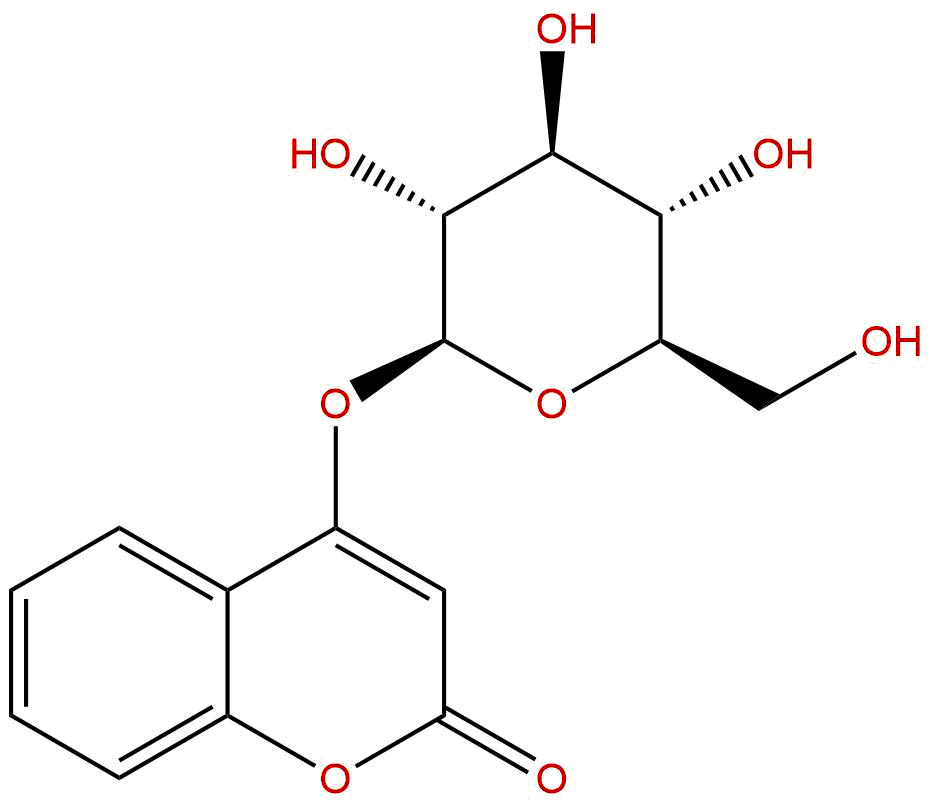
Introduction/Overview
Natural products have always been an important source of drug discovery and development, and their structural diversity and rich biological activity provide an endless treasure trove for modern pharmacological research. Among numerous natural products, coumarin compounds have long been of great concern due to their wide range of biological activities, such as anti-inflammatory, antioxidant, anticoagulant, anti-tumor, and antibacterial properties. The coumarin (1,2-benzopyranone) skeleton is the core structure of many plant secondary metabolites, and its derivatives exhibit more complex pharmacological properties through modifications such as hydroxylation and glycosylation. Coumarin-4-O-glucoside (4- (β - D-Glucopyranosyloxy) -2H1-benzopyran-2-one, CAS number: 124511-56-4) is an important glycosylated derivative of coumarin, characterized by a β - glycosidic bond connecting the 4-hydroxy group of the coumarin nucleus to the glucose molecule. This glycosylation modification not only significantly changes the physicochemical properties of the original compound, such as increasing water solubility and decreasing lipid solubility, but may also affect its absorption, distribution, metabolism, and excretion (ADME) processes in vivo, thereby regulating its biological activity.
In recent years, with a deeper understanding of the pathological mechanisms of vasculitis, especially phlebitis, researchers have begun to focus on natural compounds with multi-target regulatory potential. Venoitis is an inflammatory response of the venous wall, often accompanied by thrombosis. Its pathogenesis involves endothelial cell activation, release of inflammatory factors, leukocyte adhesion and migration, and extracellular matrix remodeling mediated by matrix metalloproteinases (MMPs). Coumarin-4-O-glucoside is gradually becoming a research hotspot in this field due to its potential regulatory activity on multiple key targets related to phlebitis, such as TNF, MMP9, NFKB1, IL1B, ICAM1, VCAM1, etc. This article aims to systematically review the chemical structure, plant origin, pharmacological activity, mechanism of action, medicinal properties, and clinical application prospects of coumarin-4-O-glucoside, in order to provide comprehensive scientific basis for the in-depth development and transformation research of this natural product.
Chemical structure and physicochemical properties
The chemical structure of coumarin-4-O-glucoside consists of two parts: the glycoside part is 4-hydroxycoumarin, and the sugar part is β - D-glucose. The two are connected by an ether bond (C-O-C) formed between the 4-hydroxy group and the anomeric carbon (C1) of glucose, i.e. β - D-glucopyranose oxygen substitution. Its system is named 4- (β - D-Glucopyranosyloxy) -2H1-benzopyran-2-one, with a molecular formula of C ₁₅ H ₁₆ O ₈ and a molecular weight of 324.2850 Da.
From the perspective of physical and chemical properties, this compound exhibits significant hydrophilicity. Its calculated lipid water partition coefficient (LogP) is -0.1834, indicating that its distribution tendency in the aqueous phase is higher than that in the lipid phase, which is in sharp contrast to the hydrophobicity of most unmodified coumarins (such as simple coumarins with LogP of about 1.5-2.0). The enhancement of hydrophilicity is mainly attributed to the presence of multiple hydroxyl groups (- OH) on the glucose group, which can form strong hydrogen bonding interactions with water molecules. The topological polar surface area (TPSA) is 129.5900 Å ², which is much higher than the recommended threshold for oral drugs (below about 140 Å ² is the reference upper limit for good absorption, but exceeding 60-70 Å ² usually indicates passive absorption limitation), further confirming its high polarity and low membrane permeability. The predicted value of water solubility is 6.2270 mg/mL (LogS), indicating good solubility in water, which provides favorable conditions for its distribution in biological fluids and formulation development.
In terms of stability, coumarin-4-O-glucoside may undergo hydrolysis under acidic or alkaline conditions, breaking glycosidic bonds and releasing the aglycone 4-hydroxycoumarin and glucose. In addition, the lactone ring (2H-1-benzopyran-2-one) in its structure may also undergo ring opening in strongly alkaline environments. Therefore, in the process of extraction, separation, storage, and formulation, attention should be paid to controlling the pH value and temperature to avoid extreme conditions that may cause structural degradation. Overall, the high polarity and good water solubility of this compound are key features that distinguish it from many traditional coumarin drugs. This determines that its pharmacokinetic behavior may be more inclined towards aqueous distribution and less likely to penetrate the blood-brain barrier (BBB), indicating a low level of BBB permeability.
Plant sources and extraction methods
Coumarin-4-O-glucoside is not a common component widely present in all plants, and its distribution has certain family and genus specificity. According to existing literature reports, this compound is mainly isolated and identified from plants such as Apiaceae and Fabaceae. For example, in the Umbelliferae family, when belonging(Angelica)Plants, such as Bai Zhi(Angelica dahurica)Or live alone(Angelica pubescens)In China, various coumarin glycosides can often be detected, including 4-O-glucoside. In addition, in certain medicinal plants of the legume family, such as Psoraleae(Psoralea corylifolia)Or licorice(Glycyrrhiza)There are also reports of its existence in plants. It is worth noting that the content of this compound in plants is usually low, and it often coexists with other structurally similar coumarin glycosides (such as 7-O-glucoside, 6-O-glucoside, etc.), which poses a challenge for its high-purity separation.
The extraction method for coumarin-4-O-glucoside usually follows the classic process of natural product chemistry. Firstly, the dried plant material is crushed and extracted using a polar solvent. Given the high water solubility of the compound, commonly used extraction solvents include methanol, ethanol, water, or their mixed solvents (such as 70% methanol or ethanol aqueous solution). Cold soaking, percolation, or ultrasound assisted extraction (UAE) are commonly used extraction methods, among which ultrasound assisted extraction is more favored due to its high efficiency and short time. After filtration and vacuum concentration of the extract, crude extract is obtained.
Further separation and purification require the combination of multiple chromatographic techniques. Due to the high polarity of the compound, normal phase silica gel column chromatography (using elution systems such as chloroform methanol water or ethyl acetate methanol water) is a commonly used method for preliminary separation. However, for coumarin glycoside isomers with extremely similar structures, normal phase chromatography often struggles to achieve baseline separation. At this point, reverse phase column chromatography (such as C18 silica gel column, using methanol water or acetonitrile water gradient elution) shows higher separation efficiency. In addition, macroporous adsorption resins (such as AB-8, D101) are also commonly used for the enrichment and preliminary purification of crude extracts. By gradient elution with ethanol water solutions of different concentrations, coumarin glycosides can be effectively separated from impurities such as polysaccharides and tannins. Ultimately, obtaining high-purity coumarin-4-O-glucoside typically relies on preparative high-performance liquid chromatography (Prep-HPLC), which optimizes the composition of the mobile phase (such as acetonitrile-0.1% formic acid aqueous solution) and flow rate to achieve precise separation of the target compound. The structural identification mainly relies on nuclear magnetic resonance spectroscopy (NMR, including ¹ H-NMR, ¹ ³ C-NMR, HMBC, HSQC, etc.) and high-resolution mass spectrometry (HR-MS) techniques, which ultimately confirm the glycosidic bond connection position (position 4) and sugar configuration (β - D).
Pharmacological activity research
The pharmacological activity research of coumarin-4-O-glucoside is currently in the early exploration stage, but existing research results have preliminarily revealed its potential in anti-inflammatory, anti thrombotic, and vascular protection, especially closely related to the treatment of phlebitis.
anti-inflammatory activity Inflammation is the core pathological process of phlebitis. Research has shown that coumarin-4-O-glucoside can significantly inhibit the production of various pro-inflammatory factors. In a macrophage or endothelial cell model stimulated by lipopolysaccharide (LPS), this compound can dose dependently reduce the mRNA expression levels and protein secretion of tumor necrosis factor - α (TNF - α), interleukin-1 β (IL-1 β), and interleukin-6 (IL-6). TNF - α and IL-1 β are key cytokines that initiate and amplify the inflammatory cascade, and their downregulation means that this compound can intervene upstream of inflammation. In addition, the compound can also inhibit the expression of cyclooxygenase-2 (COX-2) and inducible nitric oxide synthase (iNOS), thereby reducing the production of inflammatory mediators such as prostaglandin E2 (PGE2) and nitric oxide (NO), further alleviating the inflammatory response.
Antithrombotic and vascular protective activity Venous inflammation is often accompanied by thrombosis. The anticoagulant effect of coumarin compounds (such as warfarin) is mainly achieved by antagonizing the synthesis of vitamin K-dependent coagulation factors. However, the antithrombotic mechanism of coumarin-4-O-glucoside may be more complex. Preliminary research has found that it can inhibit the activation of platelet activating factor receptor (PTAFR). PAF is a potent inducer of platelet aggregation and inflammatory mediator. By blocking its binding to receptors, this compound may inhibit platelet adhesion, aggregation, and degranulation, thereby exerting antithrombotic effects. Meanwhile, the compound has a protective effect on vascular endothelial cells. It can downregulate the expression of intercellular adhesion molecule-1 (ICAM-1), vascular cell adhesion molecule-1 (VCAM-1), and E-selectin (SELE) induced by TNF - α or oxidized low-density lipoprotein (ox LDL). These adhesion molecules are key molecules for white blood cells (such as neutrophils and monocytes) to interact with vascular endothelial cells and migrate to the site of inflammation. Their downregulation of expression can effectively reduce the adhesion and infiltration of white blood cells in the venous wall, thereby slowing down the development of phlebitis.
Regulation of extracellular matrix remodeling Matrix metalloproteinases (MMPs), especially MMP9 (gelatinase B), play a dual role in the pathological process of phlebitis. On the one hand, the degradation of extracellular matrix mediated by MMP9 helps white blood cells to cross the vascular wall; On the other hand, excessive MMP9 activity can damage the integrity of blood vessel walls, leading to increased vascular permeability and thrombus formation. Coumarin-4-O-glucoside has been found to inhibit the activity and protein expression of MMP9. Meanwhile, it can also upregulate the expression of tissue inhibitor of metalloproteinases-1 (TIMP-1). TIMP-1 is an endogenous inhibitor of MMP9. By increasing the ratio of TIMP-1/MMP9, this compound can restore the balance between extracellular matrix synthesis and degradation, thereby stabilizing the vascular wall structure and preventing further deterioration of vascular damage.
Mechanism of action and molecular targets
The pharmacological activity of coumarin-4-O-glucoside is not achieved through a single target, but exhibits the characteristics of multi-target and multi pathway synergistic regulation, which is highly consistent with its potential application in the treatment of phlebitis. Its core mechanism of action mainly revolves around the regulation of inflammatory signaling pathways and cell adhesion cascade reactions.
1. Regulating the NF - κ B signaling pathway Nuclear factor kappa B (NF - κ B) is the core transcription factor in inflammatory response. In the resting state, NF - κ B binds to its inhibitory protein I κ B and exists in an inactive form in the cytoplasm. When cells are stimulated by TNF - α, IL-1 β, or LPS, I κ B kinase (IKK) is activated, phosphorylating and degrading I κ B, thereby releasing NF - κ B. Free NF - κ B immediately translocates into the nucleus, initiating the transcription of a series of pro-inflammatory genes including TNF - α, IL-1 β, IL-6, ICAM-1, VCAM-1, SELE, COX-2, iNOS, and MMP9. Coumarin-4-O-glucoside can effectively inhibit the activity of IKK, block the phosphorylation and degradation of I κ B, and thus prevent the nuclear translocation of NF - κ B. By inhibiting the activation of NF - κ B, this compound downregulates the expression of multiple downstream inflammation and adhesion related genes at the transcriptional level, which is a key molecular mechanism for its extensive anti-inflammatory and vascular protective effects. NFKB1 (encoding p50 subunit) itself is also a direct or indirect regulatory target.
2. Inhibit the MAPK signaling pathway The mitogen activated protein kinase (MAPK) pathway, including ERK, JNK, and p38 MAPK, also plays an important role in inflammatory signaling. The phosphorylation activation of these kinases can promote the synthesis and release of inflammatory factors. Research has shown that coumarin-4-O-glucoside can inhibit LPS or TNF - α - induced phosphorylation of p38 MAPK and JNK, but has little effect on ERK phosphorylation. By inhibiting the p38 and JNK pathways, this compound further weakens the transmission of inflammatory signals, complementing the inhibition of the NF - κ B pathway to achieve strong inhibition of inflammatory responses.
3. Regulating adhesion molecules and leukocyte endothelial interactions As mentioned earlier, ICAM-1, VCAM-1, and SELE are key molecules mediating leukocyte rolling, adhesion, and transendothelial migration. Coumarin-4-O-glucoside directly downregulates the expression of these adhesion molecules on the surface of endothelial cells by inhibiting the NF - κ B and MAPK pathways. This leads to a significant decrease in the adhesion ability of white blood cells (especially neutrophils and monocytes) to the venous endothelium, thereby preventing the infiltration of white blood cells into the vascular wall. This mechanism is crucial for reducing the local inflammatory response of phlebitis and preventing thrombus formation.
4. Regulating MMP/IMP balance Overactivation of MMP9 is an important marker of vascular wall damage in phlebitis. On the one hand, this compound reduces the transcription of MMP9 by inhibiting the NF - κ B pathway, and on the other hand, it may upregulate the expression of TIMP-1 through other signaling mechanisms. This dual regulatory effect (inhibiting MMP9 and enhancing TIMP-1) effectively restores the homeostasis of extracellular matrix metabolism and protects the integrity of the vascular wall.
5. Antagonistic platelet activating factor receptor (PTAFR)The direct or indirect antagonistic effect of this compound on PTAFR is a unique mechanism that distinguishes it from traditional anti-inflammatory coumarins. By blocking the binding of PAF to its receptors, this compound not only inhibits platelet aggregation, but may also inhibit PAF mediated activation of inflammatory cells and increased vascular permeability, thereby exerting effects on both anti thrombotic and anti-inflammatory levels.
In summary, coumarin-4-O-glucoside regulates key signaling pathways such as NF - κ B and MAPK by acting on them TNF、IL1B、ICAM1、VCAM1、SELE、MMP9、TIMP1、PTAFR By targeting multiple targets, a synergistic network with anti-inflammatory as the core and balancing antithrombotic and vascular protection has been formed. This multi-target mode of action gives it unique advantages in the treatment of complex phlebitis mechanisms.
Evaluation of drug properties and pharmacokinetics
Translating natural products into clinical drugs and evaluating their pharmacological properties is a crucial step. Based on the provided pharmacological parameters, we can conduct a preliminary evaluation of coumarin-4-O-glucoside.
1. Physical and chemical properties and the "Five Rules for Similar Drugs"The molecular weight of this compound is 324.2850 Da, which conforms to the "Rule of Five" (i.e. molecular weight<500). However, its LogP is -0.1834, much lower than 5, and its TPSA is as high as 129.5900 Å ². According to the "Five Rules for Drugs", the LogP should be less than 5 and the TPSA should be less than 140 Å ², both of which meet these conditions. However, it should be noted that extremely low LogP and high TPSA usually indicate poor lipid solubility and weak membrane permeability of the compound. This means that its ability to penetrate the intestinal epithelial cell membrane through passive diffusion may be poor, and oral bioavailability may be a challenge.
2. Water solubility The predicted value of water solubility is 6.2270 mg/mL, which is a very ideal value. Good water solubility is beneficial for the dissolution of drugs in the gastrointestinal tract and is a prerequisite for oral absorption. However, high water solubility is often accompanied by low fat solubility, which explains why its LogP is negative.
3. blood-brain barrier (BBB) permeability The prediction shows that the BBB permeability of this compound is low. This is consistent with its high polarity and high TPSA. For the treatment of peripheral vascular diseases such as phlebitis, low BBB permeability is an advantage because it can avoid potential central nervous system side effects and allow drugs to be mainly distributed in the peripheral circulatory system.
4. Security prediction The hERG inhibition prediction is' no ', indicating a low risk of the compound causing QT interval prolongation in the heart (a serious cardiac toxicity). The Ames test result is 0.9, and usually an Ames test result greater than 0.5 is considered to have potential mutagenicity. The value of 0.9 suggests that the compound may have a certain genetic toxicity risk, which needs to be given special attention and verification in subsequent in vitro and in vivo toxicology studies. If mutagenicity is confirmed, structural modification is necessary to eliminate this risk.
5. Speculation on pharmacokinetic (PK) characteristics Based on its physicochemical properties, it can be inferred that the pharmacokinetic characteristics of coumarin-4-O-glucoside are as follows:
- absorb Oral absorption may be poor, with the main obstacle being low membrane permeability caused by low fat solubility. Its absorption may depend on active transporters on small intestinal epithelial cells, such as glucose transporters GLUTs or sodium glucose cotransporters SGLTs, as their structure contains glucose groups. Therefore, its absorption may be saturated and influenced by factors such as food.
- distribution Due to its high water solubility, its distribution volume may be small and mainly distributed in extracellular fluid and plasma, making it difficult to enter cells or adipose tissue. Low BBB permeability primarily limits it to the peripheral circulation.
- Metabolism This compound may undergo two main metabolic pathways in vivo: one is glycosidic bond hydrolysis, which releases the glycoside 4-hydroxycoumarin under the action of gut microbiota or liver enzymes; The second is that the hydroxyl group on the glucose group undergoes phase II metabolic reactions, such as glucuronidation or sulfation. Glycoside 4-hydroxycoumarin may be further metabolized.
- excretion Due to its high polarity, the prototype drug and its metabolites are likely to be primarily excreted through the kidneys in the form of urine. Bile excretion may also be a secondary pathway.
Summary of Medicinal Properties Coumarin-4-O-glucoside has good water solubility and preliminary safety (low risk of cardiac toxicity), but its oral bioavailability may be limited due to low permeability and potential genetic toxicity risks. Therefore, the optimization direction of its pharmacological properties may include: 1) temporarily modifying glucose groups through prodrug design to improve lipid solubility and oral absorption; 2) Developing non oral routes of administration, such as intravenous or transdermal administration (which may be particularly suitable for local treatment of phlebitis); 3) Conduct systematic toxicological studies, especially genetic toxicity assessments, to clarify their safety boundaries.
Clinical application prospects and prospects
The unique pharmacological mechanism of coumarin-4-O-glucoside, especially its multi-target synergistic effects in anti-inflammatory, antithrombotic, and vascular protection, has opened up broad application prospects for its treatment in phlebitis and related vasculitis.
Targeted therapy for phlebitis At present, the drugs used to treat phlebitis in clinical practice mainly include anticoagulants (such as heparin and warfarin), antiplatelet drugs (such as aspirin), nonsteroidal anti-inflammatory drugs (NSAIDs), and thrombolytic drugs. Although these drugs are effective, they often have side effects (such as bleeding risk, gastrointestinal damage) or a single target of action. Coumarin-4-O-glucoside can block the occurrence and development of phlebitis from multiple pathological stages by simultaneously inhibiting inflammation (TNF - α, IL-1 β, NF - κ B), leukocyte adhesion (ICAM-1, VCAM-1), matrix degradation (MMP9), and platelet activation (PTAFR). This comprehensive treatment strategy is expected to provide better efficacy than single target drugs and may reduce the side effects caused by the use of high-dose single drugs. Especially its low BBB permeability gives it a safety advantage in the treatment of peripheral vascular diseases.
2. Synergistic effects with other drugs This compound can be used in combination with existing drugs to achieve synergistic enhancement or dose reduction. For example, when combined with low-dose warfarin, it may enhance antithrombotic effects without significantly increasing the risk of bleeding. Alternatively, it can be used in combination with low-dose NSAIDs to enhance the efficacy of NSAIDs through their anti-inflammatory mechanisms, while potentially reducing the gastrointestinal side effects of NSAIDs by protecting the gastric mucosa (coumarin compounds have been shown to have gastroprotective effects in some studies). This combination therapy strategy is an important direction for future clinical translation.
3. Development of local drug delivery formulations: In view of its low oral bioavailability and superficial phlebitis, the development of local drug delivery agents (such as gel, cream and patch) is a promising direction. Through transdermal administration, drugs can directly act on the affected veins and surrounding tissues, achieving local high concentrations while avoiding potential toxicity caused by systemic exposure. Its good water solubility also makes it easy to prepare external preparations such as water-based gel. This local treatment method is particularly suitable for superficial thrombophlebitis and is expected to become a non-invasive, efficient, and low side effect treatment option.
4. Research on Structure Modification and Structure Activity Relationship In order to overcome its potential genetic toxicity risk and improve oral absorption, future research should explore its structure-activity relationship (SAR) in depth. For example, selective acetylation or methylation of hydroxyl groups on glucose groups can regulate their lipid solubility and membrane permeability. Alternatively, replacing glucose with other sugar groups (such as galactose, xylose) or sugar analogues may alter its interaction with transporters or targets. In addition, modifying the coumarin core, such as introducing halogen atoms or different substituents, may also enhance its activity or improve safety. Through systematic SAR research, it is expected to develop derivatives with stronger pharmacological effects, higher safety, and better pharmacokinetic properties.
5. Expand indications Based on its anti-inflammatory and anti thrombotic mechanisms, the potential application of coumarin-4-O-glucoside may not be limited to phlebitis. It may also have therapeutic value for atherosclerosis, ischemia-reperfusion injury, vascular complications of diabetes, rheumatoid arthritis and other diseases related to inflammation and vascular diseases. Future research can explore its pharmacological effects in a wider range of disease models.
Conclusion
Coumarin-4-O-glucoside, as a naturally occurring coumarin glycoside, has shown remarkable potential in the treatment of vascular inflammatory diseases such as phlebitis due to its unique chemical structure and multi-target pharmacological activity. Its mechanism of action involves inhibition of the NF - κ B and MAPK signaling pathways, as well as regulation of multiple key targets such as TNF - α, IL-1 β, ICAM-1, VCAM-1, MMP9, PTAFR, forming a synergistic anti-inflammatory, antithrombotic, and vascular protective network. Its good water solubility and low BBB permeability provide the basis for its local application and safety, but its low oral bioavailability and potential genetic toxicity risk are the main challenges facing its drug development.
Future research should focus on the following aspects: firstly, conducting in-depth in vivo pharmacological and toxicological studies to clarify their efficacy and safety boundaries; The second is to systematically study its pharmacokinetic characteristics, especially the oral absorption mechanism and metabolic pathways; The third is to optimize its drug properties through structural modification or new formulation technologies (such as liposomes, nanoemulsions, transdermal drug delivery systems); The fourth is to explore its application value in a wider range of vascular diseases. Although the road from laboratory discovery to clinical application is still long and challenging, coumarin-4-O-glucoside, as a natural multi-target lead compound, provides valuable molecular templates and new research directions for the development of novel, efficient, and low toxicity drugs for the treatment of phlebitis. With the continuous deepening of research, this ancient and novel natural product is expected to play an important role in future clinical practice.