


Product name: Rubusoside
Synonym name:
Catalogue No.: BP1230
Cas No.: 64849-39-4
Formula: C32H50O13
Mol Weight: 642.739
Botanical Source: Hydrangea strigosa Rehd.
Physical Description:
Type of Compound: Diterpenoids
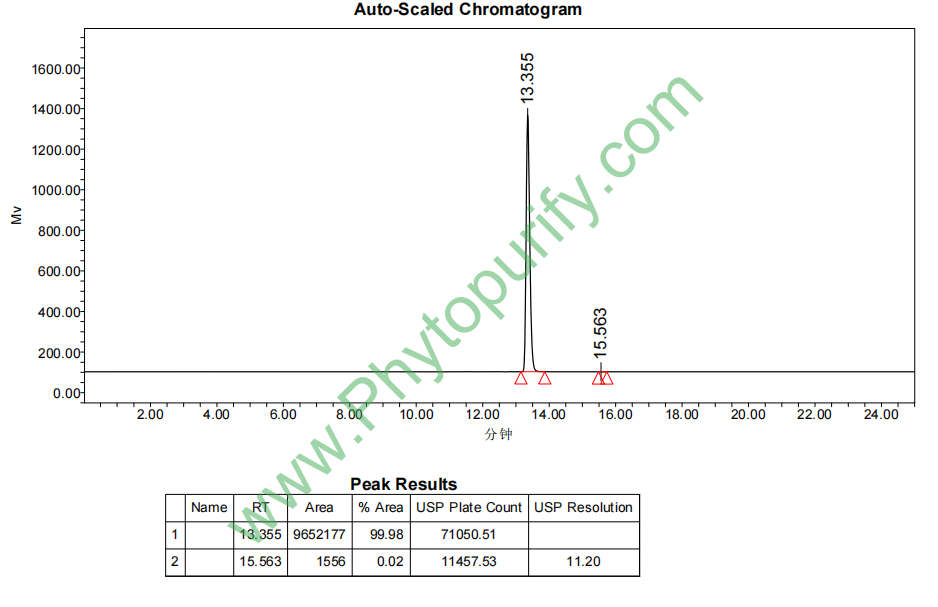
Purity: 95%~99%
Analysis Method: HPLC-DAD or/and HPLC-ELSD
Identification Method: Mass, NMR
Packing: Brown vial or HDPE plastic bottle
Storage: Store in a well closed container, protected from air and light. Put into refrigerate or freeze for long term storage.
Whenever possible, you should prepare and use solutions on the same day. However, if you need to make up stock solutions in advance, we recommend that you store the solution as aliquots in tightly sealed vials at -20℃. Generally, these will be useable for up to two weeks.
The product could be supplied from milligrams to grams
Inquire for bulk scale.
Chengdu Biopurify Phytochemicals Ltd. is a leading company in the research, development, manufacture and marketing of High Quality Phytochemicals and Extracts(especially Active Ingredients from Traditional Chinese Medicine,TCM), Natural Active Pharmaceutical Ingredients worldwide.
The main services:
A. Supply active ingredients and reference standards of TCM, from mgs to kgs scale
B. Custom extraction and purification, target Herb Active Ingredients
C. Custom synthesis and semi-synthesis for Natural Active Ingredients
D. CR(contract research), CM(contract manufacture) and PD(process development) services from lab scale, pilot scale to commercial scale(GMP is also available)
E. TCM compounds library for drug screen,more than 3000 compounds available, many of them are rare and unique.
HPLC of Rubusoside
Storage conditions:Short-term storage at 2~8℃, long-term storage at -20 ~ -80℃
215.8300
.4418
.4418
.5140
.5769
.5297
Low
68.0855
6.6604
No
No
No
No
Yes
No
0.0
Yes
No
No
No
As an important treasure trove for drug discovery and development, natural products continue to provide novel and diverse lead compounds for human health. Rubusoside, also known as 13- [(2-O - β - D-glucopyranosyl - β - D-glucopyranosyl) oxy] kaempferol-16-en-19-ate β - D-glucopyranoside, CAS number 64849-39-4, is a tetracyclic diterpenoid glycoside isolated from plants of the genus Rubus. Since its discovery, sweet tea glycosides were initially considered a potential natural sweetener and solubilizer due to their strong sweet taste characteristics (sweetness about 100-200 times that of sucrose). However, as research deepens, its extensive biological activity beyond seasoning function is gradually revealed. Modern pharmacological studies have shown that sweet tea glycosides exhibit multiple pharmacological effects, including anti angiogenesis, anti-cancer, anti obesity, anti allergy, and anti asthma. Especially in the fields of metabolic and inflammatory diseases, sweet tea glycosides have shown great potential in regulating blood sugar, improving insulin resistance, and reducing airway inflammation. Its function involves regulating multiple key targets such as glucose transporters, nuclear factor kappa B (NF - κ B) signaling pathway, and alpha amylase. This article aims to systematically review the chemical properties, plant sources, pharmacological activities, mechanisms of action, and medicinal properties of sweet tea glycosides, in order to provide comprehensive scientific references for the deep development and clinical application of this natural product.
The molecular formula of sweet tea glycoside is C32H50O13, with a molecular weight of 642.7390. Its core structure is an ent kaurane type tetracyclic diterpene, with glycosides attached at positions C-13 and C-19, respectively. Specifically, the C-13 position is connected by an oxygen atom to a disaccharide chain consisting of two glucose molecules linked by a β -1 → 2 glycosidic bond, while the carboxyl group at the C-19 position forms an ester glycosidic bond with another glucose molecule. This unique diterpenoid glycoside structure is the material basis for its sweetness and various biological activities.
In terms of physical and chemical properties, sweet tea glycosides are white crystals or powders. Its calculated lipid water partition coefficient (LogP) is about 0.44, indicating that it has a certain degree of lipophilicity, but overall it is still a hydrophilic compound. The topologically polar surface area (TPSA) is as high as 215.83 Å ², mainly attributed to the abundant hydroxyl and sugar ring structures in the molecule, indicating its strong hydrogen bonding ability. Its water solubility data is 0.5140 mg/mL, belonging to the range of slightly soluble to soluble, which provides the possibility for its absorption and distribution in organisms. Preliminary predictions of its pharmacological properties indicate that the ability of sweet tea glycosides to penetrate the blood-brain barrier is relatively low, suggesting a lower risk of central nervous system related side effects. In terms of early safety indicators, the hERG channel inhibition risk is negative, and the Ames mutagenicity test result is also 0.0, indicating that its cardiotoxicity and genotoxicity risks are relatively low, and it has a good safety basis for further development.
Sweet tea glycosides mainly come from various plants in the Rosaceae family, including the genus Rubus Sweet leaf hook (Rubus suavissimus S. Lee) The leaves of this plant have the richest content, which is also the origin of its common name "sweet tea glycoside". In addition, a small amount has also been found in closely related species such as Rubus chingii.
The extraction of sweet tea glycosides from plant materials usually involves solvent extraction combined with chromatographic separation techniques. The standard procedure is as follows:
1. Raw material pretreatment Collect sweet tea leaves, dry them and crush them.
2. Solvent extraction Water, methanol, ethanol, or water alcohol mixed solutions with different ratios are commonly used for heating reflux extraction or ultrasound assisted extraction. Among them, hot water or dilute alcohol solutions are widely used due to their good solubility in glycoside components, low cost, and environmental friendliness.
3. Preliminary purification After the extraction solution is concentrated under reduced pressure, it can be enriched by macroporous adsorption resins (such as AB-8, D101 type). First, impurities are washed away with water, and then the target component is eluted with a certain concentration of ethanol.
4. Fine separation After concentration of the eluent, further separation and purification of the sweet tea glycoside monomer are carried out using silica gel column chromatography, reverse phase silica gel column chromatography (such as ODS-C18), or high performance liquid chromatography (HPLC) to obtain high purity.
In recent years, some green extraction techniques such as microwave-assisted extraction and supercritical CO ₂ extraction have also been explored to improve extraction efficiency and product quality. The optimization of extraction process mainly focuses on improving yield, maintaining activity, and reducing solvent residue.
A large number of in vitro and in vivo studies have confirmed that sweet tea glycosides have broad and significant pharmacological activities, mainly reflected in the following aspects:
1. Hypoglycemic and anti diabetes activity
In many diabetes models, glycosides of sweet tea have shown a clear hypoglycemic effect. Its mechanism is not limited to traditional α - amylase inhibition (delaying carbohydrate digestion and absorption), but also involves improving peripheral insulin sensitivity. Studies have shown that glycoside can significantly reduce fasting blood glucose and glycosylated hemoglobin levels in diabetes model animals. At the cellular level, it can Preventing palmitic acid-induced lipid toxicity in pancreatic beta cells (INS-1 cells)Protecting the function of beta cells is crucial for maintaining insulin secretion.
2. Anti obesity and metabolic regulation
The anti obesity effect of sweet tea glycosides is closely related to their regulation of glucose and lipid metabolism. It can reduce fat accumulation, improve weight gain, fatty liver, and dyslipidemia in obese mice induced by a high-fat diet. Its function is related to regulating key lipid metabolism factors such as peroxisome proliferator activated receptor gamma (PPAR gamma).
3. Anti allergy and anti asthma activity
In allergic asthma models, sweet tea glycosides exhibit strong anti-inflammatory effects. It can significantly Weakening airway hyperresponsiveness induced by ovalbumin (OVA)And effectively Reduce the total number of inflammatory cells, especially eosinophils, lymphocytes, and neutrophils, in bronchoalveolar lavage fluid (BALF)At the same time, it can reduce the levels of Th2 cytokines (such as IL-4, IL-5, IL-13) and total IgE in BALF, thereby alleviating airway inflammation and remodeling.
4. Anti angiogenesis and anticancer activity
Sweet tea glycosides can inhibit endothelial cell proliferation, migration, and luminal formation, and have shown anti angiogenic effects in models such as chicken embryo chorioallantoic membrane. Given that tumor growth relies on neovascularization, sweet tea glycosides also exhibit inhibitory activity on the proliferation of certain cancer cell lines, which may be related to inducing cell apoptosis and inhibiting survival signaling pathways such as NF - κ B.
5. Other activities
In addition, the study also suggests that sweet tea glycosides have antioxidant, anti-inflammatory (inhibiting NF - κ B activation), and insoluble drug properties solubilizer Waiting for application potential.
The multiple pharmacological activities of sweet tea glycosides stem from their synergistic regulation of multiple molecular targets and signaling pathways.
1. Hypoglycemic target network
The hypoglycemic effect of sweet tea glycosides is a multi-target, multi pathway process:
* Enhancement of insulin signaling pathway It may activate the downstream PI3K/Akt pathway by upregulating tyrosine phosphorylation of insulin receptor substrate 1 (IRS1), thereby promoting the translocation of glucose transporter 4 (SLC2A4/GLUT4) to the cell membrane and accelerating glucose uptake in skeletal muscle and adipocytes.
* Key metabolic enzymes and receptor regulation Research has shown that sweet tea glycosides can activate glucagon kinase (GCK, a sensor of glucose metabolism) and peroxisome proliferator activated receptor gamma (PPARG, a regulator of lipid metabolism and insulin sensitization), while inhibiting dipeptidyl peptidase 4 (DPP4, an enzyme that degrades incretin), improving blood glucose homeostasis in multiple ways.
* Directly inhibit absorption and transport It can Inhibition of alpha amylase Activity, delaying the breakdown of starch into glucose. In addition, it can Reduce the transport function of human glucose transporter GLUT-1 and fructose transporter GLUT-5 Directly reduce the absorption of monosaccharides in the intestine.
2. Anti inflammatory and immune regulatory mechanisms
The core of the anti asthma and anti-inflammatory effects of sweet tea glycosides lies in the inhibition of the NF - κ B signaling pathway. NF - κ B is a key transcription factor that regulates the expression of various inflammatory factors (such as TNF - α, IL-6, IL-1 β) and chemokines. Sweet tea glycoside inhibits gene transcription of downstream inflammatory mediators by blocking the degradation of I κ B α and nuclear translocation of NF - κ B p65 subunit. In asthma models, this directly leads to a decrease in Th2 type immune response and a resolution of airway inflammation.
3. Cellular protective mechanism
In pancreatic beta cells, sweet tea glycosides inhibit palmitic acid-induced endoplasmic reticulum stress and mitochondrial dysfunction, reduce cell apoptosis, and exert their effects Anti lipotoxicity The protective function. Its antioxidant properties may also assist in this protective process by clearing reactive oxygen species (ROS).
Although sweet tea glycosides exhibit excellent in vitro activity and good initial safety, their pharmacological properties, especially pharmacokinetic properties, are the key to determining whether they can be successfully developed into drugs.
Overall, the pharmacological research of sweet tea glycosides is still in its early stages, and in-depth ADME (absorption, distribution, metabolism, excretion) research and mechanism based formulation development are the necessary steps to promote their conversion into drugs.
The diverse pharmacological activities of sweet tea glycosides have brought broad clinical application prospects in multiple therapeutic fields.
1. Potential therapeutic areas
* Type 2 diabetes and metabolic syndrome As a natural product with the functions of α - amylase inhibition, insulin resistance improvement and β - cell protection, stevioside is expected to be developed as a new multi target anti diabetes drug or functional food/health product.
* Bronchial asthma and allergic inflammation Its powerful airway anti-inflammatory effect, especially targeting Th2 type inflammation, makes it a potential candidate drug for treating allergic asthma and chronic obstructive pulmonary disease (COPD).
* Adjuvant anti-cancer therapy Its anti angiogenic properties can be used to develop adjuvant therapy strategies for tumors, and combined with chemotherapy drugs may enhance efficacy and reduce drug resistance.
* Functional sweeteners and excipients In the pharmaceutical industry, its high sweetness, low calorie and solubilizing properties make it a new pharmaceutical excipient for diabetes friendly sweeteners or insoluble drugs.
2. Challenges faced and future research directions
* Deep analysis of the mechanism of action It is necessary to use techniques such as gene knockout and proteomics to more accurately verify its direct interactions with targets such as PPARG and GCK, and elucidate the network regulatory relationships between its multiple targets.
* Optimization of drug properties in the system A comprehensive preclinical pharmacokinetic and toxicological evaluation must be conducted. The core research direction is to improve its oral bioavailability through structural modification (such as preparing prodrugs, derivatives) or advanced delivery systems (such as nanoparticles, liposomes).
* Clinical translational research It is urgent to design a rigorous randomized controlled clinical trial to evaluate its effectiveness, safety and appropriate dosage in diabetes patients or asthma patients.
* Resources and Sustainability Ensuring sustainable supply of plant raw materials or achieving green scale production through synthetic biology (such as microbial fermentation) is an important guarantee for industrialization.
Sweet tea glycoside is a diterpenoid glycoside compound found in natural plants, with a unique structure and diverse functions. It has evolved from its initial role as a sweetener to a highly promising pharmacological active molecule in the fields of metabolic and inflammatory diseases. It comprehensively exerts multiple effects such as lowering blood sugar, anti obesity, and anti asthma by regulating multiple key targets such as GCK, PPARG, NF - κ B, GLUTs, and alpha amylase. Despite facing challenges in drug formulation, especially oral absorption, its excellent safety and multi-target mode of action endow it with unique development value. In the future, through interdisciplinary cooperation, in-depth exploration of its molecular mechanism, and optimization of its properties by means of modern pharmaceutical chemistry and pharmaceutics, it is expected that saponin will be successfully transformed from an interesting natural product into an innovative drug or functional product benefiting human health, and play a role in the prevention and treatment of major chronic diseases such as diabetes and asthma.
