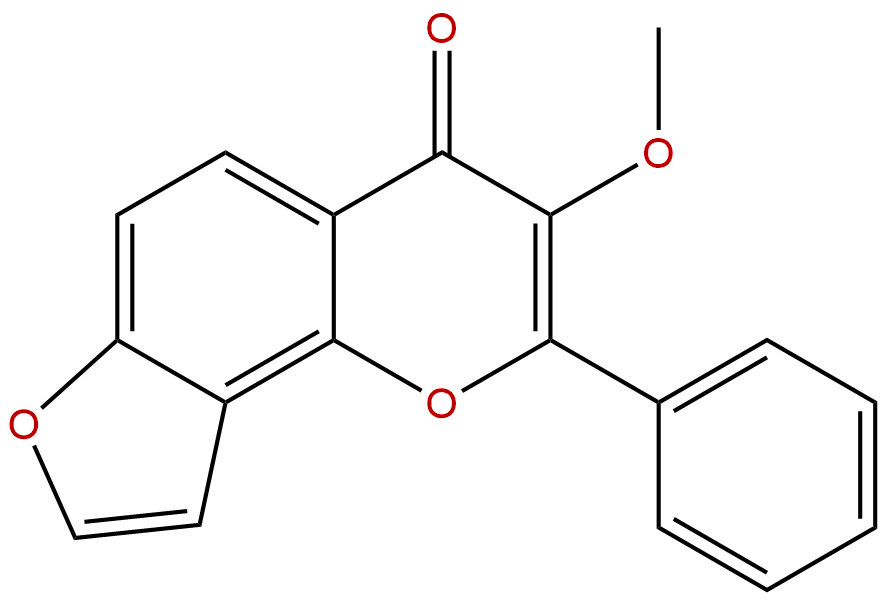
Product name: Karanjin
Synonym name:
Catalogue No.: BP3221
Cas No.: 521-88-0
Formula: C18H12O4
Mol Weight: 292.29
Botanical Source:
Physical Description:
Type of Compound:
Purity: 95%~99%
Analysis Method: HPLC-DAD or/and HPLC-ELSD
Identification Method: Mass, NMR
Packing: Brown vial or HDPE plastic bottle
The product could be supplied from milligrams to grams. Inquire for bulk scale.
We provide solution to improve the water-solubility of compounds, thereby facilitating the variety of activity tests and clinic uses.
For Reference Standard and R&D, Not for Human Use Directly.
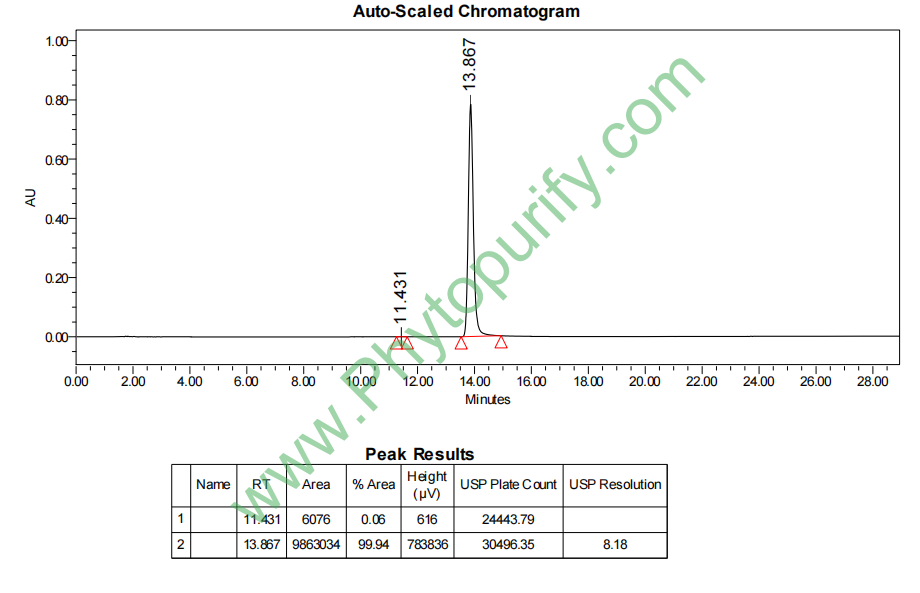
HPLC of Karanjin
Storage conditions:Short-term storage at 2~8℃, long-term storage at -20 ~ -80℃
52.5800
3.4177
3.4180
.0004
4.6989
35.2662
High
92.1707
2.2714
Yes
No
Yes
No
Yes
Yes
1.5
Yes
No
Yes
Yes
Natural products have long been an important source of innovative drug discovery, among which flavonoids have attracted much attention due to their wide range of biological activities. Karanjin, also known as kaempferol, is a unique furan flavonoid with a CAS number of 521-88-0. It mainly comes from the leguminous plant water yellow bark(Pongamia pinnata, also known as Millettia pinnata)The plant was isolated from its seeds and bark, and has a long history of application in traditional Asian medicine systems. Modern pharmacological research reveals that aquaxanthin exhibits remarkable multi target and multi-channel biological activities, including anti diabetes, anti-cancer, anti-inflammatory, antioxidant, neuroprotective and insecticidal properties, making it a star molecule in the field of pharmaceutical chemistry and pharmacology. Especially its potential value in the prevention and treatment of malignant tumors such as lung cancer is attracting increasing research attention. This article aims to systematically review the chemical properties, plant sources, pharmacological activities, mechanisms of action, medicinal properties, and clinical application prospects of water yellow bark extract, in order to provide comprehensive academic references for the in-depth development and transformation research of this natural product.
Shui Huang Pi Su is a type of furan flavonoid, with the chemical name 3-methoxy-2-phenyl-4H-furan [2,3-h] chromene-4-one. Its molecular formula is C18H12O4 and its molecular weight is 292.2900. Structurally, it is composed of a benzopyranone (chromone) core fused with a phenyl substituted furan ring, with methoxy groups attached at specific positions on the chromone ring. This unique furan ring fused structure is a key feature that distinguishes it from other common flavonoids and is closely related to its unique biological activity.
In terms of physical and chemical properties, berberine exhibits typical lipophilic characteristics. The calculated lipid water partition coefficient (LogP) is 3.4177, indicating that it has good lipid solubility. The topological polar surface area (TPSA) is 52.5800 Å ², which is relatively small due to the limited polar groups in its molecular structure. The water solubility is extremely low, about 0.0004 mg/mL, which poses certain challenges for its formulation development. It is worth noting that based on its physical and chemical parameters, berberine has a high blood-brain barrier permeability, which provides a structural basis for its application in central nervous system diseases such as Alzheimer's disease. In addition, preliminary pharmacological screening showed that its Ames test results were negative at 1.5 times the test concentration (usually a value close to 1 is negative, where 1.5 indicates a low risk of mutagenicity under test conditions), and there was no significant hERG potassium channel inhibitory activity, indicating a low risk of cardiac toxicity and providing preliminary positive signals for its safety evaluation.
Water yellow bark extract mainly comes from the leguminous plant water yellow bark(Pongamia pinnata (L.) Pierre)。 This plant is widely distributed in tropical and subtropical coastal areas such as Southeast Asia, India, Australia, and southern China. It has characteristics such as salt alkali tolerance and nitrogen fixation, and is commonly used for ecological restoration. Its seeds, bark, leaves, and roots are commonly used in folk medicine to treat rheumatism, skin diseases, ulcers, inflammation, and parasitic infections. Water yellow bark extract is one of the important bioactive components, especially in the non glyceride portion of seed oil where its content is relatively high.
Organic solvent extraction is commonly used to extract quercetin from plant materials. The classic methods include using medium polarity solvents such as petroleum ether, n-hexane, chloroform, or ethyl acetate to perform Soxhlet extraction or cold soaking extraction on the seed powder or defatted seed meal of water chestnut. Due to its strong lipid solubility, these solvents can effectively extract it from plant substrates. Subsequently, the crude extract can be separated and purified using techniques such as silica gel column chromatography, preparative thin-layer chromatography, or high-performance liquid chromatography to obtain high-purity berberine monomer. In recent years, some green extraction techniques such as ultrasound assisted extraction, microwave-assisted extraction, and supercritical CO2 extraction have also been explored to improve extraction efficiency and selectivity. The optimization of extraction processes usually focuses on factors such as solvent type, solid-liquid ratio, extraction temperature, and time to maximize the yield of the target compound.
A large number of in vitro and in vivo studies have confirmed that berberine has broad and significant pharmacological activities, covering multiple therapeutic fields.
The multiple pharmacological activities of berberine stem from its multi-target action characteristics. Research has revealed that it works by regulating complex cellular signaling networks. Based on the provided lung cancer related targets, elucidate their potential mechanism of action network:
In terms of anti-cancer, especially anti lung cancer, the mechanism of action of berberine involves multiple key targets and pathways:
* Inducing apoptosis and regulating apoptosis related proteins Shui Huang Pi Su can upregulate pro apoptotic proteins and downregulate anti apoptotic proteins such as B-cell lymphoma 2 (BCL2), thereby disrupting mitochondrial membrane potential, activating caspase cascade reactions, and ultimately inducing cancer cell apoptosis.
* Inhibition of STAT3 signaling pathway Signal transduction and transcription activator 3 (STAT3) is an important oncogenic transcription factor. Shui Huang Pi Su can inhibit the phosphorylation (activation) of STAT3, thereby downregulating the expression of downstream target genes related to cell proliferation (such as Cyclin D1), survival (such as Survivors), and angiogenesis (such as VEGF).
* Regulating lipid metabolism and cholesterol efflux Adenosine triphosphate binding cassette transporter A1 (ABCA1) is involved in cholesterol reverse transport. The regulation of ABCA1 by berberine may affect the lipid metabolism and membrane fluidity of tumor cells, which is closely related to cancer cell proliferation and metastasis.
* Anti inflammatory and immune regulation By inhibiting Toll like receptor 4 (TLR4) and its downstream nuclear factor kappa B (NF - κ B) pathway, berberine can reduce the release of inflammatory factors in the tumor microenvironment, thereby inhibiting inflammation driven tumor occurrence and development.
* Inhibit invasion and metastasis Water yellow bark extract can reduce the expression and activity of matrix metalloproteinase-2 (MMP2), thereby inhibiting the degradation and invasion ability of cancer cells to extracellular matrix.
* Activate antioxidant defense system: By activating the nuclear factor E2 related factor 2 (NFE2L2/Nrf2) pathway, aquaxanthin enhances the expression of intracellular antioxidant enzymes (such as HO-1, NQO1) and helps cells resist oxidative stress, which not only contributes to its anti-cancer activity, but also is related to its anti diabetes and neuroprotective effects.
* Intervention of estrogen signaling and PI3K/Akt pathway Potential regulation of estrogen receptor beta (ESR2) may affect the progression of hormone related cancers. Meanwhile, inhibition of phosphatidylinositol 3-kinase catalytic subunit gamma (PIK3CG) can block the critical PI3K/Akt/mTOR signaling pathway that promotes survival and proliferation.
* Affects microtubules and tau protein The regulatory effect of microtubule associated protein tau (MAPT) may be directly related to its anti Alzheimer's disease activity, by reducing tau protein hyperphosphorylation to maintain neuronal cytoskeleton stability.
Despite the wide range of biological activities of berberine, its pharmacological properties still need to be comprehensively evaluated. As mentioned earlier, its advantages lie in moderate molecular weight, good lipid solubility, ability to penetrate the blood-brain barrier, and low initial genetic and cardiac toxicity risks. However, its extremely low water solubility is a major challenge for oral administration, which may lead to limited solubility, limited absorption, and low bioavailability.
At present, there are relatively limited reports on pharmacokinetic studies of the berberine system. Existing animal pharmacokinetic studies have shown that after oral administration, berberine can be absorbed in the gastrointestinal tract, but its absolute bioavailability may vary depending on the dosage form. It undergoes extensive metabolism in the body, with the main metabolic pathways including liver microsomal enzymes (such as cytochrome P450 enzyme system) mediated oxidation, demethylation, and glucuronidation and sulfation binding reactions. Its metabolites may still have biological activity. Shui Huang Pi Su and its metabolites are mainly excreted through urine and feces.
In order to improve its bioavailability, researchers are exploring various formulation strategies, including the production of nanocrystals, liposomes, solid dispersions, cyclodextrin inclusion complexes, and self microemulsion delivery systems. These technologies aim to increase their solubility and dissolution rate, improve intestinal absorption, and thus enhance drug efficacy.
Shui Huang Pi Su has shown great potential for transformation from traditional medicinal plants to modern therapeutic drugs. Its clinical application prospects may focus on the following directions:
However, there are still many challenges to overcome before it can be applied clinically. Firstly, more systematic and standardized preclinical pharmacological, toxicological, and pharmacokinetic studies are needed to clarify its therapeutic window and long-term safety. Secondly, it is necessary to solve its water solubility problem through advanced formulation technology to achieve stable and controllable in vivo delivery. Finally, its multi-target nature is both advantageous and complex, requiring further research to elucidate its dominant mechanism of action in specific diseases and avoid potential off target effects.
Future research should focus on: ① using computational chemistry and structural biology methods to accurately analyze the interaction patterns between berberine and key targets; ② Conduct research on combination therapy based on animal models of diseases and explore its synergistic effects with existing standard drugs; ③ Promote preclinical development that meets drug registration requirements and ultimately initiate clinical trials to verify its safety and efficacy in humans.
As a type of furan flavonoid discovered from traditional medicinal plants, berberine has become an important molecule in natural product drug research due to its unique chemical structure and extensive and powerful pharmacological activity. From anti diabetes to anti-cancer, from neuroprotection to insect killing, its versatile characteristics highlight the unique value of natural products in the intervention of complex disease networks. Despite facing challenges in drug formulation, particularly in solubility and systemic pharmacokinetics, these obstacles are expected to be gradually overcome with advances in modern medicinal chemistry, pharmacology, and pharmacology technologies. Deeply revealing its multi-target mechanism of action network and promoting its clinical translation is not only expected to provide new treatment options for various refractory diseases, but also to provide valuable examples for innovative drug development based on natural products. The research journey of berberine is moving from ancient wisdom to the forefront of modern science, and its future is worth looking forward to.