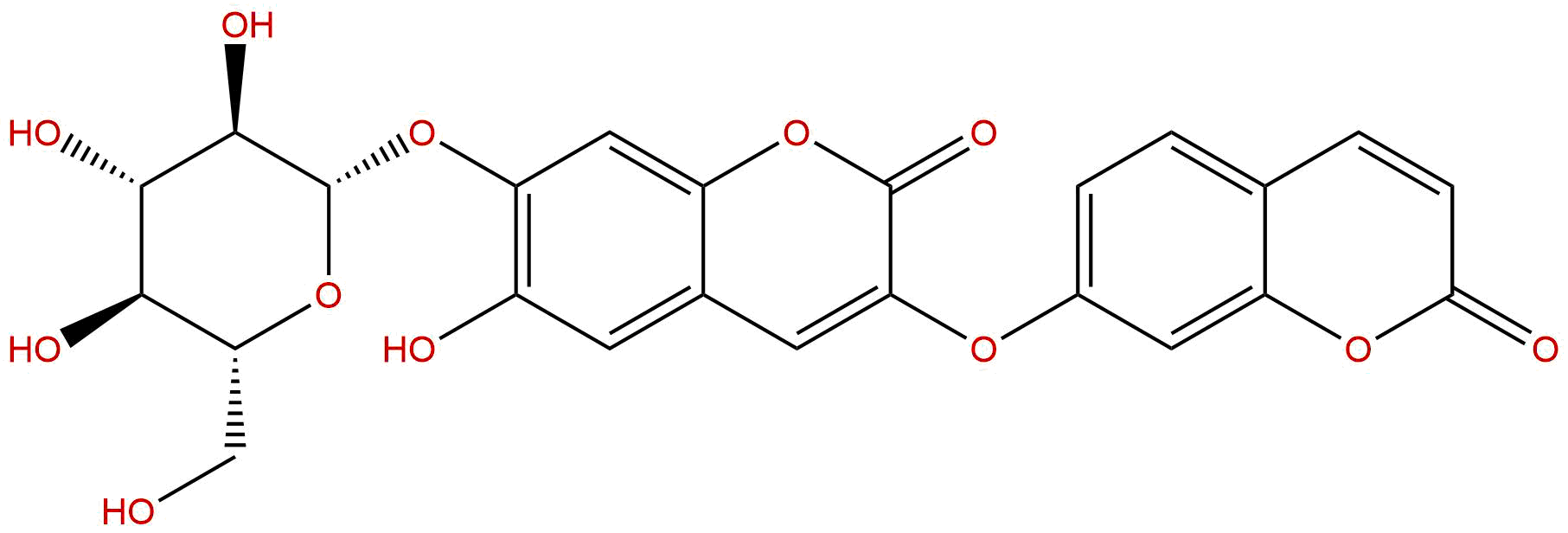


Product name: Demethyldaphnoretin-7-O-glucoside
Synonym name:
Catalogue No.: BP5131
Cas No.: 438578-91-7
Formula: C24H20O12
Mol Weight: 500.412
Botanical Source:
Type of Compound: Coumarins
Purity: 95%~99%
Analysis Method: HPLC-DAD or/and HPLC-ELSD
Identification Method: Mass, NMR
Packing: Brown vial or HDPE plastic bottle
Storage: Store in a well closed container, protected from air and light. Put into refrigerate or freeze for long term storage.
Whenever possible, you should prepare and use solutions on the same day. However, if you need to make up stock solutions in advance, we recommend that you store the solution as aliquots in tightly sealed vials at -20℃. Generally, these will be useable for up to two weeks.
The product could be supplied from milligrams to grams
Inquire for bulk scale.
For Reference Standard and R&D, Not for Human Use Directly.
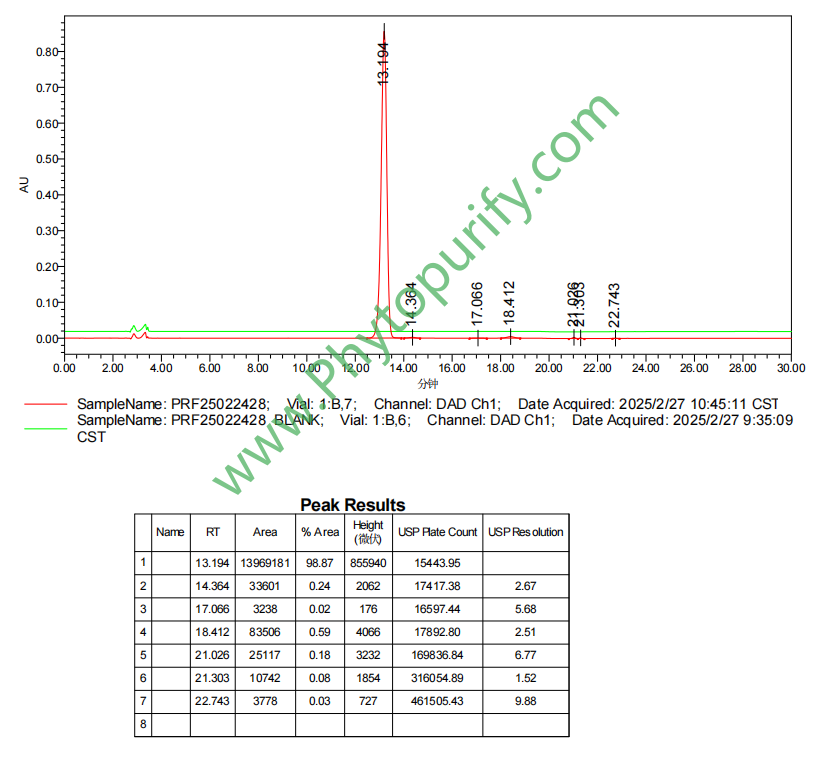
HPLC of Demethyldaphnoretin-7-O-glucoside
Storage conditions:Short-term storage at 2~8℃, long-term storage at -20 ~ -80℃
189.2600
.7368
.7336
.1595
.6553
.3662
Low
80.6013
4.0526
Yes
No
No
No
Yes
Yes
0.9
Yes
Yes
Yes
Yes
Natural products, as an important source of drug discovery, play an irreplaceable role in the long history of human fight against diseases. Especially secondary metabolites derived from medicinal plants, due to their structural diversity and wide range of biological activities, have always been a hot topic in the development of new drugs. Thymelaeaceae plants, as an important component of traditional medicine, are widely used worldwide to treat various diseases such as inflammation, pain, and tumors. Among them, the Rui Xiang genus(Daphne)Plants have attracted much attention due to their high content of active ingredients such as coumarins, flavonoids, and diterpenes.
Demethyldaphnoretin-7-O-glucide is a plant derived from the genus Daphne Daphne oleoides Natural coumarin glycosides isolated from the ethyl acetate extract of the roots. This compound belongs to the class of coumarin derivatives, and its parent nucleus structure is composed of two coumarin units connected by carbon carbon bonds, with a glucose group attached to the hydroxyl group at position 7. Since its first report in 2005, norepinephrine glucoside has gradually become a research hotspot in the fields of natural product chemistry and pharmacology due to its unique chemical structure and potential biological activity, especially anti-tumor activity.
In recent years, with the rapid development of molecular biology and medicinal chemistry technology, significant progress has been made in the pharmacological activity and mechanism of action of desmopyrazine glucoside. Research has shown that this compound can exert broad-spectrum anti-tumor effects by regulating multiple signaling pathways and molecular targets closely related to tumor occurrence and development, such as MCL1, BCL2, STAT3, MMP2, TOP1, HIF1A, TOP2A, MAPK1, ESR1, and CYP19A1. These findings not only reveal the scientific value of desmopyronine glucoside as a potential anti-tumor candidate drug, but also provide important theoretical basis for further development of anti-tumor drugs based on natural coumarin structures.
This article will provide a comprehensive and systematic review of the research progress of desmopyrazine glucoside from the aspects of chemical structure and physicochemical properties, plant sources and extraction methods, pharmacological activity research, mechanism of action and molecular targets, drug evaluation and pharmacokinetics, clinical application prospects and prospects, in order to provide reference for the in-depth research and development of this compound.
The chemical name of Demethyldaphnoretin-7-O-glucide is 7- (β - D-glucopyranosyl) -3- (7-hydroxy-2-oxo-2H-chromen-3-yl) -2Hchromen-2-one, with a molecular formula of C ₂ ₄ H ₂ ₀ O ₁ and a molecular weight of 500.4120. This compound belongs to the class of coumarin glycosides, and its core structure is composed of two coumarin mother nuclei connected by a 3-3 'carbon carbon bond, forming a unique coumarin skeleton. On the 7th hydroxyl group of one coumarin unit, a D-glucose group is connected through a β - glycosidic bond to form a glycosidic structure.
From the perspective of structural characteristics, demethylase glucoside has the following significant features: firstly, the coumarin skeleton endows the molecule with greater planarity and rigidity, which is conducive to interaction with biomolecules such as DNA and proteins; Secondly, there are multiple phenolic hydroxyl groups and hydroxyl groups on the sugar group in the molecule, which gives it strong hydrogen bond donor and acceptor abilities, facilitating the formation of a stable hydrogen bond network with the target protein; Thirdly, the introduction of sugar groups increases the water solubility of the molecule and improves its pharmacokinetic properties; Finally, the abundant π - π conjugated system in the molecule endows it with UV absorption and fluorescence properties, facilitating quantitative analysis and biological imaging research.
According to the results of computational chemistry and experimental research, the main physicochemical properties of desmopyrrhizin glucoside are as follows: the lipophilic water partition coefficient (LogP) is 0.7368, indicating that the compound has moderate lipophilicity, which can maintain a certain solubility in the aqueous phase and penetrate the biofilm structure; The topological polar surface area (TPSA) is 189.2600 Å ², and a higher TPSA value suggests that the compound may pass through the cell membrane through active transport or facilitated diffusion; The water solubility parameter is 0.1595 mg/mL, which belongs to a slightly soluble compound, which is related to the presence of multiple polar groups in its molecule.
In terms of stability, Dexmedetomidine Glucoside is relatively stable under acidic conditions, but it is prone to glycosidic bond hydrolysis under alkaline conditions, producing the aglycone Dexmedetomidine and glucose. In addition, the compound is sensitive to light and heat, and may degrade under long-term exposure to strong light or high temperature conditions. Therefore, light avoidance and low temperature measures need to be taken during extraction, separation, and storage.
The UV visible absorption spectrum of Dexamethasone Glucoside shows two main absorption peaks located at approximately 260 nm and 320 nm, respectively, attributed to the π→π * transition of the benzene ring and α, β - unsaturated lactone structure in the coumarin parent nucleus. In the infrared spectrum, a strong absorption peak appears at approximately 1700 cm ⁻¹, corresponding to the C=O stretching vibration of the coumarin lactone ring; A broad and strong absorption peak appears near 3400 cm ⁻¹, attributed to the O-H stretching vibration of phenolic and glycosyl hydroxyl groups.
In the nuclear magnetic resonance hydrogen spectrum (¹ H NMR), the proton signal of the sugar end group appears in the δ 4.8-5.2 ppm region, and the coupling constant (J value) is about 7-8 Hz, indicating that the glucose group is connected in a β - configuration; The aromatic proton signals on the coumarin parent nucleus are distributed in the δ 6.5-8.0 ppm region, exhibiting typical coumarin characteristic peaks. In the nuclear magnetic resonance carbon spectrum (¹³ C NMR), the carbon signal of the lactone ring carbonyl group appears at about δ 160 ppm, and the carbon signal of the sugar end group appears at about δ 100 ppm. High resolution mass spectrometry (HR-ESI-MS) showed an excimer ion peak m/z 523.1087 [M+Na] ⁺, which is consistent with the theoretical calculation value, further confirming the molecular formula C ₂₄ H ₂ ₀ O ₁ ₂.
Dexmedetomidine glucoside mainly comes from plants of the Rosaceae family and the Rosaceae genus. The main reported sources of plants at present are Daphne oleoides The plant is mainly distributed in arid or semi-arid areas such as the Mediterranean, West Asia and Central Asia, including Türkiye, Iran, Afghanistan, Pakistan, etc.Daphne oleoides It is an evergreen shrub, about 0.5-1.5 meters tall, with leathery leaves that are elliptical or lanceolate in shape, white or pale pink flowers, and red drupe fruits. In traditional medicine, the roots, stems, and leaves of this plant are used to treat diseases such as rheumatoid arthritis, toothache, skin diseases, and tumors.
Except Daphne oleoides In addition, other plants of the Rosaceae genus, such as Daphne genkwa(Daphne)Daphne giraldii(Huang Ruixiang)Daphne odora(Rui Xiang) and other similar substances may also contain demethylase Rui Xiang Su glucoside or its structural analogues. These plants have a long history of application in traditional Chinese medicine, such as yuanhua, which is commonly used to treat edema, phlegm retention, and tumors, and huangruixiang, which is used to treat injuries from falls and rheumatism.
The extraction of kaempferol glucoside is usually carried out using solvent extraction method, which selectively extracts the compound based on its solubility difference in different polar solvents. The classic extraction process is as follows: dry the Daphne oleoides Grind the roots into coarse powder, soak and extract with methanol or ethanol at room temperature or heating conditions, usually for 24-72 hours, and repeat the extraction 2-3 times. Combine the extracts and concentrate under reduced pressure to obtain the total extract.
After suspending the total extract in water, liquid-liquid extraction was carried out using organic solvents of different polarities such as petroleum ether, ethyl acetate, and n-butanol to obtain extraction sites of different polarities. Research has shown that the glucosinolate of Dexmedetomidine is mainly enriched in the ethyl acetate extraction site, which may be related to the moderate polarity and glycosidic structure of the compound. After vacuum concentration of the ethyl acetate fraction, a crude extract rich in the target compound was obtained.
The separation and purification of desmopyroxine glucoside from crude ethyl acetate extract is usually achieved through a combination of various chromatographic techniques. Common separation and purification strategies include:
Silica gel column chromatography Using chloroform methanol or dichloromethane methanol as elution systems, perform gradient elution and collect fractions containing the target compound based on thin layer chromatography (TLC) detection results.
Gel column chromatography: Sephadex LH-20 gel column is used, methanol or methanol water is used as eluent, and separation is carried out according to molecular size difference to remove pigment and other impurities.
Reverse phase column chromatography Using ODS (octadecylsilane bonded silica gel) reverse phase column and methanol water or acetonitrile water as mobile phase, gradient elution is performed to further improve purity.
Preparation type high performance liquid chromatography (Prep HPLC)As the final purification step, a C18 reverse phase preparation column was used, with acetonitrile water or methanol water as the mobile phase, and the target peak was collected under the monitoring of a UV detector to obtain high-purity demethylnaringenin glucoside.
Through the above separation and purification process, 10-50 mg of pure Dexamethasone Glucoside can usually be obtained from 1 kg of dried plant material, with a purity of over 95%. The structural identification of the compound was completed through spectroscopic methods (UV, IR, NMR, MS) combined with literature data comparison.
To improve the extraction efficiency of Dexmedetomidine glucoside, researchers optimized the extraction process. Research has shown that using ultrasound assisted extraction or microwave-assisted extraction techniques can significantly shorten extraction time and improve extraction efficiency. In addition, using deep eutectic solvents (DES) as green extraction solvents can improve extraction efficiency while reducing the use of organic solvents, which is in line with the concept of green chemistry. The extraction rate is significantly affected by factors such as temperature, time, solid-liquid ratio, and solvent concentration. The optimal extraction conditions can be determined through response surface methodology or orthogonal experimental design.
The anti-tumor activity of Dexmedetomidine Glucoside is one of its most closely studied pharmacological effects. In vitro cell experiments showed that the compound had significant proliferation inhibitory effects on a variety of human tumor cell lines, including breast cancer cells (MCF-7, MDA MB-231), lung cancer cells (A549, H1299), liver cancer cells (HepG2, Huh7), colon cancer cells (HT-29, HCT116), prostate cancer cells (PC-3, DU145) and leukemia cells (K562, HL-60).
In the breast cancer cell model, nordaphnetin glucoside inhibits cell proliferation in a dose-dependent and time-dependent manner, and the half inhibitory concentration (IC ₀) value is within the range of 5-20 μ M. It is worth noting that this compound has inhibitory activity on estrogen receptor positive (ER Γ) MCF-7 cells and estrogen receptor negative (ER ⁻) MDA-MB-231 cells, suggesting that its anti breast cancer effect may not depend on estrogen receptor signaling pathway. In lung cancer and liver cancer cells, desmopyroxine glucoside also exhibits significant cytotoxicity, with IC ₅₀ values ranging from 10-30 μ M.
Further research has found that the anti-tumor effect of norepinephrine glucoside is closely related to its ability to induce tumor cell apoptosis. Through Annexin V-FITC/PI double staining combined with flow cytometry detection, it was found that the early and late apoptosis rates of tumor cells were significantly increased after treatment with this compound. Hoechst 33258 staining showed typical apoptotic morphological changes in the treated group cells, including nuclear condensation, chromatin edge aggregation, and formation of apoptotic bodies.
At the molecular level, demethylase glucoside can upregulate the expression of pro apoptotic protein Bax and downregulate the expression of anti apoptotic proteins Bcl-2 and Mcl-1, leading to an increase in the Bax/Bcl-2 ratio and activating the mitochondrial apoptosis pathway. Meanwhile, the compound can activate caspase-3 and caspase-9, cleave PARP protein, and ultimately induce cell apoptosis. These results indicate that demethylase glucoside plays a role in inducing tumor cell apoptosis by regulating the expression of Bcl-2 family proteins and activating the caspase cascade reaction.
The migration and invasion ability of tumor cells are key steps in the metastasis of malignant tumors. Dexmedetomidine glucoside can significantly inhibit the migration and invasion ability of various tumor cells at non cytotoxic concentrations. The results of scratch healing experiments and Transwell chamber experiments showed that the compound treatment significantly reduced the migration distance of tumor cells and the number of cells passing through the matrix gel.
Matrix metalloproteinases (MMPs) play a crucial role in the invasion and metastasis of tumor cells. Research has found that norepinephrine glucoside can downregulate the expression and activity of MMP-2 and MMP-9, while upregulating the expression of tissue metalloproteinase inhibitors (TIMPs), thereby inhibiting the degradation of extracellular matrix and preventing tumor cell invasion and metastasis. In addition, the compound can inhibit epithelial mesenchymal transition (EMT) process, upregulate the expression of epithelial marker E-cadherin, and downregulate the expression of mesenchymal markers N-cadherin and Vimentin.
Tumor angiogenesis is an important condition for tumor growth and metastasis. Dexmedetomidine glucoside exhibits significant anti angiogenic activity. In the human umbilical vein endothelial cell (HUVECs) model, this compound can inhibit cell proliferation, migration, and lumen formation induced by vascular endothelial growth factor (VEGF). In the chicken embryo chorioallantoic membrane (CAM) experiment, treatment with desmopyronine glucoside significantly reduced the number and branching of neovascularization.
Molecular mechanism studies have shown that kaempferol glucoside can inhibit the expression and transcriptional activity of hypoxia inducible factor-1 alpha (HIF-1 alpha), thereby downregulating the expression of its downstream target gene VEGF. HIF-1 α is a key transcription factor for tumor cells to adapt to the low oxygen microenvironment, promoting angiogenesis by regulating gene expression such as VEGF. Dexmedetomidine glucoside exerts anti angiogenic effects by inhibiting the HIF-1 α/VEGF signaling axis, thereby inhibiting tumor growth and metastasis.
In addition to its anti-tumor activity, Dexamethasone Glucoside also exhibits various other pharmacological activities. In anti-inflammatory activity studies, this compound can inhibit the production of nitric oxide (NO) and prostaglandin E ₂ (PGE ₂) in macrophages induced by lipopolysaccharide (LPS), and downregulate the expression of inducible nitric oxide synthase (iNOS) and cyclooxygenase-2 (COX-2). In terms of antioxidant activity, desmopyroxine glucoside has the ability to scavenge DPPH and ABTS ⁺ free radicals, and can inhibit lipid peroxidation reactions. In addition, the compound also exhibits certain antibacterial activity and has inhibitory effects on common pathogenic bacteria such as Staphylococcus aureus and Escherichia coli.
The anti-tumor effect of Dexmedetomidine Glucoside exhibits typical multi-target and multi pathway characteristics. Through techniques such as molecular docking, surface plasmon resonance (SPR), and cellular thermal transition analysis (CETSA), researchers have identified a series of molecular targets that directly or indirectly interact with the compound, including MCL1, BCL2, STAT3, MMP2, TOP1, HIF1A, TOP2A, MAPK1, ESR1, and CYP19A1. These targets involve multiple biological processes such as cell apoptosis, cell cycle regulation, signal transduction, transcriptional regulation, angiogenesis, and hormone metabolism.
MCL1 (myeloid leukemia factor 1) and BCL2 (B-cell lymphoma factor 2) are important anti apoptotic proteins in the Bcl-2 family, highly expressed in various tumors, and closely related to tumor occurrence, development, and drug resistance. Dexmedetomidine glucoside can bind to MCL1 and BCL2 proteins, inhibiting their anti apoptotic function. Molecular docking studies have shown that the compound binds to the BH3 binding groove of MCL1 through hydrogen bonding and hydrophobic interactions, competitively inhibiting the binding of BH3 only pro apoptotic protein to MCL1, thereby releasing the pro apoptotic protein Bax/Bak and activating the mitochondrial apoptosis pathway.
Signal transducer and activator of transcription factor 3 (STAT3) is a key member of the JAK/STAT signaling pathway, which is continuously activated in various tumors, promoting tumor cell proliferation, survival, angiogenesis, and immune escape. Dexmedetomidine glucoside can inhibit the phosphorylation activation of STAT3, reduce its nuclear translocation and transcriptional activity. Specifically, the compound inhibits the activity of JAK2 and Src kinases, blocks the phosphorylation of the Tyr705 site of STAT3, and downregulates the expression of STAT3 target genes such as Cyclin D1, Survivor, Bcl xL, and VEGF. In addition, demethylase glucoside can also inhibit the binding ability of STAT3 to DNA, further weakening its transcriptional regulatory function.
Topoisomerases (TOP1 and TOP2A) are essential enzymes in DNA replication and transcription processes, and are also important targets for various anti-tumor drugs. Dexmedetomidine glucoside can inhibit the catalytic activity of TOP1 and TOP2A, leading to the inability of DNA supercoiled structure to unwind normally, causing DNA damage and replication stress. Unlike classical topoisomerase inhibitors camptothecin and etoposide, demethylnaringenin glucoside may induce DNA double strand breaks and cell death by stabilizing topoisomerase DNA cleavable complexes, preventing DNA strand reconnection.
ESR1 (estrogen receptor α) and CYP19A1 (aromatase) are key molecules of estrogen signaling pathway and play an important role in the occurrence and development of hormone dependent tumors such as breast cancer. Desmethesin glucoside can bind to ESR1, showing selective estrogen receptor modulator (SERM) like activity, and antagonizing the proliferation promoting effect of estrogen in breast cancer cells. Meanwhile, the compound can also inhibit the enzymatic activity of CYP19A1, reduce the conversion of androgens to estrogens, and lower local estrogen levels. This dual regulatory mechanism provides potential advantages for the treatment of hormone dependent tumors with norepinephrine glucoside.
The mitogen activated protein kinase (MAPK) signaling pathway includes three main branches: ERK, JNK, and p38, which play important regulatory roles in cell proliferation, differentiation, survival, and apoptosis. Dexmedetomidine glucoside can inhibit the phosphorylation activation of MAPK1 (ERK2), block the Ras/Raf/MEK/ERK signaling cascade, and thus inhibit tumor cell proliferation. Meanwhile, the compound can also activate the JNK and p38 signaling pathways, promoting the transmission of pro apoptotic signals. This differential regulation of the MAPK signaling pathway enables demethylase glucoside to simultaneously exert dual effects of inhibiting proliferation and inducing apoptosis.
HIF1A (hypoxia inducible factor-1 α) is a key transcription factor for tumor cells to adapt to the hypoxic microenvironment. It promotes angiogenesis, glycolysis, and tumor metastasis by regulating the expression of downstream genes such as VEGF, GLUT1, and LDHA. Dexmedetomidine glucoside can inhibit the accumulation and transcriptional activity of HIF1A protein, and its mechanism may involve promoting the ubiquitination degradation of HIF1A and inhibiting its binding to transcription co activator p300. By inhibiting the HIF1A signaling pathway, this compound can weaken the adaptability of tumor cells to low oxygen environments, inhibit angiogenesis and glycolysis, and thus exert anti-tumor effects.
A systematic evaluation was conducted on the pharmacological properties of Dexmedetomidine Glucoside based on computational medicinal chemistry methods. According to Lipinski's "Rule of Five", the molecular weight of the compound (500.4120) is slightly greater than 500, the LogP value (0.7368) is less than 5, the number of hydrogen bond donors (8 hydroxyl groups) is greater than 5, and the number of hydrogen bond acceptors (12 oxygen atoms) is greater than 10. Therefore, there is a violation of the rule, indicating that its oral bioavailability may be limited to some extent. However, considering that many successful drugs in natural products do not fully comply with the "five rules", demethoxyraphane glucoside still has the potential to be used as a lead compound for structural optimization.
In terms of absorption, distribution, metabolism, excretion, and toxicity (ADMET) prediction, demethylnaringenin glucoside exhibits the following characteristics: water solubility of 0.1595 mg/mL, belonging to low solubility compounds, which may affect its oral absorption; The predicted low blood-brain barrier permeability indicates that the compound is not easily able to enter the central nervous system, which is beneficial for reducing central nervous system related side effects; HERG potassium channel inhibition prediction is negative, indicating a low risk of cardiac toxicity; The Ames test predicted a value of 0.9, indicating a low risk of genetic toxicity.
At present, there is insufficient research on the in vivo pharmacokinetics of Dexmedetomidine Glucoside, but based on its structural characteristics and studies of related analogues, its possible pharmacokinetic behavior can be inferred. In terms of absorption, due to the presence of sugar groups in the molecule, demethylase glucoside may be absorbed through glucose transporters in the intestine (such as SGLT1) or passive diffusion, but the absorption efficiency may be low. After oral administration, some compounds may be hydrolyzed by β - glucosidase in the intestine, releasing the aglycone desmethylnaringenin, which may have higher membrane permeability.
In terms of distribution, demethylase glucoside has a high TPSA value, indicating that its tissue distribution may be limited, mainly distributed in extracellular fluid and blood vessels. This compound may bind to plasma proteins (such as albumin), affecting its free drug concentration and pharmacological effects. In terms of metabolism, desmopyrazine glucoside may undergo various metabolic reactions such as glycosidic bond hydrolysis, glucuronic acid binding, and sulfuric acid binding in the liver, generating multiple metabolites. In terms of excretion, the compound and its metabolites are mainly excreted through bile and urine.
Researchers have proposed various formulation strategies and structural optimization schemes to address the issues of poor water solubility and low oral bioavailability of Dexmedetomidine glucoside. In terms of formulation, the use of new drug delivery systems such as nanoliposomes, polymer micelles, and cyclodextrin inclusion complexes can improve the solubility and bioavailability of the compound. For example, encapsulating norepinephrine glucoside in poly (lactic co glycolic acid) (PLGA) nanoparticles can significantly improve its oral absorption rate and anti-tumor efficacy.
In terms of structural optimization, modifying the sugar moiety, such as prodrug strategies (esterification or phosphorylation of hydroxyl groups), can improve the lipid solubility and membrane permeability of compounds. In addition, replacing the glucose group with other sugar groups (such as galactose, mannose) or removing the sugar group to obtain aglycones may alter the pharmacokinetic properties and targeting of the compound. Structural modification of the coumarin core, such as the introduction of halogen atoms, methyl or methoxy substituents, may enhance its binding affinity and selectivity to the target.
Dexmedetomidine glucoside exerts anti-tumor effects through multi-target and multi pathway mechanisms, with broad-spectrum anti-tumor activity and relatively low toxicity to normal cells. These characteristics make it a promising candidate drug for anti-tumor development. Compared with traditional single target anti-tumor drugs, multi-target drugs have the advantages of better efficacy and slower development of drug resistance. In addition, nordaphnetin glucoside showed activity in hormone dependent tumors (such as breast cancer) and hormone independent tumors, expanding its potential scope of indications.
Given the multi-target nature of norepinephrine glucoside, its combination with existing anti-tumor drugs may result in synergistic effects, reducing drug dosage and toxic side effects. For example, the combination of Dexmedetomidine Glucoside with chemotherapy drugs such as paclitaxel and cisplatin may synergistically inhibit tumor growth through different mechanisms; Combined use with targeted drugs such as imatinib and gefitinib may overcome or delay the development of drug resistance; Combined use with immune checkpoint inhibitors such as PD-1/PD-L1 antibodies may enhance anti-tumor immune responses.
A deep understanding of the structure-activity relationship of desmopyrazine glucoside is of great significance for the development of more efficient and safer derivatives. At present, research on the structure-activity relationship of this compound is still in its infancy. Future research should focus on the following aspects: the influence of different substituents on the activity of coumarin mother nucleus; The influence of the type, connection position, and number of sugar groups on pharmacokinetic properties; Identification and optimization of key pharmacophores in molecules. Through the study of the structure-activity relationship of the system, a series of structurally novel and more active derivatives of desmopyrrhizin glucoside can be designed and synthesized.
Despite its various desirable pharmacological activities, the clinical development of Dexamethasone Glucoside still faces some challenges. Firstly, the compound has a low content in plants and high extraction and separation costs, making it difficult to meet the needs of large-scale production and clinical research. The solution strategy includes: establishing chemical synthesis or semi synthesis routes; Using biotechnology (such as plant cell culture, genetic engineering) to increase yield; Develop efficient and green extraction and purification processes.
Secondly, the low water solubility and oral bioavailability of Dexamethasone Glucoside limit its clinical application. The solution strategy includes: adopting new drug delivery systems (such as nanomaterials, liposomes); Design prodrugs or structurally similar substances; Develop non oral routes of administration (such as injection, transdermal administration).
Thirdly, the in vivo pharmacokinetics and toxicology studies of the compound are not yet sufficient. Future research should systematically evaluate its absorption, distribution, metabolism, excretion characteristics, and long-term toxicity in animal models, providing necessary safety data for clinical trials.
In addition to its anti-tumor activity, the anti-inflammatory, antioxidant, and antibacterial activities of norepinephrine glucoside are also worth further exploration. This compound may have beneficial effects in the treatment of inflammatory diseases such as rheumatoid arthritis and inflammatory bowel disease, as well as oxidative stress-related diseases such as neurodegenerative diseases and cardiovascular diseases. In addition, as a natural source of topoisomerase inhibitor, demethylase glucoside may also have potential applications in antiviral (such as HPV, HIV) and antiparasitic fields.
Dexmedetomidine glucoside as a plant derived from the Rosaceae genus Daphne oleoides The natural coumarin glycosides isolated from the medium have attracted widespread attention for their unique chemical structure and multi-target anti-tumor activity. This article systematically reviews the research progress on the chemical structure and physicochemical properties of the compound, plant sources and extraction methods, pharmacological activity research, mechanism of action and molecular targets, drug evaluation and pharmacokinetics, as well as clinical application prospects.
Research has shown that norepinephrine glucoside exerts anti-tumor effects such as inducing cell apoptosis, inhibiting cell migration and invasion, and anti angiogenesis by regulating multiple molecular targets including MCL1, BCL2, STAT3, MMP2, TOP1, HIF1A, TOP2A, MAPK1, ESR1, and CYP19A1. This compound has moderate lipid solubility, low hERG inhibition risk, and genetic toxicity risk, and has the potential to be developed as an anti-tumor lead compound. However, its poor water solubility and low oral bioavailability still need to be addressed through formulation technology and structural optimization strategies.
Looking ahead to the future, research on norepinephrine glucoside should focus on the following aspects: in-depth elucidation of its interaction mechanism with key targets; Establish efficient chemical or biological synthesis methods; Systematically evaluate its pharmacokinetic and toxicological characteristics in vivo; Developing new drug delivery systems to improve bioavailability; Conduct structure-activity relationship studies to discover derivatives with stronger activity. With the continuous deepening of research, norepinephrine glucoside and its derivatives are expected to become new candidate drugs for the treatment of malignant tumors, contributing to the cause of human health.
Natural products are valuable resources for drug discovery, and the research process of norepinephrine glucoside once again proves the scientific value of searching for active lead compounds from traditional medicinal plants. I believe that in the near future, with the cross disciplinary integration of technologies and the continuous deepening of research, the medicinal potential of Dexmedetomidine Glucoside will be more fully explored and utilized.
