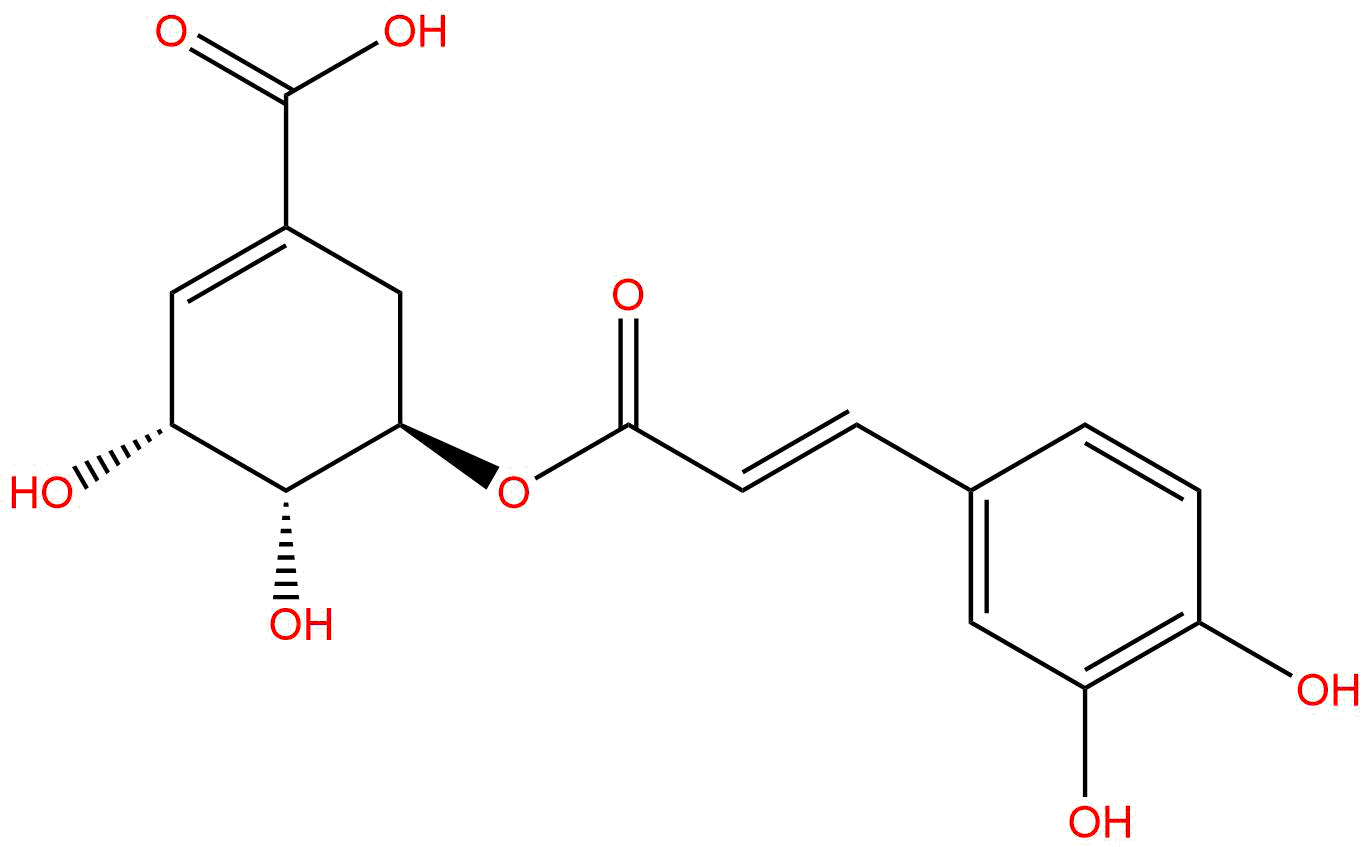


Product name: 5-O-Caffeoylshikimic acid
Synonym name: trans-5-O-Caffeoylshikimic acid
Catalogue No.: BP4534
Cas No.: 73263-62-4
Formula: C16H16O8
Mol Weight: 336.296
Botanical Source:
Type of Compound:
Purity: 95%~99%
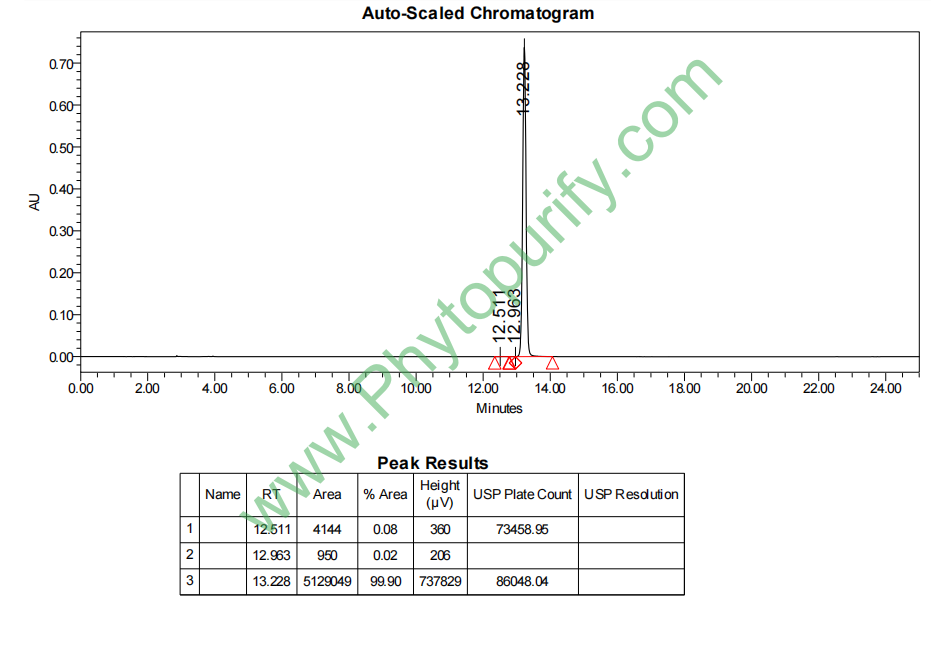
Analysis Method: HPLC-DAD or/and HPLC-ELSD
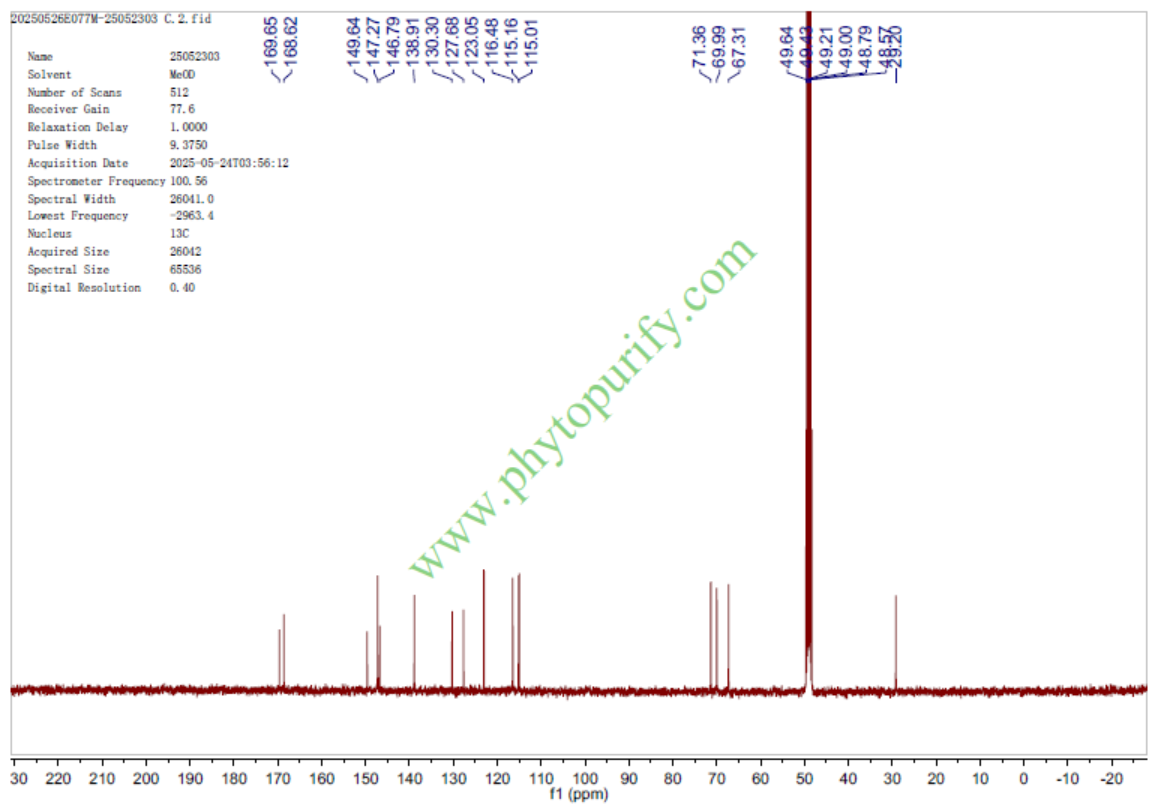
Identification Method: Mass, NMR
Packing: Brown vial or HDPE plastic bottle
Storage: Store in a well closed container, protected from air and light. Put into refrigerate or freeze for long term storage.
Whenever possible, you should prepare and use solutions on the same day. However, if you need to make up stock solutions in advance, we recommend that you store the solution as aliquots in tightly sealed vials at -20℃. Generally, these will be useable for up to two weeks.
The product could be supplied from milligrams to grams
Inquire for bulk scale.
For Reference Standard and R&D, Not for Human Use Directly.
HPLC of 5-O-Caffeoylshikimic acid
NMR of 5-O-Caffeoylshikimic acid
Storage conditions:Short-term storage at 2~8℃, long-term storage at -20 ~ -80℃
144.5200
.4402
-1.6676
5.5304
.8775
.3468
Low
78.1221
3.7293
Yes
No
No
No
Yes
No
0.0
Yes
Yes
Yes
Yes
Natural products, as an important treasure trove for drug discovery and development, play an irreplaceable role in the long history of human fight against diseases. Among them, phenylpropanoid compounds have always been a hot topic in medicinal chemistry and pharmacology research due to their extensive and significant biological activities. 5-O-Caffeoylshikimic acid (5-CSA), as an ester compound formed by the condensation of shikimic acid, a key intermediate in the shikimic acid pathway, and caffeic acid, a representative component of the phenylpropanoid pathway, perfectly integrates the characteristics of primary and secondary metabolism in plants. Its unique chemical structure suggests potential diverse biological functions. The CAS number of this compound is 73263-62-4, and early research mainly focused on its biosynthesis and distribution in plants. In recent years, with the deepening of its pharmacological activity exploration, especially its outstanding performance in the field of antiviral, 5-CSA has transformed from a common plant metabolite to a lead compound with important research value. Especially in the research of major diseases such as non-small cell lung cancer, it has shown potential, doubling its research value. This article aims to systematically review the chemical properties, plant sources, pharmacological activities, mechanisms of action, and medicinal properties of 5-CSA, in order to provide comprehensive scientific references for the in-depth research and future development of this compound.
5-O-caffeoyl shikimic acid is a typical derivative of caffeic acid esters. Its chemical name is 5- [(E) -3- (3,4-dihydroxyphenyl) acryloyloxy] -1,2,3-trihydroxycyclohexane-1-carboxylic acid. Structurally, it is composed of a hexagonal cyclic shikimic acid unit and a phenylpropanoid caffeic acid unit connected by ester bonds. Among them, the caffeic acid portion forms a key ester bond through the condensation of its α, β - unsaturated carboxylic acid structure in its trans (E) configuration with the hydroxyl group at position 5 on the parent nucleus of gallic acid. The shikimic acid portion retains its cyclohexene skeleton and three consecutive hydroxyl groups (1, 2, 3 positions), with a carboxyl group at position 1.
This unique structure endows 5-CSA with specific physicochemical properties. Its molecular weight is 336.2960 g/mol. The molecule is rich in multiple hydroxyl (- OH) and carboxyl (- COOH) groups, giving it high polarity, with a theoretical polar surface area (TPSA) of 144.52 Å ². The calculated lipid water partition coefficient (LogP) is 0.4402, indicating that the compound has a certain degree of lipophilicity but overall leans towards hydrophilicity. This prediction is consistent with its water solubility data (approximately 5.53 mg/mL), indicating that 5-CSA has moderate solubility in water. This amphiphilic feature may affect its transmembrane transport and in vivo distribution. In addition, the catechol structure in the molecule endows it with potential antioxidant activity and metal chelating ability, and is also the structural basis for its susceptibility to oxidation reactions. Its α, β - unsaturated ester bonds are potential Michael addition reaction receptors, which may covalently bind with nucleophilic groups (such as thiol groups) in biomolecules, which may be the molecular basis for some of its pharmacological activities.
5-O-caffeoyl shikimic acid is widely present in various plants and is one of the common products at the intersection of the phenylpropanoid metabolic pathway and the shikimic acid pathway in plants. Its main plant sources include:
1. Asteraceae plants Many Asteraceae plants are abundant sources of 5-CSA. For example, in medicinal plants honeysuckle(Lonicera japonica)Among them, 5-CSA is one of the important active ingredients that exert its heat clearing and detoxifying effects. In addition, in echinacea(Echinacea purpurea)、dandelion(Taraxacum officinale)It is often detected during waiting.
2. Lamiaceae plants As follows:rosemary(Rosmarinus officinalis)、Salvia miltiorrhiza(Salvia miltiorrhiza)Wait, the water-soluble parts of these plants often contain such phenolic acid components.
3. Other sources In some fruits (such as plums), vegetables, and traditional medicinal plants Eucommia、Artemisia scoparia It also exists in.
The extraction of 5-CSA typically involves methods targeting polar phenolic acid compounds.Solvent extraction method It is the most basic method, commonly using 50% -70% ethanol or methanol aqueous solution for reflux or ultrasound assisted extraction to effectively dissolve the target components. Subsequently, in order to enrich and purify, it is often used Macroporous adsorption resin chromatography method Resins such as AB-8 and D101, utilizing their adsorption desorption properties, are gradient eluted with water and different concentrations of ethanol. 5-CSA is typically enriched at the 20% -40% ethanol elution site. Further purification requires the assistance of Preparation type high-performance liquid chromatography Separate using a reverse phase C18 chromatography column with methanol water or acetonitrile water (often containing a small amount of formic acid or acetic acid to adjust pH) as the mobile phase. Attention should be paid to avoiding light and operating at low temperatures during the extraction process to reduce the possible oxidative degradation of its catechol structure. In recent years, some green extraction technologies such as Supercritical fluid extraction The use of CO ₂ and the addition of entrainers such as ethanol are also being explored to improve extraction efficiency and product stability.
A large number of in vitro and in vivo pharmacological studies have shown that 5-O-caffeoyl shikimic acid has various biological activities, among which antiviral and anti-tumor activities are the most remarkable.
1. Antiviral activity
This is the most in-depth and data rich field of 5-CSA research. Its antiviral spectrum is broad, especially showing inhibitory effects on herpes virus and human immunodeficiency virus (HIV).
* Antiherpesvirus Research has shown that 5-CSA can effectively inhibit the replication of herpes simplex virus types 1 (HSV-1) and 2 (HSV-2). Its function is not limited to inhibiting the entry of viruses into cells, but can also interfere with the early expression of viral genes and DNA replication. Related target studies suggest that it may act on virus replication essential proteins such as UL42 (DNA polymerase subunit), UL54 (ICP27, i.e. early protein), and viral thymidine kinase (TK).
* Anti HIV activity 5-CSA has been confirmed to be an inhibitor of HIV-1. Its mechanism of action has multi-target characteristics: on the one hand, it can interact with the co receptors CCR5 and CXCR4 on the surface of host cells, which may block the binding of HIV gp120 protein to these receptors, thereby inhibiting the virus from entering target cells (such as macrophages and T lymphocytes); On the other hand, research also suggests that it has a certain inhibitory potential on the integrase (INT) and protease (HIV1-PR) encoded by the virus, interfering with the virus's lifecycle.
* Other viruses Preliminary studies have shown that it may also have inhibitory effects on cytomegalovirus (CMV) and other viruses.
2. Antitumor activity
5-CSA exhibits growth inhibition and pro apoptotic effects in various tumor cell lines. especially Non small cell lung cancer In the study of NSCLC, 5-CSA can dose dependently inhibit the proliferation of lung cancer cells such as A549, and induce cell cycle arrest and apoptosis. Its anti-tumor mechanism may be related to regulating apoptosis related proteins (such as Bcl-2/Bax ratio), inducing reactive oxygen species (ROS) production, and inhibiting migration and invasion. In addition to lung cancer, it also exhibits certain cytotoxicity towards cell lines such as liver cancer and colon cancer.
3. Antioxidant and anti-inflammatory activities
Thanks to its catechol structure on the caffeoyl group, 5-CSA exhibits strong ability to scavenge free radicals such as DPPH and ABTS, demonstrating significant antioxidant activity. In the inflammatory model, 5-CSA can inhibit the excessive production of nitric oxide (NO), prostaglandin E2 (PGE2), and pro-inflammatory cytokines (such as TNF - α, IL-6) in macrophages induced by lipopolysaccharide (LPS). Its effect is related to the inhibition of the activation of nuclear factor kappa B (NF - κ B) and mitogen activated protein kinase (MAPK) signaling pathways.
4. Neuroprotective activity
Some studies have explored the role of 5-CSA in neurodegenerative disease models. In the model of neuronal damage or oxidative stress induced by β - amyloid protein (A β), 5-CSA can improve neuronal survival rate through its antioxidant and anti apoptotic properties, demonstrating potential neuroprotective effects.
5. Other activities
It also includes certain antibacterial and hepatoprotective effects, but research is relatively limited.
The multiple pharmacological activities of 5-CSA stem from its interactions with multiple biological molecular targets, and its mechanism of action exhibits characteristics of multiple pathways and targets.
1. Direct target interaction
* Virus proteins and host receptors As mentioned earlier, 5-CSA can directly act on viral proteins such as UL42, UL54, and TK of HSV; The INT and PR of HIV interfere with its function. Meanwhile, it can act as a ligand or antagonist for CCR5 and CXCR4 chemokine receptors, competitively blocking the binding of HIV to host cells. Molecular docking simulations show that 5-CSA can effectively embed into the active pockets of these targets.
* Myeloperoxidase (MPO)MPO is a key enzyme involved in the production of oxidants such as hypochlorous acid by neutrophils, and is closely related to inflammation and tissue damage. 5-CSA is predicted to be an inhibitor of MPO, which may reduce oxidative stress and inflammatory damage by inhibiting MPO peroxidase activity. This is related to its anti-inflammatory, antioxidant, and potential cardiovascular protective effects.
* Key signaling pathway molecules 5-CSA can regulate multiple signaling pathways within cells. Its anti-inflammatory effect is mainly achieved through inhibition NF - κ B pathway(Preventing I κ B α degradation and p65 nuclear translocation) and MAPK pathway Inhibition of phosphorylation of JNK, p38, and ERK. In terms of anti-tumor effects, in addition to the above-mentioned pathways, it may also involve PI3K/Akt and STAT3 Inhibition of survival signaling pathways and activation of mitochondrial apoptosis pathways.
2. Mechanisms based on chemical structure
* Antioxidant mechanism Its catechol structure can serve as a hydrogen donor, directly quenching free radicals, or inhibiting Fenton reaction by chelating transition metal ions (such as Fe ² ⁺, Cu ² ⁺), reducing the production of hydroxyl radicals.
* Electrophilic reactivity The α, β - unsaturated ester bond makes it a mild Michael addition reaction receptor. It may undergo covalent modifications with certain key proteins, such as kinases containing active cysteine residues, transcription factors, or antioxidant regulatory protein Keap1, permanently altering their function, which may be one of the underlying mechanisms for its long-lasting biological effects.
3. From a systems biology perspective
From the perspective of network pharmacology, the role of 5-CSA is likely to be achieved by slightly regulating multiple targets (viral proteins, host receptors, inflammation/apoptosis signaling nodes) simultaneously, forming a synergistic network effect, ultimately leading to inhibition of viral replication, tumor cell death, or alleviation of inflammatory response. This multi-target characteristic may give it advantages in treating complex diseases such as cancer and chronic viral infections, but it also poses challenges in elucidating its precise main target of action.
Based on the provided pharmacological parameters and existing research, the preliminary evaluation of the pharmacological properties of 5-CSA is as follows:
1. Physical, chemical and pharmaceutical properties
* Solubility and permeability Moderate water solubility (5.53 mg/mL) and low LogP value (0.44) make it consistent with the characteristics of Class III (high solubility and low permeability) or Class IV (low solubility and low permeability) drugs in the Biopharmaceutical Classification System (BCS). Its high polarity (TPSA=144.52) indicates limited passive transmembrane permeability, which may affect its oral bioavailability.
* Absorption and distribution Preliminary pharmacokinetic studies (mostly conducted in animal models) have shown that 5-CSA has a faster absorption rate after oral administration, but its absolute bioavailability may not be high due to factors such as intestinal first pass metabolism and permeability limitations. its Prediction of blood-brain barrier permeability as' low 'Although this limits its direct effect on central nervous system diseases, it may also reduce its potential central nervous system side effects. The distribution in the body may be concentrated in tissues with abundant blood and large endothelial gaps.
* Metabolism and excretion As a phenolic ester compound, 5-CSA is easily hydrolyzed by esterases in the body, producing shikimic acid and caffeic acid. In addition, the phenolic hydroxyl group on its caffeoyl group may undergo methylation, glucuronidation, and sulfation binding reactions, which are its main metabolic pathways. The prototype drug and its metabolites are mainly excreted through the kidneys. Rapid metabolism may be the main reason for its short half-life in the body.
2. Preliminary evaluation of safety
* HERG inhibition The predicted result is' no ', indicating that 5-CSA may not inhibit hERG potassium channels at therapeutic concentrations, reducing the potential risk of inducing QT interval prolongation and apical torsion type ventricular tachycardia, which is a favorable safety signal.
* Genotoxicity The Ames test predicted a value of 0.0, indicating that it may not have direct mutagenicity, but it needs to be validated through formal in vitro and in vivo genotoxicity tests.
* Other Currently, research data on its acute and long-term toxicity is incomplete. The structure of its catechol may theoretically generate oxidative stress at high doses or cause toxicity by binding with metal ions, and further evaluation is needed.
3. Challenges and optimization strategies for drug development
Overall, 5-CSA has a good active skeleton and preliminary safety prediction, but its Low bioavailability and fast metabolic rate are the main pharmaceutical bottlenecks Future structural optimization may revolve around the following strategies:
* Prodrug design Modify easily hydrolyzed ester bonds or easily bound phenolic hydroxyl groups (such as making alkyl esters, amides, or introducing biodegradable groups) to improve their metabolic stability and membrane permeability.
* Formulation technology Develop nano formulations (such as liposomes, polymer micelles), solid dispersions, or cyclodextrin inclusion complexes to enhance their solubility, protect them from premature metabolism, and potentially target tumor tissues through enhanced permeability and retention (EPR) effects.
* Exploration of administration routes For lung diseases such as non-small cell lung cancer, the development of inhaled drug formulations may achieve therapeutic advantages of local high concentration and low systemic exposure.
5-O-caffeoyl shikimic acid, as a natural lead compound with clear multi-target activity, has broad clinical application prospects, but also faces many challenges.
1. Potential application directions
* Antiviral adjuvant therapy Given its multi link inhibitory effects on HSV and HIV, 5-CSA or its derivatives have the potential to be developed as novel anti herpesvirus drugs, particularly targeting drug-resistant strains; Or as a complementary ingredient to HIV cocktail therapy, targeting new targets such as host receptors CCR5/CXCR4. Topical preparations (such as cream) for the treatment of herpes simplex virus infection may be the most achievable clinical application in the near future.
* Antitumor therapy, especially for non-small cell lung cancer The activity of inducing apoptosis and inhibiting migration in NSCLC cells deserves further exploration. It may be considered to combine it with existing chemotherapy drugs such as platinum and paclitaxel to enhance efficacy, reduce resistance, or alleviate side effects. Based on its anti-inflammatory and antioxidant properties, it may also be used to alleviate complications such as mucositis caused by radiotherapy and chemotherapy.
* Inflammatory related diseases For example, chronic hepatitis, atherosclerosis, neuritis, etc., its mechanism of inhibiting MPO and NF - κ B provides a theoretical basis for this.
2. Future research focus and prospects
* In depth study on the mechanism of action Using chemical biology methods such as affinity fishing and proteomics to identify its direct target proteins in cells and draw a complete pharmacological action network map.
* Preclinical development of the system Complete pharmacological evaluations (in animal models closer to the disease), pharmacokinetic studies (ADME), and comprehensive toxicological evaluations (acute toxicity, chronic toxicity, reproductive toxicity, etc.) that comply with new drug research standards, and clarify their treatment window.
* Reasonable structural modification and structure-activity relationship (SAR) research Systematically study the effects of various functional groups on the activity, stability, and pharmacokinetic properties of shikimic acid skeleton and caffeoyl group, guiding the synthesis of derivatives with better activity and drug properties. For example, modifying phenolic hydroxyl groups to improve metabolic stability, or introducing specific functional groups to enhance selectivity towards a specific target (such as CCR5).
* Exploring combination therapy and precision medicine To investigate the synergistic effect of 5-CSA with existing standard therapies and explore its activity in relation to specific biomarkers such as high expression of CCR5/CXCR4 on tumor cell surfaces and MPO levels, in order to provide a basis for achieving precision drug use.
5-O-caffeoyl shikimic acid is a structurally sophisticated and functionally diverse chemical entity endowed by nature. It emerged from the cross pathway of plant metabolism, but demonstrated significant potential in combating major human diseases such as viral infections and cancer. The current research has preliminarily revealed its multi-target pharmacological activities such as antiviral, anti-tumor, anti-inflammatory, and antioxidant effects, and has gained a rough understanding of its mechanism of action. Although it still faces challenges in drug development such as low bioavailability and fast metabolism, these challenges are precisely the breakthroughs that modern pharmaceutical chemistry and pharmacy can focus on addressing. With the in-depth analysis of its structure-activity relationship, rational modification based on structure, and the application of novel drug delivery systems, 5-CSA is highly likely to develop from a promising lead compound into a new drug candidate with clinical application value, especially in addressing viral resistance and supplementing existing tumor treatment plans. Continuous and in-depth research on it will not only help develop new therapeutic drugs, but also further enrich our understanding of the multi-target mode of action of natural products.
