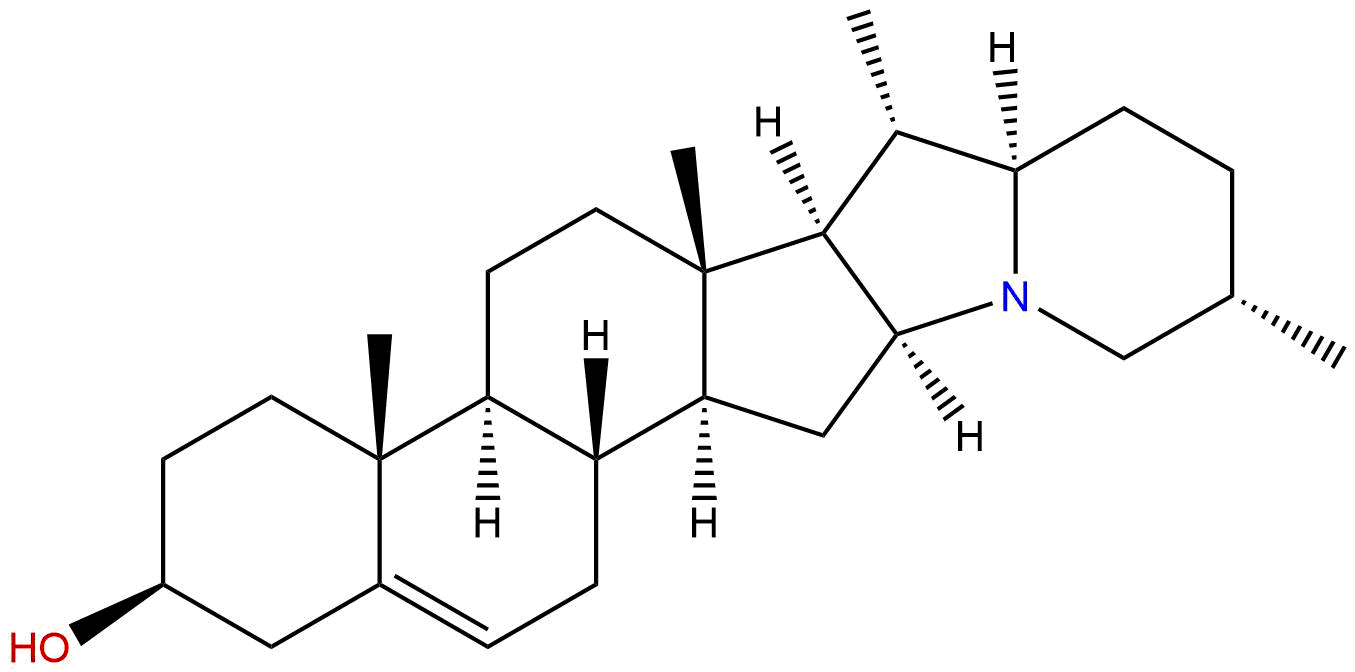


Product name: Solanidine
Synonym name: (-)-Solanidine;Solanidin; Solatubin; Solatubine
Catalogue No.: BP2453
Cas No.: 80-78-4
Formula: C27H43NO
Mol Weight: 397.647
Botanical Source:
Type of Compound: Alkaloids
Purity: 95%~99%
Analysis Method: HPLC-DAD or/and HPLC-ELSD
Identification Method: Mass, NMR
Packing: Brown vial or HDPE plastic bottle
Storage: Store in a well closed container, protected from air and light. Put into refrigerate or freeze for long term storage.
Whenever possible, you should prepare and use solutions on the same day. However, if you need to make up stock solutions in advance, we recommend that you store the solution as aliquots in tightly sealed vials at -20℃. Generally, these will be useable for up to two weeks.
The product could be supplied from milligrams to grams
Inquire for bulk scale.
For Reference Standard and R&D, Not for Human Use Directly.
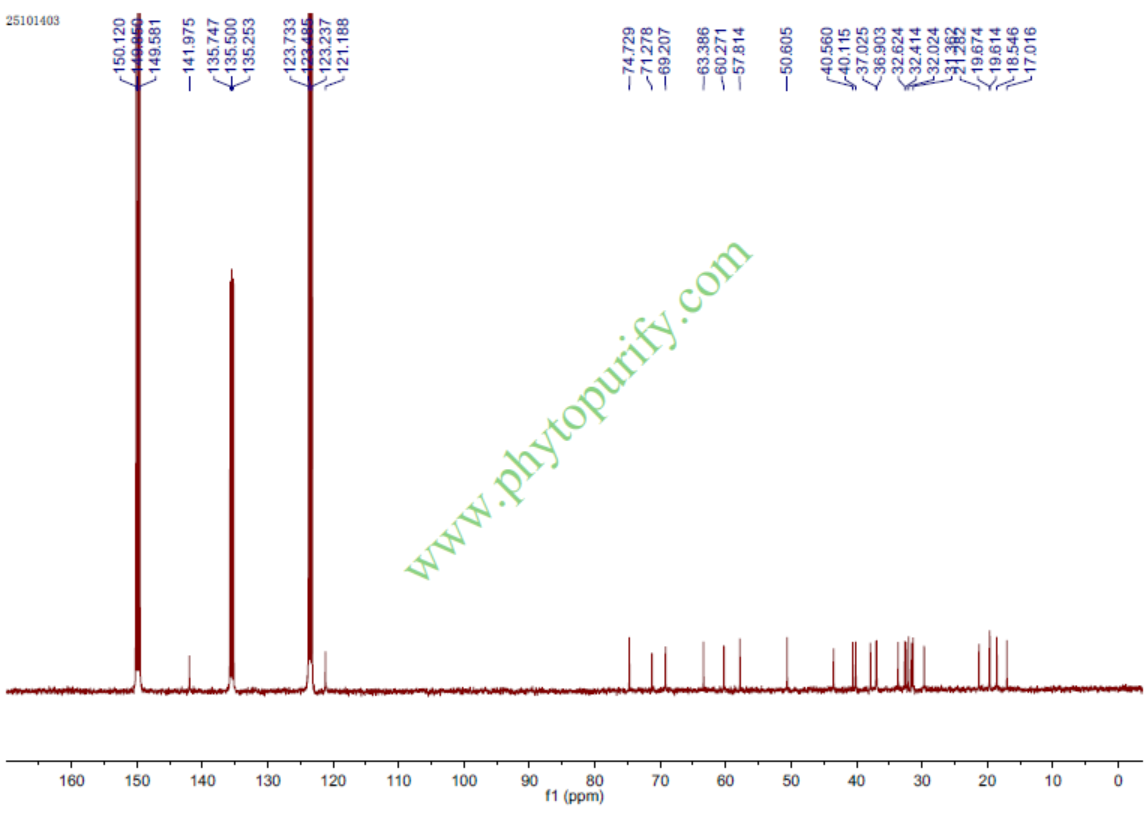
NMR of Solanidine
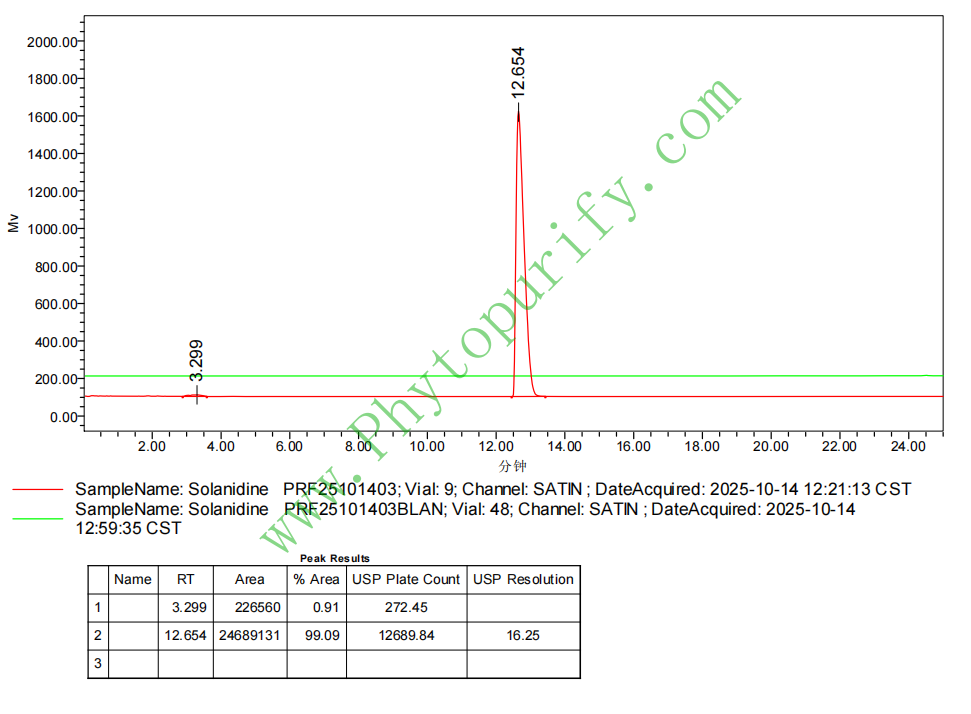
HPLC of Solanidine
Storage conditions:Short-term storage at 2~8℃, long-term storage at -20 ~ -80℃
32.5900
4.8000
No
Unknown
Unknown
Unknown
Unknown
Unknown
Unknown
Unknown
Natural products, as an important source of drug discovery, play an indispensable role in the long history of human fight against diseases. Among them, steroidal alkaloids derived from Solanaceae plants have attracted much attention due to their structural diversity and significant biological activity. Solanidine, also known as choleste-5-en-3 β - amine, is a typical cholestane steroid alkaloid with a CAS registration number of 80-78-4. This compound originated from potatoes(Solanum tuberosum)It is the core structure of glycosides in various glycoside alkaloids (such as solanine and solanine) isolated and identified from other Solanum plants.
The discovery and research history of solanine can be traced back to the late 19th century, when scientists began to pay attention to the chemical components that cause poisoning in potatoes. With the advancement of separation technology and structural analysis methods, the chemical structure of solanine has been elucidated, and it has gradually been recognized that it is not only an important secondary metabolite in plant defense systems, but also a double-edged sword with both therapeutic potential and toxicity. In recent years, with the development of molecular pharmacology and chemical biology, the biological functions of solanine have been re examined. Research has shown that this compound has multiple activities such as anti-tumor, anti angiogenesis, and reproductive toxicity. Its mechanism of action involves multiple key biological processes such as DNA damage repair, cell cycle regulation, and apoptosis signaling pathways. In particular, solanaceous alkaloids show opposite effects in different tumor types - inhibiting lung cancer cells, but promoting the proliferation of breast cancer cells. This tissue specific pharmacological behavior makes it an ideal model for studying the selective effects of natural products.
This article aims to systematically review the chemical properties, plant sources, pharmacological activities, molecular mechanisms, and medicinal characteristics of solanine, in order to provide comprehensive academic references for the further development and utilization of this natural product.
The chemical structure of solanine belongs to the class of cholestane alkaloids, and its parent nucleus is a cyclopentane dihydrophenanthrene skeleton, which is highly similar to cholesterol structure. Specifically, the molecular formula of solanine is C ₂₇ H ₄₅ N, with a molecular weight of 397.63 g/mol. Its structural feature is that the C-3 position is connected to an amino group (- NH ₂) instead of the hydroxyl group in cholesterol; There is a double bond between positions C-5 and C-6, forming a Δ - unsaturated bond; The side chain is a saturated octaalkyl chain with no branched modification at the end. This structure endows solanine with amphiphilic characteristics - the steroid skeleton provides hydrophobicity, while the amino group gives a certain hydrophilicity.
In terms of physicochemical properties, the lipid water partition coefficient (LogP) of solanine is 4.80, indicating its strong lipophilicity, easy penetration of biological membranes, and enrichment in lipid environments. The topologically polar surface area (TPSA) is 32.59 Å ², which is a relatively low value, indicating that the molecule has potential advantages in transmembrane transport. The number of hydrogen bond acceptors is 2 (from amino groups) and the number of hydrogen bond donors is 1, which conforms to the general characteristics of small molecule drugs. It is worth noting that under physiological pH conditions, the amino group of solanine can undergo protonation (pKa about 9-10), forming a positively charged ammonium ion form, which may affect its interaction mode with biological targets.
Longkui alkaloid is a white to light yellow crystalline powder with a melting point between 200-205 ° C. It is soluble in organic solvents such as methanol, ethanol, chloroform, and slightly soluble in water. Its UV absorption spectrum exhibits characteristic absorption at 200-220 nm, mainly attributed to the double bond structure in the steroid skeleton. In the infrared spectrum, the N-H stretching vibration peak of the amino group appears in the 3300-3500 cm ⁻¹ region, while the stretching vibration peak of the C=C double bond is located near 1650 cm ⁻¹. These spectral features provide a basis for the qualitative and quantitative analysis of solanine.
Longkui alkaloid is mainly distributed in Solanaceae plants in nature, especially in the Solanaceae genus(Solanum)Species. Potato(Solanum tuberosum)It is one of the most abundant sources of solanine, mainly found in the cortex, bud eyes, and tender shoots of tubers, serving as a natural defense substance for plants to resist pests and diseases. In addition, dragon anemones(Solanum nigrum)Tomatoes(Solanum lycopersicum)Immature fruits and eggplants(Solanum melongena)And some ornamental plants such as coral beans(Solanum pseudocapsicum)It also contains solanine or its glycoside derivatives.
In the plant body, solanine mainly exists in the form of glycosides, which combine with different sugar chains (such as solanine and chaconine) to form solanine or chaconine. These glycoside alkaloids can be hydrolyzed by glycosidase in plant tissues or release free solanine under acidic conditions. It is worth noting that the content of solanine is influenced by various factors, including variety, growth stage, storage conditions, light, mechanical damage, etc. For example, storing potatoes under light can significantly increase the content of solanine substances, which is also the main reason for the increased toxicity of potatoes after turning green.
The extraction of solanine is usually carried out by acid alcohol extraction method. The specific process includes: soaking or percolating the dried and crushed plant materials in acidic ethanol (such as an ethanol solution containing 1% acetic acid), and using acidic protonated amino groups to increase solubility; After the extraction solution is concentrated under reduced pressure, the pH is adjusted to alkaline with alkaline solution (such as ammonia water) to allow the free precipitation of solanine; Subsequently, the crude extract was obtained by extracting with organic solvents such as chloroform and ethyl acetate, and recovering the solvent. Further purification can be achieved by silica gel column chromatography with chloroform methanol gradient elution, or by preparative high-performance liquid chromatography (HPLC) to obtain high-purity monomers.
In recent years, green extraction techniques such as supercritical fluid extraction (SFE), microwave-assisted extraction (MAE), and ultrasound assisted extraction (UAE) have also been applied to the separation of solanine. These methods have advantages such as high extraction efficiency, low solvent consumption, and environmental friendliness. For example, by using supercritical CO ₂ extraction and adding an appropriate amount of ethanol as an entrainer under pressure of 30 MPa and temperature of 50 ° C, it is possible to effectively extract solanine components from potato peels. In addition, high-speed countercurrent chromatography (HSCCC), as a liquid-liquid distribution chromatography technique, has also demonstrated good separation efficiency in the purification of solanine.
The anti-tumor activity of solanine is one of its most studied pharmacological effects, but the research results show significant cell type dependence. In lung cancer models, solanine exhibits clear inhibitory effects. In vitro experiments have shown that solanine can inhibit the proliferation of Lewis lung cancer (LLC) cells and induce their apoptosis. Further in vivo studies have confirmed that oral administration of solanine can inhibit tumor growth, reduce tumor volume and weight in LLC tumor bearing mice. Mechanistic studies have shown that solanine downregulates the expression of the key protein RAD51 for DNA double strand break repair, while upregulating the levels of DNA damage markers gamma H2AX and tumor suppressor p53, thereby disrupting the DNA damage repair ability of tumor cells, promoting genomic instability, and ultimately leading to cell death.
However, solanaceous alkaloids showed opposite effects in breast cancer cells. Several studies have reported that solanaceous alkaloids can promote the proliferation of breast cancer cell lines such as MCF-7, MDA-MB-231, and this effect may be related to the abnormal activation of estrogen receptor signaling pathway or cyclin. This tissue-specific pharmacological behavior suggests that the target of action of solanine may vary in different cellular environments, or its metabolites may have different activities in different tissues.
Angiogenesis is a crucial process for tumor growth and metastasis. Longkui alkaloid has been found to have the ability to inhibit neovascularization. In the chicken embryo chorioallantoic membrane (CAM) model, the density of neovascularization in the solanine treated group was significantly lower than that in the control group. Further cell experiments showed that solanine can inhibit the proliferation, migration, and tubular structure formation of human umbilical vein endothelial cells (HUVECs), which may be related to the inhibition of the vascular endothelial growth factor (VEGF) signaling pathway. The anti angiogenic activity provides another explanation for the anti-tumor effect of solanine, especially in the treatment of solid tumors. Inhibiting angiogenesis can cut off the tumor's nutritional supply, thereby inhibiting its growth.
The reproductive toxicity of solanine is an issue that cannot be ignored when developing it as a potential drug. Animal experiments have shown that solanine can cause miscarriage in pregnant mice, and this effect is dose-dependent. Histological analysis showed that the embryonic development of mice treated with solanine was abnormal and the placental structure was damaged. Mechanism studies suggest that solanine may exert its abortion inducing effect by interfering with the progesterone signaling pathway, inducing placental cell apoptosis, or affecting uterine blood flow supply. In addition, solanine may also affect spermatogenesis and oocyte maturation, potentially affecting both male and female reproductive functions. These findings are consistent with the association between potato consumption and certain reproductive abnormalities observed in epidemiology, and also sound the alarm for the safety of clinical application of solanine.
In addition to the main activities mentioned above, solanine has also been reported to have anti-inflammatory, antibacterial, and insecticidal effects. In terms of anti-inflammatory effects, solanine can inhibit the production of pro-inflammatory cytokines (such as TNF - α and IL-6) in macrophages induced by lipopolysaccharide (LPS), and its mechanism may be related to the blockade of the NF - κ B signaling pathway. In terms of antibacterial activity, solanine shows a certain inhibitory effect on certain Gram positive bacteria (such as Staphylococcus aureus), but has weaker activity against Gram negative bacteria. In addition, as a plant defense substance, solanine has anti feeding and toxic effects on various insects and nematodes, which provides the possibility for its application in the agricultural field.
One of the core mechanisms of the anti-tumor effect of solanine is its regulation of the DNA damage repair system. RAD51 is a key protein in homologous recombination repair (HRR), responsible for repairing DNA double strand breaks (DSBs). Longkui alkaloid can significantly reduce the protein level of RAD51, thereby inhibiting the repair ability of tumor cells to DNA damage. At the same time, solanine upregulates the expression of γ H2AX (the phosphorylated form of histone H2AX), an early marker of DSB, and its elevated levels indicate the accumulation of DNA damage. In addition, p53, as a genomic guardian, is upregulated after treatment with solanine, thereby activating downstream apoptotic signaling pathways such as increased Bax/Bcl-2 ratio and caspase-3 activation. The triple mechanism of "inhibiting repair promoting damage inducing apoptosis" constitutes the molecular basis for the selective killing of tumor cells by solanine.
The effect of solanine on the cell cycle is also cell type dependent. In LLC cells, solanine can induce G2/M phase arrest, which is related to the activation of the p53-p21 pathway and the inhibition of the Cyclin B1/Cdk1 complex. G2/M phase blockade provides a time window for DNA damage repair, but when the repair ability is inhibited by solanine, blockade actually leads to cell mitotic disaster or apoptosis. On the contrary, in breast cancer cells, solanaceous alkaloids may promote G1/S phase transition by activating Cyclin D1 Cdk4/6 pathway or down regulating p27 ⁸ ⁱ ¹ and other cell cycle inhibitor proteins, thus accelerating cell proliferation.
Solanine can affect multiple signaling pathways. In terms of anti angiogenesis, solanine inhibits endothelial cell proliferation and migration by suppressing the phosphorylation of VEGF receptor (VEGFR), blocking downstream PI3K/Akt and MAPK/ERK signaling pathways. In addition, solanine can activate the AMPK signaling pathway, leading to inhibition of mTOR activity and subsequently affecting protein synthesis and cell growth. In terms of inflammatory pathways, solanine inhibits the phosphorylation of I κ B α and prevents NF - κ B nuclear translocation, thereby reducing the transcription of pro-inflammatory genes.
Although the clear molecular targets of solanine have not been fully elucidated, previous studies suggest that it may interact with multiple proteins. Based on its steroid structure, solanine may competitively bind some steroid hormone receptors, such as estrogen receptor (ER) or progesterone receptor (PR), which may explain its proliferative effect in breast cancer cells. In addition, solanine may directly bind to DNA and affect the topological structure of DNA through embedding or electrostatic interactions. Molecular docking studies suggest that solanine may have binding potential with classical anti-cancer targets such as topoisomerase II and microtubule proteins, but these predictions still require experimental verification.
From the perspective of medicinal chemistry, the pharmacological parameters of solanine show the following characteristics: molecular weight of 397.63 Da, in accordance with Lipinski's five rules (<500 Da); LogP 4.80, Slightly higher than the ideal range (0-3), indicating strong lipophilicity, which may lead to poor water solubility and metabolic stability issues; TPSA 32.59 Å ², below 140 Å ², indicates good intestinal absorption potential; The number of hydrogen bond acceptors is 2, and the number of hydrogen bond donors is 1, both of which meet the requirements of the rules. However, the prediction of blood-brain barrier penetration is "No", indicating that solanine is not easily able to enter the central nervous system, which to some extent reduces the risk of neurotoxicity, but also limits its application in the treatment of brain diseases.
At present, there is insufficient systematic research on the pharmacokinetics of solanine, but preliminary inferences can be made based on its structural characteristics and existing data. In terms of absorption, solanine can be absorbed in the gastrointestinal tract after oral administration, but its bioavailability may be low due to its poor water solubility and first pass metabolism. In terms of distribution, due to its high lipophilicity, solanine tends to be distributed in adipose tissue, liver, and kidneys, and can penetrate the placental barrier, which is consistent with its reproductive toxicity observations. In terms of metabolism, solanine is mainly metabolized by the liver cytochrome P450 enzyme system (such as CYP3A4), which may undergo hydroxylation, N-oxidation, or dehydrogenation reactions to produce various metabolites. In terms of excretion, solanine and its metabolites are mainly excreted through bile and urine, and may have a long half-life, posing a risk of accumulation.
The toxicity of solanine is a key limiting factor in its pharmacological evaluation. In terms of acute toxicity, the LD ₅ of solanine in rodents is about 100-200 mg/kg (oral), and the toxic symptoms include vomiting, diarrhea, dyspnea, central nervous system depression, etc. In terms of chronic toxicity, long-term exposure may lead to liver and kidney function damage. Of particular concern is its reproductive toxicity, as solanine has been proven to have embryotoxicity and miscarriage inducing effects, which severely limits its application in the reproductive age population. In addition, the genetic toxicity (Ames test) and cardiac toxicity (hERG inhibition) data of solanine are still unknown and require further evaluation.
The potential of solanine in the treatment of lung cancer makes it a candidate molecule for the development of anti-tumor drugs. However, its tissue-specific pharmacological behavior (promoting the proliferation of breast cancer) requires the development of targeted delivery systems to achieve selective effects on specific tumor tissues. For example, loading solanine into nanoliposomes or polymer micelles and surface modifying lung cancer specific ligands (such as EGFR antibodies) can enhance drug enrichment at tumor sites and reduce exposure to sensitive tissues such as the breast. In addition, as a DNA damage repair inhibitor, solanine may have a synergistic effect when used in combination with radiotherapy or DNA damage chemotherapy drugs (such as cisplatin and etoposide), reducing the dosage and toxic side effects of chemotherapy drugs.
Structural modification is an important research direction to overcome the toxicity and insufficient selectivity of solanine. Based on structure-activity relationship (SAR) analysis, modification of the C-3 amino group may alter its binding mode with the target; The oxidation or reduction of the steroid skeleton can regulate its metabolic stability; The modification of side chains may affect their lipophilicity and tissue distribution. For example, aminoacylation or alkylation can reduce its alkalinity and decrease non-specific binding; Introducing polar groups such as hydroxyl or carboxyl groups can improve water solubility and reduce LogP values. Through structural optimization of the system, it is expected to obtain derivatives of solanine with higher activity, lower toxicity, and better selectivity.
Due to the reproductive toxicity of solanine, strict reproductive toxicity evaluation must be conducted in clinical development, and clear contraindications must be set for the population (such as pregnant women and women preparing for pregnancy). In addition, long-term toxicity and carcinogenicity tests are also necessary safety data support. In clinical applications, blood drug concentration can be controlled through therapeutic drug monitoring (TDM) to avoid reaching toxicity thresholds. Meanwhile, developing antidotes or antagonists for solanine is also an important safety strategy.
In addition to anti-tumor, the antiangiogenic activity of solanaceine makes it potentially valuable in the treatment of ophthalmic diseases (such as age-related macular degeneration, diabetes retinopathy). Its antibacterial and insecticidal activities suggest that it can serve as a precursor for the development of biopesticides in the agricultural field. In addition, the regulatory effect of solanine on inflammatory pathways also provides possibilities for its application in autoimmune diseases.
Longkui alkaloid, as an ancient cholestane alkaloid in Solanaceae plants, has a research history spanning over a century. From initially being recognized as a plant toxin to now being extensively explored as a multi-target natural product, the research process of solanine vividly illustrates the complexity and charm of natural product drug discovery. Current research reveals that solanaceous alkaloids exhibit anti-tumor activity in specific tumors such as lung cancer by regulating multiple signal pathways such as DNA damage repair, cell cycle, angiogenesis, etc., but its side effects such as promoting the proliferation of breast cancer and reproductive toxicity also constitute significant development obstacles.
Looking ahead to the future, research on solanine should focus on the following key directions: firstly, to deeply elucidate its molecular targets and mechanisms of action, especially to explain the molecular basis of its tissue selective effects; The second is to optimize the structure through medicinal chemical methods, improve its pharmacokinetic properties, and reduce toxicity; Thirdly, develop targeted delivery systems to achieve precise treatment; Fourthly, carry out systematic toxicology and safety evaluations to lay the foundation for clinical translation. The story of solanine reminds us that natural products are not only a treasure trove for drug discovery, but also a double-edged sword that needs to be treated with caution. Only by fully understanding its pharmacological activity and toxicity can this ancient molecule be transformed into a new drug that benefits human health.
