


Product name: 8-O-Acetyl shanzhiside methyl ester
Synonym name: Barlerin; Umbroside
Catalogue No.: BP0110
Cas No.: 57420-46-9
Formula: C19H28O12
Mol Weight: 448.421
Botanical Source: Barleria prionitis
Physical Description: Powder
Type of Compound: Iridoids
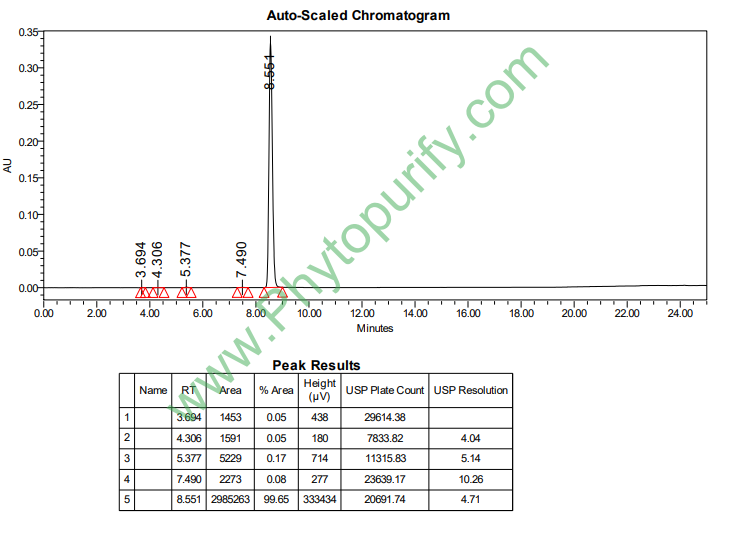
Purity: 95%~99%
Analysis Method: HPLC-DAD or/and HPLC-ELSD
Identification Method: Mass, NMR
Packing: Brown vial or HDPE plastic bottle
Storage: Store in a well closed container, protected from air and light. Put into refrigerate or freeze for long term storage.
Whenever possible, you should prepare and use solutions on the same day. However, if you need to make up stock solutions in advance, we recommend that you store the solution as aliquots in tightly sealed vials at -20℃. Generally, these will be useable for up to two weeks.
The product could be supplied from milligrams to grams, up to kilograms
Inquire for bulk scale.
Descriptions:
8-O-acetyl shanzhiside methylester (ND01), an iridoid glucoside compound, was isolated from the leaves of Lamiophlomis rotata (Benth.) Kudo, ND01 has potential against cerebral ischemic injury, and its protective effect on oxygen–glucose deprivation-induced injury might be due to the suppression of intracellular Ca 2+ elevation and caspase-3 activity, and improvement of mitochondrial energy metabolism.[1]
8- O -acetyl Shanzhiside Methylester can increases angiogenesis and improve functional recovery after stroke.[2]
8-O-acetyl shanzhiside methylester has protective effects on experimental myocardial ischemia injury, the effects might be due to block of myocardial inflammatory cascades through an HMGB1-dependent NF-κB signaling pathway.[3]
8-O-acetyl shanzhiside methylester protects diabetic brain against I/R injury by alleviating diabetic cerebral I/R injury and attenuating blood–brain barrier (BBB) breakdown, and its protective effects may involve HMGB-1 and NF-κB signalling pathway.[4]
References:
[1] Jiang W L, Fu F H, Zheng S G, et al. Eur J Pharmacol, 2010, 629(629):20-4.
[2] Jiang W L, Zhang S P, Zhu H B, et al. Basic Clin Pharmacol , 2011, 108(1):21-7.
[3] Kang Z C, Jiang W L, Xu Y, et al. Eur J Pharm Sci Official J Eur Federat Pharml Sci, 2012, 47(1):124-30.
[4] Zhang L, Kan Z C, Zhang X L, et al. Basic Clin Pharmacol , 2014, 115(6):481–7.
[5] Liao L D, Tang C, Sheng-Ming L U, et al. Res Practi on Chinese Med, 2011(05):70-2.
HPLC of 8-O-Acetyl shanzhiside methyl ester
Storage conditions:Short-term storage at 2~8℃, long-term storage at -20 ~ -80℃
181.4400
-1.1821
-1.1821
23.8231
.5235
.8799
Low
34.0436
4.9158
Yes
No
No
No
Yes
No
0.0
Yes
No
Yes
Yes
Natural products, as an important treasure trove for drug discovery, play an irreplaceable role in the history of human disease treatment. Cycloterpenoids are a class of monoterpene secondary metabolites widely present in the plant kingdom, and have attracted much attention due to their structural diversity and significant biological activity. 8-O-Acetyl shanzhiside methyl ester (ASME, CAS number: 57420-46-9) is one of the representative iridoid glucosides. This compound was originally isolated from traditional medicinal plants in Xizang, China. Its unique chemical structure and inhibition of nuclear factor - κ B (NF - κ B) signaling pathway indicate its potential value in the treatment of inflammatory related diseases, especially nephritis and other kidney diseases. In recent years, with the deepening understanding of the molecular mechanisms of inflammatory response, ASME has gradually become a hot topic in pharmacological research due to its regulatory effects on key inflammatory targets including NF - κ B, STAT3, TNF - α, IL-6, etc. This article aims to systematically review the chemical properties, plant sources, pharmacological activities, mechanisms of action, medicinal properties, and clinical application prospects of ASME, in order to provide comprehensive scientific references for the in-depth research and development of this compound.
The molecular formula of 8-O-acetylshanzhizhi methyl ester is C20H32O12, with a molecular weight of 448.4210. Its chemical structure belongs to the class of iridoid glycosides, with a core consisting of a cyclopentane pyran ring (the parent nucleus of iridoid terpenes). A glucose group is connected at the C-1 position through a glycosidic bond, the hydroxyl group at the C-8 position is acetylated, and the carboxyl group at the C-11 position is methylated. This acetylation and methylation modification has a significant impact on its biological activity and stability.
In terms of physical and chemical properties, ASME exhibits typical polar molecular characteristics. The calculated lipid water partition coefficient (LogP) is -1.1821, indicating that it has strong hydrophilicity and is not easily distributed in a lipid environment. The topologically polar surface area (TPSA) is as high as 181.44 Å ², mainly attributed to the presence of multiple hydroxyl, ester, and ether oxygen atoms in the molecule, which serve as donors and acceptors for hydrogen bonds. The high TPSA and negative LogP values together determine its good water solubility, with a calculated value of approximately 23.82 mg/mL. These properties suggest that the distribution of ASME in vivo may be more inclined towards aqueous environments, and its ability to passively diffuse across the lipid bilayer of cells may be limited. In addition, the prediction shows that its ability to cross the blood-brain barrier is relatively low, which to some extent limits its direct effect on central nervous system diseases, but may also reduce the potential risk of neurotoxicity. In terms of early safety indicators, the computational model predicted no significant hERG potassium channel inhibitory activity (low risk of arrhythmia), and the Ames test predicted negative results (no mutagenicity), providing preliminary positive signals for its safety.
ASME mainly comes from Caprifoliaceae plants, especially Gardenia and some folk medicinal plants unique to Xizang. For example, in some medicinal plants that have the effects of clearing heat, cooling blood, and detoxifying in traditional Tibetan medicine, ASME is often present as one of the main active ingredients. These plants grow in the special ecological environment of high altitude areas such as Xizang, and their secondary metabolites often have unique biological activities.
The extraction and separation of ASME from plant materials typically follow the conventional process of natural product chemistry. Firstly, the dried aboveground parts or fruits of plants are crushed and subjected to extraction or reflux extraction using polar solvents such as methanol, ethanol, or aqueous ethanol to fully obtain the iridoid glycosides. After vacuum concentration, the obtained crude extract was preliminarily enriched and decolorized using macroporous adsorption resins (such as D101, AB-8), washed with water to remove polysaccharides and inorganic salts, and then gradient eluted with different concentrations of ethanol to collect the fraction rich in iridoid glycosides. Further purification relies on chromatographic techniques, often using silica gel column chromatography or reverse phase silica gel column chromatography (such as ODS-C18), with chloroform methanol or water methanol as the mobile phase for gradient elution. High performance liquid chromatography (HPLC), especially preparative HPLC, is a key step in obtaining high-purity ASME monomers. By optimizing the mobile phase ratio and detection wavelength (usually with UV absorption around 240-245 nm), effective separation of ASME from other structurally similar compounds can be achieved. The isolated compounds need to be structurally confirmed by spectroscopic techniques such as nuclear magnetic resonance (NMR, including 1H-NMR and 13C-NMR) and mass spectrometry (MS).
A large number of in vitro and in vivo pharmacological studies have shown that ASME has a wide range of biological activities, and its core lies in its strong anti-inflammatory and immune regulatory effects, which lays the foundation for its application in inflammatory diseases such as nephritis.
anti-inflammatory effect ASME has shown significant effects in various inflammatory models. In the lipopolysaccharide (LPS) - induced macrophage (such as RAW264.7) inflammation model, ASME can dose dependently inhibit the production of nitric oxide (NO), prostaglandin E2 (PGE2), and the expression of inducible nitric oxide synthase (iNOS) and cyclooxygenase-2 (COX-2, i.e. PTGS2) proteins. In the rat paw swelling model induced by carrageenan or Freund's complete adjuvant, oral administration of ASME can effectively reduce tissue edema and inflammatory cell infiltration.
Protective effect on nephritis This is the most promising pharmacological activity direction of ASME. ASME treatment can significantly reduce urinary protein excretion, increase serum total protein and albumin levels, and improve lipid abnormalities in a rat model of nephrotic syndrome induced by doxorubicin or an immune complex glomerulonephritis model. Histopathological examination showed that ASME can alleviate mesangial cell proliferation, matrix expansion, as well as inflammatory cell infiltration and fibrosis in the renal tubular interstitium. Its renal protective effect is closely related to the downregulation of various local inflammatory factors in the kidneys.
Immune regulatory effect ASME has a regulatory effect on immune cell function. It can inhibit the excessive proliferation and activation of T lymphocytes, regulate the balance of Th1/Th2 cytokines, and reduce the release of pro-inflammatory cytokines.
Other activities Some studies also suggest that ASME may have auxiliary activities such as antioxidant, analgesic, and liver protection, which are interrelated with its anti-inflammatory mechanism and contribute to its protection against tissue damage.
The pharmacological effects of ASME, especially anti-inflammatory and renal protective effects, are achieved through multi-target and multi pathway synergistic regulation. Its core lies in inhibiting the NF - κ B signaling pathway and affecting a series of related inflammatory mediators and adhesion molecules.
Core target: NF - κ B pathway NF - κ B is a key transcription factor that regulates inflammation, immunity, and cell survival. ASME has been proven to be an effective inhibitor of NF - κ B activation. Under inflammatory stimulation, I κ B protein is phosphorylated and degraded, causing NF - κ B (usually a p50/p65 dimer) to translocate into the nucleus and initiate target gene transcription. ASME can inhibit the phosphorylation and degradation of I κ B α, thereby preventing nuclear translocation of NF - κ B, ultimately leading to downregulation of the expression of numerous pro-inflammatory genes downstream.
Downstream key effect molecules:
In summary, ASME targets the inflammatory center NF - κ B and works together to inhibit multiple key nodes such as STAT3, SELP, and LGALSs, forming an inhibitory network that comprehensively inhibits the inflammatory cascade, immune cell infiltration, and tissue fibrosis process, thereby exerting therapeutic effects on nephritis.
Although ASME has shown good pharmacological activity in preclinical studies, its pharmacological properties still need to be comprehensively evaluated.
From the calculation of pharmacological parameters, ASME complies with the Rule of Five and has a moderate molecular weight, but its high polarity (low LogP, high TPSA) may affect its cell membrane permeability and oral bioavailability. High water solubility is beneficial for formulation development, but it may also lead to difficulty in intestinal absorption after oral administration. The prediction results of low blood-brain barrier permeability indicate that its scope of action may mainly be in the peripheral system.
At present, there are relatively limited reports on pharmacokinetic studies of ASME systems. Based on the structural characteristics of its iridoid glycosides, it can be inferred that its pharmacokinetic behavior may have the following features: after oral administration, ASME may undergo hydrolysis (deacetylation or deglycosylation) under the action of gut microbiota, generating secondary glycosides or aglycones, and the activity and absorption characteristics of these metabolites may be different from the prototype drug. The prototype drug absorbed into the bloodstream may undergo extensive II binding reactions, such as glucuronidation and sulfation. Its distribution volume may be small, mainly distributed in tissues rich in blood and extracellular fluid, such as the kidneys. The excretion pathway may be dominated by renal excretion of prototypes or metabolites. Therefore, in-depth in vivo pharmacokinetic studies are needed in the future to clarify its absolute bioavailability, plasma protein binding rate, tissue distribution characteristics, main metabolic pathways, and excretion kinetics, providing a basis for dosage form design and administration regimen optimization.
In terms of toxicology, the preliminary calculation predictions (hERG and Ames) are optimistic, but their safety window still needs to be confirmed through standardized preclinical safety evaluation experiments such as acute toxicity, subchronic toxicity, and reproductive toxicity.
ASME has shown clear application prospects in the field of nephritis treatment. Nephritis, especially immune inflammation mediated glomerulonephritis, is currently mainly treated with glucocorticoids and immunosuppressants in clinical practice. Long term use is accompanied by various side effects such as infection and metabolic disorders. ASME, as a naturally occurring multi-target anti-inflammatory agent, has a mechanism of action that covers multiple key stages in the development of nephritis, and may provide an alternative or adjuvant treatment strategy with fewer side effects. In the future, we can explore its potential application in IgA nephropathy, lupus nephritis, diabetes nephropathy and other common glomerular diseases.
However, developing ASME into a new drug still faces both challenges and opportunities:
1. challenge:
* Optimization of drug properties Its poor lipid solubility and membrane permeability may limit oral efficacy. It is necessary to improve its bioavailability through structural modification (such as preparing prodrugs) or the development of novel drug delivery systems (such as nanoliposomes, polymer micelles, self microemulsions, etc.).
* Deep analysis of the mechanism of action More precise clarification is needed on the molecular targets it directly acts on (such as whether it directly interacts with IKK complexes or p65 subunits), as well as the network relationships between different targets.
* Preclinical and clinical research It is necessary to complete systematic pharmacological, pharmacokinetic, and toxicological studies, and ultimately verify their safety and efficacy in humans through clinical trials.
As a traditional medicinal plant derived iridoid glycoside, 8-O-acetylshan glycoside methyl ester has shown great potential in the treatment of inflammatory diseases such as nephritis due to its unique chemical structure and significant inhibition of multi-target anti-inflammatory activities such as NF - κ B. The current research has preliminarily revealed its pharmacological activity and mechanism of action network, laying a solid scientific foundation for its drug development. However, the challenges in drug development, especially in terms of bioavailability, are key bottlenecks that need to be overcome in future translational research. By optimizing it through modern medicinal chemistry and pharmacology methods, combined with systematic and in-depth preclinical and clinical research, it is expected to transform this ancient natural molecule into modern drugs with clinical application value, providing new treatment options for patients with kidney disease and other inflammatory diseases. The continuous research on ASME is not only an exploration of an active compound, but also a vivid practice of discovering modern treatment strategies from traditional medical wisdom.
