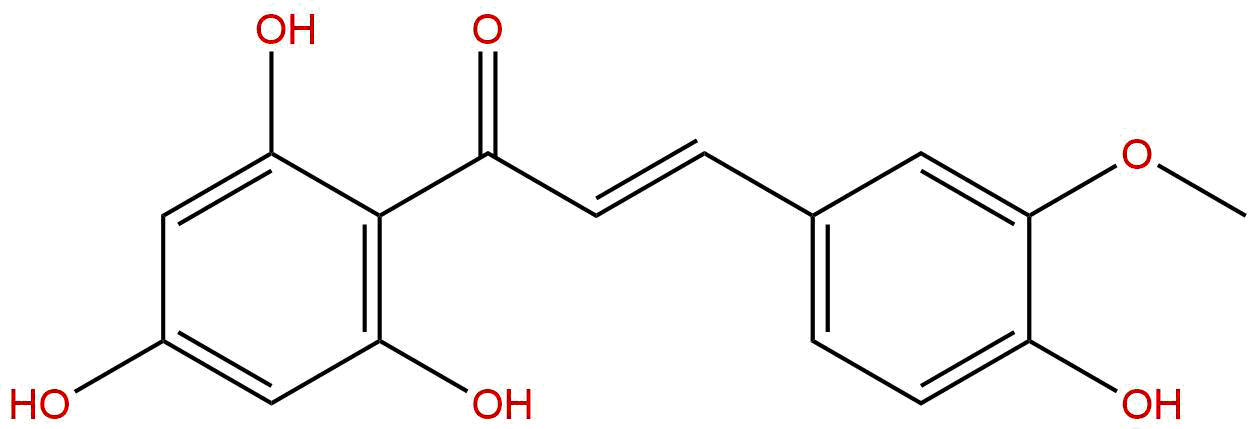


Product name: Homoeriodictyolchalcone
Synonym name: 2',4,4',6'-tetrahydroxy-3-methoxychalcone
Catalogue No.: BP5479
Cas No.: 52218-19-6
Formula: C16H14O6
Mol Weight: 302.282
Botanical Source:
Type of Compound: Chalcones
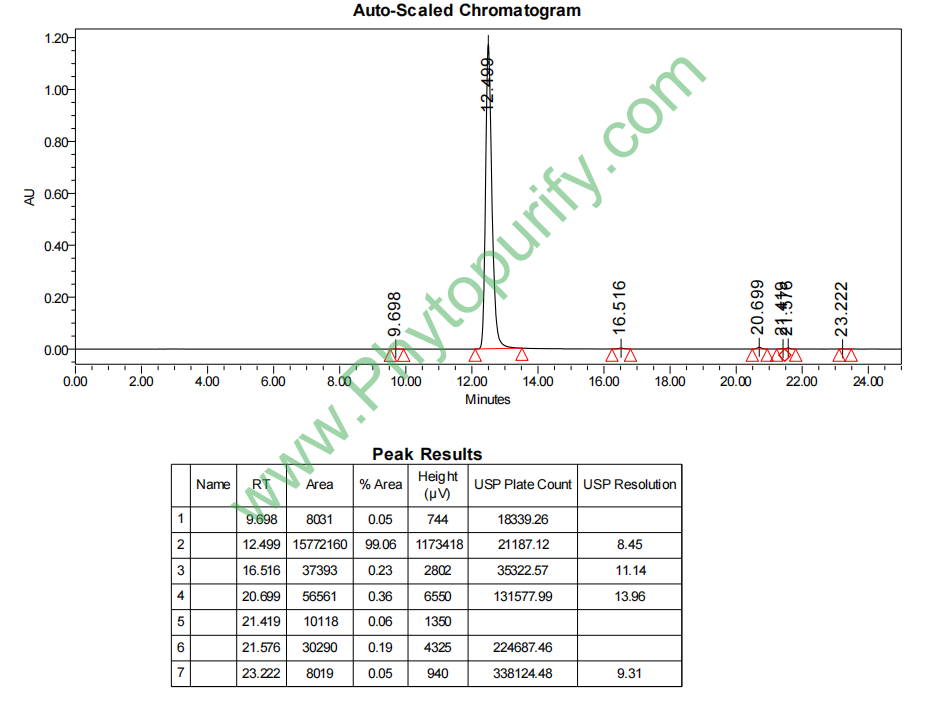
Purity: 95%~99%
Analysis Method: HPLC-DAD or/and HPLC-ELSD
Identification Method: Mass, NMR
Packing: Brown vial or HDPE plastic bottle
Storage: Store in a well closed container, protected from air and light. Put into refrigerate or freeze for long term storage.
Whenever possible, you should prepare and use solutions on the same day. However, if you need to make up stock solutions in advance, we recommend that you store the solution as aliquots in tightly sealed vials at -20℃. Generally, these will be useable for up to two weeks.
The product could be supplied from milligrams to grams
Inquire for bulk scale.
For Reference Standard and R&D, Not for Human Use Directly.
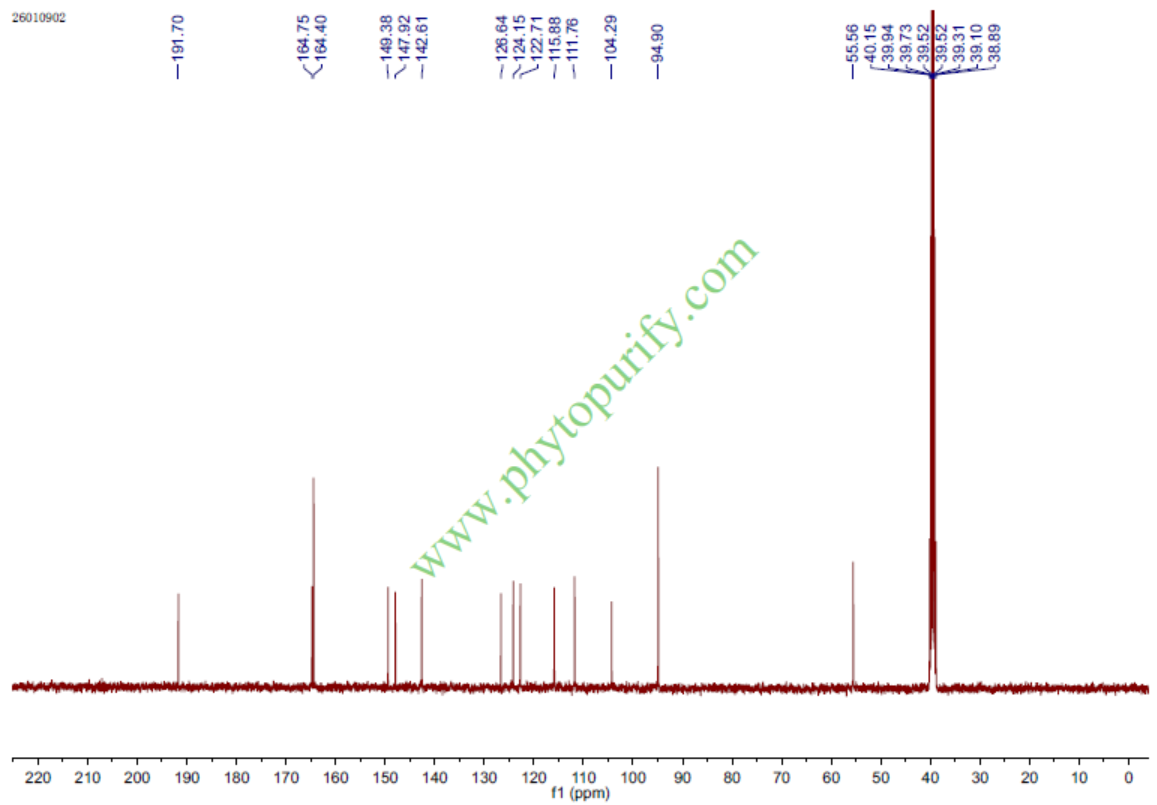
NMR of Homoeriodictyolchalcone
HPLC of Homoeriodictyolchalcone
Storage conditions:Short-term storage at 2~8℃, long-term storage at -20 ~ -80℃
103.8500
2.8000
Unknown
Unknown
Unknown
Unknown
Unknown
Unknown
Unknown
Unknown
Natural products, as an important source of drug discovery, play an irreplaceable role in the long history of human fight against diseases. Flavonoids and their derivatives, due to their widespread presence in the plant kingdom and diverse biological activities, have always been a hot topic in natural product chemistry and pharmacology research. Among numerous flavonoids, chalcone, as an important open chain flavonoid precursor, has unique chemical reactivity and broad pharmacological potential due to its structural characteristics. Homoeriodictyolchalcone, as a naturally occurring chalcone compound, has gradually entered the field of researchers in recent years. Its chemical name is (E) -1- (2,4-dihydroxy-3-methoxyphenyl) -3- (4-hydroxyphenyl) propan-2-en-1-one, and its CAS registration number is 52218-19-6. This compound belongs to the typical representative of chalcones in terms of structure, and its molecular skeleton is composed of two aromatic rings (A ring and B ring) connected by an α, β - unsaturated ketone bridge. This conjugated system is not only the basis of its UV absorption characteristics, but also the key structural unit for its interaction with biological targets and exerting various pharmacological activities. Although the systematic research on chalcone, a compound of high holy grass extract, is not as in-depth as its parent compound or some well-known flavonoids such as quercetin and luteolin, existing research evidence suggests that the compound exhibits antioxidant, anti-inflammatory, antibacterial, and potential anti-tumor activities, suggesting that it may become a promising natural lead compound for development. This article aims to provide a systematic review of the chemical structure, physicochemical properties, plant sources, extraction methods, pharmacological activity, mechanism of action, pharmacological evaluation, and clinical application prospects of high holy grass chalcone, in order to provide comprehensive academic references for the subsequent in-depth research and development of this compound.
The chemical structure of chalcone is the material basis for all its biological activities. From the perspective of structural analysis, this compound belongs to chalcones, and its core skeleton is 1,3-diphenyl-2-propen-1-one. Specifically, its A ring is 2,4-dihydroxy-3-methoxyphenyl, and its B ring is 4-hydroxyphenyl. This substitution pattern endows the molecule with unique chemical properties. The two hydroxyl groups (2-position and 4-position) and one methoxy group (3-position) on the A ring give it strong polarity and the ability to form intramolecular hydrogen bonds; The 4-hydroxy group on the B ring further increases the hydrophilicity of the molecule. α. The β - unsaturated ketone structure (C=C-C=O) is a characteristic pharmacophore of chalcone compounds. This conjugated system not only endows the molecule with a characteristic UV visible absorption spectrum (usually strong absorption in the range of 340-390 nm), but more importantly, the carbonyl and double bonds in this structure are electrophilic centers that can undergo Michael addition reactions with nucleophilic groups in the organism (such as cysteine thiol groups in proteins), which is a key chemical mechanism for its anti-inflammatory, anti-tumor and other pharmacological activities.
In terms of physicochemical properties, according to the provided pharmacological parameters, the molecular weight of Gaoshengcao Chalcone is 286.2800 Da, which is in line with the typical molecular weight range of small molecule drugs (<500 Da). Its lipid water partition coefficient LogP is 2.8000, indicating that the compound has moderate lipophilicity and theoretically has good membrane permeability, which is conducive to transmembrane transport and binding to intracellular targets. The topological polar surface area (TPSA) is 103.8500 Å ², which is slightly higher than the recommended threshold for oral drugs (about 140 Å ²), but still within an acceptable range, suggesting that it may have good oral bioavailability, but may require specific formulation techniques to optimize absorption. The molecule contains 6 hydrogen bond acceptors (5 hydroxyl oxygen and 1 carbonyl oxygen), which help it form hydrogen bond interactions with target proteins and enhance binding affinity. However, the current data on its blood-brain barrier penetration, hepatotoxicity, cardiotoxicity, hERG inhibitory activity, and Ames mutagenicity are all "unknown", which highlights the gaps in current research and points out the key data gaps that need to be prioritized in future pharmacological evaluations. Overall, high sage chalcone has a good chemical framework for optimization as a lead compound, but its comprehensive ADMET (absorption, distribution, metabolism, excretion, and toxicity) characteristics still need to be systematically elucidated.
Gaoshengcao su chalcone, as a natural product, mainly exists in specific plant families and genera. According to existing literature, this compound is mainly isolated from Asteraceae plants, especially reported in Artemisia and Erigeron plants. For example, some studies have isolated high artemisinin chalcone from Artemisia annua, although its content is much lower than that of artemisinin, the star ingredient in anti malaria. In addition, it has also been reported to exist in some traditional medicinal plants, such as some folk herbs used to treat inflammation and fever. Its biosynthetic pathway belongs to the branch of plant phenylpropane metabolism pathway, which is formed by the catalytic condensation of coumarin CoA and malonyl CoA by chalcone synthase (CHS), followed by modification steps such as hydroxylation and methylation to form the final structure.
For the extraction and separation of chalcone, a classic natural product chemical method is usually used. Due to its phenolic hydroxyl group, weak acidity, and certain polarity, commonly used extraction solvents include methanol, ethanol, acetone, or their aqueous mixtures. The extraction process usually includes the following steps: first, the dried plant material is crushed and subjected to leaching or percolation extraction with organic solvents (such as 95% ethanol or methanol) at room temperature or heating conditions to obtain the total extract. Subsequently, the total extract was preliminarily separated using liquid-liquid extraction method, with commonly used solvent systems including petroleum ether, chloroform, ethyl acetate, and n-butanol for sequential extraction. Due to the moderate polarity of chalcone, it is usually enriched in the ethyl acetate extraction layer. Further separation and purification rely on various chromatographic techniques. Silica gel column chromatography is the most commonly used method, typically using gradient elution systems such as chloroform methanol or petroleum ether acetone. For flavonoids with similar structures, polyamide column chromatography is often used for separation and purification due to its special adsorption effect on phenolic hydroxyl groups. Finally, high-purity monomer compounds can be obtained through preparative high-performance liquid chromatography (Prep HPLC). In terms of structural identification, ultraviolet spectroscopy (UV), infrared spectroscopy (IR), mass spectrometry (MS), and nuclear magnetic resonance spectroscopy (1H-NMR, 13C-NMR, 2D-NMR) are standard methods for confirming its chemical structure. It is worth noting that chalcone compounds may exhibit cis trans isomerism in solution (usually in thermodynamically more stable trans configurations), and prolonged exposure to high temperatures and strong light should be avoided during extraction and separation processes to prevent isomerization or degradation.
Although the research history of high holy grass extract chalcone is not long, existing pharmacological studies have revealed its multifaceted biological activity potential, mainly focusing on antioxidant, anti-inflammatory, antibacterial, and cytotoxic aspects.
antioxidant activity As a phenolic compound, chalcone has significant antioxidant capacity. The multiple phenolic hydroxyl groups in its molecular structure are effective hydrogen atom donors, capable of scavenging free radicals such as DPPH radicals, ABTS cationic radicals, hydroxyl radicals, and superoxide anion radicals, thereby interrupting the chain reaction of free radicals. Research has shown that its antioxidant activity is closely related to the number and location of its phenolic hydroxyl groups. The ortho dihydroxy group (2,4-dihydroxy) on ring A and the para hydroxyl group on ring B can both contribute to its reducing ability. In addition, α, β - unsaturated ketone structures can also stabilize free radical intermediates through resonance. This antioxidant activity may be closely related to its subsequent anti-inflammatory, anti-aging, and cell protective effects.
anti-inflammatory activity Inflammation is the common pathological basis of many chronic diseases (such as cardiovascular disease, diabetes, cancer). Preliminary studies have shown that resveratrol chalcone can inhibit the production of nitric oxide (NO) and prostaglandin E2 (PGE2) in macrophages stimulated by lipopolysaccharide (LPS), which are key inflammatory mediators. The mechanism may be related to the inhibition of the expression of inducible nitric oxide synthase (iNOS) and cyclooxygenase-2 (COX-2). In addition, it may also downregulate the transcription of various pro-inflammatory cytokines (such as TNF - α, IL-6, IL-1 β) by inhibiting the activation of the nuclear factor kappa B (NF - κ B) signaling pathway. These findings suggest its potential for development as an anti-inflammatory drug.
Antibacterial activity Chalcone compounds typically exhibit broad-spectrum antibacterial activity. High holy grass extract chalcone exhibits certain inhibitory effects on certain Gram positive bacteria (such as Staphylococcus aureus) and Gram negative bacteria (such as Escherichia coli). Its antibacterial mechanism may involve disrupting the integrity of bacterial cell membranes, inhibiting bacterial nucleic acid or protein synthesis, and interfering with bacterial quorum sensing systems. However, its antibacterial activity is usually weaker than traditional antibiotics, but it still has research value as a lead compound for structural modification to improve antibacterial potency and overcome drug resistance.
Antitumor activity This is currently one of the most active areas of research. In vitro cell experiments have shown that gaoshengchaolone is cytotoxic to a variety of human cancer cell lines (such as HepG2, breast cancer MCF-7, colon cancer HT-29, etc.), and can inhibit cell proliferation and induce apoptosis. Its mechanism of action may involve multiple aspects: inducing cell apoptosis by activating the caspase cascade reaction; Causing cell cycle arrest (such as G2/M phase arrest); Inhibit angiogenesis; And through its Michael receptor properties, it covalently binds to cysteine residues of key signaling proteins in cells, such as NF - κ B, STAT3, and proteins in the Wnt/β - catenin pathway, thereby interfering with pro cancer signal transduction. It is worth noting that its toxicity to normal cells is usually lower than that to cancer cells, showing a certain degree of selectivity, which is a positive signal for it as an anti-tumor candidate drug.
The pharmacological activity of Gaoshengcao su chalcone originates from its interaction with specific biomolecules. The core of its mechanism of action lies in the chemical properties of its alpha, beta unsaturated ketone structure (Michael receptor). This electrophilic center can undergo reversible or irreversible Michael addition reactions with nucleophilic groups on biomolecules (mainly proteins), especially the thiol group (- SH) of cysteine residues. This covalent modification can alter the conformation and function of the target protein, thereby regulating downstream signaling pathways.
Main molecular targets and signaling pathways:
1. NF - κ B signaling pathway NF - κ B is a core transcription factor in inflammation and cancer. Gaoshengcao su chalcone may inhibit the activity of I κ B kinase (IKK) by directly binding to cysteine residues in the IKK complex, thereby preventing the phosphorylation and degradation of I κ B α, resulting in NF - κ B being retained in the cytoplasm and unable to enter the nucleus to initiate the transcription of target genes (such as iNOS, COX-2, TNF - α). In addition, it may also directly bind to the p65 subunit of NF - κ B, inhibiting its DNA binding ability.
2. Nrf2/ARE signaling pathway This is the main defense mechanism of cells against oxidative stress. The phenolic hydroxyl group and Michael receptor structure of chalcone can activate Nrf2. It may modify key cysteine residues on Keap1 protein (the negative regulator of Nrf2), causing conformational changes in Keap1 and releasing Nrf2. Nrf2 subsequently enters the nucleus and binds to antioxidant response elements (ARE), initiating the expression of a series of antioxidant enzymes (such as HO-1, NQO1, SOD) and phase II detoxifying enzymes, thereby exerting a cell protective effect.
3. STAT3 signaling pathway Signal transducer and activator of transcription factor 3 (STAT3) is continuously activated in various tumors. Gaoshengcao su chalcone may inhibit the phosphorylation and dimerization of STAT3 by inhibiting JAK kinase or directly binding to the SH2 domain of STAT3, thereby suppressing its transcriptional activity, downregulating the expression of its target genes (such as Cyclin D1, Bcl xL, VEGF), and inhibiting tumor cell proliferation and inducing apoptosis.
4. P53/MDM2 pathway P53 is an important tumor suppressor protein. Studies have shown that chalcone compounds can disrupt the interaction between MDM2 and p53, stabilize p53 protein, and activate p53 dependent cell cycle arrest and apoptosis programs.
Multi target characteristics The pharmacological effects of Gaoshengcao su chalcone are not mediated by a single target, but are achieved by simultaneously acting on multiple signaling pathways and molecular targets (i.e. "multi-target drugs" or "multi pharmacological action modes"). This characteristic gives it potential advantages in treating complex diseases such as cancer and chronic inflammation, but also increases the complexity of studying its mechanism of action. Future research needs to utilize techniques such as chemical proteomics (such as activity-based proteomic analysis, ABPP) to systematically identify its direct covalent binding targets and more accurately elucidate its functional network.
The evaluation of drug properties is a crucial step in determining whether natural products can be transformed from "active compounds" into "candidate drugs". For high holy grass chalcone, the current data is very limited, mainly relying on computational predictions and limited in vitro experiments.
Physical and chemical properties and drug like properties As mentioned earlier, its molecular weight (286), LogP (2.8), and number of hydrogen bond acceptors (6) all meet the basic requirements of Lipinski's "Rule of Five" for oral drugs (molecular weight<500, LogP<5, hydrogen bond donor<5, hydrogen bond acceptor<10), indicating its good drug like properties. The TPSA is 103.85 Å ², slightly higher than the ideal range of 60-70 Å ², but still below the threshold of 140 Å ², indicating that it may have a moderate level of membrane permeability. However, there are multiple phenolic hydroxyl groups in its molecule, which can lead to II phase metabolic reactions such as glucuronidation and sulfation, which may result in low oral bioavailability. It is a typical "high activity, low exposure" natural product.
Pharmacokinetic (ADME) prediction:
- absorb Expected to have good oral absorption, but may be greatly affected by first pass effects. Its water solubility may be poor, and formulation techniques such as cyclodextrin inclusion complexes and solid dispersions are needed to improve solubility and bioavailability.
- distribution LogP is 2.8, indicating a tendency to distribute within the organization. The protein binding rate is unknown, but phenolic compounds typically have a high binding rate with serum albumin. The blood-brain barrier penetration is unknown, and based on its structure, its penetration ability may be weak.
- Metabolism The main metabolic pathways may include glucuronidation and sulfation of phenolic hydroxyl groups on the A and B rings; Demethylation of methoxy groups; And the reduction of α, β - unsaturated ketone structures (possibly catalyzed by aldehyde ketone reductase or quinone reductase). These metabolic reactions typically lead to decreased activity and promote excretion.
- excretion Expected to be mainly excreted through bile and urine.
Toxicity evaluation At present, key toxicological data such as hepatotoxicity, cardiotoxicity (such as hERG inhibition), and Ames mutagenicity are all "unknown". This is the most serious shortcoming in the pharmacological evaluation of this compound. Chalcone compounds, due to their Michael receptor activity, sometimes exhibit an "alert structure" characteristic, which may covalently bind to non target proteins, leading to off target toxicity (such as hepatotoxicity and allergic reactions). Therefore, systematic toxicological studies must be conducted, including:
1. In vitro toxicity screening Evaluate cytotoxicity on liver cell (such as HepG2) and myocardial cell (such as hERG channel detection) models.
2. Genotoxicity Conduct Ames test and micronucleus test to evaluate the risk of mutagenicity and chromosome damage.
3. Internal toxicity Conduct acute toxicity tests and repeated dose toxicity tests in rodents to determine the maximum tolerated dose (MTD) and no observed adverse effect level (NOAEL).
Conclusion Gaoshengcao su chalcone has a certain pharmacological basis, but its development as an oral drug faces challenges of metabolic instability and potential toxicity. Future research directions should focus on: 1) improving metabolic stability through prodrug design (such as acetylation or phosphorylation of phenolic hydroxyl groups) or structural modification (such as introducing fluorine atoms or methylation); 2) Systematically evaluate its toxicological characteristics, particularly the potential toxicity associated with covalent binding; 3) Explore non oral routes of administration (such as transdermal or inhaled administration) to avoid first pass effects.
Based on existing pharmacological activity research, high holy grass extract chalcone has shown potential clinical application prospects in the following fields:
Future research directions:
- In depth mechanism research Using chemical proteomics techniques (such as ABPP) to comprehensively identify its covalent binding targets, construct a "target pathway pharmacological" network, and elucidate the molecular basis of its multi pharmacological action modes.
- Research on Structural Optimization and Structure Activity Relationship (SAR)A series of derivatives were synthesized by systematically modifying the substituents on the A and B rings around the chalcone skeleton (such as changing the position and quantity of hydroxyl and methoxy groups, introducing halogens, trifluoromethyl, etc.), and studying their effects on the activity and selectivity of different targets, in order to obtain candidate compounds with stronger activity, higher selectivity, and more stable metabolism.
- Pharmacokinetic and Toxicological Systematic Review This is currently the most urgent task. It is necessary to complete its ADME study in animal bodies and conduct comprehensive acute and chronic toxicity evaluations, especially assessing whether its covalent binding properties will lead to specific liver toxicity or immune toxicity.
- Formulation development Develop new drug delivery systems, such as liposomes, nanoparticles, phospholipid complexes, etc., to address the issues of poor water solubility and metabolic instability, in order to improve their bioavailability and targeting.
- In vivo efficacy verification Validate its in vivo efficacy in various animal models of diseases, such as collagen induced arthritis mouse models, tumor xenograft models, and high-fat diet induced metabolic syndrome models, and evaluate its synergistic effect with existing drugs.
Gaoshengcao su chalcone, as a natural chalcone compound, exhibits various pharmacological activities such as antioxidant, anti-inflammatory, antibacterial, and anti-tumor due to its unique α, β - unsaturated ketone structure and polyphenol substitution mode. Its mechanism of action involves the regulation of multiple key signaling pathways such as NF - κ B, Nrf2, STAT3, reflecting the multi-target and multi pathway characteristics of natural products. From the perspective of drug development, it conforms to the basic rules of drug likeness, but metabolic instability and potential toxicity are the main challenges facing its development. At present, research on this compound is still in its early stages, especially in terms of pharmacokinetics and toxicology, where there are significant gaps. In the future, by combining modern medicinal chemistry, chemical biology, and pharmacology methods, in-depth structural optimization, mechanism analysis, and safety evaluation of high holy grass chalcone are expected to gradually push it from a potential natural lead compound to preclinical and even clinical research, providing new candidate molecules for the discovery of innovative drugs. In depth research on these natural products not only helps to enrich our understanding of plant chemical diversity, but also provides scientific basis for exploring new therapeutic drugs from traditional medicinal plants.
