Introduction/Overview
Malaria, as a type of malaria caused by malaria parasites(Plasmodium Parasitic diseases caused by spp. and transmitted through female mosquitoes have long been a major challenge in the global public health field. Although artemisinin based combination therapies (ACTs) have significantly reduced the incidence rate and mortality of malaria in the past two decades, the continued emergence of drug resistance, especially the spread of drug resistance to artemisinin and its derivatives in Southeast Asia, and the potential spread to high malaria prevalence areas such as Africa, make the development of antimalarial drugs with new mechanisms an urgent task. In this context, searching for novel antimalarial lead compounds from traditional medicinal plants remains one of the important strategies for drug discovery.
Natural products, especially plant secondary metabolites, provide abundant sources for drug development due to their highly diverse chemical structures and unique biological activities. Flavonoids, as a class of polyphenolic compounds widely present in the plant kingdom, have attracted much attention due to their diverse pharmacological activities, including antioxidant, anti-inflammatory, anti-tumor, and antimicrobial effects. Among them, isoflavone dimers or isoflavones have become a research hotspot due to their structural complexity and potential biological activity.
Abyssinone II (CAS number: 77263-08-2) is a natural flavonoid compound isolated from traditional medicinal plants. It was first introduced in the 1970s from the traditional medicinal plant of the genus Scolaria in Ethiopia(Erythrina abyssinica)Separate and identify.E. abyssinica It is widely used in traditional African medicine to treat various diseases, including malaria, bacterial infections, inflammation, and stomach pain. Abyssinone II, as one of the main active ingredients of this plant, has been preliminarily confirmed for its antimalarial activity in subsequent studies. However, like many other natural products, research on Abyssinone II is still in its early stages, and its specific mechanism of antimalarial action, pharmacokinetic properties, and potential for drug development have not been systematically elucidated.
This article aims to provide a comprehensive professional review of Abyssinone II. We will systematically review its chemical structure and physicochemical properties, plant sources and extraction processes, anti malaria and related pharmacological activities, mechanisms of action and molecular targets, drug efficacy evaluation and pharmacokinetic characteristics. Based on this, we will explore its clinical application prospects and challenges as a lead compound or candidate drug for anti malaria, in order to provide reference and basis for further in-depth research.
Chemical structure and physicochemical properties
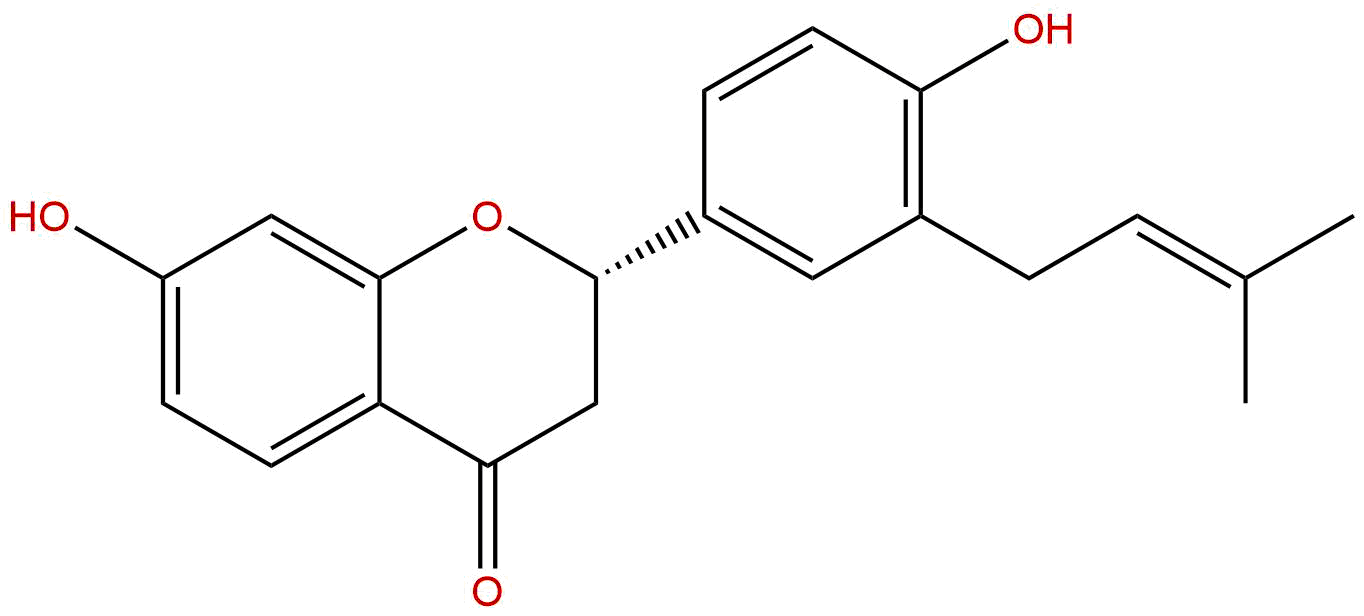
The chemical structure of Abyssinone II belongs to Isoflavonone, and its core skeleton is 3-phenylchroman-4-one. Specifically, its structural feature is the presence of a double bond between the 2nd and 3rd positions of the C ring, forming an α, β - unsaturated ketone structure, while the B ring is attached to the 3rd carbon atom of the C ring. Unlike typical isoflavones, the C ring of isoflavones is a saturated dihydropyran ring, while the C ring of Abyssine II has a double bond, so its more accurate classification should be isoflavones or derivatives of isoflavones. According to literature reports, the complete chemical name of Abyssinone II is 5,7,4 '- trihydroxy-8- (γ, γ - dimethylallyl) isoflavone. Its molecular formula is C20H18O6 and its molecular weight is 324.3760 g/mol.
From the perspective of physicochemical properties, Abyssinone II exhibits typical flavonoid compound characteristics. There are multiple phenolic hydroxyl groups (5-OH, 7-OH, 4 '- OH) in its molecule, which endow it with certain polarity and the ability to form hydrogen bonds. The calculated lipid water partition coefficient (LogP) is 3.8917, indicating that the compound has a moderate degree of lipophilicity, which facilitates its penetration into biofilms but may also affect its water solubility. Its water solubility prediction value is 0.0699 mg/mL, which belongs to poorly soluble compounds, which may be one of the key factors limiting its oral bioavailability. The Topological Polar Surface Area (TPSA) is 66.7600 Å ², which is lower than 100 Å ², indicating that it theoretically has good oral absorption potential, but the limitation of water solubility may offset this advantage. In addition, the permeability of the blood-brain barrier (BBB) is predicted to be "low", which may be a favorable feature for antimalarial drugs, as malaria parasites mainly parasitize in red blood cells and drugs do not need to enter the central nervous system in large quantities, thereby potentially reducing central nervous system side effects. The prediction of hERG inhibition is' no ', indicating a low risk of cardiac toxicity. The Ames test predicted a result of 0.0, indicating a low risk of mutagenicity.
Overall, the chemical structure of Abyssinone II (isoflavone skeleton+isopentenyl side chain) is the basis for its biological activity. Its physicochemical properties, especially moderate lipophilicity and low water solubility, have a significant impact on its pharmacokinetic behavior and drug properties.
Plant sources and extraction methods
Abyssinone II was originally derived from Fabaceae, a genus of tung trees in the legume family Ethiopian prickly tree(Erythrina abyssinica Obtained from the root bark of Lam. ex DC.E. abyssinica It is a deciduous tree distributed in eastern and southern Africa (such as Ethiopia, Kenya, Tanzania, Uganda, etc.), and plays an important role in local traditional culture and medicine. Its bark, root bark, and leaves are widely used to treat various diseases, including malaria, fever, cough, stomach pain, sexually transmitted diseases, and as insecticides. Except for E. abyssinica Furthermore, subsequent studies have also found that Abyssinone II is present in other plants of the genus Scolaria, such as Erythrina variegata(Vermilion tree)Erythrina fusca、Erythrina senegalensis and Erythrina mildbraedii Wait. In addition, there have also been reports in a few non tung tree species, such as Broussonetia papyrifera In the root bark of the tree. This indicates that Abyssinone II has a certain distribution in the plant kingdom, especially in leguminous plants.
The extraction of Abyssinone II usually follows the classic process of natural product chemistry. Due to its moderate polarity as a flavonoid compound, commonly used extraction solvents include methanol, ethanol, acetone, or their aqueous solutions. The extraction methods often use cold soaking or percolation to preserve its activity to the maximum extent possible. The specific steps are as follows:
- Ingredient Preparation Collect the root bark or bark of plants, dry them in the shade, and grind them to an appropriate particle size.
- Solvent extraction Soak or percolate the plant powder in a certain proportion of organic solvent (such as 95% ethanol or methanol) at room temperature, repeat several times, and combine the extracts.
- Concentration and preliminary separation Concentrate the extract under reduced pressure to obtain the total extract. The total extract is usually suspended in water and then subjected to liquid-liquid extraction using organic solvents of different polarities (such as petroleum ether, ethyl acetate, n-butanol) to enrich components of different polarities. Abyssinone II is usually enriched in the ethyl acetate extraction layer due to its equipolarity.
- chromatographic separation The ethyl acetate extract was preliminarily separated by silica gel column chromatography, using gradient elution with different ratios of petroleum ether ethyl acetate or chloroform methanol mixed solvents. Collect the stream fraction containing Abyssinone II, and further purify it through Sephadex LH-20 gel column chromatography, reverse phase silica gel column chromatography (such as ODS) or preparative high-performance liquid chromatography (HPLC) to finally obtain high-purity Abyssinone II monomer.
In recent years, with the promotion of green chemistry concepts, some more efficient and environmentally friendly extraction techniques, such as ultrasound assisted extraction (UAE), microwave-assisted extraction (MAE), and supercritical fluid extraction (SFE), have also been applied to the extraction of flavonoids, which is expected to improve the extraction efficiency and purity of Abyssinone II.
Pharmacological activity research
The pharmacological activity research of Abyssinone II mainly focuses on its anti malarial effect, while also involving other biological activities.
1. Anti malaria activity
This is the pharmacological activity of Abyssinone II that has received the most attention. Multiple in vitro studies have confirmed that Abyssinone II exhibits significant inhibitory activity against various strains of malaria parasites, including chloroquine sensitive strains (such as 3D7) and drug-resistant strains (such as Dd2, K1, W2). Its half maximal inhibitory concentration (IC50) is usually in the micromolar range, for example, the IC50 for 3D7 strain is about 2-10 μ M. Its activity against resistant strains is comparable or slightly different from that of sensitive strains, indicating that it may have a different mechanism of action from traditional antimalarial drugs and is not prone to cross resistance. In addition, some studies have evaluated its selectivity towards the asexual red blood cell phase of malaria parasites and found that its toxicity to malaria parasites is much higher than its toxicity to mammalian cells such as HeLa and HEK293, demonstrating a good Selectivity Index (SI).
2. Other pharmacological activities
In addition to its antimalarial effect, Abyssinone II also exhibits other potential pharmacological activities:
- Antibacterial activity For various Gram positive bacteria (such as Staphylococcus aureus)Staphylococcus aureus Bacillus subtilis Bacillus subtilis)And some Gram negative bacteria (such as Escherichia coli)Escherichia coli)Has a certain inhibitory effect.
- anti-inflammatory activity In vitro models, Abyssinone II can inhibit the production of nitric oxide (NO) and prostaglandin E2 (PGE2) in macrophages induced by lipopolysaccharide (LPS), as well as the expression of pro-inflammatory cytokines such as TNF - α and IL-6. Its mechanism may be related to the inhibition of the nuclear factor kappa B (NF - κ B) signaling pathway.
- antioxidant activity Due to the presence of multiple phenolic hydroxyl groups in its molecular structure, Abyssinone II exhibits strong free radical scavenging ability (such as DPPH and ABTS free radical scavenging experiments) and reducing ability.
- Antitumor activity: Preliminary research shows that Abyssinone II has cytotoxicity to some cancer cell lines (such as breast cancer MCF-7, colon cancer HT-29), but its activity is generally weaker than that of antimalarial.
Mechanism of action and molecular targets
A deep understanding of the antimalarial mechanism of Abyssinone II is crucial for evaluating its potential as a candidate antimalarial drug. Current research suggests that its mechanism of action may involve multiple targets rather than a single target.
1. Inhibit the detoxification pathway of Plasmodium heme
This is the classic mechanism of action for many antimalarial drugs, such as chloroquine. During the process of digesting host hemoglobin, malaria parasites release toxic heme. Malaria parasites detoxify by aggregating heme into non-toxic hemozoin. Abyssinone II has been found to inhibit the formation of β - heme (the precursor of heme synthesis), thereby interfering with the heme detoxification process of malaria parasites, leading to heme accumulation and toxicity to malaria parasites. This mechanism is an important component of its antimalarial activity.
2. Targeting the mitochondrial function of malaria parasites
The mitochondria of malaria parasites play a crucial role in energy metabolism and calcium homeostasis. Abyssinone II may induce apoptotic cell death in malaria parasites by affecting mitochondrial membrane potential, leading to mitochondrial dysfunction. There are studies suggesting that it may target malaria parasites PfATP6(a sarcoplasmic/endoplasmic reticulum calcium ATPase, SERCA type calcium pump), similar to the action mode of artemisinin. By inhibiting PfATP6, the calcium ion homeostasis in malaria parasite cells is disrupted, ultimately leading to cell death.
3. Targeting the fatty acid synthesis pathway of malaria parasites
The fatty acid synthesis pathway of malaria parasites (Type II FAS) is different from that of mammals (Type I FAS), making it an ideal target for the development of antimalarial drugs. Abyssinone II has been reported to be able to inhibit malaria parasitesβ - ketoacylACP reductase (FabG) and Oleoyl ACP reductase (FabI)Thus, it interferes with the biosynthesis of fatty acids, affecting the membrane structure and energy storage of malaria parasites.
4. Other potential targets
According to the target list you provided, Abyssinone II may also interact with other key proteins:
- PfCRT and PfMDR1 These are transporters that mediate resistance to drugs such as chloroquine. Abyssinone II is effective against drug-resistant strains, suggesting that it may not be a substrate for these transporters or may be able to overcome the resistance mechanisms mediated by them.
- PfDHFR Dihydrofolate reductase is a target of anti folate drugs such as ethambutol. Whether Abyssinone II directly inhibits PfDHFR still needs to be verified, but it may indirectly affect folate metabolism through other pathways.
- PfK13 Kelch13 protein is a key biomarker of artemisinin resistance. The activity study of Abyssinone II on PfK13 mutant strain is crucial. If its activity is not affected, it indicates that its mechanism is different from artemisinin and it is expected to become a candidate drug for combating artemisinin resistance.
- PfCYT and PfCYTb Cytochrome b is a component of mitochondrial electron transport chain complex III. Abyssinone II may indirectly act on these targets by affecting mitochondrial function.
- PfATG8 Autophagy related protein 8 is involved in the autophagy process of malaria parasites. Abyssinone II may affect the survival of malaria parasites by inducing or inhibiting autophagy.
In summary, the anti malarial mechanism of Abyssinone II is multi-target and multi pathway, including inhibition of heme detoxification, interference with mitochondrial function, inhibition of fatty acid synthesis, and possible impact on resistance related proteins and autophagy processes. This multi-target mode of action is its potential advantage in being effective against drug-resistant strains and not easily developing resistance.
Evaluation of drug properties and pharmacokinetics
To convert natural products into clinical drugs, it is necessary to evaluate their drug like and pharmacokinetic properties. Based on the parameters you provided and existing literature, conduct a preliminary evaluation of Abyssinone II.
1. Evaluation of drug properties
- Lipinski's Rule of Five The molecular weight of Abyssinone II (324.4)<500, LogP (3.89)<5, number of hydrogen bond donors (3 phenolic hydroxyl groups)<5, and number of hydrogen bond acceptors (6 oxygen atoms)<10. It fully complies with Lipinski's rules, indicating its good theoretical potential as an oral medication.
- Other parameters TPSA (66.76 Å ²) is moderate and beneficial for oral absorption and cell membrane permeation. The hERG inhibition and Ames test were both negative, indicating a low risk of cardiac and genetic toxicity and good safety. However, its poor water solubility (0.0699 mg/mL) is the main bottleneck for drug development. Low water solubility may lead to incomplete oral absorption, low bioavailability, and increase the difficulty of formulation development.
2. Pharmacokinetic characteristics
At present, there is very limited research on the in vivo pharmacokinetics of Abyssinone II, and most of the data comes from computer simulation predictions (such as ADMET Predictor, SwissADME, etc.) or in vitro experiments.
- absorb The predicted oral bioavailability may be low, mainly due to its water solubility. Its LogP value indicates that it has good membrane permeability, but the dissolution rate is the limiting step. It may be necessary to use formulation techniques such as solid dispersions, liposomes, nanocrystals, etc. to improve their solubility and dissolution rate.
- distribution Due to its lipophilicity, Abyssinone II may be widely distributed in tissues, especially in organs rich in lipids. Its plasma protein binding rate may be high. The low permeability of the blood-brain barrier is an advantage for antimalarial drugs.
- Metabolism Flavonoids typically undergo extensive phase II metabolism (glucuronidation, sulfation) and phase I metabolism (cytochrome P450 enzyme mediated oxidation). The isopentenyl side chain and phenolic hydroxyl group of Abyssinone II are the main metabolic sites. Its metabolic stability may be a challenge, as rapid metabolic clearance can lead to a short half-life.
- excretion Metabolites are mainly excreted through bile and urine.
3. Challenges and Strategies
The main challenges faced by Abyssinone II as an antimalarial lead compound are Low water solubility and Potential metabolic instability Future research should focus on:
1. Structural modification By means of medicinal chemistry, hydrophilic groups (such as phosphate esters, amino acid esters, glycosides, etc.) are introduced or replaced with isopentenyl side chains to improve water solubility and metabolic stability while maintaining or enhancing antimalarial activity.
2. Formulation development Utilizing modern formulation technologies such as lipid nanoparticles, polymer micelles, and cyclodextrin inclusion complexes to improve their solubility and oral bioavailability.
3. In vivo PK study Establish a sensitive LC-MS/MS method for systematic in vivo pharmacokinetic studies, including blood concentration time curves, bioavailability, tissue distribution, metabolic pathways, and excretion characteristics after oral and intravenous administration.
Clinical application prospects and prospects
As a natural product with multi-target antimalarial activity, Abyssinone II has both promising and challenging clinical application prospects.
1. Advantages and Potential
- Novel mechanism of action Its multi-target mode of action, especially its inhibition of heme detoxification, mitochondrial function, and fatty acid synthesis, makes it less likely to develop cross resistance with existing antimalarial drugs. This is crucial for addressing the increasingly severe artemisinin resistance.
- Effective against drug-resistant strains In vitro experiments have confirmed its effectiveness against chloroquine resistant strains and some artemisinin resistant strains, providing the possibility for it to serve as a "resistance killer".
- Good security Preliminary toxicological predictions (hERG, Ames) and selectivity indices indicate that it has a good safety window.
- Strong structural modifiability Its molecular structure contains multiple modifiable sites (phenolic hydroxyl, isopentenyl), providing broad space for optimizing its pharmacokinetic properties and activity through medicinal chemical means.
2. Challenges and shortcomings
- Pharmacokinetic defects Low water solubility and potential metabolic instability are the biggest obstacles to its clinical translation.
- Insufficient pharmacological evidence in vivo At present, the vast majority of research is still at the in vitro level, lacking systematic in vivo pharmacological evaluation of anti malaria effects (such as mouse malaria models). Its in vivo activity, effective dosage, and administration regimen are unknown.
- Mechanism research is not yet in-depth Although multiple potential targets have been proposed, the contribution of each target, the interactions between targets, and the exact molecular binding patterns still need to be further elucidated through structural biology, gene knockout, and other methods.
- Source and Cost Natural extraction yields are low, and chemical synthesis or semi synthesis routes have not yet been established, making it difficult to meet the needs of large-scale research and future clinical use.
3. Future research directions
- In depth mechanism research Using CRISPR-Cas9 gene editing technology to construct malaria parasite strains with target gene knockout or knock in, and validate the molecular target of Abyssinone II. Determine its binding affinity with target proteins using techniques such as surface plasmon resonance (SPR) or microcalorimetry (MST).
- In vivo drug efficacy and PK research In mouse malaria models (such as P. berghei or P. yoelii)Evaluate its in vivo antimalarial activity and conduct systematic pharmacokinetic studies to clarify its in vivo processes.
- Research on Structural Optimization and Structure Performance Relationship Based on its parent nucleus structure, design and synthesize a series of derivatives, systematically study the effects of substituents (especially isopentenyl and phenolic hydroxyl) on activity, selectivity, water solubility, and metabolic stability, and search for lead compounds with better drug properties.
- Combination therapy research Explore the synergistic or additive effects of Abyssinone II with existing antimalarial drugs such as artemisinin, pyronaridine, and lumefantrine, providing a basis for developing new combination therapies.
- Synthetic Biology and Biotechnology Study its biosynthetic pathway and attempt to use synthetic biology methods to heterologous produce Abyssinone II in microorganisms such as yeast and Escherichia coli, in order to solve the problem of insufficient natural sources.
Conclusion
Abyssinone II, This natural flavonoid compound derived from the Ethiopian thorn tree has demonstrated unique value in the field of new antimalarial drug development due to its unique chemical structure and multi-target anti malarial mechanism. It has significant inhibitory activity against various malaria parasites, including drug-resistant strains, and the preliminary safety evaluation is encouraging. However, its inherent low water solubility and potential metabolic instability, as well as the lack of in vivo pharmacological and pharmacokinetic data, constitute the "Achilles heel" for its clinical application.
Future research requires a systematic layout from foundation to application. Thoroughly elucidating its molecular mechanism will provide precise guidance for structural optimization; Conduct systematic in vivo studies to validate its true potential as a candidate drug; The key to pushing it from the laboratory to clinical practice is to solve the bottleneck of drug development through medicinal chemistry and formulation methods. The research process of Abyssinone II is a microcosm of the discovery of natural product drugs. It reminds us that there are still countless keys to solving human health problems in the vast treasure trove of natural products, and polishing these keys into usable tools requires interdisciplinary collaboration and persistent exploration. Despite the numerous challenges ahead, Abyssinone II undoubtedly provides a promising candidate molecule worthy of further exploration for addressing the global malaria resistance crisis.