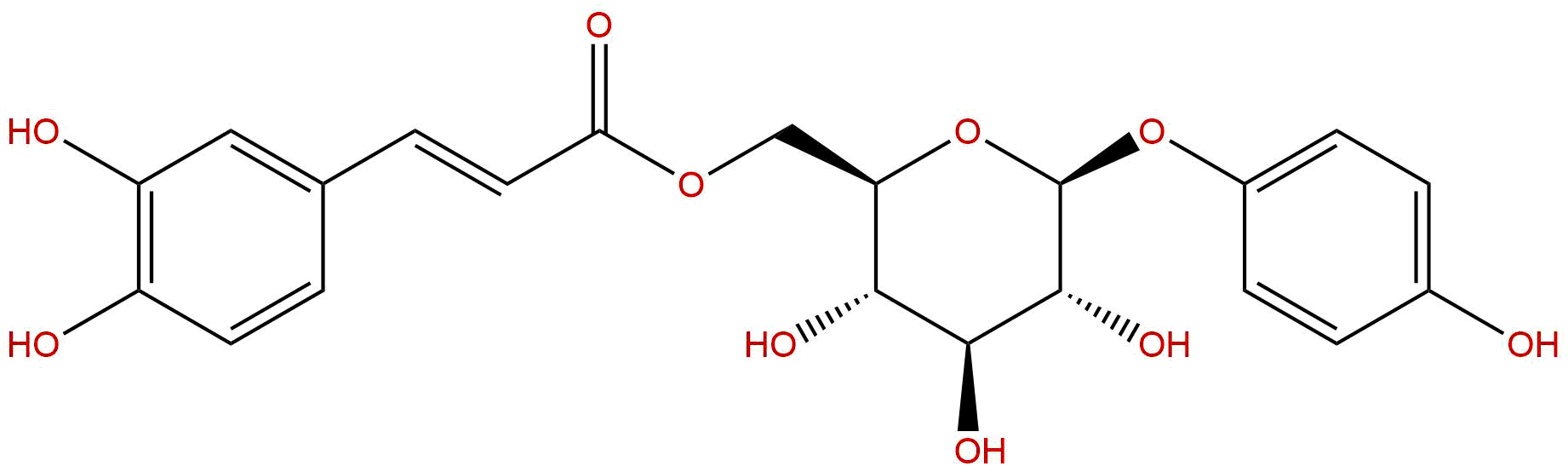


Product name: 6'-O-Caffeoylarbutin
Synonym name: Robustaside B
Catalogue No.: BP5408
Cas No.: 136172-60-6
Formula: C21H22O10
Mol Weight: 434.397
Botanical Source:
Type of Compound: Phenols
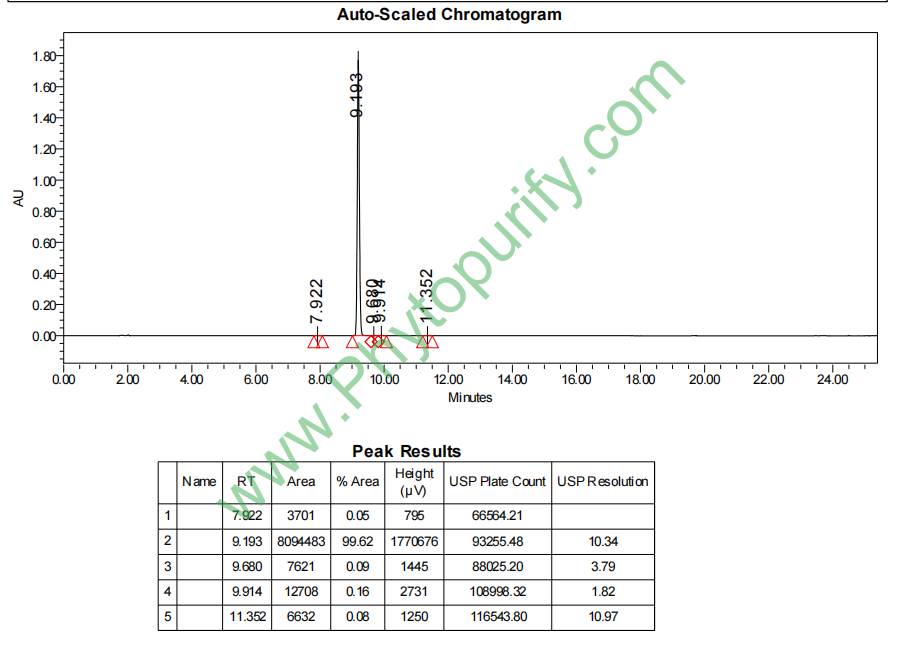
Purity: 95%~99%
Analysis Method: HPLC-DAD or/and HPLC-ELSD
Identification Method: Mass, NMR
Packing: Brown vial or HDPE plastic bottle
Storage: Store in a well closed container, protected from air and light. Put into refrigerate or freeze for long term storage.
Whenever possible, you should prepare and use solutions on the same day. However, if you need to make up stock solutions in advance, we recommend that you store the solution as aliquots in tightly sealed vials at -20℃. Generally, these will be useable for up to two weeks.
The product could be supplied from milligrams to grams
Inquire for bulk scale.
For Reference Standard and R&D, Not for Human Use Directly.
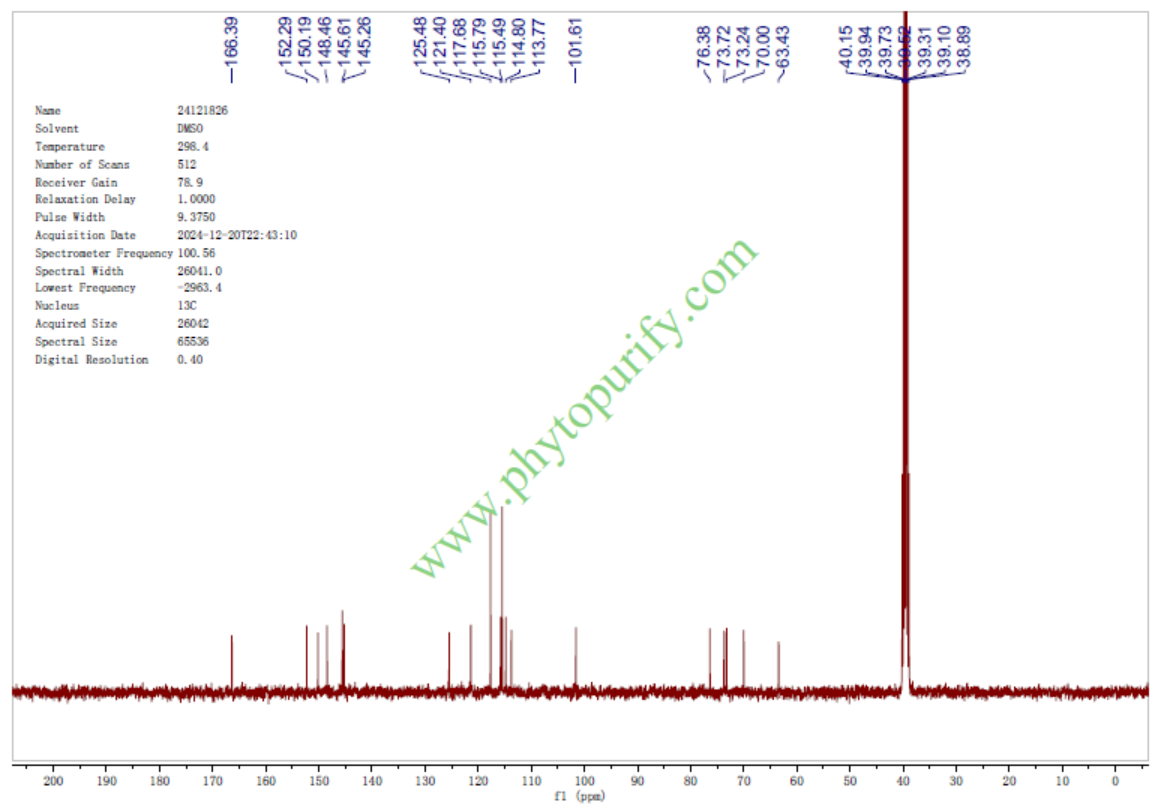
NMR of 6'-O-Caffeoylarbutin
HPLC of 6'-O-Caffeoylarbutin
Storage conditions:Short-term storage at 2~8℃, long-term storage at -20 ~ -80℃
166.1400
.6851
.6779
2.6321
.6553
.1246
Low
74.0651
3.7095
Yes
No
No
No
No
No
0.0
Yes
Yes
Yes
Yes
Natural products, as an important source of drug discovery, play an irreplaceable role in the history of human health maintenance and disease treatment. Among numerous natural phenolic compounds with biological activity, arbutin and its derivatives have attracted much attention due to their significant tyrosinase inhibitory activity and antioxidant properties. Arbutin, as a naturally occurring hydroquinone - β - D-glucopyranoside, is widely present in plants such as Rhododendron and Rosaceae, and has long been used as a skin whitening agent and urinary system antibacterial drug. However, as research deepens, scientists have found that esterification modification of arbutin with other phenolic acid structural units with pharmacological activity can produce a series of novel compounds with better biological activity and pharmacokinetic properties. Among them, 6 '- O-Caffeoylarbutin is a new star in this type of structural modification product.
The chemical structure of 6 '- O-caffeoyl arbutin is a natural ester compound formed by the ester bond between the 6' - hydroxyl group of arbutin and caffeic acid. Caffeic acid itself is a widely present hydroxycinnamic acid derivative in plants, with strong antioxidant, anti-inflammatory, antiviral, and anti-tumor activities. Introducing caffeoyl groups into arbutin molecules not only combines the potential advantages of two active units, but may also produce synergistic effects and even endow them with novel pharmacological functions. Although the compound has a low content in nature, its unique chemical structure and potential biological activity have aroused widespread interest among scholars in the fields of medicinal chemistry, natural product chemistry, and pharmacology.
In recent years, research on 6 '- O-caffeoyl arbutin has gradually increased, mainly focusing on its antioxidant, anti-inflammatory, anti melanogenesis, and neuroprotective properties. Preliminary pharmacological evaluation shows that the compound exhibits superior potential compared to the parent compounds arbutin or caffeic acid in inhibiting tyrosinase activity, clearing free radicals, suppressing inflammatory cytokine expression, and protecting nerve cells from oxidative stress damage. More importantly, its pharmacological parameters, such as moderate lipid water partition coefficient (LogP 0.6851), high polar surface area (TPSA 166.14), good water solubility (2.6321 mg/mL), and low blood-brain barrier permeability, indicate that it may have lower toxicity and better local or systemic safety for application. In addition, the negative results of hERG inhibition and Ames test further support its potential as a lead compound for subsequent development.
This article aims to provide a comprehensive and systematic review of the chemical structure, physicochemical properties, plant sources, extraction methods, pharmacological activity, mechanism of action, pharmacological evaluation, and clinical application prospects of 6 '- O-caffeoyl arbutin, in order to provide reference for the in-depth research and development of this natural product.
The chemical structure of 6 '- O-caffeoyl arbutin consists of two core units: the arbutin core and the caffeoyl group. Arbutin (chemical name 4-hydroxyphenyl - β - D-glucopyranose) is composed of a molecule of hydroquinone and a molecule of β - D-glucose connected by glycosidic bonds. Caffeic acid (chemical name 3,4-dihydroxycinnamic acid) is a phenylpropanoic acid containing ortho dihydroxy groups. In 6 '- O-caffeoyl arbutin, the carboxyl group of caffeic acid undergoes esterification with the primary hydroxyl group at the 6' - position of the glucose group of arbutin, forming a stable ester bond. Therefore, its complete chemical name is: 4-hydroxyphenyl-6-O - [(2E) -3- (3,4-dihydroxyphenyl) prop-2-enoyl] - β - D-glucopyranose, or abbreviated as 6 '- O-Caffeoylarbutin.
From the molecular formula, the compound has the formula C ₂₁ H ₂₂ O ₁₀ and a molecular weight of 434.3970 g/mol. Its structure is rich in phenolic hydroxyl and carboxylic ester groups, endowing it with unique physicochemical properties. Firstly, the presence of multiple phenolic hydroxyl groups gives it strong polarity, which is reflected in its high topological polar surface area (TPSA) of 166.14 Å ². A high TPSA value typically indicates good water solubility of the compound, as confirmed by experimental data. Its water solubility is 2.6321 mg/mL, which is above average and conducive to its dissolution and transport in living organisms. Secondly, its lipid water partition coefficient LogP is 0.6851, indicating that the compound has slightly stronger hydrophilicity than lipophilicity, but is in a relatively balanced range, which is conducive to its penetration and distribution on biofilms, but not excessively enriched in adipose tissue. This moderate LogP value is also consistent with its low blood-brain barrier (BBB) permeability, as BBB has a natural barrier effect on compounds with higher polarity, which to some extent reduces the risk of central nervous system toxicity.
In terms of spectral characteristics, the UV visible absorption spectrum of 6 '- O-caffeoyl arbutin typically displays two main absorption peaks in the range of approximately 280-330 nm, corresponding to the cinnamoyl chromophore of the arbutin moiety (approximately 280 nm) and the caffeoyl moiety (approximately 320-330 nm). In its infrared spectrum, the stretching vibration peak of ester carbonyl (C=O) usually appears around 1700 cm ⁻¹, while the broad peak of phenolic hydroxyl (- OH) is in the 3200-3600 cm ⁻¹ region. Nuclear magnetic resonance hydrogen spectroscopy (¹ H NMR) and carbon spectroscopy (¹ ³ C NMR) are key methods for identifying its structure. By analyzing the chemical shifts and coupling constants of sugar end group protons, caffeoyl olefin protons, and aromatic ring protons, the connection position of ester bonds (6 '- position) and the configuration of the compound can be determined. High resolution mass spectrometry (HR-MS) can provide accurate molecular ion peak information for molecular weight confirmation.
6 '- O-caffeoyl arbutin, as a naturally occurring secondary metabolite, has a relatively limited distribution and is mainly found in certain specific families and genera of plants. The main sources of current literature reports include:
It is worth noting that the content of 6 '- O-caffeoyl arbutin in plants is usually low, much lower than its parent compound arbutin. Its content is significantly affected by plant species, growth stage, tissue parts (such as leaves, skin, flesh), harvest season, and environmental factors (such as light, temperature, water stress). For example, in pear leaves, its content may vary with leaf maturity; In cranberry fruit, its content may be related to the maturity and variety of the fruit.
For the extraction of 6 '- O-caffeoyl arbutin, classic natural product extraction methods are usually used, combined with modern separation and purification techniques. The main process includes:
In recent years, significant progress has been made in the pharmacological activity research of 6 '- O-caffeoyl arbutin, mainly focusing on the following aspects:
Antioxidant activity is one of the core pharmacological activities of 6 '- O-caffeoyl arbutin. Its molecular structure contains multiple phenolic hydroxyl groups, especially the catechol hydroxyl group on the caffeoyl group, which is an efficient hydrogen atom donor and can directly scavenge various free radicals, such as 1,1-diphenyl-2-trinitrophenylhydrazine (DPPH) free radical, 2,2 '- diazo-bis-3-ethylbenzothiazole-6-sulfonic acid (ABTS) cationic free radical, hydroxyl free radical (• OH), and superoxide anion free radical (O ₂⁻ •). Multiple in vitro studies have shown that the DPPH free radical scavenging ability of 6 '- O-caffeoyl arbutin is significantly stronger than that of the parent compound arbutin, and even comparable to positive controls such as vitamin C or caffeic acid. This enhanced antioxidant activity is attributed to the introduction of caffeoyl groups, which increase the number of phenolic hydroxyl groups and hydrogen supply capacity in the molecule. In addition, the compound can chelate transition metal ions (such as Fe ² ⁺, Cu ² ⁺), thereby inhibiting Fenton reaction mediated oxidative damage.
Arbutin is a well-known tyrosinase inhibitor widely used in the field of cosmetic whitening. 6 '- O-caffeoyl arbutin also exhibits significant tyrosinase inhibitory activity. Research has shown that it has inhibitory effects on both monophenolase and diphenolase activities of mushroom tyrosinase, and the inhibitory effect is usually better than arbutin. The inhibitory mechanism may involve copper ion chelation with the active center of tyrosinase and competitive binding to substrate binding sites. At the cellular level, using the B16F10 mouse melanoma cell model, 6 '- O-caffeoyl arbutin can significantly inhibit alpha melanocyte stimulating hormone (α - MSH) - induced melanin synthesis with low cytotoxicity. This characteristic of combining antioxidant and tyrosinase inhibitory activity makes it an ideal candidate for developing novel, efficient, and low toxicity whitening active ingredients.
Inflammation is the common pathological basis of many diseases (such as cardiovascular diseases, diabetes, neurodegenerative diseases). 6 '- O-caffeoyl arbutin has also shown potential in anti-inflammatory properties. In the lipopolysaccharide (LPS) - stimulated macrophage model (such as RAW264.7 cells), this compound can significantly inhibit the production of pro-inflammatory cytokines such as tumor necrosis factor - α (TNF - α), interleukin-6 (IL-6), and interleukin-1 β (IL-1 β). Meanwhile, it can also downregulate the expression of inducible nitric oxide synthase (iNOS) and cyclooxygenase-2 (COX-2), thereby reducing the release of inflammatory mediators such as nitric oxide (NO) and prostaglandin E2 (PGE2). These anti-inflammatory effects may be related to their inhibition of the activation of the nuclear factor kappa B (NF - κ B) signaling pathway.
Given its strong antioxidant and anti-inflammatory abilities, the neuroprotective effects of 6 '- O-caffeoyl arbutin have also attracted attention. Research has shown that this compound can protect nerve cells such as PC12 cells and SH-SY5Y cells from oxidative stress damage and cell apoptosis induced by hydrogen peroxide (H ₂ O ₂), 6-hydroxydopamine (6-OHDA), or β - amyloid protein (A β). Its protective mechanism includes: reducing intracellular reactive oxygen species (ROS) levels, restoring mitochondrial membrane potential, inhibiting caspase-3 activation, and regulating the expression of apoptosis related proteins (such as Bax/Bcl-2). In addition, although its low blood-brain barrier permeability limits its ability to directly act on the central nervous system, it may indirectly exert neuroprotective effects by regulating peripheral inflammatory responses or acting on the blood-brain barrier itself, or achieve brain targeting through local administration (such as nasal administration).
Preliminary studies also suggest that 6 '- O-caffeoyl arbutin may have other pharmacological activities, such as:
- Antibacterial activity It exhibits certain inhibitory effects on certain Gram positive bacteria (such as Staphylococcus aureus) and Gram negative bacteria (such as Escherichia coli), but its antibacterial spectrum and efficacy need further clarification.
- Antiviral activity There are reports that it may have inhibitory effects on certain viruses, such as influenza virus, but there is limited research on this topic.
- Antidiabetic activity By inhibiting alpha glucosidase activity, it may help delay carbohydrate absorption and regulate postprandial blood glucose levels.
The pharmacological activity of 6 '- O-caffeoyl arbutin is the result of its multi-target and multi pathway effects. Its core mechanism of action can be summarized as follows:
This is the direct molecular basis of its antioxidant activity. The catechol hydroxyl group (catechol structure) in the molecule is an efficient electron donor that can react with free radicals (such as DPPH •, ABTS ⁺ •, • OH, O ₂⁻ •) to reduce them to stable products, thereby interrupting the chain reaction of free radicals. At the same time, ortho dihydroxy groups can also form stable chelates with transition metal ions (such as Fe ² ⁺, Cu ² ⁺), inhibiting the occurrence of Fenton reaction (Fe ² ⁺+H ₂ O ₂ → Fe ³ ⁺+• OH+OH ⁻), thereby reducing the generation of highly active hydroxyl radicals.
6 '- O-caffeoyl arbutin affects multiple signaling pathways by regulating intracellular redox states.
- Nuclear factor E2 related factor 2 (Nrf2)/antioxidant response element (ARE) pathway This compound may upregulate the expression of a series of antioxidant enzyme genes, such as heme oxygenase-1 (HO-1), quinone oxidoreductase 1 (NQO1), glutathione S-transferase (GST), etc., by activating Nrf2, causing it to dissociate from Keap1 protein and translocate into the nucleus, binding to ARE. This constitutes the adaptive defense mechanism of cells against oxidative stress.
- Nuclear factor kappa B (NF - κ B) pathway Under inflammatory stimulation, 6 '- O-caffeoyl arbutin can inhibit the activity of I κ B kinase (IKK), prevent the phosphorylation and degradation of I κ B α, thereby inhibiting the nuclear translocation of NF - κ B and its binding to DNA, ultimately downregulating the expression of pro-inflammatory genes such as TNF - α, IL-6, iNOS, COX-2, etc. This is the key molecular mechanism of its anti-inflammatory activity.
- Mitogen activated protein kinase (MAPK) pathway This compound may regulate cell proliferation, differentiation, and apoptosis processes, particularly in neuroprotection, by inhibiting the phosphorylation of p38 MAPK, JNK, and ERK1/2.
In terms of neuroprotection, 6 '- O-caffeoyl arbutin can regulate mitochondrial function, inhibit the decrease of mitochondrial membrane potential, prevent the release of cytochrome c, and thereby inhibit the cascade activation of caspase-9 and caspase-3, reducing cell apoptosis. Meanwhile, it may also induce protective autophagy by regulating the expression of autophagy related proteins such as LC3 and Beclin-1, helping cells clear damaged proteins and organelles.
Based on the provided pharmacological parameters, a preliminary evaluation of the pharmacological properties of 6 '- O-caffeoyl arbutin is conducted
Overall, 6 '- O-caffeoyl arbutin has a good safety profile (no hERG inhibition, no mutagenicity), but its oral bioavailability may be limited due to high TPSA. Therefore, its future administration routes may be more suitable for topical application (such as skin, mucous membranes), injection administration, or through formulation techniques (such as nanoliposomes, phospholipid complexes) to enhance its oral absorption.
There is currently insufficient research on its pharmacokinetic (ADME) properties. Preliminary speculation is as follows:
- absorb Oral absorption may be poor, but when administered locally through the skin or mucous membrane, it may have good transdermal or mucosal ability due to its moderate LogP and good water solubility.
- distribution Due to its strong hydrophilicity, it is mainly distributed in blood and extracellular fluid, and its binding rate with plasma proteins may be high. Low BBB permeability limits its central distribution.
- Metabolism As an ester compound, 6 '- O-caffeoyl arbutin may be hydrolyzed by esterases (such as those in the intestine, liver, and blood) in the body, releasing arbutin and caffeic acid. These two metabolites themselves also have pharmacological activity, so their in vivo efficacy may be the result of the combined action of the original drug and metabolites. In addition, phenolic hydroxyl groups may undergo glucuronidation or sulfation binding reactions.
- excretion The raw material and its metabolites are mainly excreted through the kidneys (urine) and bile (feces).
Based on its unique pharmacological activity and preliminary safety evaluation, 6 '- O-caffeoyl arbutin has shown broad clinical application prospects in multiple fields:
Skin care and whitening field This is its most direct application direction. As a natural product with strong antioxidant and tyrosinase inhibitory activity, it is expected to be developed into a new generation of whitening, spot lightening, anti-aging cosmetics or functional skincare products. Its low irritability (based on Ames test negative) and good water solubility make it easy to formulate. In the future, research can focus on its transdermal absorption characteristics, metabolic stability within the skin, and synergistic effects with other active ingredients such as vitamin C and niacinamide.
Anti inflammatory and wound healing Its anti-inflammatory activity suggests that it can be used to develop drugs or skincare products for treating inflammatory skin diseases such as dermatitis, eczema, and acne. In addition, its antioxidant and cell survival promoting effects may help accelerate wound healing.
Adjuvant therapy for neurodegenerative diseases Although its BBB permeability is low, brain targeted delivery may be achieved through nasal administration or the development of nanocarriers capable of crossing the BBB. Its strong antioxidant and anti-inflammatory abilities, as well as its protective effect against neurotoxicity induced by A β and 6-OHDA, make it a potential candidate compound for the treatment of neurodegenerative diseases such as Alzheimer's disease and Parkinson's disease.
Management of metabolic diseases Its α - glucosidase inhibitory activity suggests that it can be used as a dietary supplement or drug to assist in lowering blood sugar. At the same time, its anti-inflammatory and antioxidant activities also help to improve diabetes related complications, such as diabetes nephropathy, retinopathy, etc.
Food and Health Products As a naturally occurring antioxidant, 6 '- O-caffeoyl arbutin can be used as a functional food additive or health supplement ingredient to eliminate free radicals in the body, delay aging, and enhance immunity.
Future research directions and challenges:
As a naturally occurring arbutin caffeic acid ester compound, 6 '- O-caffeoyl arbutin combines the pharmacological activity advantages of the parent molecule arbutin and caffeic acid with its unique chemical structure, exhibiting excellent multiple biological activities such as antioxidant, tyrosinase inhibition, anti-inflammatory, and neuroprotection. Its preliminary pharmacological evaluation showed good safety features, such as low hERG inhibition risk and low mutagenicity, but oral bioavailability may be limited due to high polarity. This compound has shown promising application prospects in fields such as skin whitening, anti-inflammatory, neuroprotection, and metabolic disease management. However, from laboratory discoveries to clinical applications, there are still challenges such as unclear pharmacokinetic properties, insufficient evidence of in vivo efficacy, and lack of efficient preparation techniques. In the future, we should focus on in-depth analysis of its pharmacokinetics and mechanism of action, as well as the development of efficient delivery systems, and use advanced technologies such as synthetic biology to solve its source problem. With the continuous deepening of research, 6 '- O-caffeoyl arbutin is expected to gradually develop from a natural product lead compound into a drug or functional ingredient with practical application value, contributing to human health.
