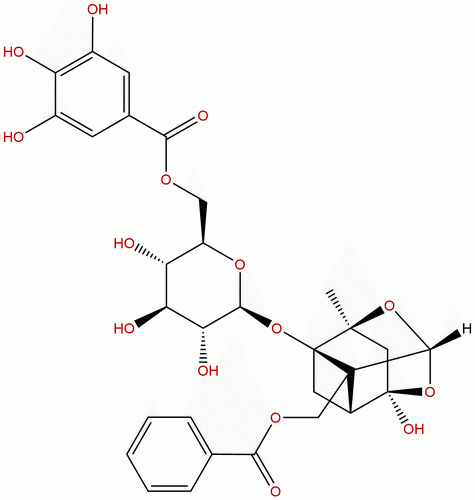


Product name: Galloylpaeoniflorin
Synonym name: Galloylpaeoniflorin
Catalogue No.: SBP03593
Cas No.: 122965-41-7
Formula: C30H32O15
Mol Weight: 632.571
Botanical Source:
Physical Description:
Type of Compound: Monoterpenoids
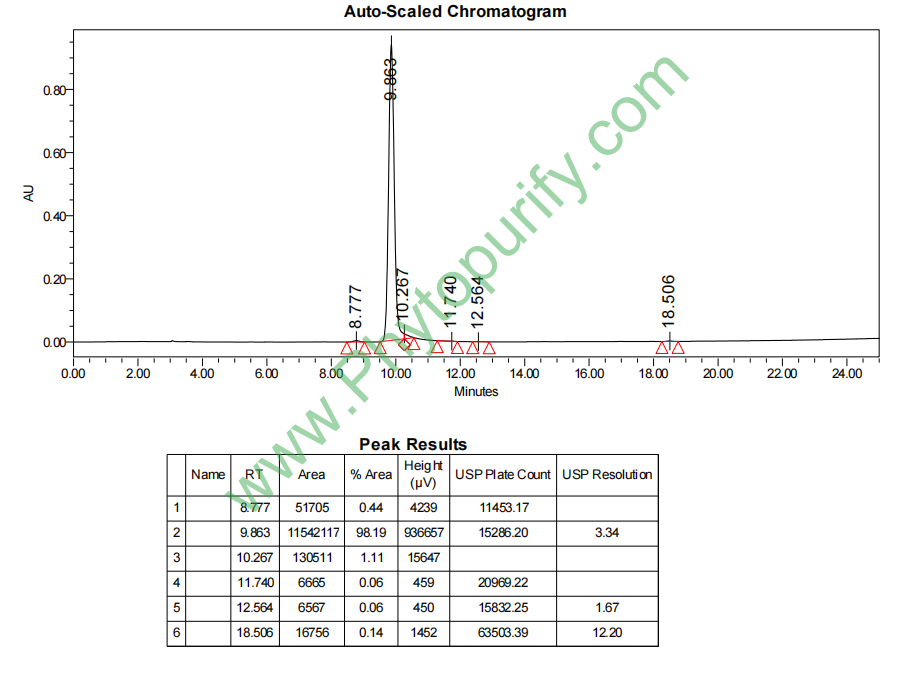
Purity: 95%~99%
Analysis Method: HPLC-DAD or/and HPLC-ELSD
Identification Method: Mass, NMR
Packing: Brown vial or HDPE plastic bottle
The product could be supplied from milligrams to grams
Inquire for bulk scale.
For Reference Standard and R&D, Not for Human Use Directly.
HPLC of Galloylpaeoniflorin
Storage conditions:Short-term storage at 2~8℃, long-term storage at -20 ~ -80℃
260.6700
Unknown
Unknown
Unknown
Unknown
Unknown
Unknown
Unknown
Unknown
Natural products, as a treasure trove for drug discovery and development, play an irreplaceable role in the history of human disease prevention and treatment. Paeoniflorin compounds, as the core active ingredients of traditional Chinese medicine Paeonia lactiflora Pall. and Paeonia suffrutiosa Andr., have been widely studied for their anti-inflammatory, immunomodulatory, neuroprotective and other pharmacological effects. Among them, galloylpaeoniflorin (GPF), as an acylated derivative of paeoniflorin, exhibits more significant or specific biological activity due to its unique chemical modification, and has gradually become a frontier hotspot in natural product pharmacology research in recent years. The chemical structure of GPF is characterized by the introduction of galloyl groups into the sugar moiety of paeoniflorin, which profoundly affects its physicochemical properties, biological activity, and mechanism of action. Preliminary studies have shown that GPF is a highly effective inhibitor of the nuclear transcription factor kappa B (NF - κ B) signaling pathway and has the ability to inhibit abnormal DNA fragmentation, suggesting its important intervention potential in the pathological processes of inflammatory diseases, autoimmune diseases, and certain cancers. The purpose of this article is to systematically review the chemical properties, plant sources, pharmacological activities, molecular mechanisms of action, and pharmacological potential of galloyl paeoniflorin, in order to provide comprehensive scientific references for the in-depth research and future development of this compound.
Paeoniflorin gallate (CAS number: 122965-41-7) is a monoterpenoid glycoside compound, and its chemical structure can be considered as a derivative of Paeoniflorin. Its molecular formula is C30H32O15 and its molecular weight is 632.5600.
Structurally, GPF retains the basic skeleton of paeoniflorin: a pinene type monoterpene nucleus (Paeonifloringen) connected to a molecule of glucose through glycosidic bonds. The key structural modification is that a hydroxyl group (usually considered 6 '- OH) of the glucose group forms an ester bond with a galloyl group (3,4,5-trihydroxybenzoyl). This acylation modification introduces additional benzene rings and three phenolic hydroxyl groups, greatly altering the physicochemical properties of the molecule.
The main physical and chemical properties are analyzed as follows:
1. Polarity: Due to the presence of multiple hydroxyl groups (including phenolic and alcohol hydroxyl groups) as well as sugar and ester bonds in the molecule, GPF has high polarity. Its theoretical topological polar surface area (TPSA) is as high as 260.6700 Å ², indicating its solubility in aqueous media, but its transmembrane permeability may be limited.
2. Solubility: GPF is usually soluble in polar solvents such as water, methanol, ethanol, and acetone, and has poor solubility in low polarity organic solvents such as ether and chloroform. The phenolic hydroxyl group on its galloyl group gives it a certain degree of weak acidity.
3. Stability As an ester compound, GPF may undergo hydrolysis in the presence of strong acids, strong bases, or esterases to produce paeoniflorin and gallic acid. Therefore, its stability needs to be considered during extraction, storage, and in vivo metabolism processes.
4. Spectral characteristics: In the UV spectrum, GPF exhibits characteristic absorption around 220 nm and 270 nm, corresponding to the benzene rings of monoterpene parent nucleus and galloyl group, respectively. In mass spectrometry, it is easy to observe peaks of quasi molecular ions such as [M-H] ⁻ or [M+Na] ⁺, as well as fragment ions that have lost galloyl groups (152 Da) or glucose groups, providing a basis for structural identification.
5. Hydrogen bond network: The 15 hydrogen bond acceptors (oxygen atoms) and multiple hydrogen bond donors (hydroxyl groups) in the molecule enable the formation of complex intramolecular and intermolecular hydrogen bonds, which not only affect its crystal structure but are also closely related to its interactions with biomolecules such as enzymes and acceptors.
The main source of galloyl paeoniflorin is from plants of the Paeonia genus in the Ranunculaceae family, and it is one of the characteristic components of these traditional medicinal plants.
1. Plant source:
* Main source: The dried roots of Paeonia lactiflora Pall., also known as the traditional Chinese medicine "white peony" or "red peony", are the main source of GPF. There are significant differences in the content of GPF among medicinal herbs from different origins, varieties, harvesting periods, and processing methods (such as "white peony" boiled after peeling and boiling, and "red peony" dried directly from the wild).
* Other sources: The root bark of Paeonia suffrutiosa Andr. also contains a certain amount of GPF. In addition, it has also been detected in other plants of the same genus, such as P. veilchii.
* Form of existence: In plants, GPF often coexists with other monoterpenoid glycosides such as paeoniflorin, oxidized paeoniflorin, and benzoyl paeoniflorin. Its content is usually lower than paeoniflorin, but its biological activity is often more prominent.
2. Extraction and Separation Methods:
The extraction and separation of GPF follows the conventional process of natural product chemistry, but it needs to be optimized for its high polarity and sensitivity to acidity and alkalinity.
* Extraction: Solvent extraction method is often used. Heat the dried peony root powder with methanol, ethanol, or aqueous ethanol (such as 70%) under reflux or ultrasound assisted extraction. Ethanol containing water is a commonly used industrial extraction solvent due to its low cost, low toxicity, and high extraction efficiency. In recent years, green and efficient technologies such as pressurized solvent extraction and microwave-assisted extraction have also been applied to the extraction of GPF.
* Enrichment and Separation: After vacuum concentration, the crude extract is usually initially enriched by macroporous adsorption resin (such as D101, AB-8, HP-20) column chromatography, and eluted with water and different concentrations of ethanol gradient. GPF is mostly concentrated in the 30% -70% ethanol elution site. Further purification relies on multiple chromatographic techniques:
* Silica gel column chromatography: Polarity gradient systems such as chloroform methanol water are commonly used for separation, but it should be noted that the weak acidity of silica gel may affect GPF.
* Reverse phase column chromatography: The use of ODS (C18) and other reverse phase fillers for gradient elution with methanol water or acetonitrile water as mobile phases is an effective method for separating highly polar compounds such as GPF, and is widely used.
* Preparation type high-performance liquid chromatography: It is the ultimate key technology for obtaining high-purity GPF monomers, usually using a reverse phase C18 column to achieve baseline separation from structurally similar compounds by optimizing the mobile phase ratio and detection wavelength (usually 230-270 nm).
* appraisal: The isolated monomer compounds were structurally confirmed by nuclear magnetic resonance (¹ H NMR, ¹ ³ C NMR, 2D NMR), mass spectrometry (ESI-MS, HR-MS), and comparison with literature data.
The pharmacological activity research of galloyl paeoniflorin mainly focuses on its anti-inflammatory, immune regulatory, neuroprotective, and potential anti-tumor effects, and its activity intensity is often superior to its parent compound paeoniflorin.
1. Anti inflammatory and immune regulatory activity:
This is the core pharmacological action of GPF. Numerous in vitro and in vivo studies have shown that GPF can significantly inhibit various inflammatory models.
* In vitro model: GPF can dose dependently inhibit the production of key inflammatory mediators such as nitric oxide (NO), prostaglandin E2 (PGE2), tumor necrosis factor - α (TNF - α), interleukin-1 β (IL-1 β), IL-6, etc. in macrophages (such as RAW264.7 cells), microglia, or synovial cells stimulated by lipopolysaccharide (LPS).
* In vivo model: In acute inflammation models such as rat paw swelling induced by carrageenan or Freund's complete adjuvant and mouse ear swelling induced by xylene, administration of GPF via gavage showed significant anti-inflammatory effects. In the collagen induced arthritis (CIA) rat model, a classic animal model of rheumatoid arthritis, GPF treatment can effectively reduce joint swelling, lower arthritis scores, inhibit synovial hyperplasia and bone erosion, and its effect is closely related to the inhibition of systemic and joint local pro-inflammatory cytokine levels.
2. Neuroprotection and anti cerebral ischemia activity:
GPF can penetrate the blood-brain barrier (although its TPSA is high, the specific ability to penetrate needs to be confirmed through experiments), and has protective potential against central nervous system diseases.
* Cerebral ischemia/reperfusion injury: In the rat model of middle cerebral artery occlusion (MCAO), GPF pretreatment or post-treatment can reduce cerebral infarction volume and improve neurological deficits, and its mechanism is related to anti-inflammatory, antioxidant, and anti apoptotic effects.
* Neuroinflammatory related diseases: In the Alzheimer's disease (AD) cell model, GPF can inhibit A β - induced activation of microglia and the subsequent production of neurotoxic factors. In Parkinson's disease (PD) models, protective effects on dopaminergic neurons have also been demonstrated.
3. Liver protective activity:
GPF has a protective effect on chemical liver injury (such as acetaminophen and carbon tetrachloride induction) and immune liver injury, can reduce serum transaminase levels, alleviate liver tissue pathological damage, and its mechanism involves inhibiting intrahepatic inflammatory response and oxidative stress.
4. Inhibit DNA fragmentation activity:
The literature clearly states that GPF is an inhibitor of DNA fragmentation. This usually means that GPF can inhibit DNA strand breaks caused by certain factors such as oxidative stress, toxins, radiation, or specific enzymes. This activity is one of the important foundations for its cellular protective effects, such as liver protection and neuroprotection, and may also be related to potential anti-aging, anti genetic toxicity, and chemopreventive effects on certain cancers. Whether to directly eliminate free radicals that cause DNA damage or to regulate the activity of related enzymes such as nucleases and poly (ADP ribose polymerase) remains to be further studied.
5. Other activities:
Preliminary studies also suggest that GPF has potential activities such as anti fibrosis, analgesia, and regulation of gut microbiota.
The multiple pharmacological activities of galloyl paeoniflorin stem from its regulation of multiple key cellular signaling pathways, and its core mechanism of action revolves around inhibiting the NF - κ B pathway and maintaining genomic stability.
1. Core mechanism: Inhibition of NF - κ B signaling pathway
NF - κ B is a core transcription factor that regulates inflammation, immunity, cell survival, and proliferation. GPF has been clearly identified as an NF - κ B inhibitor, and its action is multi-layered:
* Inhibition of I κ B α degradation and p65 nuclear translocation: Under stimulation such as LPS, GPF can prevent the phosphorylation and ubiquitination degradation of I κ B α protein, thereby anchoring NF - κ B dimers (mainly p65/p50) in the cytoplasm and preventing their transfer to the nucleus. This directly blocks the initiation of NF - κ B transcriptional activity.
* Inhibition of DNA binding and transcriptional activity of NF - κ B: Even if p65 enters the nucleus, GPF may inhibit the transcription of downstream target genes (such as iNOS, COX-2, TNF - α, IL-6) by affecting its affinity with DNA binding elements or its ability to recruit co activators.
* Regulating upstream kinases: GPF may block the activation of the NF - κ B pathway from the source by inhibiting the activation of IKK complex (I κ B kinase) or upstream signaling molecules (such as TAK1).
2. Key mechanism: Inhibiting DNA fragmentation and cell apoptosis
As an inhibitor of DNA fragmentation, GPF's mechanism may involve:
* Antioxidant and free radical scavenging: The galloyl group is a potent antioxidant group, and GPF can directly scavenge reactive oxygen/nitrogen species such as hydroxyl radicals (· OH) and peroxynitrite (ONOO ⁻), reducing their direct oxidative damage to DNA.
* Regulating DNA repair and apoptosis related pathways: DNA damage can activate sensors such as PARP and p53, triggering repair or apoptosis programs. GPF may promote repair, inhibit excessive apoptosis, and maintain cellular homeostasis after DNA damage by inhibiting PARP overactivation or regulating p53 and its downstream targets (such as Bax/Bcl-2 ratio). This is consistent with its protective mechanism in ischemia-reperfusion injury.
3. Cross regulation of related signaling pathways
The role of GPF is not isolated, it forms a network dialogue with other pathways by affecting NF - κ B and DNA damage response:
* MAPK pathway: GPF is often reported to simultaneously inhibit LPS induced phosphorylation of p38, JNK, and ERK, which synergistically regulate inflammatory response and cell fate with NF - κ B.
* Nrf2/HO-1 pathway: Studies have shown that GPF can activate antioxidant response elements (ARE), upregulate the expression of phase II detoxifying enzymes such as heme oxygenase-1 (HO-1), enhance cellular antioxidant defense capabilities, indirectly protect DNA, and alleviate inflammation.
* PI3K/Akt pathway: This pathway is involved in cell survival signaling. GPF has been shown to activate Akt in certain models, thereby inhibiting pro apoptotic proteins and exerting a protective effect.
4. Potential direct molecular targets
At present, research on the direct targets of GPF, such as proteins that specifically bind to it, is not sufficient. Based on its structure, it may act as a mimic substrate or allosteric regulator, directly interacting with certain kinases (IKK), phosphatases, receptors, or transcription factors. This requires further exploration through chemical biology methods such as affinity chromatography, molecular docking, surface plasmon resonance, etc. in the future.
Although gallic acid paeoniflorin exhibits excellent pharmacological activity, its development into a drug depends on systematic pharmacological evaluation.
1. Analysis of physical, chemical and medicinal parameters:
* Molecular weight (632.56): More than 500, belonging to larger molecules, may affect their oral absorption and transmembrane transport.
* TPSA(260.67 Ų): The value is extremely high, strongly indicating that the compound has extremely high polarity and poor lipid solubility. According to the empirical rule of the "Rule of Five", high TPSA typically leads to low oral bioavailability and poor blood-brain barrier permeability.
* Number of hydrogen bond acceptors (15): Excessive quantity is one of the main reasons for high TPSA and low membrane permeability.
In summary, GPF may face challenges in oral absorption and central nervous system distribution, which is consistent with its characteristics as a natural glycoside compound.
2. Current status of pharmacokinetic research:
The pharmacokinetic research on GPF is relatively limited. Based on the existing studies on paeoniflorin compounds, its characteristics can be inferred as follows:
* Absorption: After oral administration, GPF may partially hydrolyze into paeoniflorin and gallic acid in the gastrointestinal tract, and the absorption of its prototype drug may be low. The galloyl group may increase its stability in the intestine, but it may also affect absorption by binding to intestinal mucosal proteins or being metabolized by intestinal microbiota.
* Distribution: Due to its high polarity, its distribution volume may be small, mainly distributed in blood and tissues rich in water. Whether it can effectively penetrate the blood-brain barrier and enter the central nervous system is the key to determining its neuropharmacological activity, which requires clear experimental data (currently labeled as Unknown).
* Metabolism: GPF is an ester compound that is easily hydrolyzed by esterases (such as carboxylesterases) in blood and tissues, producing paeoniflorin and gallic acid. The phase I and phase II metabolic enzymes of the liver may also be involved in its transformation. Its metabolites, especially paeoniflorin, may contribute or mediate some pharmacological activities.
* Excretion: The prototype drug and its metabolites may be mainly excreted through the kidneys and urine.
3. Preliminary safety evaluation:
Currently, there is a lack of publicly available toxicological data for the system.
* Hepatotoxicity, cardiotoxicity, hERG inhibition, Ames test: All of them are unknown, which is a key data gap that must be filled as they move towards drug development. Standardized in vitro (such as hepatotoxicity, hERG channel inhibition assay, genetic toxicity screening) and in vivo (acute toxicity, repeated administration toxicity) safety evaluations are required.
* Safety speculation based on the background of plant medicine: The source plants Paeonia lactiflora and Paeonia lactiflora have a thousand year history of safe application in traditional Chinese medicine clinical practice, and their total extracts or compound formulas have low toxicity. As a single component, the toxicity of GPF is expected to be controllable, but scientific verification is still needed.
The multi-target and multi pathway action characteristics of galloyl paeoniflorin make it have broad application prospects in the prevention and treatment of various complex diseases, but it also faces many challenges.
1. Potential clinical application directions:
* Inflammatory and autoimmune diseases: This is the most direct application area of GPF. Based on its strong NF - κ B inhibitory activity, GPF is expected to be developed for the treatment of rheumatoid arthritis, inflammatory bowel disease (such as ulcerative colitis), psoriasis, asthma, and other conditions. Its natural product identity and multiple anti-inflammatory mechanisms may bring better safety or effectiveness for refractory cases.
* Neurological disorders: If its good blood-brain barrier permeability can be confirmed, GPF has important value in neurodegenerative diseases such as ischemic stroke (as a neuroprotective agent), Alzheimer's disease, Parkinson's disease (targeting the core mechanism of neuroinflammation).
* Liver disease: As a liver injury protective agent, it can be used as an adjuvant therapy for drug-induced liver injury, alcoholic liver disease, and even non-alcoholic steatohepatitis (NASH).
* As a chemical preventive agent: Its activity of inhibiting DNA fragmentation makes it possible to prevent DNA damage and related carcinogenesis caused by environmental toxins, radiation, or chronic inflammation.
2. Challenges and future research directions:
* Optimization of drug properties: The inherent high polarity and low permeability of GPF are the main obstacles to its development into oral drugs. Future research can focus on:
* Pre medication strategy: Modify its phenolic hydroxyl or sugar groups through esterification, etherification, and other methods to prepare lipophilic prodrugs, improve oral absorption, and release the original drug through hydrolysis in vivo.
* New drug delivery system: Develop delivery systems such as liposomes, nanoparticles, and microemulsions to encapsulate GPF for improved stability, bioavailability, and targeting (such as inflammation targeting).
* Simplification and Modification of Structure: Using GPF as the lead compound, study the structure-activity relationship, simplify the structure, retain pharmacophores (such as galloyl), and synthesize derivatives with higher activity and better drug properties.
* Deep exploration of mechanisms: Using proteomics, transcriptomics and other techniques, comprehensively map the cellular action network of GPF. Using chemical biology methods to identify its direct target of action, achieving a leap from "multi-target regulation" to "clear identification of key targets".
* Systematic pharmacokinetics and toxicology research: It is necessary to conduct preclinical pharmacokinetic and safety evaluations that comply with international standards, clarify their ADMET (absorption, distribution, metabolism, excretion, and toxicity) characteristics, and lay the foundation for clinical trials.
* Clinical translational exploration: After completing sufficient preclinical research, it may be considered for clinical development as a Class 1 new Chinese medicine or natural medicine. In the initial stage, its adjuvant therapeutic value in certain inflammatory diseases can be explored.
As a characteristic active ingredient in medicinal plants of the Paeonia genus, galloyl paeoniflorin exhibits significantly better pharmacological activities than paeoniflorin in anti-inflammatory, immune regulation, neuroprotection, and genome stability maintenance due to its unique galloyl structure. Its core mechanism of action lies in effectively inhibiting the NF - κ B signaling pathway and DNA damage response, reflecting the advantages of multi-target and networked regulation of natural products. However, its high polarity and complex pharmacokinetic behavior also pose challenges for its drug development. Future research should focus on elucidating its molecular targets and signal networks, while also improving its drug properties through medicinal chemistry and pharmacology strategies, and systematically completing preclinical safety and efficacy evaluations. The galloyl paeoniflorin is not only a promising drug lead compound, but also an important material carrier for explaining the modern scientific connotation of the traditional efficacy of Chinese medicine peony/peony in clearing heat, cooling blood, promoting blood circulation, and relieving pain. With the continuous deepening of research, it is expected to provide a new natural source candidate drug for the treatment of inflammation related diseases, continuing and expanding the modern value of traditional Chinese medicine.
