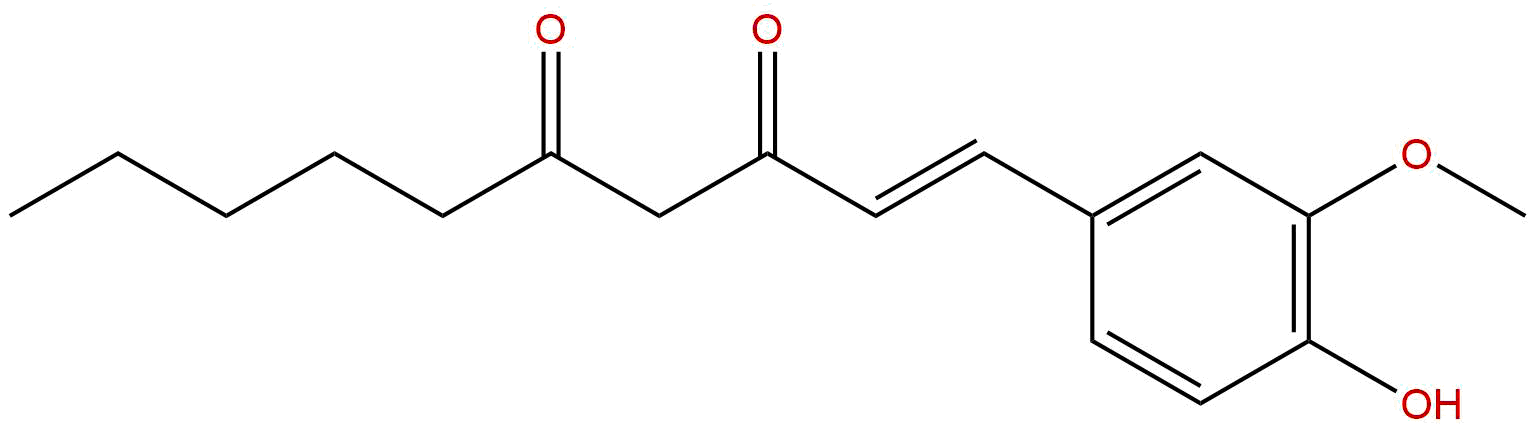


Product name: 6-Dehydrogingerdione
Synonym name:
Catalogue No.: BP4967
Cas No.: 76060-35-0
Formula: C17H22O4
Mol Weight: 290.359
Botanical Source:
Type of Compound: Phenols
Purity: 95%~99%
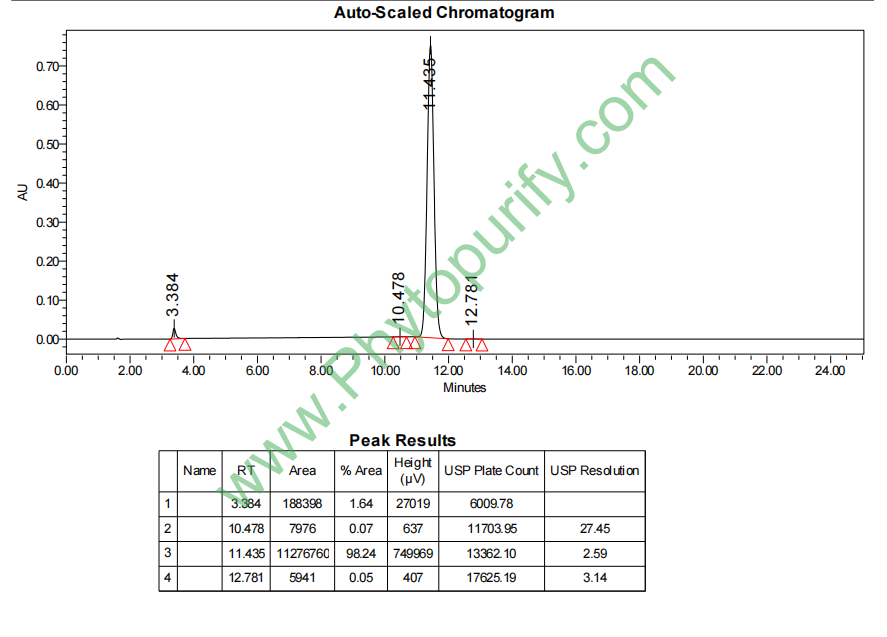
Analysis Method: HPLC-DAD or/and HPLC-ELSD
Identification Method: Mass, NMR
Packing: Brown vial or HDPE plastic bottle
Storage: Store in a well closed container, protected from air and light. Put into refrigerate or freeze for long term storage.
Whenever possible, you should prepare and use solutions on the same day. However, if you need to make up stock solutions in advance, we recommend that you store the solution as aliquots in tightly sealed vials at -20℃. Generally, these will be useable for up to two weeks.
The product could be supplied from milligrams to grams
Inquire for bulk scale.
For Reference Standard and R&D, Not for Human Use Directly.
HPLC of 6-Dehydrogingerdione
Storage conditions:Short-term storage at 2~8℃, long-term storage at -20 ~ -80℃
63.6000
3.2168
3.2096
.0360
4.3012
13.3490
High
91.5043
2.2601
Yes
Yes
Yes
No
No
No
0.0
No
Yes
No
Yes
Natural products, as an important source of drug discovery, have long played an irreplaceable role in the human fight against diseases. Ginger plants, as a widely used resource in traditional medicine and functional foods, have always been a hot topic in the fields of natural product chemistry and pharmacology in terms of the study of their active ingredients. Jiang(Zingiber officinale Roscoe is not only a global seasoning, but also highly regarded for its rich pharmacological activities such as anti-inflammatory, antioxidant, anti-tumor, and cardiovascular protective effects. The main active ingredients in ginger include a series of compounds such as Gingerols, Shogaols, and Gingerdiones. Among them, 6-dehydrogingerone (6-DG), as a relatively low content but highly active gingerol analogue, has attracted widespread interest from researchers in recent years due to its unique biological functions, especially its potential in inducing tumor cell apoptosis and antiplatelet aggregation.
6-dehydrogingerol, with a CAS number of 76060-35-0, belongs to a type of dehydrogingerol in terms of chemical structure. Compared with the common 6-gingerol, 6-DG has an additional conjugated double bond in its structure, which endows it with unique chemical properties and biological activity. Early research mainly focused on its sensory properties as a flavoring ingredient, while in the past two decades, with the development of molecular pharmacology and cell biology techniques, various pharmacological activities of 6-DG have gradually been revealed. Especially its role in enhancing tumor necrosis factor related apoptosis inducing ligand (TRAIL) - induced apoptosis in liver cancer cells, as well as its mechanism of multi-target inhibition of platelet aggregation, make it a potential candidate molecule for the development of lead compounds for anti-tumor and antithrombotic drugs.
This article aims to provide a systematic review of the current research status of 6-dehydrogingerone. The article will first elaborate on its chemical structure and physicochemical properties, followed by an introduction to its plant origin and extraction methods, with a focus on its pharmacological activities in anti-tumor and antiplatelet aggregation, and further explore its mechanism of action and molecular targets. On this basis, combined with its pharmacological parameters, the pharmacokinetic characteristics and clinical application prospects of this natural product are evaluated and forecasted, in order to provide comprehensive scientific basis for the in-depth research and development of this natural product.
The chemical name of 6-dehydrogingerone is 1- (4-hydroxy-3-methoxyphenyl) -1-decene-3,5-dione, with a molecular formula of C ₁₇ H ₂ O ₄ and a molecular weight of 290.3590 g/mol. Structurally, 6-DG belongs to a class of diarylheptane compounds, but its skeletal feature is a β - diketone structural unit containing conjugated double bonds. Specifically, its molecule is composed of a vanillin group (4-hydroxy-3-methoxyphenyl) connected by a ten carbon chain containing conjugated enones (α, β - unsaturated ketones) and β - diketones. Compared with 6-gingerol, 6-DG introduces a double bond between C-6 and C-7 positions, forming a dehydrogenated structure, which gives its molecule greater planarity and conjugated system.
This unique chemical structure determines its key physicochemical properties. According to the calculated chemical parameters, the lipid water partition coefficient (LogP) of 6-DG is 3.2168, indicating that it has moderate lipid solubility, which is beneficial for its penetration of cell membranes, but may also affect its solubility and distribution in aqueous environments. Its topological polar surface area (TPSA) is 63.6000 Å ², indicating a certain degree of polarity but not exceeding the typical threshold for oral medication (usually<140 Å ²), suggesting that it may have good oral absorption potential. However, its low water solubility (0.0360 mg/mL) makes it a poorly soluble compound, which may be one of the main challenges facing its oral bioavailability.
In addition, computational predictions show that 6-DG has high blood-brain barrier (BBB) penetration ability, suggesting that it may act on central nervous system targets, but may also bring central related side effects. Importantly, the predicted result of hERG inhibition is' no ', indicating a lower risk of cardiac toxicity. The Ames test result is 0.0, indicating that it does not have significant genotoxicity. These physicochemical properties and preliminary safety predictions provide a favorable basis for the subsequent drug development of 6-DG, but low water solubility and high BBB penetration are directions that need to be focused on and optimized. The phenolic hydroxyl and β - diketone groups in its structure are also key pharmacophores for its antioxidant and chelating activities with metal ions.
6-dehydrogingerol is mainly derived from the ginger plant in the ginger family(Zingiber officinale Roscoe's rhizome. In fresh ginger, 6-gingerol is the main spicy component, while the content of 6-DG is relatively low. However, during the drying, storage, or processing of ginger, 6-gingerol is partially converted into 6-gingerol and 6-dehydrogingerol through dehydration or oxidation reactions. Therefore, the content of 6-DG may increase in dried ginger or ginger products that have undergone specific processing. Except for ginger, other ginger plants such as galangal(Alpinia galanga)Wait, it may also contain trace amounts of 6-DG or its structural analogues.
The method of extracting 6-DG usually follows the classic process of natural product chemistry, aiming to efficiently and selectively enrich target compounds from plant matrices. Due to the fact that 6-DG is a moderately polar lipophilic component, commonly used extraction solvents include ethanol, methanol, ethyl acetate, or their mixed solvents. Traditional extraction methods such as cold soaking, percolation, and reflux extraction are widely used. In order to improve extraction efficiency and reduce solvent usage, modern extraction techniques such as ultrasound assisted extraction, microwave-assisted extraction, and supercritical fluid extraction (especially using CO ₂ as a solvent) have also been attempted for the extraction of gingerol compounds.
The crude extract after extraction usually contains a large amount of gingerol, gingerol, volatile oil, and resin impurities, which require further separation and purification. Common separation methods include:
1. Liquid-liquid extraction By using different polar solvents (such as petroleum ether, ethyl acetate, n-butanol) for fractional extraction of crude extracts, 6-DG can be enriched in the moderately polar ethyl acetate fraction.
2. Column chromatography technology Silica gel column chromatography is the most commonly used method, which uses gradient elution systems such as petroleum ether ethyl acetate or chloroform methanol to achieve preliminary separation of 6-DG from the main components 6-gingerol and 6-gingerol.
3. High performance liquid chromatography (HPLC)Preparation HPLC is a key step in obtaining high-purity 6-DG. Usually, a reverse phase C18 chromatographic column is used, with acetonitrile water or methanol water system as the mobile phase, combined with a UV detector (usually detected at 280 nm or 230 nm) for separation. Due to the small polarity difference between 6-DG and structurally similar compounds such as 6-gingerol, precise optimization of chromatographic conditions is required to achieve ideal separation efficiency.
4. High Speed Counter Current Chromatography (HSCCC)As a liquid-liquid distribution chromatography technique, HSCCC has unique advantages in separating gingerol components, which can avoid irreversible adsorption of samples on solid-phase carriers, have high recovery rates, and are suitable for large-scale preparation.
Overall, extracting and purifying 6-DG from ginger is a process that requires multiple steps and meticulous operation. Due to its low content in plants, the development of efficient and green extraction and purification processes is crucial to meet its research and potential application needs.
In recent years, significant progress has been made in the pharmacological activity research of 6-dehydrogingerone, mainly focusing on anti-tumor and antiplatelet aggregation fields, as well as anti-inflammatory and antioxidant effects.
The anti-tumor activity of 6-DG is one of its most notable pharmacological effects. Several in vitro studies have shown that 6-DG has cytotoxicity to a variety of cancer cell lines, including liver cancer, breast cancer, colon cancer, lung cancer and leukemia cells. Its mechanism of action is diverse, but a core discovery is that it can enhance the sensitivity of tumor cells to TRAIL induced apoptosis.
Enhance TRAIL induced apoptosis TRAIL is a cytokine that can selectively induce apoptosis in various tumor cells with low toxicity to normal cells, and is therefore considered a promising anti-tumor drug. However, many tumor cells develop resistance to TRAIL, limiting its clinical application. Research has found that 6-DG can significantly enhance the sensitivity of human hepatoblastoma Hep G2 cells to TRAIL induced apoptosis. The mechanism is closely related to the mediation of reactive oxygen species (ROS). 6-DG treatment can induce an increase in ROS levels in Hep G2 cells, thereby upregulating the expression of death receptor 5 (DR5, one of the TRAIL receptors). The upregulation of DR5 makes cells more sensitive to TRAIL signaling, thereby activating downstream caspase cascade reactions, ultimately leading to cell apoptosis. This discovery provides a new strategy for overcoming TRAIL resistance.
Inducing cell cycle arrest and apoptosis In addition to sensitizing TRAIL, 6-DG itself can also directly induce apoptosis in various cancer cells. Research has shown that it can activate the mitochondrial pathway (endogenous apoptosis pathway), leading to loss of mitochondrial membrane potential, release of cytochrome c, and subsequently activating caspase-9 and caspase-3. Meanwhile, 6-DG can also cause cell cycle arrest, such as blocking cells in the G2/M phase, thereby inhibiting cell proliferation. These effects are related to their regulation of Bcl-2 family proteins (such as downregulating anti apoptotic protein Bcl-2 and upregulating pro apoptotic protein Bax) and inhibition of the PI3K/Akt signaling pathway.
Inhibit angiogenesis The growth and metastasis of tumors depend on the formation of new blood vessels. Preliminary research suggests that 6-DG may have anti angiogenic activity, which can inhibit endothelial cell proliferation, migration, and luminal formation induced by vascular endothelial growth factor (VEGF), thereby cutting off the nutritional supply to tumors.
Cardiovascular disease is one of the leading causes of death worldwide, and platelet overactivation and aggregation are key links in thrombus formation. 6-DG exhibits strong anti platelet aggregation activity, and its mechanism of action involves multiple targets, reflecting the advantages of natural multi-target drugs.
Research has shown that 6-DG can effectively inhibit platelet aggregation caused by various inducers such as collagen, arachidonic acid, ADP, and thrombin. Its mechanism of action is multifaceted, mainly involving:
- Inhibition of cyclooxygenase (COX) activity 6-DG can simultaneously inhibit the activity of COX-1 (PTGS1) and COX-2 (PTGS2). COX is a key enzyme involved in the metabolism of arachidonic acid into thromboxane A2 (TXA2), which is a powerful inducer of platelet aggregation. By inhibiting COX, 6-DG reduces the production of TXA2, thereby inhibiting platelet aggregation.
- Antagonistic TXA2 receptor (TBXA2R)In addition to reducing the generation of TXA2, 6-DG may also directly antagonize the TXA2 receptor and block its downstream signaling.
- Inhibition of P2Y12 receptor ADP is another important inducer of platelet aggregation, primarily mediated through the P2Y12 receptor. 6-DG can inhibit the activity of P2Y12 receptor, thereby weakening ADP induced platelet aggregation.
- Interference with the activation of integrin α IIb β 3 (ITGA2B/ITGB3)The integrin α IIb β 3 (GPIIb/IIIa) is the ultimate common pathway for platelet aggregation. 6-DG may inhibit the binding of fibrinogen to platelets by affecting its conformational changes or downstream signals.
- Inhibition of phosphodiesterase (PDE) activity 6-DG can inhibit the activity of PDE3A, thereby increasing the level of cAMP in platelets. CAMP is a key second messenger that inhibits platelet activation, and its elevated levels can inhibit various functions of platelets, including aggregation, release, and granule secretion.
- Affects platelet membrane glycoproteins The regulation of GP1BA (GPIb α) may also be involved in its antiplatelet effect.
This multi-target synergistic mechanism may lead to higher efficacy and lower bleeding risk of 6-DG in antiplatelet therapy, as strong inhibition of a single target often accompanies bleeding side effects.
In addition to the two main activities mentioned above, 6-DG has also been reported to have anti-inflammatory and antioxidant activities. It can inhibit the production of nitric oxide (NO) and prostaglandin E2 (PGE2) in macrophages induced by lipopolysaccharide (LPS), downregulate the expression of inducible nitric oxide synthase (iNOS) and COX-2, which is related to its inhibition of the NF - κ B signaling pathway. Its antioxidant activity originates from its phenolic hydroxyl structure, which can directly scavenge free radicals and alleviate oxidative stress damage.
Based on existing research, the pharmacological mechanism of 6-dehydrogingerone can be summarized into the following core aspects, and the molecular targets involved also exhibit diversity and networking characteristics.
1. Signal regulation mediated by reactive oxygen species (ROS)
In the field of anti-tumor, the generation of ROS is one of the initiating events for the action of 6-DG. 6-DG activates multiple downstream signaling pathways by inducing an increase in intracellular ROS levels. In Hep G2 cells, an increase in ROS is a necessary condition for upregulating DR5 expression. ROS can also activate stress kinase pathways such as JNK and p38 MAPK, which are closely related to cell apoptosis and autophagy. In addition, the accumulation of ROS may also lead to mitochondrial dysfunction and trigger endogenous apoptotic pathways.
2. Synergistic activation of death receptors and mitochondrial apoptosis pathway
6-DG enhances the sensitivity of the exogenous apoptosis pathway (death receptor pathway) by upregulating DR5 expression. At the same time, it promotes mitochondrial release of cytochrome c and activates endogenous apoptotic pathways by regulating Bcl-2 family proteins (such as reducing the Bcl-2/Bax ratio). These two pathways converge at the caspase-3 level, ultimately leading to the execution of cell apoptosis. This dual activation mechanism is the basis for its efficient induction of apoptosis.
3. Inhibition of arachidonic acid metabolism and platelet activation pathway
In terms of antiplatelet aggregation, the targets of 6-DG mainly focus on the arachidonic acid metabolism pathway and platelet activation signaling pathway. It directly inhibits COX-1 and COX-2, reducing the production of TXA2. At the same time, it can also antagonize the TXA2 receptor (TBXA2R) and block its downstream G protein coupled receptor signaling. In addition, inhibition of ADP receptor P2RY12 further weakens platelet response to various agonists. Finally, by increasing cAMP levels (inhibiting PDE3A) and interfering with the activation of integrin α IIb β 3, 6-DG blocked the cascade reaction of platelet aggregation from multiple links.
4. Regulation of signal transduction pathways
6-DG can regulate multiple key signaling pathways related to cell proliferation, survival, and inflammation. For example, it can inhibit the PI3K/Akt/mTOR pathway, which is abnormally activated in various tumors, promoting cell survival and proliferation. Meanwhile, it can also inhibit the activation of NF - κ B, which is a core transcription factor regulating inflammatory response and anti apoptotic gene expression. By inhibiting NF - κ B, 6-DG downregulates the expression of downstream target genes such as COX-2, iNOS, and Bcl-2, thereby exerting anti-inflammatory and pro apoptotic effects.
Summary of Molecular Targets:
- Anti tumor related:DR5、Bcl-2、Bax、caspase-3/8/9、PI3K、Akt、NF-κB、ROS、JNK、p38 MAPK。
- Antiplatelet related:PTGS1 (COX-1)、PTGS2 (COX-2)、ITGA2B (CD41)、ITGB3 (CD61)、P2RY12 (P2Y12)、TBXA2R (TXA2 Receptors) PDE3A、GP1BA (GPIbα)。
The multi-target and multi pathway mode of action of 6-DG may demonstrate synergistic effects and reduce drug resistance in disease treatment, but it also increases the complexity of its mechanism of action research.
Developing natural products into clinical drugs requires a systematic evaluation of their pharmacological properties. Based on the provided calculation parameters and existing research, the pharmacological analysis of 6-dehydrogingerone is as follows.
1. Analysis of drug properties
According to the Lipinski Five Rules, the molecular weight (290.36<500), LogP (3.22<5), number of hydrogen bond donors (phenolic hydroxyl, 1<5), and number of hydrogen bond acceptors (4<10) of 6-DG all meet the requirements, indicating its good drug like properties. The TPSA value is 63.6 Å ², which is also within the ideal range (usually 20-130 Å ²), indicating good oral absorption and membrane permeability. However, its water solubility (0.036 mg/mL) is poor and belongs to low solubility compounds, which may limit its oral bioavailability and be a major weakness in drug development.
2. Pharmacokinetic characteristics (prediction and preliminary study)
- absorb High LogP and moderate TPSA suggest that it may be effectively absorbed by the gastrointestinal tract through passive diffusion. But low water solubility is the limiting step in absorption. At present, there is a lack of specific data on its absolute oral bioavailability, but speculation may not be high. Strategies to enhance its solubility, such as preparing salts, solid dispersions, liposomes, or cyclodextrin inclusion complexes, will be key to improving its oral utilization.
- distribution High BBB penetration indicates its ability to enter the central nervous system. This may be beneficial for treating brain tumors or central nervous system diseases, but it may bring unnecessary side effects for peripheral targets such as cardiovascular disease. Its distribution volume and plasma protein binding rate still need to be studied.
- Metabolism As a phenolic compound, 6-DG is likely to undergo phase II metabolism in the liver, such as glucuronidation and sulfation, which typically lead to its inactivation and promote excretion. The β - diketone group in its structure may also be metabolized by reductases. It is not clear whether the CYP450 enzyme system is involved in its phase I metabolism.
- excretion Expected to be mainly excreted through bile and urine.
3. Safety evaluation
The preliminary toxicological assessment results are encouraging. HERG inhibition is predicted as' no ', reducing the risk of cardiac toxicity. The Ames test result is 0.0, indicating that it has no mutagenicity. However, these are only computer predictions and need to be validated through systematic in vitro and in vivo toxicology experiments. Especially, high BBB penetration suggests the need to pay attention to central nervous system toxicity, such as sedation, dizziness, etc. In addition, although its antiplatelet activity is beneficial, excessive activity or insufficient selectivity may also increase the risk of bleeding.
4. Challenges and optimization strategies for drug development
- Main challenges Low oral bioavailability caused by low water solubility.
- Secondary challenge Potential central side effects caused by high BBB penetration; Multi targeted effects may lead to off target effects.
- Optimization Strategy:
- Prodrug design Esterification or etherification of phenolic hydroxyl groups to produce prodrugs, improve lipid solubility or water solubility, and release the original drug in vivo through enzymatic interpretation.
- Formulation optimization Using nanotechnology (such as lipid nanoparticles, polymer micelles) or solid dispersion technology to improve their solubility and dissolution rate.
- Structural modification On the basis of maintaining key pharmacophores (α, β - unsaturated ketones, β - diketones), hydrophilic groups (such as carboxyl and amino groups) are introduced to improve water solubility and regulate BBB penetration.
- Targeted drug delivery Loading 6-DG into targeted ligand modified nanocarriers to achieve precise delivery to the lesion site, improve therapeutic efficacy, and reduce systemic toxicity.
Overall, 6-dehydrogingerone has a good lead compound foundation, but the main challenge it faces in developing medicinal properties is poor water solubility. Through rational medicinal chemistry and pharmaceutical methods, it is expected to overcome these obstacles and transform them into candidate drugs with clinical application potential.
The unique pharmacological activity spectrum of 6-dehydrogingerol, especially its dual effects in anti-tumor and antiplatelet aggregation, has opened up broad prospects for its clinical application.
1. Anti tumor therapy
- TRAIL sensitizer Given its ability to upregulate DR5 through ROS and overcome tumor cell resistance to TRAIL, 6-DG is expected to serve as a sensitizer for TRAIL therapy, in combination with recombinant TRAIL protein or DR5 agonist antibodies, for the treatment of TRAIL insensitive liver cancer, lung cancer, colorectal cancer, etc. This combination therapy strategy may improve efficacy and reduce the dosage and potential toxicity of TRAIL.
- Chemotherapy/radiotherapy sensitizer The pro apoptotic and cell cycle arrest effects of 6-DG may enhance the efficacy of traditional chemotherapy drugs (such as cisplatin, paclitaxel) or radiotherapy. By using combination therapy, the dosage of chemotherapy drugs can be reduced and their toxic side effects can be alleviated.
- Preventing tumor metastasis Its potential anti angiogenic activity makes it valuable in inhibiting tumor growth and metastasis.
2. Prevention and treatment of cardiovascular diseases
- antiplatelet drugs 6-DG inhibits platelet aggregation through multiple targets, especially by simultaneously acting on COX, P2Y12, and TXA2 receptors. Its mode of action is similar to low-dose aspirin combined with P2Y12 inhibitors, but it may have a more balanced efficacy and safety. It may be developed as a new antiplatelet drug for the prevention and treatment of atherosclerosis, myocardial infarction, stroke and other thrombotic diseases.
- Anti inflammatory and antioxidant properties Its anti-inflammatory and antioxidant activities help to reduce the inflammatory reaction and oxidative stress of the vascular wall, which is of positive significance for delaying the progress of atherosclerosis. Therefore, 6-DG may become a multifunctional cardiovascular protective agent.
3. Other potential applications
- neuroprotection High BBB penetration suggests that it may act on the central nervous system. Its antioxidant and anti-inflammatory activities may have a protective effect on neurodegenerative diseases such as Alzheimer's disease and Parkinson's disease. But we need to be vigilant about its possible central toxicity.
- Metabolic diseases Preliminary studies have shown that gingerol compounds have the ability to improve insulin resistance and regulate lipid metabolism, and 6-DG may also have potential in this field.
Outlook and Challenges
Despite the promising prospects, the clinical translation of 6-DG still faces many challenges:
1. Pharmacokinetic optimization The primary task is to address the issues of low water solubility and potential low bioavailability. It is necessary to develop effective delivery systems or carry out structural modifications.
2. Systematic Toxicological Evaluation A comprehensive in vivo toxicology study is required, particularly to evaluate the safety of long-term use, the impact on the central nervous system, and the risk of bleeding.
3. Deepening the mechanism of action Although multiple targets have been identified, their exact network of action and dominant mechanism in vivo still need further clarification. Especially whether its multi-target effects will produce unexpected interactions in the body.
4. Large scale preparation Establish efficient, economical, and environmentally friendly extraction and synthesis processes to meet the needs of future clinical research and commercial production. Chemical total synthesis or semi synthesis may be a feasible approach to solve its source problem.
6-dehydrogingerol, as an important natural active ingredient in ginger, has shown significant research value and development potential in the field of natural product pharmacology due to its unique chemical structure and significant multi-target pharmacological activity. The discovery that it enhances TRAIL induced apoptosis in liver cancer cells through reactive oxygen species mediation, and exerts antiplatelet aggregation by inhibiting multiple targets such as cyclooxygenase and P2Y12 receptor, provides new ideas and lead compounds for anti-tumor and antithrombotic therapy.
Although 6-DG faces challenges such as poor water solubility and potential low oral bioavailability in terms of drug development, its good drug like properties, low cardiac toxicity, and no genotoxicity lay the foundation for its further development. Future research should focus on: 1) systematically optimizing its pharmacokinetic properties through medicinal chemistry and pharmacology methods; 2) Conduct in-depth in vivo pharmacological and toxicological studies to clarify their effectiveness and safety; 3) Using systems biology and network pharmacology methods, comprehensively analyze its complex mechanism of action; 4) Explore its synergistic effect with existing drugs and develop combination therapy plans.
In summary, 6-dehydrogingerone is a highly promising natural product lead molecule. Through in-depth research and rational development, it is expected to provide new weapons for humans to overcome major health challenges such as tumors and cardiovascular diseases. The journey of converting 6-dehydrogingerol from the kitchen of ginger to the pharmacy, although full of challenges, also contains great hope.
