| Catalog No | Package | Original Price | Price | Inventory | Quantity | Operating |
|---|---|---|---|---|---|---|
| BP5339-5mg | 5mg | $250.00 | Sign in |
|


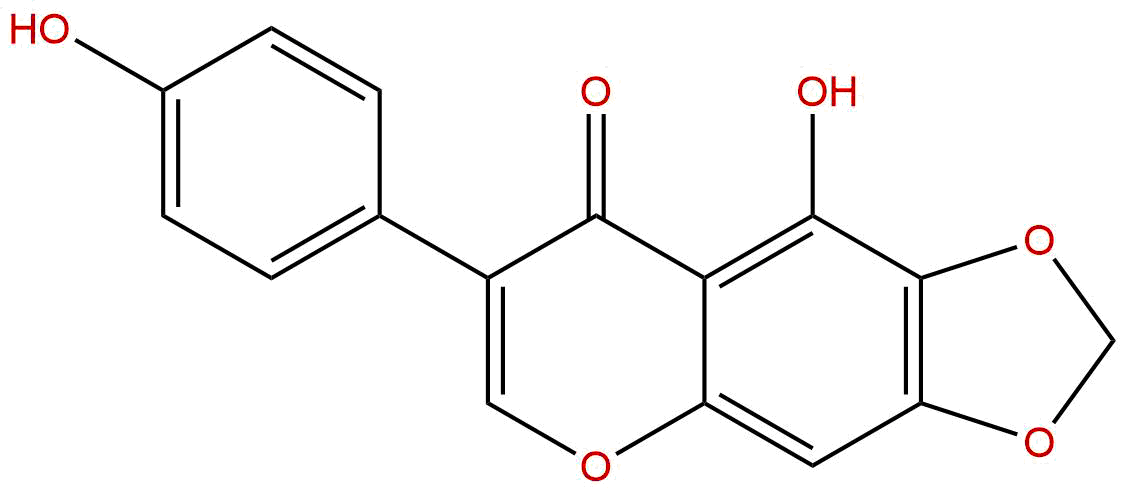
Product name: Irilone
Synonym name: 4',5-Dihydroxy-6,7-(epoxymethanoxy)isoflavone
Catalogue No.: BP5339
Cas No.: 41653-81-0
Formula: C16H10O6
Mol Weight: 298.25
Botanical Source:
Type of Compound: Isoflavones
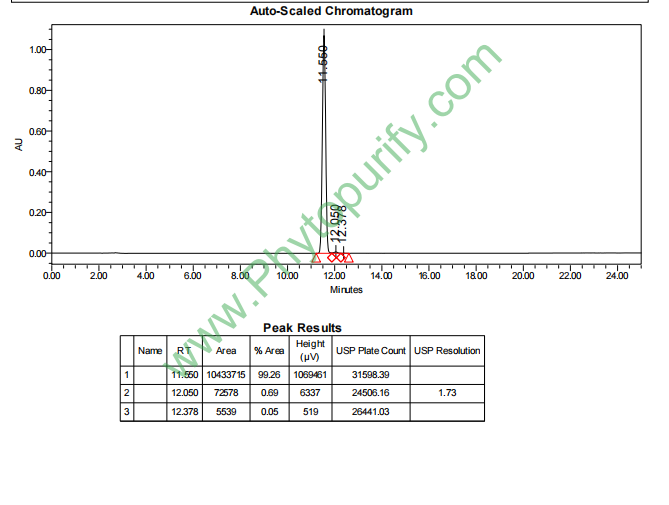
Purity: 95%~99%
Analysis Method: HPLC-DAD or/and HPLC-ELSD
Identification Method: Mass, NMR
Packing: Brown vial or HDPE plastic bottle
Storage: Store in a well closed container, protected from air and light. Put into refrigerate or freeze for long term storage.
Whenever possible, you should prepare and use solutions on the same day. However, if you need to make up stock solutions in advance, we recommend that you store the solution as aliquots in tightly sealed vials at -20℃. Generally, these will be useable for up to two weeks.
The product could be supplied from milligrams to grams
Inquire for bulk scale.
For Reference Standard and R&D, Not for Human Use Directly.
HPLC of Irilone
Storage conditions:Short-term storage at 2~8℃, long-term storage at -20 ~ -80℃
110.3800
Unknown
Unknown
Unknown
Unknown
Unknown
Unknown
Unknown
Unknown
Unknown
Natural products, as an important source of drug discovery, play an irreplaceable role in the long history of human struggle against diseases. Among them, flavonoids have become a hot topic in natural product pharmacology research due to their widespread presence, diverse biological activities, and low toxicity. Among the numerous flavonoids, the subfamilies of isoflavones are particularly noteworthy for their estrogen like effects due to their structural similarity to estradiol. Irilone, as a structurally unique flavonoid compound, is gradually emerging from numerous natural products and demonstrating pharmacological potential worthy of further exploration.
Irisin (CAS number: 41653-81-0) originated from plants in the Iridaceae family(Iris Species is isolated and identified, and its name is derived from it. However, subsequent studies have found that the leguminous plant, Trifolium repens(Trifolium pratense)The flowers and leaves are its more abundant and easily accessible sources. Red clover, as a traditional medicinal plant and forage, is often used in folk medicine to treat menopausal syndrome, cardiovascular diseases, and certain inflammatory diseases. For a long time, people have attributed the pharmacological activity of red clover mainly to its rich content of common isoflavones such as genistein and daidzein. However, with the advancement of separation and analysis techniques, components such as irisin with relatively low content but unique activity have begun to enter the field of researchers.
Compared with classic isoflavones such as genistein, irisin has a unique methylene dioxy group in its structure, which can significantly affect the physicochemical properties, metabolic stability, and interaction mode with biological targets of the molecule. Early research focused on the estrogenic activity of irisin, but in recent years, increasing evidence suggests that its pharmacological spectrum extends far beyond this, encompassing multiple fields such as anti-inflammatory, antioxidant, anti-tumor, neuroprotective, and more. These findings suggest that irisin may be a lead compound with multi-target and multi pathway action characteristics.
Although irisin has shown promising research prospects, the current systematic understanding of it is still relatively limited. Key issues such as pharmacokinetic properties, in vivo metabolic pathways, identification of specific molecular targets, and potential toxicological risks still require further clarification. This article aims to systematically review the research status of irisin, including its chemical structure, plant origin, pharmacological activity, mechanism of action, and pharmacological evaluation, in order to provide valuable references for the subsequent research and development of this natural product and explore its potential role in modern drug discovery.
Irisin belongs to the flavonoid class of compounds, with its core skeleton being 3-Phenylchromen-4-one. Compared with typical isoflavones such as daidzein, the most significant structural feature of irisin is the introduction of a methylenedioxy (- O-CH ₂ - O -) bridged ring structure between the C-6 and C-7 positions of the A ring. Specifically, its chemical name is 5,7-dihydroxy-6,7-methylenedioxyflavone, and its systematic name (IUPAC) is 5,7-dihydroxy-3- (4-hydroxyphenyl) -6H - [1,3] dioxolano-4,5-g] chromene-6-one. This unique methylenedioxy ring is a key structural unit that distinguishes irisin from other common isoflavones.
From the perspective of physical and chemical properties, the molecular formula of irisin is C ₁₆ H ₁₀ O ₆, with a molecular weight of 298.24 g/mol. Its topological polar surface area (TPSA) is 110.38 Å ², which is relatively high and usually indicates that the molecule has good water solubility potential. However, it may also limit its ability to penetrate biological membranes, especially through the blood-brain barrier. The molecular structure contains six hydrogen bond acceptors (mainly from phenolic hydroxyl and carbonyl oxygen), as well as two hydrogen bond donors (from phenolic hydroxyl groups at positions C-5 and C-7). These functional groups enable irisin to interact with various biomolecules (such as proteins and enzymes) through hydrogen bonding, which is the chemical basis for its biological activity.
Irisin is a yellow or pale yellow crystalline powder with a certain melting point. Its UV absorption spectrum has strong absorption in the characteristic regions of isoflavones (approximately 250-270 nm and 300-350 nm), which can be used for their qualitative and quantitative analysis. In terms of solubility, irisin is slightly soluble in water, but easily soluble in organic solvents such as methanol, ethanol, and dimethyl sulfoxide (DMSO). The presence of its phenolic hydroxyl group increases its solubility in alkaline solutions, forming phenolic salts. In terms of stability, irisin is relatively stable under conventional storage conditions (dark, dry, low temperature), but may degrade under strong light, high temperature, or extreme pH conditions. Its unique methylenedioxyl structure may be metabolized by cytochrome P450 enzymes (CYPs) in vitro and in vivo to generate corresponding catechol derivatives, which may be closely related to its biological activity and toxicity.
The distribution of irisin in nature is relatively limited, mainly found in some plants of the Iridaceae and Fabaceae families. Its discovery history is closely related to plants of the Iris genus, such as the German iris(Iris germanica)Iris fragrans(Iris pallida)Wait. However, from the perspective of resource sustainability and content, red clover(Trifolium pratense)It is considered to be the most promising plant source for obtaining irisin at present. Red clover is widely planted in temperate regions around the world, with abundant resources. Its flowers and leaves are the main medicinal parts. Research has shown that although the content of irisin in red clover is lower than that of genistein and daidzein, considerable yield can still be obtained by optimizing the extraction process. In addition, in certain leguminous plants such as soybean root(Sophora subprostrata)It has also been detected.
The classic solvent extraction method is still the foundation for the extraction of irisin. Due to its polarity characteristics, methanol, ethanol, or aqueous alcohols are often used as extraction solvents. In order to improve extraction efficiency and selectivity, researchers have developed various modern extraction techniques. For example, ultrasound assisted extraction (UAE) utilizes the cavitation effect of ultrasound to destroy plant cell walls, accelerate solvent permeation and solute diffusion, and can achieve higher extraction rates in a shorter period of time (such as 30-60 minutes) and at lower temperatures. Microwave assisted extraction (MAE) utilizes microwave energy to selectively heat polar molecules (such as water), causing a rapid increase in temperature and pressure inside the cell, leading to cell rupture and promoting the dissolution of target compounds. For irisin, using a certain concentration of ethanol (such as 70% ethanol) as a solvent, combined with UAE or MAE, can usually achieve better results than traditional reflux extraction.
The crude extract after extraction has complex components and requires separation and purification steps to obtain high-purity irisin. Column chromatography is the core method. In the early days, silica gel column chromatography was commonly used, with gradient elution using chloroform methanol or petroleum ether acetone systems in different ratios. Due to the presence of phenolic hydroxyl groups in irisin, polyamide column chromatography is also commonly used for separation due to its selective adsorption ability for phenolic compounds. In recent years, efficient and rapid separation technologies have been widely applied. High speed counter current chromatography (HSCCC) is a chromatographic technique based on the liquid-liquid distribution principle, which does not require a solid stationary phase and avoids irreversible adsorption of samples on the column, making it particularly suitable for the separation of flavonoids. Previous studies have successfully used HSCCC to isolate multiple isoflavones, including irisin, from crude extract of red clover in one step. In addition, preparative high-performance liquid chromatography (Prep HPLC) can achieve high-purity (>98%) final purification and is a commonly used method for obtaining standards or conducting in-depth pharmacological research samples.
In terms of analysis and detection, high-performance liquid chromatography (HPLC) combined with ultraviolet detector (UV) or diode array detector (DAD) is the standard method for quantitative analysis of irisin. Liquid chromatography-mass spectrometry (LC-MS/MS) is widely used for qualitative and quantitative analysis of irisin complex matrices (such as plant extracts and biological samples) due to its high sensitivity and specificity, and can simultaneously analyze its metabolites.
In recent years, significant progress has been made in the pharmacological activity research of irisin, revealing its potential therapeutic value in multiple disease models. Its activity spectrum is extensive, mainly including the following aspects:
1. Estrogen like activity and bone protective effect
As a member of the isoflavone family, one of the most noteworthy activities of irisin is its interaction with estrogen receptors. In vitro experiments have shown that irisin can bind to estrogen receptor beta (ER β) and estrogen receptor alpha (ER α), exhibiting the characteristics of a selective estrogen receptor modulator (SERM). In the ovariectomy (OVX) rat model (simulating postmenopausal osteoporosis), oral administration of irisin can significantly increase bone density, improve bone microstructure, and reduce levels of bone turnover markers such as serum osteocalcin and urinary deoxypyridinoline. Its mechanism of action is partially attributed to activating ER β, promoting osteoblast differentiation and mineralization, while inhibiting osteoclast activity. Compared with classical estrogen, irisin has a weaker stimulating effect on the uterus, suggesting that it may have a better safety window, which is particularly important for the development of drugs to treat postmenopausal osteoporosis.
2. Anti inflammatory and antioxidant activity
Inflammation and oxidative stress are common pathological foundations of many chronic diseases, such as cardiovascular disease, neurodegenerative diseases, and cancer. Irisin exhibits significant anti-inflammatory activity. In a macrophage model stimulated by lipopolysaccharide (LPS), irisin can dose dependently inhibit the production of pro-inflammatory cytokines such as tumor necrosis factor - α (TNF - α), interleukin-6 (IL-6), and interleukin-1 β (IL-1 β). Meanwhile, it can also downregulate the expression of inducible nitric oxide synthase (iNOS) and cyclooxygenase-2 (COX-2), thereby reducing the release of inflammatory mediators such as nitric oxide (NO) and prostaglandin E2 (PGE2). Its antioxidant activity is reflected in its ability to directly scavenge free radicals (such as DPPH ·, ABTS ⁺ ·) and activate endogenous antioxidant defense systems in cells, such as the nuclear factor E2 related factor 2 (Nrf2) pathway, upregulating the expression of antioxidant enzymes such as superoxide dismutase (SOD) and glutathione peroxidase (GPx).
3. Antitumor activity
Irisin exhibits inhibitory effects on proliferation and induces apoptosis in various tumor cell lines. The research involves breast cancer, prostate cancer, colon cancer, liver cancer, etc. For example, in human breast cancer MCF-7 cells, de irone can inhibit cell proliferation and induce G2/M phase cell cycle arrest by regulating estrogen receptor signaling pathway and non genomic effects. In prostate cancer PC-3 and LNCaP cells, irisin can inhibit androgen receptor signaling and induce cell apoptosis. Its anti-tumor mechanism is complex and may involve multiple aspects: ① regulating cell cycle related proteins (such as Cyclin B1, p21); ② Activate mitochondrial apoptosis pathway (upregulate Bax, downregulate Bcl-2, release cytochrome c, activate Caspase cascade reaction); ③ Inhibiting survival signaling pathways such as PI3K/Akt/mTOR; ④ Inhibit the expression of vascular endothelial growth factor (VEGF) and exert anti angiogenic effects. It is worth noting that irisin has relatively low toxicity to normal cells and exhibits a certain degree of selectivity.
4. Neuroprotective activity
Given its anti-inflammatory and antioxidant properties, irisin also exhibits protective effects in neurodegenerative disease models. In the neurotoxic model induced by β - amyloid protein (A β), irisin can reduce the production of reactive oxygen species (ROS), inhibit neuronal apoptosis, and improve synaptic plasticity. In Parkinson's disease models, it can protect dopaminergic neurons from damage caused by 6-hydroxydopamine (6-OHDA) or 1-methyl-4-phenylpyridine ion (MPP ⁺). These effects may be related to activating the Nrf2/ARE antioxidant pathway, inhibiting neuroinflammation mediated by microglia, and regulating autophagy function. However, whether irisin can effectively penetrate the blood-brain barrier (BBB) remains a key bottleneck in its neuroprotective application, and there is currently no consensus.
5. Other activities
Preliminary studies also suggest that irisin may have antibacterial, antiviral (such as anti influenza virus), hypoglycemic (improving insulin resistance), and cardiovascular protective (such as inhibiting vascular smooth muscle cell proliferation and improving endothelial function) activities. These findings further expand their potential application scope, but most of them are still in the preliminary exploration stage.
The pharmacological activity of irisin is the result of the synergistic effect of multiple targets and pathways. Its core mechanism of action can be summarized as follows:
1. Estrogen receptor (ER) - mediated signaling pathway
This is the most classic mechanism of action of irisin. As a plant estrogen, irisin can bind to ER α and ER β. Compared to estradiol (E2), it typically has a higher relative binding affinity for ER β. After binding, the irisin ER complex undergoes conformational changes and subsequently binds to the estrogen response element (ERE) in the promoter region of the target gene, regulating downstream gene transcription (genomic effects). In addition, it can rapidly activate signaling pathways such as MAPK/ERK and PI3K/Akt through membrane related ER (such as GPER1) (non genomic effects). This SERM like characteristic enables it to exert excitatory effects in certain tissues (such as bone), while in other tissues (such as breast and uterus) it exhibits partial excitatory or antagonistic effects, which constitutes the molecular basis for its bone protective effect with minimal side effects.
2. Inflammatory and oxidative stress-related signaling pathways
- Inhibition of NF - κ B pathway Irisin can inhibit the activity of I κ B kinase (IKK), prevent the phosphorylation and degradation of I κ B α, and thus inhibit the nuclear translocation of NF - κ B (p65). This directly leads to a decrease in the transcriptional activity of downstream pro-inflammatory genes such as TNF - α, IL-6, iNOS, COX-2.
- Nrf2/ARE pathway activation Irisin can promote the dissociation of transcription factor Nrf2 from cytoplasmic chaperone Keap1, stabilizing it and translocating it into the nucleus. It binds to antioxidant response elements (ARE) and initiates the expression of a series of antioxidant enzymes (such as HO-1, NQO1, SOD, GPx) and phase II detoxifying enzymes. This is the key mechanism by which it exerts its cell protective effect.
- MAPK pathway regulation Irisin can regulate the phosphorylation levels of p38 MAPK, JNK, and ERK1/2. Under different cell types and stimulation conditions, its regulatory direction may vary, but overall it tends to inhibit pro-inflammatory p38 and JNK signals, while possibly moderately activating protective ERK signals.
3. Apoptosis and proliferation regulatory pathways
- Mitochondrial apoptosis pathway In tumor cells, irisin upregulates the pro apoptotic protein Bax and downregulates the anti apoptotic protein Bcl-2, leading to a decrease in mitochondrial membrane potential and the release of cytochrome c and apoptosis inducing factor (AIF), thereby activating Caspase-9 and Caspase-3 and executing the apoptotic program.
- PI3K/Akt/mTOR pathway This pathway is a key regulator of cell growth and survival. Irisin can inhibit the phosphorylation of Akt, thereby reducing the activity of its downstream effector molecule mTOR, leading to cell cycle arrest and promoting apoptosis.
- Wnt/β - catenin pathway In some studies, irisin has been found to inhibit Wnt/β - catenin signaling, reduce the nuclear level of β - catenin, and thus inhibit the transcription of target genes related to cell proliferation (such as c-Myc, Cyclin D1).
4. Epigenetic regulation
The latest research suggests that irisin may exert its effects by affecting epigenetic modifications. For example, it may inhibit the activity of histone deacetylase (HDAC) or DNA methyltransferase (DNMT), thereby altering chromatin status and reactivating silenced tumor suppressor genes. The research in this field is still in its infancy, but it provides a new perspective for understanding its complex pharmacological effects.
To advance irisin from a naturally occurring phenological candidate to a clinical drug, it is necessary to rigorously evaluate its drug like and pharmacokinetic (ADME) properties.
1. Analysis of pharmacological parameters
According to Lipinski's "Rule of Five", the molecular weight of irisin (298.24 Da<500 Da), the number of hydrogen bond donors (2<5), and the number of hydrogen bond acceptors (6<10) all meet the requirements, and the calculated lipid water partition coefficient (logP) is usually within an acceptable range (about 2-3). This indicates that it has good potential for oral medication. However, its TPSA (110.38 Å ²) is slightly higher than the common upper limit for oral medications (about 140 Å ²), but still within an acceptable range. Importantly, key safety indicators such as blood-brain barrier penetration, hepatotoxicity, cardiotoxicity (such as hERG inhibition), and Ames mutagenicity are currently 'unknown', which is a significant gap and risk point in its drug efficacy evaluation. Especially the methylenedioxy structure may produce catechol like active intermediates after ring opening metabolism in vivo, which may have potential toxicity (such as hepatotoxicity and nephrotoxicity) and need to be evaluated with emphasis.
2. Pharmacokinetic characteristics
At present, there is very limited data on the pharmacokinetics of irisin in vivo, mainly from preliminary exploration in animal experiments.
- absorb After oral administration, irisin is absorbed in the gastrointestinal tract. As isoflavones, their absorption may be influenced by the gut microbiota. Glycoside forms are usually absorbed faster than their glycoside forms. Preliminary studies have shown that the oral bioavailability of irisin in rats is relatively low, which may be related to first pass effects and intestinal metabolism.
- distribution After absorption, irisin is widely distributed in various tissues. The binding rate with plasma proteins is still unclear. Due to its high polarity, it is speculated that its distribution in adipose tissue is limited. Whether it can penetrate the blood-brain barrier is a key issue that urgently needs to be addressed. The existing data is "unknown", but based on its structural characteristics (high TPSA and polarity), it is speculated that its ability to penetrate the BBB may be weak.
- Metabolism Metabolism is a key link in the in vivo disposal of irisin. The main metabolic pathways include: ① Phase II metabolism In the liver and intestine, phenolic hydroxyl groups undergo glucuronidation and sulfation binding reactions, generating corresponding complexes, which are the main metabolic and detoxification pathways. ② Phase I metabolism Under the catalysis of cytochrome P450 enzymes (especially CYP1A1, CYP1A2, CYP2D6), the methylenedioxy ring can undergo oxidative ring opening to generate catechol derivatives (such as 6,7-dihydroxylignin). This metabolite may have stronger biological activity or toxicity. In addition, hydroxylation reactions may also occur between the A and B rings.
- excretion Irisin and its metabolites are mainly excreted through bile and urine. Due to the increased molecular weight of the II complex, bile excretion may be an important pathway, leading to some drugs entering the enterohepatic circulation and prolonging their retention time in the body.
3. Potential for drug interactions
The effect of irisin on the CYP450 enzyme system is not yet clear. Its methylenedioxy structure is a potential CYP enzyme inhibitor (such as inhibition of CYP1A2, CYP2D6), which may lead to interactions with other drugs metabolized by these enzymes. Meanwhile, it may also induce the expression of certain CYP enzymes, such as CYP3A4. In addition, the possibility of serving as a substrate or inhibitor for transporters such as P-glycoprotein (P-gp) also needs to be investigated.
Based on existing pharmacological research, irisin has shown potential clinical application prospects in the following areas:
1. Postmenopausal osteoporosis
This is the most promising indication for the conversion of irisin. Its SERM like properties, especially its protective effect on bones and minimal stimulation to the uterus, make it an ideal lead compound for developing new anti osteoporosis drugs. The future research focus will be on: ① improving the selectivity and oral bioavailability of ER β through structural modification; ② Validate its long-term efficacy and safety in larger animal models such as sheep and non-human primates; ③ Conduct systematic toxicology research, particularly evaluating its potential effects on the reproductive system, cardiovascular system, and liver.
2. Chronic inflammatory diseases
The strong anti-inflammatory and antioxidant activities of Deirin make it potentially used to treat chronic inflammatory diseases such as rheumatoid arthritis, inflammatory bowel disease, atherosclerosis, etc. However, these diseases usually require long-term medication, so the safety requirements for the drugs are extremely high. A reliable animal model needs to be established to evaluate the efficacy and toxic side effects of long-term administration.
3. Tumor adjuvant therapy
The inhibitory effect of irisin on various tumor cells suggests that it can be used as an adjuvant drug for chemotherapy or radiotherapy. Its low toxicity and multi-target action characteristics help enhance the efficacy of the main drug, reduce drug resistance, and alleviate side effects. However, we should be alert to its possible double-edged sword effect as a phytoestrogen in hormone sensitive tumors (such as breast cancer). Therefore, precise mechanism research and in vivo efficacy evaluation for different types of tumors are crucial.
4. Neurodegenerative diseases
Although blood-brain barrier penetration is the main obstacle, the application prospects of irisin in Alzheimer's disease, Parkinson's disease, and other fields are worth looking forward to if effective delivery can be achieved in the brain through nano formulations, prodrug design, or nasal administration.
Future research direction outlook:
1. In depth mechanism research Using modern omics technologies (such as proteomics and metabolomics) and gene editing tools (such as CRISPR-Cas9), systematically identify the direct target of irisin, especially the unique target endowed by its methylenedioxyl structure.
2. Metabolism and Toxicology Research Systematically elucidate the metabolic pathways of irisin in vivo, particularly the generation, activity, and potential toxicity of methylenedioxyl ring opening metabolites. Conduct comprehensive evaluations of genetic toxicity, reproductive toxicity, and long-term toxicity.
3. Pharmaceutical Chemistry Optimization Conduct a systematic structure-activity relationship (SAR) study using irisin as a lead. By introducing specific substituents, changing the position of the methylenedioxy ring, or performing bioelectronic equivalent substitution, the aim is to enhance activity, improve pharmacokinetic properties, and reduce toxicity.
4. Development of a new drug delivery system To address the issues of poor solubility, low bioavailability, and poor BBB penetration, new drug delivery systems such as liposomes, nanoparticles, phospholipid complexes, and cyclodextrin inclusion complexes have been developed.
5. Resources and Synthetic Biology Given the low content of natural sources, study their biosynthetic pathways and utilize synthetic biology techniques such as engineered yeast or Escherichia coli to achieve efficient and sustainable heterologous production.
As a structurally unique natural isoflavone, irisin exhibits a more diverse and profound pharmacological activity spectrum beyond traditional plant estrogens, thanks to its unique methylenedioxy structure. From the classic estrogen like effects to the recently discovered anti-inflammatory, antioxidant, anti-tumor, and neuroprotective activities, the research on irisin is shifting from a single target to a multi target, multi pathway network regulation model. Its potential in the treatment of osteoporosis is particularly prominent, providing a new molecular template for the development of safer SERM drugs.
However, we must be aware that research on irisin is still in its early stages. The large number of "unknown" parameters in its pharmacological evaluation, especially the ambiguity of pharmacokinetic properties and the lack of toxicological data, constitute a huge gap in its clinical application. In the future, collaborative efforts from multidisciplinary researchers such as chemistry, biology, pharmacology, toxicology, and pharmacy are needed to thoroughly elucidate its mechanism of action, clarify its metabolic fate, evaluate its safety risks, and combine modern medicinal chemistry optimization and new drug delivery technologies to truly translate the potential of this natural product into clinical value. The research process of irisin is a typical epitome of the field of natural product drug discovery: from discovery to application, the road is long and full of challenges, but every mechanism elucidation and technological breakthrough brings us closer to the ultimate goal.
