Introduction/Overview
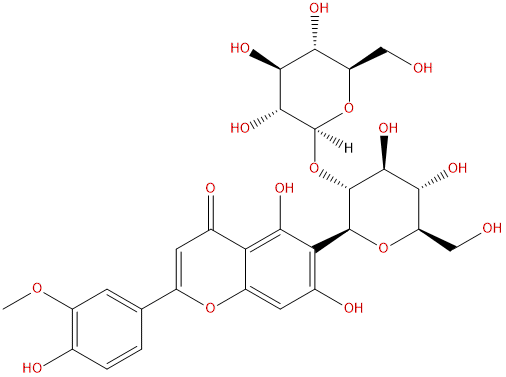
Flavonoids, as one of the most widely distributed plant secondary metabolites in nature, have long been of great concern due to their extensive biological activities. Among them, C-glycosylated flavonoids have become a hot topic in natural medicinal chemistry research due to their sugar groups being directly connected to the flavonoid nucleus through stable C-C bonds. Compared with common O-glycosides, C-glycosylated flavonoids have stronger acid resistance and enzymatic stability, and may exhibit more lasting effects and unique pharmacological effects in organisms. Isosporin-2 '' - O-glucoside (CAS: 97605-25-9) is a structurally unique C-glycosylated trihydroxyflavone disaccharide derivative. It is further connected to a β - D-glucose group through an O-glycosidic bond on the 2 '' - hydroxyl group of the C-linked sugar group (presumably glucose or similar six carbon sugar) of its parent compound Isosporin, forming a complex sugar chain structure of 'C-glycosyl-O-sugar'.
In recent years, as the global burden of cardiovascular disease (CVD) continues to increase, the search for efficient and low toxicity cardiovascular protective agents from natural products has become an important research direction. Preliminary bioinformatics and experimental studies suggest that genistein -2 '' - O-glucoside may act on several key targets closely related to cardiovascular function, such as SELP, PPARG, ACE, NOS3, etc., showing potential value in anti atherosclerosis, improving endothelial function, regulating blood pressure and cardiac ion channels. However, compared to other star flavonoids such as quercetin and apigenin, there is still a lack of systematic reviews on this specific compound. Therefore, this article aims to comprehensively review the chemical properties, plant sources, pharmacological activities, molecular mechanisms of action, and pharmacological potential of isoquercetin 2 '' - O-glucoside, in order to provide a systematic scientific reference for the in-depth research and future development of this compound.
Chemical structure and physicochemical properties
The chemical system name of isokaempferol-2 '' - O-glucoside can be described as: 2 '' - O - β - D-glucopyranosyl isofuscin. Its molecular formula is C28H32O16, with a molecular weight of 624.5480 g/mol. Structurally, its parent nucleus is trihydroxyflavone, which has undergone monomethoxy substitution. Its core feature lies in the glycosylation mode: firstly, a sugar group (usually glucose or arabinose, commonly glucose in isoquercetin) is directly connected to a certain position (usually position 6 or 8) of the flavonoid nucleus through a C-C bond, forming a C-glycosylated flavonoid skeleton; Subsequently, a second D-glucose group was connected to the 2 '' hydroxyl group of the C-linked sugar group through a β - glycosidic bond, forming a disaccharide side chain. This "C-glycosyl-O-glycosyl" structure gives it both the stability of C-glycosides and certain metabolic properties of O-glycosides.
Based on its calculated physicochemical parameters, we can conduct a preliminary evaluation of its properties: its lipid water partition coefficient (LogP) is -0.8179, indicating that the compound has good hydrophilicity. The topologically polar surface area (TPSA) is as high as 269.43 Å ², which is mainly attributed to the large number of hydroxyl and ether oxygen atoms in the molecule, further confirming its strong polarity characteristics. The theoretically calculated water solubility value is 3.3301 (LogS), indicating that it has a medium to high solubility in water, which is beneficial for its application in aqueous formulations and absorption in the gastrointestinal tract. However, high polarity and large TPSA often indicate limited transmembrane ability, and calculations predict low blood-brain barrier (BBB) permeability, suggesting that its main target may be located in the peripheral system rather than the central nervous system. In addition, preliminary toxicity predictions indicate a "no" risk of hERG channel inhibition, and the Ames test predicted a value of 0.6 (usually<0.9 is considered a low mutagenic risk), providing preliminary, computationally based positive signals for its safety.
Plant sources and extraction methods
Isoquercetin 2 '' - O-glucoside is relatively concentrated in nature and mainly exists in some traditional medicinal plants. According to literature reports, the compound is Jue Bed Science(Acanthaceae) and Brassicaceae Brassicaceae is one of the characteristic components of certain plants. For example, in traditional medicinal plants used for clearing heat and detoxifying Board Blue(also known as Ma Lan,Baphicacanthus cusia)It has been separated and identified. In addition, in various ways Isatis genus(Isatis)Plants, such as Isatis indigotica(Isatis indigotica It also exists in the leaves (big green leaves) of the traditional Chinese medicine Banlangen, which is one of its sources. The traditional uses of these plants are mostly related to anti-inflammatory and antiviral effects, suggesting that their active ingredients may have the function of regulating the body's immune and inflammatory responses, which is inherently related to the potential cardiovascular protective effects of this compound.
Extracting isoquercetin 2 '' - O-glucoside from plant materials follows the general extraction principles of flavonoids. Common methods include:
1. Solvent extraction method Using a medium polarity solvent system, such as methanol water or ethanol water (commonly 70% -80% ethanol), for heating reflux or ultrasound assisted extraction. This method is easy to operate and is an effective means of preliminary enrichment.
2. Purification and Separation After vacuum concentration, the crude extract is subjected to liquid-liquid extraction using petroleum ether, ethyl acetate, n-butanol, etc. The compound is usually enriched in the n-butanol fraction or water-soluble fraction. Further purification is highly dependent on modern chromatographic techniques. Silica gel column chromatography is often used for preliminary separation, and then combined with reverse phase silica gel (such as ODS-C18) column chromatography and Sephadex gel (LH-20) column chromatography for fine purification. High performance liquid chromatography (HPLC), especially preparative HPLC, is the ultimate key technology for obtaining high-purity monomers. Its detection often uses ultraviolet detectors, based on the ultraviolet absorption characteristics of flavonoids (usually with maximum absorption at 250-280 nm and 300-380 nm) for monitoring.
Due to the fact that the compound is a C-glycosylated flavonoid, it is relatively stable to acidity and high temperature during the extraction process, but strong alkaline conditions should still be avoided to prevent the opening of the mother nucleus or the breakage of glycosidic bonds.
Pharmacological activity research
Although functional literature directly studying isoquercetin 2 '' - O-glucoside is still accumulating, extensive research on its parent compound isoquercetin and related C-glycosylated flavonoids, combined with its predicted target network, can infer and preliminarily validate its multifaceted pharmacological activities. The core focus is on Cardiovascular protection open.
-
Anti atherosclerosis and anti-inflammatory effects Atherosclerosis is a chronic inflammatory disease. This compound predicts that intercellular adhesion molecule-1 (ICAM1), vascular cell adhesion molecule-1 (VCAM1), and P-selectin (SELP) in the target are key factors mediating leukocyte adhesion and migration to vascular endothelium, and are early markers of inflammation initiation. Research has shown that many structurally similar flavonoids can downregulate the expression of adhesion molecules by inhibiting inflammatory signaling pathways such as nuclear factor kappa B (NF - κ B). In addition, the activation of peroxisome proliferator activated receptor γ (PPARG) has anti-inflammatory, improving insulin resistance and inhibiting the proliferation of vascular smooth muscle cells, which is a potential target for atherosclerosis treatment. Isoquercetin 2 '' - O-glucoside may act as a regulator of PPARG.
-
Endothelial function protection and antihypertensive potential Dysfunction of vascular endothelium is the initiating link of cardiovascular events. The target associated with this compound, nitric oxide synthase 3 (NOS3), is a key enzyme in the synthesis of vasodilator nitric oxide (NO). Enhancing NOS3 activity and expression can help improve endothelial dependent vasodilation. Meanwhile, angiotensin-converting enzyme (ACE) is the core of the renin-angiotensin system (RAS), and its inhibition can reduce the production of angiotensin II, resulting in vasodilation and blood pressure lowering effects. This compound may have certain ACE inhibitory activity.
-
Possible myocardial protection and antiarrhythmic effects The target sodium calcium exchanger (SLC8A1) and potassium voltage-gated channel subfamily H member 2 (KCNH2, encoding hERG protein) are closely related to ion homeostasis and action potential repolarization in cardiomyocytes. Regulating these channels may affect the contractility and electrical stability of the myocardium. Although the prediction shows no risk of hERG inhibition (reducing concerns about QT interval prolongation), its precise regulation of targets such as SLC8A1 requires further experimental clarification. Protein kinase B (AKT1) is the core of the cell survival pathway, and its activation is of great significance in resisting myocardial cell apoptosis and reducing ischemia-reperfusion injury.
-
Other potential activities The regulation of β -2 adrenergic receptors (ADRB2) is related to bronchial dilation, vascular regulation, and other factors. In addition, flavonoids generally possess antioxidant activity, which can alleviate oxidative stress damage to the cardiovascular system by directly clearing free radicals or activating the Nrf2/ARE antioxidant pathway. This may be a common underlying mechanism for their protective effects.
Mechanism of action and molecular targets
The cardiovascular protective effect of isoquercetin 2 '' - O-glucoside is not achieved through a single target, but exhibits a "multi-target, micro network" characteristic of action. The mechanism of action can be elucidated from the following key target pathways:
-
Regulating inflammation adhesion network (SELP, ICAM1, VCAM1)Under the stimulation of inflammatory factors such as tumor necrosis factor - α (TNF - α), the NF - κ B pathway is activated in endothelial cells. This compound may inhibit the nuclear translocation of NF - κ B p65 subunit by intervening in the IKK/I κ B/NF - κ B signaling cascade, thereby suppressing the expression of SELP, ICAM1, and VCAM1 at the transcriptional level. This directly weakens the rolling, adhesion and trans endothelial migration of inflammatory cells such as monocytes on the endothelium, and slows down the infiltration of inflammatory cells in atherosclerotic plaques at the source.
-
Activate PPARG nuclear receptor pathway PPARG, as a ligand activated transcription factor, forms a heterodimer with retinol X receptor (RXR) after binding to agonists, binds to specific DNA response elements, and regulates gene expression. Isogenin-2 '' - O-glucoside may be used as part of the agonist or regulator of PPARG to induce the expression of anti-inflammatory factors (such as IL-10), inhibit inflammatory factors (such as TNF - α, IL-6), promote the expression of genes related to lipid metabolism, improve metabolic disorder, and jointly create a vascular microenvironment against atherosclerosis.
-
Regulating vascular tone and RAS system (NOS3, ACE)This compound may phosphorylate and activate the PI3K/AKT pathway, thereby phosphorylating and activating NOS3, increasing the biosynthesis of NO. NO diffuses into vascular smooth muscle cells, activates guanylate cyclase, increases cGMP levels, and leads to vasodilation. On the other hand, it may competitively inhibit the catalytic activity of ACE by binding specific groups in the molecule to zinc ions in the ACE active center, reducing the production of the potent vasoconstrictor Ang II and the degradation of bradykinin, resulting in a dual effect of lowering blood pressure.
-
Affects myocardial cell signaling and ion homeostasis (AKT1, SLC8A1)During myocardial ischemic injury, this compound may activate AKT1 through upstream receptors such as insulin-like growth factor receptors. Activated AKT1 exerts a strong anti cardiomyocyte apoptosis effect by phosphorylating and inhibiting pro apoptotic proteins such as Bad and Caspase-9, as well as activating pro survival pathways such as mTOR. For SLC8A1, its regulation may be more complex and experimental verification is needed to determine whether it inhibits or regulates its activity, in order to affect calcium transients and contractility in myocardial cells, which may have regulatory significance for heart failure.
These targets are not isolated, but intertwined with each other. For example, AKT activation can simultaneously promote NOS3 activity and inhibit inflammation; PPARG activation can also inhibit the NF - κ B pathway. This multi-target synergistic effect may be the advantage of natural products in exerting mild and systemic therapeutic effects.
Evaluation of drug properties and pharmacokinetics
Based on computational and analogical analysis of drug properties, isoquercetin 2 '' - O-glucoside, as a drug lead compound, has both promising prospects and challenges.
Advantage:
1. Good safety prediction The unpredictable risk of hERG blockade reduces potential concerns about cardiac toxicity (causing arrhythmia). The Ames test predicts a negative result, indicating a low risk of genetic toxicity.
2. Moderate water solubility Good water solubility is beneficial for formulation development, especially for oral solutions, injections, and other dosage forms, and may improve oral absorption.
3. Metabolic stability potential The core C-glycosidic bond can resist the degradation of gastrointestinal digestive enzymes and most glycosidases in the gut microbiota, which may allow it to be absorbed in its prototype or major metabolite form, and its bioavailability is expected to be higher than that of common O-glycosidic flavonoids.
Challenges and unknowns:
1. Membrane permeability may be limited High polarity (low LogP, high TPSA) indicates weaker passive transmembrane diffusion ability. Its absorption may depend on active transporters in the intestine (such as glucose transporter SGLT1, which may recognize its glycosyl portion), but the efficiency remains to be verified. This may be the main limiting factor for its oral bioavailability.
2. Lack of pharmacokinetic data Currently, there is a severe lack of publicly available experimental data on the specific absorption, distribution, metabolism, and excretion (ADME) of this compound. Future research is needed to clarify: its oral absorption rate, peak time, plasma protein binding rate, tissue distribution characteristics (especially whether it can target tissues such as vascular endothelium), main metabolic pathways (such as catalysis of liver microsomal enzyme CYP450, II binding reaction, etc.), and excretion mode.
3. Low blood-brain barrier penetration Predicting its difficulty in entering the central nervous system may actually reduce central side effects for the treatment of peripheral cardiovascular diseases, which can be seen as a "targeted" feature.
Future research directions Systematic in vitro ADME experiments (such as Caco-2 cell permeability, liver microsomal stability, plasma stability) and in vivo pharmacokinetic studies are required. If the bioavailability is indeed not high, structural modification can be considered, such as preparing its prodrug (such as esterifying some hydroxyl groups to improve lipid solubility), or developing new drug delivery systems (such as nanoliposomes, polymer micelles) to enhance its absorption and targeted delivery.
Clinical application prospects and prospects
The clinical application development of isokaempferol-2 '' - O-glucoside should be based on its "multi-target, light intervention" characteristics, targeting the unmet needs in the current prevention and treatment of cardiovascular diseases.
Potential application directions:
1. Adjuvant treatment for primary/secondary prevention of early atherosclerosis and cardiovascular events: As a functional food or dietary supplement ingredient, it is used for people with risk factors such as hypertension, dyslipidemia, diabetes, etc., to slow down the process of atherosclerosis through mild anti-inflammatory, antioxidant and endothelial protection.
2. Auxiliary management of mild to moderate hypertension When used in combination with existing antihypertensive drugs (such as ACEI, ARB), it may produce synergistic effects through different mechanisms (such as enhancing the NO pathway) or be used to reduce the side effects caused by certain antihypertensive drugs.
3. Prevention and treatment of vascular complications in diabetes Diabetes cardiomyopathy and diabetes nephropathy are closely related to oxidative stress and chronic inflammation. This compound may protect target organ blood vessels while improving metabolism by activating pathways such as PPARG and AKT.
4. Auxiliary protective agents for myocardial ischemia-reperfusion injury Before and after cardiac surgery, thrombolysis, and interventional therapy, utilizing the anti apoptotic effect of AKT activation may help alleviate reperfusion injury.
Development Strategy and Prospects:
1. In depth mechanism research Currently, most target associations are based on prediction, and there is an urgent need to validate their direct interactions and functional regulation with key targets such as PPARG and ACE through biophysical and cellular molecular biology methods such as surface plasmon resonance (SPR), isothermal titration calorimetry (ITC), reporter gene experiments, and enzyme activity assays.
2. Strengthen in vivo pharmacological validation: To evaluate the efficacy and safety of long-term administration in mature animal models such as atherosclerosis (such as ApoE -/- mice), spontaneously hypertensive rats (SHR), and myocardial ischemia/reperfusion.
3. Explore structural optimization Reasonably modify the glycosyl portion or flavonoid core while maintaining the core pharmacophore to optimize its pharmacokinetic properties (such as improving oral bioavailability and prolonging half-life).
4. Explore the application of compound formulas A compound composed of other natural products with complementary mechanisms of action, such as resveratrol and tanshinone, may produce a more comprehensive cardiovascular protective effect.
Conclusion
Isoquercetin 2 '' - O-glucoside, as a structurally unique C-glycosyl-O-glycosylated flavonoid, has become a candidate molecule worthy of further exploration in the field of natural product pharmacology due to its well predicted safety, multi-target mechanism of action, and potential cardiovascular protective activity. It embodies the therapeutic philosophy of natural products systematically regulating complex disease networks through multiple pathways and multi-target synergistic effects. Although its research is still in its early stages, with a large amount of pharmacological validation, pharmacokinetic studies, and in-depth analysis of its mechanism of action yet to be carried out, its potential is highly anticipated. In the future, with the integration of systems biology, computational chemistry, and drug design technologies, isokaempferol-2 '' - O-glucoside is expected to develop from a plant chemical component into a new type of drug or functional ingredient for the prevention and treatment of cardiovascular diseases, providing innovative solutions derived from nature to address global cardiovascular health challenges. Its research process will also provide valuable paradigms for the development of other complex structured natural products.