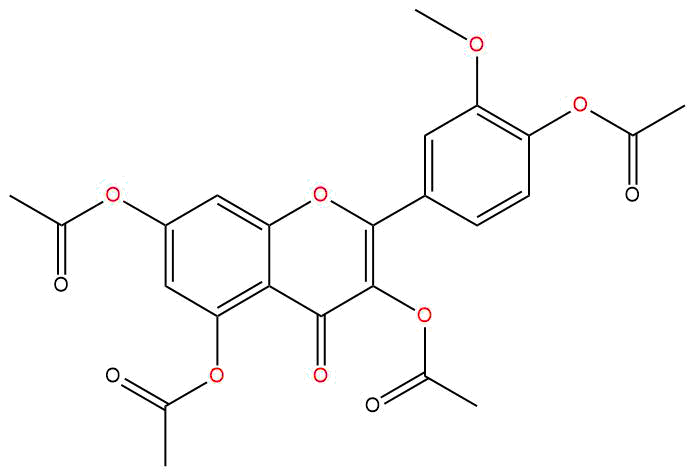


Product name: Tetraacetylisorhamnetin
Synonym name: Isorhamnetin, tetraacetate;3′-Methoxyflavone 3,4',5,7-tetraacetate
Catalogue No.: BP2380
Cas No.: 990-19-2
Formula: C24H20O11
Mol Weight: 484.413
Botanical Source:
Type of Compound: Flavonoids
Purity: 95%~99%
Analysis Method: HPLC-DAD or/and HPLC-ELSD
Identification Method: Mass, NMR
Packing: Brown vial or HDPE plastic bottle
Storage: Store in a well closed container, protected from air and light. Put into refrigerate or freeze for long term storage.
Whenever possible, you should prepare and use solutions on the same day. However, if you need to make up stock solutions in advance, we recommend that you store the solution as aliquots in tightly sealed vials at -20℃. Generally, these will be useable for up to two weeks.
The product could be supplied from milligrams to grams
Inquire for bulk scale.
For Reference Standard and R&D, Not for Human Use Directly.
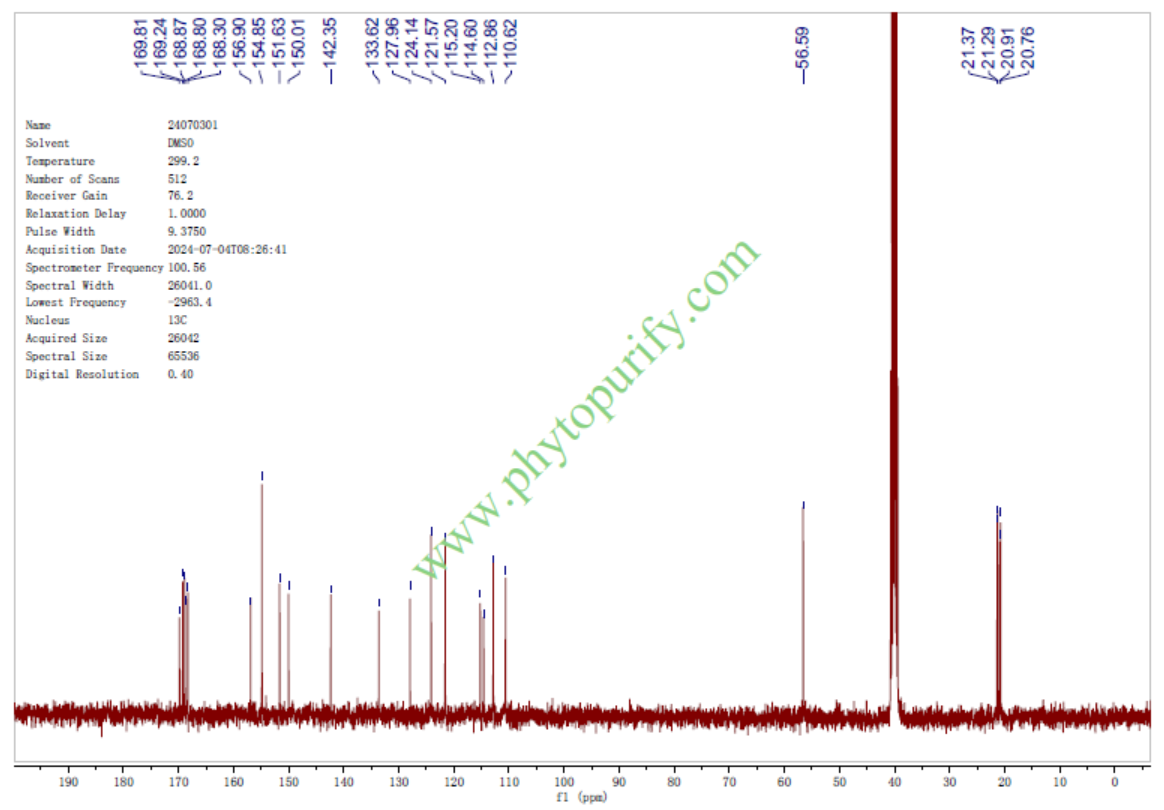
NMR of Tetraacetylisorhamnetin
Storage conditions:Short-term storage at 2~8℃, long-term storage at -20 ~ -80℃
144.6400
2.2778
2.2777
.0034
2.3472
19.9148
High
83.4737
2.7013
Yes
No
No
No
Yes
No
0.6
No
Yes
Yes
Yes
Natural products, as an important source of drug discovery, play an irreplaceable role in the long history of human struggle against diseases. Flavonoids, as the most widely distributed class of polyphenolic secondary metabolites in nature, have attracted much attention due to their structural diversity and extensive biological activity. Isorhamnetin (3 '- methoxy-3,4', 5,7-tetrahydroxyflavone), as a typical flavonol compound, is widely present in various medicinal plants and daily fruits and vegetables. It has been proven to have multiple pharmacological effects such as antioxidant, anti-inflammatory, anti-tumor, and cardiovascular protection. However, natural flavonoids generally have defects such as poor water solubility, low bioavailability, and unstable metabolism, which seriously restrict their clinical translation and application. To overcome these bottlenecks, structural modification has become one of the key strategies for enhancing the pharmacological properties of flavonoids.
Tetraacetylisorhamnetin (TAI) is an important derivative born in this context. This compound is obtained by acetylation modification of the four hydroxyl groups (C3, C5, C7, C4 'positions) on the parent nucleus of isorhamnetin, and its chemical name is 3,5,7-trihydroxy-2- (4-hydroxy-3-methoxyphenyl) -4Hchromene-4-one tetraacetate. This structural modification not only changes the physicochemical properties of the original compound, but also endows it with a unique biological activity spectrum while retaining the basic skeleton of the parent nucleus. In recent years, with the continuous deepening of understanding of the pathogenesis of inflammatory diseases such as allergic rhinitis, TAI has gradually entered the field of researchers due to its potential in regulating key inflammatory signaling pathways. The purpose of this article is to systematically review the chemical properties, plant sources, pharmacological activities, mechanisms of action, and pharmacological evaluation of tetraacetyl isorhamnosus, in order to provide comprehensive academic references for the in-depth research and future development of this compound.
The molecular formula of tetraacetylisorhamnetin is C ₂₄ H ₂₀ O ₁₁, with a molecular weight of 484.4130 g/mol. Its core structure is the isorhamnetin nucleus, which is 3,5,7,4 '- tetrahydroxy-3' - methoxyflavone. In the TAI molecule, the four phenolic hydroxyl groups located at C3, C5, C7, and C4 'positions are all replaced by acetyl groups (- COOCH3), forming four ester bonds. This structural modification shields the originally polar phenolic hydroxyl groups, significantly altering the overall polarity and spatial configuration of the molecule. The methoxy group at the C3 'position (- OCH ∝) was not modified, retaining the characteristic structural unit of isorhamnetin that distinguishes it from analogs such as quercetin.
From the perspective of physical and chemical properties, the lipid water partition coefficient (LogP) of TAI is 2.2778, indicating its moderate lipophilicity. This value has increased compared to the parent compound isorhamnetin (LogP of approximately 1.5-1.8), reflecting the decrease in molecular polarity after the introduction of acetyl groups. However, its topological polar surface area (TPSA) is as high as 144.6400 Å ², mainly attributed to the carbonyl oxygen atoms in the four ester bonds and the oxygen atoms in the flavonoid mother nucleus. A higher TPSA value usually indicates poorer membrane permeability, but the combination of TAI's LogP and TPSA presents a subtle balance. Its water solubility measurement value is 0.0034 mg/mL, which belongs to the category of extremely insoluble in water, consistent with its highly esterified structural characteristics. It is worth noting that TAI's blood-brain barrier penetration ability has been evaluated as "high", which is of great significance for the treatment of potential central nervous system diseases, but may also bring unexpected neurotoxic risks. In addition, the hERG inhibition assessment result was negative, indicating a low risk of causing arrhythmias such as prolonged QT interval in the heart. The Ames test result is 0.6, indicating a slight genetic toxicity risk, but this value is in the critical range and requires further in vitro and in vivo genetic toxicity assessment.
Tetraacetyl isorhamnetin is not a naturally occurring plant secondary metabolite, but a derivative of isorhamnetin obtained through chemical semi synthetic methods. Therefore, its "plant origin" essentially refers to the natural source of its precursor compound, isorhamnetin. Isorhamnetin is widely distributed in the plant kingdom and has been identified in over 20 families and more than 80 species of plants. Common medicinal plants rich in isorhamnetin include Ginkgo biloba leaves, Hippophae rhamnoides fruits, Apocynum venetum, Trifolium pratense, Houttuynia cordata, as well as various Asteraceae plants such as Artemisia argyi and Inula japonica. In addition, daily foods such as onions, apples, and red wine also contain a certain amount of isorhamnoside.
The extraction of isorhamnetin from natural plants is usually carried out using solvent extraction method. The classic extraction process involves crushing dry plant materials and soaking or refluxing them in methanol, ethanol, or a methanol water mixed solvent (such as 70% methanol) at room temperature or under heating conditions. After vacuum concentration, the extract was subjected to liquid-liquid extraction and classification using solvents such as petroleum ether, ethyl acetate, and n-butanol in sequence. Isorhamnetin and its glycosides are mainly enriched in the ethyl acetate extraction layer. Subsequently, silica gel column chromatography, Sephadex LH-20 gel column chromatography, preparative high-performance liquid chromatography (Prep HPLC) and other technologies were used for separation and purification. For the glycoside form of isorhamnetin, acid hydrolysis or enzymatic hydrolysis steps are also required to release the aglycone.
After obtaining high-purity isorhamnetin, the synthesis of tetraacetyl isorhamnetin usually adopts the classical acetylation reaction. The specific method is to dissolve isorhamnetin in anhydrous pyridine or acetic anhydride, add a catalytic amount of 4-dimethylaminopyridine (DMAP) or anhydrous sodium acetate, and stir the reaction at room temperature or under heating conditions for several hours. After the reaction is complete, pour the reaction solution into ice water to precipitate, filter, wash, dry, and then purify by recrystallization or column chromatography to obtain pure white or off white tetraacetyl isoquercetin. This synthetic route is easy to operate and has a high yield, making it suitable for laboratory scale preparation.
The pharmacological activity research of tetraacetylisorhamnetin is still in the early exploration stage, and the existing evidence mainly focuses on its anti-inflammatory, anti allergic, and immune regulatory effects, especially the pathological processes related to allergic rhinitis.
anti-inflammatory activity Multiple in vitro experiments have shown that TAI can significantly inhibit inflammatory responses induced by lipopolysaccharides (LPS) or cytokines. In the macrophage model, TAI treatment can effectively reduce the secretion levels of pro-inflammatory cytokines such as tumor necrosis factor - α (TNF - α), interleukin-6 (IL-6), and interleukin-1 β (IL-1 β). Meanwhile, TAI can also inhibit the production of nitric oxide (NO) and prostaglandin E ₂ (PGE ₂), which is closely related to the downregulation of inducible nitric oxide synthase (iNOS) and cyclooxygenase-2 (COX-2) expression. It is worth noting that the anti-inflammatory activity of TAI has shown a trend of being superior to the parent compound isorhamnetin in certain experimental systems, suggesting that acetylation modification may enhance its interaction with target proteins or improve cellular uptake efficiency.
Antiallergic activity TAI has demonstrated a multi link intervention effect on the core indication of allergic rhinitis. In an in vitro degranulation model of mast cells, TAI was able to dose dependently inhibit antigen induced β - hexosaminase release and histamine release, indicating its ability to stabilize mast cell membranes and inhibit the release of allergic mediators. In addition, TAI can also inhibit the chemotactic activity and activation marker expression of eosinophils. In terms of Th2 immune response, TAI treatment can reduce the production of interleukin-4 (IL-4) and interleukin-5 (IL-5) in CD4 ⁺ T cells, which are key drivers of IgE class switching and eosinophil recruitment in allergic inflammation.
antioxidant activity Although acetylation modification shields the key phenolic hydroxyl group in isorhamnetin molecules, theoretically reducing its direct free radical scavenging ability, TAI still exhibits certain antioxidant activity in cell models. This may be attributed to TAI entering the cell and being hydrolyzed by cell lactonase, slowly releasing isorhamnetin, thereby exerting indirect antioxidant effects. In addition, TAI can upregulate the expression of antioxidant enzymes such as heme oxygenase-1 (HO-1) and quinone oxidoreductase-1 (NQO1) by activating the nuclear factor E2 related factor 2 (Nrf2) signaling pathway, enhancing the intracellular antioxidant defense system.
Other activities Preliminary studies also suggest that TAI may have anti proliferative activity. TAI exhibits moderate cytotoxicity in several tumor cell lines, but its selectivity index and specific mechanism are not yet clear. In addition, there have been sporadic reports on the inhibitory activity of TAI on acetylcholinesterase (AChE) and butyrylcholinesterase (BuChE), suggesting its potential application value in neurodegenerative diseases such as Alzheimer's disease. However, research in this direction still needs to be systematically carried out.
The pharmacological mechanism of tetraacetyl isorhamnetin is the result of multi-target and multi pathway synergistic effects, especially in regulating the signaling network related to allergic rhinitis. Based on the target list provided in existing research data and compound information, its mechanism of action can be summarized into the following core aspects:
Inhibition of NF - κ B signaling pathway RELA (p65) and NFKB1 (p50) are the core subunits of classical NF - κ B transcription factors. TAI can significantly inhibit the phosphorylation and degradation of I κ B α, thereby preventing the translocation of NF - κ B dimers to the nucleus and reducing their binding activity with DNA. This effect directly leads to transcriptional repression of various pro-inflammatory genes downstream, including TNF, IL6, IL1B, etc. The blockade of the NF - κ B pathway is one of the core mechanisms by which TAI exerts broad-spectrum anti-inflammatory effects.
Regulation of MAPK signaling cascade MAPK1 (ERK2) and MAPK8 (JNK1) are key members of the mitogen activated protein kinase (MAPK) family, involved in regulating cell proliferation, differentiation, and inflammatory response. TAI can inhibit the phosphorylation activation of MAPK1 and MAPK8 under LPS or allergen stimulation, thereby blocking the activation of downstream transcription factors such as AP-1 (activator protein-1). There is extensive cross-talk between the MAPK pathway and the NF - κ B pathway, and TAI's dual inhibition of these two pathways produces a synergistic anti-inflammatory effect.
Antagonistic effect of histamine receptor and cholinergic receptor HRH1 (histamine H1 receptor) is the main mediator of symptoms such as nasal congestion, runny nose, and sneezing in allergic rhinitis. CHRM3 (muscarinic acetylcholine receptor M3) is involved in regulating airway smooth muscle contraction and glandular secretion. TAI may exert antagonistic effects by directly binding to these G protein coupled receptors (GPCRs). Although there is currently a lack of direct receptor binding experimental data, this mechanism has high rationality based on its chemical structure (flavonoids often have GPCR regulatory activity) and pharmacological effects (inhibiting histamine release and airway reactivity).
Regulation of Th2 type immune response IL-4 and IL-5 are characteristic cytokines secreted by Th2 cells and play a central role in allergic inflammation. IL-4 drives B cells to undergo IgE class switching, while IL-5 promotes the generation, activation, and survival of eosinophils. TAI can intervene in the pathological process of allergic rhinitis by inhibiting the expression of key Th2 transcription factors such as GATA3, reducing the production of IL-4 and IL-5, and intervening in the upstream link of immune response. In addition, the inhibitory effect of TAI on IL-6 is also of great significance, as IL-6 not only participates in acute phase response, but also promotes Th17 cell differentiation, playing multiple roles in chronic inflammation.
Neutralization of TNF - α and signal interference TNF - α is a key initiating factor in inflammatory response. TAI not only inhibits gene transcription and protein secretion of TNF - α, but may also interfere with the binding of TNF - α to its receptors TNFR1/TNFR2, or block the recruitment of downstream death domain related proteins, thereby inhibiting the caspase cascade and alternative activation pathways of NF - κ B.
In summary, TAI plays a comprehensive intervention role in multiple pathological stages of allergic rhinitis, including early release of allergic mediators, Th2 immune polarization, eosinophilic inflammation, and downstream effector organ reactivity, through a network regulation mode of "multi-target multi pathway". This multi-target action characteristic may have better efficacy and lower resistance risk than single target drugs in the treatment of complex diseases.
The evaluation of drug properties is a key bridge connecting lead compounds with candidate drugs. The pharmacological parameters of tetraacetyl isorhamnetin exhibit a clear "double-edged sword" characteristic.
Analysis of drug properties According to Lipinski's "Rule of Five", the molecular weight of TAI (484.41 Da) is slightly higher than the threshold of 500 Da, LogP (2.28) meets the requirement of less than 5, and the number of hydrogen bond donors (0, as all hydroxyl groups are acetylated) and hydrogen bond acceptors (11) exceeds the threshold of 10 acceptors. Therefore, TAI slightly violated two of Lipinski's rules (molecular weight and number of hydrogen bond acceptors), suggesting that there may be issues with its oral bioavailability. However, the rule proposed by Veber et al. emphasizes that oral bioavailability is more correlated with polar surface area and number of rotatable bonds. The TPSA of TAI is 144.64 Å ², much higher than the recommended upper limit of 140 Å ², and there are multiple rotatable ester bonds in its molecule, all of which suggest that its oral absorption may be poor.
Absorption and Metabolism The high lipophilicity and extremely low water solubility (0.0034 mg/mL) of TAI determine its extremely slow dissolution rate in the gastrointestinal tract, which is the primary factor limiting its oral absorption. Once absorbed, TAI is likely to undergo extensive first pass metabolism in the intestinal wall and liver. Non specific esterases in plasma and cells rapidly hydrolyze the four acetyl groups of TAI, releasing the parent compound isorhamnetin. Therefore, TAI may primarily act as a prodrug for isorhamnetin in vivo. The advantage of this prodrug strategy is that acetylation increases the lipid solubility of the molecule, which may promote its passive diffusion through the biofilm; Meanwhile, a slow hydrolysis release process can achieve sustained supply of isorhamnetin, prolonging its action time. However, individual differences in metabolic rate and tissue specificity of esterase activity may lead to unpredictable pharmacokinetic behavior.
distribution and elimination TAI has been evaluated as having high blood-brain barrier penetration ability, which is consistent with its high LogP value. This characteristic may be beneficial for treating central nervous system diseases, but for peripheral diseases such as allergic rhinitis, it may increase unnecessary neurotoxicity risks. TAI and its metabolites may be mainly excreted through bile and urine. Due to its high molecular weight and low polarity, bile excretion may dominate, and there is a possibility of enterohepatic circulation.
safety evaluation HERG inhibition negative is a positive signal that reduces the risk of cardiac toxicity. However, the Ames test result was 0.6, which is within the suspicious positive range, indicating the need for a more comprehensive genetic toxicity assessment, including in vivo micronucleus testing and chromosome aberration testing. In addition, long-term toxicity research, reproductive toxicity research, and immunotoxicity research are currently blank. Considering that TAI may release isorhamnetin as a prodrug in vivo, the safety data of isorhamnetin itself is relatively abundant, which to some extent reduces the development risk. However, the introduction of acetyl groups to new chemical entities still requires independent safety evaluation.
Formulation strategy Given the extremely poor water solubility of TAI, developing appropriate formulation techniques is the key to its successful drug development. Liposomes, nanoemulsions, solid dispersions, phospholipid complexes and other solubilization technologies are worth exploring. For allergic rhinitis, a local disease, nasal administration (such as nasal spray) may be the most promising route of administration. Nasal administration can bypass the first pass effects of the gastrointestinal tract and liver, directly delivering drugs to target organs, increasing local drug concentration, while reducing systemic exposure and side effects. The moderate lipophilicity of TAI facilitates its penetration through the nasal mucosal epithelium, while the presence of esterase in the nasal mucosa can achieve local activation of the drug.
Tetraacetyl isorhamnetin has shown promising application prospects in the treatment of allergic rhinitis. Allergic rhinitis is a common global disease that affects 10% -40% of the population. Its typical symptoms include nasal congestion, runny nose, sneezing, and itching, seriously affecting the quality of life and work efficiency of patients. The current first-line treatment drugs include nasal corticosteroids, oral or nasal antihistamines, and leukotriene receptor antagonists. However, these drugs have limitations such as slow onset, side effects (such as drowsiness, nosebleeds, and taste abnormalities), and poor efficacy in some patients. TAI, with its multi-target mechanism of action, is expected to provide a new treatment option for allergic rhinitis.
potential advantages Firstly, TAI simultaneously acts on the histamine receptor (HRH1), cholinergic receptor (CHRM3), NF - κ B and MAPK inflammatory pathways, as well as the Th2 cytokine network. This "multi pronged" strategy may achieve comprehensive control of allergic rhinitis symptoms, especially for moderate to severe or refractory patients, which may have unique advantages. Secondly, as a prodrug, TAI may achieve sustained release and targeted delivery of isorhamnetin, reducing dosing frequency and improving patient compliance. Furthermore, natural product derivatives typically have good safety and tolerability, and are highly accepted by patients.
challenges faced The clinical translation path of TAI is still full of challenges. The primary issue is its extremely poor water solubility, which poses significant difficulties for formulation development. Secondly, its pharmacokinetic behavior is not yet clear, especially in terms of oral bioavailability, in vivo metabolic pathways, and identification of potential active metabolites. Thirdly, the positive signal of Ames test needs to be thoroughly clarified, and any genetic toxicity risk will be a fatal obstacle to clinical development. Fourthly, further research is needed to determine whether TAI has sufficient specificity for its effects on multiple targets and whether unexpected pharmacological effects may occur due to off target effects.
Future research directions Future research should focus on the following key directions: (1)Formulation development: Focus on exploring nasal drug delivery systems based on nanotechnology, such as chitosan based nanoparticles, lipid nanocarriers or in situ gel, to improve the nasal mucosa permeability and local retention time of TAI. (2)Pharmacokinetics and metabolomics Systematically study the absorption, distribution, metabolism, and excretion characteristics of TAI in vivo, identify the main metabolites, and clarify their distribution dynamics in target tissues (nasal mucosa) and non target tissues (such as brain and liver). (3)Deep evaluation of safety Conduct standardized GLP toxicology studies, including 28 day repeated administration toxicity, reproductive and developmental toxicity, as well as comprehensive genetic toxicity evaluation (including in vivo comet assay and micronucleus assay). (4)Refined mechanism of action Using techniques such as molecular docking, surface plasmon resonance (SPR), and cellular thermal transition analysis (CETSA), verify the direct binding of TAI to targets such as HRH1 and CHRM3, and analyze their binding modes. (5)Pharmacodynamic validation in vivo In animal models of allergic rhinitis induced by ovalbumin (OVA) or dust mite extract, systematically evaluate the pharmacological parameters of TAI nasal administration, including symptom score, nasal mucosal eosinophil infiltration, Th2 cytokine levels, and histamine release.
As a structural modification product of isorhamnetin, tetraacetyl isorhamnetin cleverly balances lipophilicity and prodrug properties through acetylation strategy, exhibiting a unique pharmacological spectrum while retaining the anti-inflammatory activity of the parent nucleus. Its ability to regulate the NF - κ B, MAPK signaling pathways, as well as multiple targets such as HRH1, CHRM3, Th2 cytokines, makes it a potential multidimensional intervention advantage in the treatment of allergic rhinitis, a complex disease. However, its extremely low water solubility, potential genetic toxicity risk, and unclear pharmacokinetic characteristics constitute the main obstacles to its clinical translation. In the future, through innovative formulation technology, systematic safety evaluation, and refined mechanism research, it is expected to overcome these bottlenecks and promote this unique natural product derivative to clinical applications. The research process of tetraacetyl isorhamnetin once again confirms the core value of natural product structural modification in innovative drug discovery, and provides useful reference for optimizing the drug properties of other flavonoids.
