Pharmacological research progress and pharmacological evaluation of natural product Ombuin
Introduction/Overview
Natural products, as an important source of drug discovery, play an irreplaceable role in the long history of human fight against diseases. Flavonoids, as the most widely distributed class of secondary metabolites in nature, have attracted much attention due to their structural diversity and extensive biological activity. Among numerous flavonoids, Ombuin (CAS number: 529-40-8), as a unique dimethoxyflavonoid, has gradually entered the field of researchers in recent years and demonstrated multifaceted pharmacological potential.
Shang Lu Huang originally originated from plants in the Shang Lu family(Phytolacca Isolation and identification in the spp., followed by identification in Sichuan pepper(Zanthoxylum spp.)、 Tenerifasha grass(Cyperus teneriffae)Found in various plants. From a chemical structure perspective, naringenin is a derivative of Quercetin, in which the hydroxyl groups at positions 7 and 4 are replaced by methoxy groups. This structural modification endows it with unique physicochemical properties and biological activity. Early research mainly focused on its antibacterial effect, and found that Shanglu flavin has broad-spectrum antibacterial activity against various pathogenic bacteria, with a minimum inhibitory concentration (MIC) range of 125 to 500 μ g/mL. With the deepening of research, its various pharmacological activities such as anti-inflammatory, anti-tumor, and antioxidant have gradually been revealed, especially in the field of anti-tumor. Shanglu flavin has shown potential therapeutic value for tumors by regulating multiple key signaling pathways and molecular targets.
This article will provide a systematic review of the research progress of Shanglu flavin from multiple dimensions, including chemical structure and physicochemical properties, plant sources and extraction methods, pharmacological activity research, mechanism of action and molecular targets, pharmacological evaluation and pharmacokinetics, clinical application prospects and prospects, in order to provide reference for the in-depth development and clinical translation of this natural product.
Chemical structure and physicochemical properties
Chemical structural characteristics
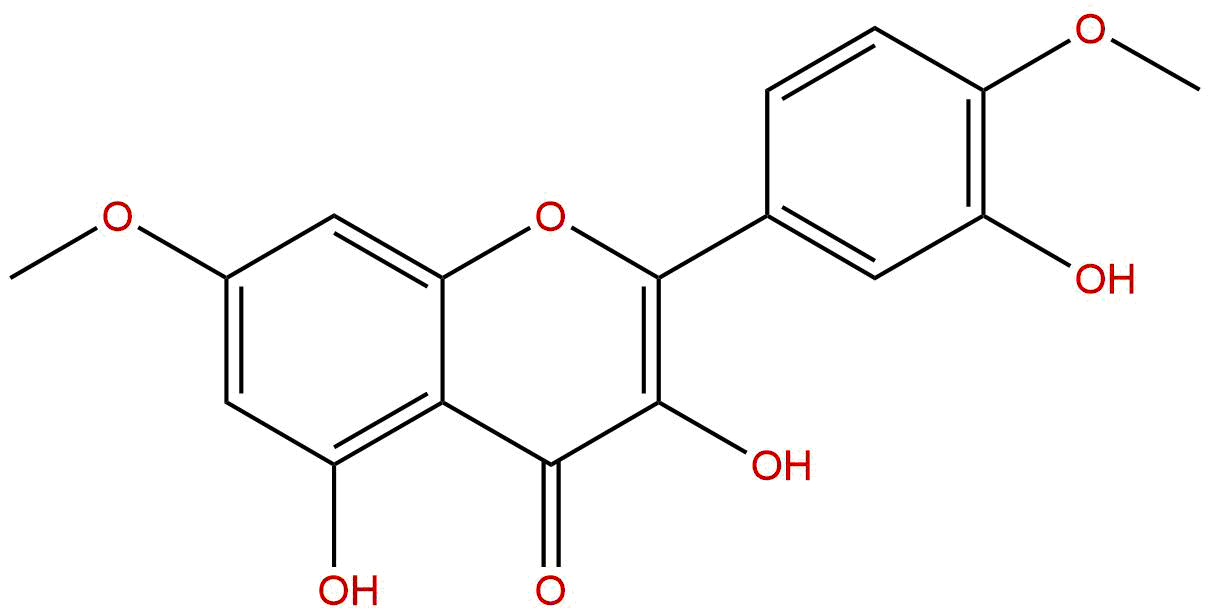
The chemical name of Ombuin is 3,5,3 '- trihydroxy-74' - dimethoxyflavone, which belongs to the class of dimethoxyflavones. Its molecular formula is C ₁₇ H ₁₄ O ₇, and its molecular weight is 330.2920 g/mol. Structurally, Shanglu flavin has a typical flavonoid core structure, consisting of two benzene rings (A and B rings) connected by an oxygen-containing heterocyclic ring (C ring). Specifically, the 5th and 7th positions of ring A are respectively connected to hydroxyl and methoxy groups, the 3rd position of ring C is connected to hydroxyl groups, and the 3rd and 4th positions of ring B are respectively connected to hydroxyl and methoxy groups.
Compared with the parent compound quercetin, berberine undergoes methoxylation modification at positions 7 and 4 '. This structural modification significantly alters the polarity and hydrogen bond donor/acceptor properties of the molecule. The introduction of methoxy groups increases the lipophilicity of the molecule while reducing the number of hydroxyl groups that can form hydrogen bonds, thereby affecting its interaction mode with biomolecules. It is worth noting that there are multiple phenolic hydroxyl groups in the molecule of Shanglu flavin, which endow it with strong antioxidant and metal chelating abilities.
Physical and chemical property parameters
According to the results of computational chemistry and experimental measurements, the main physical and chemical properties of Shanglu flavin are as follows:
- Lipid water partition coefficient (LogP)2.4465 indicates that the compound has moderate lipid solubility, which facilitates transmembrane transport and interaction with lipid membranes.
- Topological Polarity Surface Area (TPSA)109.3600 Å ², which is higher than the typical threshold for oral medication (usually<140 Å ²), suggests that it may have good oral absorption potential.
- Water solubility:0.0609 mg/mL, It belongs to insoluble compounds, which may limit its bioavailability.
- Blood-brain barrier penetrability Low, indicating that berberine is not easily able to enter the central nervous system, this characteristic may be advantageous in the treatment of peripheral diseases and can reduce central nervous system side effects.
- HERG inhibition Negative, indicating a low risk of cardiac toxicity.
- Ames test 0.6 indicates that the compound is weakly positive or negative in the standard mutagenicity test, indicating a low risk of genetic toxicity.
These physicochemical property parameters provide important references for the drug development of Shanglu Huang. Its moderate lipid solubility and low risk of hERG inhibition are favorable factors, but poor water solubility may become a challenge for formulation development.
Plant sources and extraction methods
Plant-based
Shanglu flavin is widely distributed in nature and mainly exists in the following plant groups:
-
Shanglu family plants: Shanglu(Phytolacca acinosa)The American Commercial Land(Phytolacca americana)It is the earliest discovered source of Shanglu flavin. As a traditional Chinese medicine, Shanglu has the effects of relieving diarrhea, promoting diuresis, reducing swelling, and dispersing nodules. The study of its chemical composition laid the foundation for the discovery of Shanglu flavonoids.
-
Rutaceae plants: Sichuan pepper(Zanthoxylum bungeanum)It and its related plants are important sources of Shanglu flavonoids. Research has shown that the phytodin isolated from Sichuan pepper has broad-spectrum antibacterial activity, with a MIC of 125-500 μ g/mL.
-
Cyperaceous plants: Tenerifasha Grass(Cyperus teneriffae)It is another important source of phytophthora infestans, and phytophthora infestans isolated from this plant exhibit significant anti-inflammatory activity.
-
Other plants Shanglu flavin still exists in the genus Hypericum(Hypericum)Salvia genus(Salvia)Among various plants, it indicates that their distribution in the plant kingdom is diverse.
Extraction and Separation Methods
The extraction of Shanglu flavonoids is usually carried out using organic solvent extraction combined with modern chromatographic separation techniques. The typical extraction process is as follows:
Step 1: Raw material pretreatment Crush the dried plant material to an appropriate particle size, typically using a 40-60 mesh sieve.
Step 2: Solvent Extraction Using ethanol or methanol as extraction solvents, the solid-liquid ratio is usually 1:10 to 1:20 (w/v), and multiple extractions are carried out at room temperature or heating conditions (40-60 ° C). Research has shown that a 70% ethanol aqueous solution has a higher extraction efficiency for emodin from Phytophthora infestans.
Step 3: Concentration and Preliminary Purification Concentrate the extract under reduced pressure until it becomes a paste, and then perform liquid-liquid extraction using solvents such as petroleum ether, ethyl acetate, and n-butanol in sequence. The main enrichment of emodin is in the ethyl acetate extraction site.
Step 4: Chromatographic Separation Silica gel column chromatography, Sephadex LH-20 gel column chromatography and preparative high performance liquid chromatography (HPLC) were used for purification. Common elution systems include chloroform methanol (gradient elution with different ratios) or acetonitrile water systems.
Step 5: Structural Identification The structure of the isolated compound was confirmed by techniques such as nuclear magnetic resonance spectroscopy (¹ H-NMR, ¹ ³ C-NMR), mass spectrometry (MS), ultraviolet spectroscopy (UV), and infrared spectroscopy (IR).
In recent years, with the promotion of the concept of green chemistry, new extraction technologies such as ultrasound assisted extraction, microwave-assisted extraction, and supercritical fluid extraction have also been attempted to be applied to the extraction of emodin from Shanglu. These methods have the advantages of high extraction efficiency, low solvent consumption, and environmental friendliness.
Pharmacological activity research
Antibacterial activity
The antibacterial activity of Shanglu flavin is one of its earliest discovered pharmacological effects. Research has shown that Shanglu flavin has inhibitory effects on various Gram positive and Gram negative bacteria. Specifically, it affects Staphylococcus aureus(Staphylococcus aureus)Staphylococcus epidermidis(Staphylococcus epidermidis)Escherichia coli(Escherichia coli)Pseudomonas aeruginosa(Pseudomonas aeruginosa)The MIC range for common pathogenic bacteria is 125-500 μ g/mL.
Further research has found that the antibacterial mechanism of Shanglu flavin may involve multiple aspects: firstly, it destroys the integrity of bacterial cell membranes, leading to the leakage of intracellular substances; Secondly, it inhibits the activity of bacterial DNA gyrase and interferes with DNA replication; The third is the interaction with bacterial cell wall components, which affects cell wall synthesis. It is worth noting that Shanglu flavin also exhibits certain antibacterial activity against drug-resistant strains, suggesting its potential to overcome bacterial resistance.
anti-inflammatory activity
The anti-inflammatory activity of Shanglu flavin has been validated in various inflammatory models. In the lipopolysaccharide (LPS) - induced macrophage inflammation model, berberine can significantly inhibit the production of pro-inflammatory factors such as tumor necrosis factor - α (TNF - α), interleukin-6 (IL-6), and interleukin-1 β (IL-1 β). At the same time, berberine can also inhibit the synthesis of nitric oxide (NO) and prostaglandin E ₂ (PGE ₂), which is related to its inhibition of the expression of inducible nitric oxide synthase (iNOS) and cyclooxygenase-2 (COX-2).
In animal models, Shanglu flavin showed significant inhibitory effects on acute inflammation models such as rat toe swelling induced by carrageenan and increased intra-abdominal capillary permeability induced by acetic acid in mice. In addition, in chronic inflammation models such as adjuvant arthritis models, berberine can also reduce joint swelling and inflammatory cell infiltration.
Antitumor activity
The anti-tumor activity of Shanglu flavin has been a hot research topic in recent years. In vitro experiments showed that Phytolaccin inhibited the proliferation of many tumor cell lines, including breast cancer cells (MCF-7, MDA-MB-231), lung cancer cells (A549, H1299), liver cancer cells (HepG2), colon cancer cells (HT-29, HCT-116), gastric cancer cells (SGC-7901) and leukemia cells (HL-60, K562). Its half maximal inhibitory concentration (IC ₅₀) is usually in the range of 10-50 μ M, and its toxicity to normal cells is relatively low, showing a certain degree of selectivity.
In in vivo experiments, Shanglu flavin can inhibit the growth of transplanted tumors in nude mice and prolong the survival of tumor bearing mice. It is worth noting that when used in combination with chemotherapy drugs such as cisplatin and paclitaxel, Shang Lu Huang exhibits a synergistic effect, which can reduce the dosage of chemotherapy drugs and alleviate their toxic side effects.
antioxidant activity
The multiple phenolic hydroxyl groups in the molecule of Shang Lu Huang endow it with strong free radical scavenging ability. In the DPPH radical scavenging experiment, the IC50 value of naringenin was approximately 20-30 μ M, which was comparable to the positive control vitamin C. In addition, berberine can also scavenge ABTS ⁺ free radicals, superoxide anion free radicals, and hydroxyl free radicals, and inhibit lipid peroxidation reactions.
At the cellular level, berberine can reduce the levels of oxidative stress markers such as malondialdehyde (MDA) and reactive oxygen species (ROS), while increasing the activity of antioxidant enzymes such as superoxide dismutase (SOD), catalase (CAT), and glutathione peroxidase (GSH Px). These antioxidant activities may be closely related to their anti-inflammatory and anti-tumor effects.
Other pharmacological activities
In addition to the main activities mentioned above, Shang Lu Huang Huang also exhibits the following pharmacological effects:
- Antiviral activity Has a certain inhibitory effect on influenza virus, herpes simplex virus, etc.
- Hepatoprotective activity In the carbon tetrachloride induced liver injury model, berberine can reduce serum transaminase levels and alleviate liver cell damage.
- Hypoglycemic activity By activating the AMPK signaling pathway, it promotes glucose uptake and utilization.
- Neuroprotective activity In the Alzheimer's disease model, berberine can reduce the aggregation of β - amyloid protein and protect neurons from damage.
Mechanism of action and molecular targets
Mechanism of anti-tumor action
The anti-tumor effect of Shang Lu Huang involves multiple signaling pathways and molecular targets, mainly including the following aspects:
1. Inducing cell apoptosis
Shanglu flavin induces tumor cell apoptosis through two pathways: endogenous (mitochondrial) and exogenous (death receptor). In the mitochondrial pathway, berberine can downregulate the expression of anti apoptotic proteins MCL1 (MCL1) and BCL2 (BCL2), while upregulating the expression of pro apoptotic proteins BAX and BAD, leading to a decrease in mitochondrial membrane potential, release of cytochrome c, and activation of caspase-9 and caspase-3, ultimately triggering cell apoptosis. In addition, berberine can inhibit the phosphorylation of STAT3 (STAT3), block its transcriptional activity, and thereby downregulate the expression of its target genes such as MCL1 and BCL2.
2. Inhibit cell proliferation and induce cell cycle arrest
Shanglu flavin can inhibit the proliferation of tumor cells, mainly by inducing cell cycle arrest. Research has shown that berberine can block tumor cells in the G ₁/S phase or G ₂/M phase, which is related to the downregulation of the expression of cell cycle proteins (Cyclin D1, Cyclin E) and cyclin dependent kinases (CDK2, CDK4, CDK6). In addition, Shanglu flavin can upregulate the expression of cell cycle inhibitory proteins p21 and p27, further enhancing the cell cycle arrest effect.
3. Inhibit angiogenesis
Shang Lu Huang can inhibit tumor angiogenesis, which is one of the important mechanisms of its anti-tumor effect. In vitro experiments have shown that berberine can inhibit the proliferation, migration, and luminal formation of human umbilical vein endothelial cells (HUVECs). At the molecular level, berberine can downregulate the expression of hypoxia inducible factor-1 alpha (HIF1A, HIF1A) and inhibit the transcription and secretion of vascular endothelial growth factor (VEGF). In addition, berberine can inhibit the activity of matrix metalloproteinase-2 (MMP2, MMP2), reduce the degradation of extracellular matrix, and thus inhibit the invasion and metastasis of tumor cells.
4. Inhibit topoisomerase activity
Shanglu flavin can inhibit the activity of topoisomerase I (TOP1, TOP1) and topoisomerase II α (TOP2A, TOP2A). Topoisomerase plays a crucial role in DNA replication, transcription, and recombination processes, and its inhibitors can cause DNA damage, leading to induction of cell apoptosis. Shanglu flavin stabilizes the topoisomerase DNA complex, preventing the reconnection of DNA strands and causing double strand breaks, ultimately leading to cell death.
5. Regulating the MAPK signaling pathway
Shanglu flavin can regulate the mitogen activated protein kinase (MAPK) signaling pathway, including ERK, JNK, and p38 MAPK. Research has shown that berberine can activate JNK and p38 MAPK, while inhibiting the phosphorylation of ERK. The changes in these MAPK signals are closely related to cell apoptosis and cell cycle arrest.
6. Regulating the estrogen signaling pathway
Shanglu flavin has regulatory effects on estrogen receptor alpha (ESR1, ESR1) and aromatase (CYP19A1, CYP19A1). In estrogen receptor positive breast cancer cells, Phytolaccin can antagonize the binding of estrogen and receptor, and inhibit the proliferation of estrogen dependent cells. At the same time, Phytolaccin can also inhibit the activity of aromatase and reduce the synthesis of estrogen, thus playing an anti breast cancer role.
Anti inflammatory mechanism
The anti-inflammatory effect of Shanglu flavin is mainly achieved by inhibiting the nuclear factor kappa B (NF - κ B) and mitogen activated protein kinase (MAPK) signaling pathways. Specifically, berberine can inhibit the phosphorylation and degradation of I κ B α, prevent the nuclear translocation of NF - κ B, and thus suppress the expression of downstream pro-inflammatory genes. In addition, berberine can inhibit the phosphorylation of JNK and p38 in the MAPK pathway, reducing the transcriptional activity of AP-1.
Antibacterial mechanism
The antibacterial mechanism of Shanglu flavin involves multiple aspects: firstly, it destroys the integrity of bacterial cell membranes, increases membrane permeability, and leads to the leakage of intracellular substances; Secondly, it inhibits the activity of bacterial DNA gyrase and topoisomerase IV, interfering with DNA replication; Thirdly, it binds to bacterial cell wall components such as peptidoglycan precursors, affecting cell wall synthesis; The fourth is to inhibit the formation of bacterial biofilm and enhance the antibacterial activity against drug-resistant strains.
Evaluation of drug properties and pharmacokinetics
Drugability assessment
Based on the aforementioned physicochemical property parameters, the pharmacological properties of Shanglu Huang can be evaluated from the following aspects:
1. Analysis of drug properties According to Lipinski's "Rule of Five", the molecular weight (330.29) of naringenin is less than 500, the LogP (2.45) is less than 5, the number of hydrogen bond donors (3 phenolic hydroxyl groups) is less than 5, and the number of hydrogen bond acceptors (7 oxygen atoms) is less than 10, fully meeting the criteria for drug likeness. In addition, its rotatable key count is 2, which is in line with the typical characteristics of oral medications.
2. Absorption characteristics Shanglu flavin has moderate lipid solubility (LogP=2.45), which facilitates passive diffusion through biofilms. But its water solubility is poor (0.0609 mg/mL), which may limit its dissolution and absorption in the gastrointestinal tract. Through formulation techniques such as solid dispersions, liposomes, cyclodextrin inclusion complexes, etc., it is expected to improve their solubility and oral bioavailability.
3. Metabolic stability The phenolic hydroxyl and methoxy groups in the molecule of Shanglu flavin are potential sites for metabolic modification. In the body, berberine may undergo phase II metabolic reactions such as glucuronidation and sulfation, which can increase its water solubility and promote excretion. In addition, methoxy groups may be converted into hydroxyl groups through O-demethylation reactions, generating metabolites such as quercetin, which may have different biological activities.
4. Safety evaluation Shang Lu Huang showed weak positivity (0.6) in the Ames test, indicating a low risk of genetic toxicity. The hERG inhibition test is negative, indicating a low risk of cardiac toxicity. In animal experiments, no significant acute toxicity reactions were observed within the therapeutic dose range of Shanglu flavin. However, its long-term toxicity, reproductive toxicity, and carcinogenicity safety data are still insufficient and require further research.
Pharmacokinetic characteristics
At present, there is relatively limited research on the pharmacokinetics of Shanglu flavin, but some preliminary findings have been made:
1. Absorption The oral absorption of Shanglu flavin may be poor, which is related to its low water solubility. Animal experiments have shown that after oral administration, the blood concentration of berberine is lower, and its absolute bioavailability may be less than 10%. By means of formulation or structural modification, it is expected to improve its oral absorption.
2. Distribution Shanglu flavin has moderate lipid solubility, which is beneficial for distribution in tissues. Its apparent distribution volume (Vd) may be large, indicating widespread tissue distribution. It is worth noting that the blood-brain barrier penetration of berberine is low, which limits its distribution in the central nervous system but also reduces the risk of central nervous system side effects.
3. Metabolism Shanglu flavin is mainly metabolized in the liver, involving phase II metabolic reactions including glucuronidation and sulfation. In addition, the O-demethylation reaction of methoxy groups may generate metabolites such as quercetin. These metabolites may have different pharmacological activities and need to be considered in pharmacological studies.
4. Excretion Shanglu flavin and its metabolites are mainly excreted through bile and urine. Its half-life (t ₁/₂) may be short and requires multiple administrations to maintain effective blood drug concentration.
Clinical application prospects and prospects
Clinical application prospects
Based on the multifaceted pharmacological activities of Shanglu flavin, it has potential clinical application prospects in the following disease fields:
1. Tumor treatment Phytolaccin plays an anti-tumor role by regulating multiple signaling pathways and molecular targets, especially for breast cancer, lung cancer, liver cancer and other common malignant tumors. Its synergistic effect with chemotherapy drugs and relatively low toxicity make it a potential candidate drug for combination therapy of tumors. In addition, the inhibitory effect of berberine on tumor angiogenesis and metastasis makes it valuable for the prevention of tumor metastasis.
2. Inflammatory diseases The anti-inflammatory activity of Shanglu flavin makes it potentially applicable in inflammatory diseases such as rheumatoid arthritis, inflammatory bowel disease, and dermatitis. It is expected to be developed as a novel anti-inflammatory drug by inhibiting the NF - κ B and MAPK signaling pathways, reducing the production of pro-inflammatory factors.
3. infectious diseases The broad-spectrum antibacterial activity of Shanglu flavin, especially its inhibitory effect on drug-resistant strains, makes it have potential applications in the field of anti infection. In addition, its antiviral activity also deserves further research.
4. Metabolic disorders Phytolaccin has hypoglycemic and liver protective activities, which makes it have potential application value in metabolic diseases such as diabetes and fatty liver.
Challenges and Prospects Faced
Despite the multifaceted pharmacological activities and good pharmacological properties of Shanglu Huang, its clinical translation still faces the following challenges:
1. Issue of bioavailability The poor water solubility and low oral bioavailability of Shanglu flavin limit its clinical application. In the future, it is necessary to improve its bioavailability through formulation technology (such as nano formulations, liposomes, solid dispersions) or structural modification (such as prodrug design).
2. Systematic research on the mechanism of action At present, research on the mechanism of action of Shanglu flavin mainly focuses on the cellular and molecular levels, lacking systematic network pharmacology and systems biology studies. In the future, it is necessary to combine omics technology to comprehensively reveal its targets and signal networks.
3. Safety evaluation The long-term toxicity, reproductive toxicity, carcinogenicity, and other safety data of Shanglu flavin are not sufficient, and a systematic preclinical safety evaluation is needed.
4. Quality control standards As a natural product, quality control standards for Shanglu flavin need to be established, including content determination methods, impurity control, stability studies, etc.
5. Clinical research At present, research on Shanglu flavin mainly remains in the preclinical stage and lacks clinical trial data. In the future, standardized clinical trials need to be conducted to verify its clinical effectiveness and safety.
Conclusion
Ombuin, as a natural dimethoxyflavonoid compound, has shown extensive pharmacological activity in various fields such as anti-tumor, anti-inflammatory, and antioxidant from its initial discovery as an antibacterial ingredient. Its research process reflects the typical path of natural product drug discovery. Shanglu flavin exerts its anti-tumor effect by regulating multiple molecular targets such as MCL1, BCL2, STAT3, MMP2, TOP1, HIF1A, TOP2A, MAPK1, ESR1, CYP19A1, etc., demonstrating a multi-target and multi pathway characteristic.
From the perspective of medicinal properties, Shanglu Huang meets the criteria for drug likeness, with moderate lipid solubility and low toxicity risk. However, its poor water solubility and low oral bioavailability urgently need to be addressed. In the future, through strategies such as formulation technology optimization, structural modification, and combination therapy, it is expected to overcome these obstacles and promote the clinical translation of Shanglu flavin.
In summary, as a natural product with multiple pharmacological activities, Shanglu flavin has potential application value in the treatment of diseases such as tumors, inflammation, and infections. With the deepening of research and the advancement of technology, Shanglu flavin is expected to become a leading compound in the development of a new generation of natural medicines, contributing to human health.