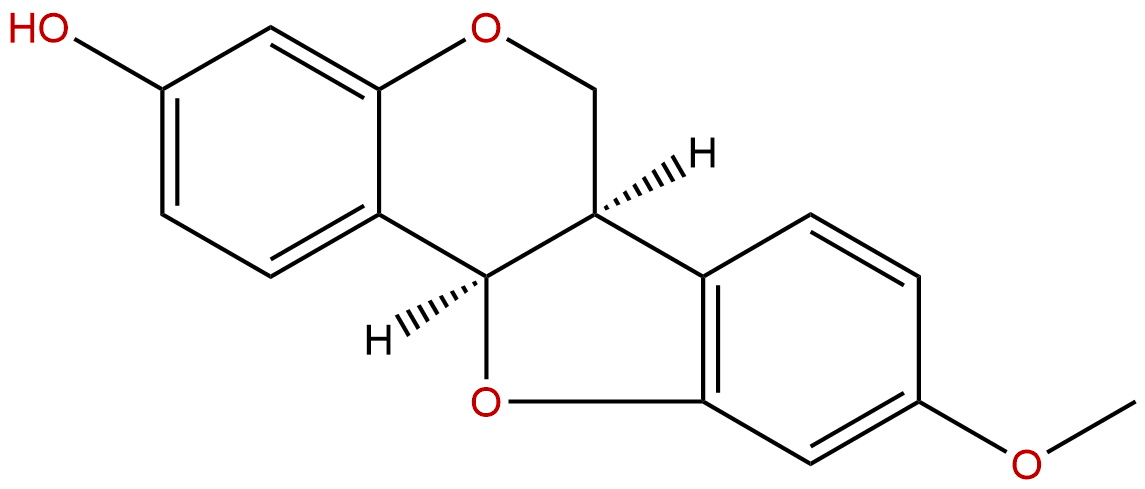


Product name: Medicarpin
Synonym name:
Catalogue No.: SBP00529
Cas No.: 32383-76-9
Formula: C16H14O4
Mol Weight: 270.284
Botanical Source:
Physical Description: Powder
Type of Compound: Flavonoids
Purity: 95%~99%
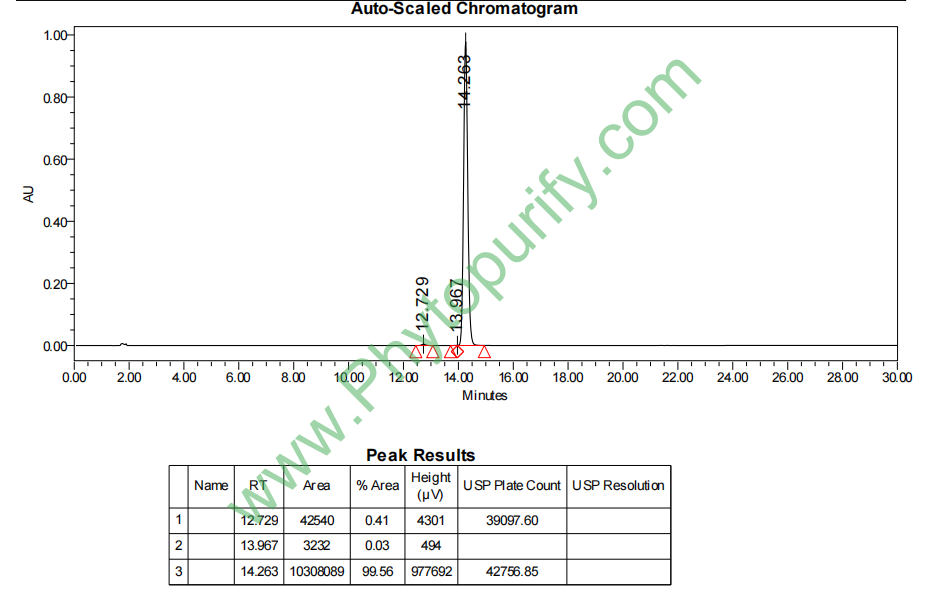
Analysis Method: HPLC-DAD or/and HPLC-ELSD
Identification Method: Mass, NMR
Packing: Brown vial or HDPE plastic bottle
The product could be supplied from milligrams to grams. Inquire for bulk scale.
We provide solution to improve the water-solubility of compounds, thereby facilitating the variety of activity tests and clinic uses.
For Reference Standard and R&D, Not for Human Use Directly.
HPLC of Methylnissolin
Storage conditions:Short-term storage at 2~8℃, long-term storage at -20 ~ -80℃
47.9200
3.1613
3.1594
.0880
5.1677
9.1089
High
85.8929
3.1435
No
Yes
No
No
Yes
No
0.6
No
Yes
No
Yes
Natural products, as an important source of drug discovery, play an irreplaceable role in human health maintenance and disease treatment. Among numerous natural product families, isoflavone compounds have attracted much attention due to their diverse biological activities and relatively low toxicity. Medicarpin, as a typical flavonoid compound, has shown remarkable potential in pharmacological research in recent years.
Meidi rosewood extract, chemical name (+) - Meidi rosewood extract, CAS number 32383-76-9, is a natural isoflavone isolated from various medicinal plants. Its name comes from its original plant source, the Pterocarpus genus. This compound belongs to the pterocarpan isoflavone class structurally and has a unique four ring skeleton structure, which endows it with diverse biological activities.
From a historical perspective, Meidi rosewood was first discovered as a phytotoxin in plants, which is a defensive secondary metabolite produced by leguminous plants when infected by pathogenic microorganisms. As research deepens, scientists gradually realize that this compound not only plays a role in plant defense mechanisms, but also exhibits various pharmacological activities against mammalian cells. Especially in the fields of bone metabolism regulation and anti-tumor, the research results of Meidi rosewood extract are particularly outstanding.
In recent years, osteoporosis and bone related diseases have become global public health issues. According to statistics, about 200 million people worldwide suffer from osteoporosis, and fractures are its main complication, seriously affecting the quality of life of patients and bringing huge social and economic burdens. In the field of anti-tumor therapy, although significant progress has been made in chemotherapy and targeted therapy, drug resistance and toxic side effects remain urgent challenges to be addressed. Meidi rosewood promotes bone healing by regulating osteoclastogenesis and osteoblast differentiation, while exhibiting anti-tumor activity through a multi-target mechanism. These characteristics make it a highly promising natural lead compound for development.
This article will provide a systematic review of the research progress of Meidi rosewood from the aspects of chemical structure, plant origin, pharmacological activity, mechanism of action, pharmacological evaluation, and clinical application prospects, in order to provide reference for the in-depth research and development of this compound.
Meidi rosewood belongs to the class of rosewood isoflavones, and its core skeleton is 6a, 11a-dihydro-6H - [1] benzofuran [3,2-c] chromene. This structure consists of three ring systems: a chromon ring, a benzofuran ring, and a benzene ring, forming a unique four ring fused system. Specifically, the A ring in its structure is a benzene ring, the B ring is a dihydropyran ring in the chroman ring, the C ring is a furan ring, and the D ring is another benzene ring.
(+) - Meidi rosewood has a chiral center located at C-6a position, naturally occurring in the (6aS, 11aS) configuration. This absolute configuration is crucial for its biological activity, as the configuration of the chiral center directly affects the stereoselective interaction between the molecule and the target protein. The molecular formula is C ₁₆ H ₁₄ O ₄, and the molecular weight is 270.2840 g/mol.
From the perspective of physical and chemical properties, Meidi rosewood exhibits typical characteristics of isoflavone compounds. Its lipid water partition coefficient (LogP) is 3.1613, indicating that the compound has a moderate degree of lipophilicity, which is beneficial for its permeation through biofilm structures. The topologically polar surface area (TPSA) is 47.9200 Å ², which is within the acceptable range for oral medication (usually TPSA<140 Å ²), indicating that it may have good oral absorption potential.
In terms of water solubility, the water solubility value of Meidi rosewood is 0.0880 mg/mL, which belongs to insoluble compounds. This characteristic is both a challenge and an opportunity in drug development: low water solubility may limit its bioavailability, but appropriate formulation strategies (such as nanomaterials, cyclodextrin inclusion, etc.) can improve this problem. It is worth noting that the compound's blood-brain barrier penetration ability has been rated as "high", which is of great significance for the treatment of central nervous system diseases, but also suggests the need to pay attention to potential central nervous system side effects in the development process.
In terms of safety prediction, the hERG inhibition assessment result is' no ', indicating that the risk of Meidi rosewood causing QT interval prolongation in the heart is low, which is a favorable safety feature. The Ames test result is 0.6, indicating that it may have a certain genetic toxicity risk and requires more comprehensive genetic toxicity assessment in subsequent development.
Meidi rosewood is mainly distributed in Fabaceae plants in nature, especially in multiple genera and species of Faboideae subfamily. The plants currently reported to contain Meidi rosewood include but are not limited to the following:
Sophora genus Sophora japonica is one of the important sources of Meidi rosewood extract. Sophora japonica is commonly used in traditional Chinese medicine for hemostasis and blood pressure reduction, and modern research has shown that it contains various flavonoids.
Pterocarpus genus Plants of this genus, such as Pterocarpus marsupium and Pterocarpus santalinus, are classic sources of Meidi rosewood. Red sandalwood is used in traditional medicine to treat diabetes and inflammatory diseases.
Zollernia genus Zollernia paraensis is a plant endemic to Brazil, and its heartwood contains abundant flavonoids.
Platymiscum genus Platymiscum Yucatamu and Platymiscum floribundum are tropical tree species found in Central and South America, and their wood and bark contain Meidi rosewood.
Machaerium genus Machaerium aristulatum is a medicinal plant in South America, used in folk medicine to treat rheumatism and inflammation.
In addition, other leguminous plants such as Medicago sativa and Trifolium spp. also contain trace amounts of Meidi rosewood. It is worth noting that Meidi rosewood extract usually exists in the form of plant antitoxin in these plants, and its content significantly increases when the plants are subjected to biotic or abiotic stress.
The extraction of Meidi rosewood extract is usually carried out using organic solvent extraction method. Common extraction solvents include methanol, ethanol, ethyl acetate, etc. Due to the moderate lipophilicity of the compound, using an ethanol water mixed solvent (such as 70% ethanol) for reflux extraction can achieve good extraction efficiency. During the extraction process, factors such as dryness, particle size, extraction temperature, and extraction time of plant materials can all affect the extraction rate.
The crude extract after extraction usually requires a series of purification steps. Liquid liquid extraction is a commonly used method for preliminary purification, which uses different polar solvents (such as petroleum ether, chloroform, ethyl acetate, n-butanol) for fractional extraction to enrich Meidi rosewood in the moderately polar ethyl acetate fraction.
Further separation and purification mainly rely on chromatographic techniques. Silica gel column chromatography is the most commonly used method, which uses solvent systems such as chloroform methanol or n-hexane ethyl acetate for gradient elution. For isoflavone compounds with similar structures, high-performance liquid chromatography (HPLC) and preparative thin-layer chromatography can provide higher separation efficiency. In recent years, new separation techniques such as high-speed countercurrent chromatography (HSCCC) and supercritical fluid chromatography (SFC) have also been applied to the purification of Meidi rosewood, which have the advantages of high separation efficiency and low solvent consumption.
In terms of structural identification, Meidi rosewood can be confirmed by ultraviolet spectroscopy (UV), infrared spectroscopy (IR), mass spectrometry (MS), and nuclear magnetic resonance spectroscopy (NMR). Its typical UV absorption peak appears in the 280-290 nm and 310-320 nm regions, which is consistent with the conjugated system characteristics of isoflavones. In the ¹ H NMR spectrum, the characteristic signals of Meidi rosewood include the methylene protons (δ 3.5-4.5 ppm), methoxy protons (around δ 3.8 ppm), and aromatic proton signals of H-6a and H-11a.
The activity of Meidi rosewood extract in regulating bone metabolism is one of its most concerned pharmacological effects. Research has shown that this compound can effectively inhibit osteoclastogenesis and promote osteoblast differentiation, thereby exerting a bidirectional regulatory effect in the process of bone remodeling.
In terms of osteoclasts, Meidi rosewood inhibits the signaling pathway induced by receptor activator of nuclear factor kappa B ligand (RANKL), reducing the differentiation of osteoclasts precursor cells into mature osteoclasts. Specifically, the compound can inhibit the activation of the NF - κ B and MAPK signaling pathways induced by RANKL, thereby downregulating the expression of osteoclast specific genes such as TRAP, CTSK, MMP9, etc. In addition, Meidi rosewood extract can promote apoptosis of osteoclasts, further reducing bone resorption activity.
In terms of osteoblasts, Meidi rosewood promotes differentiation and mineralization of osteoblasts by activating the estrogen receptor beta (ER β) - mediated signaling pathway. Research has shown that this compound can upregulate the expression of osteoblast specific transcription factors Runx2 and Osterix, while increasing alkaline phosphatase (ALP) activity and osteocalcin (OCN) secretion. Importantly, the selective activation of ER β by Medea rosewood avoids the common side effects in traditional estrogen therapy, such as endometrial hyperplasia and increased risk of breast cancer.
Animal experiments further confirmed the bone protective effect of Meidi rosewood extract. In a rat model of osteoporosis induced by ovariectomy (OVX), oral administration of Meidi rosewood can significantly increase bone density (BMD), improve bone microstructural parameters, and enhance bone biomechanical strength. In the fracture healing model, this compound can accelerate the transformation of cartilage callus to bone callus and promote bone remodeling at the fracture site.
The anti-tumor activity of Meidi rosewood extract is another important pharmacological research direction. In vitro experiments showed that the compound had proliferation inhibitory effects on a variety of tumor cell lines, including breast cancer, prostate cancer, lung cancer, colon cancer and liver cancer.
In breast cancer cells, Medea rosewood plays an anti proliferative role by regulating estrogen receptor (ER) signaling pathway. It is worth noting that this compound shows activity on ER positive breast cancer cells (such as MCF-7) and ER negative breast cancer cells (such as MDA MB-231), suggesting that its mechanism of action is not limited to ER pathway. Further research has found that Meidi rosewood extract can induce cell cycle arrest in the G1 phase and promote cell apoptosis.
In terms of prostate cancer, Meidi rosewood inhibits the proliferation and migration of prostate cancer cells by suppressing the androgen receptor (AR) signaling pathway and phosphorylation of STAT3. In addition, the compound can downregulate the expression of matrix metalloproteinases (MMP-2 and MMP-9), thereby inhibiting the invasion and metastasis ability of tumor cells.
In addition to regulating bone metabolism and anti-tumor activity, Meidi rosewood also exhibits various other pharmacological effects:
anti-inflammatory activity Meidi rosewood extract can inhibit the production of pro-inflammatory factors (such as TNF - α, IL-6, IL-1 β) in macrophages induced by lipopolysaccharide (LPS), and its mechanism is related to the inhibition of NF - κ B and MAPK signaling pathways.
antioxidant activity This compound has the ability to scavenge free radicals, reduce oxidative stress levels, and protect cells from oxidative damage.
Anti angiogenic activity Meidi rosewood extract can inhibit vascular endothelial growth factor (VEGF) - induced angiogenesis, which is closely related to its anti-tumor effect.
Neuroprotective activity Given its excellent blood-brain barrier penetration ability, Meidi rosewood has also shown protective effects in neurodegenerative disease models, reducing neurotoxicity induced by β - amyloid protein.
The regulatory effect of Meidi rosewood extract on bone metabolism involves multiple signaling pathways and molecular targets. In terms of inhibiting osteoclastogenesis, this compound mainly exerts its effects through the following mechanisms:
RANKL/RANK signaling pathway Meidi rosewood can inhibit the binding of RANKL and RANK receptors, thereby blocking the activation of downstream NF - κ B and MAPK (including ERK, JNK, p38) signaling pathways. This leads to downregulation of the key transcription factor NFATc1 in osteoclast differentiation, thereby inhibiting osteoclastogenesis.
ROS/NF - κ B pathway The antioxidant activity of Meidi rosewood can reduce intracellular reactive oxygen species (ROS) levels, which are important second messengers of the RANKL signaling pathway. By reducing ROS production, this compound indirectly inhibits the activation of NF - κ B.
In terms of promoting osteoblast differentiation, Meidi rosewood mainly exerts its effects through the ER β - mediated signaling pathway:
ER β activation Meidi rosewood extract, as a selective ER β agonist, can activate ER β receptors, promote their nuclear translocation, and bind to estrogen response elements (ERE). This leads to transcriptional activation of osteogenic differentiation related genes such as Runx2, Osterix, ALP, OCN.
Wnt/β - catenin pathway Research has shown that Meidi rosewood extract can activate the Wnt/β - catenin signaling pathway, promote nuclear accumulation of β - catenin, and thereby activate the expression of osteogenic differentiation related genes.
The anti-tumor activity of Meidi rosewood involves multiple molecular targets, reflecting its multi-target effect characteristics:
Apoptosis regulatory protein This compound can downregulate the expression of anti apoptotic proteins MCL1 and BCL2, while upregulating the expression of pro apoptotic protein BAX, thereby promoting tumor cell apoptosis. This effect is closely related to the activation of the mitochondrial apoptosis pathway.
STAT3 signaling pathway Meidi rosewood extract can inhibit the phosphorylation of STAT3, block its nuclear translocation and transcriptional activation functions. STAT3 is a continuously activated oncogenic transcription factor in various tumors, and its inhibition can lead to inhibition of tumor cell proliferation and induction of apoptosis.
Matrix metalloproteinases By downregulating the expression of MMP2, Meidi rosewood can inhibit the invasion and metastasis ability of tumor cells. MMP2 plays a crucial role in the degradation of extracellular matrix and angiogenesis in tumor cells.
Topoisomerase Meidi rosewood extract has inhibitory effects on TOP1 and TOP2A, which is similar to the topoisomerase inhibitors used clinically, such as camptothecin and etoposide. By inhibiting topoisomerase activity, this compound can cause DNA damage and cell cycle arrest.
Hypoxia inducible factor Meidi rosewood can downregulate the expression of HIF1A, inhibit hypoxia induced tumor cell adaptation and angiogenesis. HIF1A is a key transcription factor that adapts to low oxygen conditions in the tumor microenvironment.
MAPK signaling pathway This compound can regulate the phosphorylation level of MAPK1 (ERK2), affecting cell proliferation and differentiation. It is worth noting that the regulation of MAPK pathway by Meidi rosewood has cell type specificity and usually exhibits inhibitory effects in tumor cells.
Estrogen related targets The regulatory effects of Meidi rosewood extract on ESR1 (ER α) and CYP19A1 (aromatase) are also involved in its anti-tumor activity. In ER positive breast cancer, the compound can antagonize ER α signal; Meanwhile, by inhibiting aromatase activity, the synthesis of estrogen is reduced.
The mechanism of action of Meidi rosewood reflects the characteristic of natural products with "multi-target and multi pathway". By simultaneously regulating multiple biological processes such as apoptosis, proliferation, metastasis, and angiogenesis, this compound can inhibit tumor development from multiple levels. This multi-target mode of action not only improves anti-tumor efficacy, but may also reduce common resistance issues of single target drugs.
Based on medicinal chemistry and pharmacological parameters, the pharmacological properties of Meidi rosewood can be evaluated from the following aspects:
Drug Evaluation According to Lipinski's Five Rules, the molecular weight (270.28) of Meidi rosewood is less than 500, LogP (3.16) is less than 5, the number of hydrogen bond donors (1) is less than 5, and the number of hydrogen bond acceptors (4) is less than 10, fully meeting the criteria for drug likeness. In addition, its TPSA (47.92)<140 indicates good oral absorption potential.
safety assessment HERG inhibition negativity is an important safety advantage that reduces the risk of cardiac toxicity. However, the Ames test result (0.6) suggests the need to pay attention to potential genotoxicity and suggests a more comprehensive genotoxicity assessment (such as in vivo micronucleus test, chromosome aberration test, etc.).
Water solubility challenge Poor water solubility (0.088 mg/mL) is the main challenge faced by the medicinal properties of Meidi rosewood. Low water solubility may lead to low oral bioavailability and affect in vivo drug efficacy. To address this issue, the following strategies can be adopted for improvement: preparing in salt form, developing nano formulations (such as liposomes, polymer nanoparticles), using cyclodextrin inclusion technology, designing prodrugs, etc.
At present, the pharmacokinetic research on Meidi rosewood is not sufficient, but based on its physicochemical properties and preliminary research results, the following characteristics can be inferred:
absorb Meidi rosewood has moderate lipophilicity and theoretically can penetrate intestinal epithelial cells through passive diffusion. However, low water solubility may limit its dissolution rate, thereby affecting the degree of absorption. After oral administration, its absolute bioavailability may be low and needs to be improved through formulation methods.
distribution This compound has high blood-brain barrier penetration ability, indicating its possible high distribution in brain tissue. This feature has advantages for developing therapeutic drugs for neurological diseases, but it also requires attention to potential central nervous system side effects. In addition, its higher LogP value suggests a higher binding rate with plasma proteins.
Metabolism As an isoflavone compound, Meidi rosewood may undergo phase I and phase II metabolism in the liver. Phase I metabolism mainly involves oxidative reactions catalyzed by cytochrome P450 enzymes (CYP450), such as hydroxylation; Phase II metabolism includes binding reactions such as glucuronidation and sulfation. The activity of metabolites may differ from that of the prototype drug and further research is needed.
excretion Meidi rosewood extract and its metabolites may be mainly excreted through bile and urine. Due to its lipophilicity, there may be enterohepatic circulation, which prolongs its retention time in the body.
Considering the inhibitory effect of Meidi rosewood on CYP19A1 (aromatase), this compound may interact with drugs or endogenous substances metabolized by aromatase. In addition, its potential impact on CYP450 enzymes also needs to be evaluated to predict possible drug drug interactions.
The unique role of Meidi rosewood in regulating bone metabolism makes it have broad application prospects in the treatment of the following diseases:
osteoporosis As a dual acting drug that inhibits bone resorption and promotes bone formation, Meidi rosewood is expected to become a new candidate drug for the treatment of osteoporosis. Compared with traditional anti bone resorption drugs such as bisphosphonates, its activity in promoting bone formation may lead to better bone quality improvement effects; Compared to bone formation promoting drugs such as parathyroid hormone, its oral administration provides better compliance.
Fracture healing Meidi rosewood has the potential to promote osteoblast differentiation and callus maturation, making it effective in accelerating fracture healing. Especially for delayed or non healing fractures, this compound may provide new treatment options.
Bone defect repair Combined with bone tissue engineering strategies, Meidi rosewood can be loaded as a bioactive factor into scaffold materials to promote bone regeneration in bone defect areas.
In the field of tumor therapy, the multi-target mechanism of action of Meidi rosewood provides multiple possibilities for its application:
breast cancer treatment In view of its selective activation of ER β and its antagonistic effect on ER α, medallin may be used in the treatment of ER positive breast cancer, while avoiding the adverse effects of traditional estrogen therapy. In addition, its inhibitory effect on aromatase also suggests that it can be used as an adjuvant therapy for postmenopausal breast cancer.
Prostate cancer treatment By inhibiting the AR signaling pathway and STAT3 activity, Meidi rosewood may have therapeutic value for castration resistant prostate cancer (CRPC).
Combination therapy strategy The combination of Meidi rosewood with chemotherapy drugs (such as paclitaxel, cisplatin) or targeted drugs (such as tamoxifen, letrozole) may produce synergistic effects while reducing the toxic side effects of a single drug.
Despite exhibiting various pharmacological activities, Meidi rosewood extract still faces many challenges from laboratory research to clinical application
Pharmacokinetic optimization Low water solubility and potential low bioavailability are priority issues that need to be addressed. Developing suitable drug delivery systems (such as nanomaterials, liposomes, phospholipid complexes) is a key strategy to improve their oral bioavailability.
Comprehensive Security Assessment Systematic toxicology research is needed, including acute toxicity, chronic toxicity, reproductive toxicity, genetic toxicity, etc., to comprehensively evaluate its safety. Especially the genetic toxicity risk suggested by Ames test needs to be given special attention.
In depth elucidation of the mechanism of action Although multiple molecular targets have been identified, the specific binding mode, binding affinity, and precise mechanism of signal network regulation of Meidi rosewood with these targets still need further clarification. Structural biology research, such as X-ray crystallography and molecular docking, will help to understand their mechanisms of action.
Study on Structure Activity Relationship By synthesizing analogues and derivatives of Meidi rosewood and studying the effects of structural modifications on activity and pharmacokinetic properties, guidance can be provided for the development of better candidate compounds.
Clinical translational research After completing sufficient preclinical research, clinical trials need to be conducted to verify its safety and efficacy in humans. Choosing the appropriate indications and patient population is the key to successful clinical translation.
Meidi rosewood extract, as a natural flavonoid compound, has attracted widespread attention for its unique chemical structure and diverse pharmacological activities. From a phytochemical perspective, this compound is widely distributed in leguminous plants and can be obtained through mature extraction and purification techniques; From a pharmacological perspective, its activity in regulating bone metabolism and anti-tumor is particularly prominent, and its mechanism of action involves multiple signaling pathways and molecular targets; From the perspective of drug development, this compound has good drug like and safety characteristics, but poor water solubility and potential genetic toxicity are challenges that need to be overcome.
Looking ahead to the future, with a deeper understanding of the mechanism of action of Meidi rosewood and continuous optimization of its medicinal chemistry, this compound is expected to be developed into a novel drug for the treatment of osteoporosis, poor fracture healing, and certain types of tumors. Meanwhile, as a lead compound, it also provides valuable structural basis for designing and synthesizing derivatives with better activity and pharmacokinetic properties. In today's world where natural product drug development is increasingly valued, the research on Meidi rosewood not only has important scientific value, but also contains enormous clinical application potential. We look forward to promoting this natural product from the laboratory to clinical practice through interdisciplinary collaborative efforts, and making contributions to the cause of human health.
