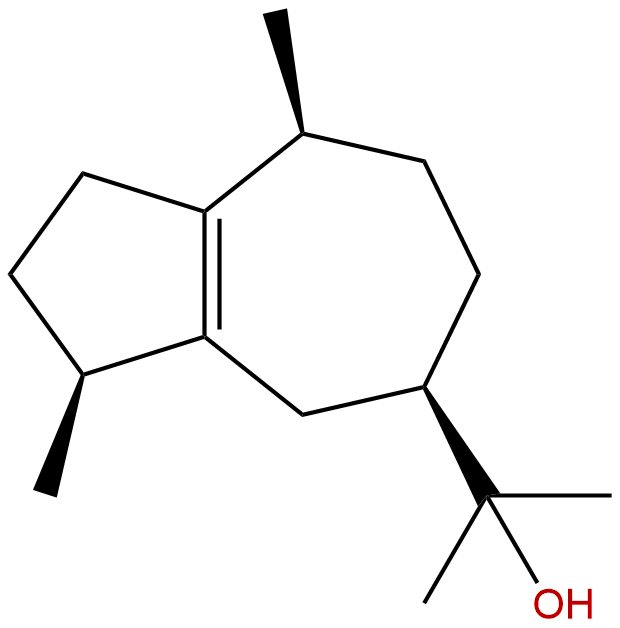
Guaiol: Pharmacological research progress and prospects for drug development of a multi-target sesquiterpene alcohol
Introduction/Overview
Natural products, as an important source of drug discovery, play an irreplaceable role in the long-term struggle between humans and diseases. As the most structurally diverse group in the terpenoid family, sesquiterpenes are widely present in plants, fungi, and marine organisms, exhibiting a wide range of biological activities. Guaiol, also known as 1,4-dimethyl-7- (1-methylethyl) -1,2,3,4,5,6,7,8-octahydroazulene-6-ol, is a sesquiterpene alcohol with a typical guaiaceae skeleton. Its CAS number is 489-86-1. This compound originated from Yuchuang wood(Guaiacum officinale)It was named after its separation and identification, and subsequently discovered in various medicinal plants, including Atractylodes macrocephala(Atractylodes lancea), patchouli(Pogostemon cablin)And some Asteraceae plants.
The pharmacological research history of guaiacol can be traced back to the mid-20th century, but it was not until nearly two decades, with the advancement of molecular pharmacology and chemical biology techniques, that its multifaceted biological activities were systematically revealed. Current research indicates that guaiacol has multiple pharmacological effects, including anti proliferation, promotion of autophagy, insecticidal, anti anxiety, anti-inflammatory, diuretic, and blood pressure lowering. Of particular note is that guaiacol regulates the stability of RAD51 protein through autophagy dependent pathways in non-small cell lung cancer (NSCLC) models, thereby inducing tumor cell apoptosis; In the field of antiparasitic treatment, it exhibits extremely strong killing activity against Leishmania flagellates (IC50 as low as 0.01 µ g/mL), and its mechanism of action involves multiple damage to parasite kinetochores, mitochondrial matrix, and cell membrane. These findings make guaiacol a potential lead compound in the fields of cancer, infectious diseases, cardiovascular diseases and inflammatory diseases.
This article will provide a systematic review of the research progress of guaiacol from the aspects of chemical structure, plant origin, pharmacological activity, molecular mechanism, medicinal evaluation, and clinical application prospects, in order to provide reference for the in-depth development of this natural product.
Chemical structure and physicochemical properties
The molecular formula of guaiacol is C15H26O, with a molecular weight of 222.3720 Da, and it belongs to a typical bicyclic sesquiterpene alcohol. Its core skeleton is a hydrogenated derivative of azulene - octahydroazulene, with a methyl group attached to each of the C1 and C4 positions, an isopropyl group attached to the C7 position, and a hydroxyl group substituted at the C6 position. This structure endows guaiacol with a certain lipophilicity, and the calculated LogP value is 4.3695, indicating that it has a good distribution coefficient in a lipid environment. The topological polar surface area (TPSA) is only 20.23 Å ², far below the recommended upper limit of 140 Å ² for oral medications, indicating good membrane permeability.
In physical form, guaiacol is a colorless to pale yellow crystalline or oily substance with a characteristic woody aroma. Its water solubility is poor, with a calculated water solubility value of 0.0175 mg/mL, which is consistent with its high lipophilicity. It is worth noting that the blood-brain barrier (BBB) penetration ability of guaiacol has been evaluated as "high", which provides a pharmacokinetic basis for its application in central nervous system diseases such as anxiety and neuroinflammation. In addition, the hERG inhibition prediction was negative, and the Ames test result was 0.0, indicating a low risk of cardiac toxicity and genetic toxicity, which is a positive signal in the preliminary pharmacological evaluation.
The stereochemical structure of guaiacol is crucial for its biological activity. The naturally occurring guaiacol is usually (-) - Guaiol, and its absolute configuration has been confirmed by X-ray crystallography and optical rotation spectroscopy. Different stereoisomers may exhibit differential biological activity, therefore, in subsequent research, attention should be paid to the influence of optical purity on drug efficacy. In addition, the C6 hydroxyl group is a key active functional group that may participate in hydrogen bonding formation or serve as a metabolic modification site, providing a starting point for structural optimization.
Plant sources and extraction methods
Yuchuang alcohol is widely distributed in the plant kingdom and mainly exists in plants of the following families and genera:
-
Zygophyllaceae: Yuchuang Wood genus(Guaiacum)Plants, such as eucalyptus(G. officinale)And the sacred Yuchuang wood(G. sanctum)The content of guaiacol in its heartwood is relatively high, which is traditionally the main source for obtaining this compound.
-
Asteraceae (Asteraceae): Atractylodes genus(Atractylodes)Plants, such as Atractylodes macrocephala(A. lancea)He Beicang Shu(A. chinensis)The volatile oil component in its rhizome contains guaiacol. In addition, the genus Convolvulus(Inula)Artemisia genus(Blumea)It also contains this ingredient.
-
Lamiaceae: Patchouli(Pogostemon cablin)It is another important source of guaiacol, and the content of guaiacol in its aboveground volatile oil can reach 1% -5%.
-
Zingiberaceae Some turmeric species(Curcuma)Guaiacol was also detected in the roots and stems of plants.
In terms of extraction methods, traditional methods use steam distillation to extract volatile oils from plant materials, and then purify guaiacol through fractionation or column chromatography separation. Modern extraction techniques are more diverse:
-
Supercritical CO ₂ extraction Under the conditions of 40-50 ° C and 20-30 MPa, guaiacol can be efficiently extracted while avoiding the problem of residual organic solvents. This method provides better protection for thermosensitive components and increases the extraction rate by 30% -50% compared to traditional steam distillation.
-
Microwave assisted extraction Using microwave radiation to accelerate cell wall rupture, combined with ethanol or n-hexane solvents, extraction can be completed in a short time (10-20 minutes), suitable for rapid preparation on a laboratory scale.
-
molecular distillation For crude volatile oil extracts, molecular distillation technology can achieve efficient separation of guaiacol at lower temperatures, and the product purity can reach over 95%.
-
High Speed Counter Current Chromatography (HSCCC)Using n-hexane ethyl acetate methanol water as the solvent system, efficient separation of guaiacol from other sesquiterpenes (such as β - eucalyptol and Atractylodes macrocephala) can be achieved, with a single separation purity of over 98%.
It is worth noting that different plant sources and origins, harvesting seasons, and processing methods can all affect the content of guaiacol. For example, the content of guaiacol in the rhizomes of Atractylodes macrocephala is highest during the autumn harvest period, while the content of guaiacol in Pogostemon patchouli decreases with increasing planting altitude. Therefore, establishing standardized extraction processes and quality control standards is crucial for the in-depth study of guaiacol.
Pharmacological activity research
Antitumor activity
The anti-tumor activity of guaiacol is currently a hot research topic. Several in vitro experiments have shown that guaiacol can inhibit the proliferation of many cancer cell lines, including non-small cell lung cancer (A549, H1299), breast cancer (MCF-7), liver cancer (HepG2), colon cancer (HT-29) and prostate cancer (PC-3). Among them, the effect on non-small cell lung cancer cells is the most significant, with IC50 values ranging from 10-30 µ M.
In vivo experiments, guaiacol (20-40 mg/kg, intraperitoneal injection) significantly inhibited tumor growth in the A549 xenograft tumor model, with an inhibition rate of 45% -60%, and no significant weight loss or organ toxicity was observed. Histopathological analysis showed that the proportion of apoptotic cells significantly increased and the Ki-67 proliferation index decreased in the tumor tissue treated with guaiacol.
It is worth noting that guaiacol has low toxicity to normal cells (such as human embryonic lung fibroblast MRC-5) (IC50>100 µ M) and exhibits certain selective cytotoxicity. This characteristic provides a safety basis for its anti-tumor application.
anti-inflammatory activity
Yuchuang alcohol exhibits significant anti-inflammatory effects in various inflammatory models. In the lipopolysaccharide (LPS) - induced RAW264.7 macrophage inflammation model, guaiacol (5-20 µ M) can concentration dependently inhibit the production of nitric oxide (NO), prostaglandin E2 (PGE2), and tumor necrosis factor - α (TNF - α). Further research suggests that its anti-inflammatory mechanism involves dual inhibition of the NF - κ B and STAT3 signaling pathways.
In animal models, guaiacol (25-50 mg/kg, oral) significantly reduced carrageenan induced paw swelling in rats, with inhibition rates comparable to the positive control drug indomethacin. In a mouse colitis model induced by dextran sulfate sodium (DSS), oral administration of guaiacol can improve disease activity index, reduce levels of IL-6, TNF - α, and IL-1 β in colon tissue, and alleviate tissue pathological damage.
Antiparasitic activity
The anti Leishmania activity of Yuchuang alcohol is particularly outstanding. Targeting Leishmania donovani(Leishmania donovani)Without flagella, the IC50 of guaiacol is as low as 0.01 µ g/mL (approximately 45 nM), and the selectivity index (SI) exceeds 1000, far superior to first-line drugs antimony and amphotericin B. In an infected mouse model, guaiacol (5 mg/kg, intraperitoneal injection for 10 consecutive days) can reduce parasitic insect load in the spleen and liver by more than 85%.
Transmission electron microscopy observation revealed that Leishmania parasites treated with guaiacol exhibited ultrastructural damage such as kinetochore swelling, mitochondrial matrix vacuolization, and cell membrane rupture. These multi-target mechanisms of action may reduce the risk of drug resistance.
In addition, guaiacol has an effect on malaria parasites(Plasmodium falciparum)And trypanosomes(Trypanosoma brucei)It also showed certain activity, with IC50 values of 2.5 µ M and 1.8 µ M, respectively, but the selectivity needs to be improved.
Neuropsychiatric activity
Yuchuang alcohol has a clear anti anxiety effect. In the elevated cross maze and light dark box experiments, guaiacol (10-30 mg/kg, orally administered) significantly increased the residence time and entry frequency of mice in open arms and light boxes, with effects comparable to diazepam (1 mg/kg), and no motor coordination damage or sedative effect was observed. It is worth noting that the anti anxiety effect of guaiacol is not reversed by flumazenil (a benzodiazepine receptor antagonist), suggesting that its mechanism of action may not involve GABAA receptors, but rather be mediated through 5-HT1A receptors or TRPV1 channels.
Cardiovascular activity
Yuchuang alcohol has diuretic and hypotensive effects. In normal rats, guaiacol (20 mg/kg, intravenous injection) can cause a decrease in mean arterial pressure of 15-20 mmHg, lasting for about 2 hours. Its antihypertensive mechanism may be related to the dual effects of vasodilation and diuresis. The ex vivo vascular ring experiment showed that guaiacol can induce concentration dependent relaxation of rat aortic rings pre contracted by norepinephrine, which is partially dependent on the activation of endothelial nitric oxide synthase (eNOS).
Mechanism of action and molecular targets
Antitumor mechanism: autophagy dependent RAD51 regulation
The core mechanism of Yuchuang alcohol in combating non-small cell lung cancer involves the cross regulation of autophagy and DNA damage repair. Research has found that treatment of A549 cells with guaiacol can significantly induce an increase in the autophagy marker LC3-II/I ratio and p62 degradation, accompanied by enhanced autophagy flow. Interestingly, autophagy inhibitors (3-methyladenine, chloroquine) or ATG5 gene knockout can partially reverse the cytotoxicity of guaiacol, indicating that autophagy plays a pro death role in guaiacol induced cell death.
At the mechanistic level, guaiacol promotes the degradation of the key protein RAD51 through homologous recombination repair by activating the autophagy lysosome pathway. RAD51 is a core factor in DNA double strand break repair, and its decreased stability leads to the accumulation of DNA damage, ultimately triggering cell apoptosis. Immunoprecipitation experiments confirmed that guaiacol promotes the binding of RAD51 to autophagy receptor protein p62, thereby targeting RAD51 to autophagosomes for degradation. In addition, guaiacol can also inhibit the phosphorylation of STAT3, which is a transcriptional activator of RAD51, thereby downregulating RAD51 levels at both transcriptional and post-translational levels.
Anti inflammatory mechanism: Multi pathway network regulation
The anti-inflammatory effect of guaiacol involves the interactive regulation of multiple signaling pathways:
-
NF - κ B pathway Yuchuang alcohol can inhibit LPS induced phosphorylation and degradation of I κ B α, thereby preventing nuclear translocation of p65 (RELA) subunit and reducing transcription of downstream pro-inflammatory genes (such as TNF, IL-6, NOS2).
-
STAT3 pathway Yuchuang alcohol directly inhibits JAK2/STAT3 phosphorylation, reduces STAT3 transcriptional activity, and subsequently downregulates the expression of target genes such as IL-6.
-
CASP1/inflammasome Yuchuang alcohol can inhibit NLRP3 inflammasome assembly, reduce caspase-1 activation and IL-1 β mature secretion.
-
TRP channel As a dual antagonist of TRPV1 and TRPA1, guaiacol can block calcium influx and neurogenic inflammatory responses induced by capsaicin or mustard oil.
Antiparasitic mechanism: multi-target membrane damage
The mechanism of action of Yuchuang alcohol on Leishmania parasites exhibits multi-target characteristics. Molecular docking and dynamic simulations have shown that guaiacol can bind to kinetochore proteins (such as KINETOCHORE PROTEIN NDC80), interfere with kinetochore microtubule connections, and cause mitotic arrest. At the same time, guaiacol can insert into the mitochondrial membrane, disrupt the membrane potential (Δ PSI m), and cause mitochondrial matrix swelling and ATP synthesis disorders. In addition, the lipophilicity of guaiacol makes it easy to embed into the phospholipid bilayer of parasite cell membranes, increasing membrane permeability, leading to ion leakage and cell lysis.
Evaluation of drug properties and pharmacokinetics
Analysis of drug properties parameters
Based on the Lipinski Five Rules, the molecular weight of guaiacol (222.37 Da) is less than 500, the LogP (4.37) is less than 5, the number of hydrogen bond donors (1 hydroxyl group) is less than 5, and the number of hydrogen bond acceptors (1 oxygen atom) is less than 10, fully meeting the requirements for oral medication. TPSA (20.23 Å ²) is much lower than 140 Å ², indicating good intestinal absorption. Although the water solubility (0.0175 mg/mL) is relatively low, it can be improved through formulation techniques such as cyclodextrin inclusion and liposome encapsulation.
In terms of safety evaluation, a negative hERG inhibition indicates a low risk of cardiac toxicity; A negative Ames test indicates no mutagenicity. Preliminary acute toxicity experiments showed that the LD50 of guaiacol on mice is approximately 500 mg/kg (orally administered), with a wide safety window.
Pharmacokinetic characteristics
At present, there is insufficient systematic research on the pharmacokinetics of guaiacol, but preliminary data is available:
-
absorb After oral administration, the absolute bioavailability of guaiacol in rats is approximately 25% -35%, which may be related to first pass metabolism. Tmax is approximately 1-2 hours.
-
distribution High lipophilicity and BBB penetration ability enable it to be well distributed in brain tissue, with a brain/plasma concentration ratio of approximately 0.8-1.2. In addition, it is also highly distributed in tissues such as the liver, lungs, and kidneys.
-
Metabolism Yuchuang alcohol is mainly metabolized by the liver CYP450 enzyme system (CYP3A4, CYP2C9) through hydroxylation and glucuronic acid binding. Metabolites may retain some biological activity.
-
excretion Less than 5% of the prototype drug is excreted through urine, with the majority being excreted in the form of metabolites through bile and urine. The half-life (t1/2) is approximately 4-6 hours.
Formulation strategy
In response to the problem of poor water solubility of guaiacol, various formulation strategies have been developed:
-
Cyclodextrin inclusion complex After inclusion with hydroxypropyl - β - cyclodextrin, the apparent solubility of guaiacol increased by more than 20 times, and the oral bioavailability increased to 45%.
-
Lipid Nanoparticles Solid lipid nanoparticles (SLN) and nanostructured lipid carriers (NLC) can enhance the drug loading and sustained release properties of guaiacol, and increase tumor tissue distribution after intravenous injection.
-
Phospholipid complex After forming a complex with soybean phospholipids, the lipophilicity of guaiacol is further improved, and the transdermal absorption rate is increased by three times.
Clinical application prospects and prospects
Anti tumor field
The unique mechanism of Yuchuang alcohol inducing apoptosis in non-small cell lung cancer cells through autophagy dependent RAD51 degradation provides a new approach to overcome traditional chemotherapy resistance. Given that RAD51 is highly expressed in a variety of tumors (such as breast cancer, ovarian cancer, and pancreatic cancer) and is associated with poor prognosis, guaiacol or its derivatives are expected to become targeted drugs for DNA damage repair deficient tumors. The combination of PARP inhibitors (such as olaparib) may produce synthetic lethal effects, which is worth further exploration.
Anti infection field
The extremely strong activity (IC50 of 0.01 µ g/mL) and ultra-high selectivity index (>1000) of Yuchuang alcohol against Leishmania parasites make it a strong competitor for candidate drugs against Leishmania disease. At present, there are problems such as high toxicity and increased drug resistance in the treatment of leishmaniasis. The multi-target mechanism of action of guaiacol can reduce the risk of drug resistance. In addition, its oral activity also provides the possibility for developing non injectable dosing regimens.
Inflammatory diseases
Yuchuang alcohol regulates inflammatory response through multiple pathways such as NF - κ B, STAT3, and inflammasomes, and has potential application value in chronic inflammatory diseases such as rheumatoid arthritis, inflammatory bowel disease, and neuroinflammation. Its BBB penetration ability is particularly advantageous for the treatment of central nervous system inflammations such as multiple sclerosis and Alzheimer's disease.
Challenges and Prospects
Although guaiacol exhibits various pharmacological activities and good drug properties, its development still faces the following challenges:
-
Pharmacokinetic optimization The low oral bioavailability (25% -35%) and short half-life (4-6 hours) limit clinical application. Improving bioavailability through prodrug design (such as hydroxyesterification) or novel formulation technologies is an important direction.
-
Selective Enhancement Yuchuang alcohol has effects on multiple targets, although this is beneficial for pleiotropy, it may also bring off target effects. Structural modification to enhance selectivity towards specific targets is a key focus of pharmaceutical chemistry research.
-
Large scale supply Natural extraction yields are limited, and plant sources are influenced by the environment. The development of fully synthetic or semi synthetic routes (such as chemical conversion using β - eucalyptol as raw material) is the key to ensuring supply.
-
clinical translation At present, research on guaiacol is mainly in the preclinical stage, and there is an urgent need to conduct systematic toxicology, pharmacokinetics, and preliminary clinical studies to verify its safety and efficacy.
Conclusion
Yuchuang alcohol, as an ancient and novel natural sesquiterpene alcohol, occupies an important position in the field of natural product pharmacology due to its unique chemical structure and various biological activities. From the autophagy regulatory mechanism of anti-tumor to the multi-target membrane damage of anti parasitic, from the neural activity of anti anxiety to the multi-path network of anti-inflammatory, Yuchengchun exhibits the characteristics of a "versatile" natural product. Its good pharmacological parameters and preliminary safety data have laid a solid foundation for its further development.
In the future, with the progress of structural biology, computational chemistry and drug delivery technology, guaiacol is expected to be transformed into clinical candidate drugs for the treatment of cancer, infectious diseases and inflammatory diseases through structural optimization and pharmaceutical innovation. At the same time, in-depth research on the mechanism of action of guaiacol will provide new perspectives for understanding the cross regulation of autophagy and DNA damage repair, as well as basic biological issues such as parasite host interactions. The development process of Yuchengchun is a vivid practice of exploring modern drugs from traditional Chinese medicine.