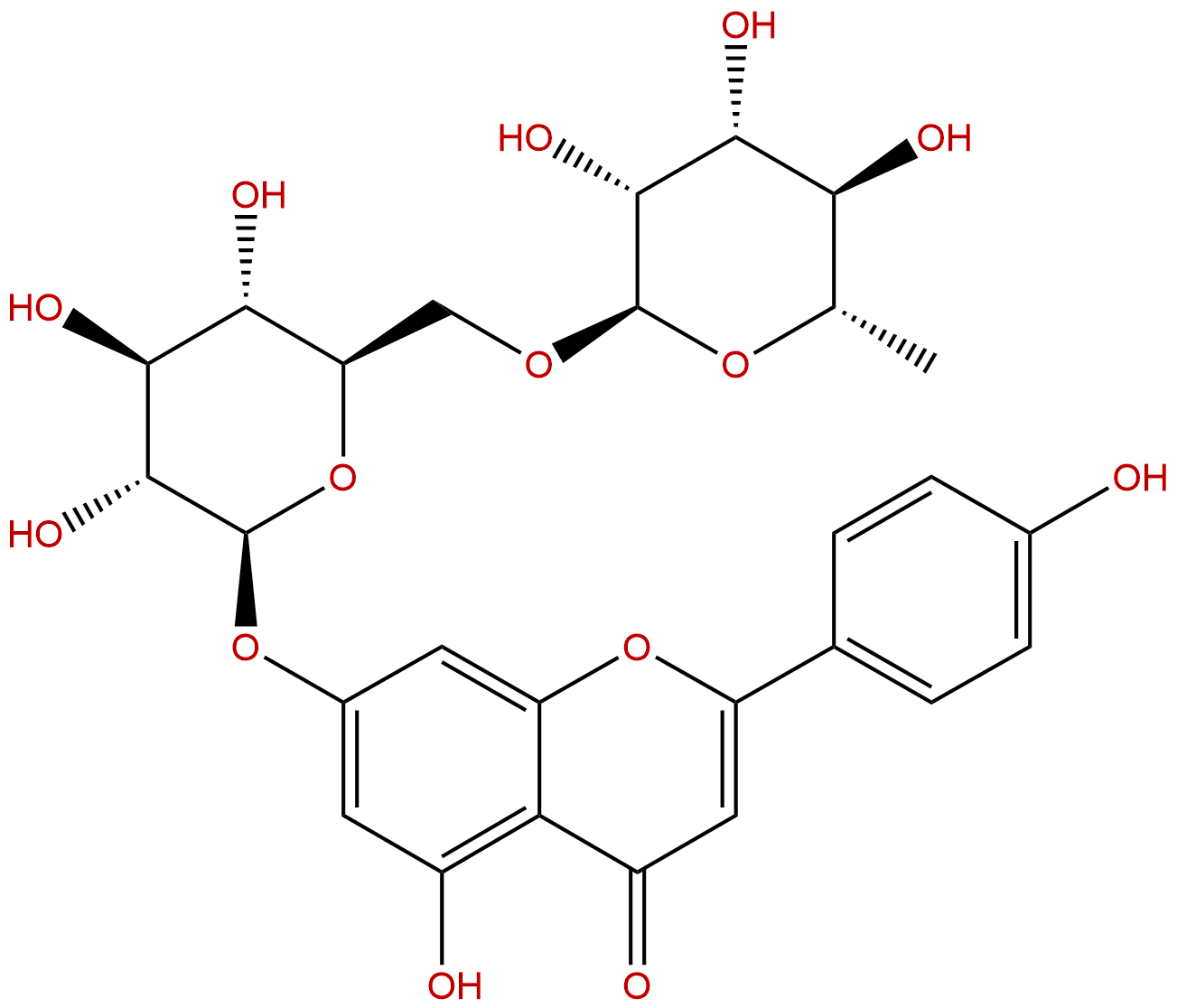


Product name: Isorhoifolin
Synonym name: Impurity C of Diosmin
Catalogue No.: SBP01942
Cas No.: 552-57-8
Formula: C27H30O14
Mol Weight: 578.523
Botanical Source:
Physical Description: Yellow powder
Type of Compound: Flavonoids
Purity: 95%~99%
Analysis Method: HPLC-DAD or/and HPLC-ELSD
Identification Method: Mass, NMR
Packing: Brown vial or HDPE plastic bottle
The product could be supplied from milligrams to grams. Inquire for bulk scale.
We provide solution to improve the water-solubility of compounds, thereby facilitating the variety of activity tests and clinic uses.
For Reference Standard and R&D, Not for Human Use Directly.
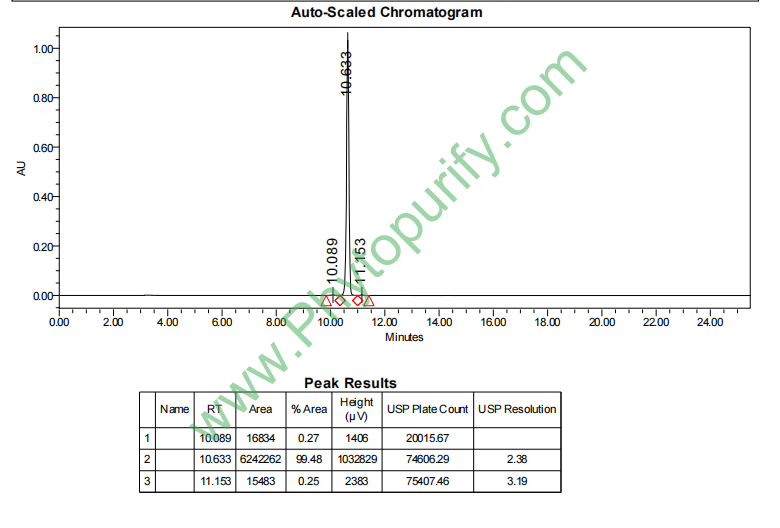
HPLC of Isorhoifolin
Storage conditions:Short-term storage at 2~8℃, long-term storage at -20 ~ -80℃
228.9700
-.1329
-.1428
2.0975
.4670
.1183
Low
79.2551
4.6124
Yes
No
No
No
Yes
No
0.6
Yes
Yes
Yes
Yes
Natural products, as an important source of drug discovery, play an irreplaceable role in the long history of human fight against diseases. Flavonoids, as a class of secondary metabolites widely present in the plant kingdom, have attracted much attention due to their structural diversity and extensive biological activities. Among numerous flavonoids, Isorhoifolin, as a specific flavonoid glycoside, has gradually entered the field of researchers in recent years. Apigenin-7-O - β - D-rutinoside, also known as apigenin-7-O - β - D-rutinoside, is a compound derived from the Asteraceae plant Mugwort(Hemistepta lyrata)The active ingredient obtained through separation. Its CAS number is 552-57-8 and its molecular weight is 578.5230.
The discovery and research of Yiye lacquer tree glycoside are rooted in the in-depth exploration of the traditional medicinal plant Mugwort. Ni Hu Cai has a long history of application in Chinese folk medicine, often used to treat inflammation related diseases such as carbuncles, sores, and traumatic bleeding. Modern pharmacological research has gradually revealed its anti-inflammatory, analgesic, antioxidant and other activities, and isoquercetin is considered one of its key active ingredients. Preliminary studies have shown that isoquercetin has significant anti leakage effects, which can stabilize the endothelial cell barrier and reduce the leakage of inflammatory mediators. This provides an important pharmacological basis for its application in inflammation related diseases.
With the continuous deepening of research on isoquercetin, its mechanism of action is gradually becoming clearer. Research has shown that this compound can inhibit the expression of key pro-inflammatory factors such as tumor necrosis factor (TNF), interleukin-6 (IL-6), and nitric oxide synthase (NOS2) by regulating multiple inflammatory signaling pathways, such as IL-6/STAT3, NF - κ B (involving RELA, IKBKB, etc.), and NLRP3/CASP1 inflammasome pathway. In addition, its regulatory effect on transient receptor potential channels (TRPV1, TRPA1) also provides a new explanation for its role in pain and itch related inflammatory responses. These findings not only deepen our understanding of the pharmacological activity of isoquercetin, but also lay a solid theoretical foundation for its development as a candidate molecule for novel anti-inflammatory drugs.
This article aims to comprehensively review the research status of isoquercetin, including its chemical structure and physicochemical properties, plant sources and extraction methods, pharmacological activity, mechanism of action and molecular targets, drug evaluation and pharmacokinetics, as well as clinical application prospects and prospects. A systematic review and analysis will be conducted to provide valuable references for the subsequent research and development of this natural product.
Yiye lacquer tree glycoside belongs to the flavonoid glycoside class, and its chemical structure is composed of the aglycone apigenin and the disaccharide rutinose linked by glycosidic bonds. Specifically, rutin (α - L-rhamnose - (1 → 6) - β - D-glucose) is linked to the 7th hydroxyl group of apigenin through a β - glycosidic bond. Therefore, its system is named Apigenin-7-O - β - D-rutinoside. This structure determines its unique physicochemical properties and biological activity.
From the perspective of structural characteristics, the aglycone apigenin of isoquercetin belongs to the typical flavonoid mother nucleus, which has the basic skeleton of 4-oxoflavones, with A, B, and C rings forming its core structure. The hydroxyl group at position 7 on ring A is connected to the sugar group, while the hydroxyl group at position 4 'on ring B is in a free state. This structure endows isoquercetin with excellent antioxidant potential, as phenolic hydroxyl groups can effectively scavenge free radicals. Meanwhile, the introduction of sugar groups significantly altered the physicochemical properties of aglycones, particularly their water solubility and bioavailability.
In terms of physicochemical properties, the molecular formula of isoquercetin is C ₂₇ H ∝₀ O ₁₄, with a molecular weight of 578.5230. Its lipophilic water partition coefficient (LogP) is -0.1329, indicating that the compound has high hydrophilicity, which is consistent with its structural characteristics of containing multiple hydroxyl groups and one disaccharide group in its molecule. A higher hydrophilicity usually means better solubility in the aqueous phase, with a calculated water solubility value of 2.0975, belonging to moderate water solubility. The polar surface area (TPSA) is 228.9700 Å ², which is a relatively large value reflecting the abundance of polar atoms (such as oxygen atoms) and hydrogen bond donors/acceptors in the molecule. High TPSA values are usually associated with low membrane permeability, which directly affects their oral absorption and blood-brain barrier penetration ability. According to the pharmacological parameters, the blood-brain barrier penetration ability of isoquercetin is "low", which is consistent with its high polarity and high molecular weight characteristics, indicating that it is not easy to enter the central nervous system. In addition, the hERG inhibition prediction was "no", and the Ames test prediction value was 0.6, indicating a low risk of cardiac and genetic toxicity, which provides preliminary positive signals for its safety evaluation.
Yiye lacquer tree glycoside was initially discovered and isolated from the Asteraceae plant Mugwort(Hemistepta lyrata). Ni Hu Cai is an annual herbaceous plant widely distributed in China, Japan, the Korean Peninsula, and the Far East of Russia. It often grows on roadsides, wastelands, and fields. In the traditional Chinese medicine system, the whole herb of Chinese cabbage is used as medicine, which has the effects of clearing heat and detoxifying, reducing swelling and dispersing lumps. It is commonly used to treat mastitis, abscesses, hemorrhoids, traumatic bleeding, etc. Modern plant chemistry research has shown that Mugwort is rich in various chemical components such as flavonoids, sesquiterpene lactones, phenolic acids, etc. Among them, isoquercetin is one of the flavonoid glycosides with a higher content.
In addition to Mugwort, isorhamnoside is also present in other plants, such as certain citrus genera(Citrus Plants of the family Lamiaceae (such as basil) Ocimum basilicum)And some ferns. However, mud mustard is still the main source of research at present. There may be significant differences in the content of isogenic lacquer tree glycosides among different plant sources, production areas, and harvest periods of Chinese cabbage. Usually, plants accumulate more secondary metabolites during flowering or vigorous growth periods, and harvesting at this time may yield higher levels.
The extraction method for isoquercetin mainly adopts solvent extraction method, supplemented by modern separation and purification technology. The classic extraction process is as follows:
1. Raw material pretreatment Grind the dried whole plant of Chinese cabbage to an appropriate particle size to increase the solvent contact area.
2. Solvent extraction Common solvents include methanol, ethanol, or their aqueous solutions. Due to the high polarity of isoquercetin, high concentrations of ethanol (such as 70% -95%) or methanol are often used as extraction solvents. The extraction methods can be cold soaking, reflux extraction, or ultrasound assisted extraction. Ultrasound assisted extraction is widely used due to its high efficiency, short time, and controllable temperature. The extraction temperature is usually controlled at 40-60 ° C to avoid high temperature damage to the active ingredients.
3. Preparation of crude extract After filtration and vacuum concentration of the extract, crude extract is obtained.
4. Separation and purification The crude extract contains a large amount of impurities and requires further purification. Common methods include:
- Liquid-liquid extraction Using different polar solvents (such as petroleum ether, ethyl acetate, n-butanol) to perform fractional extraction on the crude extract, and enriching isoquercetin in the n-butanol or ethyl acetate fractions.
- Column chromatography method This is the most critical purification step. Common stationary phases include silica gel, polyamide, macroporous adsorption resins (such as D101, AB-8), and Sephadex LH-20. Among them, polyamide column chromatography has good selectivity for flavonoids and is often used for preliminary separation; Macroporous adsorption resin is suitable for large-scale preparation, and can effectively enrich flavonoid glycosides through gradient elution using ethanol water systems of different concentrations.
- High performance liquid chromatography (HPLC)For the preparation of high-purity samples (such as purity>98%), preparative HPLC is commonly used, using C18 reverse phase chromatography column and methanol water or acetonitrile water system as mobile phase for isocratic or gradient elution.
5. appraisal The structure of the purified compound was confirmed by techniques such as nuclear magnetic resonance spectroscopy (NMR) and mass spectrometry (MS).
The pharmacological activity research of Yiye lacquer tree glycoside mainly focuses on its anti-inflammatory effect, involving multiple aspects such as antioxidant, anti leakage, and analgesic effects.
Anti inflammation is the core pharmacological activity of isoquercetin. Numerous in vitro and in vivo experiments have confirmed its significant anti-inflammatory effect.
- In vitro research In the lipopolysaccharide (LPS) - stimulated macrophage model (such as RAW264.7 cells), isoquercetin can significantly inhibit the production of pro-inflammatory factors such as nitric oxide (NO), prostaglandin E2 (PGE2), tumor necrosis factor - α (TNF - α), interleukin-6 (IL-6), and interleukin-1 β (IL-1 β). Meanwhile, it can also inhibit the expression of inducible nitric oxide synthase (iNOS/NOS2) and cyclooxygenase-2 (COX-2/PTGS2). These effects are concentration dependent.
- In vivo research In various animal models of acute inflammation, such as the rat toe swelling model induced by carrageenan and the mouse ear swelling model induced by xylene, administration of isoquercetin by gavage or intraperitoneal injection can significantly reduce the inflammatory response and decrease the degree of swelling. In chronic inflammation models such as adjuvant arthritis, it has also been observed to alleviate joint swelling and inflammatory cell infiltration.
Yiye lacquer glycoside has been described as having an "anti leakage effect", which is closely related to its ability to stabilize the vascular endothelial barrier function. One of the core characteristics of inflammatory response is an increase in vascular permeability, leading to the leakage of plasma proteins and inflammatory cells into tissue interstices. Research has shown that isoquercetin can inhibit the increase in endothelial cell permeability induced by inflammatory mediators such as histamine, bradykinin, and TNF - α. The mechanism may involve protecting the integrity of tight junction proteins (such as ZO-1, Occludin) between endothelial cells, as well as inhibiting the expression of adhesion molecules (such as ICAM-1, VCAM-1) in endothelial cells, thereby reducing the adhesion and crossing between white blood cells and endothelial cells. This anti leakage effect is of great significance for the treatment of diseases such as vasculitis, edema, and sepsis.
As a flavonoid compound, isoquercetin has excellent antioxidant capacity. The phenolic hydroxyl groups in its molecular structure can directly scavenge various free radicals, such as DPPH free radicals, ABTS cationic free radicals, superoxide anions, and hydroxyl free radicals. In addition, it can chelate transition metal ions (such as Fe ² ⁺, Cu ² ⁺) and reduce the reactive oxygen species (ROS) produced by the Fenton reaction. In cell models, isoquercetin can upregulate the activity of antioxidant enzymes such as superoxide dismutase (SOD) and glutathione peroxidase (GPx), reduce intracellular ROS levels, and protect cells from oxidative stress damage. Antioxidant activity is an important supplement to its anti-inflammatory effect, as oxidative stress and inflammatory response mutually promote each other, forming a vicious cycle.
Preliminary studies also suggest that isoquercetin may have analgesic activity, possibly by inhibiting inflammatory mediators or regulating TRP channels (such as TRPV1). In addition, there are reports showing that it has certain antiviral (such as anti influenza virus) and anti-tumor activities, but these studies are still in the early stages and require more evidence to support them.
The pharmacological activity of isoquercetin, especially its anti-inflammatory effect, is achieved by regulating multiple key signaling pathways and molecular targets. Based on existing research, its core mechanism of action can be summarized as follows:
Nuclear factor kappa B (NF - κ B) is the core transcription factor in inflammatory response. In the resting state, NF - κ B (usually a p50/p65/RELA heterodimer) binds to its inhibitory protein I κ B (regulated by kinases such as IKBKB/IKK β) and exists in an inactive form in the cytoplasm. When cells are stimulated by LPS, TNF - α, etc., I κ B kinase (IKK complex, including IKBKB) is activated, phosphorylating I κ B, leading to its ubiquitination degradation. The released NF - κ B immediately enters the nucleus, initiating the transcription of various pro-inflammatory genes such as TNF, IL-6, NOS2, COX-2.
Research has shown that isoquercetin can inhibit the activity of IKBKB, thereby blocking the phosphorylation and degradation of I κ B and preventing the nuclear translocation of NF - κ B (RELA). By inhibiting the activation of the NF - κ B pathway, isoquercetin suppresses the expression of various pro-inflammatory factors at the transcriptional level, which is one of the core mechanisms of its anti-inflammatory effect.
Interleukin-6 (IL-6) is a multifunctional cytokine that plays a critical role in both acute and chronic inflammation. After binding to the receptor, IL-6 activates JAK kinase, which in turn phosphorylates signal transduction and transcription activator 3 (STAT3). Phosphorylated STAT3 forms a dimer and enters the nucleus, regulating the expression of downstream target genes (including IL-6 itself), forming a positive feedback loop, and amplifying the inflammatory response.
It has been confirmed that isoquercetin can inhibit the phosphorylation of STAT3, thereby blocking the transmission of the IL-6/STAT3 signaling pathway. This not only directly reduces the production of IL-6, but also breaks the positive feedback loop of inflammation, effectively inhibiting the persistence and deterioration of inflammation.
NLRP3 inflammasome is an important component of the innate immune system, and its abnormal activation is associated with various inflammatory diseases. After NLRP3 inflammasome activation, recruit and activate cysteine aspartate protease 1 (CASP1). Activated CASP1 cleaves inactive pro-IL-1 β and pro-IL-18 into mature IL-1 β and IL-18, which are released into the extracellular space, triggering a strong inflammatory response.
Research has shown that isoquercetin can inhibit the assembly and activation of NLRP3 inflammasomes, thereby reducing the activation of CASP1 and the maturation and secretion of IL-1 β. This mechanism further explains the broad-spectrum and effectiveness of its anti-inflammatory effects.
Transient receptor potential (TRP) channels, especially TRPV1 and TRPA1, are non selective cation channels on sensory neurons that can be activated by various inflammatory mediators and physical stimuli, and participate in the regulation of pain, itching, and neurogenic inflammation.
It has been found that isoquercetin can regulate the activity of TRPV1 and TRPA1. Although the specific mechanism is not fully understood, it may involve direct antagonism or indirect regulation of its phosphorylation state. By inhibiting the excessive activation of these channels, isoquercetin may exert analgesic and anti itch effects, and alleviate neurogenic inflammation.
Cyclooxygenase-1 (PTGS1/COX-1) and inducible nitric oxide synthase (NOS2/iNOS) are key enzymes involved in the synthesis of inflammatory mediators. COX-1 catalyzes the synthesis of prostaglandins (such as PGE2), while NOS2 catalyzes the production of large amounts of NO. Yiye lacquer glycoside can directly inhibit the enzymatic activity or expression levels of PTGS1 and NOS2, thereby reducing the production of PGE2 and NO, which is one of the direct effects of its anti-inflammatory effect.
In summary, isoquercetin exerts its anti-inflammatory effects through multiple targets and pathways. It simultaneously acts on core inflammatory signaling pathways such as NF - κ B, IL-6/STAT3, NLRP3/CASP1, and regulates TRP channels and key enzyme activities to form a synergistic effect, effectively inhibiting inflammatory responses. This multi-target mode of action gives it potential advantages in treating complex inflammatory diseases.
Developing natural products into clinical drugs requires a systematic evaluation of their pharmacological properties, including pharmacokinetic characteristics, safety, and preliminary ADME (absorption, distribution, metabolism, excretion) properties.
Based on the provided calculation parameters, the pharmacological characteristics of isoquercetin are as follows:
- Molecular weight and LogP The molecular weight is 578.5 Da, far exceeding the limit of molecular weight<500 in Lipinski's Rule of Five. LogP is -0.13, indicating strong hydrophilicity and poor lipid solubility. These two parameters together suggest that oral absorption may be poor, as the drug needs to pass through the lipid bilayer to be absorbed.
- TPSA and blood-brain barrier The TPSA is as high as 228.97 Å ², much higher than the commonly believed passive diffusion upper limit (about 140 Å ²). High TPSA is consistent with low blood-brain barrier penetration ability, which limits its application in central nervous system diseases, but also means that its peripheral effects may be more concentrated and the risk of central side effects is lower.
- HERG inhibition and Ames test The prediction of hERG inhibition is' no ', indicating a lower risk of inducing QT interval prolongation and arrhythmia in the heart. The predicted value of Ames test is 0.6, which is generally considered negative if it is less than 0.5 and weakly positive if it is between 0.5-0.8. Therefore, there is a certain risk of genetic toxicity that needs to be verified by subsequent experiments. Overall, these parameters suggest that there are challenges in the oral absorption of isoquercetin, but the safety risks are relatively controllable.
At present, there is relatively limited experimental data on the pharmacokinetics of isoquercetin in vivo. However, based on its structural characteristics and research on similar flavonoid glycosides (such as rutin and quercetin-3-O-glucoside), it can be inferred that its general pattern is:
- absorb Due to its large molecular weight and high polarity, the passive absorption rate of isoquercetin in the small intestine is very low. Its oral bioavailability is usually extremely low. Absorption may mainly rely on the active transport of intestinal transporters (such as glucose transporter SGLT1), or be metabolized into aglycones (apigenin) by intestinal microbiota before being absorbed. Therefore, after oral administration, the systemic exposure may be very low.
- distribution Due to its high hydrophilicity, isoquercetin is mainly distributed in extracellular fluid and blood, making it difficult to penetrate the cell membrane and enter tissue cells. Its distribution volume may be small. The plasma protein binding rate is still unclear.
- Metabolism The metabolism of isoquercetin in the body mainly occurs in the intestine and liver. The β - glucosidase and rhamnosidase produced by gut microbiota can hydrolyze it into aglycones apigenin and rutin. Celery extract subsequently undergoes phase II metabolism, such as glucuronidation and sulfation, forming more water-soluble metabolites that are excreted through urine or bile. In addition, apigenin may also be further methylated or hydroxylated.
- excretion Isoquercetin and its metabolites are mainly excreted through bile and urine. Due to its high molecular weight and polarity, bile excretion may be its main clearance pathway.
Given that the low oral bioavailability is the main bottleneck in the development of isoquercetin, future research needs to explore effective delivery strategies:
- nano-formulation Such as liposomes, polymer nanoparticles, solid lipid nanoparticles, etc., can improve their water solubility, protect them from gastrointestinal degradation, and promote lymphatic absorption.
- Phospholipid complex Forming complexes with phospholipids can enhance their lipid solubility and improve transmembrane transport.
- Prodrug design By chemical modification, such as introducing ester or phosphate groups, the membrane permeability is increased, and it is converted into its active form by enzymatic hydrolysis in vivo.
- Absorption enhancer Used in combination with P-glycoprotein inhibitors or intestinal permeability enhancers.
Based on the significant anti-inflammatory, anti leakage, and antioxidant activities of isoquercetin, as well as its multi-target mechanism of action, it has shown broad clinical application prospects in the treatment of various inflammation related diseases.
The anti-inflammatory and anti leakage effects of isoquercetin make it promising in the treatment of inflammatory skin diseases such as eczema, dermatitis, and psoriasis. It can inhibit skin inflammation, reduce redness, exudation, and itching. The development of topical preparations (such as ointment and gel) may bypass the bottleneck of poor oral absorption, directly affect the focus, improve the efficacy and reduce systemic side effects.
Its anti leakage effect is of great significance for the treatment of diseases such as vasculitis, allergic purpura, and traumatic edema. By stabilizing the vascular endothelial barrier and reducing the extravasation of plasma proteins and inflammatory cells, tissue edema and damage can be alleviated. Intravenous injection preparations may become an effective choice for acute phase treatment.
IBD (such as Crohn's disease and ulcerative colitis) is a chronic, recurrent intestinal inflammation. Yiye lacquer glycoside can effectively inhibit intestinal inflammation by inhibiting the NF - κ B, IL-6/STAT3, and NLRP3 inflammasome pathways. Oral colon targeted delivery systems (such as pH sensitive or enzyme sensitive microspheres) can directly deliver it to the site of colon lesions, increasing local drug concentration while reducing systemic absorption and side effects.
In ALI/ARDS, excessive inflammatory response leads to the breakdown of the alveolar capillary barrier, causing pulmonary edema and gas exchange disorders. The anti-inflammatory and anti leakage effects of isoquercetin may alleviate lung injury by inhibiting lung inflammation and stabilizing the pulmonary vascular endothelial barrier. Nebulization inhalation is a promising local administration method.
RA is an autoimmune disease characterized by chronic inflammation of the joint synovium. The anti-inflammatory effect of isoquercetin in adjuvant arthritis models suggests that it may have therapeutic effects on RA. It may delay joint destruction, alleviate pain and swelling by inhibiting multiple inflammatory pathways.
Despite its broad prospects, the clinical translation of isoquercetin still faces many challenges, and future research should focus on the following directions:
1. In depth mechanism research Using gene knockout animal models and omics techniques, we aim to more accurately elucidate the direct targets of its in vivo effects, particularly the specific regulatory mechanisms of TRP channels and NLRP3 inflammasomes.
2. Pharmacokinetic optimization Conduct pharmacokinetic studies in vivo to clarify its absorption, distribution, metabolism, and excretion characteristics. Focus on developing new delivery systems to improve their oral bioavailability, such as nanoliposomes, polymer micelles, phospholipid complexes, etc.
3. safety evaluation Conduct systematic toxicology studies, including acute toxicity, long-term toxicity, reproductive toxicity, and genetic toxicity experiments. Although Ames is predicted to be weakly positive, it needs to be confirmed through in vivo experiments such as micronucleus test and comet assay.
4. Study on Structure Activity Relationship By synthesizing derivatives or analogues of isoquercetin, studying their structure-activity relationship, and searching for lead compounds with stronger activity and better medicinal properties.
5. Preclinical pharmacodynamic evaluation Systematically evaluate the efficacy of various animal models highly related to human diseases, such as genetically engineered mouse models, and determine the optimal route of administration, dosage, and course of treatment.
Yiye lacquer glycoside, as a natural flavonoid glycoside derived from the traditional medicinal plant Mugwort, has become a candidate molecule worthy of further research in the field of natural product pharmacology due to its clear chemical structure, significant anti-inflammatory activity, and multi-target mechanism of action. It exhibits broad-spectrum anti-inflammatory, anti leakage, and antioxidant potential by inhibiting key inflammatory signaling pathways such as NF - κ B, IL-6/STAT3, NLRP3/CASP1, and regulating targets such as TRPV1 and TRPA1. It has potential application value in various diseases such as inflammatory skin diseases, vasculitis, and inflammatory bowel disease.
However, the road from laboratory discovery to clinical application of isoquercetin remains long and challenging. Its inherent physicochemical properties - high molecular weight, high polarity, low fat solubility - result in extremely low oral bioavailability, which is the biggest bottleneck restricting its drug development. In addition, its pharmacokinetic characteristics, long-term safety, and specific target of action still need to be elucidated through rigorous experimental research.
In the future, with the cross integration of multiple disciplines such as medicinal chemistry, pharmacy, pharmacology, and toxicology, especially the application of nano delivery technology, prodrug design strategies, and systems biology methods, it is expected to overcome the shortcomings of isoquercetin in drug development. We have reason to believe that through continuous and in-depth research, isoquercetin and its derivatives have the potential to be developed into new drugs for treating inflammation related diseases, thereby transforming the valuable experience of traditional medicinal plants into reliable weapons of modern medicine and contributing to human health.
