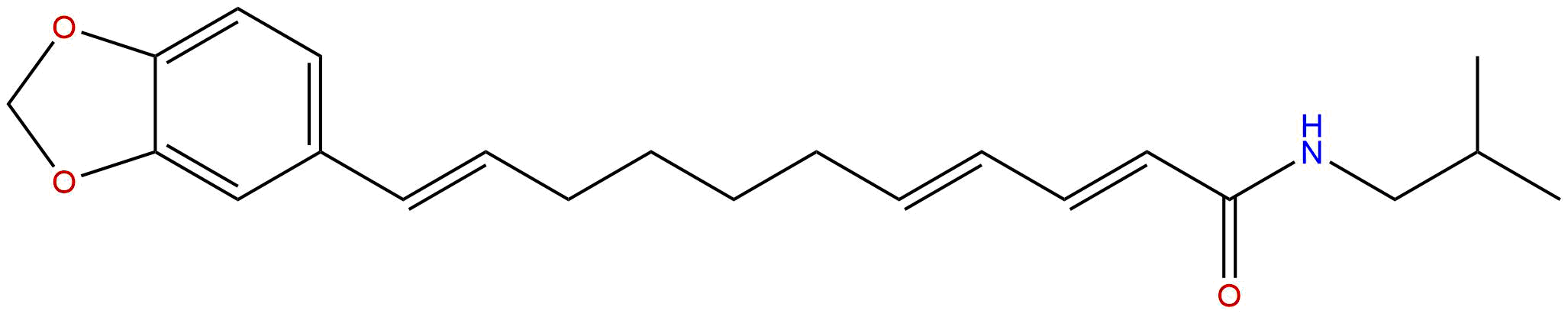


Product name: Retrofractamide B
Synonym name: Pipercide; Piperlongumine B
Catalogue No.: BP5382
Cas No.: 54794-74-0
Formula: C22H29NO3
Mol Weight: 355.478
Botanical Source:
Type of Compound: Alkaloids
Purity: 95%~99%
Analysis Method: HPLC-DAD or/and HPLC-ELSD
Identification Method: Mass, NMR
Packing: Brown vial or HDPE plastic bottle
Storage: Store in a well closed container, protected from air and light. Put into refrigerate or freeze for long term storage.
Whenever possible, you should prepare and use solutions on the same day. However, if you need to make up stock solutions in advance, we recommend that you store the solution as aliquots in tightly sealed vials at -20℃. Generally, these will be useable for up to two weeks.
The product could be supplied from milligrams to grams
Inquire for bulk scale.
For Reference Standard and R&D, Not for Human Use Directly.
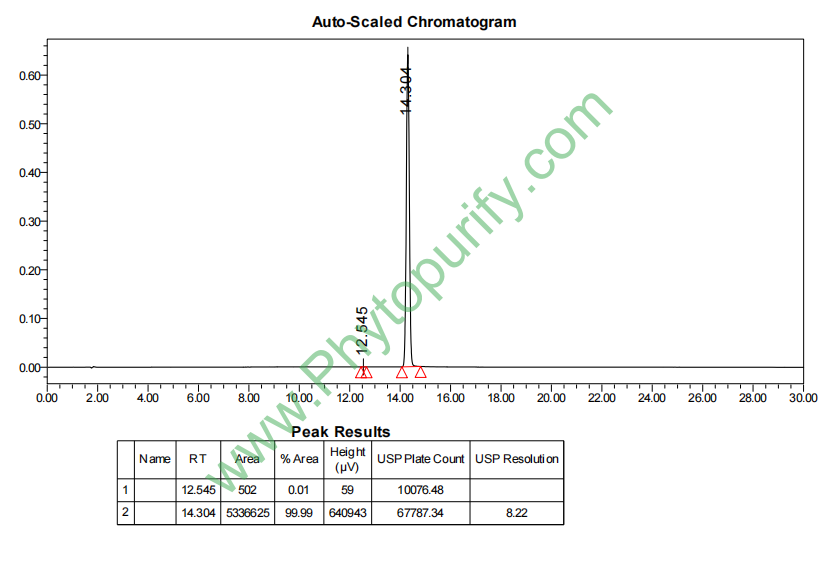
HPLC of Retrofractamide B
Storage conditions:Short-term storage at 2~8℃, long-term storage at -20 ~ -80℃
47.5600
4.7824
4.7819
.0043
2.5179
16.0377
High
94.8232
2.6616
No
Yes
Yes
No
No
Yes
0.0
No
Yes
Yes
Yes
Natural products, as an important source of drug discovery, play an irreplaceable role in the long history of human fight against diseases. From aspirin to paclitaxel, from artemisinin to morphine, the abundant chemical diversity in nature provides a continuous supply of lead compounds for modern drug development. Amidst numerous biologically active natural products, amide compounds have attracted much attention due to their structural diversity and extensive pharmacological activities. Refractamide B, a piperidine amide derived from pepper plants, has gradually entered the field of researchers in recent years due to its unique analgesic activity and multi-target mechanism of action.
The discovery of pseudopiperidine B can be traced back to a systematic study of the chemical composition of pepper plants. This compound was originally derived from Piper longum(Piper longum)It belongs to the benzodioxolane alkaloids and has been isolated and identified from its closely related species. Its chemical structure consists of a pyridine ring, an aromatic ring, and an amide bond connecting the two, which endows it with unique biological activity. It is worth noting that the application of pseudopiperidine B has already been established in traditional medicine systems. Pepper plants are often used in Asian traditional medicine to treat pain, inflammation, and digestive system diseases, providing important clues for modern pharmacological research.
In recent years, with the deepening of research on pain pathophysiology and the challenges faced by analgesic drug development, the search for new, efficient, and low side effect analgesics has become an important topic in the field of pharmacology. Although existing opioid and nonsteroidal anti-inflammatory drugs (NSAIDs) have definite therapeutic effects, they also have serious adverse reactions such as addiction, respiratory depression, and gastrointestinal injury, respectively. The emergence of pseudopipemide B provides a new approach for the development of analgesic drugs, and its ability to act on multiple pain related targets gives it a unique advantage in the development of multi-target analgesic drugs.
This article will provide a systematic review of the research progress on pseudopiperidine B from multiple dimensions, including chemical structure, plant origin, pharmacological activity, mechanism of action, pharmacological evaluation, and clinical application prospects. The aim is to provide reference for the in-depth research and development of this natural product.
The chemical structure of fake piperidine amide B belongs to the typical piperidine amide compound, and its core skeleton is composed of a piperidine ring, a benzodioxolane ring system, and an amide bond connecting the two. Specifically, the molecule contains a six membered pyridine ring (C ₅ H ₁₀ N) connected to a substituted benzodioxole unit via an amide bond (- CONH -). The benzodioxolane ring system is a common structural unit in pepper plants, consisting of a benzene ring fused with a 1,3-dioxolane ring. This structure endows the molecule with certain rigidity and electronic properties.
From the molecular formula perspective, the molecular formula of pseudopiperidine B is C ₂ ₂ H ₂ ₅ NO ₄, with a molecular weight of 355.4780 Da. This molecular weight falls within the ideal range for small molecule drugs and meets the Lipinski "Five Rules" requirement of a molecular weight less than 500. Its LogP value is 4.7824, indicating that the compound has high lipid solubility, which is consistent with its abundant aromatic and hydrophobic pyridine rings in the molecular structure. High lipid solubility is beneficial for compounds to penetrate biological membranes, but it may also lead to poor water solubility. In fact, the water solubility of pseudopiperidine B is only 0.0043 mg/mL, which is a poorly soluble compound, which may pose challenges to its formulation development and oral bioavailability.
The topological polar surface area (TPSA) is 47.5600 Å ², which is below the threshold of 60 Å ², indicating that the compound has good cell membrane permeability. It is worth noting that TPSA is closely related to blood-brain barrier penetration ability, and compounds with TPSA less than 90 Å ² are generally considered to have good central nervous system penetration. The TPSA value of pseudopiperidine B is much lower than this threshold. Combined with its high LogP value, it can be predicted that this compound can effectively penetrate the blood-brain barrier, which is highly correlated with its potential application in central analgesia.
In terms of chemical stability, the amide bond of pseudopiperidine B is relatively stable under physiological conditions, but may undergo hydrolysis under strong acid or strong base conditions. The benzodioxolane ring system is sensitive to oxidative conditions and may undergo metabolic activation in vivo to generate reactive intermediates. In addition, there are multiple rotatable bonds in the molecule, giving it a certain degree of conformational flexibility, which is beneficial for binding to different targets.
From the perspective of structure-activity relationship, the pyridine ring of pseudopiperidine B may participate in hydrophobic interactions with receptor proteins, while the amide bond provides hydrogen bond donor and acceptor sites. The benzodioxolane ring system may bind to aromatic residues of target proteins through π - π stacking or π - cation interactions. These structural features collectively determine the molecular basis of its multi-target action.
The main source of fake long pepper amide B comes from the Piperaceae genus of the Piperaceae family(Piper)Plants, among which long pepper(Piper longum L. ) and fake long pepper(Piper retrofractum Vahl is the most common. Piper longum is native to Southeast Asia such as Indonesia and the Philippines, and has also been introduced and cultivated in Yunnan, Guangdong, and other places in China. Fake long pepper is mainly distributed in tropical Southeast Asia, and its fruit is similar to long pepper. It is often used as a substitute for long pepper in traditional medicine. In addition, this compound is Piper nigrum(Black pepper)Piper sarmentosum It has also been detected in species such as fake konjac, but the content is usually low.
In terms of distribution in plant tissues, pseudopiperidine B is mainly enriched in fruits and rhizomes. Research has shown that the content of this compound in the fruit of Piper longum can reach 0.1% -0.5% of dry weight, while the content in the rhizome is relatively low. The harvesting period has a significant impact on the content, usually reaching its peak during the fruit ripening period (when the color changes from green to red). In addition, the place of origin, cultivation conditions, and processing methods can also affect the final content.
The selection of extraction method is crucial for obtaining high-purity pseudopiperidine B. The traditional extraction method mainly uses organic solvent extraction, and commonly used solvents include ethanol, methanol, ethyl acetate, chloroform, etc. Among them, 95% ethanol reflux extraction is the most commonly used method, with a high extraction rate and moderate cost. The specific operation process is as follows: the dried and crushed plant materials are refluxed and extracted 2-3 times with 95% ethanol at 60-70 ℃, each time for 2-3 hours. The extracted liquids are combined and concentrated under reduced pressure to obtain the extract. Subsequently, a liquid-liquid extraction method was used for preliminary separation, usually using petroleum ether, chloroform, ethyl acetate, and n-butanol for extraction in sequence. Pseudopiperidine B was mainly enriched in the chloroform and ethyl acetate extraction sites.
The application of modern extraction technology has significantly improved extraction efficiency and purity. Supercritical fluid extraction (SFE) technology, especially supercritical CO ₂ extraction, has shown advantages in the extraction of piperonyl amide compounds due to its green and environmentally friendly properties and good selectivity. Research has shown that under the conditions of a pressure of 30 MPa, a temperature of 50 ℃, and the addition of 5% ethanol as an entrainer, the extraction rate of pseudopiperidine B can be increased by more than 30% compared to traditional solvent methods. In addition, microwave-assisted extraction (MAE) and ultrasound assisted extraction (UAE) technologies can effectively shorten extraction time and improve extraction efficiency.
Column chromatography is the most commonly used method for separation and purification. Silica gel column chromatography often uses chloroform methanol or petroleum ether ethyl acetate gradient elution systems. For amide compounds with similar structures, reverse phase silica gel column chromatography (such as ODS) and preparative high-performance liquid chromatography (Prep HPLC) can achieve better separation effects. In recent years, the application of high-speed countercurrent chromatography (HSCCC) technology in the separation of natural products has become increasingly widespread. It utilizes the liquid-liquid distribution principle to avoid irreversible adsorption of samples on solid stationary phases, making it particularly suitable for the separation of moderately polar compounds. Using a two-phase solvent system of n-hexane ethyl acetate methanol water (5:5:5:5, v/v), it is possible to obtain a purity of over 98% of pseudopiperidine B in one operation.
Structural identification typically combines spectroscopic methods, including ultraviolet spectroscopy (UV), infrared spectroscopy (IR), mass spectrometry (MS), and nuclear magnetic resonance spectroscopy (NMR). The UV spectrum of pseudopiperidine B exhibits characteristic absorption around 230 nm and 290 nm, corresponding to the π→π * transitions of the benzene ring and amide bond, respectively. In the 1H NMR spectrum, the proton signal of the pyridine ring appears in the range of δ 1.5-3.5 ppm, the proton signal of the methylenedioxy group on the benzodioxolane ring is a single peak at around δ 5.9 ppm, and the aromatic proton appears in the range of δ 6.5-7.0 ppm. In the ¹ ³ C NMR spectrum, the signal of amide carbonyl carbon is around δ 165-170 ppm, and the signal of methylenedioxy carbon on the benzodioxolane ring is around δ 101 ppm. High resolution mass spectrometry (HR-ESI-MS) can provide precise molecular weight information, further confirming the structure of compounds.
The most notable pharmacological activity of pseudopiperidine B is its significant analgesic effect. Multiple in vitro and in vivo studies have confirmed that this compound exhibits dose-dependent analgesic effects in various pain models. In the classic acetic acid writhing test, intraperitoneal injection of pseudopiperidine B (10-30 mg/kg) significantly reduced the number of writhing events in mice, with an ED ₅₀ value of approximately 15 mg/kg, equivalent in efficacy to aspirin at the same dose. In the hot plate test, the compound (20 mg/kg) can prolong the latency period of mouse foot licking, indicating its inhibitory effect on acute pain caused by thermal stimulation.
More importantly, pseudopiperidine B also exhibited activity in chronic pain models. In the inflammatory pain model induced by complete Freund's adjuvant (CFA), continuous oral administration of pseudopiperidine B (30 mg/kg/day) for 7 days significantly reduced mechanical hyperalgesia and thermal hyperalgesia, and its effect was comparable to the positive control drug indomethacin, but the gastrointestinal side effects were significantly reduced. In the neuropathic pain model induced by chronic sciatic nerve compression injury (CCI), the compound also exhibited dose-dependent analgesic effects and good tolerability, with no significant motor dysfunction or sedative effects observed.
It is worth noting that the analgesic effect of pseudopiperidine B has multi-target characteristics, which makes it potentially advantageous in the treatment of complex pain syndromes. Unlike single target opioid drugs, this compound acts on multiple pain signaling pathways simultaneously, potentially producing a synergistic analgesic effect while reducing the risk of tolerance and dependence.
In addition to its analgesic effect, pseudopiperidine B also exhibits significant anti-inflammatory activity. In the carrageenan induced rat model of plantar swelling, oral administration of pseudopipemide B (20-50 mg/kg) can dose dependently inhibit plantar swelling, with a maximum inhibition rate of over 60%. Histological analysis shows that the compound can reduce the infiltration of inflammatory cells and the degree of edema at the site of inflammation. In the RAW264.7 macrophage model stimulated by lipopolysaccharide (LPS), pseudopiperidine B (1-10 μ M) significantly inhibited the release of pro-inflammatory factors such as tumor necrosis factor - α (TNF - α), interleukin-1 β (IL-1 β), and interleukin-6 (IL-6), while promoting the expression of anti-inflammatory factor interleukin-10 (IL-10).
Further mechanistic studies have shown that the anti-inflammatory effect of pseudopiperidine B is closely related to its inhibition of the nuclear factor kappa B (NF - κ B) signaling pathway. This compound can block the phosphorylation and degradation of I κ B α, thereby inhibiting the nuclear translocation and transcriptional activity of NF - κ B. In addition, it can inhibit the phosphorylation of p38 and JNK in the mitogen activated protein kinase (MAPK) pathway, further reducing the production of inflammatory mediators.
In addition to its analgesic and anti-inflammatory effects, pseudopiperidine B also exhibits various other pharmacological activities. In terms of antioxidant activity, the compound can scavenge DPPH free radicals and ABTS cationic free radicals, with IC ₅₀ values of 25.6 μ M and 18.3 μ M, respectively. In cell models, pseudopiperidine B can reduce oxidative stress levels induced by hydrogen peroxide, decrease the production of reactive oxygen species (ROS), and upregulate the activity of antioxidant enzymes such as superoxide dismutase (SOD) and glutathione peroxidase (GPx).
In terms of neuroprotection, pseudopiperidine B has a protective effect on glutamate induced damage in PC12 cells, reducing cell apoptosis and mitochondrial dysfunction. This discovery suggests that the compound may have the potential to treat neurodegenerative diseases. In addition, preliminary studies have shown that pseudopiperidine B also has slight antibacterial activity and has a certain inhibitory effect on the growth of Staphylococcus aureus and Candida albicans, but its MIC value is relatively high (>100 μ g/mL), and its clinical significance is limited.
The pharmacological activity of pseudopiperidine B originates from its interaction with multiple molecular targets, and this multi-target mechanism of action is a significant feature that distinguishes it from traditional analgesics. Based on existing research, this compound mainly exerts synergistic analgesic effects by binding to key proteins in the pain signaling pathway.
Transient receptor potential vanillic acid subtype 1 (TRPV1) is a key molecule in pain perception, which can be activated by capsaicin, thermal stimulation (>43 ℃), and acidic environment. Pseudopiperidine B has a dual regulatory effect on TRPV1: at low concentrations (0.1-1 μ M), it can act as an antagonist of TRPV1, blocking capsaicin and proton induced calcium influx; At high concentrations (>10 μ M), it exhibits partial agonist activity, causing transient receptor desensitization. This unique regulatory mode enables it to suppress pain signal transmission without causing significant burning sensation. Molecular docking studies have shown that the benzodioxolane ring of pseudopiperidine B can form hydrogen bonds and π - π interactions with the Tyr511 and Ser512 residues in the S4-S5 junction region of TRPV1, while the pyridine ring is embedded in a hydrophobic pocket.
TRPA1 is another transient receptor potential channel closely related to pain, which can be activated by various stimulating compounds. Pseudopiperidine B exhibits a direct antagonistic effect on TRPA1, with an IC ₅₀ of approximately 2.5 μ M. This compound can inhibit TRPA1 activation induced by mustard oil and formaldehyde, thereby reducing chemical pain. It is worth noting that TRPA1 plays an important role in neuropathic pain, so the inhibitory effect of pseudopiperidine B on TRPA1 may be closely related to its therapeutic efficacy in neuropathic pain models.
The interaction between pseudopiperidine B and the opioid receptor system is complex. Radioligand binding experiments showed that the compound has a certain affinity for μ - opioid receptor (OPRM1), δ - opioid receptor (OPRD1), and κ - opioid receptor (OPRK1), with Ki values of 1.8 μ M, 3.2 μ M, and 4.5 μ M, respectively. Functional experiments have shown that pseudopiperidine B acts as a partial agonist on opioid receptors, activating the G protein signaling pathway, but its maximum effect is only 40-60% of that of the complete agonist morphine. This partial agonist characteristic may help reduce typical side effects of opioid drugs, such as respiratory depression and constipation. In addition, the cannabinoid receptor CB1 (CNR1) may also be involved in its analgesic effect, but the specific mechanism still needs further research.
Cyclooxygenase (COX) is a key enzyme in prostaglandin synthesis and plays an important role in inflammation and pain. Pseudopiperidine B has inhibitory effects on COX-1 (PTGS1) and COX-2 (PTGS2), with IC ₅₀ values of 8.5 μ M and 5.2 μ M, respectively. It is worth noting that this compound has a higher selectivity for COX-2 than COX-1 (selectivity index of about 1.6), which is consistent with its lower gastrointestinal toxicity. Molecular simulation studies have shown that the amide bond of pseudopiperidine B can form hydrogen bonds with the Arg120 and Tyr355 active sites of COX-2, while the benzodioxolane ring occupies the hydrophobic channel.
Pseudopiperidine B also acts on other targets related to pain regulation. It can inhibit the serotonin transporter (SLC6A4), with an IC ₅₀ of approximately 6.8 μ M, thereby increasing the concentration of serotonin in the synaptic cleft and enhancing the function of the descending inhibitory pathway. In addition, the compound has a moderate affinity (Ki=4.2 μ M) for dopamine D2 receptor (DRD2) and may be involved in regulating the emotional dimension of pain. These multi-target effects together constitute the unique analgesic mechanism network of pseudopiperidine B.
Based on computational pharmacology and experimental data, the pharmacological parameters of pseudopiperidine B exhibit certain advantages and challenges. According to Lipinski's five rules, the molecular weight (355.48 Da) and LogP (4.78) of the compound meet the requirements, but its water solubility (0.0043 mg/mL) is poor and it belongs to a low solubility compound. Its TPSA (47.56 Å ²) and the number of rotatable bonds (4) are also within the ideal range. Overall, fake piperidine B complies with Lipinski's rule, but its water solubility is a key concern.
In terms of safety prediction, the hERG inhibition test result was negative, indicating a low risk of the compound causing QT interval prolongation in the heart. The Ames test result is 0.0, indicating that it does not have significant mutagenicity. These preliminary security data provide favorable support for subsequent development. However, it should be pointed out that these predicted results still need to be validated through systematic toxicological studies.
The pharmacokinetic study of pseudopiperidine B is still in its early stages, and the existing data mainly comes from animal experiments. After oral administration, the absorption rate of the compound in rats is moderate, with a peak time (Tmax) of approximately 1.5-2 hours. Due to poor water solubility, its oral bioavailability is relatively low, about 15-20%. After intravenous administration, the distribution volume (Vd) is relatively large (about 3.5 L/kg), indicating widespread tissue distribution. The plasma protein binding rate is about 92%, mainly binding to albumin.
In terms of metabolism, pseudopiperidine B is mainly metabolized in the liver, involving multiple cytochrome P450 enzyme systems (CYP450). The main metabolic pathways include: ring opening of the methylenedioxy group of the benzodioxolane ring to generate catechol derivatives, hydroxylation of the pyridine ring, and hydrolysis of amide bonds. Among them, methylenedioxyl ring opening metabolites have potential biological activity and may contribute to some pharmacological effects. Metabolites are mainly excreted through bile, with a small amount excreted through the kidneys.
The blood-brain barrier penetration is a significant advantage of pseudopiperidine B. Based on its high LogP value and low TPSA, this compound can effectively penetrate the blood-brain barrier, with a brain/plasma concentration ratio of approximately 0.8. This characteristic gives it a significant advantage in central analgesia, but it may also increase the risk of central nervous system side effects.
Multiple formulation strategies are currently being explored to address the issue of poor water solubility of fake piperidine B. Solid dispersion technology can significantly improve the dissolution rate and oral bioavailability of drugs by dispersing them in hydrophilic carriers such as polyvinylpyrrolidone and hydroxypropyl methylcellulose. Liposome encapsulation technology can not only improve water solubility, but also achieve targeted delivery and sustained release effects. In addition, phospholipid complexes and self microemulsifying drug delivery systems (SMEDS) are also effective means of improving bioavailability.
The application prospect of pseudopiperidine B in the field of analgesia is the most promising. Its multi-target mechanism of action gives it unique advantages in the treatment of complex pain syndromes, especially for neuropathic pain and inflammatory pain that do not respond well to traditional analgesics. Compared to opioid drugs, the partial agonist properties of pseudopiperidine B may reduce the risk of addiction and respiratory depression; Compared with nonsteroidal anti-inflammatory drugs, its COX-2 selective inhibition and lower gastrointestinal toxicity make it more suitable for long-term use.
Preclinical studies have shown that pseudopiperidine B is effective in various pain models and no significant tolerance development has been observed. This suggests that the compound may be suitable for long-term management of chronic pain. In addition, its ability to penetrate the blood-brain barrier makes it potentially valuable for the treatment of central pain, such as pain after spinal cord injury and stroke.
Based on its multi-target mechanism of action, the combination application of pseudopiperidine B with other analgesic drugs is worth exploring. Combined use with low-dose opioid drugs may enhance analgesic effects through synergistic effects, while reducing the dosage and side effects of opioid drugs. The combination with gabapentin drugs may have better therapeutic effects on neuropathic pain. In addition, the combination with antidepressants such as duloxetine may simultaneously improve pain and accompanying emotional disorders.
In addition to pain relief, the anti-inflammatory and neuroprotective activities of pseudopiperidine B suggest its potential applications in other disease fields. In terms of neurodegenerative diseases, its antioxidant and anti-inflammatory effects may have therapeutic value for Alzheimer's disease and Parkinson's disease. In inflammatory diseases such as rheumatoid arthritis and inflammatory bowel disease, their multi-target anti-inflammatory effects may provide new treatment options. In addition, preliminary studies suggest that the compound may have antidepressant and anti anxiety activity, consistent with its effects on serotonin transporters and dopamine receptors.
Despite its broad prospects, the development of fake piperidine B still faces many challenges. Firstly, the low oral bioavailability caused by poor water solubility is the main bottleneck restricting its clinical application. The solution strategy includes prodrug design, nanoformulation technology, and structural modification. Secondly, although multi-target action brings therapeutic advantages, it also increases the complexity of predicting side effects. Systematic toxicology research, especially the safety assessment of long-term medication, is a necessary task before clinical translation. Thirdly, the source limitations and extraction costs of natural products need to be addressed through synthetic biology and total synthesis methods.
In terms of structural optimization, improving water solubility and selectivity through chemical modification is an important direction. For example, introducing polar groups (such as hydroxyl and carboxyl groups) on the pyridine ring can improve water solubility while potentially altering target selectivity. In addition, developing derivatives with higher COX-2 selectivity may further reduce gastrointestinal toxicity.
As a natural product derived from traditional medicinal plants, the compound B has shown significant research value and application potential in the field of analgesic drug development due to its unique chemical structure and multi-target mechanism of action. This compound achieves comprehensive regulation of pain signaling pathways by acting on multiple pain related targets such as TRPV1, TRPA1, opioid receptors, and cyclooxygenase. This multi-target strategy provides new ideas for the development of novel analgesic drugs.
From a chemical perspective, the benzodioxolane piperidinamide skeleton of pseudopiperidinamide B provides a good lead structure for medicinal chemists, and through reasonable structural modification, it is expected to obtain derivatives with better drug properties. From a pharmacological perspective, its dual mechanism of action at both central and peripheral levels, as well as its broad effectiveness in treating acute and chronic pain, give it unique advantages in treating complex pain syndromes. From the perspective of drug development, although poor water solubility is currently the main challenge, various formulation technologies and structural modification strategies are being actively explored.
Looking ahead to the future, research on pseudopiperidine B should focus on the following aspects: firstly, to deeply elucidate its multi-target mechanism of action, especially the synergistic relationship between each target; Secondly, conduct systematic pharmacokinetic and toxicological studies to provide data support for clinical translation; The third is to improve its drug properties through structural optimization and formulation technology; The fourth is to explore its potential application in new indications such as neurodegenerative diseases and inflammatory diseases.
In summary, the study of pseudopiperidine B not only provides new candidate molecules for the development of analgesic drugs, but also provides a successful example for the development of multi-target natural product drugs. With the deepening of research, the active ingredients in this ancient plant are expected to bring new treatment options to modern medicine and bring good news to patients suffering from pain.
