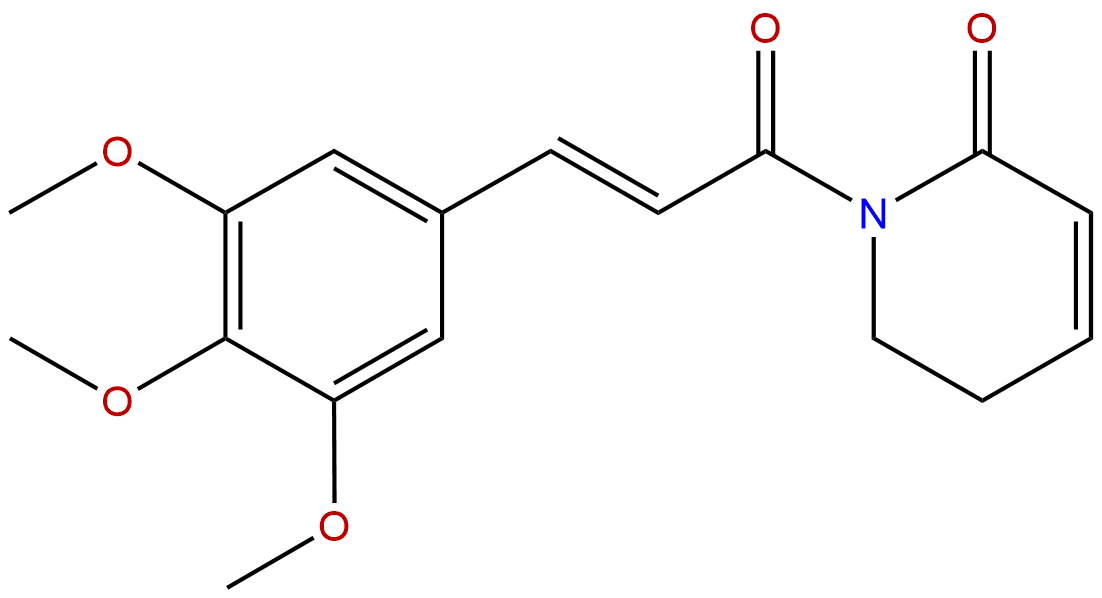


Product name: Piperlongumine
Synonym name: Piperlongumin
Catalogue No.: BP3320
Cas No.: 20069-09-4
Formula: C17H19NO5
Mol Weight: 317.341
Botanical Source:
Physical Description: Powder
Type of Compound: Alkaloids
Purity: 95%~99%
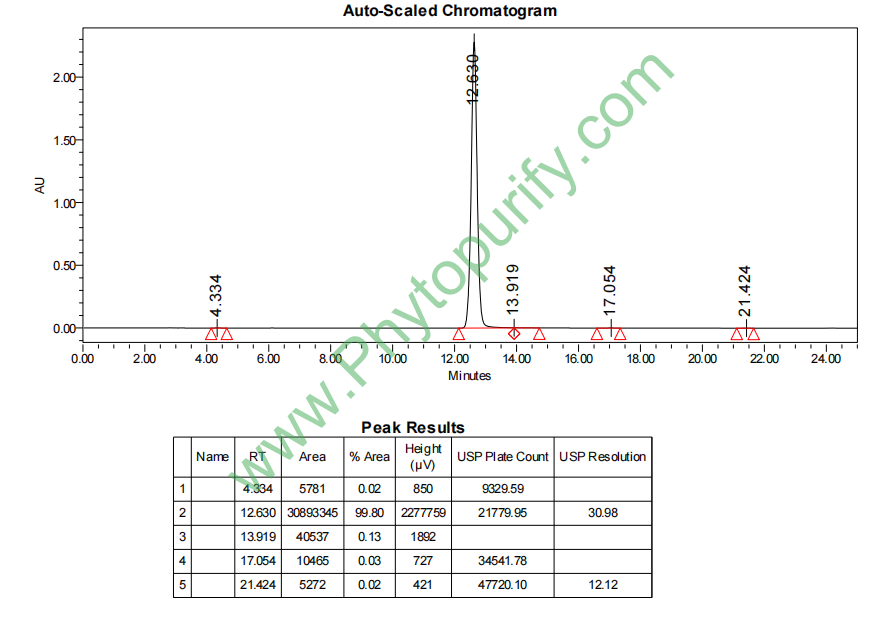
Analysis Method: HPLC-DAD or/and HPLC-ELSD
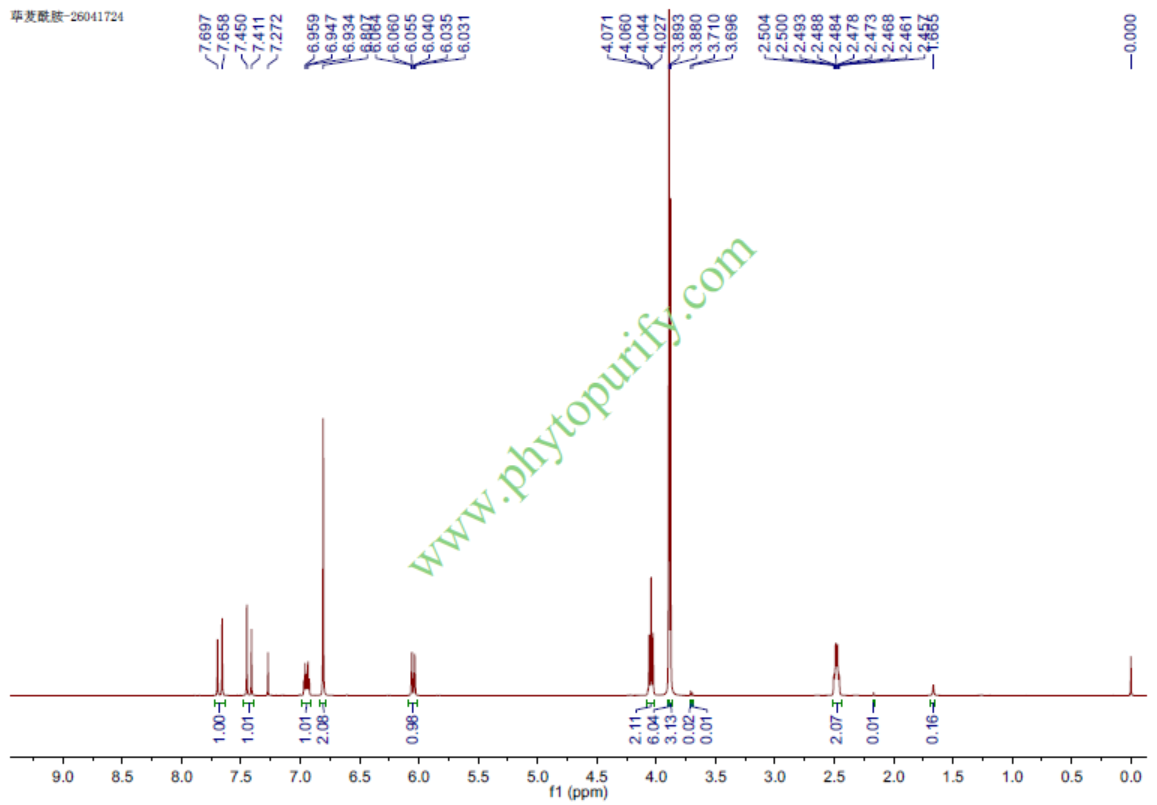
Identification Method: Mass, NMR
Packing: Brown vial or HDPE plastic bottle
The product could be supplied from milligrams to grams. Inquire for bulk scale.
We provide solution to improve the water-solubility of compounds, thereby facilitating the variety of activity tests and clinic uses.
For Reference Standard and R&D, Not for Human Use Directly.
HPLC of Piperlongumine
HNMR of Piperlongumine
Storage conditions:Short-term storage at 2~8℃, long-term storage at -20 ~ -80℃
65.0700
1.7629
1.7629
.1419
3.9941
19.6041
High
82.9005
2.5863
Yes
Yes
Yes
No
Yes
No
0.0
No
Yes
Yes
Yes
Natural products, as an important treasure trove for drug discovery and development, play an irreplaceable role in the history of human disease prevention and treatment. Among them, alkaloid compounds have always been a hot topic in medicinal chemistry and pharmacology research due to their structural diversity and significant biological activity. Piperlongumine, an amide alkaloid isolated from pepper plants, has attracted continuous attention from researchers due to its wide and unique pharmacological activities since its discovery. Its CAS number is 20069-09-4, and early research mainly focused on its traditional uses such as antibacterial and anti-inflammatory. However, in the past two decades, with the deepening of molecular pharmacology and tumor biology research, piperidine has shown a more remarkable core potential - selectively inducing an increase in reactive oxygen species (ROS) in tumor cells and triggering apoptosis, while having little effect on normal cells. This characteristic makes it a new star in the field of anti-tumor drug development. In addition, studies have continuously revealed its pharmacological effects in anti platelet aggregation, anti myocardial fibrosis, anti diabetes and neuroprotection, and the target network has become increasingly clear. This article aims to provide a systematic review of the chemical properties, plant sources, pharmacological activities, molecular mechanisms of action, pharmacological evaluation, and clinical application prospects of piperidine, in order to provide comprehensive academic references for the in-depth research and development of this compound.
The chemical name of piperidine is (2E, 4E) -5- (3,4-dihydro-1H-pyrrolo [1,2-a] pyrazin-2 (6H) - yl) -1- (1,3-benzodioxolan-5-yl) pentane-2,4-dien-1-one, with a molecular formula of C17H19NO5 and a molecular weight of 317.3410. Its structural feature is that a benzodioxolane ring (pepper ring) is connected to a dihydropyrrolopyrazine ring through an alpha, beta unsaturated carbonyl system (Michael reaction acceptor), forming two conjugated alpha, beta unsaturated double bonds (2E, 4E configuration). This unique structure is the chemical basis for its various biological activities, especially the Michael reaction receptor, which enables it to covalently bind with thiol rich proteins in cells (such as glutathione, thioredoxin, and cysteine residues of certain key enzymes), thereby interfering with cellular redox homeostasis and signal transduction.
Based on the analysis of the parameters related to drug properties, the lipid water partition coefficient (LogP) of piperidine is 1.7629, indicating that it has moderate lipophilicity and is conducive to transmembrane absorption. Its topological polar surface area (TPSA) is 65.0700 Å ², which is relatively low and suggests good membrane permeability. The water solubility data is 0.1419 mg/mL, which is slightly soluble, and this may be one of the challenges that need to be overcome for its oral bioavailability. It is worth noting that the prediction shows that it has a high blood-brain barrier permeability, which provides potential therapeutic applications for central nervous system diseases such as neurodegenerative diseases or brain tumors. In terms of preliminary safety prediction, the risk of hERG inhibition is "no", indicating a low risk of causing QT interval prolongation in the heart; The Ames test predicted a value of 0.0, indicating that it may not be mutagenic, which provides favorable preliminary safety features for its subsequent development.
Piper longum amide mainly comes from various plants in the Piperaceae family, among which the most well-known is the fruit of Piper longum L., also known as long pepper. Long pepper has a long history in traditional medical systems such as Ayurveda and traditional Chinese medicine, and is commonly used to treat digestive disorders, respiratory diseases, and inflammatory diseases. In addition, this component has also been found in plants of the same genus such as Piper chaba and Piper retrofractum.
Organic solvent extraction is commonly used to extract piperidine from plant materials. The common process is as follows: after crushing the dried long pepper fruit, Soxhlet extraction or room temperature extraction is carried out using a medium polarity solvent (such as methanol, ethanol, or ethyl acetate). After vacuum concentration, the crude extract was preliminarily separated using silica gel column chromatography, with different ratios of petroleum ether ethyl acetate or chloroform methanol gradient elution. The fraction rich in piperidine can be further purified by preparative thin layer chromatography (PTLC) or high performance liquid chromatography (HPLC) to obtain high-purity monomers. Modern technologies such as high-speed countercurrent chromatography (HSCCC) have also been applied for their efficient separation. Structural identification mainly relies on nuclear magnetic resonance (NMR, including 1H-NMR and 13C-NMR), mass spectrometry (MS), and comparison with standard samples. In order to meet the needs of pharmacological research and potential development, chemical total synthesis routes have also been successfully established, usually starting from piperic acid and corresponding amines, and constructing their core skeleton through Wittig reaction or condensation reaction, which provides a guarantee for obtaining a large number of standard compounds.
Piper longum amide exhibits a wide and diverse range of pharmacological activities, and its research has expanded from traditional antibacterial and anti-inflammatory methods to modern major disease fields.
Antitumor activity This is the most highly anticipated activity of piperonymus. A large number of in vitro studies have shown that it has significant proliferation inhibition and apoptosis induction effects on a variety of human tumor cell lines (such as breast cancer, prostate cancer, lung cancer, colon cancer, pancreatic cancer, ovarian cancer, glioma, etc.). Its uniqueness lies in its ability to selectively increase ROS levels within tumor cells, while normal cells are able to tolerate this' selective toxicity 'due to their stronger antioxidant capacity, making it highly therapeutic. Animal experiments in vivo have also confirmed that piperidine can effectively inhibit the growth and metastasis of transplanted tumors.
Antiplatelet aggregation and antithrombotic activity Piper longum amide is an effective inhibitor of platelet aggregation induced by arachidonic acid (AA), collagen, and platelet activating factor (PAF). Its function involves interference with thromboxane A2 synthesis, platelet membrane glycoprotein receptor function, and intracellular signaling pathways. This activity suggests its potential in preventing and treating cardiovascular and cerebrovascular diseases such as arterial thrombosis, myocardial infarction, and stroke.
Anti inflammatory and immune regulatory activity Piper longum amide can inhibit the production of nitric oxide (NO), prostaglandin E2 (PGE2), and pro-inflammatory cytokines (such as TNF - α, IL-1 β, IL-6) in macrophages stimulated by lipopolysaccharide (LPS) and other factors. Its anti-inflammatory mechanism is closely related to the inhibition of the activation of key inflammatory transcription factors such as nuclear factor kappa B (NF - κ B) and activator protein-1 (AP-1).
Anti fibrotic activity In the field of cardiovascular diseases, studies have shown that piperonymus can alleviate the activation and proliferation of myocardial fibroblasts induced by angiotensin II or transforming growth factor - β (TGF - β), inhibit excessive deposition of extracellular matrix (such as collagen), and thus exert anti myocardial fibrosis effects. Similar anti fibrotic effects have also been observed in liver and lung fibrosis models.
Other activities In addition, piper longum amide also showed antioxidant, antibacterial (against some gram-positive and negative bacteria), anti diabetes (to improve insulin resistance), anti angiogenesis and neuroprotective activities. In recent studies, it has also been used as a chemical tool to investigate the function of a new type of organelle - the "migratory body".
The multiple pharmacological effects of piperidine stem from its interactions with multiple molecular targets within cells, forming a complex network.
ROS mediated selective cytotoxicity and apoptosis pathway This is the core mechanism of its anti-tumor effect. Piper longum amide directly inhibits the activity of antioxidant enzymes (such as glutathione S-transferase π 1, GSTP1) or consumes the main antioxidant glutathione (GSH) in cells, disrupting the redox balance of tumor cells and leading to rapid accumulation of ROS (such as superoxide anions and hydrogen peroxide). Excessive ROS causes oxidative stress, damages DNA, proteins, and lipids, and activates multiple apoptotic signaling pathways, including the mitochondrial pathway (Bcl-2 family protein imbalance, cytochrome c release, caspase-9/3 activation), death receptor pathway, and endoplasmic reticulum stress pathway. Meanwhile, ROS can activate stress kinases such as p38 MAPK and JNK, and inhibit survival signals such as Akt/mTOR.
Target network for antiplatelet aggregation As shown in the target information you provided, the action of piperidine involves multiple stages of platelet aggregation. It may reduce the synthesis of thromboxane A2 (TXA2) by inhibiting cyclooxygenase (PTGS1/COX-1); By affecting the activation of integrin α IIb β 3 (encoded by ITGA2B and ITGB3), it interferes with the ultimate common pathway of platelet aggregation; It may also antagonize thromboxane A2 receptor (TBXA2R) or purinergic receptor P2Y12 (P2RY12), blocking agonist signaling; And inhibit phosphodiesterase 3A (PDE3A), increase cAMP levels in platelets, thereby inhibiting activation. The possible impact on platelet membrane glycoprotein Ib (GP1BA) involves early platelet adhesion.
Anti fibrotic and anti-inflammatory signaling pathways In the treatment of myocardial fibrosis, it has been confirmed that piperidine can significantly inhibit the phosphorylation and activation of extracellular signal regulated kinase 1/2 (ERK1/2). ERK1/2 is a key signaling molecule downstream of pro fibrotic factors such as TGF - β. When inhibited, it can block the transformation, proliferation, and collagen synthesis from fibroblasts to myofibroblasts. Its anti-inflammatory effect is mainly related to inhibiting the I κ B kinase (IKK) complex, preventing I κ B degradation, and thus inhibiting the nuclear translocation and transcriptional activity of NF - κ B. Meanwhile, it can also inhibit the activation of MAPK pathway (JNK, p38) and STAT3.
Other potential targets Piper longum amide can also interact with redox regulatory proteins such as thioredoxin reductase (TrxR) and nuclear factor E2 related factor 2 (Nrf2), affecting the antioxidant response of cells. In anti diabetes research, it has been reported that it can activate AMP activated protein kinase (AMPK).
Although piperidine has shown great potential in preclinical studies, its pharmacological properties still require systematic evaluation.
Pharmacokinetic study Animal pharmacokinetic studies have shown that oral absorption of piperidine is relatively fast, but its absolute bioavailability varies depending on species and dosage form, with its slight solubility and possible first pass effects being limiting factors. It is widely distributed in the body, and due to its high lipid solubility and blood-brain barrier permeability, it can enter brain tissue, which is advantageous for treating brain diseases. In terms of metabolism, piperidine is mainly metabolized through the liver cytochrome P450 enzyme system (such as CYP3A4, CYP2C9), and its main metabolic pathways include ring opening of benzodioxolane, reduction of double bonds, and glucuronic acid binding reaction. Excretion is mainly in the form of metabolites excreted through urine and feces. Its half-life in the body is relatively short, and it may require structural modification or formulation methods to prolong the action time.
Safety evaluation (preclinical)The results of in vitro safety prediction (such as hERG, Ames) are relatively optimistic. Animal acute toxicity and repeated administration toxicity studies have shown that within a certain dose range, piperonymus is well tolerated. However, its mechanism of inducing ROS is a double-edged sword, as excessive doses or inappropriate conditions may pose a risk of oxidative damage to normal tissues, especially high metabolic organs such as the heart and liver. Therefore, determining the treatment window is crucial.
Challenges and optimization strategies for drug development:
The clinical application prospects of piperidine are broad, but the road still needs to be explored solidly.
Potential indications:
Future research directions and challenges:
As a natural alkaloid derived from traditional medicinal plants, piperidine has shown new vitality in modern pharmacological research due to its unique chemical structure and multi-target mechanism of action. From selectively inducing ROS dependent apoptosis in tumor cells, to inhibiting platelet aggregation through multiple pathways, to intervening in key signaling pathways such as ERK to combat tissue fibrosis, its broad pharmacological activity reveals its enormous potential in addressing major health challenges such as tumors, cardiovascular and cerebrovascular diseases, and fibrosis. Despite facing challenges such as water solubility and selective optimization in drug formulation, these obstacles are expected to be overcome through strategies in modern medicinal chemistry, pharmacy, and nanotechnology. In the future, through deeper molecular mechanism analysis, precise application exploration based on biomarkers, and rigorous clinical translational research, piperonymus is expected to move from the laboratory to clinical practice, and develop into a new type of multi-target therapeutic drug with independent intellectual property rights, contributing the wisdom and power of natural products to human health. The research process once again confirms the eternal value of exploring modern drug lead compounds from traditional medicine.
