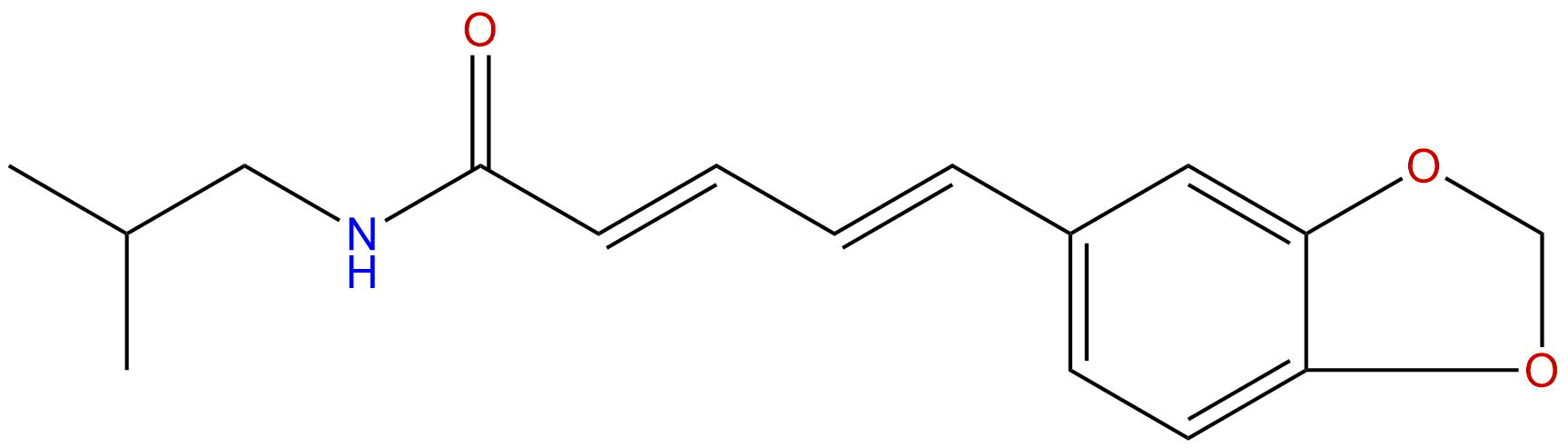


Product name: Piperlonguminine
Synonym name: N-Isobutylpiperamide; Piperlonguminin
Catalogue No.: BP4388
Cas No.: 5950-12-9
Formula: C16H19NO3
Mol Weight: 273.332
Botanical Source:
Type of Compound:
Purity: 95%~99%
Analysis Method: HPLC-DAD or/and HPLC-ELSD
Identification Method: Mass, NMR
Packing: Brown vial or HDPE plastic bottle
Storage: Store in a well closed container, protected from air and light. Put into refrigerate or freeze for long term storage.
Whenever possible, you should prepare and use solutions on the same day. However, if you need to make up stock solutions in advance, we recommend that you store the solution as aliquots in tightly sealed vials at -20℃. Generally, these will be useable for up to two weeks.
The product could be supplied from milligrams to grams
Inquire for bulk scale.
For Reference Standard and R&D, Not for Human Use Directly.
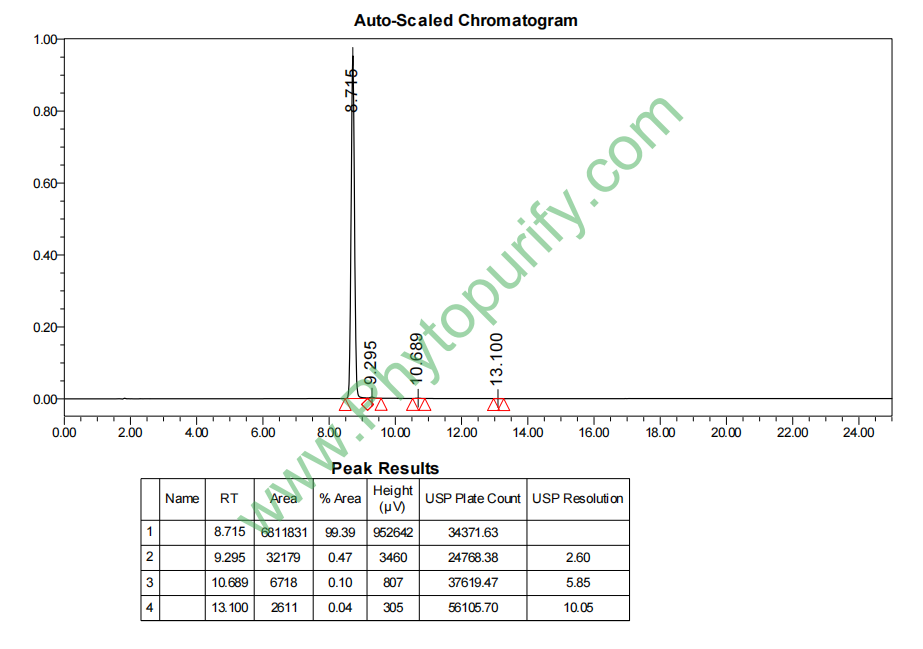
HPLC of Piperlonguminine
Storage conditions:Short-term storage at 2~8℃, long-term storage at -20 ~ -80℃
47.5600
2.7318
2.7318
.0321
2.5983
40.7996
High
89.0785
2.3993
Yes
Yes
Yes
No
No
Yes
0.6
No
Yes
Yes
Yes
Natural products have always been an important source of innovative drug discovery, among which Piper plants have attracted much attention for their rich bioactive ingredients. Piperlongminine, as an alkaloid amide isolated from this genus of plants, has become a hot topic in pharmacological research due to its extensive biological activity since its structure was elucidated. Its CAS number is 5950-12-9, and its molecular skeleton combines benzodioxolane and amide structure, making it a typical representative of piperonyl amide compounds. Modern pharmacological research has revealed that Bi Long Ning exhibits multiple biological activities including anti-inflammatory, anti-tumor, neuroprotective, antiplatelet aggregation, anti melanogenesis, antifungal, and antibacterial properties, demonstrating enormous potential medicinal value. Especially in the fields of cardiovascular disease and oncology, the clear anti platelet aggregation effect and the discovery of related molecular targets provide new candidate molecules for the development of novel therapeutic drugs. This article aims to systematically review the chemical properties, plant sources, pharmacological activities, mechanisms of action, medicinal properties, and clinical application prospects of Bi Long Ning, in order to provide comprehensive scientific references for the in-depth research and development of this natural product.
The chemical name of Bi Long Ning is (2E, 4E) -5- (1,3-benzodioxolan-5-yl) - N - (2-methylpropyl) -2,4-pentadienamide. Its molecular formula is C ₁₇ H ₁₉ NO ∝, and its molecular weight is 273.3320 g/mol. Structurally, the core feature of piperidine is a 1,3-benzodioxolane (pepper ring) linked to an isobutyramide group via a conjugated diene chain. This unique structure gives it specific physicochemical properties.
In terms of physicochemical properties, the calculated lipid water partition coefficient (LogP) is 2.7318, indicating that the compound has moderate lipophilicity, which is beneficial for its penetration of cell membranes but may also affect its water solubility. Its topological polar surface area (TPSA) is 47.56 Å ², which is relatively small and further supports its good membrane permeability. The experimental data shows that its water solubility is low, about 0.0321 mg/mL, which suggests that solubilization strategies may need to be considered in formulation development. It is worth noting that based on its physicochemical properties, Bi Long Ning has a high blood-brain barrier permeability, which lays a theoretical foundation for its potential neuroprotective or therapeutic applications in central nervous system related diseases. In addition, preliminary safety screening of the drug showed no significant inhibitory effect on hERG potassium channels at standard test concentrations (hERG inhibition: No), and the Ames test result was 0.6, indicating a low risk of mutagenicity and preliminary safety basis for further development.
Bi Long Ning is mainly derived from various plants of the pepper family and the pepper genus. This genus of plants is widely distributed in tropical and subtropical regions around the world, and many species have a long history of application in traditional medicine. Piperine is one of the representative components of secondary metabolites in these plants, often coexisting with structurally similar compounds such as piperine.
Common plant sources rich in Piper longum L. include Piper longum L. (used as medicine in fruit ears), Piper nigrum L., and some locally medicinal plants of the Piper genus. Among these plants, piperidine mainly exists in fruits, rhizomes, and other parts.
Its extraction and separation usually follow the conventional process of natural product chemistry. Firstly, crush the dried plant material and extract it using an appropriate organic solvent. Common solvents include methanol, ethanol, chloroform, or combinations of solvents with different polarities. Methods such as Soxhlet extraction, reflux extraction, or ultrasound assisted extraction are used to improve efficiency. After filtration and concentration, the crude extract is separated and purified by a series of chromatographic techniques, such as silica gel column chromatography, gel column chromatography (Sephadex LH-20) and high performance liquid chromatography (HPLC). Thin layer chromatography (TLC) and high-performance liquid chromatography are commonly used for tracking and identifying piperidine. Structural identification mainly relies on modern spectroscopic techniques, including nuclear magnetic resonance (¹ H-NMR, ¹ ³ C-NMR), mass spectrometry (MS), and infrared spectroscopy (IR), which are confirmed by comparing with literature data or standard samples. In recent years, green extraction techniques such as supercritical fluid extraction have also been explored for efficient extraction of such alkaloids.
Numerous in vitro and in vivo studies have confirmed that Bi Long Ning has diverse pharmacological activities, constituting its multifaceted application potential.
Antiplatelet aggregation activity This is one of the most extensively and clearly studied activities of Bi Long Ning. In platelet aggregation models induced by various inducers such as arachidonic acid, collagen, and ADP, Bi Long Ning showed significant concentration dependent inhibitory effects. Its strength of action is comparable to some commonly used antiplatelet drugs in clinical practice, indicating its potential as a novel antithrombotic drug.
Antitumor activity: Piper longum L. showed growth inhibition and apoptosis promoting effects on a variety of human tumor cell lines, including lung cancer, breast cancer, prostate cancer, colon cancer and leukemia cells. Its function is not limited to cytotoxicity, but also involves inhibiting cell migration and invasion, indicating its potential for anti-tumor metastasis.
Neuroprotective activity With its excellent blood-brain barrier permeability, Bi Long Ning has shown promising prospects in neuroprotection. Research has reported that it can alleviate oxidative stress, inhibit neuroinflammation, reduce neuronal apoptosis, and improve cognitive and motor function deficits in cellular and animal models of neurodegenerative diseases such as Alzheimer's disease and Parkinson's disease.
anti-inflammatory activity Bi Long Ning can effectively inhibit the production of nitric oxide (NO), prostaglandin E2 (PGE2), and pro-inflammatory cytokines (such as TNF - α, IL-6) in macrophages induced by stimuli such as lipopolysaccharide (LPS). It also exhibits anti-inflammatory effects in animal models of acute and chronic inflammation.
Other activities In addition, Bi Long Ning also has Anti melanin generation Function: By inhibiting tyrosinase activity or related signaling pathways, it may be used for the treatment of skin hyperpigmentation disorders; its antifungal and Antibacterial The activity has also been reported to have inhibitory effects on certain pathogenic fungi and bacterial strains.
The multiple pharmacological activities of Bi Long Ning stem from its interactions with multiple biomolecule targets, forming a complex networked mechanism of action.
In Antiplatelet aggregation In terms of mechanism research, it is the most systematic. Bi Long Ning does not act on a single target, but interferes with different pathways of platelet activation through the synergistic action of multiple targets:
* Inhibition of cyclooxygenase (COX)Research has shown that Bi Long Ning can inhibit the activity of COX-1 (PTGS1) and COX-2 (PTGS2), thereby reducing the synthesis of thromboxane A2 (TXA2). TXA2 is a powerful inducer of platelet aggregation and vasoconstrictor.
* Antagonistic thromboxane A2 receptor (TBXA2R)Bi Long Long prefers to act directly as an antagonist of TBXA2R, blocking the signal transduction of TXA2.
* Affects platelet membrane receptors It may interfere with the activation of platelet membrane glycoprotein GPIIb/IIIa complex (encoded by ITGA2B and ITGB3), which is the ultimate common pathway for platelet aggregation. In addition, it may also have a regulatory effect on platelet membrane receptor GP1BA.
* Inhibition of ADP receptors (P2Y12/P2RY12)ADP is an important platelet aggregation agonist that acts through the P2Y12 receptor. Bi Long Ning may antagonize this receptor.
* Inhibition of phosphodiesterase 3A (PDE3A)Inhibition of PDE3A can increase the level of cyclic adenosine monophosphate (cAMP) in platelets, thereby inhibiting platelet activation.
In antitumor In terms of mechanism, it involves inducing the accumulation of reactive oxygen species (ROS), leading to cell cycle arrest (such as G2/M phase), activating mitochondrial apoptosis pathways (such as regulating the Bcl-2/Bax ratio and activating caspase-3/9), inhibiting survival promoting signaling pathways such as nuclear factor kappa B (NF - κ B) and signal transduction and transcription activating factor 3 (STAT3).
In neuroprotection and anti-inflammatory In terms of its core mechanism, it is closely related to the inhibition of NF - κ B and MAPK signaling pathways, thereby downregulating the expression of inducible nitric oxide synthase (iNOS), COX-2, and the production of various pro-inflammatory mediators. Its antioxidant properties (clearing free radicals or enhancing the endogenous antioxidant defense system) also play an important role in it.
Anti melanin generation The main function is related to the inhibition of transcription factors associated with microphthalmia (MITF) and their downstream tyrosinase expression.
Based on the parameters provided earlier, Bi Long Ning has shown certain potential as a drug, but there are also challenges.
Advantage aspects The molecular weight is moderate (273 Da), the LogP value is around the ideal range (2-3), and the TPSA is small. These characteristics indicate that it has good oral absorption and cell membrane permeability, especially its predicted high blood-brain barrier permeability, which is extremely beneficial for the development of central nervous system drugs. The preliminary safety indicators (no significant hERG inhibition, negative Ames test) provide preliminary guarantees for its subsequent development.
Challenge aspect The main issue lies in its low water solubility (0.0321 mg/mL), which may result in suboptimal oral bioavailability and variable absorption in vivo. In addition, the presence of amide bonds may make it susceptible to enzymatic hydrolysis in vivo.
At present, there are relatively limited reports on pharmacokinetic studies of the Bi Long Ning system. Limited animal studies have shown that it can be absorbed into the bloodstream after oral administration, but there may be a first pass effect. Its metabolic pathway in the body is not fully understood, and it is speculated that it may involve oxidative metabolism of liver cytochrome P450 enzymes and hydrolysis of amide bonds. In terms of distribution, due to its lipophilicity, it may be widely distributed in various tissues. The main pathways of excretion may be through the kidneys and bile. To comprehensively evaluate its pharmacological properties, in-depth systematic research including absorption, distribution, metabolism, excretion, and toxicity (ADMET) is needed in the future, and exploration of improving its water solubility and metabolic stability through structural modification or formulation techniques such as nanomaterials, solid dispersions, phospholipid complexes.
The multi-target and multi activity characteristics of Bi Long Ning provide broad prospects for its application in various disease fields.
However, there are still many challenges to clinical application: firstly, a systematic preclinical pharmacodynamic and safety evaluation (including long-term toxicity, reproductive toxicity, etc.) needs to be completed. Secondly, it is necessary to clarify the ADMET characteristics in the human body through pharmacokinetic studies and optimize the dosing regimen. Finally, its multi-target nature is a double-edged sword. While it brings synergistic efficacy, it may also increase the risk of off target effects and unpredictable side effects, which need to be carefully evaluated in clinical trials.
Future research directions should include: ① conducting in-depth target validation and signal pathway studies to elucidate their core functional targets; ② Carry out reasonable structural modifications to optimize its activity, selectivity, and pharmacokinetic properties; ③ Develop new drug delivery systems to improve their bioavailability and targeting; ④ Explore its potential for combination therapy with other drugs.
As a natural alkaloid amide derived from traditional medicinal plants, Bi Long Ning has become an important molecule in natural product pharmacology research due to its unique chemical structure and extensive pharmacological activity. Its outstanding activities in antiplatelet aggregation, anti-tumor, neuroprotection, and the mechanism of acting on multiple molecular targets such as COX, TBXA2R, NF - κ B reveal its enormous potential as a multi-target therapeutic drug. Despite facing challenges such as water solubility in drug development, its excellent membrane permeability, blood-brain barrier permeability, and preliminary safety characteristics have laid a solid foundation for its further development. With the continuous advancement of modern pharmaceutical chemistry, pharmacology, and formulation technology, through systematic structural optimization, dosage form improvement, and in-depth preclinical and clinical research, Bi Long Ning is expected to gradually develop from a promising natural active ingredient into an innovative drug for treating various major diseases such as thrombotic diseases, tumors, and neurodegenerative diseases, fully demonstrating the sustained vitality of natural products in drug discovery.
