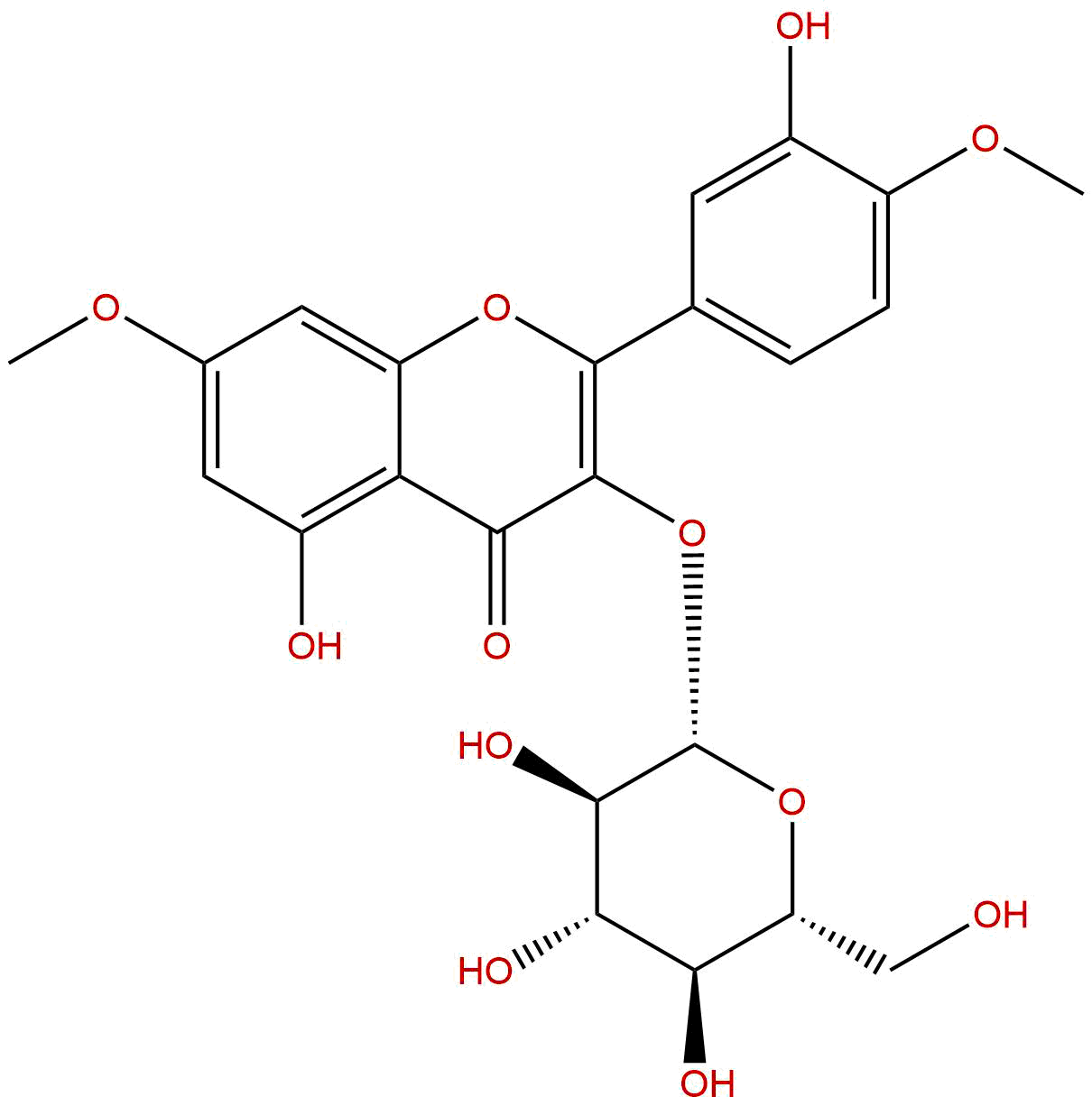


Product name: Yixingensin
Synonym name: Ombuin 3-O-β-D-glucopyranoside; Ombuin-3-O-β-D-glucoside; Ombuin-3-O-glucoside
Catalogue No.: BP2269
Cas No.: 158642-42-3
Formula: C23H24O12
Mol Weight: 492.433
Botanical Source:
Type of Compound: Flavonoids
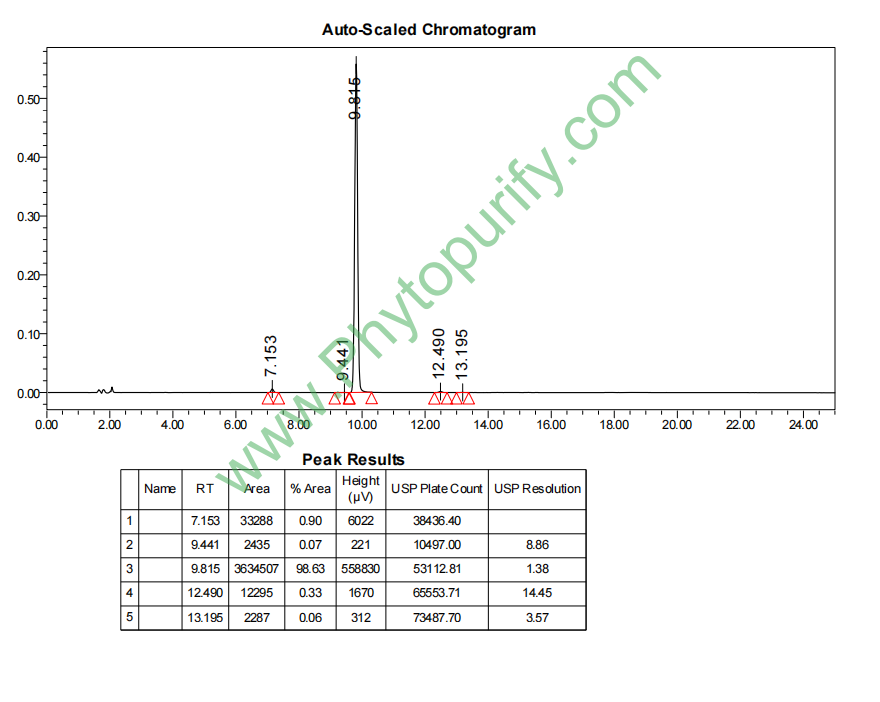
Purity: 95%~99%
Analysis Method: HPLC-DAD or/and HPLC-ELSD
Identification Method: Mass, NMR
Packing: Brown vial or HDPE plastic bottle
Storage: Store in a well closed container, protected from air and light. Put into refrigerate or freeze for long term storage.
Whenever possible, you should prepare and use solutions on the same day. However, if you need to make up stock solutions in advance, we recommend that you store the solution as aliquots in tightly sealed vials at -20℃. Generally, these will be useable for up to two weeks.
The product could be supplied from milligrams to grams
Inquire for bulk scale.
For Reference Standard and R&D, Not for Human Use Directly.
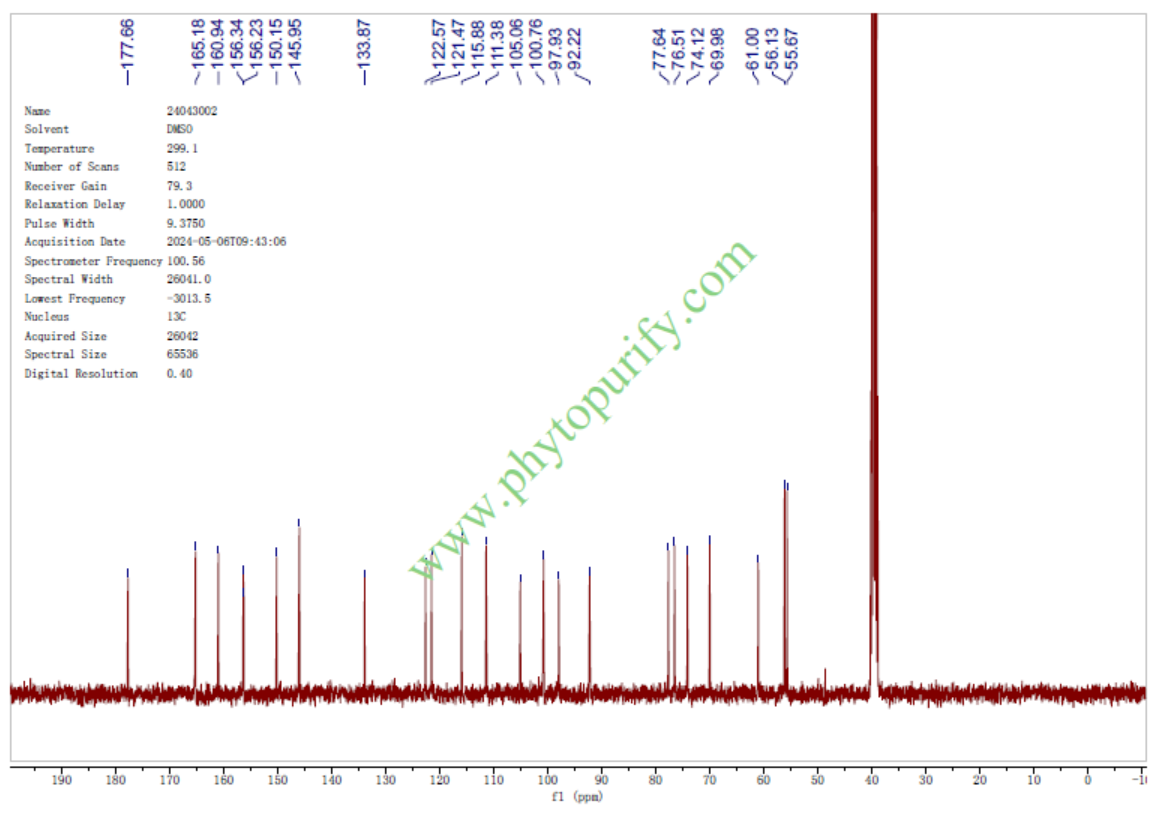
NMR of Yixingensin
HPLC of Yixingensin
Storage conditions:Short-term storage at 2~8℃, long-term storage at -20 ~ -80℃
Yixingensin, also known as Phytolacca acinosa Roxb., is a natural flavonoid compound derived from the traditional Chinese medicine plant Phytolacca acinosa Roxb. Its molecular formula is C24H28O11, CAS number 158642-42-3. In recent years, it has received widespread attention due to its potential pharmacological activity, especially its application value in respiratory diseases. Asthma, as a chronic airway inflammatory disease, involves multiple inflammatory mediators and signaling pathways, seriously affecting the quality of life of patients. Beak fruit flavonoids exhibit significant anti asthma activity by regulating various inflammation related targets, making them a hot topic in natural product pharmacology research.
This article focuses on the chemical structure, physicochemical properties, plant sources, and extraction methods of quercetin. It systematically reviews its pharmacological activity, mechanism of action, and molecular targets. Combined with drug evaluation and pharmacokinetic data, it explores its clinical application prospects, aiming to provide theoretical basis and research direction for the development of natural anti asthma drugs.
Pecorin belongs to the flavonoid class of compounds, specifically the 3-glucoside derivative of Epinepheline. Its molecular weight is 492.4330, and its molecular structure contains multiple hydroxyl and glycosidic groups, giving it high polarity and water solubility. The LogP value is 0.3433, indicating its strong hydrophilicity, which is beneficial for in vivo distribution but may limit its ability to penetrate lipid membranes. The topological polar surface area (TPSA) is 188.5100, indicating its high polarity, which is usually negatively correlated with the ability of molecules to pass through the cell membrane.
The water solubility is 1.4148, which supports its good solubility in aqueous phase and is beneficial for the development of oral formulations. The low permeability of the blood-brain barrier suggests that its effect is mainly limited to peripheral tissues, reducing the risk of central nervous system side effects. The hERG channel inhibition experiment result was negative, indicating a low risk of cardiac toxicity from quercetin. The Ames test result is 0.6, indicating a low risk of genotoxicity and good safety.
Pecorin is mainly present in the roots and fruits of commercial plants. Shanglu is a perennial herbaceous plant widely distributed in southern China and Southeast Asia. In traditional Chinese medicine, it is used for clearing heat and detoxifying, reducing swelling and dispersing nodules. Its roots contain abundant active ingredients such as flavonoids, saponins, and polysaccharides.
The common methods for extracting quercetin from beaked fruit include:
Solvent extraction method Using ethanol or methanol as extraction solvents, flavonoids can be effectively extracted through reflux or ultrasound assisted extraction. The extraction solution is purified through concentration, separation, column chromatography, and other steps to obtain high-purity quercetin.
Supercritical fluid extraction Using supercritical CO2 as a solvent, combined with ethanol assistance, the extraction efficiency is high and environmentally friendly, suitable for industrial production.
Purification by High Performance Liquid Chromatography (HPLC)Separate and purify the extract to ensure the purity and structural integrity of quercetin.
In recent years, by combining modern extraction techniques and separation methods, the extraction efficiency and purity of quercetin have been significantly improved, laying the foundation for its pharmacological research and clinical applications.
Beakgolide has shown significant anti-inflammatory, antioxidant, and immunomodulatory activities in various in vitro and in vivo models, particularly in respiratory diseases such as asthma, which has attracted much attention.
The pathological features of asthma include airway hyperresponsiveness, chronic inflammation, and airway remodeling. Beak fruit flavonoids alleviate airway inflammation and allergic reactions by regulating various inflammatory mediators and signaling pathways.
Inhibit the expression of inflammatory factors Beakgolide significantly downregulates Th2 cell related cytokines such as IL-4, IL-5, IL-13, reduces airway eosinophil infiltration, and inhibits IgE mediated allergic reactions.
Regulating immune cell function By acting on the FCER1A receptor, it regulates the activation of mast cells and eosinophils, reduces histamine release, and alleviates airway spasms.
Antioxidant effect By clearing free radicals, reducing oxidative stress damage to airway epithelial cells, and protecting the integrity of airway structure.
Improve airway hyperresponsiveness Acting on ADRB2 receptors, regulating smooth muscle relaxation and relieving airway spasms.
In addition to anti asthma effects, quercetin also exhibits certain anti-tumor, antibacterial, and neuroprotective effects, but related research is still in the preliminary stage and needs further verification.
The mechanism of action of quercetin is mainly achieved through multi-target synergistic regulation, involving multiple aspects such as immune regulation, inflammation inhibition, and airway smooth muscle relaxation.
CHRM3 (M3 type cholinergic receptor)Regulating smooth muscle contraction in the airway, coracoidin alleviates airway spasms by antagonizing CHRM3.
ADRB2 (β 2-adrenergic receptor)Promoting airway smooth muscle relaxation, berberine can enhance ADRB2 signaling and improve airway patency.
HRH1 (histamine H1 receptor)Mediating allergic reactions, quercetin inhibits HRH1 activity and alleviates histamine induced airway inflammation.
IL4、IL5、IL13 Key Th2 cell secreted factors drive the inflammatory response in asthma. Beakgolide downregulates the expression of these cytokines and inhibits the inflammatory cascade.
FCER1A (high affinity IgE receptor alpha chain)Regulating mast cell activation, coracoidin blocks FCER1A mediated signaling and reduces allergic reactions.
IL17A、PTGDR2、IL25 Involved in airway inflammation and immune regulation, the regulation of these targets by quercetin helps to inhibit chronic inflammation and airway remodeling.
Beakgolide reduces the release of inflammatory mediators and lowers airway inflammation by inhibiting the NF - κ B and MAPK signaling pathways. At the same time, regulating the JAK/STAT pathway, inhibiting Th2 cell differentiation, and restoring immune balance.
The pharmacological parameters of quercetin show that it has good potential for drug development.
Molecular weight and polarity Molecular weight 492.4330, TPSA 188.5100, Although high, it is suitable for targeted lung administration to reduce systemic side effects.
Water soluble and fat soluble Good water solubility (1.4148), LogP 0.3433, conducive to formulation design and in vivo absorption.
Low permeability of blood-brain barrier Reduce the risk of central nervous system toxicity and be suitable for treating peripheral diseases.
safety The hERG channel has no inhibitory effect, and the Ames test results show low genotoxicity and high safety.
In terms of pharmacokinetics, the oral absorption of quercetin is relatively fast, and its bioavailability is limited by the hydrolysis metabolism of glycoside structure. The distribution in the body is mainly concentrated in the lungs and liver, with metabolic pathways mainly through liver enzymatic hydrolysis and glucosidase action, and excretion mainly through the kidneys. Moderate half-life, supporting daily dosing regimen.
With a deeper understanding of the pathogenesis of asthma, natural products have shown unique advantages as drug candidates for multi-target and multi pathway regulation. Beakgolide has the potential to become a novel anti asthma drug due to its significant anti-inflammatory, immune regulatory, and airway protective effects.
The future clinical application prospects include:
Asthma adjuvant therapy As a supplement to traditional hormones and β 2 agonists, it reduces the risk of drug side effects and resistance.
Chronic airway inflammatory disease For chronic obstructive pulmonary disease (COPD) and other conditions, the anti-inflammatory effect of quercetin is also applicable.
Combination therapy strategy Combining with existing drugs to achieve synergistic effects and improve treatment efficacy.
Development of new dosage forms Inhalation formulations, nanocarrier systems, etc. can improve the efficiency of targeted drug delivery to the lungs.
However, the clinical translation of quercetin still faces challenges, such as pharmacokinetic optimization, dose safety evaluation, and large-scale clinical trials, which require interdisciplinary collaboration to promote.
As a natural flavonoid compound with multi-target regulatory ability, quercetin has shown broad application prospects in the treatment of asthma and related respiratory diseases. Its good safety and pharmacological parameters lay the foundation for subsequent drug development. In the future, by combining modern medicinal chemistry, molecular biology, and clinical research, a deeper understanding of the mechanism of action and pharmacokinetic characteristics of quercetin will help promote its transition from laboratory to clinical use, benefiting a wide range of patients. The continuous development of natural product pharmacology will provide more innovative treatment options for complex diseases such as asthma.
