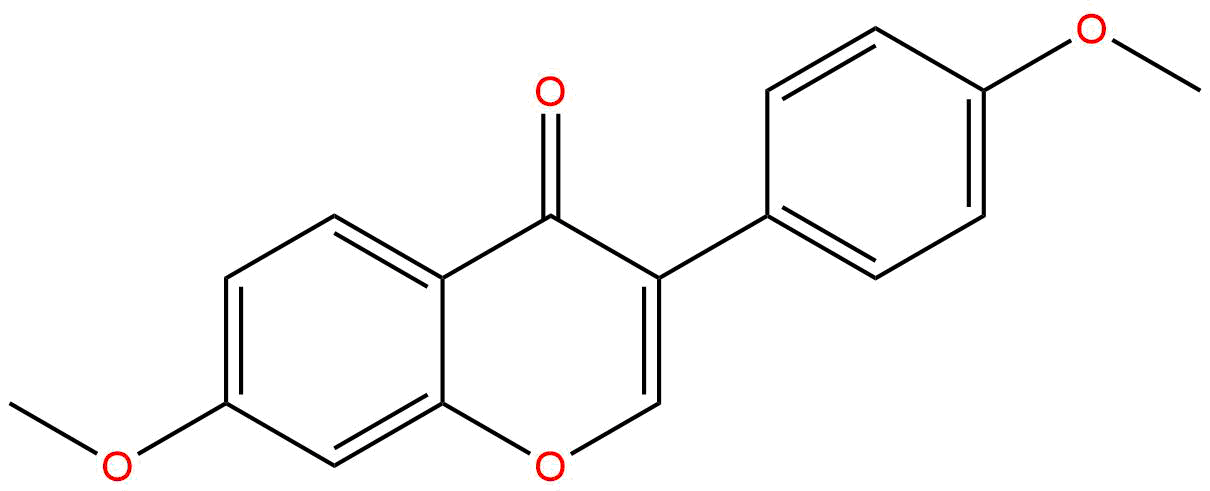


Product name: 7,4'-Di-O-methyldaidzein
Synonym name: 4',7-Dimethoxyisoflavone
Catalogue No.: BP3719
Cas No.: 1157-39-7
Formula: C17H14O4
Mol Weight: 282.295
Botanical Source: 7-O-Methylformononetin; Di-O-methyldaidzein; Dimethoxydaidzein;Formononetin 7-O-methyl ether
Physical Description:
Type of Compound: Flavonoids
Purity: 95%~99%
Analysis Method: HPLC-DAD or/and HPLC-ELSD
Identification Method: Mass, NMR
Packing: Brown vial or HDPE plastic bottle
Storage: Store in a well closed container, protected from air and light. Put into refrigerate or freeze for long term storage.
Whenever possible, you should prepare and use solutions on the same day. However, if you need to make up stock solutions in advance, we recommend that you store the solution as aliquots in tightly sealed vials at -20℃. Generally, these will be useable for up to two weeks.
The product could be supplied from milligrams to grams
Inquire for bulk scale.
For Reference Standard and R&D, Not for Human Use Directly.
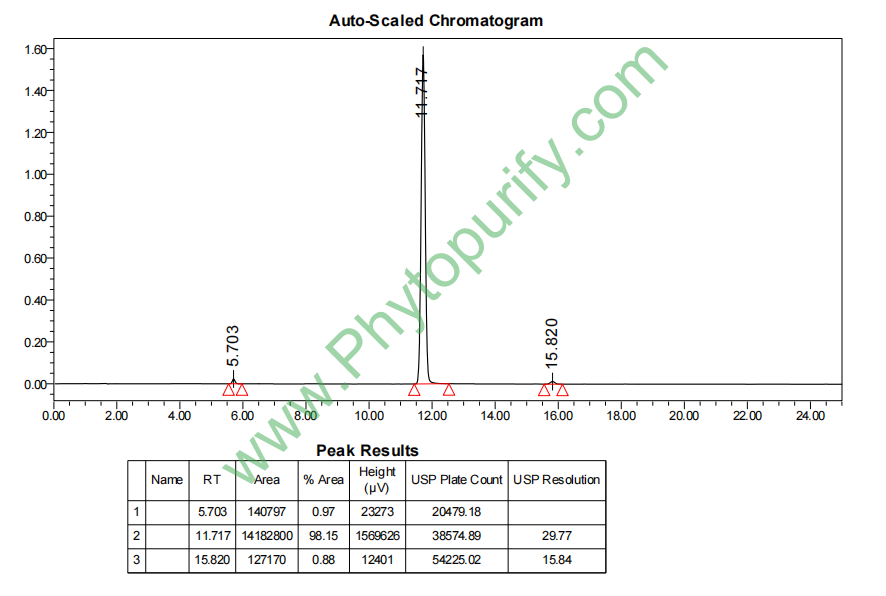
HPLC of 7,4'-Di-O-methyldaidzein
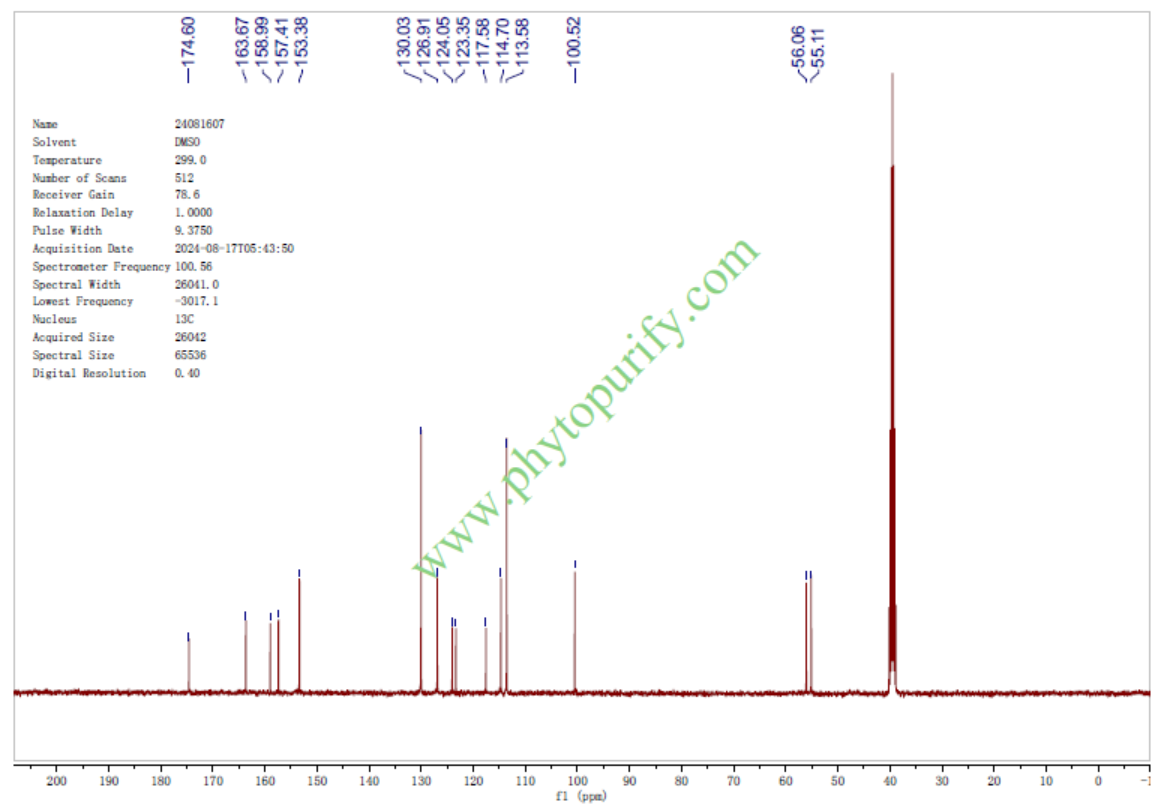
NMR of 7,4'-Di-O-methyldaidzein
Storage conditions:Short-term storage at 2~8℃, long-term storage at -20 ~ -80℃
48.6700
3.0272
3.0274
.0028
4.8832
54.0945
High
90.6646
1.8527
Yes
No
Yes
No
Yes
Yes
2.4
No
Yes
No
No
Daidzein (7,4 '- Di-O-methyldaidzein, CAS number 1157-39-7) is a naturally occurring methoxy isoflavone compound and a derivative of soy isoflavones. Isoflavones, as representative components of plant estrogens, exhibit significant biological activities in regulating human endocrine, antioxidant, anti-inflammatory, anti-tumor and other aspects, and have therefore received widespread attention in the fields of pharmacology and natural product chemistry. Daidzein dimethyl ether, due to its unique methoxy substituted structure, not only exhibits high stability in chemical properties, but also shows advantages in biological activity and pharmacokinetic properties compared to non methoxy isoflavones.
In recent years, with the in-depth study of the regulation mechanism of estrogen receptor, daidzein dimethyl ether has gradually become more and more important in regulating estrogen related diseases such as breast cancer, osteoporosis, metabolic syndrome and neurodegenerative diseases. Its targets include various key proteins related to estrogen regulation, including estrogen receptor alpha (ESR1), estrogen receptor beta (ESR2), sex hormone binding globulin (SHBG), aromatase (CYP19A1), androgen receptor (AR), progesterone receptor (PGR), follicle stimulating hormone receptor (FSHR), and luteinizing hormone beta subunit (LHB), demonstrating a complex and diverse regulatory network.
This article provides a systematic review of the chemical structure and physicochemical properties, plant sources and extraction methods, pharmacological activity and mechanism of action, pharmacological evaluation and pharmacokinetic characteristics of daidzein dimethyl ether. Combining its potential and challenges in clinical applications, it aims to provide comprehensive academic references for further research and development of this natural product.
The molecular formula of daidzein dimethyl ether is C17H14O4, with a molecular weight of 282.2950, and it belongs to the methoxy derivatives of isoflavone compounds. Its structural feature is that the hydroxyl groups at positions 7 and 4 of daidzein molecule are replaced by methoxy groups, forming 7,4 '- dimethoxyflavone. The methoxy substitution of this structure not only affects the polarity and hydrophobicity of the molecule, but also significantly alters its binding affinity and metabolic stability with biological targets.
In terms of physical and chemical properties, the LogP value of daidzein dimethyl ether is 3.0272, indicating its moderate lipid solubility, which facilitates cell membrane penetration and in vivo distribution. Its topological polar surface area (TPSA) is 48.67 Å ², which belongs to a moderately polar molecule and supports its good permeability in living organisms. Low water solubility (0.0028 mg/mL) suggests limited solubility in aqueous phase and may require improvement in bioavailability through pharmaceutical formulation technology. The high permeability of the blood-brain barrier suggests its potential application value in central nervous system diseases. The hERG channel inhibition experiment showed a negative result, indicating a low risk of cardiac toxicity. The Ames test value is 2.4, indicating a low risk of genotoxicity and a good safety foundation.
The methoxy modification of chemical structure not only enhances the stability of molecules and reduces the oxidative sensitivity of phenolic hydroxyl groups, but also may affect their binding mode and affinity with receptors by changing their molecular conformation and electron distribution, providing a structural basis for their multi-target mechanism of action.
Daidzein dimethyl ether is mainly present in soybeans (Glycine max) and related products, and is one of the methoxy derivatives of soy isoflavone compounds. Soybeans, as an important crop, are rich in various isoflavone components in their seeds and fermented products, including daidzein, genistein, and their methoxy derivatives. Although the content of daidzein dimethyl ether is relatively low, its unique biological activity makes it a research focus.
The traditional extraction method mainly uses organic solvent extraction, such as ethanol, methanol or ethyl acetate, combined with ultrasound assisted extraction, reflux extraction and other technologies, which can effectively separate isoflavone components from soybean powder or fermentation products. Subsequently, high-purity daidzein dimethyl ether was further purified through liquid-liquid distribution, silica gel column chromatography, high-performance liquid chromatography (HPLC), and other methods.
In recent years, green extraction technologies such as supercritical CO2 extraction, microwave-assisted extraction, and membrane separation have also been applied to the extraction of this compound, significantly improving extraction efficiency and purity while reducing the use of organic solvents, in line with the sustainable development trend of modern natural product extraction.
The fermentation process has also been proven to promote the production of daidzein dimethyl ether. Some microorganisms, such as Aspergillus, convert daidzein into its methoxy derivatives through the action of methyltransferase, enhancing its content and biological activity. This provides new ideas for industrial production and functional food development.
Daidzein dimethyl ether, as a methoxy isoflavone, exhibits various significant pharmacological activities, mainly focused on regulating the endocrine system, antioxidant, anti-inflammatory, and anti-tumor effects.
Daidzein dimethyl ether exhibits selective regulatory effects by binding to estrogen receptor (ER) subtypes ESR1 and ESR2. Research has shown that this compound has a high affinity for ESR2 and can mimic some physiological functions of natural estrogen, regulate the estrogen signaling pathway, and thereby affect cell proliferation, differentiation, and apoptosis processes. Its regulatory effect on SHBG helps to regulate the level of free estrogen in the blood and maintain endocrine balance.
In addition, daidzein dimethyl ether inhibits aromatase (CYP19A1) and reduces the transformation of androgen to estrogen, which may play an important role in the prevention and treatment of hormone dependent tumors such as breast cancer. Its regulation of androgen receptor (AR) and progesterone receptor (PGR) further enriches its potential application in sex hormone related diseases.
Daidzein dimethyl ether has strong free radical scavenging ability and can inhibit oxidative stress-related cell damage. The methoxy group in its structure enhances its ability to capture reactive oxygen species (ROS) and nitrogen radicals through electron donating effect, reducing membrane lipid peroxidation and DNA damage.
In inflammation models, this compound can downregulate the expression of pro-inflammatory factors such as TNF - α, IL-6, and IL-1 β, inhibit the activation of the NF - κ B signaling pathway, and exert significant anti-inflammatory effects. This characteristic has attracted widespread attention for its application prospects in chronic inflammatory diseases and neuroinflammation.
Both in vitro and in vivo studies have shown that daidzein dimethyl ether can inhibit the proliferation of various tumor cells, induce cell cycle arrest and apoptosis. Its mechanism of action involves regulating cell cycle proteins, activating apoptosis related proteins (such as caspase family), and inhibiting tumor related signaling pathways (such as PI3K/Akt, MAPK). Especially in breast cancer and prostate cancer models, this compound shows good anti-tumor potential by regulating estrogen and androgen receptor signals.
Due to its excellent blood-brain barrier permeability, research on daidzein dimethyl ether in neurodegenerative diseases is gradually increasing. Its antioxidant and anti-inflammatory properties help alleviate neuronal damage and improve cognitive dysfunction. Some studies have shown that this compound can promote nerve regeneration and functional recovery by regulating neurotransmitters and neurotrophic factors.
The pharmacological effects of daidzein dimethyl ether depend on its interactions with multiple molecular targets, forming a complex signal regulatory network.
As a plant estrogen, daidzein dimethyl ether activates or inhibits downstream gene expression by binding to ER α (ESR1) and ER β (ESR2). Its preferential binding to ER β helps to exert anti proliferative and anti-inflammatory effects, reducing the risk of hormone dependent diseases. The mechanism of action involves receptor conformational changes, recruitment of co activators, and transcriptional regulation.
SHBG regulates the levels of free sex hormones in plasma and affects the bioavailability of hormones. Daidzein dimethyl ether can regulate the expression or binding ability of SHBG, indirectly regulating the activity of estrogen and androgen, and maintaining endocrine homeostasis.
CYP19A1 catalyzes the conversion of androgens to estrogens and is an important target for hormone dependent tumors. Daidzein dimethyl ether exerts anti-tumor effects by inhibiting aromatase activity, reducing estrogen synthesis, and minimizing hormone stimulation.
This compound has a regulatory effect on AR and PGR, affects androgen and progesterone signaling pathways, participates in sex hormone related physiological and pathological processes, and has potential value in prostate diseases and menstrual cycle regulation.
FSHR and LHB are important receptors and hormone subunits that regulate reproductive function. Daidzein dimethyl ether has the potential to regulate reproductive endocrine by modulating these targets, which may affect follicular development and luteal function.
The pharmacological parameters of daidzein dimethyl ether show that it has good potential for drug development.
In terms of pharmacokinetics, existing studies have shown that daidzein dimethyl ether is rapidly absorbed after oral administration and widely distributed in the body, especially at high concentrations in brain tissue. Its metabolism mainly occurs through the liver's phase I and phase II enzyme systems, including hydroxylation and methylation reactions, producing various metabolites. The main excretion pathways are bile and urine. Good metabolic stability and moderate half-life support its development as an oral medication.
However, due to its low water solubility, its bioavailability is limited, and in the future, modern formulation technologies such as nanocarriers and solid dispersions will be needed to improve its absorption performance. In addition, the toxicological evaluation and pharmacokinetic studies of the system still need to be further improved to ensure its safety and effectiveness in clinical applications.
Daidzein dimethyl ether, with its unique structure and multi-target regulatory ability, has shown broad clinical application prospects in various disease fields.
In the prevention and adjuvant treatment of hormone dependent tumors such as breast cancer and prostate cancer, daidzein dimethyl ether has a potential anti-tumor effect by regulating estrogen and androgen receptor signals and inhibiting tumor cell proliferation. Its inhibitory effect on aromatase provides a new therapeutic strategy for hormone level regulation.
In addition, in women's health issues such as osteoporosis and menopausal syndrome, this compound has good potential for application by simulating estrogen activity, improving bone density, and alleviating menopausal symptoms.
Its high blood-brain barrier permeability, antioxidant and anti-inflammatory properties have attracted much attention in the prevention and treatment of neurodegenerative diseases such as Alzheimer's disease and Parkinson's disease. In the future, clinical trials will verify its neuroprotective effects, opening up new avenues for the treatment of neurological diseases with natural products.
The regulation of daidzein dimethyl ether on lipid metabolism and inflammatory reaction helps to improve hyperlipidemia, hyperglycemia and atherosclerosis related to metabolic syndrome, and has potential cardiovascular protection.
Given its natural source and safety advantages, daidzein dimethyl ether can be used as a functional food ingredient or nutritional supplement to assist in regulating endocrine function and improving health status, meeting consumers' demand for natural health products.
Although daidzein dimethyl ether exhibits various biological activities and good drug properties, its clinical translation still faces many challenges, including low bioavailability due to poor water solubility, complex metabolic pathways in vivo, and lack of systematic clinical safety and efficacy data. Future research needs to focus on:
Through interdisciplinary collaborative innovation, daidzein dimethyl ether is expected to become an important candidate molecule in the development of natural product drugs.
Daidzein dimethyl ether, as a typical methoxy isoflavone, exhibits a wide range of pharmacological activities in regulating estrogen related diseases, antioxidant and anti-inflammatory effects, anti-tumor effects, and neuroprotection due to its unique chemical structure and multi-target regulatory ability. Its good pharmacological parameters and safety foundation have laid a solid foundation for clinical application.
In the future, with the advancement of modern medicinal chemistry, molecular biology, and formulation science, in-depth research on daidzein dimethyl ether will promote its transition from laboratory to clinical use and meet human health needs. As an important resource for the development of new drugs, the research on daidzein dimethyl ether not only enriches the pharmacological knowledge system of isoflavone compounds, but also provides valuable examples and inspirations for the development of natural product pharmacology.
