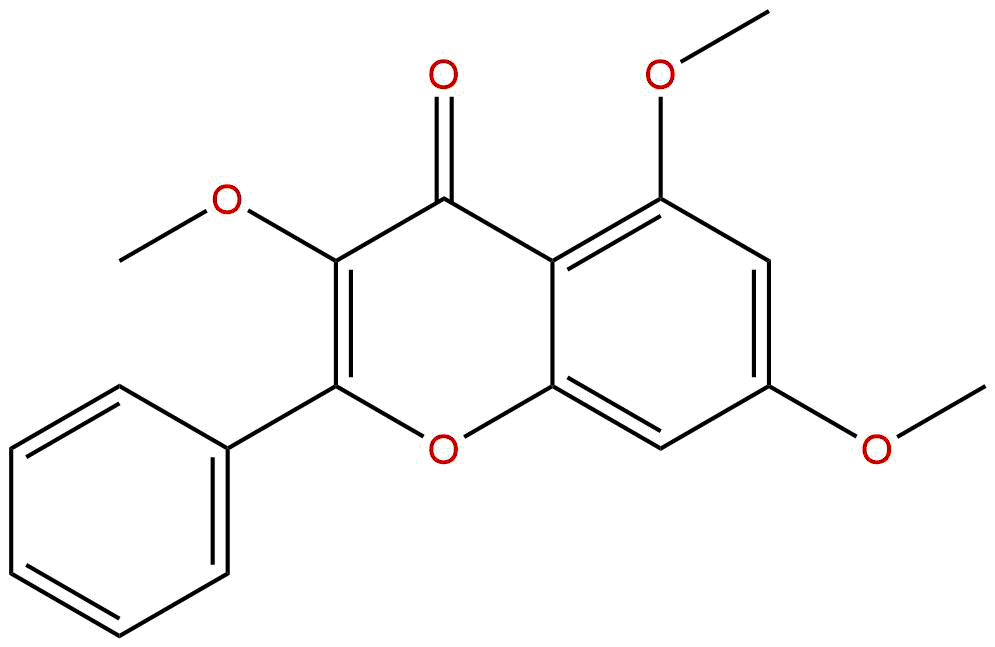


Product name: 3,5,7-Trimethoxyflavone
Synonym name: 3,5,7-Tri-O-methylgalangin
Catalogue No.: BP5009
Cas No.: 26964-29-4
Formula: C18H16O5
Mol Weight: 312.321
Botanical Source:
Type of Compound: Flavonoids
Purity: 95%~99%
Analysis Method: HPLC-DAD or/and HPLC-ELSD
Identification Method: Mass, NMR
Packing: Brown vial or HDPE plastic bottle
Storage: Store in a well closed container, protected from air and light. Put into refrigerate or freeze for long term storage.
Whenever possible, you should prepare and use solutions on the same day. However, if you need to make up stock solutions in advance, we recommend that you store the solution as aliquots in tightly sealed vials at -20℃. Generally, these will be useable for up to two weeks.
The product could be supplied from milligrams to grams
Inquire for bulk scale.
For Reference Standard and R&D, Not for Human Use Directly.
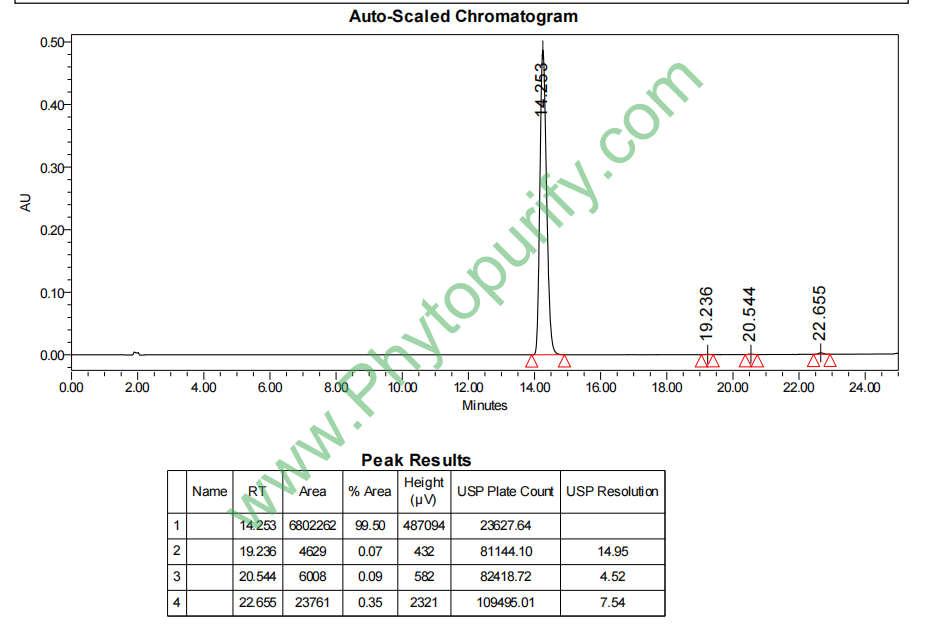
HPLC of 3,5,7-Trimethoxyflavone
Storage conditions:Short-term storage at 2~8℃, long-term storage at -20 ~ -80℃
57.9000
3.1447
3.1447
.0034
4.5599
53.1946
High
87.9988
2.0724
Yes
No
Yes
No
Yes
No
0.9
No
Yes
Yes
Yes
Natural products have always been an important source of drug discovery and development, and their diverse chemical structures and unique biological activities provide endless treasures for modern pharmacological research. Among the diverse natural flavonoids, 3,5,7-trimethoxyflavone (CAS number: 26964-29-4) has attracted widespread attention from researchers in recent years as a structurally clear and highly active compound. This compound is a 3,5,7-trimethyl ether derivative of Galangin (3,5,7-trihydroxyflavone), and its structural methylation modification not only changes its physicochemical properties, but also endows it with a unique biological activity spectrum.
Flavonoids are a major class of secondary metabolites in plants, widely present in fruits, vegetables, tea, and various medicinal plants. They usually exist in the form of glycosides or free glycosides, and have various pharmacological activities such as antioxidant, anti-inflammatory, anti-tumor, antiviral, and cardiovascular protection. However, natural flavonoids generally suffer from poor water solubility, unstable metabolism, and low bioavailability, which greatly limits their clinical applications. Structural modification, especially methylation, is one of the important strategies to improve the pharmacological properties of flavonoids. 3,5,7-trimethoxyflavone is a natural product example of this strategy. After its three hydroxyl groups are replaced by methyl groups, its lipophilicity is significantly enhanced and metabolic stability is improved, which may exhibit pharmacokinetic characteristics and pharmacological effects different from its parent compound, galangin.
At present, research on 3,5,7-trimethoxyflavonoids mainly focuses on areas such as antiplatelet aggregation, anti-inflammatory, antioxidant, and anti-tumor effects. In particular, its antiplatelet aggregation activity has become a research hotspot because it is closely related to the pathological process of a variety of cardiovascular diseases (such as atherosclerosis, thrombosis). Platelets play a central role in hemostasis and thrombus formation, and their excessive activation is a key factor leading to cardiovascular and cerebrovascular events such as myocardial infarction and stroke. Therefore, the search for efficient and low toxicity new antiplatelet drugs has important clinical significance. 3,5,7-trimethoxyflavone exhibits a multi-target and multi pathway antiplatelet aggregation mechanism by acting on multiple targets, such as cyclooxygenase (PTGS1/PTGS2), integrin receptor (ITGA2B/ITGB3), purinergic receptor (P2RY12/P2Y12), and thromboxane receptor (TBXA2R), making it a highly promising lead compound for development.
This article aims to systematically review the chemical structure, physicochemical properties, plant sources, extraction methods, pharmacological activity, mechanism of action, pharmacological evaluation, and clinical application prospects of 3,5,7-trimethoxyflavone, in order to provide comprehensive references for the in-depth research and development of this compound.
The chemical structure of 3,5,7-trimethoxyflavone belongs to the basic skeleton of flavonoids, which is composed of two benzene rings (A ring and B ring) connected by a central three carbon chain (C ring), and the C ring is a γ - pyranone structure. Its molecular formula is C ₁₈ H ₁₆ O ₅, and its molecular weight is 312.3210. Compared with the parent compound galangin (3,5,7-trihydroxyflavone), the hydroxyl groups (- OH) of 3,5,7-trimethoxyflavone at positions C-5 and C-7 of the A ring and C-3 of the C ring are replaced by methoxy groups (- OCH ∝). This structural modification is key to understanding the differences in its physicochemical properties and biological activity.
From the perspective of physical and chemical properties, the introduction of methoxy groups significantly changes the polarity and hydrophobicity of the compound. The calculated lipid water partition coefficient (LogP) is 3.1447, indicating that the compound has strong lipophilicity, which facilitates its penetration through biological membranes, including cell membranes and the blood-brain barrier. In fact, its blood-brain barrier permeability has been evaluated as' high ', suggesting that it may have central nervous system activity, but potential central toxicity should also be noted. The topological polar surface area (TPSA) is 57.9000 Å ², which is within the acceptable range for oral medication (usually<140 Å ²), indicating its potential for oral absorption. However, its water solubility is extremely poor, only 0.0034 mg/mL, which constitutes the main obstacle to its formulation development and in vivo absorption.
In addition, pharmacological evaluation showed that 3,5,7-trimethoxyflavone has a low risk of inhibiting hERG (human ether - à - go related gene) potassium channels (hERG inhibition: no), which reduces its risk of causing cardiac QT interval prolongation and fatal arrhythmias, and is an important safety advantage. The Ames test result is 0.9, indicating that it may not have significant genetic toxicity, but more comprehensive toxicological studies are needed to confirm. Overall, 3,5,7-trimethoxyflavonoids have typical structural characteristics of flavonoids, and their methylation modification endows them with high lipophilicity, high blood-brain barrier permeability, and potential metabolic stability, but also brings challenges of poor water solubility. These properties collectively determine its potential and limitations as a drug lead compound.
3,5,7-trimethoxyflavone is not a widely distributed common flavonoid, but exists in the secondary metabolites of specific plants. Its main sources include some traditional medicinal plants, such as sorghum(Alpinia officinarum Hance)、 Shanjiang genus(Alpinia Plants and certain propolis products. In galangal, this compound often coexists with other flavonoid components such as galangal extract and kaempferol methyl ether, and is one of its characteristic components. In addition, it has also been found in some Asteraceae and Fabaceae plants.
The extraction of 3,5,7-trimethoxyflavonoids usually follows the classic process of natural product chemistry, which mainly includes the following steps:
It is worth noting that due to the low content of this compound in plants and its coexistence with multiple structurally similar compounds, its extraction and purification process requires a sophisticated chromatographic separation strategy to obtain sufficient amounts of pure product for subsequent research. In recent years, with the promotion of green chemistry concepts, new and environmentally friendly extraction technologies such as supercritical fluid extraction and deep eutectic solvent extraction have also been applied to the extraction of flavonoids. In the future, they are expected to be applied to the large-scale preparation of 3,5,7-trimethoxyflavonoids.
Although the pharmacological activity research of 3,5,7-trimethoxyflavone is not as extensive as its parent compound galangin, previous studies have revealed its potential value in multiple disease models, among which antiplatelet aggregation activity is its most prominent pharmacological effect.
1. Antiplatelet aggregation activity
This is the most in-depth field of research on 3,5,7-trimethoxyflavonoids. Multiple in vitro experiments have shown that this compound can effectively inhibit platelet aggregation induced by various inducers, such as arachidonic acid, adenosine diphosphate, collagen, and thrombin. Its mechanism of action involves multiple links (see next chapter for details), exhibiting the characteristic of multi-target inhibition. Compared with the classic antiplatelet drug aspirin, 3,5,7-trimethoxyflavone not only inhibits the generation of thromboxane A ₂ (TXA ₂) mediated by cyclooxygenase-1 (PTGS1), but may also act on other receptors and signaling pathways on the surface of platelets, providing a more comprehensive anti aggregation effect. This multi-target mode of action may lead to stronger therapeutic efficacy and lower risk of drug resistance.
2. Anti inflammatory and antioxidant activity
As a flavonoid compound, 3,5,7-trimethoxyflavone also exhibits certain anti-inflammatory and antioxidant activities. Research has shown that it can inhibit the production of nitric oxide (NO) and prostaglandin E ₂ (PGE ₂) in macrophages stimulated by lipopolysaccharide (LPS), which is related to its inhibition of the expression of inducible nitric oxide synthase (iNOS) and cyclooxygenase-2 (PTGS2). In addition, it can also scavenge free radicals such as DPPH free radicals and ABTS cationic free radicals, and enhance the activity of endogenous antioxidant enzymes (such as superoxide dismutase and catalase) in cells. These anti-inflammatory and antioxidant effects may be closely related to their cardiovascular protective effects.
3. Antitumor activity
Preliminary studies have shown that 3,5,7-trimethoxyflavone can inhibit the proliferation of some tumor cell lines (such as HepG2, MCF-7). The mechanism may involve inducing cell cycle arrest and apoptosis. However, compared with galangin, its anti-tumor activity is usually weaker, which may be due to the introduction of methoxy groups changing its interaction mode with target proteins. At present, research on its anti-tumor activity is not yet in-depth, and more in vitro and in vivo experiments are needed to verify it.
4. Other activities
In addition, it has been reported that 3,5,7-trimethoxyflavone also has mild antibacterial, antiviral, and vasodilatory activity. For example, it may exert a hypotensive effect by inhibiting the influx of calcium ions into vascular smooth muscle cells, causing vasodilation. But the intensity of these activities is usually low, and their physiological significance needs further evaluation.
Overall, the pharmacological activity spectrum of 3,5,7-trimethoxyflavone is centered around antiplatelet aggregation, with anti-inflammatory, antioxidant, and certain anti-tumor potential. Its activity intensity is closely related to its structure, and methylation modification may make it superior to its parent galangin in antiplatelet activity, but its activity is weakened in other aspects.
The pharmacological effects of 3,5,7-trimethoxyflavone, especially its antiplatelet aggregation activity, are achieved through interactions with multiple molecular targets, reflecting the multi-component and multi-target characteristics of natural products. Its main mechanism of action and targets can be summarized as follows:
1. Inhibit the arachidonic acid metabolic pathway
2. Block the binding of platelet surface receptors to ligands
Target: ITGA2B/ITGB3 (integrin α IIb β 3, i.e. glycoprotein IIb/IIIa receptor)
Integrin α IIb β 3 is the most abundant receptor on the surface of platelets and the ultimate common pathway for platelet aggregation. When platelets are activated, the conformation of the α IIb β 3 receptor changes and binds to fibrinogen, bridging adjacent platelets through fibrinogen and leading to aggregation. Research has shown that 3,5,7-trimethoxyflavone can inhibit the binding of fibrinogen to α IIb β 3 receptors, thereby directly blocking the final step of platelet aggregation. This mechanism of action distinguishes it from drugs that only act on a single pathway.
Target: P2RY12/P2Y12 (adenosine diphosphate receptor)
ADP is an important agonist for platelet activation and aggregation, primarily acting on the P2Y1 and P2Y12 receptors on the surface of platelets, with the P2Y12 receptor being a key target for antiplatelet drugs such as clopidogrel. 3,5,7-trimethoxyflavone can antagonize the binding of ADP to P2Y12 receptors, thereby inhibiting ADP induced platelet aggregation signaling transduction.
Target: TBXA2R (thromboxane A ₂ receptor)
TXA ₂ activates downstream signaling pathways such as phospholipase C and protein kinase C by binding to its specific receptor TBXA2R, leading to an increase in platelet calcium ion concentration and particle release. 3,5,7-trimethoxyflavone may act as an antagonist of TBXA2R, directly blocking the action of TXA ₂, even if TXA ₂ has already been generated, it can inhibit its effect.
3. Regulating intracellular signaling molecules
Target: PDE3A (phosphodiesterase 3A)
Cyclic adenosine monophosphate (cAMP) is an important inhibitory second messenger in platelets, and its elevated levels can inhibit platelet activation. PDE3A is a key enzyme for degrading cAMP. 3,5,7-trimethoxyflavone can inhibit the activity of PDE3A, leading to an increase in cAMP levels in platelets, thereby inhibiting platelet activation, aggregation, and degranulation. This mechanism of action is similar to that of cilostazol.
Target: GP1BA (glycoprotein Ib α)
GP1BA is a receptor for von Willebrand factor (vWF) on the surface of platelets, mainly involved in the adhesion process of platelets at the site of vascular injury. Although there is limited research, there is evidence to suggest that 3,5,7-trimethoxyflavone may interfere with the binding of vWF to GP1BA, thereby affecting the initial adhesion of platelets.
In summary, 3,5,7-trimethoxyflavone exerts its antiplatelet aggregation effect through a "multi-target, multi pathway" network regulation mode. It can inhibit the synthesis of TXA ₂ from the source (PTGS1/2), directly block the final pathway of platelet aggregation (α IIb β 3), and synergistically inhibit platelet function by antagonizing agonist receptors (P2Y12, TBXA2R) and increasing intracellular inhibitory signaling molecules (cAMP). This multi-target mechanism of action gives it strong antiplatelet activity and may reduce the common resistance and bleeding risk of single target drugs, but it also increases the complexity of mechanism of action research.
Developing 3,5,7-trimethoxyflavone as a clinical drug requires a comprehensive evaluation of its pharmacological properties, including pharmacokinetic characteristics, safety, and formulation feasibility.
1. Pharmacokinetic characteristics
2. Security assessment
3. Formulation strategy
Given its extremely low water solubility, developing suitable formulations is key to improving its bioavailability. Possible strategies include:
- Solid dispersion Disperse the drug in a water-soluble carrier (such as polyvinylpyrrolidone, hydroxypropyl methylcellulose) to form an amorphous form, in order to increase the dissolution rate.
- Cyclodextrin inclusion complex Using β - cyclodextrin or its derivatives (such as hydroxypropyl - β - cyclodextrin) to encapsulate drugs and increase their apparent solubility.
- Liposome preparation Encapsulating drugs in lipid bilayers can improve their water dispersibility and bioavailability, and may enable targeted delivery.
- Nanocrystal technology Reducing the drug particle size to the nanometer level significantly increases the specific surface area, thereby accelerating dissolution.
- Phospholipid complex Forming complexes with phospholipids can improve their absorption in the gastrointestinal tract.
Overall, the pharmacological characteristics of 3,5,7-trimethoxyflavone as a lead compound are a combination of potential and challenges. Its multi-target antiplatelet activity and good preliminary safety evaluation (hERG, Ames) are its advantages; The main obstacles to its development are poor water solubility, potential low oral bioavailability, and lack of systematic toxicological data. The future research focus should be on developing efficient formulation technologies to overcome their solubility issues, and conducting comprehensive pharmacokinetic and toxicological evaluations.
Based on the unique pharmacological activity and mechanism of action of 3,5,7-trimethoxyflavone, its clinical application prospects mainly focus on the prevention and treatment of cardiovascular diseases, especially thrombotic diseases.
1. Antithrombotic drugs
As a natural product with multi-target antiplatelet aggregation effects, 3,5,7-trimethoxyflavone is expected to be developed as a novel antiplatelet drug. Compared to existing drugs, its potential advantages include:
- Multi target synergistic effect Simultaneously acting on the arachidonic acid pathway, ADP receptor, integrin receptor, and cAMP signaling pathway may provide stronger antithrombotic effects and reduce the risk of compensatory pathway activation caused by single target inhibition.
- Potential lower risk of bleeding In theory, multi-target, moderate intensity inhibition may have a lower risk of bleeding than single target, potent inhibition (such as aspirin, clopidogrel). However, this requires rigorous preclinical and clinical studies to validate.
- Combining anti-inflammatory and antioxidant effects Atherosclerosis is a chronic inflammatory disease, and platelet activation is also closely related to inflammation. The anti-inflammatory and antioxidant activities of this compound may provide additional vascular protection benefits, which are superior to pure antiplatelet drugs.
2. Treatment of ischemic stroke
Given its high blood-brain barrier permeability, 3,5,7-trimethoxyflavone may be used for the treatment of ischemic stroke. Platelet activation and inflammatory response are important factors exacerbating brain injury in cerebral ischemia-reperfusion injury. This compound can inhibit platelet aggregation (prevent re embolism), as well as suppress neuroinflammation and oxidative stress, and may exert multiple neuroprotective effects.
3. Other potential applications
Future research directions
Despite its promising prospects, the clinical translation of 3,5,7-trimethoxyflavonoids still faces many challenges, and future research should focus on:
3,5,7-trimethoxyflavone, as a trimethyl ether derivative of galangin, is a typical case of natural product structural modification to improve biological activity and drug properties. It exhibits significant and unique antiplatelet aggregation activity through a synergistic mechanism of multiple targets and pathways, while also possessing anti-inflammatory and antioxidant potential. It has important research value and development prospects in the prevention and treatment of cardiovascular diseases, especially thrombotic diseases.
However, the extremely poor water solubility of the compound is the main bottleneck for its clinical translation, severely limiting its oral bioavailability. Future research must combine formulation innovation with in-depth pharmacological and toxicological evaluations in order to overcome this obstacle and push it from laboratory "lead compounds" to clinical "candidate drugs". The in-depth study of 3,5,7-trimethoxyflavonoids not only has the potential to provide a new type of antithrombotic drug selection for clinical practice, but also provides valuable experience and ideas for the development of other naturally occurring flavonoids with poor water solubility but significant activity. With the continuous development of modern medicinal chemistry, pharmacy, and molecular pharmacology, it is believed that the active molecules in this ancient plant will eventually radiate new clinical value.
