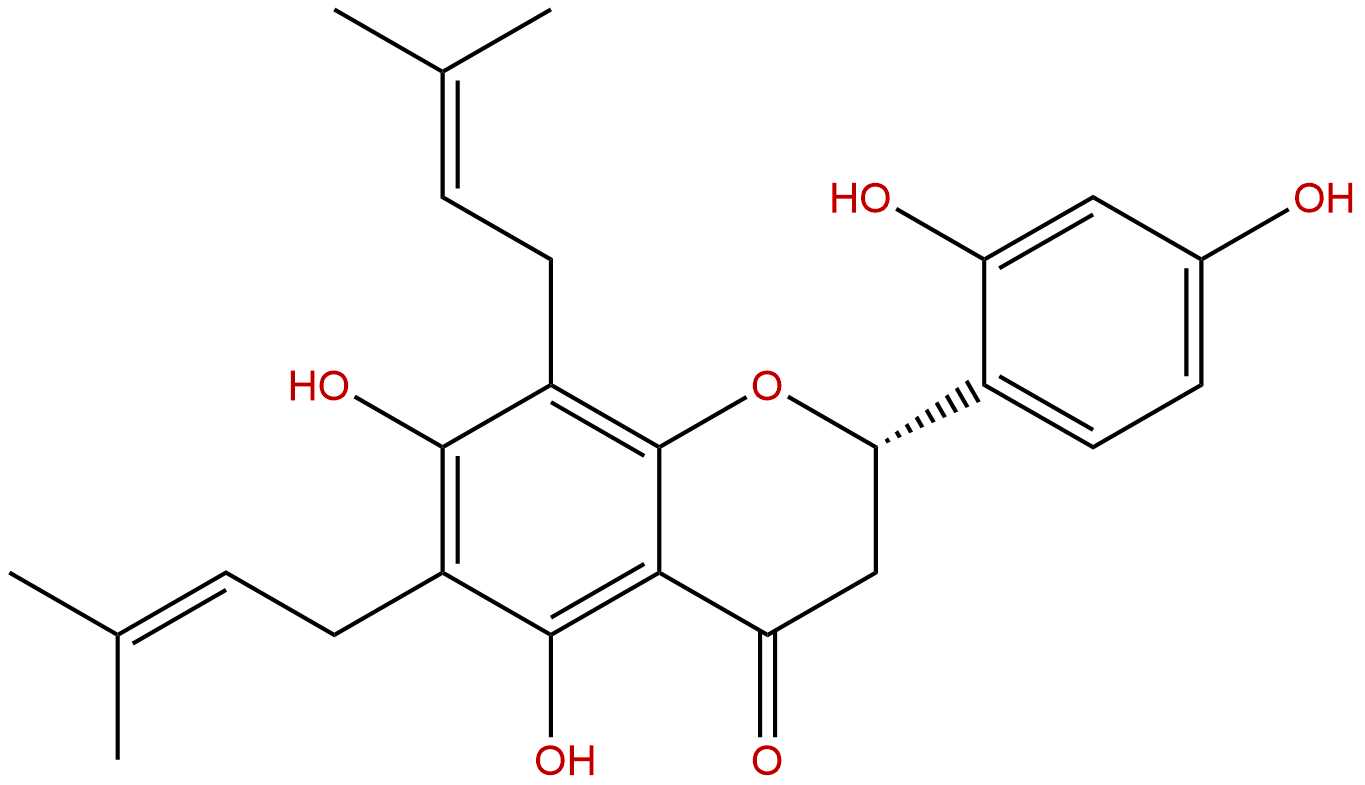


Product name: Kushenol E
Synonym name: Flemiphilippinin D
Catalogue No.: BP3545
Cas No.: 99119-72-9
Formula: C265H28O6
Mol Weight: 424.493
Botanical Source:
Physical Description: Powder
Type of Compound: Flavonoids
Purity: 95%~99%
Analysis Method: HPLC-DAD or/and HPLC-ELSD
Identification Method: Mass, NMR
Packing: Brown vial or HDPE plastic bottle
The product could be supplied from milligrams to grams. Inquire for bulk scale.
We provide solution to improve the water-solubility of compounds, thereby facilitating the variety of activity tests and clinic uses.
For Reference Standard and R&D, Not for Human Use Directly.
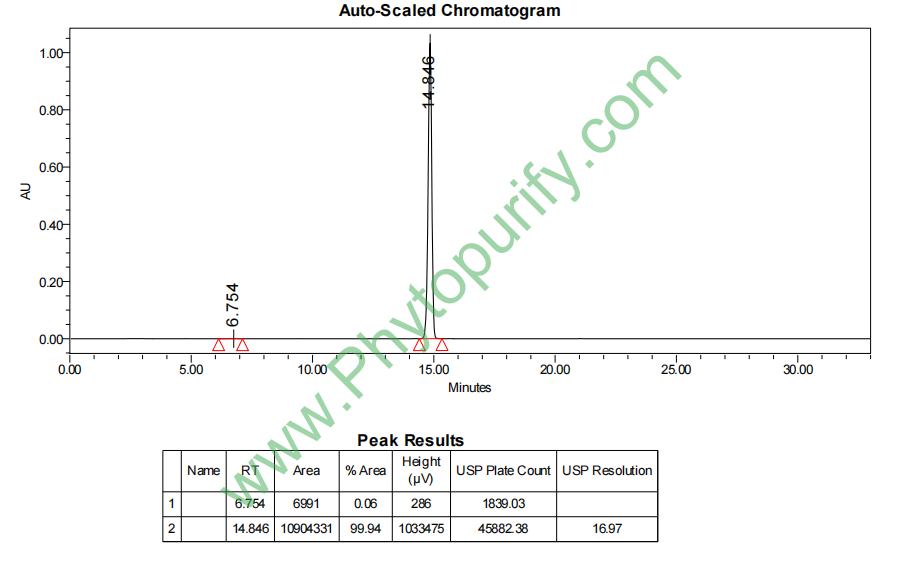
HPLC of Kushenol E
Storage conditions:Short-term storage at 2~8℃, long-term storage at -20 ~ -80℃
Unknown
Unknown
Unknown
Unknown
Unknown
Unknown
Unknown
Unknown
Natural products, as an important source of drug discovery, play an irreplaceable role in the long history of human fight against diseases. Chinese traditional medicinal plant Sophora flavescens(Sophora flavescens As a plant of the Sophora genus in the legume family, the dried rhizomes of Ait have been used in traditional Chinese medicine clinical practice for thousands of years. They are commonly used to treat conditions such as damp heat diarrhea, rectal bleeding, jaundice, hematuria, eczema, scabies, and skin itching. Modern pharmacological research has shown that Sophora flavescens extract has various biological activities such as anti-tumor, anti-inflammatory, antiviral, antibacterial, immune regulation, and cardiovascular protection. Its rich chemical components mainly include alkaloids and flavonoids.
Among the numerous flavonoids contained in Sophora flavescens, Kushenol E, as an isopentenyl flavonol with unique structural characteristics, has attracted widespread attention from medicinal chemists and pharmacologists in recent years. This compound was first isolated and identified from Sophora flavescens roots in the 1990s. Its chemical structure belongs to a typical flavonol nucleus, with prenyl and methyl substituents attached to the A and B rings, respectively. Of particular note is that matrine E has been found to be a non competitive inhibitor of indoleamine 2,3-dioxygenase 1 (IDO1), with a half maximal inhibitory concentration (IC50) of 7.7 µ M and an inhibition constant (Ki) of 9.5 µ M. IDO1 is a key rate limiting enzyme in the tryptophan kynurenine metabolic pathway, mediating tumor immune escape by depleting tryptophan and producing immunosuppressive metabolites in the tumor microenvironment. Therefore, IDO1 has become a highly anticipated emerging target in the field of tumor immunotherapy.
This article aims to systematically review the chemical structure and physicochemical properties, plant sources and extraction methods, pharmacological activity research, mechanism of action and molecular targets, pharmacological evaluation and pharmacokinetic characteristics of Sophora flavescens E, and prospects its clinical application prospects, in order to provide comprehensive academic references for the in-depth development and utilization of this natural product.
The chemical name of Sophora flavanol E is 5,7,4 '- trihydroxy-6,8-di (3-methyl-2-butenyl) flavonol, with a molecular formula of C25H28O6 and a molecular weight of 424.4900. From a structural classification perspective, sophorol E belongs to prenylated flavonol, with its core skeleton being flavonol (3-hydroxyflavone), which has a hydroxyl substitution at the C-3 position of the flavonoid nucleus. The structural characteristics of this compound are mainly reflected in the following aspects:
Firstly, the A ring (benzopyran ring) of the flavonol parent nucleus has a hydroxyl substituent at positions C-5 and C-7, respectively. The presence of these two hydroxyl groups endows the compound with a certain polarity and the ability to form intramolecular hydrogen bonds. Secondly, the C-6 and C-8 positions of the A ring are respectively connected to a 3-methyl-2-butenyl (i.e. isopentenyl) side chain, which is a key structural feature that distinguishes Sophora flavescens E from other common flavonoids. The introduction of isopentenyl not only increases the lipophilicity of the molecule, but may also enhance its biological activity by affecting its conformation and hydrophobic interactions with the target protein. Furthermore, the C-4 'position of the B ring (benzene ring) is substituted with a hydroxyl group, while the C-3' and C-5 'positions have no substituents. In addition, the C-3 hydroxyl group of the C-ring (pyran ring) forms an α, β - unsaturated ketone structure with the C-4 carbonyl group, which is an important pharmacophore for flavonoids to exert antioxidant and metal chelating activities.
In terms of physical and chemical properties, Sophora flavescens E is a light yellow to yellow crystalline powder with a melting point in the range of 190-195 ° C (specific values may vary slightly depending on the crystal form). Due to the presence of multiple phenolic hydroxyl groups in the molecule, this compound exhibits a characteristic yellow deepening phenomenon in alkaline solution and can undergo a color reaction with ferric chloride reagent (appearing dark green), indicating its presence of ortho dihydroxy or phenolic hydroxyl structures. In terms of solubility, Sophora flavescens E is easily soluble in organic solvents such as methanol, ethanol, dimethyl sulfoxide (DMSO), and ethyl acetate, slightly soluble in chloroform, and difficult to dissolve in water. The lipid water partition coefficient (logP) of this compound has not been accurately reported, but based on its structure, it is speculated that due to the presence of two isopentenyl side chains, its logP value should be between 3.0-4.5, indicating that the compound has moderate lipophilicity, which is of great significance for its transmembrane transport and interaction with membrane-bound proteins.
It is worth noting that the E molecule of Sophora flavescens contains multiple ionizable phenolic hydroxyl groups, and its pKa value is expected to be in the range of 7.0-10.0. Therefore, partial deprotonation under physiological pH conditions may affect its binding mode with target proteins and pharmacokinetic behavior. In addition, this compound is sensitive to light, heat, and oxygen. During storage and experimental operations, attention should be paid to avoiding light, low temperatures, and inert gas protection to prevent oxidative degradation.
Sophora flavescens E mainly comes from Sophora flavescens, a plant of the Sophora genus in the legume family(Sophora flavescens Dry roots and rhizomes of Ait. Sophora flavescens is widely distributed in East and North Asia, including China, Japan, South Korea, and Siberia. In China, it is mainly produced in Shanxi, Henan, Hebei, Liaoning, Inner Mongolia, and other places. In addition to Sophora flavescens, this compound also exists in small amounts in the same plant species, Sophora flavescens(Sophora tonkinensis Gagnep. and bitter beans(Sophora alopecuroides L. But the content is usually low.
In terms of distribution within the plant body, matrine E mainly accumulates in the periderm and phloem tissues of the roots, with relatively low content in the xylem. The biosynthetic pathway of Sophora flavescens belongs to the branch metabolic pathway of flavonoids. Phenylalanine is metabolized through the phenylpropanoid pathway to generate p-coumaroyl CoA, which then condenses with malonyl CoA to form chalcone, which is further cyclized to form flavanone. It is then hydroxylated, dehydrogenated, and catalyzed by isopentenyl transferase to introduce the isopentenyl side chain, ultimately forming Sophora flavescens E. It is worth noting that the content of isopentenyl flavonoids in Sophora flavescens is influenced by various factors, including plant growth period, harvest season, production environment, and processing methods. Research has shown that the total flavonoid content in Sophora flavescens roots grown for 3-4 years is higher, and the content of Sophora flavescens E in medicinal materials harvested in autumn is usually higher than that in samples harvested in spring.
In terms of extraction methods, traditional solvent extraction is still the main means of obtaining Sophora flavescens E. Considering the good solubility of the compound in ethanol and methanol, 70% -95% ethanol or methanol is usually used as the extraction solvent, and reflux extraction or cold soaking extraction processes are employed. The typical extraction process is to crush the dried Sophora flavescens roots to 20-40 mesh, extract 2-3 times with 10 times the amount (w/v) of 80% ethanol at 60-70 ° C under reflux, each time for 1-2 hours, combine the extracts, concentrate under reduced pressure until there is no alcohol taste, and obtain the total extract. Subsequently, the total extract was suspended in water and subjected to liquid-liquid extraction using petroleum ether, ethyl acetate, and n-butanol in sequence. Matrine E is mainly concentrated in the ethyl acetate extraction part, which can be separated and purified by silica gel column chromatography, Sephadex LH-20 gel column chromatography, preparative high performance liquid chromatography (prep HPLC) and other separation and purification steps, and the monomer compound with a purity of more than 95% can be obtained.
In recent years, some green extraction techniques have also been applied to the extraction of flavonoids from Sophora flavescens in order to improve extraction efficiency and reduce the use of organic solvents. For example, ultrasound assisted extraction (UAE) utilizes the cavitation effect of ultrasound to destroy cell walls, and can complete extraction within 30-60 minutes, with an extraction rate 15% -30% higher than traditional reflux methods. Microwave assisted extraction (MAE) generates internal thermal effects through the rapid vibration of polar molecules in a microwave field, which can significantly shorten the extraction time (usually 5-15 minutes), but it is important to control the temperature to prevent the degradation of thermosensitive components. In addition, supercritical fluid extraction (SFE) uses CO2 as the extraction medium and achieves selective extraction by adjusting pressure and temperature. The resulting product has no solvent residue and is particularly suitable for preparing high-purity active ingredients. However, due to the moderate polarity of Sophora flavescens E, the extraction efficiency using supercritical CO2 alone is relatively low, and it is usually necessary to add solvents such as ethanol to improve the extraction rate.
In terms of quality control, the qualitative identification of Sophora flavescens E can be performed using thin-layer chromatography (TLC) with silica gel G as the stationary phase and toluene ethyl acetate formic acid (5:4:1, v/v/v) as the development system. Fluorescent spots can be observed under ultraviolet light (254 nm or 365 nm), or color can be developed using a 10% sulfuric acid ethanol solution. Quantitative analysis mainly uses high-performance liquid chromatography (HPLC), with C18 reverse phase chromatography column as the separation column and acetonitrile water (containing 0.1% formic acid) as the mobile phase for gradient elution. The detection wavelength is 280 nm or 360 nm. Liquid chromatography-mass spectrometry (LC-MS/MS) can provide more accurate structural identification and trace analysis.
As an important active flavonoid component in Sophora flavescens, the pharmacological activity research of Sophora flavescens E mainly focuses on anti-tumor, anti-inflammatory, antioxidant, and antibacterial aspects, among which the research on anti-tumor activity and its immune regulatory mechanism is the most in-depth.
The anti-tumor activity of Sophora flavescens E is its most prominent pharmacological effect. In vitro cell experiments showed that the compound had a proliferation inhibitory effect on a variety of human tumor cell lines, including liver cancer cells (HepG2, Huh7), lung cancer cells (A549, H1299), breast cancer cells (MCF-7, MDA-MB-231), colorectal cancer cells (HCT116, SW480), melanoma cells (B16F10) and leukemia cells (K562, HL-60). The half maximal inhibitory concentration (IC50) varies depending on the cell type and treatment time, typically within the range of 5-30 µ M. It is worth noting that matrine E has relatively low toxicity to normal cells (such as human liver cell L02 and human umbilical vein endothelial cell HUVEC), indicating its selective anti-tumor activity.
In in vivo anti-tumor research, Sophora flavescens E has shown tumor growth inhibitory effects in various tumor bearing mouse models. For example, in the B16F10 melanoma transplant tumor model, intraperitoneal injection of Sophora flavescens E (20 mg/kg, once daily, for 14 consecutive days) significantly inhibited tumor volume growth, with an inhibition rate of 45% -60%, and did not cause significant weight loss or organ toxicity. In the H22 liver cancer ascites tumor model, the survival period of mice treated with Sophora flavescens E was extended by 30% -50% compared to the control group. In addition, the compound can enhance the anti-tumor effect of chemotherapy drugs such as cisplatin and 5-fluorouracil, demonstrating a synergistic effect.
Matrine E exhibits significant anti-inflammatory effects in various inflammatory models. In the macrophage RAW264.7 model stimulated by lipopolysaccharide (LPS), matrine E (10-30 µ M) can concentration dependently inhibit the production of nitric oxide (NO) and prostaglandin E2 (PGE2), while reducing the protein expression levels of inducible nitric oxide synthase (iNOS) and cyclooxygenase-2 (COX-2). Further research has shown that the compound reduces the release of inflammatory factors such as tumor necrosis factor alpha (TNF - α), interleukin-6 (IL-6), and interleukin-1 β (IL-1 β) by inhibiting the activation of the nuclear factor kappa B (NF - κ B) signaling pathway. In the rat paw swelling model induced by carrageenan, oral administration of Sophora flavescens E (50-100 mg/kg) can significantly reduce the degree of swelling, and the effect is comparable to the positive control drug indomethacin.
Due to the presence of multiple phenolic hydroxyl groups in the molecule, sophorol E has strong free radical scavenging ability. In the free radical scavenging experiment of 1,1-diphenyl-2-trinitrophenylhydrazine (DPPH), its IC50 value is about 15-20 µ M, which is similar to the standard antioxidant vitamin C (IC50 of about 12 µ M). In the 2,2 '- diazobis (3-ethylbenzothiazole-6-sulfonic acid) (ABTS) radical scavenging experiment, sophorol E also showed good activity. In addition, the compound can also inhibit iron ion induced lipid peroxidation and protect cell membranes from oxidative damage. In the oxidative stress model induced by hydrogen peroxide (H2O2), pretreatment with Sophora flavescens E can significantly reduce intracellular reactive oxygen species (ROS) levels, increase the activity of superoxide dismutase (SOD) and glutathione peroxidase (GSH Px), thereby alleviating cell damage.
Matrine E has a certain inhibitory effect on various pathogenic bacteria. Research has shown that this compound is effective against Staphylococcus aureus(Staphylococcus aureus)The minimum inhibitory concentrations (MIC) for methicillin-resistant Staphylococcus aureus (MRSA) and methicillin-resistant Staphylococcus aureus (MRSA) were 32 µ g/mL and 64 µ g/mL, respectively, against Escherichia coli(Escherichia coli)And Pseudomonas aeruginosa(Pseudomonas aeruginosa)The MIC values are 128 µ g/mL and 256 µ g/mL, respectively. Its antibacterial mechanism may be related to the destruction of bacterial cell membrane integrity and inhibition of bacterial nucleic acid synthesis. In addition, Sophora flavescens E also has an effect on Candida albicans(Candida albicans)Fungi have a certain inhibitory effect.
The pharmacological activity of Sophora flavescens E involves multiple molecular targets and signaling pathways, among which the most crucial is its inhibitory effect on IDO1 and its mediated tumor immune regulatory mechanism.
IDO1 is a heme containing monomeric enzyme that catalyzes the degradation of tryptophan along the kynurenine pathway to N-formylkynurenine. In the tumor microenvironment, overexpression of IDO1 leads to local depletion of tryptophan and accumulation of kynurenine and its metabolites, thereby inhibiting T cell proliferation and function, inducing regulatory T cell (Treg) differentiation, and promoting tumor immune escape. Therefore, IDO1 has become an important target for tumor immunotherapy.
Enzyme kinetics studies have shown that matrine E is a non competitive inhibitor of IDO1, with an IC50 value of 7.7 µ M and a Ki value of 9.5 µ M. Unlike competitive inhibitors, non competitive inhibitors do not compete with the substrate (tryptophan) for the active site of the enzyme, but instead bind to the enzyme substrate complex or other conformational sites of the enzyme, thereby reducing the catalytic efficiency of the enzyme. Molecular docking and molecular dynamics simulation studies suggest that sophorol E may inhibit enzyme activity by binding to the hydrophobic pocket of IDO1, interfering with the electron transfer of heme cofactors or the pathway for substrate entry into the active center. It is worth noting that the selectivity of Sophora flavescens E towards IDO1 is superior to its isoenzymes IDO2 and tryptophan 2,3-dioxygenase (TDO), providing a structural basis for its development as a specific IDO1 inhibitor.
At the cellular level, matrine E can reverse IDO1-mediated T cell inhibition. In the co culture system, tumor cells overexpressing IDO1 can inhibit T cell proliferation stimulated by CD3/CD28 antibodies, while the addition of matrine E (10-20 µ M) can significantly restore T cell proliferation ability and increase the production of interferon - γ (IFN - γ) and granzyme B. In a tumor bearing mouse model, treatment with oxymatrine E can reduce the canine urea/tryptophan ratio in tumor tissue, increase the number and activity of tumor infiltrating CD8+T cells, and reduce the proportion of Treg cells, thereby reshaping the tumor immune microenvironment.
In addition to IDO1, matrine E also exerts anti-tumor effects by regulating multiple signaling pathways. In terms of cell cycle regulation, this compound can induce G2/M phase arrest in tumor cells, which involves downregulating the expression of cyclin B1 and cyclin dependent kinase 1 (CDK1), while upregulating the levels of cell cycle inhibitory proteins such as p21 and p53. In terms of apoptosis induction, Sophora flavescens E activates the mitochondrial apoptosis pathway, promotes cytochrome c release, activates caspase-9 and caspase-3, and ultimately leads to cell apoptosis. In addition, the compound can also inhibit the PI3K/Akt/mTOR signaling pathway, reduce the expression of anti apoptotic proteins Bcl-2 and Bcl xL, and increase the expression of pro apoptotic proteins Bax and Bak.
In terms of metastasis inhibition, matrine E can inhibit the migration and invasion ability of tumor cells. The mechanism involves downregulating the expression of matrix metalloproteinase-2 (MMP-2) and MMP-9, while upregulating the levels of tissue inhibitors of metalloproteinase-1 (TIMP-1) and TIMP-2. In addition, the compound can also inhibit the epithelial mesenchymal transition (EMT) process, manifested by upregulation of epithelial marker E-cadherin expression and downregulation of mesenchymal markers N-cadherin and vimentin expression.
In terms of anti-inflammatory mechanism, Sophora flavescens E reduces the production of inflammatory mediators by inhibiting the activation of NF - κ B and MAPK signaling pathways. Specifically, the compound can inhibit the phosphorylation and degradation of I κ B α, and prevent the nuclear translocation of NF - κ B p65 subunit; Simultaneously inhibiting the phosphorylation of p38 MAPK, JNK, and ERK1/2, thereby blocking the cascade amplification of inflammatory signals.
According to the provided pharmacological parameters, the molecular weight of Sophora flavescens E is 424.4900, which conforms to Lipinski's "Five Rules" (molecular weight<500), indicating its good oral absorption potential. However, other pharmacological parameters of the compound (blood-brain barrier permeability, hepatotoxicity, cardiotoxicity, hERG inhibition, and Ames test) are labeled as "Unknown", indicating a lack of systematic pharmacological evaluation data at present.
From a chemical structure perspective, Sophora flavescens E has the following pharmacological advantages: (1) moderate molecular weight, which facilitates transmembrane transport; (2) Containing multiple phenolic hydroxyl groups, which can form hydrogen bonds and facilitate binding with target proteins; (3) The isopentenyl side chain increases the lipophilicity of the molecule, facilitating interactions with cell membranes and hydrophobic protein pockets. However, this structure also poses potential pharmaceutical challenges: (1) phenolic hydroxyl groups are prone to undergo II phase metabolic reactions such as glucuronidation and sulfation, leading to a decrease in oral bioavailability; (2) Isopentenyl side chains may be oxidized and metabolized by cytochrome P450 enzymes, producing reactive intermediates; (3) The presence of multiple phenolic hydroxyl groups may make the molecule prone to oxidative degradation, affecting the stability of the formulation.
At present, there are few systematic studies on the pharmacokinetics of Sophora flavescens E, but reasonable inferences can be made based on the pharmacokinetic behavior of similar isopentenyl flavonoids. Generally speaking, after oral administration, isoprenyl flavonoids are partially absorbed in the gastrointestinal tract, but the absorption rate is usually low (bioavailability is mostly between 1% -10%), mainly affected by the following factors: (1) poor water solubility, which limits their dissolution in gastrointestinal fluids; (2) The active efflux of efflux transporters such as P-glycoprotein (P-gp) and multidrug resistance associated protein (MRP); (3) The first pass metabolic effects of the intestinal wall and liver.
In terms of distribution, Sophora flavescens E is expected to be widely distributed in various tissues in the body due to its moderate lipophilicity, with possibly higher concentrations in the liver, lungs, and kidneys. Due to its large molecular weight and multiple polar groups, the ability of this compound to penetrate the blood-brain barrier may be limited, but further experimental verification is needed. In terms of metabolism, Sophora flavescens E mainly undergoes phase I metabolism (oxidation, reduction, hydrolysis) and phase II metabolism (glucuronidation, sulfation, methylation). The CYP450 enzyme system (especially CYP3A4 and CYP2C9) may be involved in the oxidative metabolism of isopentenyl side chains, while phenolic hydroxyl groups mainly undergo glucuronidation and sulfation binding reactions. In terms of excretion, Sophora flavescens E and its metabolites are mainly excreted through bile and urine.
At present, there is limited toxicity data on Sophora flavescens E. In cytotoxicity experiments, the IC50 value of this compound on normal cells is usually higher than that on tumor cells, indicating a certain degree of selectivity. In acute toxicity experiments, the median lethal dose (LD50) of intraperitoneal injection of Sophora flavescens E in mice has not been reported, but based on similar compounds, its acute toxicity may be relatively low. In the subchronic toxicity experiment, no significant weight loss, organ coefficient changes, or histopathological damage were observed after continuous administration for 14-28 days at doses ranging from 20-50 mg/kg. However, toxicological evaluations such as long-term toxicity, reproductive toxicity, genetic toxicity, and carcinogenicity are still blank and need to be systematically carried out in subsequent research.
It is worth noting that the inhibitory activity of matrine E on hERG potassium channels is unknown, and hERG inhibition is an important risk factor for drug-induced QT interval prolongation and arrhythmia. In addition, the Ames test results are unknown, making it impossible to determine whether it has mutagenicity. The lack of these critical safety data is one of the main bottlenecks restricting the compound from entering the preclinical development stage.
Matrine E, as a non competitive inhibitor of IDO1, has significant development value in the field of tumor immunotherapy. At present, multiple IDO1 inhibitors have entered the clinical trial stage, such as Epacadostat (INCB024360), Navoximod (GDC-0919), and BMS-986205, but most have not been successfully approved for marketing due to limited efficacy of monotherapy or toxic side effects of combination therapy. IDO1 inhibitors derived from natural products may overcome the limitations of existing synthetic inhibitors due to their novel structure and unique mechanism of action.
The non competitive inhibition mode of Sophora flavescens E gives it unique advantages: non competitive inhibitors are not affected by the concentration of substrate (tryptophan) and can still maintain inhibitory activity in the tumor microenvironment depleted of tryptophan; In addition, non competitive inhibitors typically bind to the conformational sites of enzymes, which may have better selectivity and reduce interference with normal physiological functions. However, there is still a significant gap in the IDO1 inhibitory activity (IC50=7.7 µ M) of Sophora flavescens E compared to clinical candidate drugs (such as Epacadostat, with an IC50 of approximately 10 nM), and its inhibitory efficacy needs to be improved through structural optimization.
Based on the chemical structure of Sophora flavescens E, structural optimization can be achieved through the following strategies: (1) modifying the isopentenyl side chain, such as shortening or extending the carbon chain length, introducing oxygen-containing functional groups or aromatic rings, to enhance the interaction with the IDO1 hydrophobic pocket; (2) Protecting or substituting phenolic hydroxyl groups, such as methylation, acetylation, or introducing halogen atoms, to improve metabolic stability; (3) Modify the flavonoid core, such as introducing nitrogen-containing heterocycles or changing the oxidation state, to enhance target affinity. Studies on structure-activity relationships have shown that the presence of isopentenyl side chains is crucial for the inhibitory activity of IDO1, while 4 '- and 5-hydroxy groups may participate in binding to target proteins through hydrogen bonding.
Given the limited efficacy of IDO1 inhibitors in monotherapy, combination therapy is an important direction to enhance their clinical value. Matrine E can be used in combination with immune checkpoint inhibitors (such as PD-1/PD-L1 antibodies) to produce a synergistic anti-tumor effect by simultaneously blocking IDO1-mediated tryptophan metabolism immunosuppression and PD-1/PD-L1-mediated T cell depletion. In addition, the compound can also be combined with chemotherapy drugs (such as cisplatin, paclitaxel) or targeted drugs (such as sorafenib, imatinib) to enhance anti-tumor efficacy through multi-target regulation, and may reduce the dosage and toxic side effects of chemotherapy drugs.
To overcome the problems of poor water solubility and low oral bioavailability of Sophora flavescens E, a new drug delivery system can be developed. Liposomes, nanoparticles, cyclodextrin inclusion complexes, and phospholipid complexes can significantly improve the solubility and bioavailability of the compound. For example, encapsulating Sophora flavescens E in poly (lactic co glycolic acid) (PLGA) nanoparticles can prolong the circulation time of the drug in the body, increase drug accumulation at the tumor site, and enhance anti-tumor efficacy. In addition, transdermal and nasal delivery systems can also serve as alternative routes of administration to avoid first pass effects in the liver and improve bioavailability.
Before promoting the clinical research of Sophora flavescens E, its safety evaluation must be systematically completed. This includes: (1) improving in vitro hERG inhibition experiments, Ames experiments, chromosome aberration experiments, and other genetic toxicity evaluations; (2) Conduct acute toxicity, subchronic toxicity, and chronic toxicity experiments on rats and dogs to determine the No Observed Adverse Effect Level (NOAEL) and Maximum Tolerant Dose (MTD); (3) Conduct evaluations on reproductive toxicity, developmental toxicity, and carcinogenicity; (4) Establish a pharmacokinetic pharmacodynamic (PK-PD) model to guide the design of clinical dosing regimens. Clinical trials can only be initiated with sufficient safety data support.
Kushanol E, as an isopentenyl flavonol compound isolated and identified from traditional Chinese medicine Sophora flavescens, has shown significant research value and application potential in the field of tumor immunotherapy due to its unique chemical structure and significant IDO1 inhibitory activity. This article systematically reviews the chemical structure and physicochemical properties, plant sources and extraction methods, pharmacological activity, mechanism of action, drug evaluation, and clinical application prospects of the compound, revealing its biological activities in anti-tumor, anti-inflammatory, antioxidant, and antibacterial aspects, especially its immunomodulatory mechanism as a non competitive inhibitor of IDO1.
However, the research on Sophora flavescens E still faces many challenges: its pharmacokinetic characteristics are not yet clear, and its oral bioavailability may be low; The lack of critical safety data, such as hERG inhibition and genotoxicity, hinders its clinical translation process; There is still a gap between IDO1 inhibitory activity and clinical candidate drugs, and structural optimization is needed to improve efficacy. Future research should focus on the following aspects: (1) conducting in-depth studies on structure-activity relationships, designing and synthesizing derivatives with higher activity and selectivity; (2) Systematically evaluate its pharmacokinetic and toxicological characteristics to provide data support for preclinical studies; (3) Explore combination therapy strategies and leverage their synergistic effects in tumor immunotherapy; (4) Develop new drug delivery systems to improve their biopharmaceutical properties.
In summary, Sophora flavescens E, as a natural product derived IDO1 inhibitor, has a unique structural framework and mechanism of action, making it a lead compound for the development of novel tumor immunotherapy drugs. With the continuous deepening of research and the continuous advancement of technology, the active ingredients in this ancient traditional Chinese medicine are expected to shine with new vitality in modern drug development and contribute to the cause of human health.
