A review of the anticancer potential and pharmacological mechanisms of Telekin, a natural eucalyptus type sesquiterpenoid lactone
Introduction/Overview
Natural products, as an important source of drug discovery, play an irreplaceable role in the long history of human fight against diseases. Among them, Sesquiterpene lactones (SLs) are a family of naturally occurring compounds with diverse structures and significant biological activities, widely distributed in higher plants such as Asteraceae. These compounds, characterized by their unique α - methylene - γ - lactone structural units, exhibit various pharmacological activities such as anti-inflammatory, anti-tumor, antibacterial, and antiparasitic effects, making them a hot topic in natural product chemistry and pharmacology research.
Telekin, as a typical eudesmane type sesquiterpene lactone, was first introduced from the Asteraceae plant genus Auchenipterium(Carpesium)Isolation and identification in plants. This compound has attracted widespread attention from researchers due to its significant anti-cancer activity. Research has shown that tricloside can selectively induce programmed cell death in tumor cells by activating the mitochondrial mediated apoptosis pathway, with relatively low toxicity to normal cells. This characteristic makes it a potential anti-tumor candidate compound.
As the global incidence rate of cancer continues to rise and the problem of drug resistance to traditional chemotherapy drugs becomes increasingly prominent, it is urgent to find new, efficient and low toxic natural anti-tumor active molecules for drug research and development. The unique chemical structure, clear anti-tumor mechanism, and excellent potential for drug development of Terulolactone have shown important research value and application prospects in the field of natural anti-cancer drug development. This article will provide a systematic review of the research progress of Terteroid from multiple dimensions, including chemical structure, plant origin, pharmacological activity, mechanism of action, pharmacological evaluation, and clinical application prospects, in order to provide reference for the further development and utilization of this compound.
Chemical structure and physicochemical properties
Chemical structural characteristics
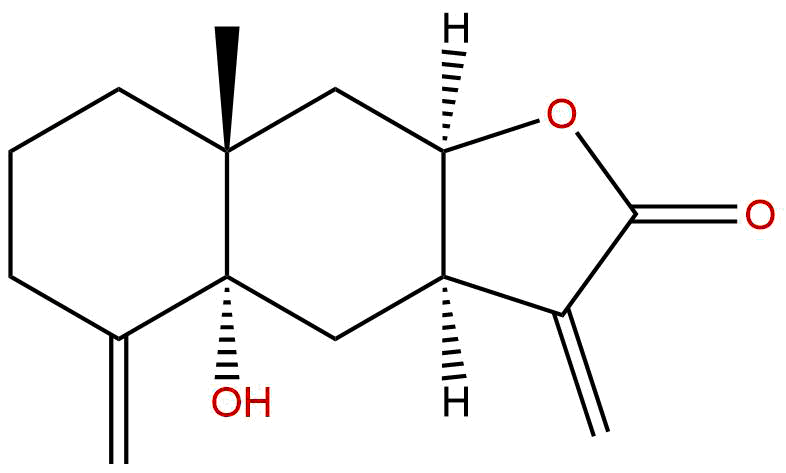
Teller lactone belongs to the eucalyptus type sesquiterpene lactone, with a basic skeleton consisting of 15 carbon atoms and a core structure of decalin system, fused with a gamma lactone ring. The chemical structure of this compound has the following key characteristics:
-
Skeleton type The basic skeleton of eucalyptus type sesquiterpene lactones is a trans - or cis fused decahydronaphthalene ring system, usually with methyl substituents at the C4 and C10 positions. The skeleton of Tertolide belongs to the typical Eudesmane type, and its stereochemical characteristics determine the spatial conformation and biological activity of the molecule.
-
Lactone ring The α - methylene - γ - lactone ring formed at positions C6-C7 or C7-C8 is a common active group in sesquiterpene lactones. The alpha methylene group on the lactone ring has electrophilicity and can undergo Michael addition reaction with the thiol group (- SH) in biomolecules, which is considered a key pharmacophore group for its anti-tumor activity.
-
Functional group distribution Teller lactone molecules typically contain oxygen-containing functional groups such as hydroxyl (- OH) and carbonyl (C=O), which not only affect the polarity and solubility of the molecule, but also participate in non covalent interactions such as hydrogen bonding, which are crucial for the binding of the molecule to the target protein.
The molecular formula of Tertolide is C ₁₅ H ₂₀ O3, with a molecular weight of 248.32 g/mol. Its precise structure can be confirmed by modern spectroscopic techniques such as nuclear magnetic resonance (NMR), mass spectrometry (MS), and X-ray single crystal diffraction. Terteroids obtained from different plant sources or extraction conditions may have stereoisomers or structural analogues, and these subtle structural differences often lead to significant changes in biological activity.
Physical and chemical property parameters
Based on the pharmacological parameters provided by the compound information, the physicochemical properties of Terulolide can be summarized as follows:
- molecular weight:248.3200 Da, Meeting the Lipinski "Five Rules" requirement of a molecular weight less than 500 indicates good oral absorption potential.
- Lipid water partition coefficient (LogP)2.1600, within the ideal oral drug LogP range (0-3), indicates that the compound has moderate lipophilicity, which can effectively penetrate biological membranes without causing poor water solubility or rapid metabolic clearance due to excessive lipophilicity.
- Topological Polarity Surface Area (TPSA)55.7600 Å ², below the threshold of 140 Å ², indicates good cell membrane permeability and oral bioavailability. The TPSA value also suggests that the compound is not easily able to cross the blood-brain barrier (usually requiring a TPSA<60-70 Å ² and a small molecular weight), which is consistent with the "unknown" state of the blood-brain barrier in the information. However, based on its TPSA value, it is speculated that the permeability of the central nervous system may be limited.
- Number of hydrogen bond acceptors 3, meeting the requirement of no more than 10 hydrogen bond acceptors in the "Five Rules".
- Other toxicity parameters At present, the liver toxicity, cardiac toxicity, hERG inhibition, and Ames test results are all "unknown", indicating that these key safety evaluation data still need to be systematically studied.
Overall, the physical and chemical properties of Terulolide meet the basic requirements of oral medication and exhibit good drug like characteristics. Its moderate molecular weight, reasonable lipid water partition coefficient, and low polar surface area lay the physical and chemical foundation for its further development as an oral anti-tumor drug. However, more detailed physicochemical properties such as metabolic stability and water solubility still need to be supplemented through experimental research.
Plant sources and extraction methods
Main plant sources
Tertrelactone is mainly derived from the Asteraceae family, genus Auchenipterium(Carpesium)Plants. There are about 20 species of the genus Auchenipterium worldwide, mainly distributed in temperate and subtropical regions of Asia and Europe. China is one of the distribution centers of this genus of plants and has abundant germplasm resources.
-
Golden digging ear(Carpesium divaricatum)This is the main source of tricloside from plants. Golden ear is a perennial herbaceous plant widely distributed in northeastern, northern, eastern, and southwestern provinces of China, growing on mountain slopes, grasslands, and forest edges. In traditional medicine, the whole herb of Golden Ear is used as medicine, which has the effects of clearing heat, detoxifying, reducing swelling, and relieving pain. It is commonly used to treat diseases such as colds, fever, sore throat, and abscesses. Modern plant chemistry research has confirmed that goldenrod contains abundant sesquiterpene lactones, among which tricloside is one of its main active ingredients.
-
Other Carpesium Belonging to plants Except for the golden ear, other plants in the golden ear genus such as tobacco tube grass(C. cernuum)Inverted chrysanthemum(C. abrotanoides)It has also been reported to contain tricyclic lactone or its structural analogues. There are significant differences in the content of tricloside among plant materials of different species, origins, and harvesting periods, which are mainly influenced by genetic factors, ecological environment (light, temperature, soil), and plant growth and development stages.
-
Other plant species In recent years, there have been research reports on other genera of plants in the Asteraceae family, such as the Tianming genus(Carpesium In a broad sense, the genus Auchenipterium is sometimes classified under the genera Tianming Jing and Helianthus(Inula)The presence of tricloside was also detected, indicating that this compound may have a wider distribution in Asteraceae plants.
Extraction and Separation Purification Methods
The extraction and separation of Tertolide usually follow the classic process of natural product chemistry, combined with modern chromatographic techniques for efficient separation.
1. Extraction method
-
Solvent extraction method The most commonly used method. Extract or percolate dried and crushed plant materials (usually whole plants or aboveground parts) using organic solvents. Common solvents include ethanol (70% -95%), methanol, ethyl acetate, etc. Among them, ethanol is the preferred solvent for extracting sesquiterpene lactones due to its good permeability, low toxicity, and moderate polarity range. The extraction conditions (temperature, time, solid-liquid ratio) need to be optimized according to the specific plant material, usually using room temperature or heating reflux extraction, with 2-3 extraction cycles.
-
Ultrasound assisted extraction Utilizing the cavitation effect and mechanical vibration of ultrasound to accelerate the fragmentation of plant cell walls and the dissolution of active ingredients. This method has the advantages of high extraction efficiency, short time, and low temperature, which is beneficial for protecting thermosensitive components.
-
Supercritical fluid extraction Selective extraction is achieved by adjusting pressure and temperature using supercritical CO ₂ as the extraction medium. This method is green and environmentally friendly, with no solvent residue, but the equipment cost is relatively high, and it is currently mostly used for laboratory research.
2. Separation and purification methods
The crude extract usually contains a large amount of impurities (such as chlorophyll, wax, polysaccharides, etc.), which need to undergo a series of separation and purification steps to obtain high-purity tricloside.
-
Liquid-liquid extraction Preliminary separation using differences in solvent polarity. For example, after concentrating the ethanol extract, extraction is carried out sequentially with petroleum ether, ethyl acetate, and n-butanol. Terulinide is mainly enriched in the ethyl acetate extraction site.
-
Column chromatography separation Silica gel column chromatography is the most commonly used separation method. Preliminary separation can be achieved by gradient elution using different proportions of petroleum ether ethyl acetate or chloroform methanol as mobile phases. For structurally similar sesquiterpene lactones, other chromatographic techniques need to be combined.
-
High performance liquid chromatography (HPLC)Preparation HPLC is a key step in obtaining high-purity Terulinide. Usually, a reverse phase C18 column is used, with methanol water or acetonitrile water as the mobile phase for isocratic or gradient elution, combined with a UV detector (detection wavelength 210-254 nm) for monitoring.
-
Structural Identification The purified compound was subjected to structural confirmation and stereochemical analysis using techniques such as nuclear magnetic resonance (¹ H-NMR, ¹ ³ C-NMR, DEPT, COSY, HSQC, HMBC), high-resolution mass spectrometry (HR-ESI-MS), and circular dichroism (CD).
It is worth noting that there are significant differences in the yield of tricloside obtained from different plant sources and extraction methods. Generally speaking, the content of tricloside in the whole plant of golden ear is about 0.01% -0.1% of dry weight. By optimizing the extraction process (such as using ultrasound assisted ethanol extraction, combined with macroporous resin enrichment and preparative HPLC purification), tricloside monomers with a purity of over 98% can be obtained.
Pharmacological activity research
Antitumor activity
The most widely studied pharmacological activity of Terulinide is its anti-tumor effect. A large number of in vitro cell experiments have shown that tricloside has significant proliferative and cytotoxic effects on various human tumor cell lines.
-
Broad spectrum anti-tumor activity: Tellerone has inhibitory activity on lung cancer (A549, H1299), liver cancer (HepG2, SMMC-7721), breast cancer (MCF-7, MDA-MB-231), colorectal cancer (HCT-116, SW480), gastric cancer (SGC-7901), cervical cancer (HeLa), leukemia (HL-60, K562) and many other tumor cells, and the half inhibitory concentration (IC ₀) is usually at the micromolar level (1-20 μ M), showing a broad spectrum of anti-tumor potential.
-
Selective cytotoxicity Compared to tumor cells, Terulinide has lower toxicity to normal cells (such as human normal liver cell LO2, human embryonic kidney cell HEK293, and human peripheral blood mononuclear cell PBMC) and exhibits certain selectivity. The ability to selectively kill tumor cells is one of its advantages as an anti-tumor candidate compound, which may be related to its targeted effect on abnormal metabolic pathways of tumor cells.
-
Inhibit tumor cell proliferation Teruline can inhibit tumor cell proliferation by interfering with the cell cycle progression. Research has found that this compound can block tumor cells in the G0/G1 or G2/M phase, accompanied by changes in the expression levels of cyclins and cyclin dependent kinases (CDKs).
-
Inducing cell apoptosis The core mechanism of its anti-tumor activity is the induction of apoptosis in tumor cells by Terulinide. Tumor cells treated with telidone exhibit typical apoptotic morphological features, including cell shrinkage, chromatin condensation, nuclear fragmentation, and formation of apoptotic bodies. Flow cytometry analysis showed a significant increase in the proportion of Annexin V-FITC/PI double staining positive cells.
Mitochondrial pathway inducing apoptosis
The induction of cell apoptosis by telidone is mainly achieved through the endogenous apoptotic pathway mediated by mitochondria, which is manifested as:
-
Loss of mitochondrial membrane potential (Δ PSI m)The decrease in mitochondrial membrane potential is an early event in the mitochondrial apoptosis pathway. The treatment with telidone can significantly reduce the mitochondrial membrane potential of tumor cells, indicating impaired mitochondrial function.
-
cytochrome c release After the mitochondrial membrane permeability transition pore (mPTP) is opened, cytochrome c is released from the mitochondrial intermembrane gap into the cytoplasm, and binds with Apaf-1 to form an apoptotic body, thereby activating downstream caspase cascade reactions.
-
Regulation of Bcl-2 family proteins Bcl-2 family proteins play a crucial role in regulating mitochondrial apoptosis. Tellerone can downregulate the expression of anti apoptotic proteins Bcl-2 and Bcl xL, upregulate the expression of pro apoptotic proteins Bax and Bak, and promote the translocation of Bax from the cytoplasm to the mitochondrial membrane, thereby breaking the balance of Bcl-2/Bax and increasing the permeability of the outer mitochondrial membrane.
-
Caspase activation The mitochondrial pathway ultimately leads to the activation of caspase-9, which in turn activates downstream executing caspases (caspase-3, caspase-7), cleaves substrate proteins such as poly ADP ribose polymerase (PARP), and ultimately executes the cell apoptosis program.
Other pharmacological activities
In addition to its anti-tumor activity, Terulinide also exhibits other potential pharmacological effects:
-
anti-inflammatory activity Sesquiterpene lactones typically have significant anti-inflammatory effects. Research has shown that telidone can inhibit the production of nitric oxide (NO) and prostaglandin E ₂ (PGE ₂) in macrophages induced by lipopolysaccharide (LPS), downregulate the expression of inducible nitric oxide synthase (iNOS) and cyclooxygenase-2 (COX-2), and its mechanism may be related to the inhibition of the nuclear factor kappa B (NF - κ B) signaling pathway.
-
antioxidant activity Terulinide has a certain free radical scavenging ability, which can reduce intracellular reactive oxygen species (ROS) levels and protect cells from oxidative stress damage. However, in some tumor cells, telidone can induce ROS production, promote cell apoptosis, and exhibit biphasic regulatory effects.
-
Antibacterial activity Some studies have reported that tricloside has inhibitory effects on common pathogenic bacteria such as Staphylococcus aureus and Escherichia coli, but its antibacterial activity is relatively weak and may not be its main pharmacological effect.
-
Anti angiogenic activity Preliminary studies have shown that tricloside may exert anti angiogenic effects by inhibiting the expression of vascular endothelial growth factor (VEGF) or interfering with the function of endothelial cells, thereby indirectly inhibiting tumor growth and metastasis.
Mechanism of action and molecular targets
The anti-tumor mechanism of Terteroid involves multiple signaling pathways and molecular targets, exhibiting the characteristics of multi-target and multi pathway synergistic effects. A deep understanding of its molecular mechanism is of great significance for rational drug design and predicting clinical efficacy.
Core mechanism: Activation of mitochondrial apoptosis pathway
As mentioned earlier, the endogenous apoptotic pathway mediated by mitochondria is the core mechanism of tumor cell death induced by tricloside. The activation of this pathway involves the following key steps:
-
ROS mediated mitochondrial damage Teruline can induce a sharp increase in ROS levels within tumor cells, leading to oxidative stress. High levels of ROS directly attack mitochondrial membranes, causing lipid peroxidation, membrane potential decline, and mPTP opening. ROS can also activate stress kinases such as JNK (c-Jun N-terminal kinase) to further promote phosphorylation and functional changes of Bcl-2 family proteins, amplifying apoptotic signals.
-
Regulation of Bcl-2 Family Proteins Tertolide regulates Bcl-2 family proteins through a dual mechanism of transcription and post-translational modification. At the transcriptional level, this compound can inhibit the gene expression of Bcl-2 and upregulate the transcription of Bax; At the post-translational level, it can promote conformational changes and mitochondrial translocation of Bax, as well as phosphorylation inactivation of Bcl-2. The increase in Bax/Bcl-2 ratio is a key determinant of the initiation of mitochondrial apoptosis pathway.
-
The involvement of p53 pathway In some wild-type p53 tumor cells, telaglactone can upregulate the expression and transcriptional activity of p53 protein. As a "guardian of the genome", p53 can transcribe and activate pro apoptotic genes such as Bax, PUMA, Noxa, while inhibiting the expression of Bcl-2, thereby enhancing mitochondrial apoptosis signaling. However, in tumor cells with p53 mutations or deletions, tricloside can still induce apoptosis, indicating the existence of p53 independent apoptosis mechanisms.
Regulation of signaling pathways
-
NF - κ B signaling pathway NF - κ B is a key transcription factor that regulates inflammation, cell survival, and proliferation. Many sesquiterpene lactones inhibit the nuclear translocation and transcriptional activity of NF - κ B by suppressing the activity of I κ B kinase (IKK), preventing the phosphorylation and degradation of I κ B α. Terulolide can also inhibit the activation of NF - κ B in tumor cells, downregulate the expression of its target genes (such as Bcl xL, cIAP, and Survivors), thereby enhancing the sensitivity of tumor cells to apoptosis.
-
PI3K/Akt/mTOR pathway The PI3K/Akt signaling pathway is an important pathway for cell survival. Terulinide can inhibit the phosphorylation activation of Akt and reduce the activity of its downstream effector molecules mTOR and p70S6K. The inhibition of Akt activity leads to the dephosphorylation and activation of Bad (Bcl-2 related death promoter), further promoting mitochondrial apoptosis.
-
MAPK signaling pathway Terulinide can activate stress kinases such as JNK and p38 MAPK, while inhibiting the activity of ERK (extracellular signal regulated kinase). The activation of JNK can phosphorylate Bcl-2 and Bcl xL, inactivate them, and activate Bax; Activation of p38 can upregulate the expression of death receptors such as Fas and enhance exogenous apoptotic signals.
-
Endoplasmic reticulum stress pathway Part of the research suggests that tricloside can induce endoplasmic reticulum stress, activate unfolded protein response (UPR), upregulate the expression of pro apoptotic factors such as CHOP (C/EBP homologous protein), and thus synergize with the mitochondrial apoptosis pathway.
Direct molecular target
Although the multi-target mechanism of action of tricloside has been widely recognized, its direct molecular targets still need further clarification. At present, it is believed that the compound may interact with the target protein through the following ways:
-
michael reaction The α - methylene - γ - lactone structural unit of Terulelactone is an electrophilic center that can undergo Michael addition reaction with the thiol group (- SH) on the cysteine residue of proteins, forming covalent adducts. This covalent modification can lead to functional changes in the target protein. Potential target proteins reported include IKK β, p65 (NF - κ B subunit), Keap1 (Kelch like ECH related protein 1), etc.
-
Non covalent interaction The hydroxyl and carbonyl groups of tricyclic lactones can bind to target proteins through non covalent interactions such as hydrogen bonding and hydrophobic interactions, affecting their conformation and activity.
-
Epigenetic regulation The latest research suggests that sesquiterpene lactones may regulate the epigenetic status of tumor cells by inhibiting the activity of histone deacetylase (HDAC) or DNA methyltransferase (DNMT), thereby affecting gene expression.
In summary, Terulinide exerts synergistic anti-tumor effects through covalent modification of key signaling proteins, regulation of multiple signaling pathways, induction of oxidative stress, and mitochondrial damage. This multi-target mode of action not only endows it with broad-spectrum anti-tumor activity and lower risk of drug resistance, but also increases the complexity of mechanism of action research.
Evaluation of drug properties and pharmacokinetics
Preliminary evaluation of drug properties
Based on the parameters provided by the compound information, the preliminary evaluation of the pharmacological properties of Terulolide is as follows:
-
Analysis of drug properties The molecular weight (248.32 Da), LogP (2.16), and number of hydrogen bond acceptors (3) of Teruline all meet the requirements of Lipinski's "Five Rules", indicating that it has the basic characteristics of an oral drug. TPSA (55.76 Å ²) is also within the ideal range, indicating good intestinal absorption and cell permeability.
-
Water solubility Moderate LogP values suggest that water solubility may be acceptable, but sesquiterpene lactones typically have limited solubility in water. It is necessary to determine its water solubility (such as kinetic solubility) in practice, as low water solubility may lead to insufficient oral bioavailability.
-
Metabolic stability At present, there is a lack of metabolic data on tricloside. Its molecule contains ester bonds (lactone rings) and hydroxyl groups, suggesting that it may undergo metabolic pathways such as hydrolysis, oxidation, and glucuronic acid binding. The hydrolysis of lactone rings may affect their biological activity and toxicity.
-
Security risk Hepatotoxicity, cardiotoxicity, hERG inhibition, and Ames test results are all "unknown", which is currently the most critical blank in drug efficacy evaluation. Due to their electrophilicity, sesquiterpene lactones may have potential toxic side effects such as hepatotoxicity, nephrotoxicity, or allergic reactions. Systematic toxicology research is a prerequisite for advancing its preclinical development.
Current status of pharmacokinetic research
At present, there are few research reports on the in vivo pharmacokinetics (ADME) of tricloside, and it is still in the early exploration stage. Based on its physical and chemical properties and research experience of similar compounds, the following speculations can be made:
-
absorb Based on good LogP and TPSA values, it is speculated that after oral administration, tricloside can be absorbed in the small intestine through passive diffusion. However, it should be noted that the lactone ring may be hydrolyzed by gut microbiota or intestinal wall esterases, affecting its absorption degree. The absolute bioavailability needs to be determined through pharmacokinetic experiments after oral and intravenous administration.
-
distribution Moderate lipophilicity suggests that its distribution volume may be large and can be widely distributed in tissues and organs. The plasma protein binding rate is not yet clear, but sesquiterpene lactones typically bind to albumin and alpha 1-acid glycoprotein to a certain extent.
-
Metabolism The liver is the main metabolic organ. Possible metabolic pathways include hydrolysis and ring opening of lactone rings, oxidation or glucuronic acid binding of hydroxyl groups, and reduction of methylene groups. Cytochrome P450 enzymes (especially CYP3A4) may be involved in its oxidative metabolism. The activity and toxicity of metabolites need to be studied.
-
excretion Metabolites are mainly excreted through bile and urine. The excretion rate of the prototype drug may be lower.
Key issues that need to be addressed
In order to promote the pharmacological research of tricloside, the following issues urgently need to be addressed:
-
Establish sensitive and reliable methods for analyzing biological samples Develop LC-MS/MS method for quantitative detection of tricloside and its metabolites in biological matrices.
-
Conduct in vitro ADME experiments on the system Including Caco-2 cell monolayer permeability assay, liver microsome or liver cell metabolic stability assay, plasma protein binding rate determination, CYP enzyme inhibition/induction assay, etc.
-
Conduct pharmacokinetic studies in vivo Pharmacokinetic studies were conducted in rodents (mice, rats) after oral and intravenous administration to obtain key parameters such as half-life (t ₁/₂), peak time (Tmax), peak concentration (Cmax), area under the drug time curve (AUC), bioavailability (F), etc.
-
Conduct preliminary toxicological evaluation Including acute toxicity experiments (measuring LD ₅₀), repeated dose toxicity experiments, hERG cardiac toxicity screening, Ames genetic toxicity experiments, etc., to evaluate its safety window.
-
Formulation research Exploring appropriate formulation strategies, such as cyclodextrin inclusion complexes, liposomes, nanoparticles, etc., to address potential issues of poor water solubility or metabolic instability, in order to improve their bioavailability.
Clinical application prospects and prospects
Potential as a candidate anti-tumor drug
Terulolactone has shown promising prospects in the field of anti-tumor drug development due to its unique chemical structure, clear anti-tumor mechanism, and excellent drug like properties
-
Advantages of natural products As a natural product, Terulolide has the characteristics of novel structure, unique mechanism of action, and multi-target synergy. Compared with traditional chemotherapy drugs, it may have a lower incidence of drug resistance and better safety.
-
Selective anti-tumor activity The selective killing effect on tumor cells is its important advantage, and it is expected to be developed as a low toxicity and efficient anti-tumor drug.
-
Potential for combination therapy Based on its multi-target mechanism of action, telidone may have a synergistic effect with existing chemotherapy drugs (such as cisplatin, paclitaxel, 5-fluorouracil) or targeted drugs, enhancing efficacy and reducing toxicity. For example, by inhibiting the NF - κ B pathway, tricloside may reverse tumor cell resistance to chemotherapy drugs.
-
Structural decoration space There are multiple modifiable sites (such as hydroxyl groups, lactone rings, and double bonds) in the molecule of tricyclic lactone, which can be optimized through semi synthetic or total synthetic methods to enhance activity, improve pharmacokinetic properties, or reduce toxicity.
Challenges and Solutions Faced
Despite its broad prospects, the clinical translation of telidone still faces many challenges:
-
Pharmacokinetic properties need to be optimized At present, there is a lack of systematic pharmacokinetic data, and key parameters such as oral bioavailability, metabolic stability, and in vivo half-life are not yet clear. If it is found that its oral bioavailability is low or metabolism is too fast, it can be improved through prodrug design, structural modification, or new formulation technology.
-
Toxicological data blank Safety is the primary concern in drug development. It is necessary to systematically evaluate its hepatotoxicity, nephrotoxicity, cardiotoxicity, genetic toxicity, and reproductive toxicity. Especially the non-specific covalent modifications that may be caused by its electrophilicity require in-depth evaluation through methods such as toxicogenomics and proteomics.
-
The mechanism of action needs further clarification Although it is known to activate the mitochondrial apoptosis pathway, the direct molecular targets still need to be identified. Identifying the target is helpful for rational drug design and predicting potential side effects.
-
Resource sustainability issues Natural extraction methods are limited by plant resources, resulting in low yields and high costs. Efficient chemical synthesis or biosynthetic methods need to be developed to meet the needs of subsequent research and development.
Future research directions
-
In depth mechanism research Using chemical biology methods such as active probes and click chemistry to identify the direct target protein of tricloside; Systematically analyze its functional network using omics techniques (transcriptomics, proteomics, metabolomics).
-
Research on Structural Optimization and Structure Performance Relationship Synthesize a series of derivatives of tricyclic lactones, systematically study their structure-activity relationships, and search for lead compounds with stronger activity, higher selectivity, and lower toxicity.
-
Pharmacokinetic and Toxicological Studies Complete the preclinical ADME and toxicology evaluation of the system, laying the foundation for entering clinical trials.
-
Formulation development Develop appropriate drug delivery systems (such as liposomes, nanoemulsions, solid dispersions) based on their physicochemical properties to improve their solubility and bioavailability.
-
Combination therapy research Exploring combination therapy with chemotherapy drugs, targeted drugs, or immunotherapy drugs in in in vitro and in vivo models.
-
Expand indication research In addition to anti-tumor effects, explore its potential applications in anti-inflammatory, immune regulation, metabolic diseases, and other fields.
Conclusion
As a type of eucalyptus sesquiterpene lactone isolated from plants in the Asteraceae family, Terteroides has attracted widespread attention from natural product researchers due to its unique chemical structure and significant anti-tumor activity. This compound selectively induces tumor cell apoptosis by activating the mitochondrial mediated endogenous apoptosis pathway, regulating multiple signaling pathways such as NF - κ B, PI3K/Akt, MAPK, etc., demonstrating great potential as a novel anti-tumor candidate drug.
From the perspective of drug properties, the physicochemical parameters of Terulolide meet the basic requirements of oral drugs and have good drug like characteristics. However, its pharmacokinetic properties and toxicological safety data are currently blank, which is a key bottleneck restricting its preclinical development. Future research should focus on elucidating its direct molecular targets and detailed mechanisms of action; Conduct systematic ADME and toxicological evaluations; Improve its pharmacokinetic properties through structural modification and formulation optimization; Explore combination therapy strategies to improve efficacy and reduce toxicity.
Natural products are an inexhaustible source of drug discovery, and the research process of Tertolide once again confirms this truth. From the active ingredients of traditional herbs to candidate drugs with clear mechanisms of action, the research and development of Terulolide is full of challenges, but its unique chemical space and biological activity indicate broad application prospects. With the continuous advancement of modern medicinal chemistry, pharmacology, and chemical biology technologies, we have reason to believe that telidone and its derivatives have the potential to become important members of the anti-tumor drug family in the future, bringing new treatment options for cancer patients.