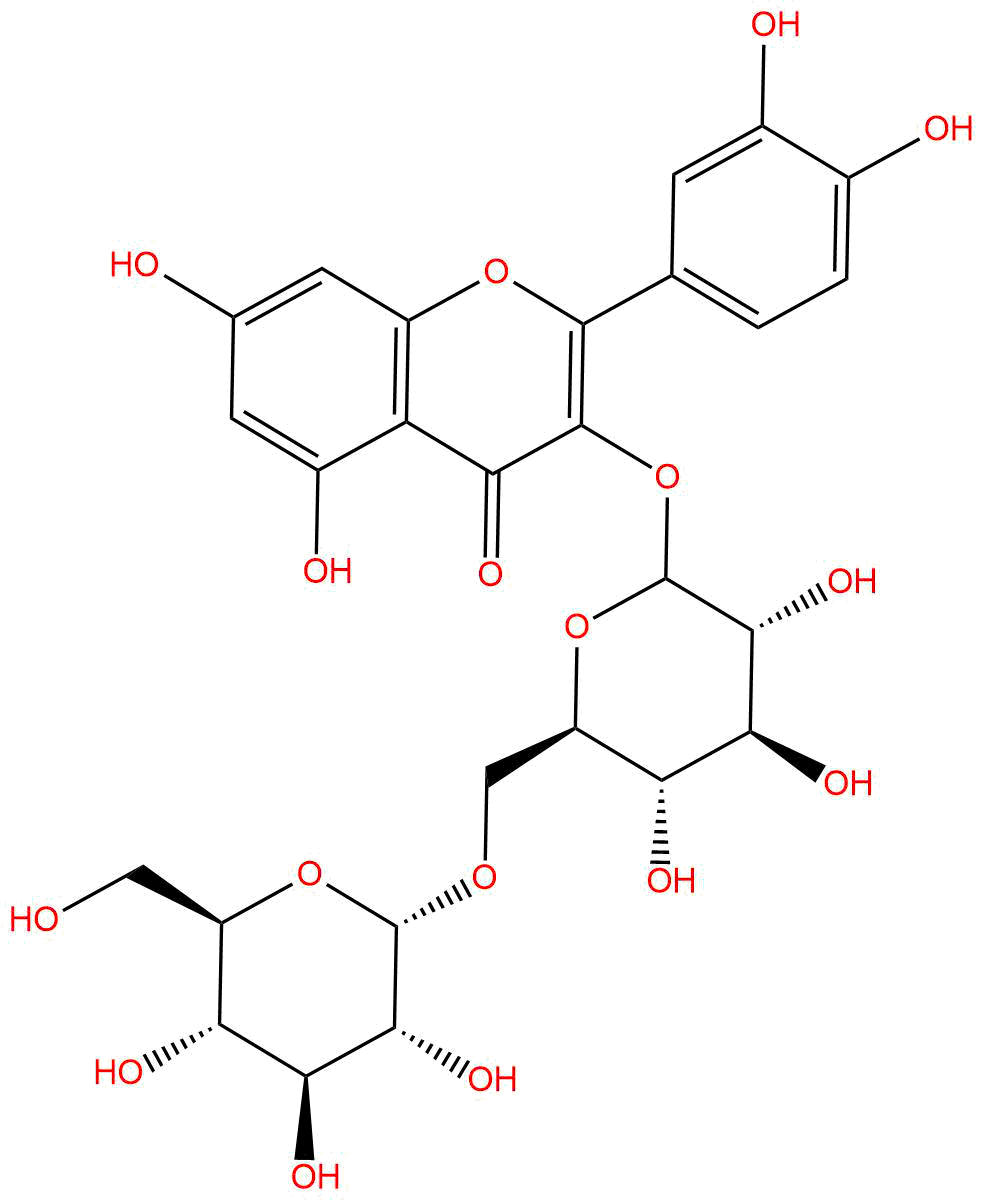


Product name: Quercetin 3-gentiobioside
Synonym name:
Catalogue No.: BP1477
Cas No.: 7431-83-6
Formula: C27H30O17
Mol Weight: 626.52
Botanical Source:
Physical Description:
Type of Compound: Flavonoids
Purity: 95%~99%
Analysis Method: HPLC-DAD or/and HPLC-ELSD
Identification Method: Mass, NMR
Packing: Brown vial or HDPE plastic bottle
Storage: Store in a well closed container, protected from air and light. Put into refrigerate or freeze for long term storage.
Whenever possible, you should prepare and use solutions on the same day. However, if you need to make up stock solutions in advance, we recommend that you store the solution as aliquots in tightly sealed vials at -20℃. Generally, these will be useable for up to two weeks.
The product could be supplied from milligrams to grams
Inquire for bulk scale.
Description:
Quercetin-3-gentiobioside may show significant inhibitor on AR and AGEs formation activities.
References:
Biomed Res Int. 2017;2017:7375615.
Inhibitory Effect of Chemical Constituents Isolated from Artemisia iwayomogi on Polyol Pathway and Simultaneous Quantification of Major Bioactive Compounds.
Blocking the polyol pathway plays an important role preventing diabetic complications. Therefore, aldose reductase (AR) and advanced glycation endproducts (AGEs) formation has significant effect on diabetic complications. Artemisia iwayomogi has long been used as treatment of various diseases in Korea. However, no literatures have reported on AR and AGEs formation inhibitory activities of A. iwayomogi.
METHODS AND RESULTS:
For these reasons, we aimed to assess that A. iwayomogi had potential as anti-diabetic complications agents. We led to isolation of two coumarins (1 and 2), nine flavonoids (3-11), five caffeoylquinic acids (12-16), three diterpene glycosides (17-19), and one phenolic compound (20) from A. iwayomogi. Among them, hispidulin (4), 6-methoxytricin (6), arteanoflavone (7), Quercetin-3-gentiobioside (10), 1,3-di-O-caffeoylquinic acid (13), and suavioside A (18) were first reported on the isolation from A. iwayomogi. Not only two coumarins (1 and 2), nine flavonoids (3-11), and five caffeoylquinic acids (12-16) but also extracts showed significant inhibitor on AR and AGEs formation activities. We analyzed contents of major bioactive compounds in Korea's various regions of A. iwayomogi.
CONCLUSIONS:
Overall, we selected Yangyang, Gangwon-do, from June, which contained the highest amounts of bioactive compounds, as suitable areas for cultivating A. iwayomogi as preventive or therapeutic agent in the treatment of diabetic complications.
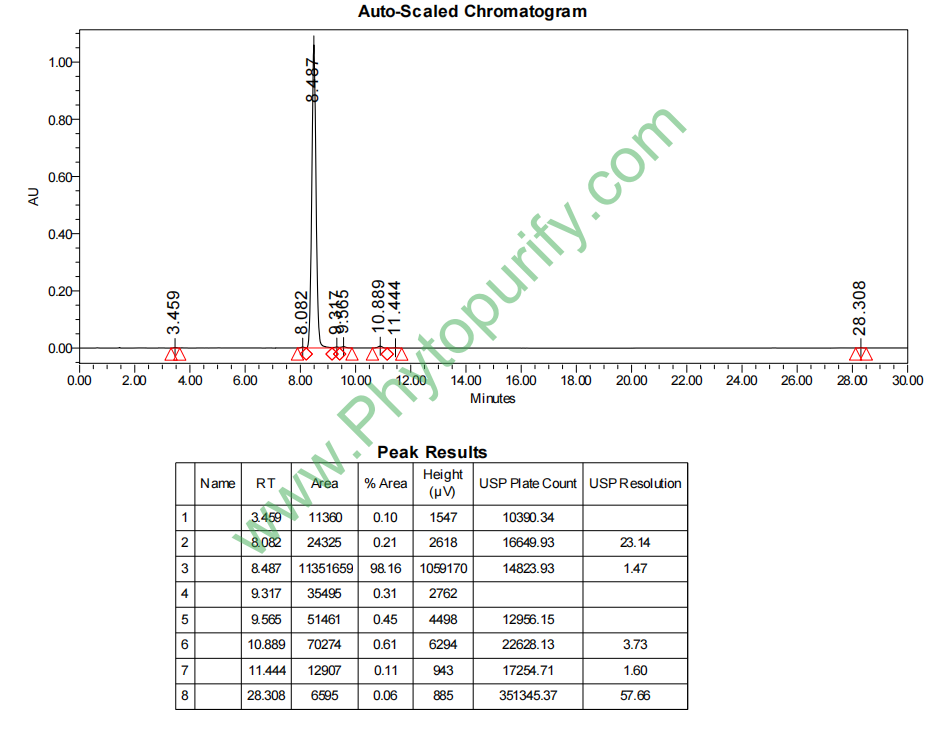
HPLC of Quercetin 3-gentiobioside
Storage conditions:Short-term storage at 2~8℃, long-term storage at -20 ~ -80℃
289.6600
-1.0535
-1.1837
4.3091
.3910
.1352
Low
73.3362
4.7908
Yes
No
Yes
No
Yes
No
1.2
Yes
No
Yes
Yes
Flavonoids, as one of the most widely distributed plant secondary metabolites in nature, have attracted much attention in pharmacological research due to their diverse biological activities. Quercetin and its glycoside derivatives are the most representative members, showing great potential in antioxidant, anti-inflammatory, anti-tumor, and metabolic disease intervention. Quercetin 3-gentiobinoside (CAS: 7431-83-6) is a glycoside compound formed by the combination of quercetin and gentian disaccharide (linked by a β -1,6 glycosidic bond between two molecules of glucose) at the C-3 position. Compared with quercetin aglycone, its glycosylation modification significantly changes the physicochemical properties and bioavailability, and endows it with a unique pharmacological activity spectrum. Recent studies have revealed that this compound is not only a powerful aromatase inhibitor (Ki=46.77 nM), but also a dual inhibitor of aldose reductase and advanced glycosylation end products, which has laid a solid scientific foundation for its application in the prevention and treatment of hormone dependent breast cancer, diabetes and its complications. This article aims to provide a systematic review of the chemical properties, plant sources, pharmacological activities, molecular mechanisms of action, pharmacological evaluation, and clinical application prospects of Quercetin-3-gentian glycoside, in order to provide comprehensive theoretical references for the deep development and transformation research of this natural product.
The molecular formula of Quercetin-3-Gentianacide is C27H30O17, with a molecular weight of 626.5200. Its core structure is the flavonoid skeleton composed of the A and C rings of quercetin (3,5,7,3 ', 4' - pentahydroxyflavone), and its characteristic 3-hydroxy site is connected to Gentiobiose through O-glycosidic bonds. Gentian disaccharide is a rare disaccharide with a β - D-glucosyl - (1 → 6) - β - D-glucose linkage. This structure is different from common rutin or glucoside, and may affect its interaction with target proteins and metabolic fate in vivo.
In terms of physicochemical properties, the introduction of highly hydrophilic gentian disaccharide groups significantly altered the polarity of the compound. Its theoretical distribution coefficient (LogP) is -1.0535, indicating its high hydrophilicity. The topological polar surface area (TPSA) is as high as 289.6600 Å ², further confirming its strong polarity characteristics. The predicted value of water solubility is 4.3091, which belongs to the soluble range, which is beneficial for its development in water-based formulations. However, high polarity and high molecular weight also pose challenges to its biofilm permeability, and it is predicted that its blood-brain barrier permeability is low, mainly affecting the peripheral system. The preliminary drug risk assessment shows that the hERG channel inhibition risk is negative, and the Ames test value is 1.2 (usually considered>1.5 as potential mutagenicity positive, which needs to be judged based on specific experiments), indicating that its cardiac toxicity and genetic toxicity risks are low, and it has a relatively good safety starting point.
Quercetin-3-gentian glucoside has a relatively specific distribution in the plant kingdom, mainly found in certain medicinal and edible plants. According to literature reports, it is Ginkgo leaf、Gynostemma pentaphyllum、Sea buckthorn leaves And some Rhododendron family The content is relatively abundant in plants. In addition, it is also detected in some traditional herbs used to treat diabetes or inflammation, suggesting that its biological activity may be related to the traditional efficacy of plants.
Its extraction and separation usually follow the conventional process of natural product chemistry. Firstly, methanol, ethanol, or ethanol water mixed solvents are used for extraction or ultrasound assisted extraction of dried plant materials to fully obtain flavonoid components. After filtration and concentration, the crude extract was preliminarily enriched and purified using macroporous adsorption resins (such as AB-8, D101). Through gradient elution with different concentrations of ethanol aqueous solutions, quercetin glycosides were mainly concentrated in the elution sites with medium to high concentrations of ethanol. Further separation and purification rely on chromatographic techniques, including silica gel column chromatography, polyamide column chromatography, and high-performance liquid chromatography (HPLC) preparative chromatography. A reverse phase C18 chromatographic column combined with water methanol or water acetonitrile (often containing small amounts of formic acid or acetic acid to improve peak shape) gradient elution is an effective method for separating this compound. Its identification mainly relies on mass spectrometry (MS, providing molecular weight and fragment ion information) and nuclear magnetic resonance spectroscopy (NMR, especially 1H-NMR and 13C-NMR, which can accurately analyze the position and configuration of sugar linkage). In recent years, efficient preparation techniques such as high-speed countercurrent chromatography have also been applied to the rapid separation of such compounds.
Quercetin -3- Gentianobioside shows many pharmacological activities, mainly focusing on anti-tumor, anti diabetes complications and antioxidant.
Antitumor activity (especially for breast cancer)One of its most prominent activities is as a potent aromatase inhibitor. Aromatase is a key rate limiting enzyme in estrogen biosynthesis, which can convert androgen into estrogen and plays a central role in the occurrence and development of hormone dependent breast cancer. Quercetin-3-gentianobioside can competitively inhibit aromatase activity with an affinity of nanomolar level (Ki=46.77 nM), thereby reducing the production of estrogen in the local tumor, theoretically inhibiting the proliferation of estrogen dependent breast cancer cells. This activity makes it a potential candidate molecule for chemoprevention or adjuvant therapy of breast cancer.
Anti diabetes and its complications:
Antioxidant and anti-inflammatory activities As a derivative of quercetin, it has direct free radical scavenging ability. More importantly, studies have shown that it can upregulate the gene expression of downstream antioxidant enzymes and phase II detoxifying enzymes, such as superoxide dismutase (SOD1, SOD2), catalase (CAT), glutathione peroxidase (GPX1), and heme oxygenase-1 (HMOX1), by regulating the nuclear factor E2 related factor 2 (NRF2/NFE2L2) signaling pathway, thereby enhancing the endogenous antioxidant defense system of cells. At the same time, it can also inhibit the expression of matrix metalloproteinases (such as MMP1, MMP3), which play an important role in inflammation and tissue remodeling. The potential inhibitory effect on tyrosinase (TYR) also suggests its potential application in skin pigmentation related diseases.
The multiple pharmacological activities of Quercetin-3-Gentianacide stem from its regulation of multiple key molecular targets, forming a multi-target network.
Direct enzyme inhibition:
Signal pathway regulation:
Indirect antioxidant In addition to directly clearing free radicals and activating the NRF2 pathway, upregulated antioxidant enzymes (such as SOD, CAT, GPX1) can work synergistically to convert reactive oxygen species such as superoxide anions and hydrogen peroxide into harmless water and oxygen, forming a strong cell protective barrier. The upregulation of HMOX1 not only has antioxidant effects, but also produces carbon monoxide and biliverdin, exerting anti-inflammatory and cell protective effects.
Although Quercetin-3-gentiopicroside exhibits excellent biological activity in vitro, its pharmacological properties, especially its pharmacokinetic properties in vivo, are the key to determining its successful development.
Based on its unique pharmacological mechanism of action, Quercetin-3-gentiopicroside has broad development prospects in multiple disease fields:
Future research should focus on: 1) further elucidating its in vivo metabolic profile and main active forms; 2) Use animal models (such as breast cancer transgenic mice, diabetes complication models) to verify its efficacy and safety in vivo; 3) Carry out systematic pharmaceutical research to overcome its bioavailability bottleneck; 4) Explore its interactions with other targets such as inflammasomes and autophagy pathways to expand its new indications.
As a natural flavonoid glycoside, quercetin-3-gentianobioside, with its unique gentianobiose group, not only optimizes the physical and chemical properties of quercetin mother nucleus, but also endows it with powerful aromatase inhibition and dual inhibition ability against key pathways of diabetes complications (AR and AGEs). Its multi-target mechanism of action, especially the activation of the NRF2 antioxidant defense system, constitutes the molecular basis of its antioxidant, anti-inflammatory, anti-tumor, and metabolic regulatory activities. Although there are challenges in developing drug properties such as oral absorption, these obstacles can be overcome through the optimization of modern medicinal chemistry and formulation methods. With the in-depth study of its pharmacological mechanism and in vivo process, quercetin-3-gentianoside is expected to develop from a potential lead compound into an innovative drug or functional product with important value in the fields of adjuvant treatment of breast cancer, prevention and control of diabetes complications and oxidative stress related diseases, fully demonstrating the eternal charm of natural products as a treasure house of drug discovery.
