Introduction/Overview
Natural products, as an important source of drug discovery, play an irreplaceable role in human health maintenance and disease treatment. Isoflavones, as a class of secondary metabolites widely present in leguminous plants, have attracted much attention due to their diverse biological activities. Biochanin A is one of the more extensively studied compounds, and Sissotrin, also known as Biochanin A 7-glucoside, is the main glycosylated form of the compound. It is widely distributed in nature and exhibits unique pharmacological activities. Compared with aglycones, glycosylation modification not only changes the physicochemical properties of molecules, such as solubility and stability, but may also affect their absorption, distribution, metabolism, and excretion (ADME) processes in vivo, resulting in biological effects different from those of the parent compound.
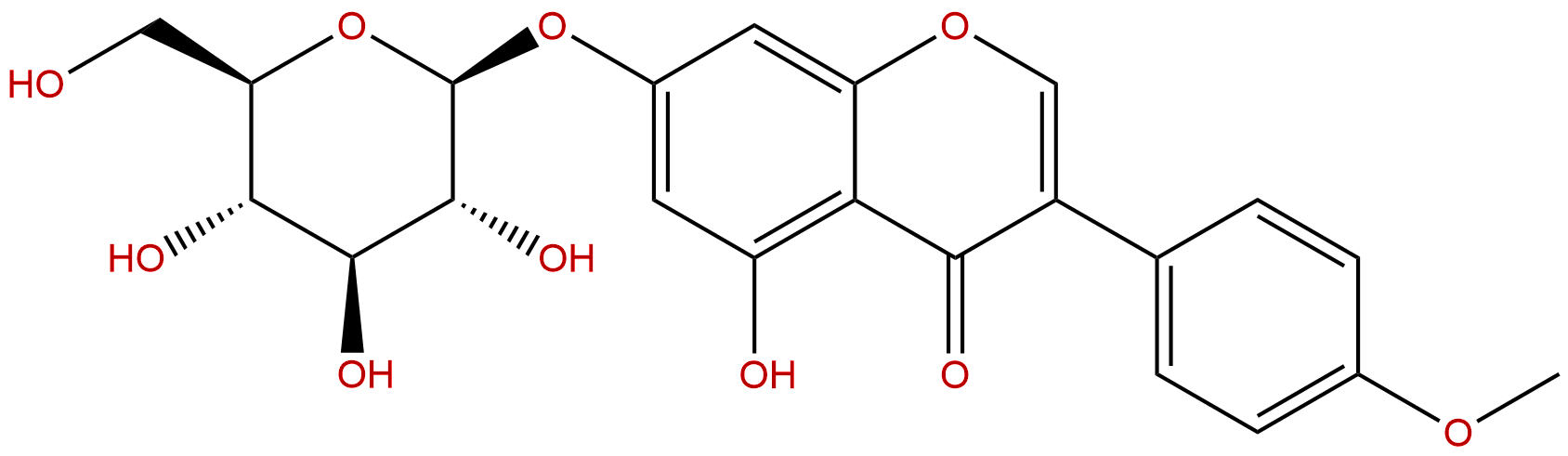
The molecular formula of olecranon bean sprout glycoside (CAS number: 5928-26-7) is C ₂ ₂ H ₂ ₂ O ₁ ₀, and the molecular weight is 446.4080. Early research mainly regarded it as a storage or transport form of chickpea sprout extract A, believing that its activity depends on the glycosides released after hydrolysis by glycosidase in the body. However, increasing evidence suggests that olecranon glycosides themselves have direct and undeniable pharmacological activities, particularly in the fields of antibacterial and antioxidant activity. Research has shown that olecranon bean sprouts glycoside exhibits inhibitory effects on yeast, Gram positive bacteria, and Gram negative bacteria, with a minimum inhibitory concentration (MIC) range of 32-256 μ g/mL, demonstrating broad-spectrum antibacterial potential. Meanwhile, its regulatory effects on various oxidative stress-related targets, such as tyrosinase (TYR), matrix metalloproteinase 1 (MMP1), nuclear factor E2 related factor 2 (NFE2L2/NRF2), superoxide dismutase (SOD1, SOD2), catalase (CAT), glutathione peroxidase 1 (GPX1), and heme oxygenase 1 (HMOX1), reveal its complex role in the antioxidant defense network.
Given the significant antibacterial and antioxidant activities of olecranon bean sprouts glycosides, as well as their representative structure as isoflavone glycosides, a systematic review of them is of great significance for a deeper understanding of the structure-activity relationship of isoflavone compounds and exploring their potential as lead compounds or functional food ingredients. This article will comprehensively and deeply expound on the research progress of olecranon glycoside from the aspects of chemical structure, plant origin, pharmacological activity, mechanism of action, medicinal properties, and clinical application prospects.
Chemical structure and physicochemical properties
Chickpea sprout glycosides belong to the isoflavone class of compounds, and their core skeleton is 3-phenylchromenone. Its chemical structural characteristics are as follows: the mother nucleus is olecranon bean sprout extract A (5,7-dihydroxy-4 '- methoxyisoflavone), which is connected to a D-glucose group through a β - glycosidic bond at the C-7 hydroxyl group to form 7-O - β - D-glucopyranoside. The glycosylation site (C-7) is one of the most common glycosylation modification sites in isoflavone molecules, which has a profound impact on the overall properties of the molecule.
From the perspective of physical and chemical properties, the molecular weight of olecranon sprouts glycoside is 446.4080 Da. Its lipid water partition coefficient (LogP) is 0.4980, indicating that the molecule has moderate lipophilicity but is more inclined towards a hydrophilic environment. This characteristic is closely related to its molecular structure: the flavonoid skeleton in the glycoside part provides a certain hydrophobicity, while the glucose group connected to the C-7 position contains multiple hydroxyl groups, significantly increasing the polarity of the molecule and its ability to form hydrogen bonds with water. Its topological polar surface area (TPSA) is 159.0500 Å ², much higher than the recommended threshold for oral drugs (about 140 Å ²), indicating that its transmembrane passive diffusion ability may be limited, and oral absorption may mainly rely on active transport mediated by transporters or cellular bypass pathways. The calculated water solubility is 1.0357 mg/mL, indicating that its solubility in water is acceptable, which provides favorable conditions for its distribution in biological fluids and subsequent biological evaluation.
In addition, the blood-brain barrier (BBB) penetration prediction is "low", which is consistent with higher TPSA and polarity characteristics, suggesting that the potential application of olecranon glycosides in the treatment of central nervous system diseases may be limited, but it also reduces its possible risk of central neurotoxicity. HERG inhibition is predicted as' no ', which is a positive pharmacological indicator indicating a low risk of causing QT interval prolongation and arrhythmia in the heart. The predicted result of Ames test is 0.9, indicating that it may not have significant mutagenicity and the safety risk is relatively low. These physicochemical properties and preliminary pharmacological prediction data provide important reference for subsequent pharmacological activity research and drug development.
Plant sources and extraction methods
Chickpea sprout glycosides are not unique to a single plant, but are widely present in various plants, especially Fabaceae plants. Its name "Sissotrin" comes from one of its earliest isolated plants - Indian rosewood(Dalbergia sissoo). In addition to Indian rosewood, olecranon glycosides have been reported in the following plants:
- Leguminous plants:
- Chickpeas(Cicer arietinum)As the name comes from a plant, the seeds, buds, and various parts of the plant of chickpeas contain chickpea sprouts glycosides and their aglycones.
- Red wheelbase grass(Trifolium pratense)Red clover is a rich source of isoflavones, which contains a large amount of chickpea sprouts A and its glycosides, including chickpea sprouts glycosides.
- Soybeans(Glycine max)Although soybeans are mainly composed of daidzein and genistein, they also contain trace amounts of olecranon glycosides.
- Astragalus genus(Astragalus)Various Astragalus plants, such as Membranous Astragalus membranaceus(Astragalus membranaceus)It has been confirmed to contain olecranon glycoside.
- Purple locust tree(Amorpha fruticosa)The compound was also isolated from its fruit and branches and leaves.
- Plants of other families and genera Except for legumes, certain plants in the Asteraceae family, such as the Convolvulus genus(Inula)It has also been discovered.
The method of extracting olecranon glycosides usually follows the classic process of natural product chemistry and combines modern separation techniques to improve efficiency and purity. The main steps include:
- Raw material pretreatment Crush dry plant materials (such as roots, stems, leaves, or seeds) to an appropriate particle size to increase the solvent contact area.
- Solvent extraction Due to the polarity of olecranon bean sprout glycosides (LogP 0.498), polar solvents are often used for extraction. The most commonly used solvents are aqueous solutions of methanol or ethanol (such as 70% -80% ethanol), and sometimes pure methanol or water is also used. Extraction methods include cold soaking, reflux extraction, ultrasound assisted extraction, or microwave-assisted extraction. Ultrasound and microwave-assisted techniques can significantly shorten extraction time and improve yield.
- Preliminary purification After the extraction solution is concentrated under reduced pressure, crude extract is obtained. The crude extract is usually preliminarily classified by liquid-liquid extraction (such as sequential extraction with petroleum ether, ethyl acetate, and n-butanol), and olecranon glycoside is mainly enriched in the n-butanol or ethyl acetate extraction layer due to its polarity.
- chromatographic separation This is a key step in obtaining high-purity olecranon bean sprout glycosides. Common methods include:
- Column chromatography: Silica gel, polyamide, ODS (C18 inverted silica gel) or dextran gel (Sephadex LH-20) are used as the stationary phase. The elution system is usually a chloroform methanol water or methanol water gradient system.
- Preparation type high performance liquid chromatography (Prep HPLC)For mixtures that are difficult to separate, preparative HPLC is used, with a C18 reverse phase column and acetonitrile water or methanol water as the mobile phase, combined with a UV detector (usually at 260-280 nm) for separation and purification.
- Structural Identification The purified compound was structurally confirmed by techniques such as nuclear magnetic resonance spectroscopy (NMR, including ¹ H-NMR, ¹ ³ C-NMR, 2D-NMR), mass spectrometry (MS, such as ESI-MS, HR-MS), and ultraviolet visible spectroscopy (UV Vis).
Pharmacological activity research
The pharmacological activity research of olecranon sprouts glycoside mainly focuses on its antibacterial and antioxidant fields. At the same time, some studies have also revealed its potential effects in anti-inflammatory and anti-tumor aspects.
1. Antibacterial activity
Chickpea sprout glycosides exhibit broad-spectrum antibacterial activity. According to the provided information, it has inhibitory effects on yeast, Gram positive bacteria, and Gram negative bacteria, with a MIC range of 32-256 μ g/mL. This level of activity indicates that it has moderate antibacterial potential. Specifically:
* Antibacterial effect Research shows that olecranon bean sprout glycosides have an effect on Staphylococcus aureus(Staphylococcus aureus)Bacillus subtilis(Bacillus subtilis)Waiting for Gram positive bacteria and Escherichia coli(Escherichia coli)Pseudomonas aeruginosa(Pseudomonas aeruginosa)All Gram negative bacteria have inhibitory effects. The mechanism may involve disrupting the integrity of bacterial cell membranes, inhibiting nucleic acid synthesis, or interfering with bacterial quorum sensing systems.
* Antifungal effect Regarding Candida albicans(Candida albicans)The activity of yeast indicates its potential application value in the treatment of fungal infections. Compared with traditional azole antifungal drugs, its mechanism of action may be different, providing new ideas for overcoming drug resistance.
2. Antioxidant activity
Antioxidant activity is one of the most highly regarded activities of olecranon bean sprout glycosides. Its antioxidant effect is reflected in multiple aspects:
* Directly eliminate free radicals The phenolic hydroxyl groups (especially the C-5 and C-7 hydroxyl groups) in the structure of isoflavones are good hydrogen atom donors, which can directly neutralize reactive oxygen species (ROS) and reactive nitrogen species (RNS), such as hydroxyl radicals, superoxide anions, peroxynitrite, etc. Glycosylation modification has not completely eliminated this ability, although it may be slightly reduced due to steric hindrance or electronic effects.
* Chelation of metal ions The hydroxyl and carbonyl groups in its structure can chelate transition metal ions (such as Fe ² ⁺, Cu ² ⁺), thereby inhibiting the Fenton reaction and reducing the generation of highly active hydroxyl radicals.
* Regulating the endogenous antioxidant enzyme system This is one of the core mechanisms of its antioxidant activity. Research has shown that olecranon bean sprout glycosides can upregulate the expression and activity of various key antioxidant enzymes, including superoxide dismutase (SOD1, SOD2), catalase (CAT), glutathione peroxidase 1 (GPX1), and heme oxygenase 1 (HMOX1). This regulatory effect is usually achieved by activating the transcription factor NRF2 (NFE2L2), which is the main regulator of cellular antioxidant defense. In addition, its inhibitory activity against tyrosinase (TYR) also makes it potentially applicable in skin whitening and anti pigmentation.
3. Other pharmacological activities
- anti-inflammatory effect By inhibiting inflammatory signaling pathways such as NF - κ B, reducing the production of pro-inflammatory cytokines (such as TNF - α, IL-6, IL-1 β), and inhibiting the activity of cyclooxygenase-2 (COX-2) and inducible nitric oxide synthase (iNOS), olecranon sprouts glycoside exhibits anti-inflammatory potential.
- antitumor activity Some in vitro studies have shown that chickpea sprout glycoside can inhibit the proliferation and induce apoptosis of some cancer cell lines (such as breast cancer and prostate cancer cells). The mechanism may be related to regulating the cell cycle, affecting estrogen receptor signaling (as a plant estrogen), and inhibiting the activity of matrix metalloproteinases (MMP1, MMP3), which are closely related to tumor invasion and metastasis.
- Protective effect on the skin Given its inhibitory effect on TYR and MMPs, olecranon sprouts glycoside shows promising application prospects in the field of skin care. Inhibiting TYR can reduce melanin synthesis, while inhibiting MMP1 and MMP3 can slow down collagen degradation, thereby combating skin photoaging and wrinkle formation.
Mechanism of action and molecular targets
The pharmacological activity of olecranon sprouts glycoside is the result of its interaction with multiple molecular targets, and its mechanism of action exhibits the characteristics of multi-target and multi pathway.
1. Molecular mechanism of antioxidant stress
The core of the antioxidant effect of olecranon bean sprout glycoside lies in its activation NRF2/ARE signaling pathway NRF2 (NFE2L2) is a key transcription factor for cells to cope with oxidative stress. Under normal physiological conditions, NRF2 binds to the inhibitory protein Keap1 in the cytoplasm, remains inactive, and is degraded by ubiquitination. When cells are stimulated by oxidative stress or electrophilic agents (including olecranon glycoside itself or its metabolites), the conformation of Keap1 changes, and NRF2 is released and translocated into the nucleus. In the nucleus, NRF2 forms heterodimers with small Maf proteins, recognizing and binding to antioxidant response elements (ARE) in the promoter region of target genes, thereby initiating transcription of a series of downstream protective genes. These genes include:
* SOD1, SOD2 Encoding superoxide dismutase, catalyzing the dismutation of superoxide anions into hydrogen peroxide and oxygen.
* CAT Encoding catalase, which decomposes hydrogen peroxide into water and oxygen.
* GPX1 Encode glutathione peroxidase, which uses glutathione to reduce hydrogen peroxide and organic peroxides.
* HMOX1 Encoding heme oxygenase 1, it catalyzes the degradation of heme into biliverdin, carbon monoxide, and free iron. biliverdin and its reduced product bilirubin are potent endogenous antioxidants.
By activating NRF2, olecranon glycosides can synergistically regulate an antioxidant enzyme network, providing more lasting and comprehensive protection than a single antioxidant.
2. Antibacterial mechanism
The antibacterial mechanism of olecranon sprouts glycosides has not been fully elucidated, but it may involve the following pathways:
* Damage the cell membrane As an amphiphilic molecule (with hydrophobic and hydrophilic glycosides), olecranon glycosides may insert into the lipid bilayer of bacterial cell membranes, increasing membrane permeability and leading to the leakage of important substances (such as K ⁺, ATP) from the cell, ultimately causing cell death.
* Inhibition of nucleic acid synthesis Isoflavones may interfere with bacterial DNA replication and transcription by embedding double stranded DNA or inhibiting key enzymes such as topoisomerases.
* Inhibition of Quorum Sensing (QS)The pathogenicity and biofilm formation of many bacteria depend on the QS system. Chickpea sprout glycosides may act as analogs or antagonists of QS signaling, interfering with bacterial communication, thereby inhibiting the expression of virulence factors and biofilm formation, making bacteria more easily cleared by the host immune system or antibiotics.
3. Regulation of skin related targets
- Inhibition of Tyrosinase (TYR)Tyrosinase is the rate limiting enzyme for melanin synthesis. Chickpea sprout glycosides may inhibit their activity and reduce melanin production by chelating with copper ions in the active center of tyrosinase or competing with substrates for binding sites. This is the molecular basis for its potential as a whitening ingredient.
- Inhibition of matrix metalloproteinases (MMP1, MMP3)MMPs are a class of zinc dependent endopeptidases responsible for degrading extracellular matrix (such as collagen and elastin). Factors such as ultraviolet radiation can induce overexpression of MMPs, leading to skin photoaging and wrinkles. Chickpea sprout glycosides help maintain the integrity of the skin matrix and exert anti-aging effects by inhibiting the activity or expression of MMP1 and MMP3.
Evaluation of drug properties and pharmacokinetics
The evaluation of drug properties is a crucial step in the transition from natural products to clinical drugs. Based on the provided parameters and literature data, a preliminary analysis was conducted on the pharmacological properties of olecranon glycoside.
1. Analysis of pharmacological parameters
- Molecular weight and LogP The molecular weight of 446.4 Da is slightly higher than the limit of molecular weight<500 in Lipinski's Rule of Five, and LogP 0.498 meets the requirement of<5. Overall, its physical and chemical properties are within an acceptable range.
- TPSA 159.05 Å ² is higher than the threshold of 140 Å ², indicating that its oral absorption may be poor and its permeability may be low. This may be one of the main challenges in its development as a drug.
- Water solubility The water solubility of 1.0357 mg/mL is good, which is beneficial for the development of the formulation.
- Security prediction The hERG inhibition risk is low (no), and the Ames test predicts a negative result (0.9), indicating a low risk of cardiac and genetic toxicity and a promising safety outlook.
2. Pharmacokinetic characteristics
Pharmacokinetic studies are key to understanding the in vivo behavior of drugs. The pharmacokinetic characteristics of olecranon bean sprouts glycoside are closely related to the glycoside structure:
* absorb After oral administration, the absorption of olecranon glycoside in the gastrointestinal tract is a complex process. Due to its high polarity and large molecular weight, its passive diffusion ability is limited. Partial olecranon glycosides may be fully absorbed through glucose transporters (such as SGLT1) on intestinal epithelial cells. However, most of the olecranon sprouts glycosides reach the colon and are hydrolyzed by β - glucosidase produced by the gut microbiota, releasing the aglycone olecranon sprouts A. Due to its high lipid solubility (LogP~3.0), aglycones are more easily passively diffused and absorbed. Therefore, after oral administration of chickpea sprout glycosides, the main components detected in the blood may be their aglycones and further metabolites (such as glucuronic acid conjugates and sulfate conjugates).
* distribution After absorption into the bloodstream, olecranon glycosides and their metabolites bind to plasma proteins (mainly albumin). Due to its high polarity, its tissue distribution may be limited and mainly distributed in the extracellular fluid. BBB has low penetrability, which limits the distribution of the central nervous system.
* Metabolism Metabolism is the main pathway for the clearance of olecranon glycosides in the body. As mentioned above, hydrolysis of gut microbiota is the first key metabolism step. The absorbed aglycones undergo phase II metabolism in the liver and intestinal wall, mainly binding with glucuronic acid and sulfuric acid to form more water-soluble complexes, which are easier to excrete from urine and bile.
* excretion Metabolites are mainly excreted from the body through urine and feces. After bile excretion, some of the complexes may be re hydrolyzed by gut microbiota, forming enterohepatic circulation and prolonging their retention time in the body.
In summary, the oral bioavailability of olecranon bean sprout glycoside may be low, and its main active form may be its aglycone and its II complex. Developing it as an oral medication requires overcoming the challenge of poor absorption, such as using nano formulations, prodrug design, or in combination with other absorption enhancers. As an active ingredient for topical application (such as skin care), its high polarity and low permeability may actually allow it to stay more on the surface of the skin, exerting local antioxidant and whitening effects, which may be its more advantageous application direction.
Clinical application prospects and prospects
Although the direct clinical application of olecranon sprouts glycosides has not been widely developed, based on its clear pharmacological activity and preliminary safety evaluation, it has shown broad application prospects in the following fields.
1. Functional foods and health products
Due to its strong antioxidant activity and characteristics derived from edible plants such as chickpeas and red clover, olecranon sprouts glycosides can be used as ingredients in functional foods or dietary supplements. Through daily intake, it helps to enhance the antioxidant defense ability of the body and prevent chronic diseases related to oxidative stress, such as cardiovascular diseases, diabetes, neurodegenerative diseases and some cancers. As a characteristic of plant estrogen, it may also be beneficial for alleviating menopausal symptoms and maintaining bone health.
2. Skin care and cosmetics
The application prospects of olecranon bean sprout glycosides in the field of skin care are particularly prominent. Its multiple functions perfectly meet the needs of modern skincare products:
* Whitening and Spot Removal Reduce melanin production by inhibiting tyrosinase (TYR) activity.
* anti-aging By inhibiting MMP1 and MMP3, collagen is protected and wrinkles are reduced; At the same time, by activating NRF2, the endogenous antioxidant capacity of skin cells is enhanced to resist oxidative damage caused by environmental factors such as ultraviolet radiation.
* Anti inflammatory and Soothing Inhibiting inflammatory response can help improve problems such as acne and sensitive skin.
As a natural source of active ingredients, it conforms to the consumption trend of "green" and "safe", and has high commercial development value.
3. Antibacterial drugs or adjuvants
Faced with the increasingly severe problem of antibiotic resistance, it is urgent to develop new antibiotics or antibacterial enhancers. The broad-spectrum antibacterial activity of olecranon bean sprouts glycoside, especially its potential effect on drug-resistant strains, makes it an attractive lead compound. It can be developed as:
* Local antibacterial agent Used to treat bacterial or fungal infections of the skin and mucous membranes.
* Antibiotic adjuvants Combined with existing antibiotics, by disrupting bacterial cell membranes or inhibiting efflux pumps, enhancing the bactericidal effect of antibiotics, reducing effective doses, and delaying the development of drug resistance.
4. Future research directions
In order to promote the clinical application of chickpea sprout glycosides, future research should focus on the following aspects:
1. In depth pharmacokinetic research Systematically study its absorption, distribution, metabolism, and excretion processes in vivo, clarify the reasons for its low oral bioavailability, and explore strategies to improve bioavailability (such as nanoliposomes, phospholipid complexes, structural modifications).
2. Study on Structure Activity Relationship Systematic comparison of the activity differences between olecranon bean sprouts glycoside and its aglycone (olecranon bean sprouts glycoside A), as well as other analogues such as genistein and daidzein, to elucidate the effects of glycosylation modification on activity, selectivity, and pharmacokinetic properties.
3. Refined analysis of the mechanism of action By utilizing modern molecular biology techniques such as gene knockout, proteomics, and metabolomics, we aim to further elucidate its functional network at the cellular and molecular levels, particularly the activation details of the NRF2 pathway and the identification of antibacterial targets.
4. Pharmacodynamic and toxicological evaluation in vivo Validate its in vivo efficacy in appropriate animal models, such as skin photoaging models, bacterial infection models, and inflammatory bowel disease models, and conduct systematic long-term toxicology and reproductive toxicity studies to provide sufficient evidence for its safety.
5. Clinical translational research After completing sufficient preclinical research, conduct small-scale human clinical trials to preliminarily validate its effectiveness and safety in specific indications such as skin whitening, oral ulcers, and mild skin infections.
Conclusion
Chickpea sprout glycoside, as an important flavonoid glycoside in nature, occupies a place in the field of natural product pharmacology due to its unique chemical structure and various biological activities. It is not only the storage and transportation form of chickpea sprout extract A in plants, but also a molecule with direct pharmacological activity. Its broad-spectrum antibacterial activity, especially its potential effect on drug-resistant bacteria, and its excellent antioxidant capacity through activating the NRF2 pathway make it of great value in dealing with infectious diseases and oxidative stress related diseases. Meanwhile, its regulatory effect on skin related targets (TYR, MMPs) indicates its enormous potential in the skin care and cosmetics industry.
Although there are challenges in terms of drug development, especially in terms of oral bioavailability, this has not obscured its brilliance as a lead compound or functional ingredient. Through modern medicinal chemistry methods such as prodrug design and new dosage form development, as well as in-depth mechanism of action research, it is expected to overcome these obstacles. In the future, with the continuous deepening of research on olecranon glycosides, we have reason to believe that this gift from nature will play a more important role in human health maintenance and disease prevention, moving from the laboratory to a broader application stage.